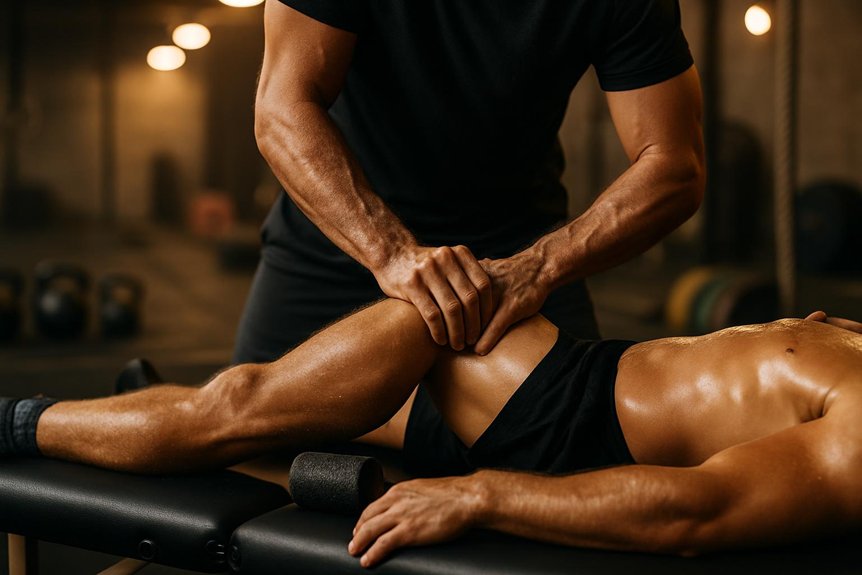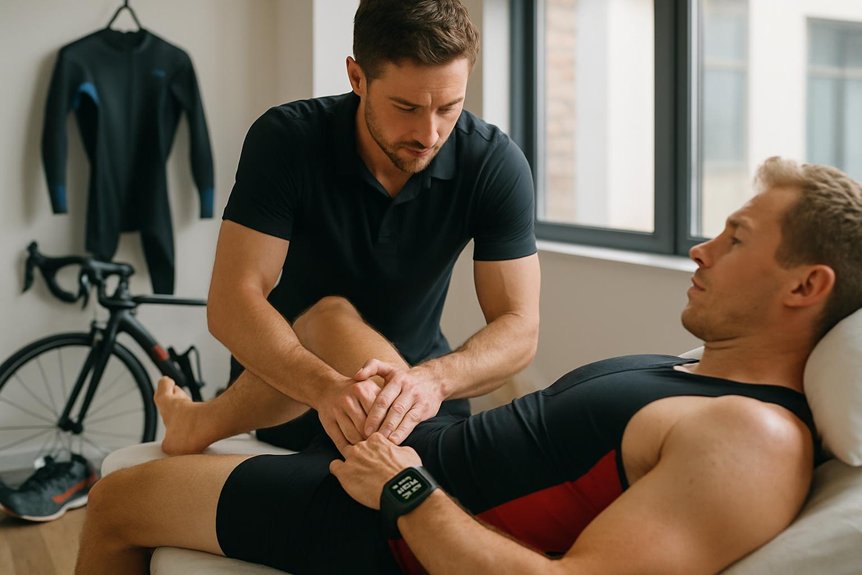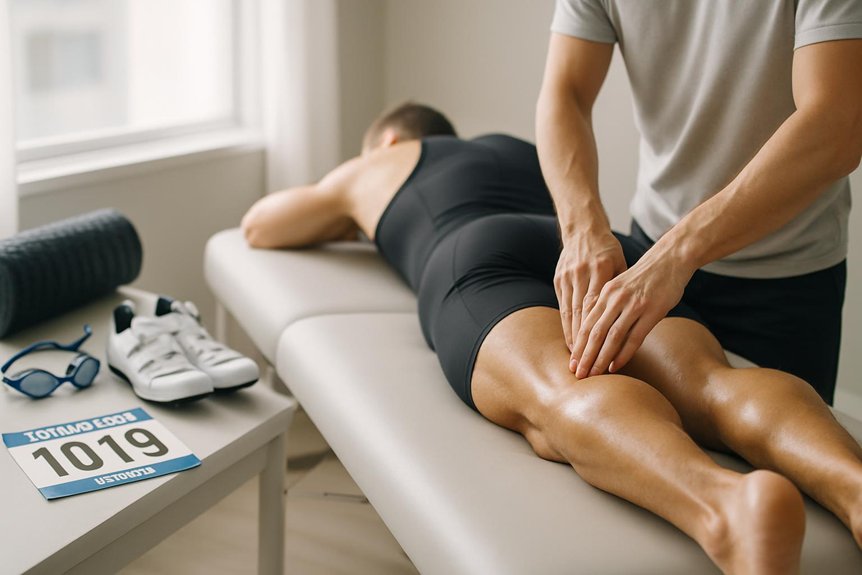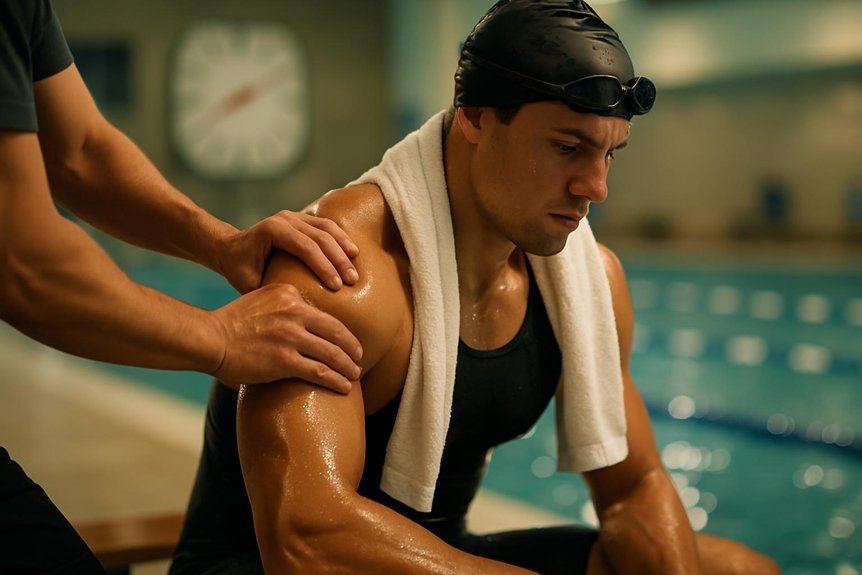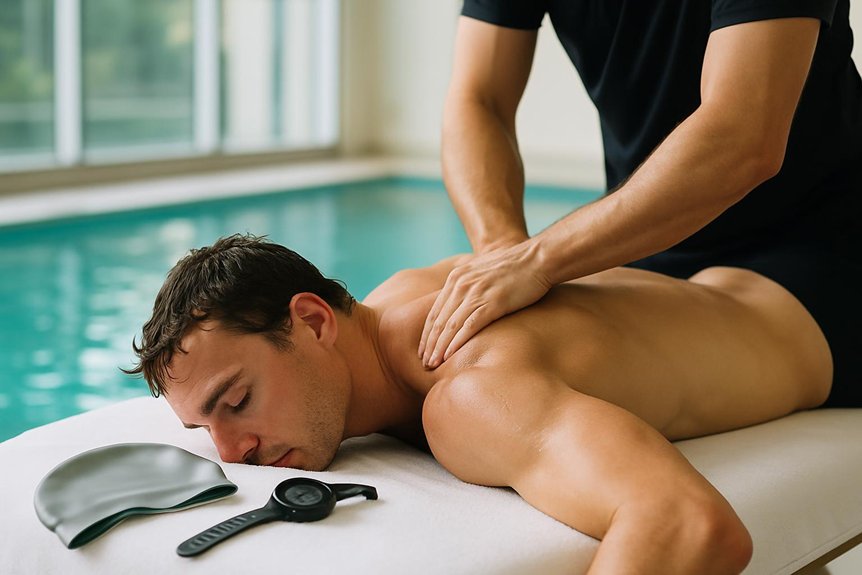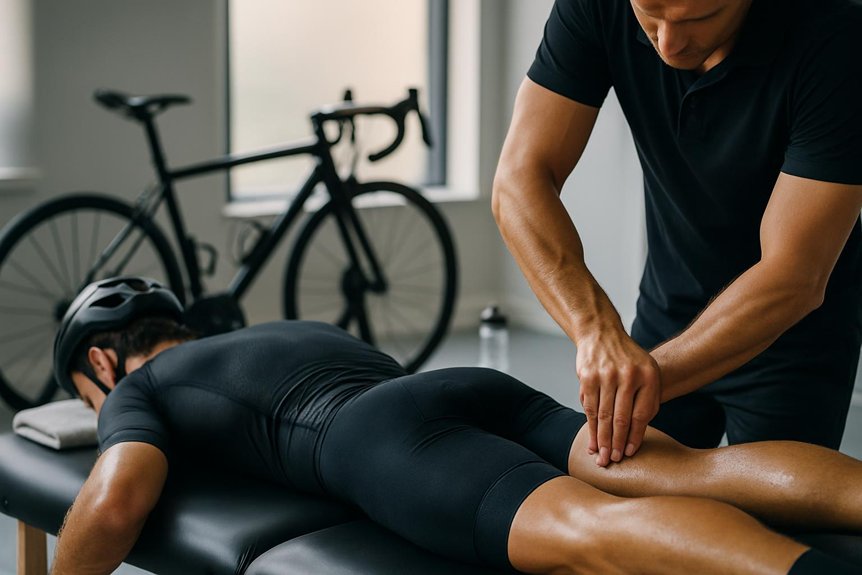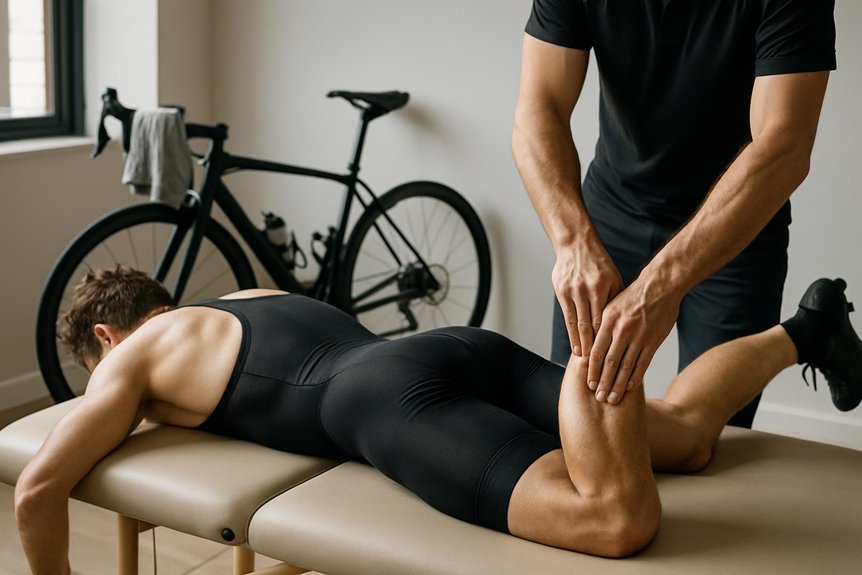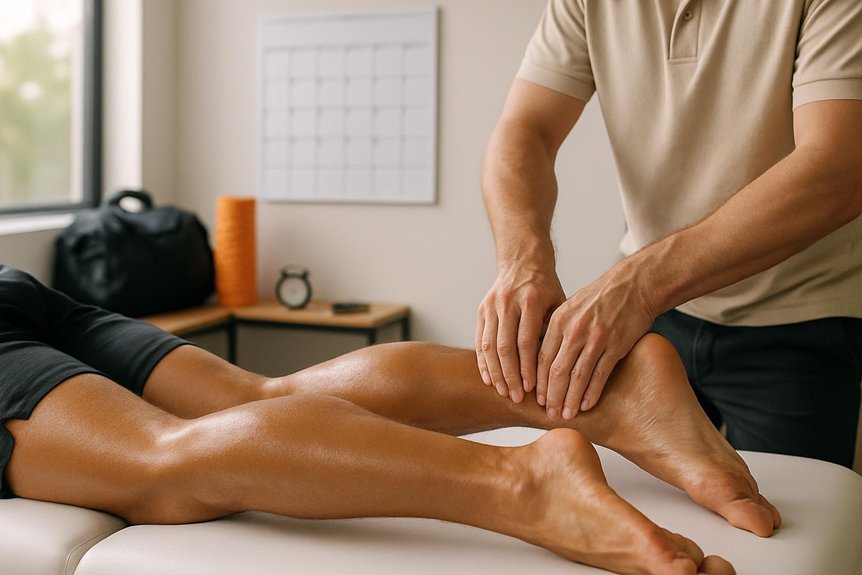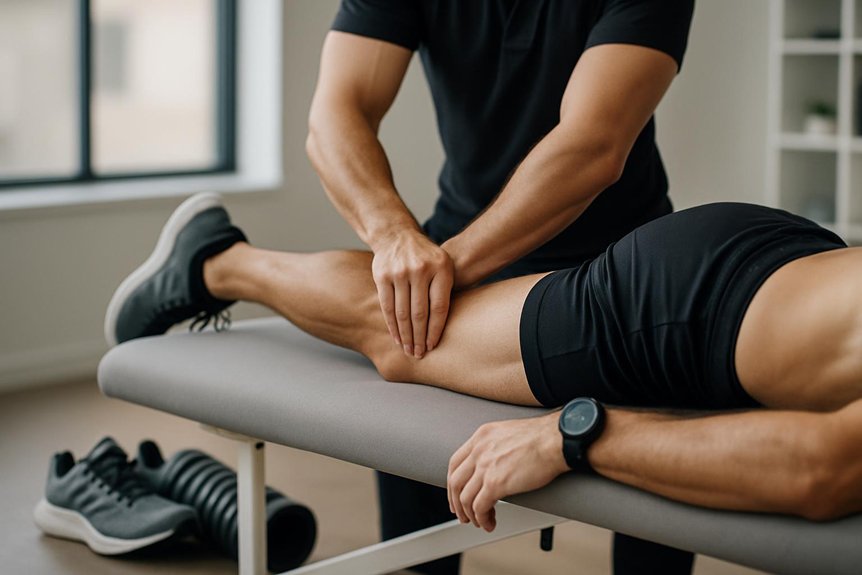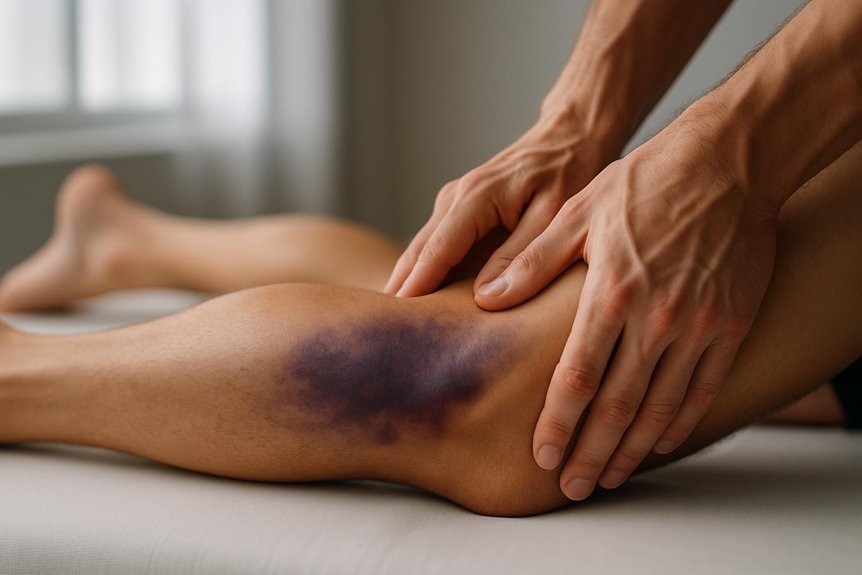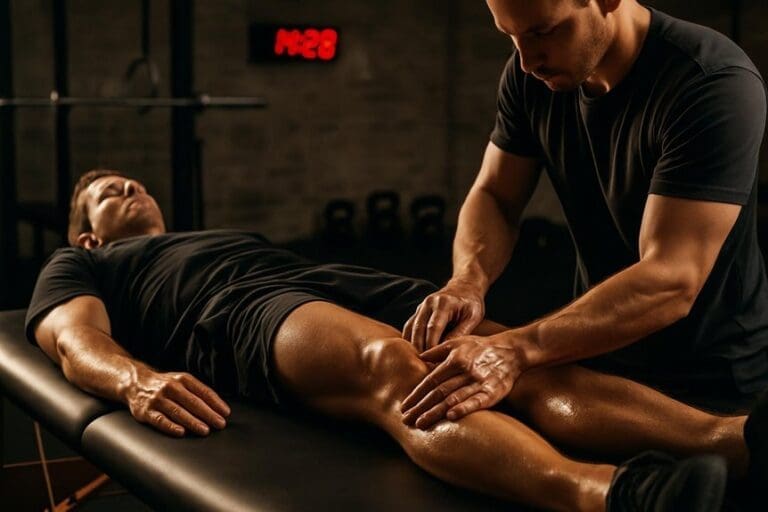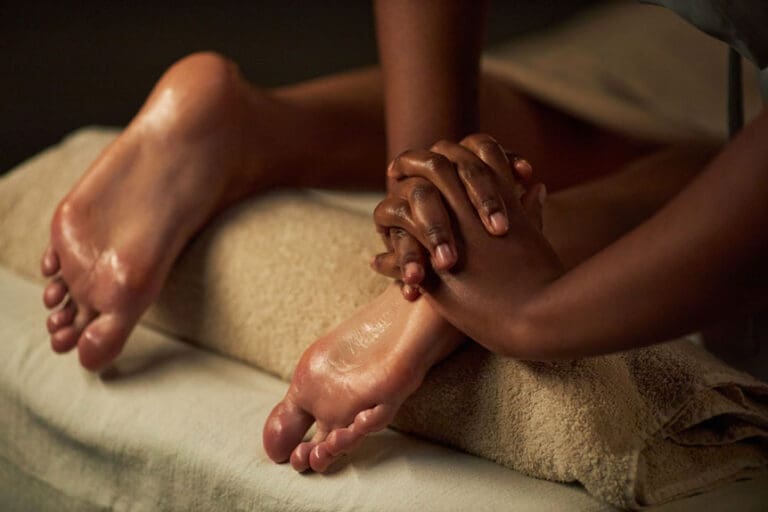
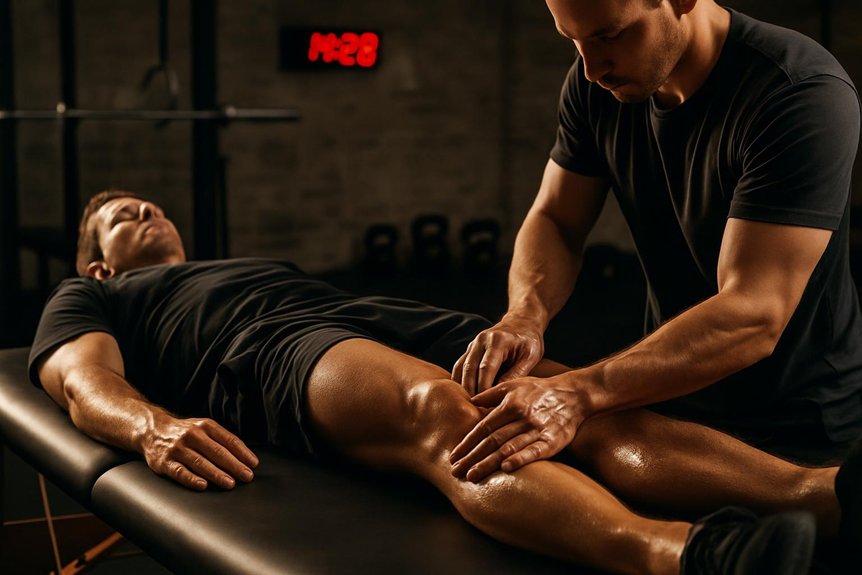
For CrossFit athletes, performance massage is most effective 24–72 hours after a high-load WOD, when DOMS and protective muscle tone typically peak and deeper, targeted work can restore glide in quads, glutes, calves, lats, and forearms. In the first 0–2 hours post-WOD, lighter effleurage and gentle compression can support venous and lymphatic return without adding irritation. Pre-WOD priming is best 6–24 hours prior using brief, brisk strokes. The next sections outline how to match timing, pressure, and frequency to training blocks.
Best Time for Sports Massage for CrossFit (Quick Rules)
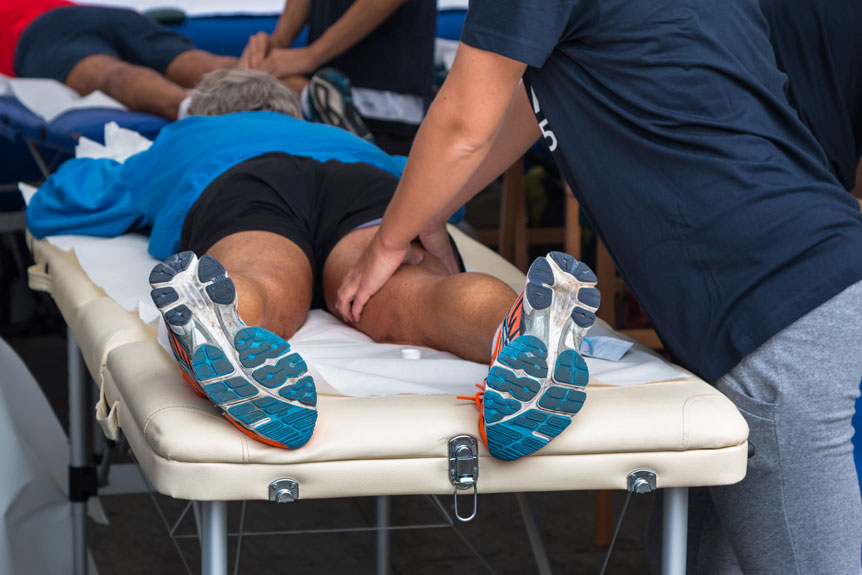
Before, after, or between high-intensity sessions, the “best” time for a performance massage in CrossFit depends on the immediate goal—performance priming, recovery acceleration, or injury-risk reduction—because mechanical load, tissue irritability, and neuromuscular fatigue change across the training week.
For priming, schedule 6–24 hours pre-WOD with lighter pressure and faster strokes to enhance circulation and readiness without provoking soreness.
For recovery, book 2–48 hours post-WOD when delayed-onset soreness peaks; use slower, deeper work on calves, quads, glutes, lats, and forearms to reduce tone and restore glide.
For protection, place treatment after heavy lifting blocks, focusing on hip flexors, thoracolumbar fascia, and rotator cuff.
It offers key benefits for athletes by supporting performance readiness and recovery.
At Spa & Massage, therapists tailor pressure, pace, and consent.
How Often CrossFit Athletes Should Get Performance Massage
For most CrossFit athletes, a practical starting point is performance massage every 2–4 weeks to support soft-tissue recovery in commonly overloaded structures such as the calves, quads, gluteals, lats, and thoracolumbar fascia.
As training load rises (higher volume, intensity, or competition blocks), frequency often increases to weekly or fortnightly to address elevated muscle tone, tendon irritability, and range-of-motion restrictions before they accumulate into performance-limiting symptoms.
At Spa & Massage clinics across London, therapists typically adjust scheduling based on measurable markers such as soreness duration, joint mobility changes, and localised tenderness in key muscle groups used in CrossFit.
Recommended Massage Frequency
Most CrossFit athletes benefit from performance massage on a consistent schedule that matches training load, recovery capacity, and current tissue irritability.
For many, one session every 7–14 days supports soft-tissue quality in the calves, quads, glutes, thoracolumbar fascia, lats, and forearms, helping maintain comfortable range of motion and reduce protective tone.
During quieter phases, a maintenance visit every 3–4 weeks is often sufficient.
When symptoms are more persistent, shorter, focused work (30–45 minutes) weekly for 2–3 sessions can settle local tenderness and restore glide between muscle and fascia.
At Spa & Massage clinics across London, therapists tailor pressure, pace, and positioning so clients feel safely held, not overwhelmed, with aftercare that includes hydration and gentle mobility.
Adjusting For Training Load
In line with periodised CrossFit programming, performance massage frequency is best adjusted to weekly training volume, intensity, and cumulative tissue stress rather than fixed to the calendar.
During high-load phases (more Olympic lifts, kipping, running, and doubles), athletes often benefit from 1 session weekly or fortnightly to support tone, reduce tenderness, and maintain range through calves, hip flexors, glutes, lats, and forearms.
In deload weeks, a lighter session every 3–4 weeks can prioritise parasympathetic settling, breathing, and gentle myofascial work.
Post-competition blocks may suit 48–72 hours after the event, when soreness peaks.
At Spa & Massage London clinics, therapists modulate pressure, pace, and oil to match readiness, keeping contact deliberate and respectful.
Performance Massage Before CrossFit: Prime Muscles Without Fatigue
Often, a short, targeted performance massage before a CrossFit session can prime key muscle groups and joints for high-intensity movement without draining performance.
At Spa & Massage, therapists keep pre-WOD work brief (about 10–20 minutes) and specific, using moderate pressure and brisk effleurage, compression, and muscle stripping to increase local blood flow and tissue temperature, while avoiding heavy, fatigue-inducing deep work.
Focus commonly sits on calves, quads, glutes, hip flexors, lats, pecs, and forearms, supporting squat depth, overhead stability, and grip.
Light fascial glides around the thoracolumbar fascia and scapular border can improve shoulder mechanics.
Clients are advised to communicate tender points so pressure stays “invigorating,” leaving muscles responsive, not sore.
Performance Massage After a CrossFit WOD: Ideal Timing Windows
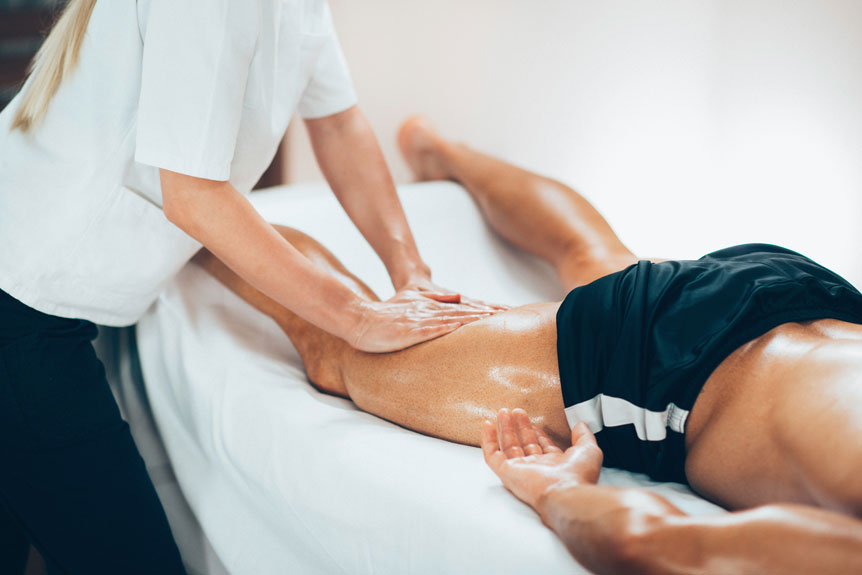
After a CrossFit WOD, two evidence-informed timing windows tend to suit performance massage: an immediate post-session period and a next-day recovery period.
In the first 0–2 hours, lighter techniques can support circulation and reduce protective muscle tone in heavily loaded tissues (e.g., quadriceps, gluteals, lumbar erectors) without adding excessive mechanical stress.
In the 12–36 hour window, when delayed onset muscle soreness typically peaks, Spa & Massage therapists often apply more targeted deep tissue and myofascial work to address specific hotspots and restore range of motion.
Immediate Post-WOD Window
Within the first 0–2 hours post‑WOD, a light-to-moderate performance massage can support recovery when tissue sensitivity and acute fatigue are highest, provided pressure is carefully controlled.
At Spa & Massage, therapists prioritise calming effleurage, gentle compression, and slow myofascial gliding to reduce perceived soreness, encourage venous and lymphatic return, and soften protective muscle tone without aggravating micro‑trauma.
Work typically targets loaded regions—forearms, lats, hip flexors, glutes, and calves—while avoiding aggressive stripping, prolonged ischemic pressure, or heavy trigger‑point work that can amplify inflammation and tenderness.
Many clients prefer a close, reassuring pace with clear consent and breath cues, helping the nervous system downshift.
Post‑treatment guidance includes hydration, light mobility, and warmth, supporting comfort and sleep.
Next-Day Recovery Window
On the next day (approximately 24–36 hours post‑WOD), performance massage is typically best positioned for deeper, more specific work, as delayed‑onset muscle soreness and residual tissue stiffness tend to peak while acute post‑exercise sensitivity has settled.
At Spa & Massage, therapists may focus on the prime movers loaded in CrossFit—gluteals, quadriceps, hamstrings, calves, lats, and thoracolumbar fascia—using slow, sinking pressure and targeted friction to reduce tone and improve glide between tissue layers.
This window can support range of motion around the hip and shoulder complexes, easing compensations that develop during squats, pulls, and overhead work.
Many clients prefer steady, close contact with clear feedback, keeping intensity “comfortably strong” rather than sharp.
Aftercare typically includes hydration, gentle walking, and light mobility, avoiding maximal lifts for 12–24 hours.
Performance Massage on CrossFit Rest Days: When It Works Best
During planned CrossFit rest days, performance massage often fits best because it supports recovery without adding further mechanical load to already stressed tissues. This timing allows therapists to work more precisely through the hamstrings, glutes, lats, pecs, and forearms, where residual tone and trigger points can limit range and impair technique. With no session immediately after, parasympathetic settling tends to be stronger, supporting perceived soreness reduction and sleep quality.
At Spa & Massage clinics across London, treatment is typically medium-to-deep, paced slowly to respect post-training sensitivity and to encourage fluid exchange. Many clients schedule a rest-day session 24–72 hours after heavy lifts or high-rep gymnastics, when tenderness is present but inflammation is calmer.
Afterwards, therapists recommend hydration, a warm shower, and gentle mobility.
Performance Massage in Deloads and Tapers for CrossFit
In a CrossFit deload or pre-competition taper, performance massage is often most useful for maintaining tissue quality while training volume and intensity are intentionally reduced.
With fewer high-load exposures, the aim shifts to preserving range of motion, easing residual tone in the calves, hip flexors, thoracic paraspinals, lats, and forearms, and supporting comfortable mechanics for skill work.
Evidence suggests massage can reduce perceived soreness and improve short-term flexibility, which may help athletes feel supple and connected to their bodies without disrupting the taper.
At Spa & Massage clinics across London, therapists typically schedule one session early in the deload, then another 3–5 days before an event, avoiding last‑minute novelty.
Hydration, sleep, and light mobility are recommended afterward.
Performance Massage Pressure: Light Flush vs Deep Tissue
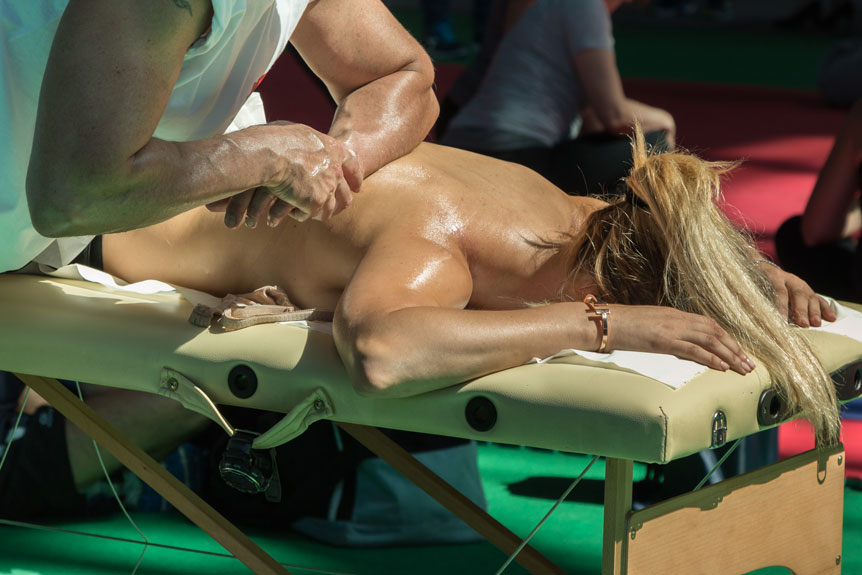
Most CrossFit athletes benefit from matching performance massage pressure to the intended training effect: a light “flush” for circulation and nervous-system downregulation, or deeper tissue work to address localised restriction in high-demand structures such as the calves, hip flexors, gluteals, thoracolumbar fascia, lats, and forearm flexors.
A flush uses broad, gliding strokes and gentle compressions that support venous/lymphatic return, soften global tone, and leave athletes feeling calm, connected, and ready to sleep. Deep tissue is slower and more specific, targeting myofascial interfaces and trigger points to improve tissue glide and joint mechanics.
At Spa & Massage clinics across London, therapists titrate pressure to breath, guarding, and post-session function, using warm oil and clear consent to keep intensity therapeutic, intimate, and controlled.
DOMS vs Injury Pain: When Massage Helps (and When Not)
After a hard CrossFit session, distinguishing delayed onset muscle soreness (DOMS) from injury pain determines whether performance massage is appropriate or potentially counterproductive. DOMS typically peaks 24–72 hours post-workout, feels dull, diffuse, and bilateral, and eases with gentle movement. In these cases, light-to-moderate massage can support circulation, reduce perceived soreness, and calm the nervous system without aggravating tissue.
Injury pain is sharper, localized, often immediate, and may involve swelling, bruising, warmth, weakness, numbness, or pain that worsens with loading or persists at rest. Massage over suspected strains, tendon irritation, or joint sprains can increase inflammation or delay appropriate assessment. At Spa & Massage, therapists advise pausing and seeking clinical evaluation when red flags appear.
What Our CrossFit-Focused Performance Massage Includes at Spa & Massage
For CrossFit athletes balancing high-volume lifting, gymnastics, and metabolic conditioning, Spa & Massage delivers performance massage sessions structured around movement demands and tissue presentation rather than a fixed routine.
Assessment covers training history, current soreness, and palpation plus range-of-motion checks to identify tone, trigger points, and overuse patterns.
Treatment commonly targets calves and plantar fascia for running and skipping, hip flexors and gluteals for squats, thoracic spine and lats for overhead work, and forearms for gripping.
Therapists blend deep tissue, myofascial release, and controlled friction around tendons, then use slower compressions to downshift the nervous system.
Sessions finish with mobility guidance, hydration advice, and a calm re-entry so clients leave grounded and safely ready to train.
Conclusion
Timed well, performance massage fits a CrossFit week like breath between sets: light, circulatory work before training to warm fascia and prime neuromuscular control; deeper, targeted release after key sessions or on rest days to unload calves, hip flexors, lats, and thoracolumbar tissue. In deloads and tapers it preserves range without residual soreness. Like drawing tension from a rope, the goal is smoother mechanics and lower strain—guided by symptoms, workload, and tissue response.