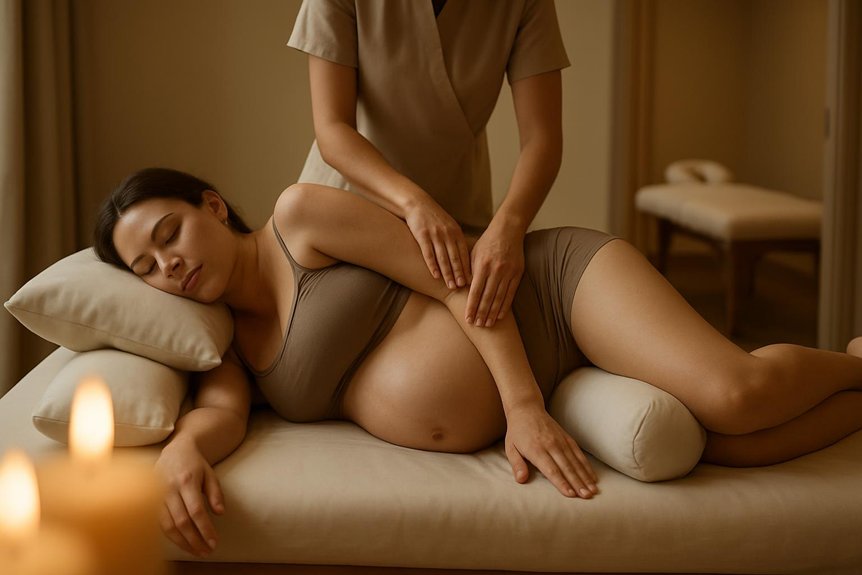
Prenatal massage and maternity massage usually refer to the same specialised treatment adapted for pregnancy, with differences more about clinic protocols than intent. What matters is therapist training, informed consent, and trimester-appropriate adjustments to pressure, positioning, and oils. Sessions typically use side-lying support with bolsters to avoid abdominal pressure and reduce dizziness. Massage is often booked from the second trimester, and medical clearance is advised for high-risk symptoms. More guidance on safety, benefits, and booking follows.
Prenatal vs Maternity Massage: Any Difference?
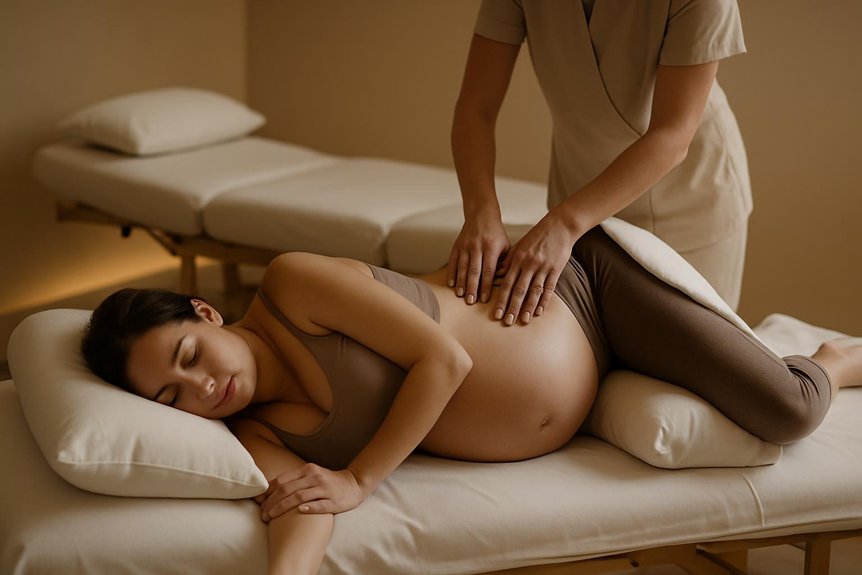
In practice, “prenatal massage” and “maternity massage” usually refer to the same specialised treatment—massage adapted for a person who is currently pregnant—with the key differences being terminology and clinic-specific protocols rather than intent.
Evidence-based practice prioritises comfort, circulation support, and safe positioning, while avoiding excessive pressure, overheating, and any work that feels unsettling or painful.
It’s also widely used to ease common discomforts like back pain and swelling while supporting overall relaxation through maternity massage benefits for expecting mothers.
At Spa & Massage clinics across London, therapists tailor pressure and pacing to trimester, symptoms, and medical history, and they encourage clients to check in often so care stays attuned and reassuring.
Some services labelled “prenatal” may emphasise earlier pregnancy screening; “pregnancy” may read more general. In both cases, the meaningful difference is training, consent, and individual adaptation, not the name alone.
What to Expect in a Pregnancy Massage
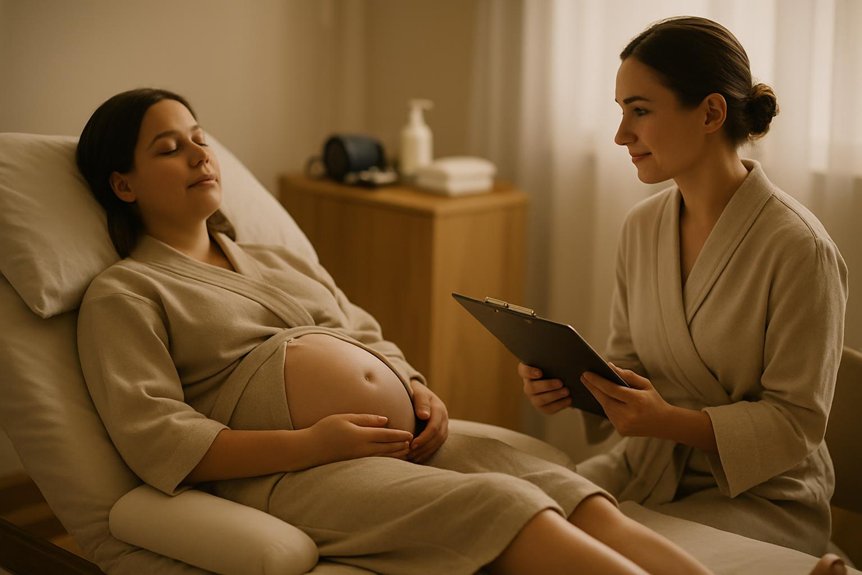
From the moment a client arrives, a maternity massage is structured around safety, comfort, and clear communication: the therapist completes a brief health and trimester check, discusses any symptoms (such as back or pelvic discomfort, swelling, headaches, or sleep issues), and agrees boundaries and pressure preferences before treatment begins.
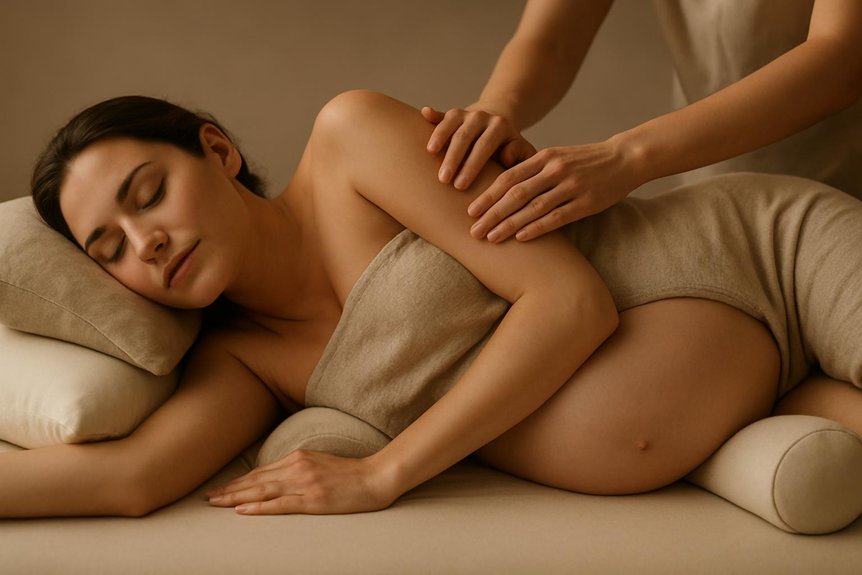
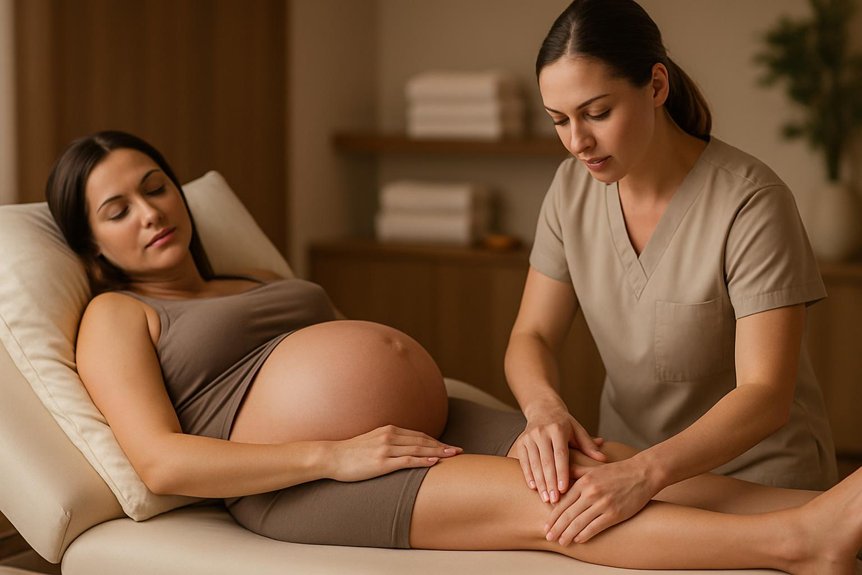
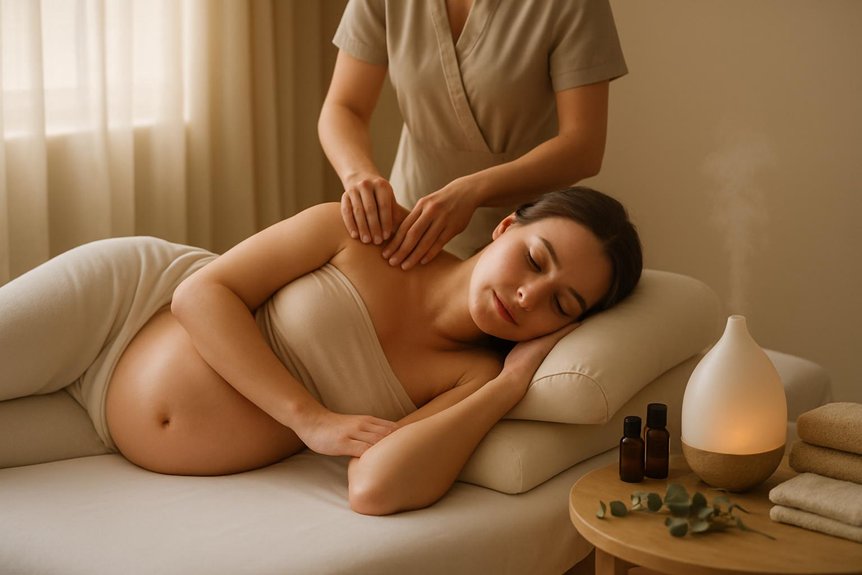
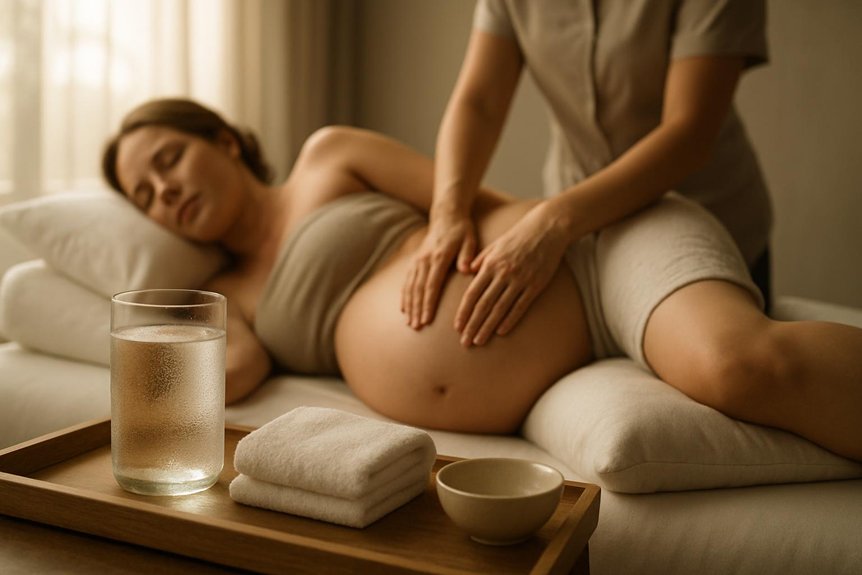
At Spa & Massage clinics in London, positioning is adapted with supportive bolsters so the body feels held and relaxed, often side-lying for ease and closeness. Strokes are typically slow and nurturing, with focused work through the neck, shoulders, lower back, hips, and legs while avoiding any painful pressure.
If oils are used, therapists select gentle blends and keep scent exposure minimal.
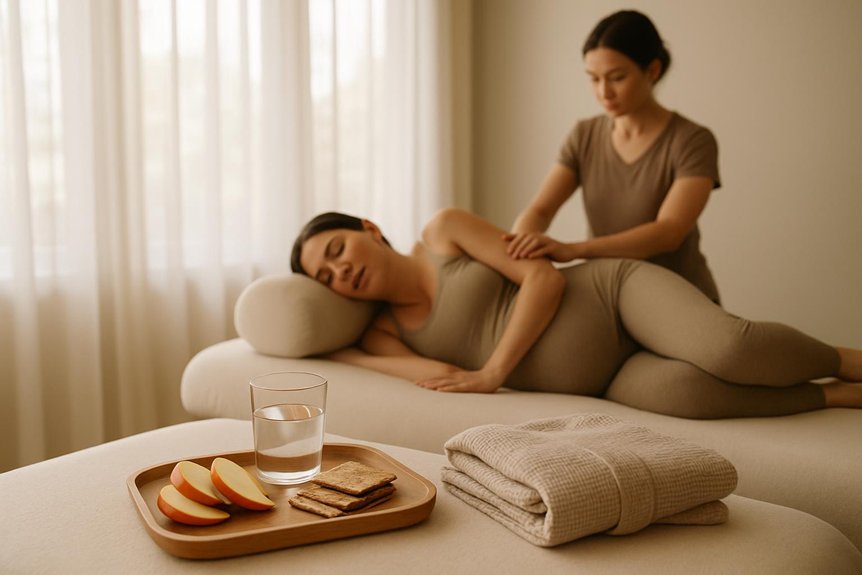
Afterward, clients are encouraged to rise slowly, hydrate, and note changes in comfort or sleep.
When Maternity Massage Is Safest to Book
After a maternity massage, noticing changes in comfort, swelling, and sleep can help guide the timing of the next session, but safety should determine when to book.
Most people are advised to schedule from the second trimester onward, once early pregnancy symptoms and miscarriage risk have typically eased; earlier appointments should be discussed with a midwife or GP.
Sessions are safest when pregnancy is uncomplicated, blood pressure is stable, and there is no bleeding, fever, severe headache, or sudden swelling.
Those with preeclampsia risk, placenta complications, thrombosis history, or high-risk pregnancies should seek medical clearance first.
At Spa & Massage London clinics, therapists complete a detailed consultation each visit and may suggest shorter, gentler sessions with supportive positioning to maintain closeness without strain.
Maternity Massage Techniques by Trimester
Maternity massage techniques are typically adjusted by trimester to reflect changing physiology and comfort needs, with safety considerations guiding pressure, positioning, and session length.
At Spa & Massage clinics, first-trimester modifications prioritise gentle, conservative work and careful screening, while second-trimester sessions commonly use side-lying positioning with supportive bolsters to reduce strain.
In the third trimester, the focus shifts toward comfort and circulation support, using cushioning and calm, soothing techniques that help manage common late-pregnancy tension.
First Trimester Modifications
In the first trimester, how massage is adapted matters because early pregnancy can bring heightened nausea, fatigue, breast tenderness, and a more sensitive nervous system.
At Spa & Massage, therapists keep pressure light-to-moderate, prioritising soothing, grounding strokes over deep work, and avoiding any techniques that provoke discomfort or dizziness. Sessions focus on relieving neck, shoulder, and low-back tension while maintaining steady, unhurried pacing to support a calm parasympathetic response.
Unscented or very low-aroma oils are preferred when scent sensitivity is present, and heat is kept gentle to prevent overheating.
Clients are encouraged to share any cramping, spotting, or sudden symptoms; massage is deferred and medical advice recommended in those cases.
Clear consent and close communication protect intimacy.
Second Trimester Positioning
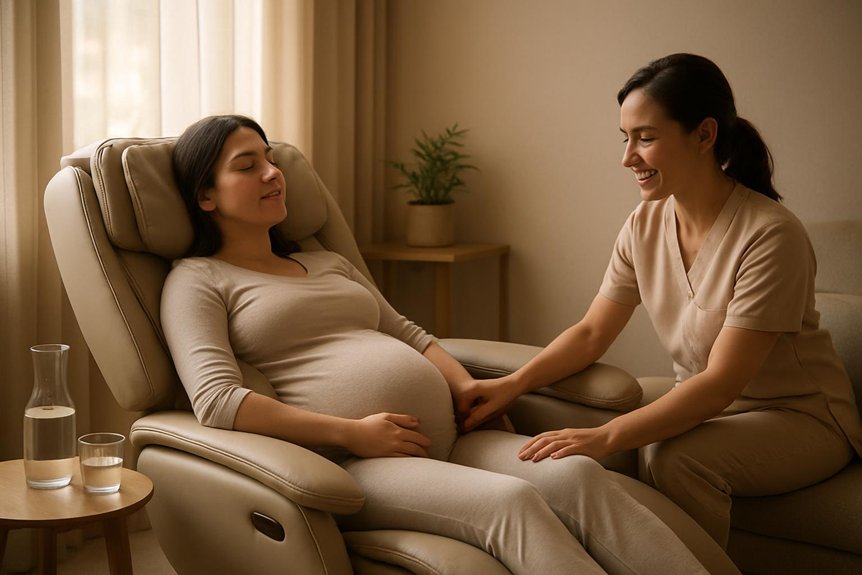
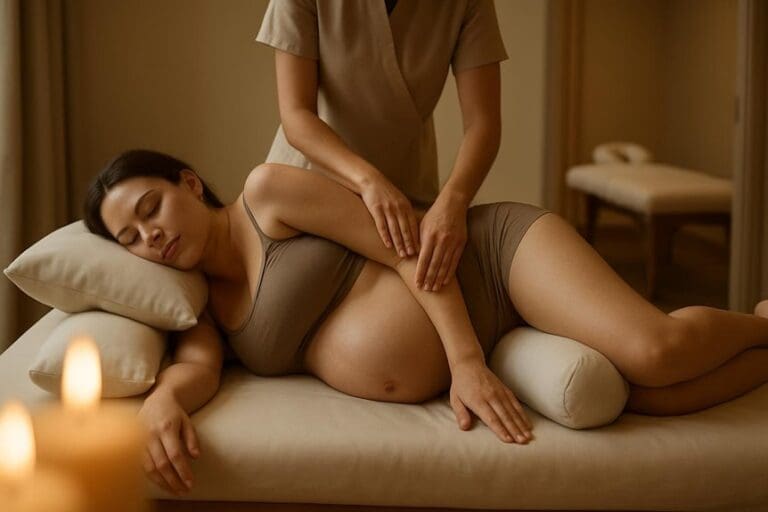
From around 13 weeks onward, positioning becomes the key safety consideration, because comfort needs change as the abdomen grows and prolonged lying flat can contribute to dizziness or nausea in some clients. Evidence-informed practice consequently favours side-lying or a supported semi-recline to reduce pressure on major blood vessels and keep breathing easy.
At Spa & Massage clinics across London, therapists use bolsters, pillows and careful draping to create a secure, close-fitting nest that feels private and soothing while maintaining full professional boundaries. Gentle torso rotation, a pillow between the knees, and support under the bump help keep hips and lower back neutral. Treatment pace is slower, with frequent check-ins, and any tingling, light-headedness, or breathlessness prompts immediate repositioning.
Third Trimester Comfort Focus
By the third trimester, comfort and circulation become the dominant clinical priorities, as a larger abdomen and increased fluid retention can make sustained positions and firm pressure less tolerable.
At Spa & Massage clinics across London, therapists prioritise side-lying support with cushions to protect the lower back and ease breathlessness, avoiding prolonged supine positioning.
Techniques shift toward slow, nurturing strokes, gentle myofascial release, and light-to-moderate work on hips, glutes, and upper back to reduce postural strain.
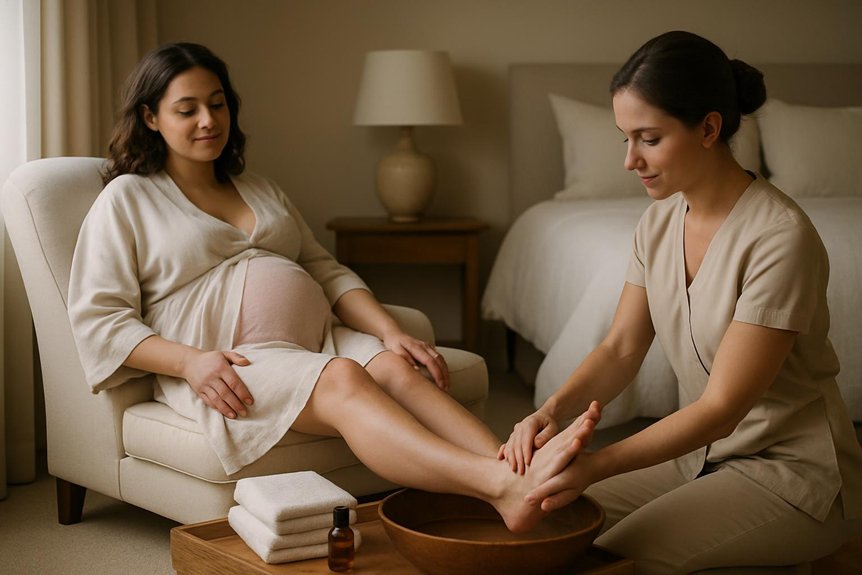
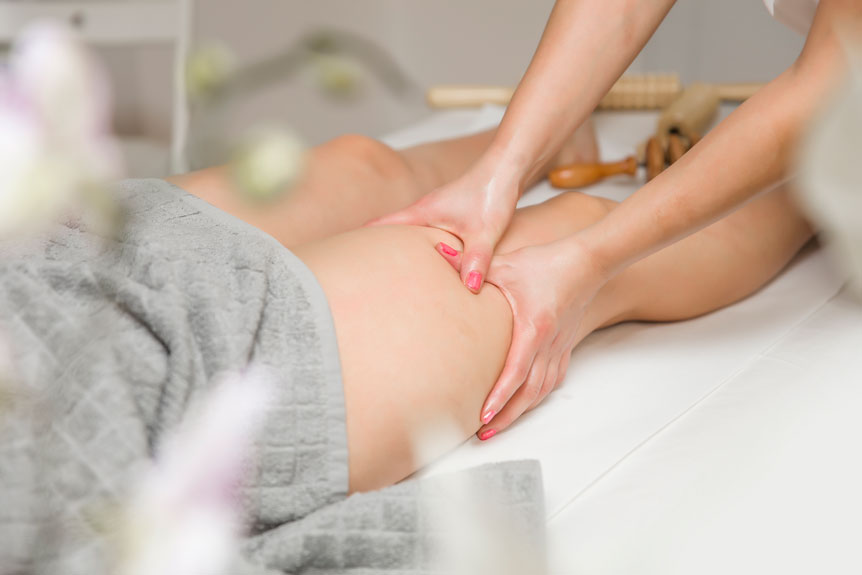
For swelling, they may use rhythmic, superficial strokes on legs and feet, keeping pressure delicate and checking for calf tenderness, heat, or redness that warrants medical review.
Unscented or pregnancy-appropriate aromatherapy oils are selected, with temperature, hydration, and pace adjusted to the client’s comfort.
Best Maternity Massage Positions (Side-Lying, Bolsters)
During pregnancy, positioning is a safety and comfort priority, and the most consistently recommended setup for massage is a supported side-lying posture using bolsters and pillows. This alignment helps avoid sustained pressure on the abdomen and reduces the chance of compressing major blood vessels, particularly later in pregnancy.
At Spa & Massage clinics across London, therapists typically place a bolster under the head and neck, a pillow between the knees and ankles, and supportive padding along the back or under the bump to create a close, cradled feel. A semi-reclined position can suit clients who prefer face-to-face reassurance, with wedges supporting the upper body.
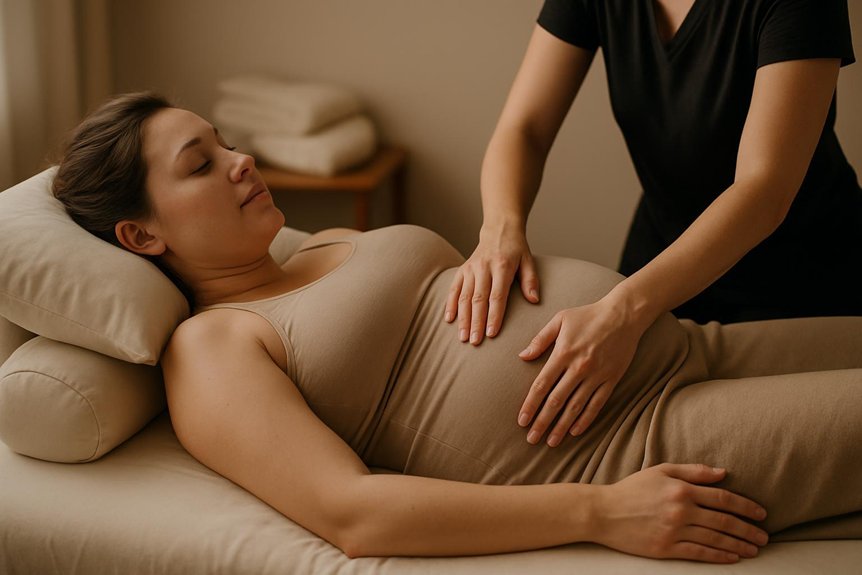
Prone and flat supine positions are generally limited or avoided, depending on trimester and comfort.
Maternity Massage Benefits: Pain Relief, Sleep, Stress
Often, a well-adapted maternity massage supports three of the most common wellbeing goals in pregnancy—reducing musculoskeletal pain, improving sleep quality, and easing stress—while prioritising comfort and clinical safety.
Gentle, targeted work can relieve low-back, hip, neck, and shoulder tension created by postural change and extra load, helping day-to-day movement feel easier.
Many clients also notice better sleep: slower, diaphragmatic breathing, soothing rhythm, and supportive side-lying positioning can downshift the nervous system and reduce night-time restlessness.
Stress relief is both physiological and emotional; calm touch and a quiet room can lower perceived anxiety and encourage a sense of being held and cared for. At Spa & Massage London clinics, therapists tailor pressure, bolsters, and oils to individual comfort and scent sensitivity.
When to Avoid Maternity Massage (and Get Medical Advice)
A safe maternity massage begins with clear boundaries: there are situations where massage should be postponed and medical advice sought first.
Massage should be avoided with vaginal bleeding, leaking fluid, severe abdominal pain, fever, reduced fetal movements, pre‑eclampsia symptoms (severe headache, visual changes, sudden swelling), or suspected preterm labour.
Caution is also advised with a history of blood clots, placenta praevia, uncontrolled high blood pressure, significant heart or kidney disease, or new shortness of breath.
Any calf pain, warmth, or one‑sided swelling warrants urgent assessment.
At Spa & Massage, therapists ask screening questions and adapt positioning and pressure; however, medical clearance is requested when risk factors are present.
In uncertain cases, choosing rest, hydration, and reassurance can be the most caring touch.
How to Choose a Maternity Massage in London
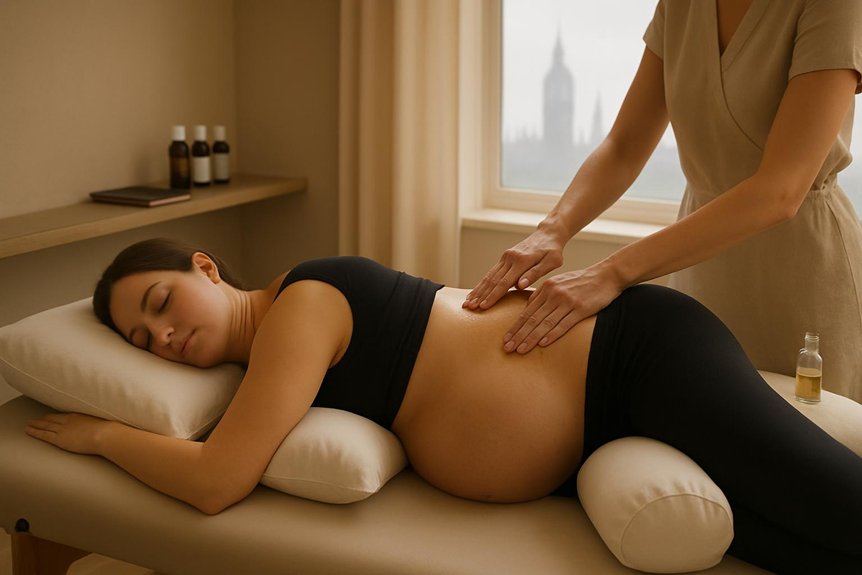
How can someone in London choose a maternity massage that is both calming and clinically sensible? They should prioritise a clinic with therapists trained in pregnancy care, clear intake screening, and a willingness to liaise with a midwife or GP when needed.
Evidence-informed practice means adapting pressure, avoiding contraindicated areas, and using safe positioning with supportive bolsters for comfort and circulation.
A good provider will ask about trimester, symptoms (pelvic pain, swelling, sciatica), medications, and any complications flagged previously.
They should offer choices that feel intimate yet respectful: gentle aromatherapy (with pregnancy-appropriate oils), focused relief for back and hips, or soothing reflexology.
Spa & Massage offers maternity massage across six London locations, tailoring every session to individual needs in a tranquil, private setting.
How to Prepare and What to Do After Your Massage
For prenatal or maternity massage, safe outcomes are supported by practical preparation before the appointment, clear communication during the session, and thoughtful aftercare to aid recovery.
At Spa & Massage clinics across London, therapists encourage clients to share gestational stage, symptoms, and any medical guidance, and they use appropriate positioning and pressure to prioritise comfort and circulation.
The following guidance outlines what to do before arrival, what to expect during the massage, and simple aftercare steps—such as hydration, gentle movement, and monitoring how the body responds—to help clients feel supported and well.
Before Your Appointment
When is the best time to book, and what should be done beforehand to keep a prenatal (pregnancy) massage both comfortable and safe? At Spa & Massage, many clients book from the second trimester onwards, and are advised to check with their midwife or GP if there are complications (e.g., pre‑eclampsia, bleeding, clotting risk, or severe swelling).
Before arrival, it helps to eat lightly, hydrate, and allow time for an unhurried journey to any London clinic. Clients should share gestational age, symptoms, medications, and any pelvic or back pain when booking, so the session can be tailored safely.
Afterward, gentle movement, extra water, and a quiet evening support recovery; soreness, if any, should be mild and short‑lived.
During The Massage
During a prenatal (pregnancy) massage at Spa & Massage, comfort and clinical safety guide every decision: the therapist begins by confirming gestational age, current symptoms, and any medical guidance, then positions the client with supportive bolsters—typically side‑lying rather than face‑down—to reduce pressure on the abdomen and optimise circulation.
Pressure is adjusted to preference and trimester, favouring slow, grounding strokes over intense deep work on legs or abdomen. Fragrance‑free or pregnancy‑appropriate oils are used, and the room is kept warm and quiet to support relaxation. The client is encouraged to share sensations, nausea, dizziness, or tenderness immediately; pauses and repositioning are normal.
Focus commonly includes back, hips, shoulders, and feet, easing muscular strain while preserving a safe, intimate sense of ease.
Aftercare And Recovery
After a prenatal (pregnancy) massage, recovery tends to be gentle but benefits are best maintained with simple, safety‑led aftercare. At Spa & Massage, therapists advise slow shifts off the couch, a few minutes of calm breathing, and water to support circulation and reduce post‑treatment light‑headedness. Light, nourishing food and avoiding alcohol or overheating (hot baths/saunas) are recommended, especially in later trimesters.
Preparation helps too: arriving well‑hydrated, sharing current symptoms, and noting any medical guidance.
After the session, mild soreness can occur; a warm shower and gentle stretching often ease it. If dizziness, bleeding, reduced fetal movement, or persistent pain occurs, clients are urged to contact their midwife or GP promptly and pause further treatments.
Conclusion
Prenatal and maternity massage are largely the same service, with terminology mainly indicating timing and how adaptations change across trimesters. Evidence-informed practice prioritises screening, specialist training, appropriate positioning, and pressure modification to support comfort while minimising risk. When symptoms, medical history, or complications are present, consultation with a midwife or clinician should guide booking. Like a cautious air-traffic controller, a skilled therapist monitors cues throughout, helping many clients leave with less pain, improved sleep, and calmer mood.