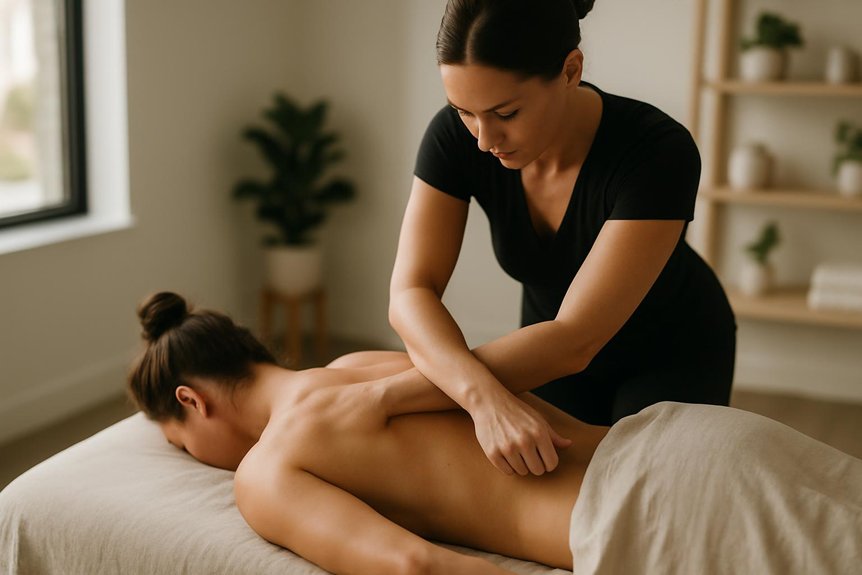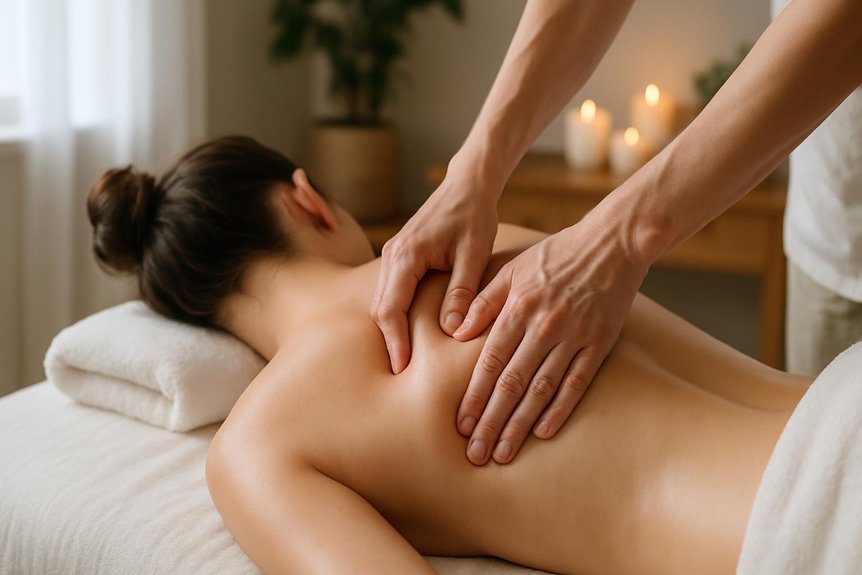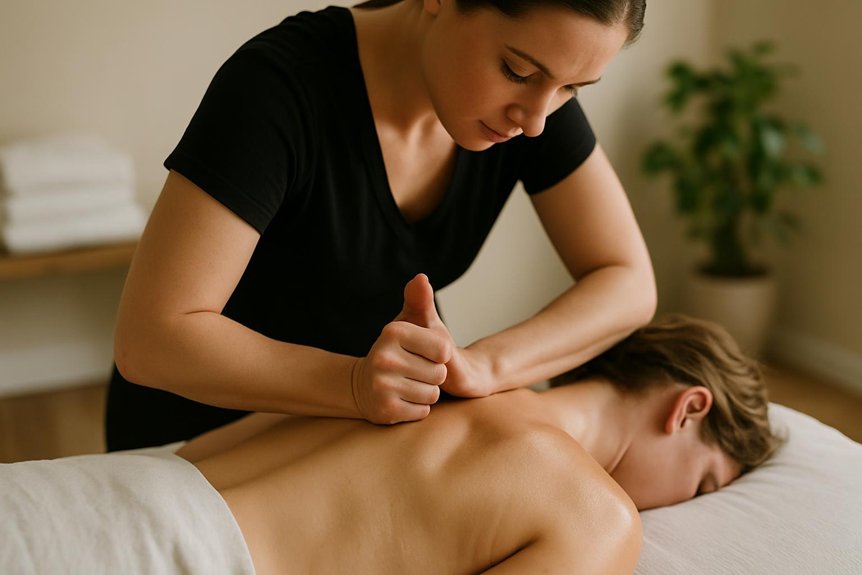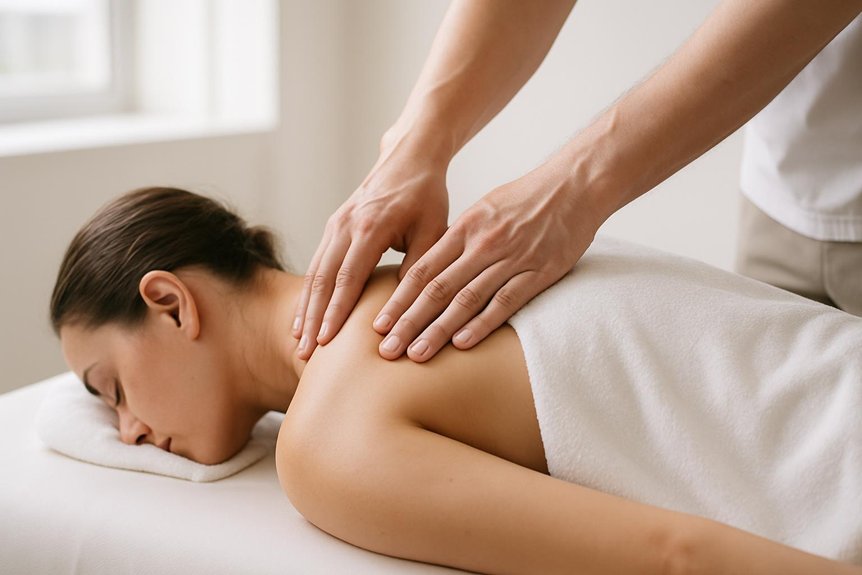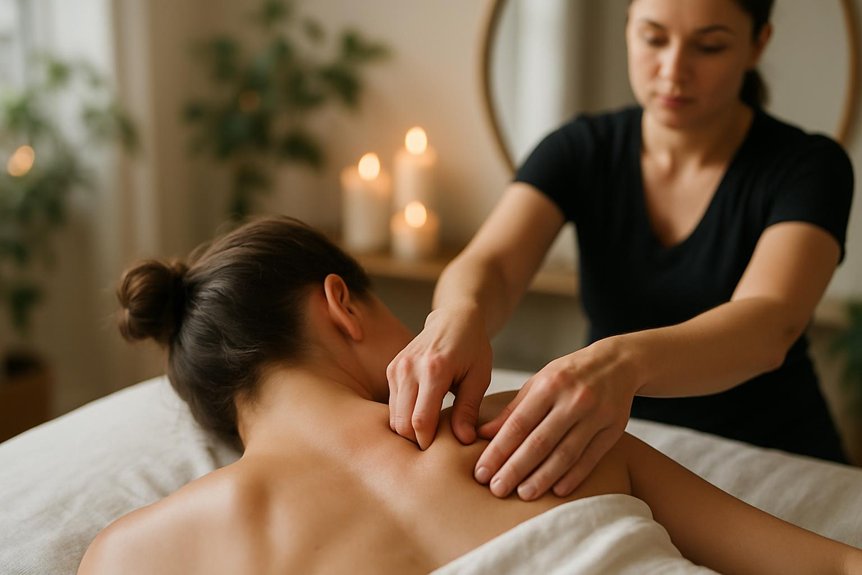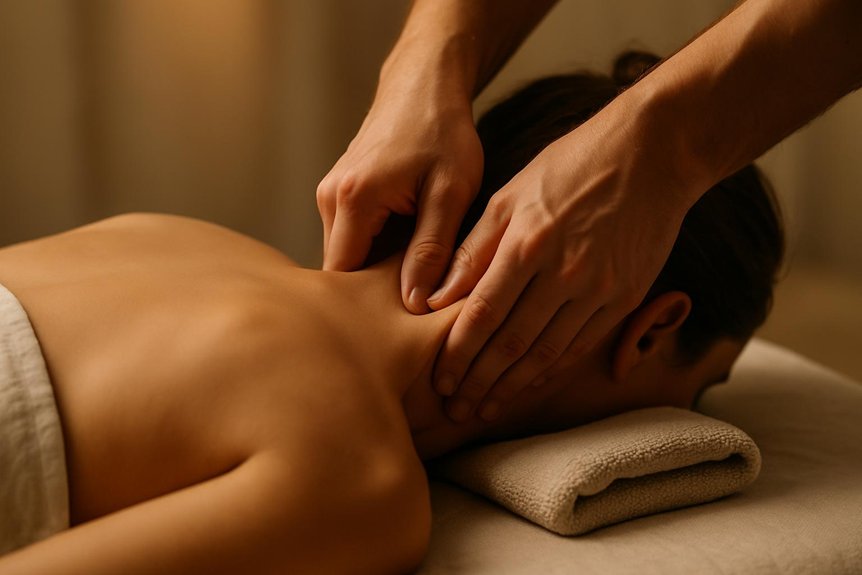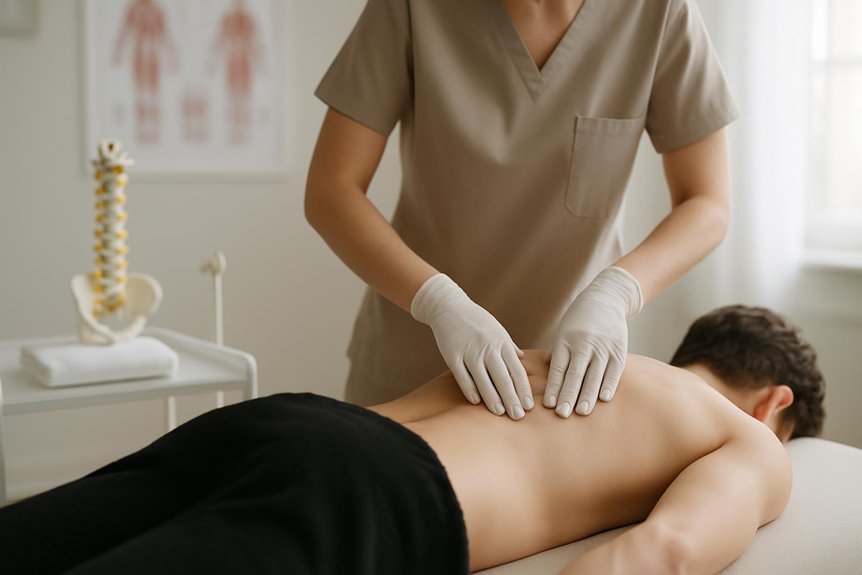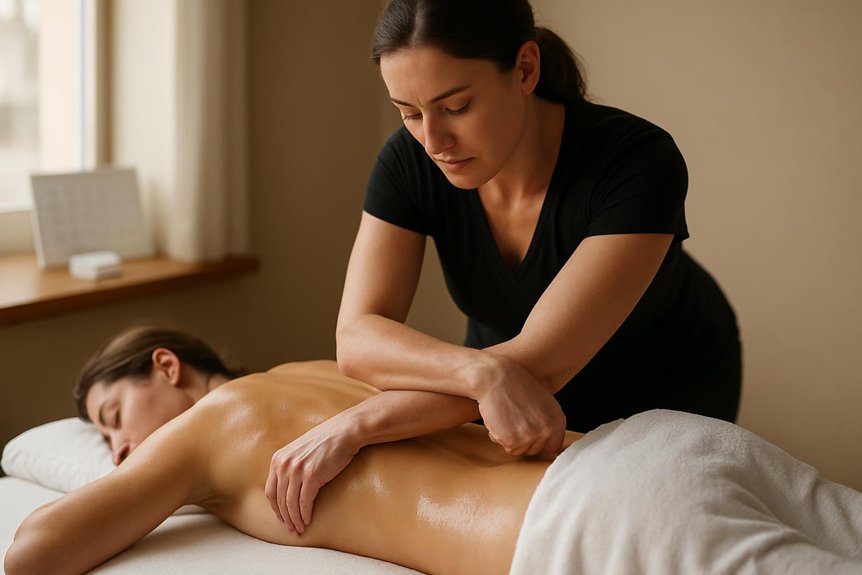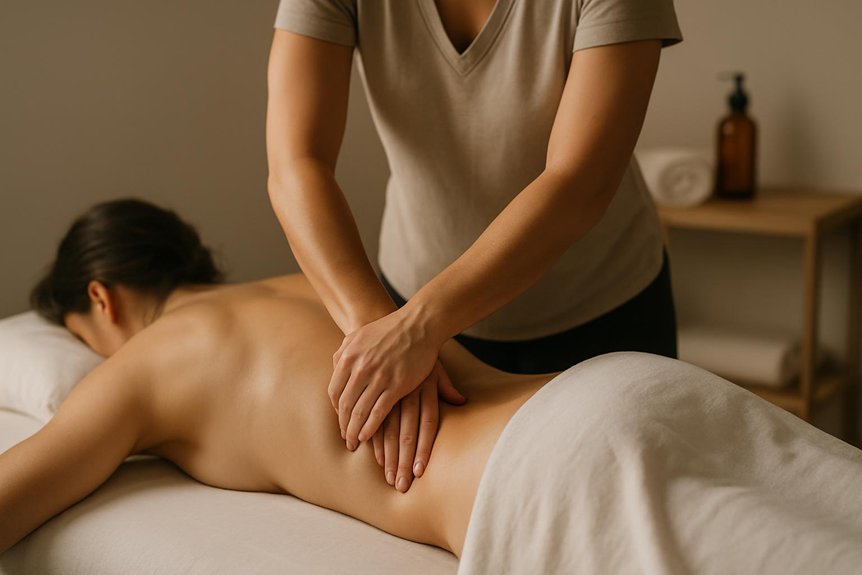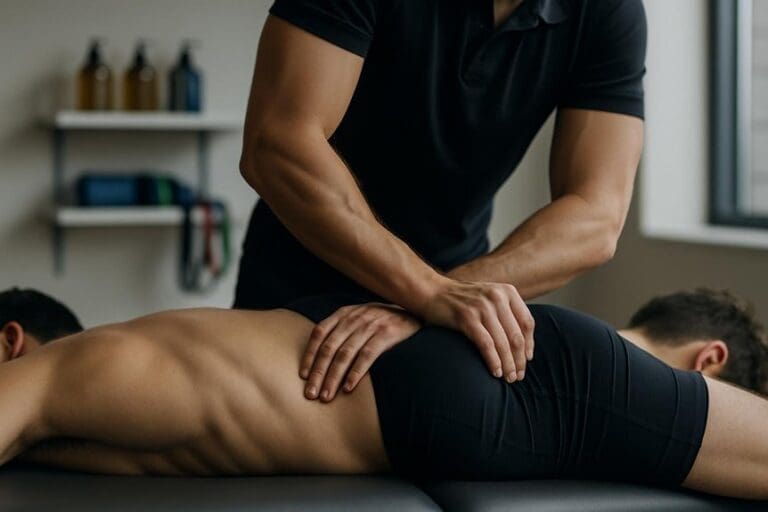
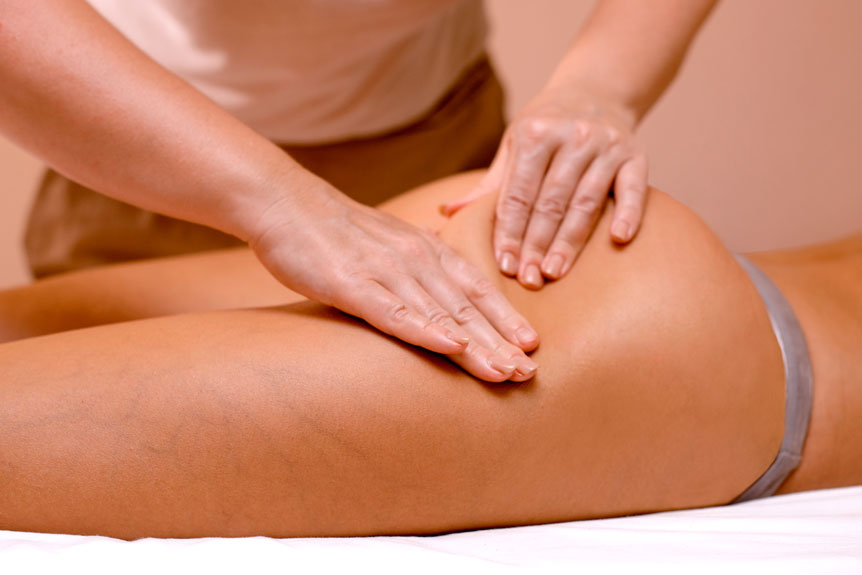
It can help hip pain when symptoms are driven by myofascial overload, muscle guarding, and soft‑tissue restriction rather than fracture, severe joint pathology, or systemic inflammatory disease. It best suits dull ache, tightness, and load‑related discomfort that eases with warmth and movement. Slow, graded compressions, stripping, and trigger‑point work can reduce nociceptive input and restore extensibility in gluteals, hip flexors, adductors, and deep rotators. Key cautions and typical session dosing are outlined next.
Can Deep Tissue Massage Help Hip Pain?
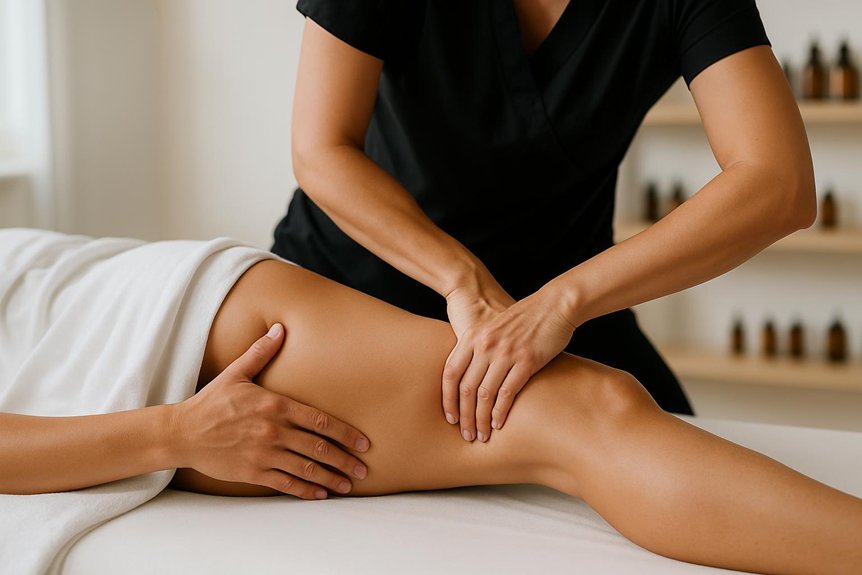
In many cases, it can help reduce hip pain when symptoms are driven by soft-tissue overload, muscle guarding, or myofascial restriction rather than acute fracture, severe joint pathology, or systemic inflammatory disease.
By applying slow, graded pressure, a therapist can modulate nociceptive input, improve local circulation, and restore extensibility in the gluteals, hip flexors, adductors, and deep rotators. Deep tissue work often uses slow, firm pressure to reach deeper layers of muscle and fascia, which can be especially helpful when hip discomfort is linked to chronic tightness and adhesions. At Spa & Massage clinics, sessions typically combine sustained compressions, stripping along fibre direction, and targeted myofascial release, with careful pacing to keep the client comfortable and closely held.
Treatment is often paired with breath cueing and gentle passive range-of-motion to reduce protective tension. Many clients report easier walking, looser hips, and improved sleep after a course.
Which Hip Pain Suits It?
It is most appropriate for hip pain patterns linked to soft-tissue dysfunction—typically a dull ache, tightness, or load-related discomfort that eases with warmth and movement rather than constant, sharp, or systemic pain. It tends to suit lateral hip tightness from overworked gluteus medius/minimus, deep buttock soreness linked to piriformis and rotators, and front-of-hip “pinch” sensations associated with iliopsoas or TFL restriction.
It is also appropriate when stiffness follows running, cycling, desk work, or strength training, and when tenderness is reproducible with pressure in muscles rather than within the joint. At Spa & Massage clinics across London, therapists prioritise cases where symptoms change with positioning and where touch feels productively “good sore,” not alarming. Sudden trauma, night pain, fever, or neurological symptoms warrant medical review first.
How Does Intensive Tissue Massage Reduce Hip Pain?
It can reduce hip pain by applying slow, targeted pressure to release hypertonic hip musculature and adjacent fascia that can restrict joint mechanics.
At Spa & Massage clinics, therapists typically focus on structures such as the gluteals, iliopsoas, TFL, and adductors to improve local circulation, reduce nociceptive input, and restore tissue glide.
These effects commonly support better hip mobility and more efficient movement patterns, which may lessen pain during daily activity.
Releasing Tight Hip Muscles
Through targeted, high-pressure manual techniques, intensive tissue massage can reduce hip pain by decreasing hypertonicity in key stabilising muscles (e.g., iliopsoas, TFL/ITB complex, gluteus medius/minimus, piriformis) that otherwise compress joint structures and irritate surrounding nerves.
At Spa & Massage, therapists assess tone, tenderness, and referral patterns, then apply slow stripping strokes, sustained cross-fibre friction, and precise trigger-point compression to soften adhesions and reduce protective guarding.
Pressure is gradually layered to remain tolerable while reaching deeper fibres, supporting parasympathetic downshift and improved muscle length-tension balance.
Hands-on release of the hip flexors and lateral hip often reduces anterior pinching and outer-hip ache, while piriformis work may ease sciatic-like symptoms.
Sessions are tailored to comfort, privacy, and informed consent.
Improving Circulation And Mobility
By enhancing local blood flow and restoring tissue glide, intensive tissue massage can reduce hip pain by addressing ischaemic, stiff soft tissues that limit joint motion.
Sustained, slow-pressure strokes along the gluteals, iliopsoas, TFL, and adductors can improve microcirculation, supporting oxygen delivery and metabolite clearance linked with soreness and guarding.
Myofascial release and cross-fibre friction can reduce adhesions, allowing smoother femoral head movement and less compressive load on sensitised structures.
At Spa & Massage clinics across London, therapists combine specific trigger-point compression with gentle hip mobilisation and breathing cues to downshift protective tone.
Many clients notice warmer hips, easier stride length, and reduced pinching when sitting.
Aftercare commonly includes hydration and brief walking to maintain perfusion and mobility gains.
Which Hip Muscles Does Deep Tissue Target?
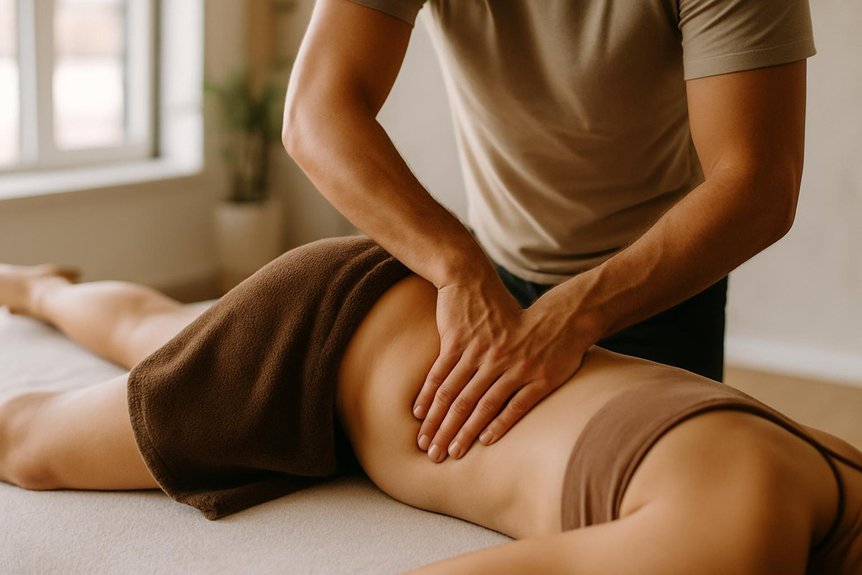
Deep tissue work for hip pain typically targets the gluteal complex (gluteus maximus, medius, and minimus) to reduce myofascial restriction and improve load transfer through the pelvis.
It also applies sustained, specific pressure to release hip flexors such as iliopsoas, rectus femoris, and tensor fasciae latae, which commonly contribute to anterior hip tension and limited extension.
At Spa & Massage clinics, therapists further address the deep external rotators (including piriformis and obturator muscles) with controlled, technique-focused compression to modulate trigger points and improve rotational control.
Glute Muscles Focus
Hip–glute mechanics are a primary focus when intensive tissue massage is used to address hip pain, because the gluteal complex strongly influences pelvic stability and femoral alignment. Therapists often prioritise gluteus medius and minimus to reduce lateral hip strain and improve load transfer during walking and single‑leg stance.
In Spa & Massage clinics, treatment commonly uses slow, specific pressure and cross‑fibre work along the posterior iliac crest and greater trochanter attachments, followed by sustained compressions into gluteus maximus to ease protective tone. Trigger‑point techniques may be applied to the deep lateral fibres, with careful pacing, clear consent, and draping that maintains comfort and privacy. Many clients report a warmer, looser hip and smoother stride after focused glute work and gentle hydration.
Hip Flexors Release
In many cases of hip pain, restricted hip flexors contribute to anterior pelvic tilt, reduced hip extension, and compensatory lumbar or groin loading. Deep tissue work commonly targets iliopsoas (as accessible), iliacus, rectus femoris, sartorius, and tensor fasciae latae, aiming to reduce tone and improve glide.
At Spa & Massage clinics, therapists apply slow, sustained pressure and specific stripping along the anterior thigh and proximal hip, then use gentle pin-and-stretch to restore length without provoking guarding. Palpation guides pressure around sensitive neurovascular structures, with clear consent and continuous check-ins to maintain comfort and a sense of safety.
Treatment is typically paired with diaphragmatic breathing and supported hip extension positioning, encouraging down‑regulation and better pelvic control between sessions.
Deep Rotators Targeting
Within the posterior hip capsule, intensive tissue massage commonly targets the short external rotators—piriformis, obturator internus and externus, superior and inferior gemelli, and quadratus femoris—because excessive tone or adhesions here can reduce femoral head glide and contribute to buttock pain or pseudo‑sciatic referral patterns.
At Spa & Massage, therapists typically work with slow, sinking pressure and small pin‑and‑stretch strokes, positioning the hip in gentle flexion and internal rotation to lengthen the rotators while protecting the sciatic nerve.
Palpation guides load to the muscle belly and tendon attachments along the greater trochanter and ischial spine regions, avoiding sharp, radiating symptoms.
Myofascial release around the gluteus medius/deep fascia is often added to improve rotational control and ease intimate, close-range movement.
When Can It Worsen Hip Pain?
Although intensive tissue massage can be effective for muscular contributors to hip pain, symptoms may worsen when excessive pressure is applied to an acutely inflamed or recently injured area, when forceful work aggravates neural structures (such as sciatic irritation), or when the primary driver is non-muscular pathology (including hip joint arthritis, labral injury, or bursitis) that is not suited to deep compression.
Over-treatment can also provoke post-treatment guarding: sustained elbow pressure into gluteal trigger points, aggressive stripping of the TFL/ITB, or compressing the anterior hip may amplify tenderness and referred pain.
In Spa & Massage clinics, therapists screen for red flags (night pain, fever, unexplained swelling) and adapt: lighter, slower strokes, shorter holds, careful side-lying positioning, and conservative depth guided by breath and feedback.
Persistent flare-ups warrant clinical assessment promptly.
How Many Deep Tissue Sessions for Hip Pain?
After pressure and technique are calibrated to avoid aggravating inflamed tissue, neural sensitivity, or joint-driven pathology, the next practical question is dosage—how many deep tissue sessions are typically required to meaningfully reduce hip pain.
In Spa & Massage clinics, an initial course of 3–6 sessions is commonly trialled, spaced weekly or fortnightly, to assess change in pain, range, and sleep tolerance.
For acute overuse or myofascial irritability, 1–3 sessions may settle protective guarding; persistent hip pain linked to longstanding load patterns often needs 6–10 sessions with periodic re‑evaluation.
Dosage is adjusted to tissue response: post‑treatment soreness beyond 48 hours suggests reducing depth or frequency.
Progress is tracked via palpation tenderness, hip rotation symmetry, and provocation tests.
What to Do Between Sessions for Hip Pain?
Often, the change achieved in a deep tissue session is consolidated—or lost—by what happens in the following 48–72 hours, so between-session management should prioritise load control, symptom-calming inputs, and targeted mobility rather than aggressive stretching or self-massage.
Spa & Massage therapists typically advise a “comfort zone” approach: keep walking and daily tasks, but reduce hills, long strides, deep squats, or prolonged sitting if symptoms flare.
Use brief heat for stiffness or 10–15 minutes of cold for sharp, reactive pain.
Perform gentle hip flexor and glute mobility (pain ≤3/10), plus isometric glute bridges or side-lying abduction holds to support tendon load.
Sleep with a pillow between knees, and hydrate; many clients add aromatherapy massage for down-regulation and soothing.
Conclusion
It may help hip pain when symptoms are primarily myofascial—driven by muscle overuse, trigger points, and restricted tissue glide—rather than acute injury or inflammatory joint disease. By applying slow, targeted pressure to the glutes, hip flexors, and lateral thigh, it can reduce protective tone and improve range of motion. Used appropriately, it can feel like a reset button for the entire pelvis. Outcomes improve with staged sessions, movement retraining, and symptom-guided aftercare.