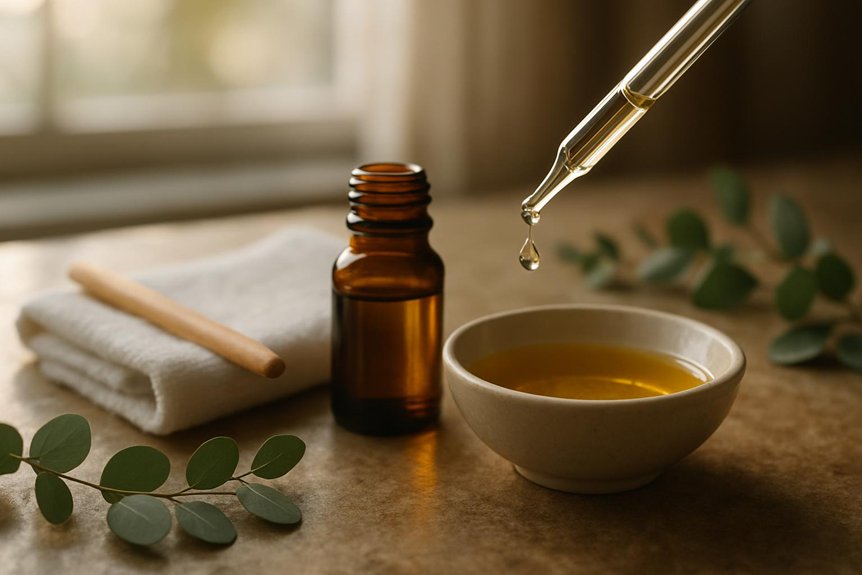
For aromatic massage, tea tree oil is typically diluted to 1–2% in a carrier oil to balance aroma with skin tolerance: about 2–4 drops per 10 ml for 1% and 4–8 drops per 10 ml for 2% (roughly 20 drops/ml). It should be mixed in a clean glass bottle, capped, and gently rolled to blend. A 24–48 hour patch test is advised, and lower strengths are used for face and sensitive areas. More guidance follows.
Tea Tree Oil Dilution Ratios for Massage (Drops per 10ml/30ml)
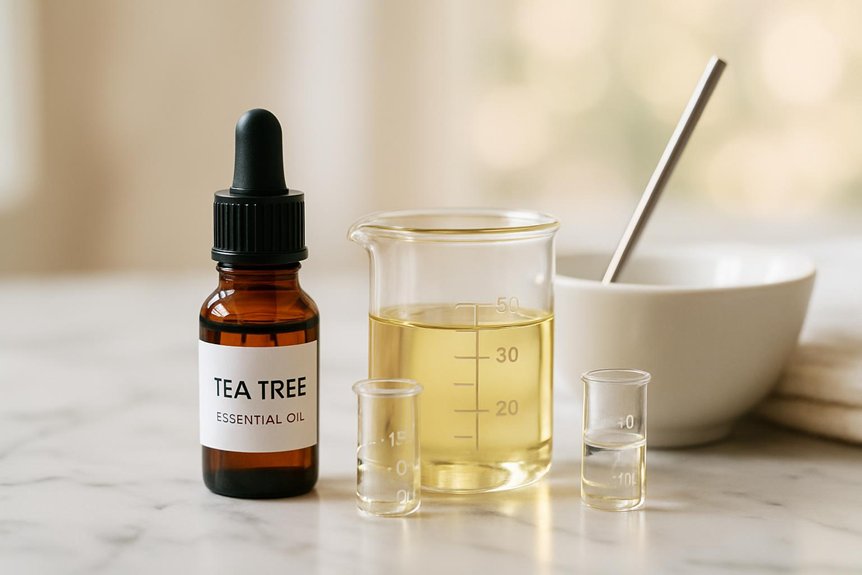
For aromatic massage, tea tree essential oil is typically diluted to around 1–2% to support skin tolerance while still providing a noticeable aroma.
In practical terms, that equates to about 2–4 drops per 10ml of carrier oil for a 1% blend, or 4–8 drops per 10ml for 2% (assuming ~20 drops per ml).
For a 30ml bottle, the same ratios are 6–12 drops at 1% and 12–24 drops at 2%.
At Spa & Massage, therapists blend fresh for each client, starting lower for sensitive-feeling skin and increasing only if the scent and sensation remain comfortable.
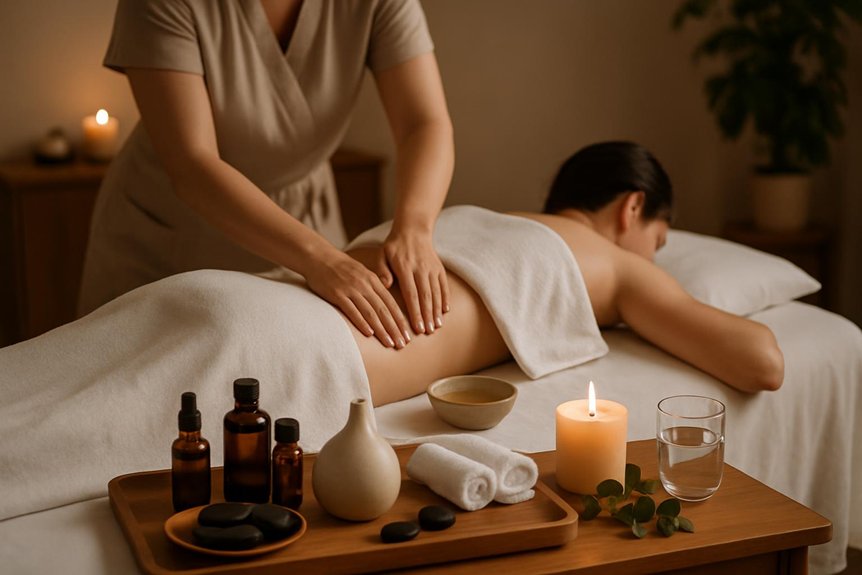
The oil is warmed in the hands before slow, close-contact strokes, supporting relaxation while keeping dilution consistent.
These dilution guidelines pair well with aromatherapy massage practices designed to help you relax and heal.
Safety Limits for Tea Tree Oil Dilution (Who Should Avoid It)
Staying within a 1–2% blend is a practical starting point, yet tea tree oil can still irritate or sensitise skin, so clear safety limits matter.
Many therapists cap at 1% for facial work, and avoid use on broken, inflamed, freshly shaved, or newly waxed skin.
A patch test (24 hours) is prudent, especially for eczema, dermatitis, or fragrance allergy history.
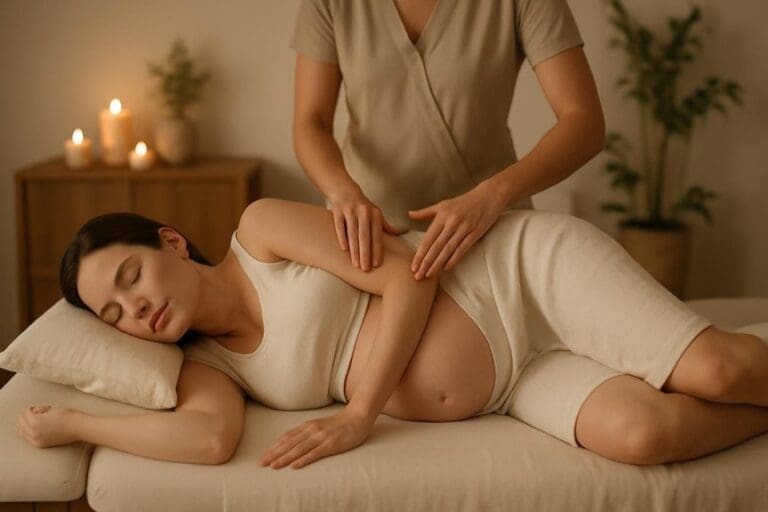
At Spa & Massage, therapists screen for contraindications during consultation: pregnancy (particularly first trimester), breastfeeding, and clients under 12 are typically advised to avoid tea tree unless cleared by a clinician.
It should be avoided with known tea tree allergy, asthma triggered by strong aromas, or when taking multiple topical prescriptions.
Never ingest; keep away from pets, especially cats.
Best Carrier Oils for Tea Tree Oil Dilution Blends
For tea tree oil dilution blends in aromatic massage, carrier oil choice should be guided by skin tolerance, desired slip, absorption to support safe, comfortable treatment.
In Spa & Massage clinics, jojoba oil is often selected for its skin-balancing feel, sweet almond for a smooth glide suited to longer strokes, and grapeseed for a lighter texture that absorbs quickly.
These options help therapists tailor the blend to the client’s skin type and treatment goals while keeping irritation risk as low as reasonably possible.
Jojoba Oil Balance
A well-balanced carrier oil can make tea tree oil blends safer and more comfortable on the skin, and jojoba oil is often chosen for this role because its wax-ester profile closely resembles natural sebum. This similarity helps support the skin barrier and can suit clients who feel oily yet dehydrated, or easily sensitised. It is also relatively stable against oxidation, which supports hygiene and consistent aroma over time.
At Spa & Massage clinics across London, therapists may select jojoba when a close, calming skin feel is preferred without heaviness, especially for back, chest, or neck work where blemish-prone areas are common. For safety, they keep tea tree dilution low (typically 0.5–1% for leave-on massage), patch test when needed, and avoid broken skin.
Sweet Almond Glide
Jojoba’s skin-sebum similarity suits clients who want a light, balanced feel; sweet almond oil, by contrast, is typically chosen when a smoother, longer glide is needed for full-body aromatic massage.
At Spa & Massage clinics across London, therapists select it for unhurried strokes that support relaxation and close, comforting contact without frequent reapplication.
For tea tree dilution, a conservative approach protects sensitive skin: typically 1% for most adults (about 2 drops per 10 ml carrier), and 0.5% for reactive skin or first-time clients.
A patch test is recommended, and it is avoided for clients with known nut allergy. It should not be used on broken skin; eyes and mucous membranes are kept clear. Always stop if stinging occurs.
Grapeseed Light Absorption
With its fast, light absorption profile, grapeseed oil is often selected as a carrier for tea tree dilution when a non-greasy finish and quick skin feel are priorities. Its thinner texture supports smooth, close contact during aromatic massage while reducing lingering residue, which many clients prefer for daytime appointments in London.
At Spa & Massage clinics, therapists typically use conservative dilution (about 1% for facial or sensitive areas, up to 2% for body) and recommend patch testing, especially for reactive skin. Grapeseed oil’s low scent helps tea tree remain perceptible without overwhelming the senses. Because tea tree can irritate when overused, precise measuring and avoiding broken skin are emphasized.
For extra nourishment, it may be blended with a richer carrier while keeping the overall dilution within safe limits.
How to Measure and Mix Tea Tree Oil for Massage
For safe, consistent results, tea tree essential oil should be measured in drops and diluted by percentage into a neutral carrier oil rather than applied neat.
In Spa & Massage clinics, therapists typically aim for 1% dilution for full‑body aromatherapy and up to 2% for shorter, targeted work, adjusting to skin sensitivity and the desired closeness of the experience.
As a guide, 1% equals about 6 drops per 30 ml carrier; 2% equals about 12 drops per 30 ml.
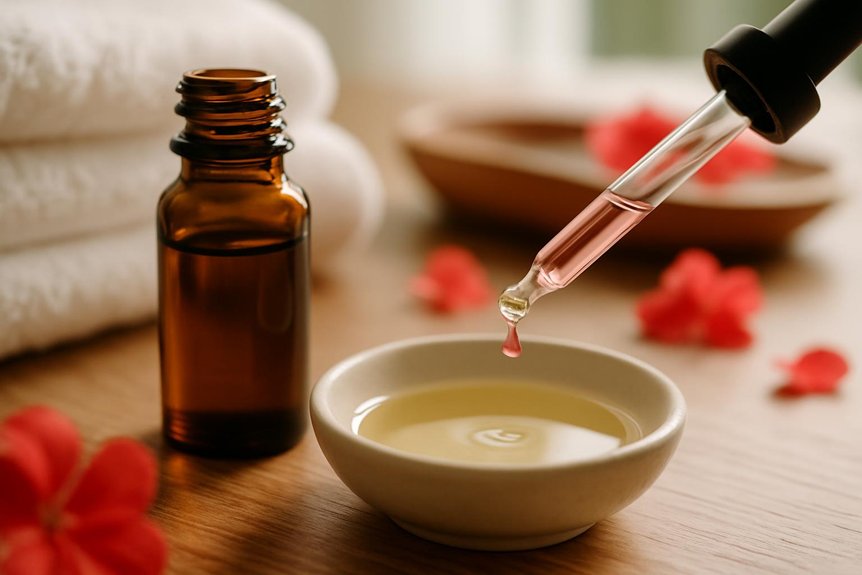
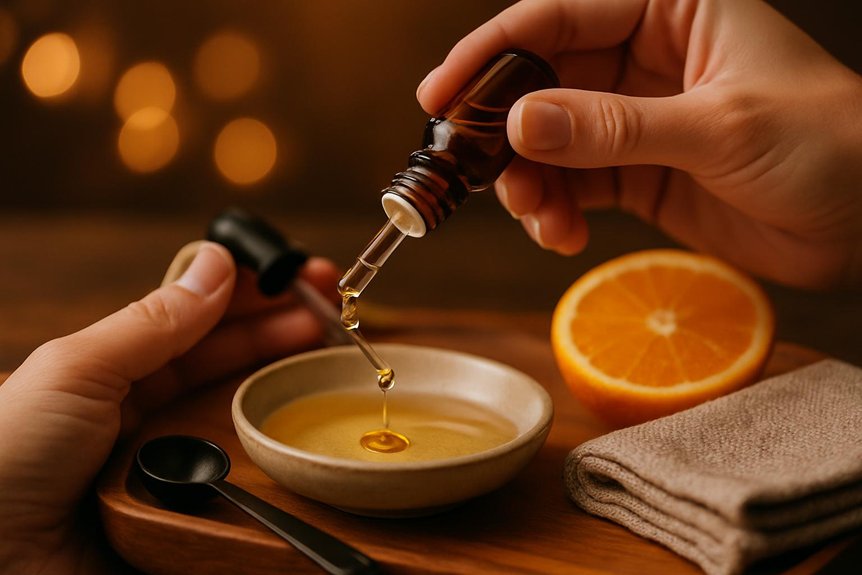
Measure the carrier into a clean glass bowl or bottle, add drops slowly, then cap and roll between palms to blend without aerating.
Label the mix with date and strength, and prepare small batches to keep the aroma fresh.
Patch Testing Your Tea Tree Oil Dilution Before Use
Patch testing should always be completed before using a tea tree oil massage blend, because even properly diluted essential oils can trigger irritation or allergic contact dermatitis in some people.
At Spa & Massage, therapists prioritise this step to protect sensitive skin and guarantee a comfortable, trusting treatment experience.
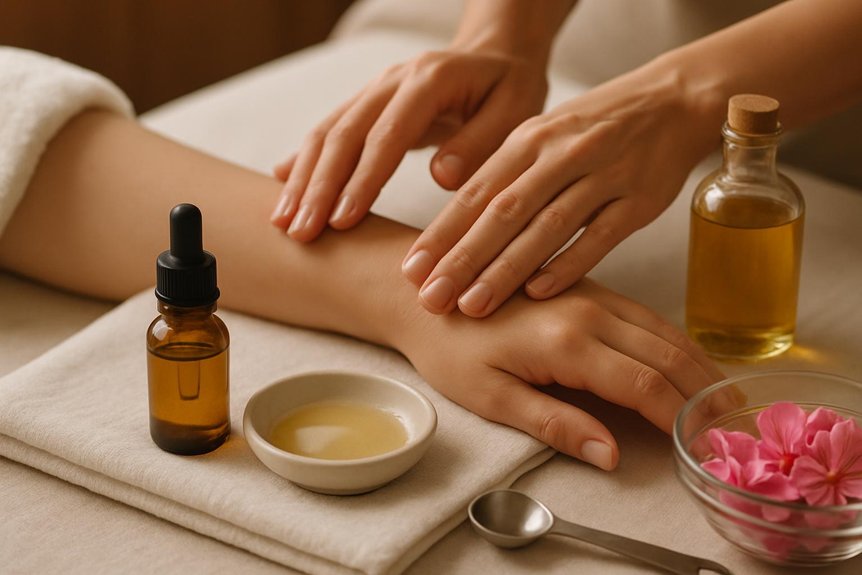
A small amount of the diluted blend should be applied to clean skin on the inner forearm or behind the ear, then covered and left undisturbed.
The area should be checked at 24 and 48 hours for redness, itching, burning, swelling, or blistering.
If any reaction appears, the blend should not be used and a clinician should be consulted if symptoms persist.
Patch testing is especially important for clients with eczema, asthma, fragrance sensitivity, or a history of allergies, and before pregnancy massage.
Face vs Body: Tea Tree Oil Dilution Guidelines
Reactions can still occur even after a careful patch test, so dilution should also be adjusted to match the sensitivity and exposure level of the area being treated.
Facial skin is thinner and more reactive, so Spa & Massage therapists typically keep tea tree oil at 0.5–1% (about 1–2 drops per 10 ml carrier) and avoid the eye and lip contours.
For full-body aromatic massage, healthy adult skin often tolerates 1–2% (2–4 drops per 10 ml), with lower ratios for the neck, décolletage, and inner arms where touch is close and warmth increases absorption.
For intimate, slow-work areas such as shoulders and lower back, consistent low dilution supports comfort while allowing the aroma to unfold.
Tea Tree Oil Dilution Mistakes, Aftercare, and Irritation Signs
Common tea tree oil dilution mistakes include using undiluted oil, guessing measurements, or applying stronger blends to sensitive areas, all of which increase the risk of irritation.
At Spa & Massage clinics, therapists prioritise accurate dilution, patch-testing where appropriate, and clear aftercare guidance such as avoiding heat treatments, sun exposure, and additional fragranced products on the treated area.
Clients should be advised to watch for stinging, persistent redness, itching, swelling, or rash, and to stop use and seek clinical advice if symptoms do not quickly settle.
Common Dilution Mistakes
Why do dilution errors with tea tree oil cause problems so quickly during aromatic massage?
Tea tree oil is rich in potent terpenes; friction, warmth, and occlusion from hands and linens can drive rapid skin penetration, so small measuring slips matter.
Common mistakes include “eyeballing” drops, using a bottle with a fast-flow orifice, adding oil directly onto damp skin, or reusing a blended bottle without rechecking the ratio.
Another frequent error is assuming “natural” means gentle, then choosing facial-strength dilution for full‑body work.
In Spa & Massage clinics, therapists measure precisely, keep blends clearly labelled, and select dilution to match the area, session length, and client sensitivity.
This protects comfort and preserves the intimacy of safe, unbroken touch.
Aftercare And Irritation Signs
After an aromatic massage using tea tree oil, aftercare and early recognition of irritation are essential because sensitisation can develop quickly when dilution has been too strong or applied over large areas.
At Spa & Massage clinics, therapists advise clients to drink water, keep the skin warm, and avoid hot baths, saunas, or intense exercise for 12–24 hours to reduce flushing.
The oiled area should be left undisturbed; reapplying essential oils at home can increase exposure.
Early warning signs include persistent redness, itching, burning, stinging, swelling, hives, or a rash that spreads beyond the massaged region.
Watery eyes or throat tightness suggest a stronger reaction.
If symptoms occur, cleanse gently with mild soap and cool water, stop all fragranced products, and seek medical advice if worsening.
Conclusion
Diluting tea tree oil correctly keeps aromatic massage effective, comfortable, and safe. Evidence-informed ratios—lower for sensitive skin, higher only within professional limits—support even spread and reduce irritation risk. Suitable carrier oils improve glide and temper intensity, while careful measuring prevents overuse. Patch testing adds a further safeguard, especially before facial application or first-time use. When contraindications apply, avoidance is prudent. Measure, mix, monitor: this sequence protects skin integrity and the client experience.