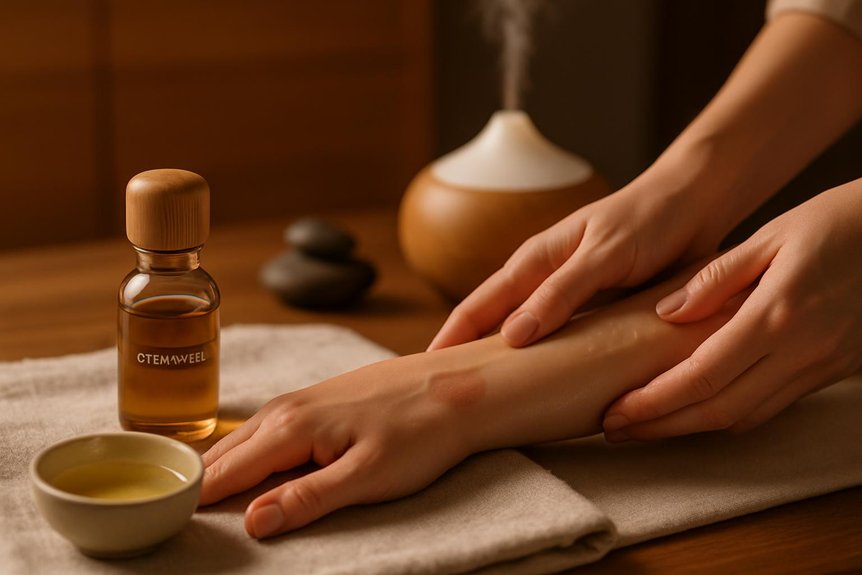
Cedarwood oil is generally considered safe for aromatic massage when a high‑quality, correctly identified oil is used and it is properly diluted for the client. Most professionals start at 0.5–1% dilution (about 1–2 drops per 10 ml carrier) and avoid eyes, mucous membranes, and broken or eczematous skin. Patch testing is advised for reactive skin. Use extra caution or avoid during pregnancy, breastfeeding, asthma, or fragrance allergy, and stop if stinging, redness, headache, or nausea occurs. More guidance follows.
Is Cedarwood Oil Safe for Aromatic Massage?
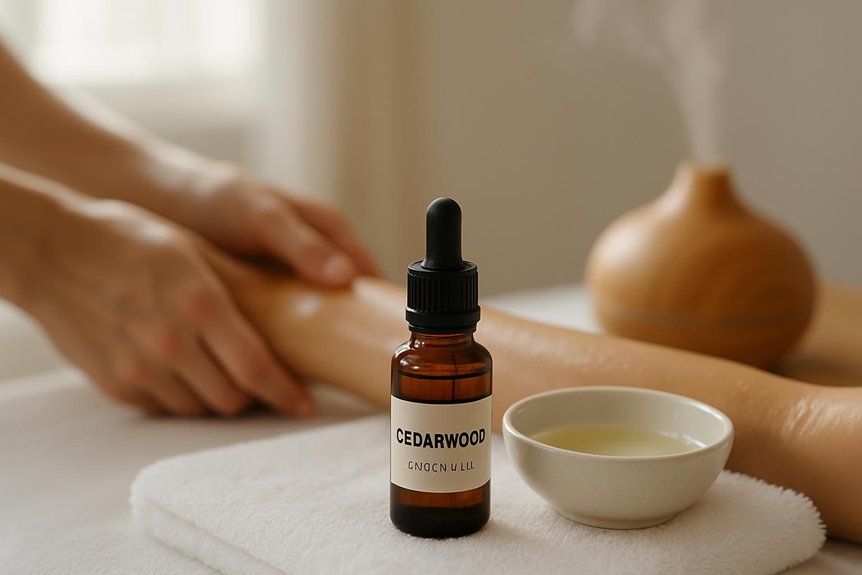
Approach cedarwood oil with the same care as any essential oil used in massage: it can be safe for aromatic massage when properly diluted, professionally selected, and matched to the client’s health profile.
At Spa & Massage clinics across London, therapists screen for asthma, migraine sensitivity, eczema, pregnancy status, and medication use, then choose high-quality, properly identified cedarwood.
For most adults, it is well tolerated and may support calm breathing and emotional grounding, which can deepen a close, reassuring massage experience.
Incorporating aromatherapy massage tips can help ensure the session stays relaxing while prioritising safe dilution and skin comfort.
Safety hinges on avoiding ingestion, keeping it away from eyes and mucous membranes, and stopping if stinging, redness, or headache appears. A patch test is advised for reactive skin.
Clients should disclose allergies and seek medical advice for complex conditions.
What Dilution Is Safe for Cedarwood Oil Massage?
While cedarwood oil is generally well tolerated on adult skin, a conservative dilution is the safest standard for massage: typically 1% for most full-body aromatherapy treatments (about 1 drop per 5 ml of carrier oil), rising to a maximum of 2% for short, targeted work when a client has no history of sensitivity; at Spa & Massage, therapists often reduce this to 0.5% for reactive skin, first-time essential-oil users, or facial/neck areas, and avoid higher concentrations because irritation risk increases without clear added benefit.
Dilution also depends on contact time, heat, and pressure: longer sessions and deeper techniques can increase skin uptake. Clients who are pregnant, managing eczema, or using retinoids may need extra caution or no essential oils. In Spa & Massage clinics, blends are personalised, keeping the aroma gentle, close, and comforting without overwhelming the skin.
How to Patch Test Cedarwood Oil Before Massage
Before a cedarwood aromatic massage, a simple patch test helps identify irritation or allergic contact dermatitis risk in a controlled way.
Spa & Massage therapists advise using the same dilution planned for treatment in an unscented carrier oil. Apply a small amount to clean, dry inner forearm or behind the ear, then cover lightly with a plaster.
Leave for 24 hours, avoiding washing, friction, heat, or other products on the area. Check at 30–60 minutes and again at 24 hours for redness, itching, swelling, burning, hives, or blistering.
If any reaction appears, cleanse with mild soap and water and do not use cedarwood oil. If the skin stays calm, massage can proceed with gentle, mindful contact and continued monitoring during the session.
Who Should Avoid Cedarwood Oil Massage?
Cedarwood oil massage may be unsuitable for some clients, particularly those who are pregnant or breastfeeding, due to limited safety evidence and the need for cautious exposure during these periods.
It should also be avoided or strictly supervised in people with sensitive skin, asthma, eczema, or a history of fragrance allergies, as essential oils can trigger irritation or allergic reactions even when diluted.
At Spa & Massage clinics, therapists also screen for medications and health conditions (such as anticoagulant use, epilepsy, or hormone-sensitive concerns) and may recommend an unscented alternative or medical clearance before treatment.
Pregnancy And Breastfeeding
During pregnancy and breastfeeding, aromatic massage requires extra caution because essential oils can be absorbed through the skin and inhaled, and robust safety data for cedarwood oil in these groups is limited.
For this reason, Spa & Massage typically advises avoiding cedarwood oil during pregnancy unless a qualified clinician has explicitly approved its use. Many clients choose a pregnancy massage instead, where therapists prioritise gentle, nurturing touch and opt for unscented or pregnancy-appropriate blends at very low dilution.
Breastfeeding clients should also be cautious: oils applied to the chest, shoulders, or upper back may transfer through close skin-to-skin contact. In Spa & Massage clinics, therapists discuss trimester, medical history, and breastfeeding routines, and will adapt pressure, positioning, and product choice accordingly.
Sensitive Skin Or Allergies
For whom is a cedarwood oil aromatic massage not the best choice? People with sensitive skin, eczema, dermatitis, or a history of fragrance allergy may react to essential oils, including cedarwood.
Evidence from aromatherapy safety guidance supports patch testing and careful dilution, because irritation or allergic contact dermatitis can occur even with “natural” products.
Anyone who has previously developed redness, itching, hives, or breathing discomfort around scented candles, perfumes, or massage oils should avoid cedarwood until assessed.
At Spa & Massage clinics across London, therapists carry out a thorough consultation, can offer a patch test on the inner forearm, and will dilute within conservative limits or switch to an unscented carrier oil.
Client comfort, consent, and calm intimacy come first.
Medication And Health Conditions
Several medications and underlying health conditions can change how the body responds to essential oils and massage, so a cedarwood oil aromatherapy treatment is not always the most suitable option.
Extra caution is advised for clients using blood thinners or with bleeding disorders, as massage may increase bruising risk.
People with asthma, COPD, or fragrance-triggered migraines may find cedarwood aroma irritating.
Those with eczema flares, active dermatitis, or compromised skin barriers should avoid essential oils on affected areas.
Clients who are pregnant, trying to conceive, or breastfeeding should request a tailored plan, as safety data are limited.
Epilepsy and severe liver or kidney disease also warrant medical guidance.
At Spa & Massage, therapists complete a confidential consultation and can offer an unscented alternative.
Is Cedarwood Oil Massage Safe for Sensitive Skin?
Cedarwood oil massage can be suitable for sensitive skin when precautions are followed, starting with a patch test to check for individual reactivity.
In Spa & Massage clinics, therapists typically use conservative dilution levels for clients prone to sensitivity and adjust the blend based on skin response and comfort.
Clients are advised to watch for irritation signs such as redness, burning, itching, or rash, and to stop treatment and follow simple aftercare (gentle cleansing, bland moisturiser, and clinical advice if symptoms persist).
Patch Testing Essentials
How can sensitive skin be protected when cedarwood oil is used in aromatic massage? Patch testing is the simplest, evidence-based safeguard before intimate, full-body application.
At Spa & Massage clinics, therapists encourage clients with sensitivity, eczema history, or fragrance reactions to test first. A small amount of the intended massage blend is applied to the inner forearm or behind the ear, then left undisturbed and dry. The area is observed at 30 minutes and again over 24 hours for redness, itching, swelling, burning, or rash. If any reaction appears, cedarwood is avoided and the therapist documents the response, selecting a gentler plan.
Testing should be repeated when formulas change, after illness, or during pregnancy, when skin can react differently.
Dilution For Sensitivity
For most people with sensitive skin, cedarwood oil can be used in aromatic massage only when it is diluted to a conservative, skin-safe level and applied with careful monitoring.
At Spa & Massage clinics, therapists typically begin at 0.5–1% essential oil in a gentle carrier (about 1–2 drops per 10 ml), increasing only when comfort and skin tolerance are clear.
This approach reflects common aromatherapy safety guidance that lower concentrations reduce the likelihood of reactivity while still supporting a warm, grounding scent experience.
For clients seeking closer, more sensual touch, a lighter dilution also allows longer, slower strokes without overwhelming the skin or senses.
It is especially appropriate for facial-adjacent areas, décolletage, and pregnancy massage, where extra caution is standard.
Irritation Signs And Aftercare
Sometimes, even at conservative dilutions, sensitive skin can still react during a cedarwood aromatic massage, so early recognition and prompt aftercare are central to safe practice.
Typical irritation signs include new stinging, burning warmth, persistent itching, hives, or a spreading, blotchy redness—especially where friction is highest. At Spa & Massage clinics, therapists watch for these cues and invite clients to speak up the moment sensation shifts from soothing to sharp.
If a reaction occurs, the session should pause; oil is removed with a gentle carrier oil, then the area is cleansed with lukewarm water and a mild, fragrance-free wash. Cool compresses may help.
Clients should avoid heat, exfoliation, and further essential oils for 24–48 hours, and seek medical advice if swelling, wheeze, or worsening rash appears.
Pregnancy & Breastfeeding: Is Cedarwood Oil Safe?
During pregnancy and breastfeeding, cedarwood essential oil is generally treated as a “use with caution” ingredient in professional aromatherapy because robust human safety data are limited and individual sensitivity can be higher. Most guidance consequently prioritises conservative use, avoiding self-blending and oral use, and choosing gentler options unless a clinician approves.
At Spa & Massage, pregnancy and postnatal clients are invited to share trimester, symptoms, medications, and scent preferences so the therapist can select the safest approach. If cedarwood is considered, it is typically kept very dilute, used for brief exposure, and never applied near the chest while breastfeeding. Clients with asthma, migraines, or fragrance sensitivity may be advised to skip it.
When in doubt, an unscented pregnancy massage keeps the experience calm, close, and reassuring.
Cedarwood Oil Massage Side Effects and When to Use It
Cedarwood oil is generally well tolerated in aromatic massage when properly diluted, yet side effects can occur and the choice to use it should be guided by the client’s skin sensitivity, medical history, and treatment goal.
Possible reactions include redness, itching, warmth, headache, or nausea, particularly with overuse or application to broken skin. Rarely, contact dermatitis may occur; a patch test and low dilution help reduce risk.
In Spa & Massage clinics, therapists avoid cedarwood for clients with known fragrance allergy, asthma that is scent‑triggered, or those taking sedatives, and they stop immediately if discomfort appears.
It may be chosen when a grounding, calming tone is desired, or to support scalp and oily skin care, always with clear consent and aftercare advice.
Conclusion
Cedarwood oil can be safe in aromatic massage when treated as a concentrated botanical and used with appropriate dilution, patch testing, and informed consent. Like a seatbelt on a quiet road, these precautions help reduce avoidable risk. Safety depends on oil quality, dose, application area, and the client’s health history, medications, and skin reactivity. Sensitive skin, pregnancy, and certain medical conditions warrant professional guidance. Stop use if irritation, headache, or breathing changes occur.