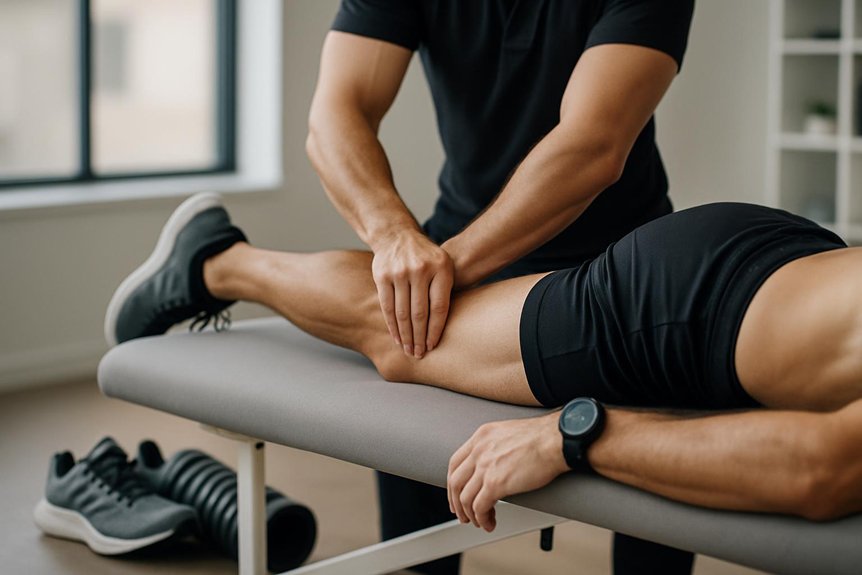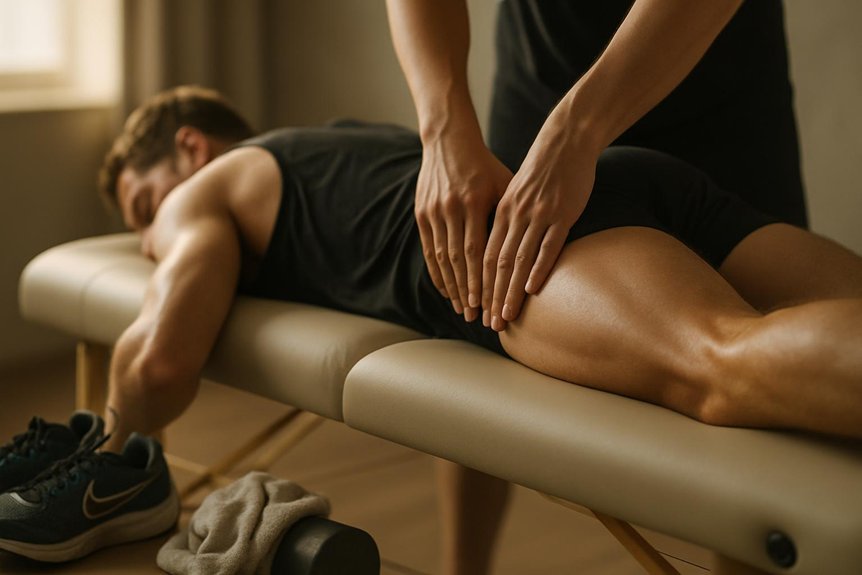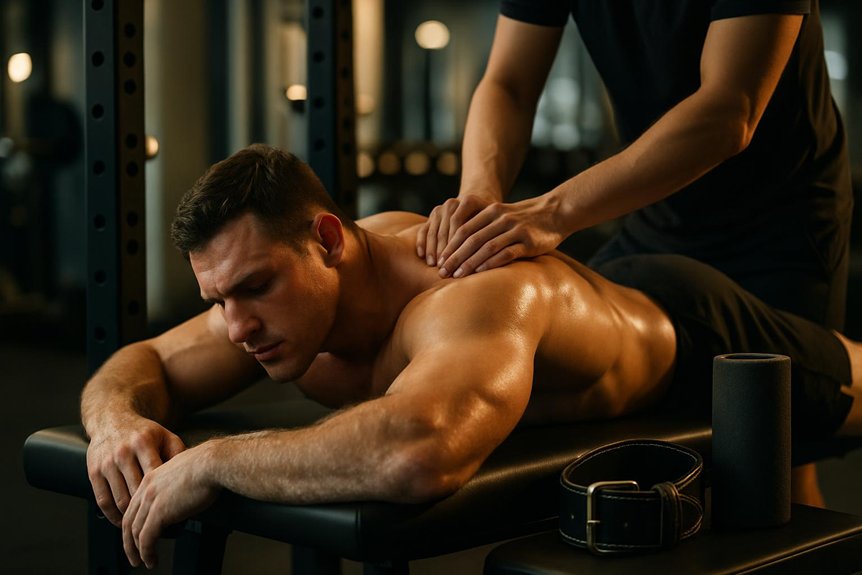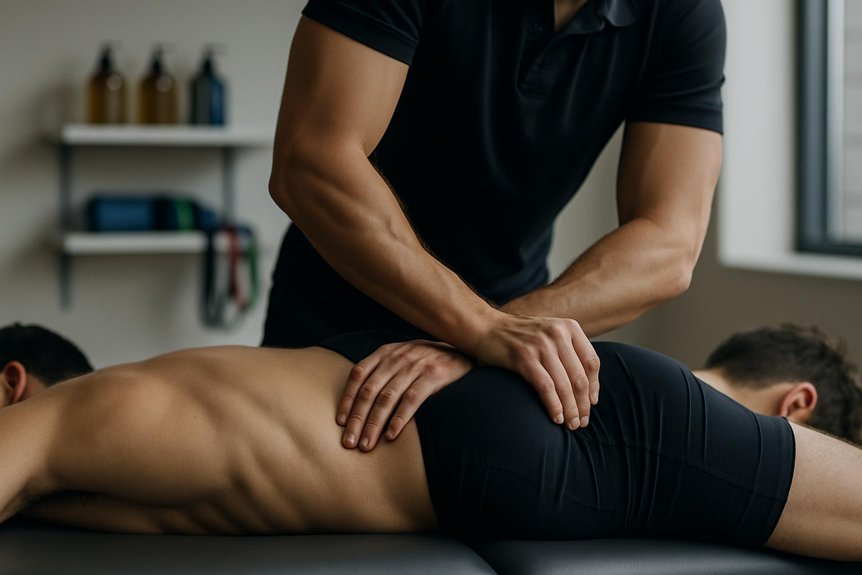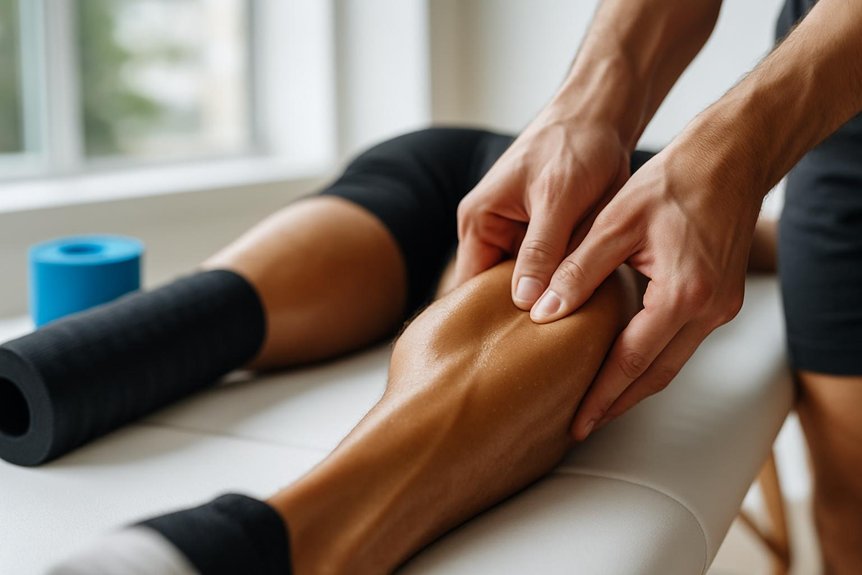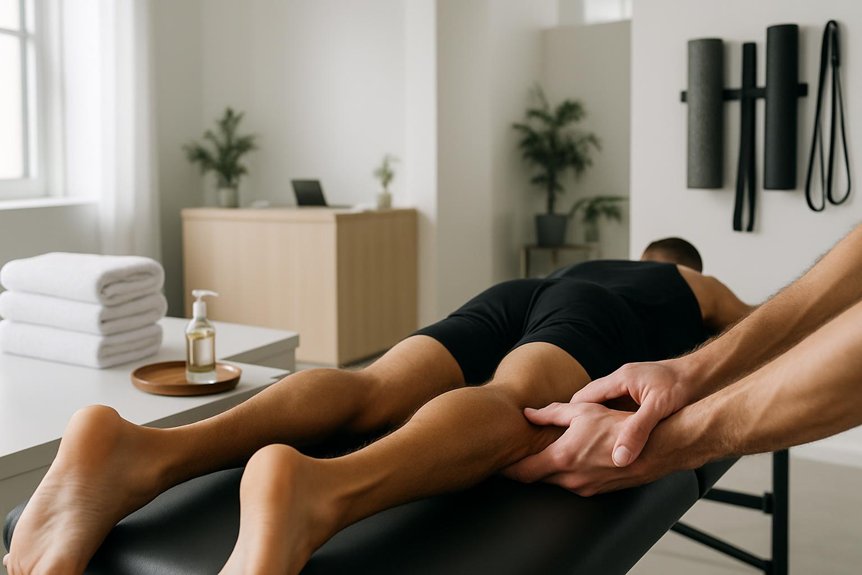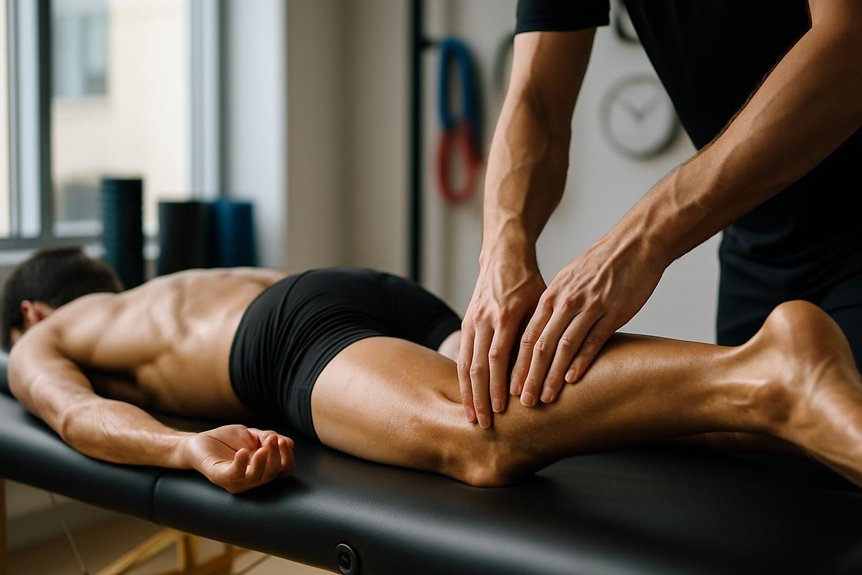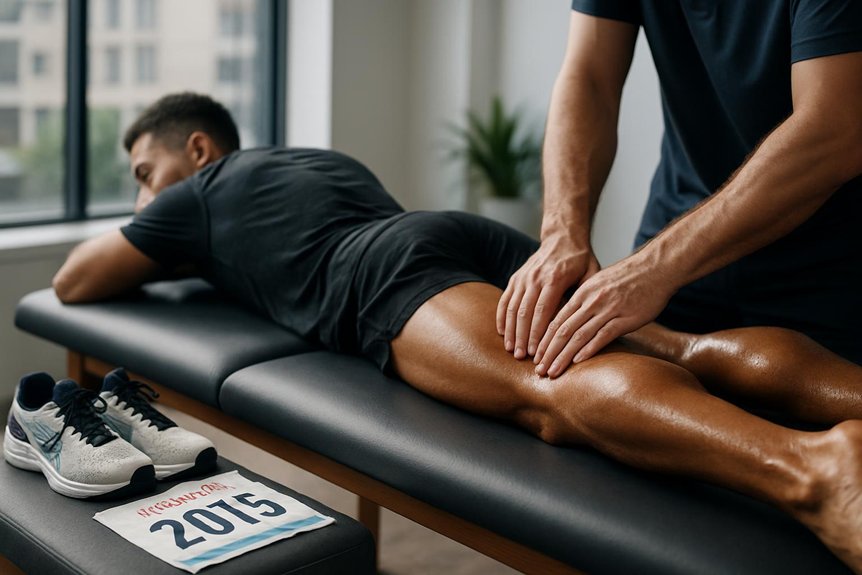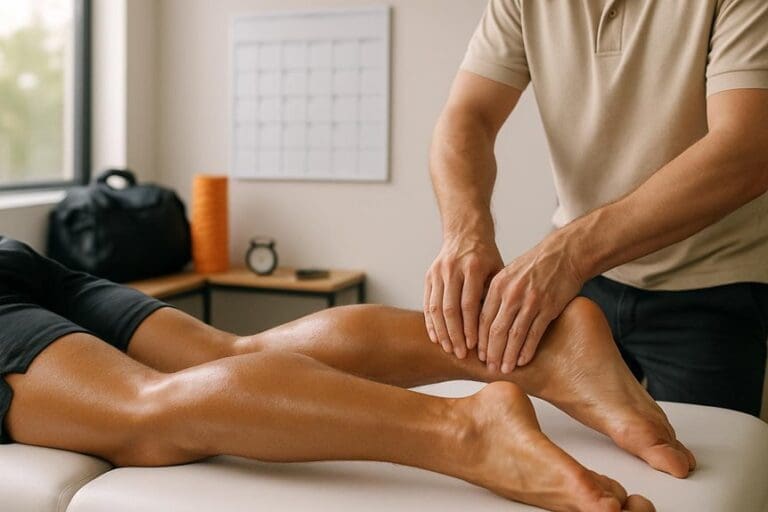
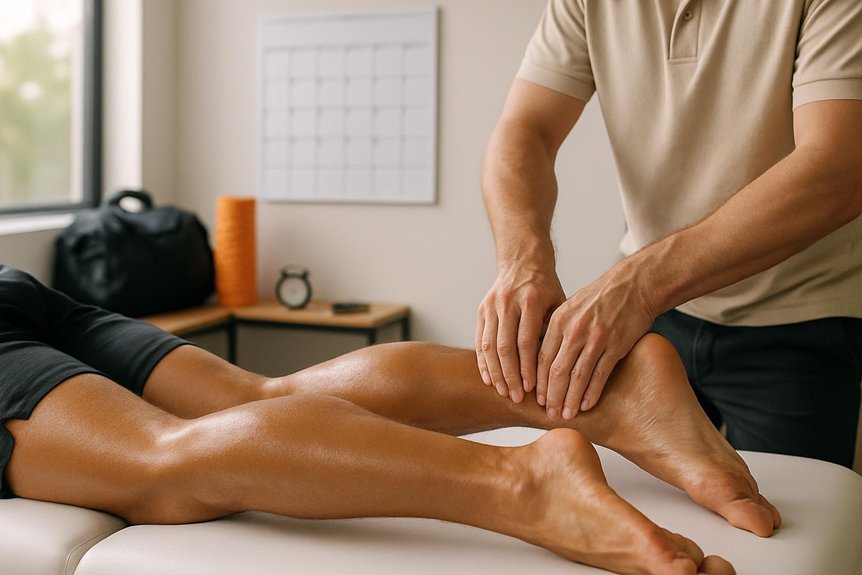
The best time for a performance massage in a runner’s training week is on a rest or easy day, ideally 24–48 hours after the long run or hardest session, and 24–72 hours away from the next key workout. Within 12–24 hours post-run, lighter circulatory work suits heaviness or swelling; deeper work is better 48–72 hours later once soreness peaks. Aftercare should prioritise hydration, gentle walking, and avoiding hills. More detailed timing options follow.
What’s the Best Day for Performance Massage in Your Run Week?
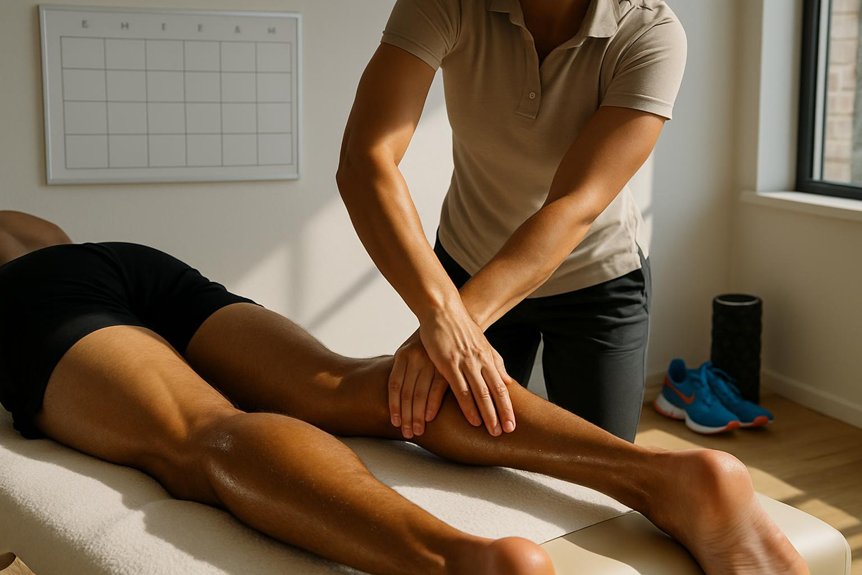
After the week’s key run sessions are complete, the most effective day for a performance massage is typically a rest or easy day—ideally within 24–48 hours of the hardest workout or long run—because this timing supports tissue recovery without adding extra stress before the next high-intensity effort.
In Spa & Massage clinics across London, therapists often focus on calves, hamstrings, glutes, and hip flexors to reduce tone, improve range, and help soreness settle while keeping the nervous system calm.
This approach reflects the broader benefits of sports massage for athletes by promoting recovery and supporting ongoing training consistency.
A lighter pressure is preferred if DOMS is pronounced, while targeted deep tissue work suits stable, non-acute tightness.
Scheduling before speedwork is discouraged, as temporary tenderness can alter stride mechanics.
Aftercare includes hydration, gentle walking, and avoiding maximal hills for 24 hours to protect vulnerable tissue.
How Often Should Runners Get Performance Massage (and Why)?
Often, runners benefit most from performance massage when it is scheduled consistently enough to manage tissue load without masking early warning signs of injury.
For most, this means every 2–4 weeks in steady training, increasing to weekly during peak mileage, marathon blocks, or when niggles arise.
Evidence suggests massage can reduce perceived soreness, improve range of motion short-term, and support relaxation—helpful for sleep and recovery behaviours that underpin performance.
Frequency should reflect volume, intensity, age, and history of calf, hamstring, or plantar issues; more is not always better if it blunts pain signals.
At Spa & Massage London clinics, therapists favour targeted, pressure-appropriate work with clear check-ins, then prescribe aftercare: hydration, gentle mobility, and easy running if tenderness lingers.
Should You Get Performance Massage Before a Hard Run or Race?
A pre-run performance massage may support performance by improving perceived readiness and short-term range of motion, but it should prioritise light, circulation-focused work to avoid soreness or reduced power output.
At Spa & Massage, therapists typically recommend scheduling it 24–48 hours before a hard run, or keeping it to a brief, gentle session on race day, with deep tissue reserved for post-event recovery.
Race-day considerations include targeting key muscle groups without provoking tenderness, especially for anyone managing a niggle or recent injury.
Pre-Run Massage Benefits
Pre-run performance massage can sometimes support performance by reducing perceived muscle stiffness and improving range of motion, but timing and technique matter to avoid transient soreness or reduced neuromuscular readiness before a hard session or race. When delivered with light-to-moderate pressure, it may increase local circulation, calm protective muscle tone, and help runners feel more connected to stride mechanics.
It can also support confidence and body awareness, especially for athletes who carry pre-race tension in calves, hip flexors, or glutes. At Spa & Massage clinics across London, therapists favour focused, non-bruising work, brief mobilisation, and soothing oils where appropriate, avoiding aggressive deep tissue immediately pre-run.
Any sharp pain, recent strain, or DOMS warrants caution and a gentler approach.
Timing And Intensity
In the 24–72 hours before a hard run or race, the safest performance-oriented approach is to keep performance massage light, targeted, and non-fatiguing, because heavy deep-tissue work can temporarily increase soreness, reduce force output, and irritate sensitised tissue.
At Spa & Massage, therapists typically use brief flushing strokes, gentle compression, and focused work around “hot spots” (calves, hips, feet) to improve comfort and movement quality without provoking inflammation.
If the athlete is carrying niggles, intensity should drop further: pain, bruising, or next-day stiffness suggests the session was too aggressive.
A deeper performance massage can fit earlier in the week, leaving adequate recovery for the nervous system and connective tissue.
The aim is calm readiness—softened tension, steadier breath, and confident stride.
Race-Day Considerations
Keeping intensity light in the days before an event sets the stage for an even more conservative approach on race day, when tissues are warm, adrenaline is high, and any extra irritation can quickly change stride mechanics.
Evidence supports short, calming work over deep, corrective pressure immediately pre‑race; heavy techniques can leave tenderness, reduced range, or altered proprioception.
Spa & Massage typically advises avoiding deep tissue or intense performance massage within 24–48 hours of a hard run or race.
If massage is desired, a brief 10–20 minute flush focused on calves, quads, glutes, and feet can promote comfort and body awareness without provoking soreness.
Therapists keep strokes light, slow, and specific, respecting niggles.
Hydration, gentle mobility, and warm‑up drills remain the safest performance tools.
When Should You Book Performance Massage After a Long Run?
After a long run, the ideal timing for a performance massage often depends on whether it is booked the same day to reduce acute tightness or the next day when post-run soreness (DOMS) is clearer and tissue tolerance is higher.
In Spa & Massage clinics, therapists typically factor in soreness levels, swelling, and any sharp or focal pain to decide between a lighter recovery-focused treatment or a more targeted sports session that supports performance without aggravating an emerging injury.
Race schedules also matter, as post-event recovery goals and the time available before the next key session influence how soon the massage should be booked and how intensive it should be.
Same Day Vs Next Day
Within the first 6–24 hours following a long run, the decision to book a performance massage the same day or the next day should be guided by training load, symptom severity, and recovery goals rather than convenience.
Same-day sessions tend to suit runners wanting faster downregulation: gentler pressure, slower pacing, and focused work on calves, hip flexors, and glutes to ease tone without provoking micro‑trauma.
Next-day appointments often fit heavy blocks, when tissues feel more receptive and deeper, more specific techniques can restore range and address hotspots safely.
At Spa & Massage clinics across London, therapists screen for swelling, sharp pain, or altered gait; these are flags to keep work light or refer.
Either timing benefits from hydration, easy walking, and avoiding intense stretching immediately after.
Post-Run Soreness Levels
Timing alone does not determine the best window for a post‑run performance massage; soreness level and symptom quality should. Mild, even tenderness that eases with movement often suits a light-to-moderate session within 12–24 hours, supporting circulation and relaxed tone without overloading sensitised tissue.
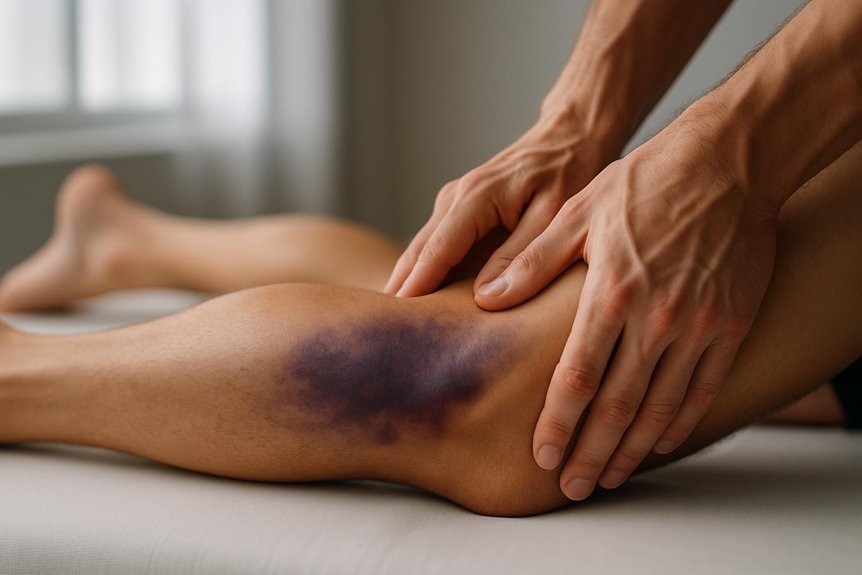
When soreness peaks at 24–48 hours (DOMS), firmer work may feel too intense; many clients benefit more from slower, comforting pressure, focused compressions, and mobility-based soft-tissue techniques. Sharp pain, swelling, bruising, night pain, or focal “stabbing” signals warrant medical assessment and a gentler approach or postponement.
At Spa & Massage clinics, therapists tailor depth and pace, check consent throughout, and recommend hydration, warm showers, and easy walking after treatment.
Race And Recovery Timing
In the 24–72 hours following a long run or race, the best booking window for performance massage depends on the recovery goal—downregulating acute fatigue, restoring range of motion, or addressing a developing niggle—rather than a fixed rule.
Within 12–24 hours, lighter, circulatory work may suit runners who feel heavy or swollen; aggressive pressure can amplify soreness in already sensitised tissue.
At 24–48 hours, a targeted performance massage can ease tone, improve stride mechanics, and help calm protective guarding, especially around calves, hips, and hamstrings.
At 48–72 hours, deeper work can address persistent tight spots once delayed-onset soreness peaks.
Spa & Massage therapists in London tailor pressure, pace, and aftercare—hydration, gentle mobility, and sleep—to keep recovery close, safe, and performance-ready.
How Long Should You Wait to Run After a Performance Massage?
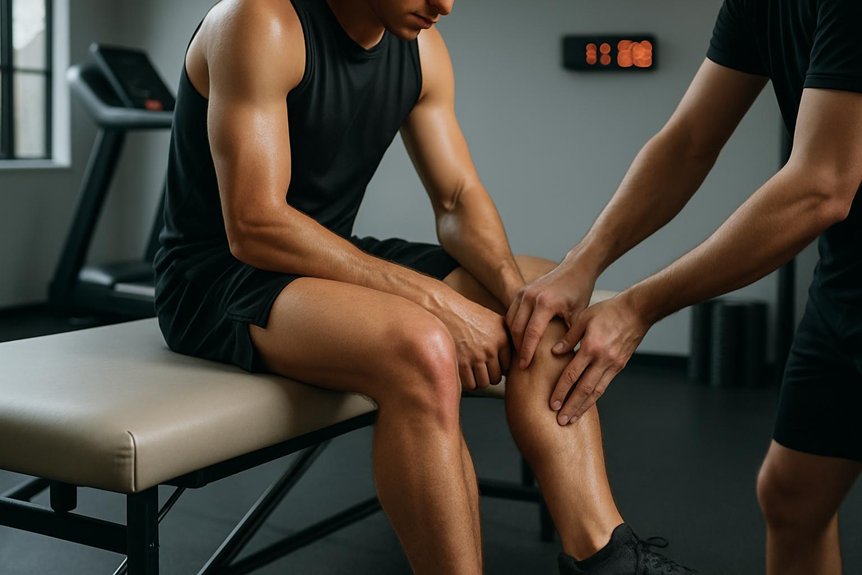
After a performance massage, most runners should allow 12–24 hours before an easy run, and 24–48 hours before higher-intensity sessions, because the treatment can leave muscles temporarily tender, alter neuromuscular coordination, and increase local circulation in a way that may heighten injury risk if hard loading resumes too soon.
At Spa & Massage, therapists advise using soreness, sleep quality, and range of motion as readiness markers. If touch feels bruised, stride feels “off,” or joints feel less stable, a rest day or gentle walk is safer.
Hydration, light protein, and warmth support tissue response; many clients prefer a hot shower and relaxed stretching later, not immediately. A short, conversational pace run is usually tolerated first; speed, hills, and long runs should wait.
When to Schedule Performance Massage During Marathon Training Blocks
During a marathon training block, performance massage is best scheduled to support recovery and tissue tolerance without compromising key quality sessions: many runners benefit from a regular maintenance treatment every 2–4 weeks, with sessions placed 24–72 hours away from long runs, interval workouts, or race-pace efforts to minimise post-treatment soreness and neuromuscular disruption.
As weekly volume rises, slightly lighter pressure and shorter sessions can maintain comfort while preserving training output. Targeted work is often timed after easier days or steady aerobic runs, when tissues are warm and the nervous system is calmer.
If niggles emerge, earlier booking helps guide load management and reduces risk of compensatory patterns. At Spa & Massage, therapists adapt depth, pace, and aftercare—hydration, gentle mobility, and sleep support—to keep runners moving confidently between sessions.
Performance Massage Timing for Taper Week and Race Week
As taper week begins, performance massage is best used to reduce residual tightness and maintain range of motion without provoking soreness that could blunt key sharpening sessions. Spa & Massage therapists typically schedule it 7–10 days before race day, using moderate pressure, mobility work, and targeted flushing for calves, quads, hip flexors, and feet, guided by the runner’s training load and niggles.
In race week, timing shifts to reassurance and readiness: a shorter session 2–4 days out can calm the nervous system, ease stiffness from travel or reduced mileage, and improve body awareness. Within 24–48 hours, most runners do best with light, soothing work only. Aftercare emphasises hydration, gentle walking, and staying warm so tissues feel supple, connected, and responsive.
When Deep Tissue Massage Is Too Much for Runners
For runners chasing performance gains, deep tissue massage can become counterproductive when training load is high or tissue irritability is elevated. Excess pressure may amplify post-treatment soreness, reduce neuromuscular readiness, and provoke protective muscle guarding that distorts stride mechanics.
Warning signs include lingering tenderness beyond 48 hours, bruising, sharp “electric” pain, or symptoms that flare during easy runs. It is also a poor choice around acute tendon pain, suspected stress injury, or when sleep and recovery are already compromised.
At Spa & Massage clinics, therapists scale depth to the runner’s tolerance, favouring slower, specific work and checking in continuously. When the goal is consistent training, many clients do better with performance massage, lighter myofascial techniques, and calming aromatherapy to support parasympathetic recovery.
Where to Fit Performance Massage Into a London Running Routine
In a typical London running week, performance massage is most effective when scheduled to complement key sessions rather than compete with them: many runners place a moderate-pressure treatment 24–72 hours after a long run or hard workout to address residual tightness, maintain range of motion, and spot early overload patterns before they become injuries.
Before race-pace or intervals, lighter work (30–45 minutes) can reduce tone without leaving the legs tender; deeper sessions suit recovery blocks, not peak weeks.
For morning commuters, an evening appointment supports sleep and parasympathetic downshifting.
Spa & Massage therapists across Crouch End, Bayswater, Chiswick, Earl’s Court, Belsize Park, and Richmond tailor pressure, then recommend hydration, gentle mobility, and avoiding maximal lifting for 24 hours.
Conclusion
It works best when scheduled like a well-placed recovery run: deliberate, not random. Evidence suggests lighter work supports circulation and range of motion near key sessions, while deeper treatment is best after heavy weeks, with sufficient time to absorb load. For most runners, 24–48 hours before a hard workout is too close for deep work; 24–72 hours after a long run often fits better. Timed well, it helps reduce tension, monitor niggles, and sustain consistent training.