A pregnancy massage pillow is a supportive positioning aid used during prenatal massage to keep the body comfortably aligned while reducing pressure on the abdomen and lower back and supporting circulation and breathing. It typically uses contoured cut-outs, wedges, or bolsters to encourage side-lying or a gentle semi-recline. Setup focuses on a firm surface, keeping the bump completely free of pressure, and adding supports between the knees and under the waist as needed. Further guidance covers trimesters, warning signs, and safe cleaning.
What Is a Pregnancy Massage Pillow?
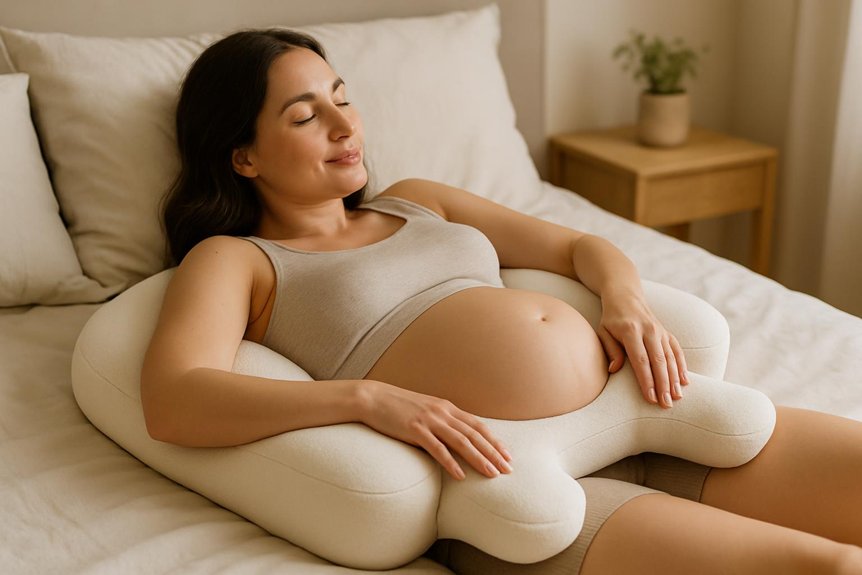
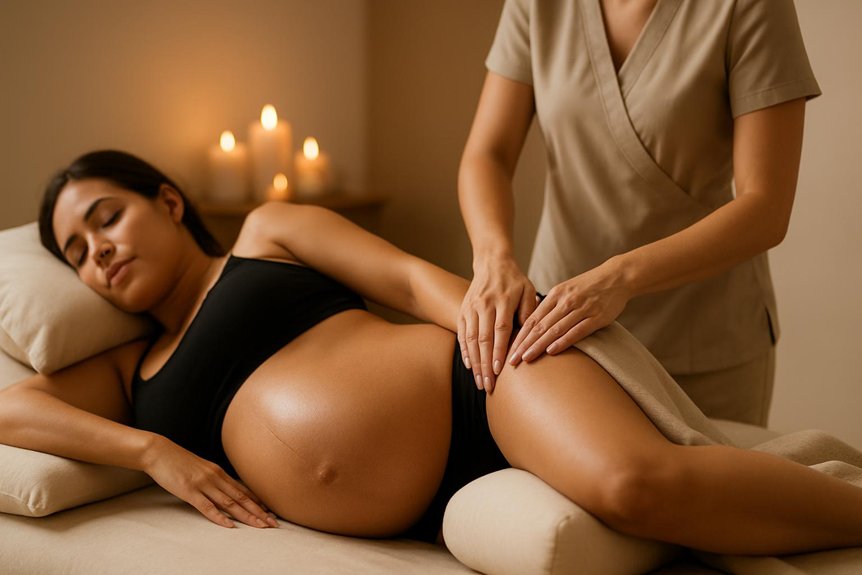
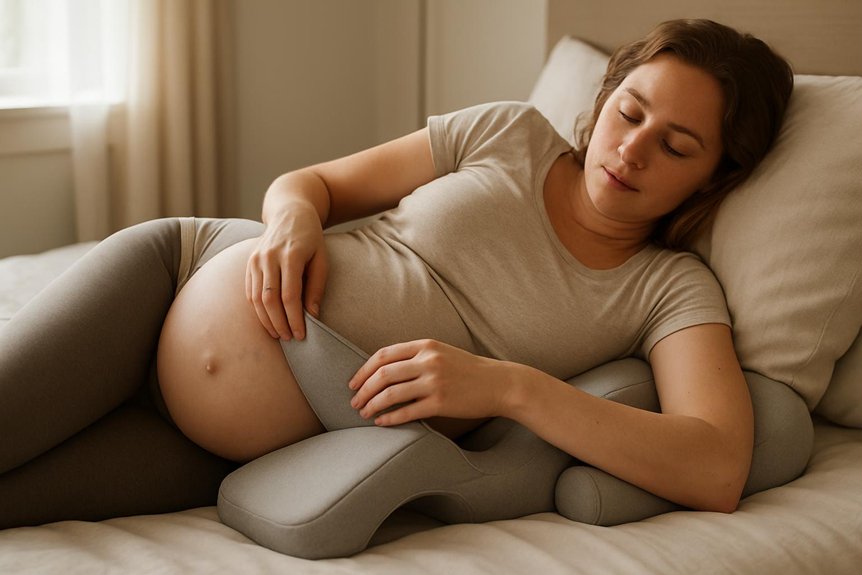
A maternity massage pillow is a supportive positioning aid designed to help a pregnant person lie comfortably and safely during massage by accommodating a growing bump and reducing pressure on the abdomen and lower back.
It typically uses contoured cut-outs, bolsters, or wedges to encourage side-lying or supported semi-reclining positions, helping keep the spine neutral and easing strain in the hips and pelvic joints.
In Spa & Massage London clinics, therapists use positioning pillows to create a sense of closeness and ease without compressing sensitive tissues.
By stabilising the body, the pillow can improve relaxation, allow slower, more precise strokes, and reduce the need to “hold tension” to stay comfortable.
This added comfort can support the wider benefits of pregnancy massage for expecting mothers by easing stress and encouraging rest.
Materials are usually supportive foam with hygienic, wipeable covers to maintain cleanliness between clients.
Is a Maternity Massage Pillow Safe in Every Trimester?
A maternity massage pillow can be used in every trimester, but safety depends on gestational stage, maternal comfort, and appropriate positioning.
In the first trimester, cautious use is advised due to higher baseline miscarriage rates and nausea sensitivity, while the second trimester typically focuses on side-lying support to avoid prolonged supine positioning.
First Trimester Precautions
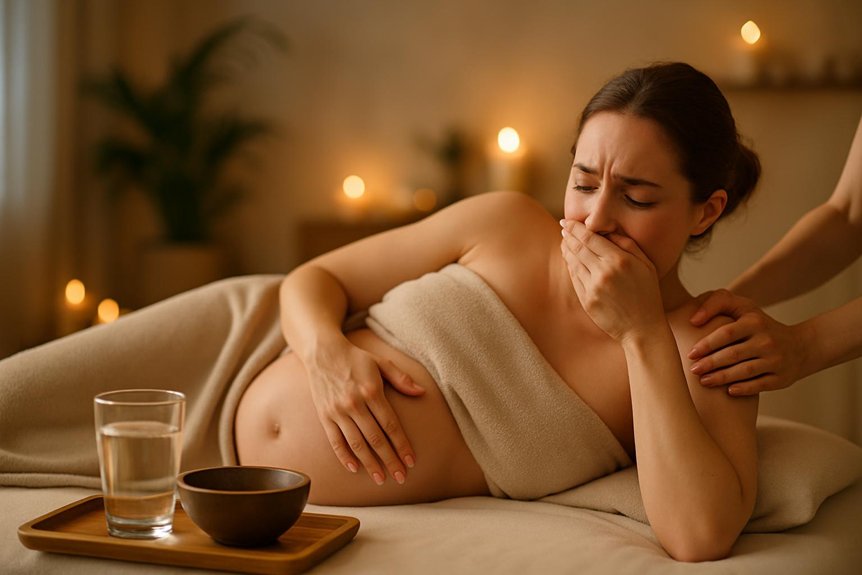
Although maternity massage pillows are designed to improve comfort and reduce strain, extra caution is advised in the first trimester, when miscarriage risk is naturally higher and many people experience nausea, dizziness, and heightened sensitivity.
A maternity massage pillow is generally considered low-risk when it supports neutral alignment without compressing the abdomen or restricting breathing.
Spa & Massage recommends choosing stable, hypoallergenic materials, keeping sessions short, and stopping immediately if there is cramping, bleeding, light-headedness, or new pain.
Heat should be avoided on the abdomen, and essential oils should be used only with professional guidance, as some are not recommended early in pregnancy.
Hydration and slow shifts (especially when getting up) reduce dizziness.
Anyone with prior pregnancy loss, IVF, or medical complications should seek clinician approval first.
Second Trimester Positioning
From the second trimester onward, positioning with a maternity massage pillow is typically safer and more comfortable because the uterus has risen out of the pelvis and many people can tolerate longer, well-supported side-lying.
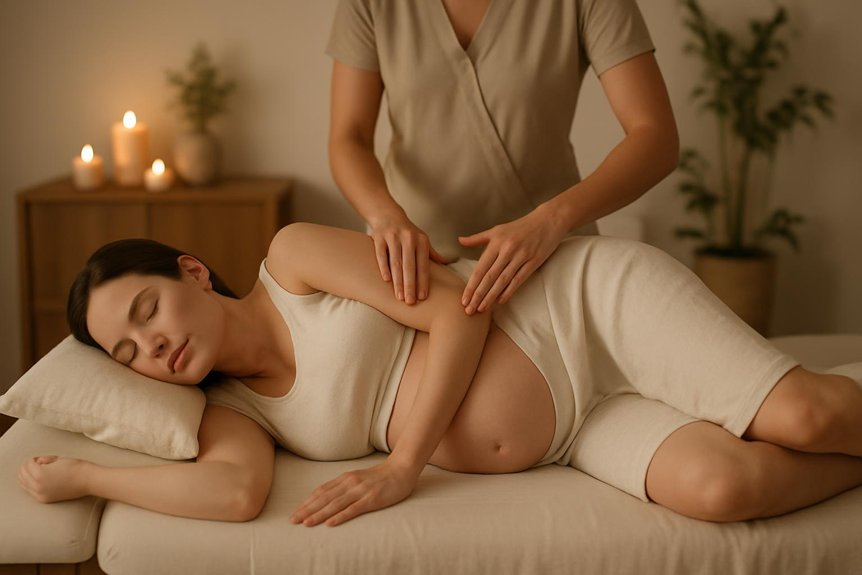
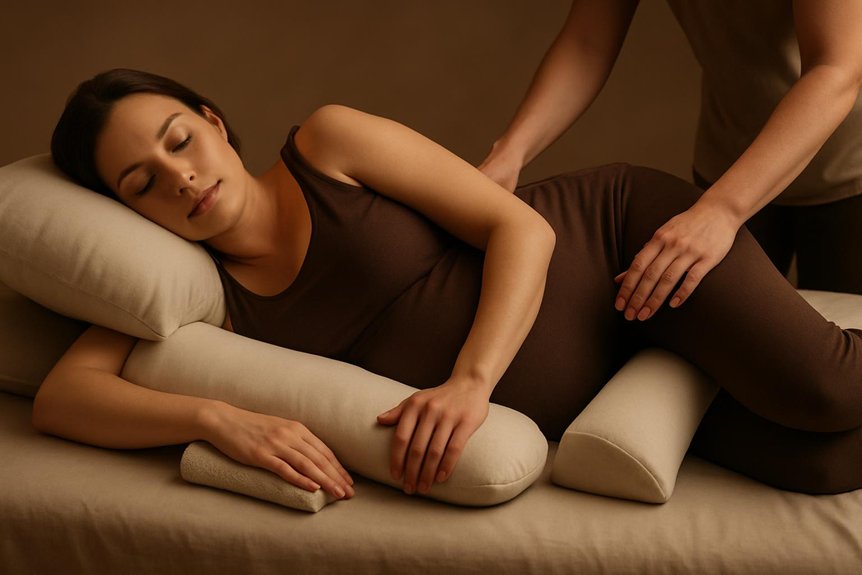
A firm pillow under the bump and between the knees helps keep hips and spine aligned, reducing strain in the lower back and pelvis.
Supine lying should be limited; if any dizziness, nausea, or breathlessness occurs, the position should be changed promptly.
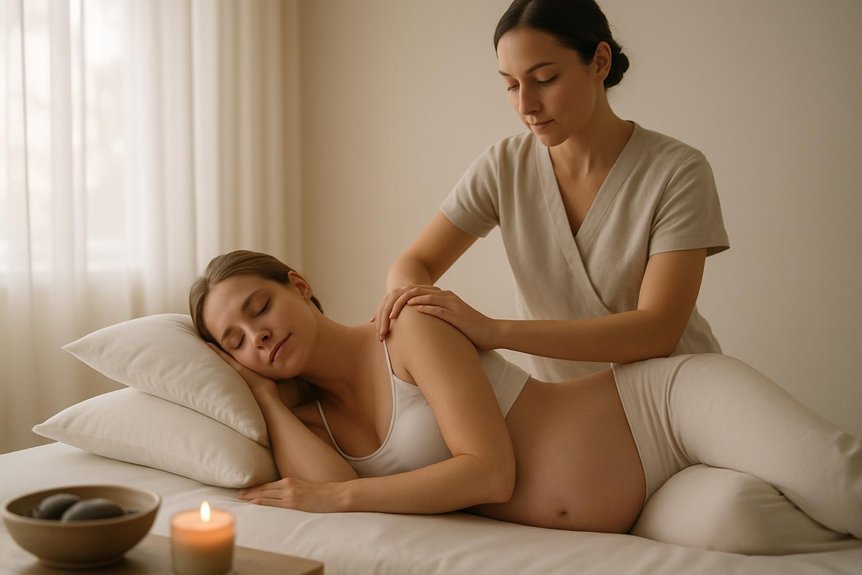
In Spa & Massage clinics, therapists favour a gentle side-lying set-up with support at the chest and waist so the body feels held, not twisted, and circulation stays steady.
Pressure should remain moderate, avoiding deep work over the abdomen, and comfort cues should guide every adjustment.
Third Trimester Support Needs
By the third trimester, a maternity massage pillow is generally safe when it supports side-lying and reduces pressure on the abdomen and major blood vessels, but it often needs more structured positioning than earlier in pregnancy. Support should keep the chest, belly, and hips aligned, with a small wedge under the bump and a bolster between the knees to ease pelvic and low-back strain.
Prolonged supine positioning is usually avoided, as it can compress the vena cava and trigger dizziness or nausea. Height and firmness matter: too-soft pillows can collapse and twist the spine; too-high support can strain the neck and ribs.
At Spa & Massage clinics across London, therapists use adjustable bolsters and frequent check-ins, inviting slow breaths, warmth, and steady comfort.
What Makes a Maternity Massage Pillow Safe?
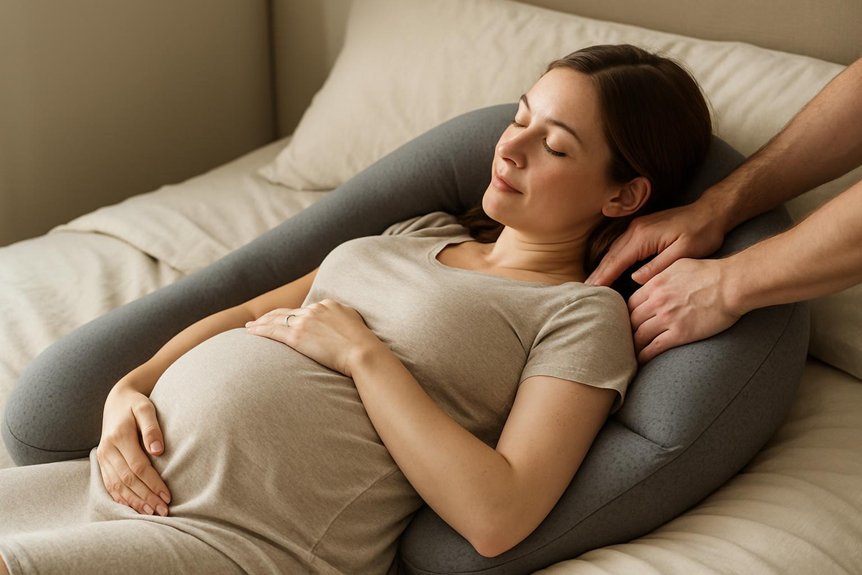
In clinical practice, a maternity massage pillow is considered safe when it supports side‑lying positioning (rather than prolonged face‑down or flat‑on‑the‑back lying), keeps the spine and pelvis in neutral alignment, and avoids pressure on the abdomen and chest.
It should feel stable, with enough firmness to prevent sinking that strains the lower back, while still cushioning hips, ribs, and shoulders for close, comfortable contact.
Cleanable, hypoallergenic covers and secure seams reduce irritation and slipping.
At Spa & Massage clinics across London, therapists also check that head and neck support maintains an open airway and that the pillow allows easy micro‑adjustments as comfort changes.
Safety improves when clients can breathe freely, move without effort, and communicate tenderness or discomfort immediately during massage.
How Do You Set Up a Maternity Massage Pillow?
For a safe, comfortable setup, a maternity massage pillow should be arranged to support a stable side‑lying position with the abdomen completely free of pressure and the spine kept neutral.
A firm, level surface is preferred; the pillow’s base should be secured so it cannot slide, and all inserts should feel supportive rather than sinking.
At Spa & Massage clinics, therapists begin by adjusting height under the head and upper torso so breathing stays easy and shoulders relax.
The abdomen cut‑out is aligned with the bump, then padding is added behind the back to prevent rolling and under the top thigh to reduce pelvic strain.
Straps or wedges are checked for pressure points.
Any numbness, dizziness, breathlessness, or increased uterine tightening means stopping and re‑setting.
What Positions Work Best With a Maternity Massage Pillow?
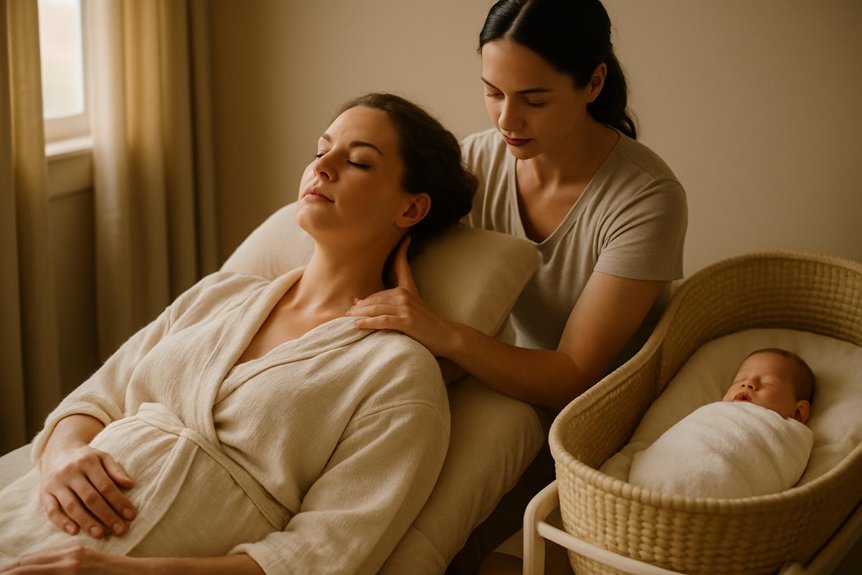
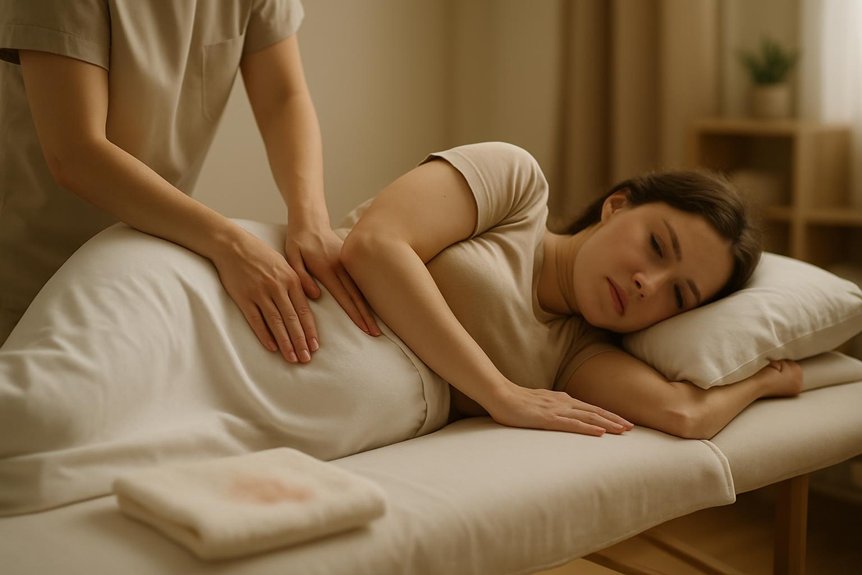
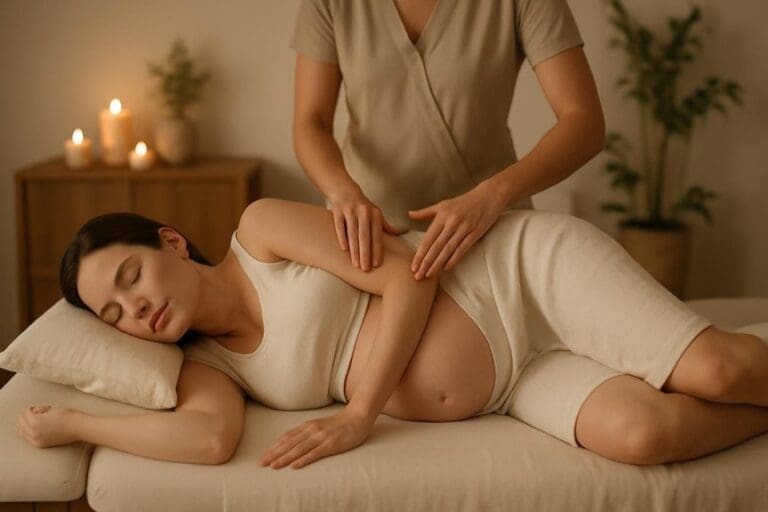
With comfort and circulation in mind, the most effective positions with a maternity massage pillow tend to be supported side‑lying (especially left side‑lying) and a gently propped semi‑reclined position, both of which minimise pressure on the abdomen while helping maintain a neutral spine.
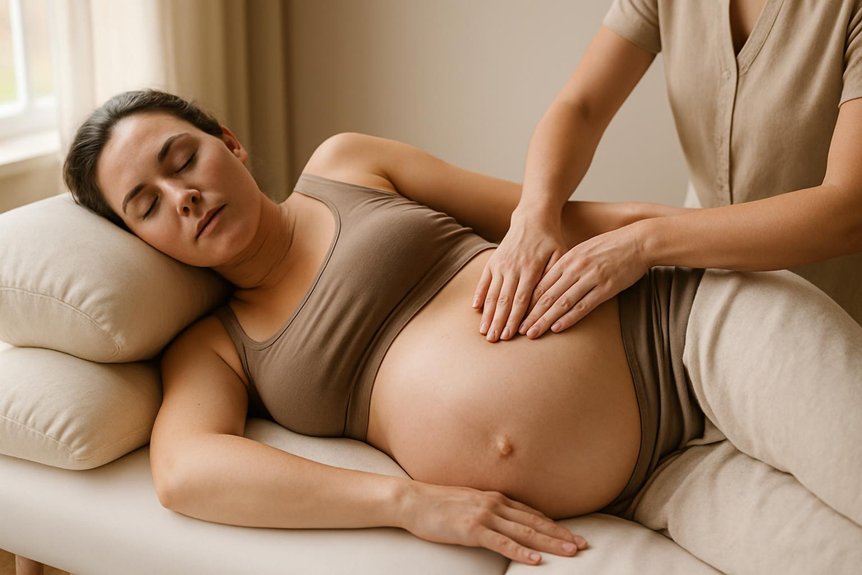
In side‑lying, the pillow can cradle the bump while supporting the top knee and ankle, reducing pelvic tug and easing lower‑back strain; a small roll under the waist may help keep the spine aligned.
In semi‑recline, the pillow supports the upper back and shoulders, encouraging calmer breathing and softer chest opening.
Many clients at Spa & Massage prefer a pillow between the thighs with a light hug around the front section, creating a secure, close, cocooned feel.
When Should You Not Use a Maternity Massage Pillow?
A maternity massage pillow should be avoided whenever its use could compromise comfort, breathing, circulation, or medical safety—particularly in the presence of new or worsening pain, dizziness, shortness of breath, numbness/tingling, vaginal bleeding, contractions, reduced fetal movements, or any condition where a midwife or obstetric team has advised modified positioning.
It should also be avoided with pre-eclampsia symptoms (severe headache, visual changes, sudden swelling), suspected DVT (one-sided calf pain/warmth), fever, or uncontrolled asthma.
If lying prone or semi-prone causes pressure on the abdomen, heartburn, pelvic pain, or breathlessness, repositioning or stopping is safest.
At Spa & Massage, therapists pause immediately if any warning sign appears and recommend medical assessment before further use.
When in doubt, choose gentler support rather than forcing closeness.
How We Use Maternity Massage Pillows in Clinic
In Spa & Massage clinics across London, maternity massage pillows are used to support evidence-informed, safety-first positioning that prioritises maternal comfort and circulation.
Therapists set up bolsters and pillows to maintain neutral spinal alignment and minimise pressure on the abdomen and pelvis, adjusting the configuration throughout the session as needed.
Techniques are then modified—using appropriate pressure, pacing, and side-lying access—to meet clinical goals while keeping both parent and baby’s wellbeing central.
Safe Positioning Protocols
For maternity massage to be both relaxing and clinically safe, positioning is treated as a core part of care at Spa & Massage’s London clinics. Therapists complete a brief screening each visit, confirm gestational stage and any symptoms, then choose positions that support circulation and breathing.
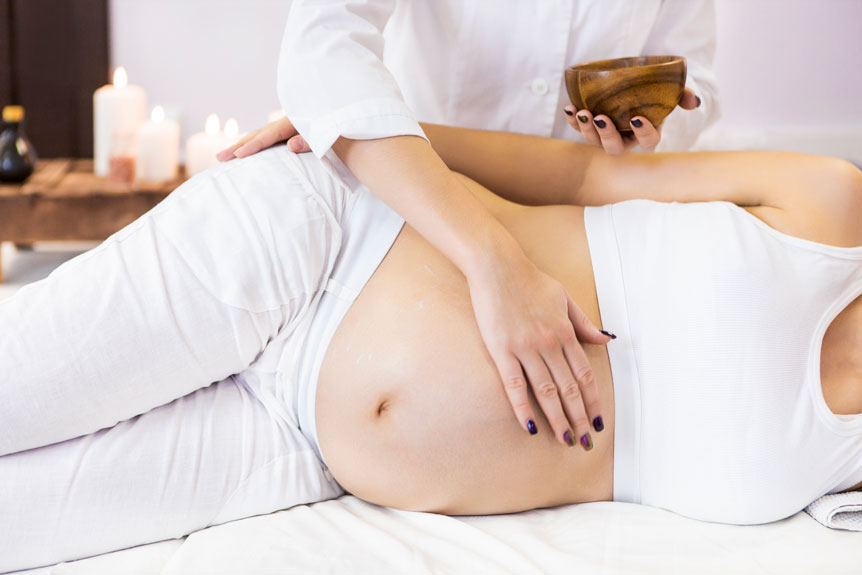
Side-lying is commonly used, with a gentle tilt to reduce vena cava compression; prone lying is avoided unless specifically assessed as appropriate and comfortable. Pressure is moderated, and abdominal work is performed only with explicit consent and a light, reassuring touch.
Throughout treatment, therapists check in quietly on warmth, nausea, dizziness, and baby movement, and they pause immediately if anything feels “off.” Clients are encouraged to speak up at any moment.
Bolster And Pillow Setup
At Spa & Massage’s London clinics, bolster and pillow setup is treated as a safety tool as much as a comfort aid, with supports placed to maintain neutral spinal alignment, protect the bump from pressure, and keep breathing and circulation unrestricted.
Side-lying is typically supported with a firm bolster between the knees to reduce pelvic torsion, plus a pillow under the top ankle to ease hip strain. A small cushion is often placed beneath the waist to prevent side-bending, while a wedge or folded towel supports the upper chest so the ribcage can expand easily.
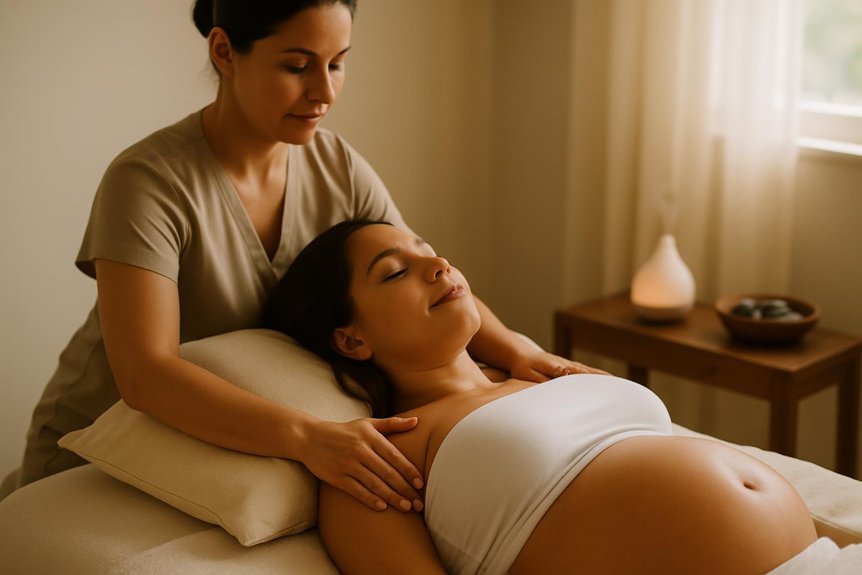
For clients who prefer semi-reclined, pillows elevate the head and shoulders and keep the abdomen free. Supports are adjusted gradually, checking comfort and warmth throughout.
Therapist Technique Adjustments
Small adjustments make a measurable difference in comfort and safety during maternity massage. At Spa & Massage clinics across London, therapists modify technique once the maternity massage pillow is positioned: pressure is reduced and broadened, favouring slow, rhythmic strokes that support circulation without compressing the abdomen.
Side‑lying work is prioritised; the pillow helps stabilise hips and ribs so the therapist can access back, glutes, and shoulders without twisting the client’s spine. Range of motion is kept gentle, avoiding deep abdominal work and sustained pressure over varicose veins, sacrum irritation, or tender ligaments.
Frequent check‑ins guide micro‑repositioning, hydration breaks, and temperature control. Many clients find these quiet calibrations create a reassuring, close-feeling session.
How to Use a Maternity Massage Pillow at Home
During pregnancy, a massage pillow can make at-home relaxation more comfortable and safer by supporting the bump and keeping the spine and pelvis in a neutral position. Spa & Massage advises starting side-lying, with the pillow supporting the abdomen and a second support between the knees to reduce hip and lower-back strain.
For seated use, the pillow can be placed behind the mid-back or under the forearms to soften shoulder tension. If the pillow includes vibration or heat, keep settings low, limit sessions to 10–15 minutes, and stop if warmth feels excessive, dizziness occurs, or contractions increase. Avoid deep pressure on the abdomen and avoid lying flat on the back later in pregnancy. When in doubt, her midwife or GP should be consulted.
How to Clean and Store a Maternity Massage Pillow
Once a maternity massage pillow is being used regularly at home, hygiene and correct storage become part of using it safely, particularly because pregnancy can increase skin sensitivity and reduce tolerance to irritants.
Spa & Massage advises checking the care label first, then removing and washing covers on a gentle, fragrance-free cycle; fully air-dry before re-fitting to prevent damp-related odour or mould.
If the inner cushion cannot be washed, it can be wiped with a mild soap solution, then with clean water, and dried completely.
Avoid strong disinfectants, essential oils, or bleach, which may irritate delicate skin.
Store the pillow in a breathable cotton bag, away from heat, pets, and direct sunlight, so each session feels clean, close, and reassuring.
Conclusion
A maternity massage pillow can transform positioning—but only when chosen and used with care. With trimester-appropriate support, neutral spinal alignment, and clear pressure-free space for the abdomen, comfort improves and strain often eases. Yet one detail still matters most: safety signals. Dizziness, breathlessness, pain, bleeding, fluid loss, or reduced fetal movement mean stopping and seeking medical advice. Clean storage and stable set-up protect hygiene and posture. Used correctly, the real benefit is revealed: true, supported relaxation.