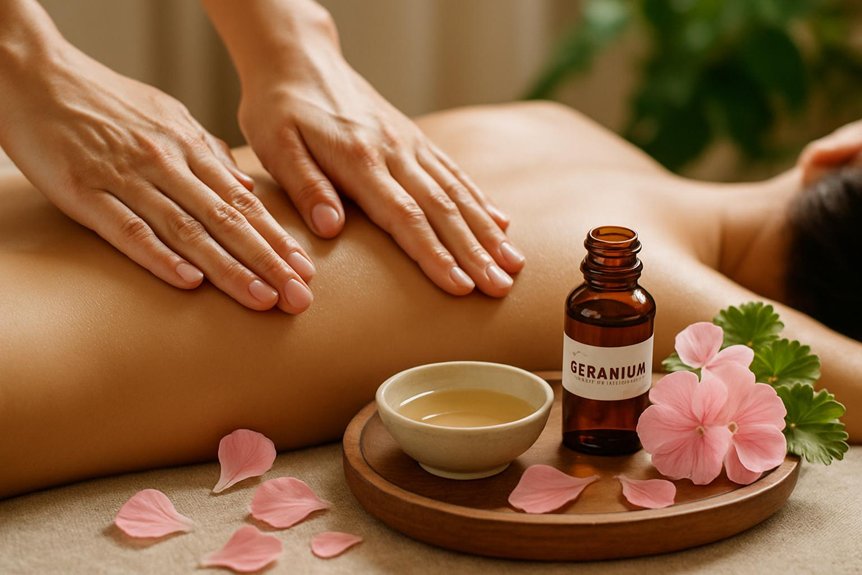
Geranium essential oil is generally safe for aromatic massage when correctly diluted and used on intact, non-irritated skin. A 1–2% dilution in a carrier oil is typical, with patch testing advised for reactive skin or fragrance sensitivity. It should not be applied neat, and it is best avoided on broken or recently shaved skin. Extra caution is recommended during pregnancy, breastfeeding, asthma, migraines, or when taking certain medications. Further guidance covers dilution, screening, and side-effect signs.
Is Geranium Essential Oil Safe for Massage?
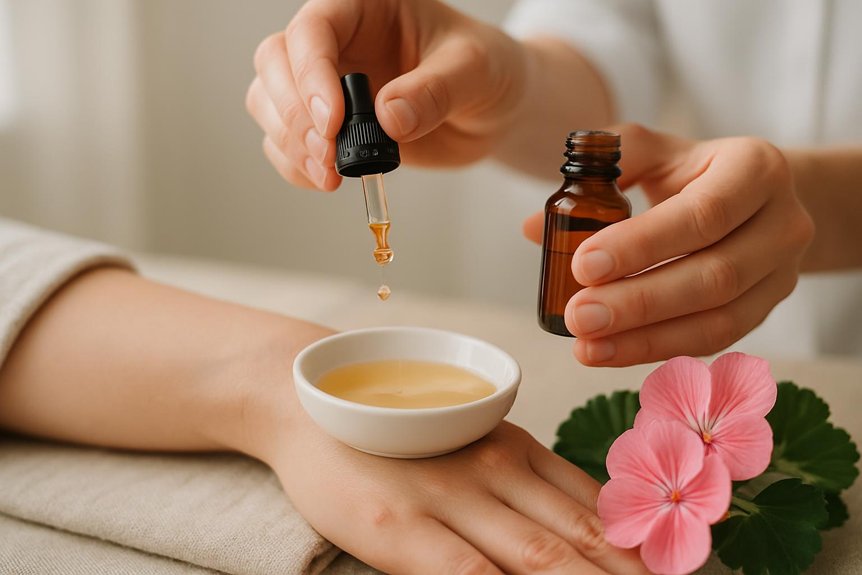
When used correctly, geranium essential oil is generally considered safe for massage, but it should be treated as a potent concentrate that requires proper dilution and screening for individual sensitivities.
In Spa & Massage clinics, therapists begin with a brief consultation and skin-history check, then select oils with the client’s comfort and goals in mind.
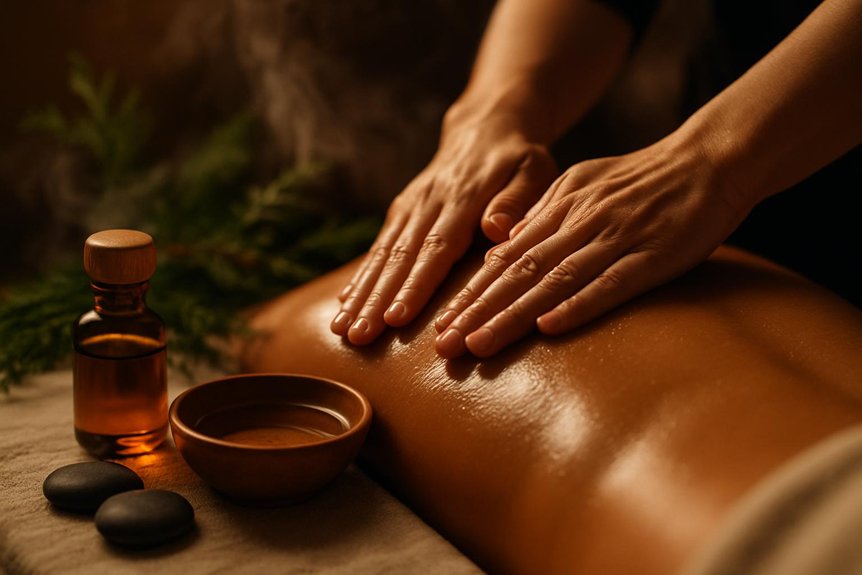
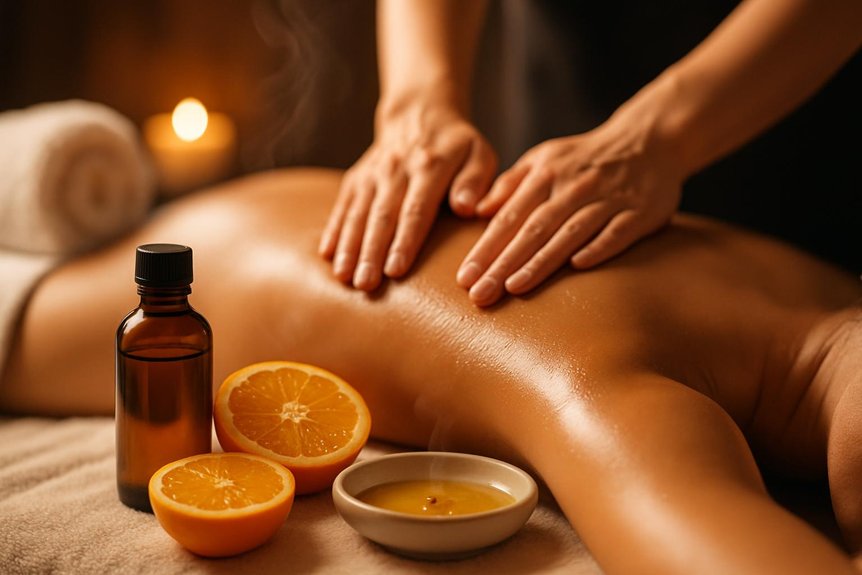
For deeper relaxation, some practitioners incorporate aromatherapy massage techniques to help clients unwind while still prioritizing safe dilution practices.
Patch testing is prudent for reactive skin, eczema, or fragrance sensitivity.
Geranium may be best avoided on broken skin, immediately after shaving, or when irritation is present.
Extra caution is appropriate during pregnancy, breastfeeding, and for those with asthma or multiple allergies; a therapist can recommend gentler options.
If burning, itching, headache, or nausea occurs, the massage should stop and the oil removed promptly with carrier oil.
How Do You Dilute Geranium Oil for Massage?
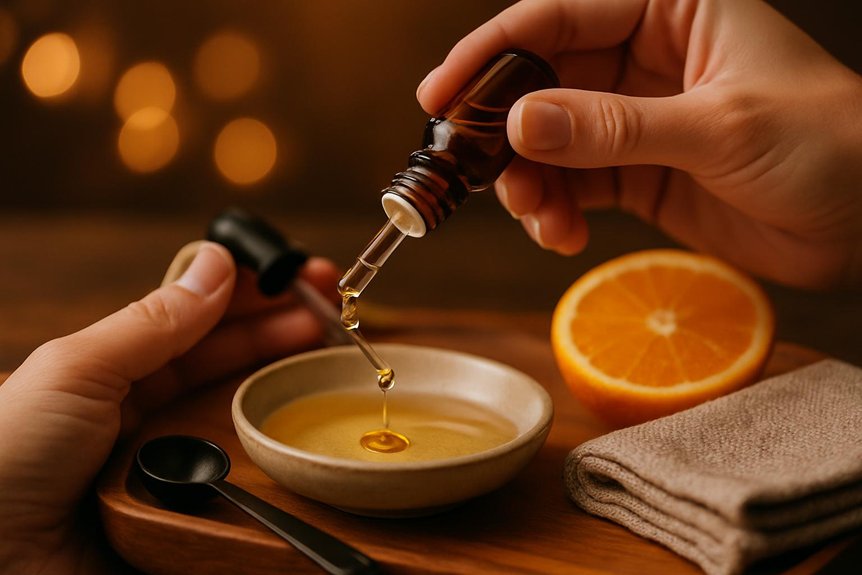
Start with a measured dilution, as geranium essential oil is highly concentrated and should never be applied neat to the skin.
For full-body massage, Spa & Massage therapists typically use a 1–2% blend: 3–6 drops of geranium essential oil per 10 ml of carrier oil (such as sweet almond, grapeseed, or jojoba).
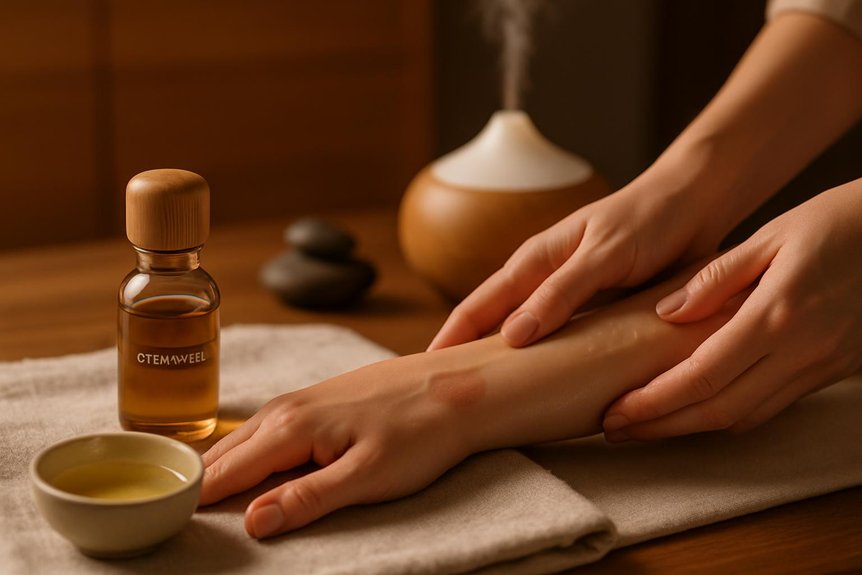
For a smaller, more intimate massage area like the neck, décolletage, or hands, a 1% dilution is often preferred to keep scent gentle and reduce irritation risk.
The oil should be mixed in a clean bottle, swirled to combine, then patch-tested on the inner forearm for 24 hours.
During treatment, pressure and fragrance intensity are adjusted to comfort and consent.
Who Should Avoid Geranium Oil Massage (Pregnancy, Meds)?
Who should skip a geranium oil massage, or at least seek clinical advice first? Anyone pregnant, trying to conceive, or breastfeeding should be cautious, as essential oils have limited safety data; at Spa & Massage, therapists typically recommend pregnancy massage with pregnancy-appropriate, low-scent blends instead.
Clients with asthma, migraine triggered by fragrance, or a history of severe sensitivities may prefer an unscented option to keep the session soothing rather than overwhelming.
People taking anticoagulants, antiplatelets, or diabetes medicines, or managing epilepsy, should check with a clinician before aromatherapy, because some essential oils can affect bleeding risk, blood sugar, or seizure threshold.
Those with complex medical conditions, recent surgery, or undergoing chemotherapy should request a tailored, fragrance-light treatment plan.
What Are Geranium Oil Side Effects or Allergy Signs?
Even for clients who are generally suitable for aromatherapy, geranium oil can occasionally cause side effects, most commonly skin irritation or an allergic contact reaction.
Typical signs include redness, itching, burning, rash, hives, or new dryness where the oil was applied; symptoms may appear during treatment or within 24–48 hours.
Less commonly, sensitive clients may notice headache, nausea, or light-headedness from the aroma, particularly in warm rooms or with prolonged inhalation.
Any swelling of the lips, eyelids, or face, wheezing, or sudden widespread hives should be treated as urgent.
At Spa & Massage, therapists advise clients to speak up at the first tingle, stop exposure, and rinse the area with mild soap and cool water promptly.
Patch testing is prudent.
How We Use Geranium Oil in Our London Clinics
In Spa & Massage’s London clinics, geranium essential oil is used selectively within aromatic massage blends to support relaxation and balanced skin comfort while keeping safety and tolerability front of mind. Therapists across Crouch End, Bayswater, Chiswick, Earl’s Court, Belsize Park, and Richmond choose it when a client prefers a soft, floral profile and a calming, close-to-skin experience.
Use is guided by consultation: medical history, pregnancy status, asthma, migraines, and prior fragrance reactions are checked first. The oil is diluted conservatively in a carrier oil, never applied neat, and avoided on broken or recently shaved skin. A patch test is offered for sensitive clients. During the massage, pressure and scent intensity are adjusted, and aftercare includes monitoring for delayed irritation.
Conclusion
Used well, geranium essential oil can feel like a miracle for massage—yet it is never “just a nice scent.” Safety hinges on disciplined dilution, patch testing, and rigorous screening for pregnancy, sensitising medications, asthma, and allergy history. Any itching, burning, rash, headache, or nausea should halt use immediately. Quality sourcing, correct storage, and therapist competence matter as much as the oil itself. In London clinics, blends are individualised, documented, and adjusted to the client.