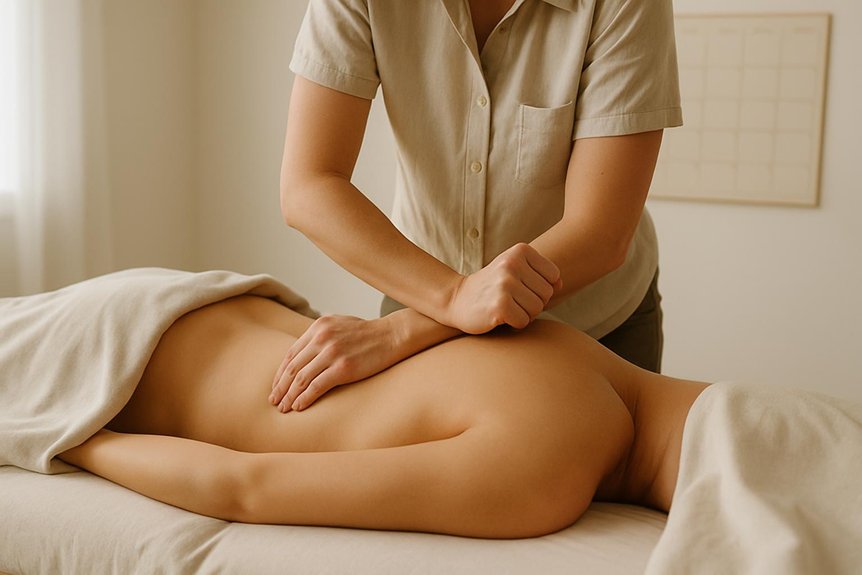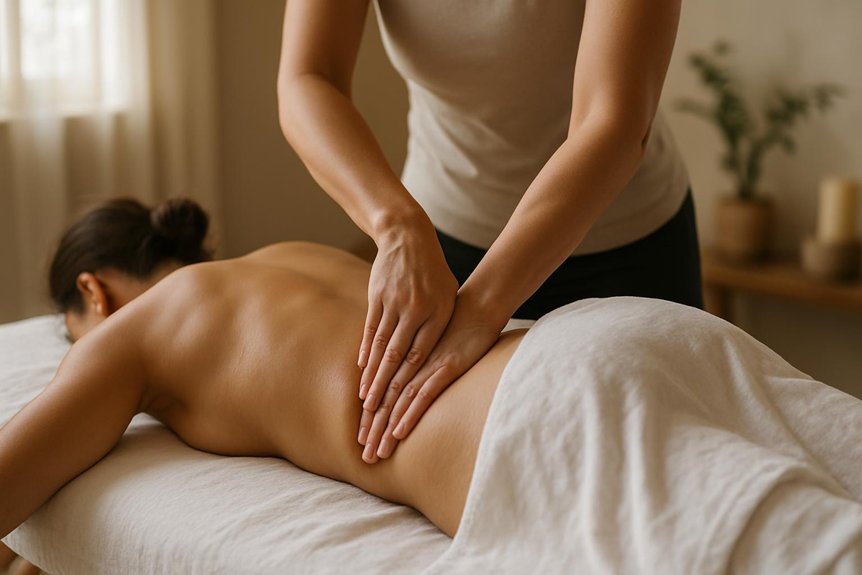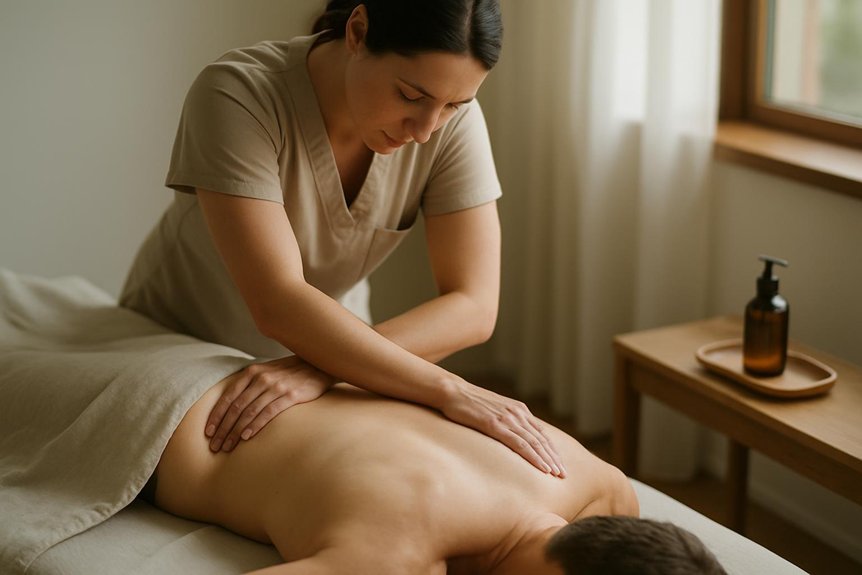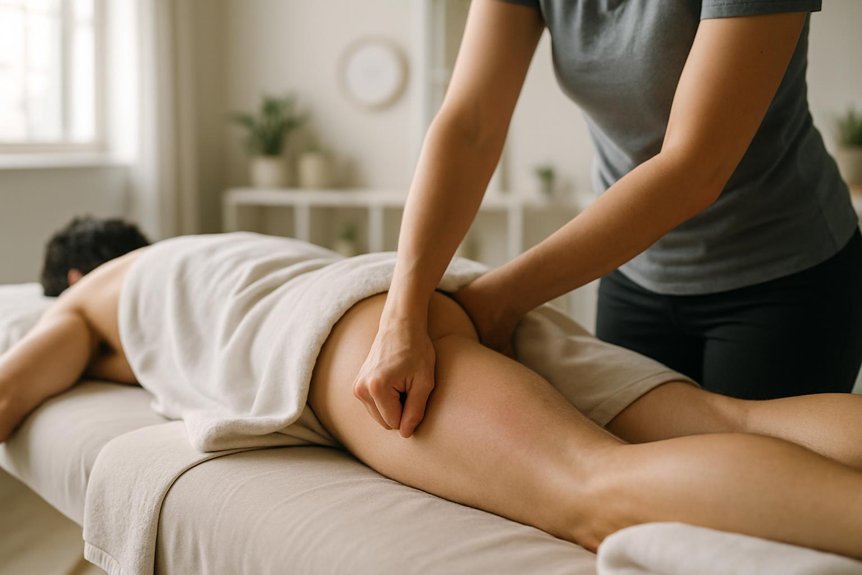
Most people with tight hamstrings benefit from intensive tissue massage every 7–14 days initially, then tapering to every 2–4 weeks as symptoms and post‑treatment soreness improve. Severe or highly limiting tightness may justify weekly sessions for 2–3 visits with reassessment, while maintenance is often every 4–8 weeks once goals are met. Allow 48–72 hours between deep sessions, and avoid escalating if bruising, worsening pain, or radiating symptoms occur. More guidance follows.
How Often to Get Deep Tissue Massage?
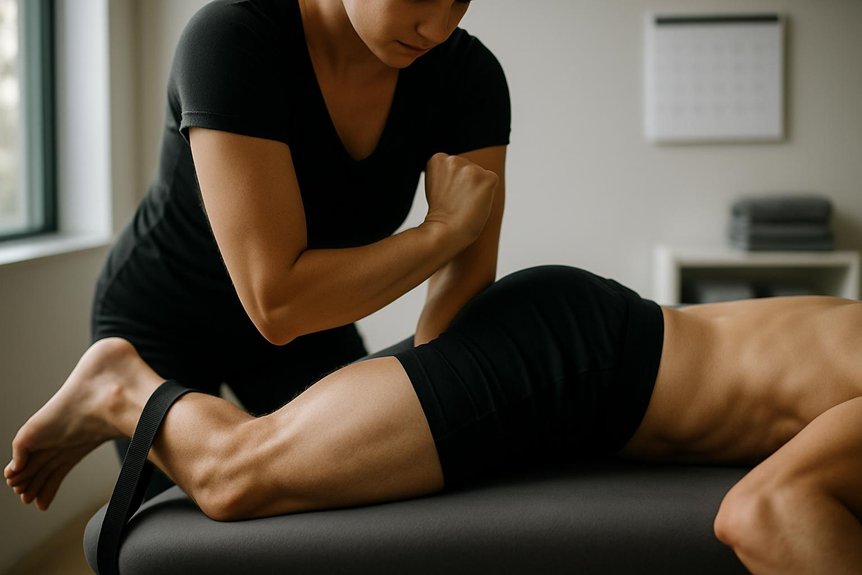
Often, the appropriate frequency of intensive tissue massage for tight hamstrings depends on symptom severity, training load, and tissue irritability, with safety considerations guiding progression.
In early, more irritable presentations, Spa & Massage therapists typically schedule sessions every 7–14 days to allow recovery and reduce post-treatment soreness, adjusting pressure to remain comfortably intense.
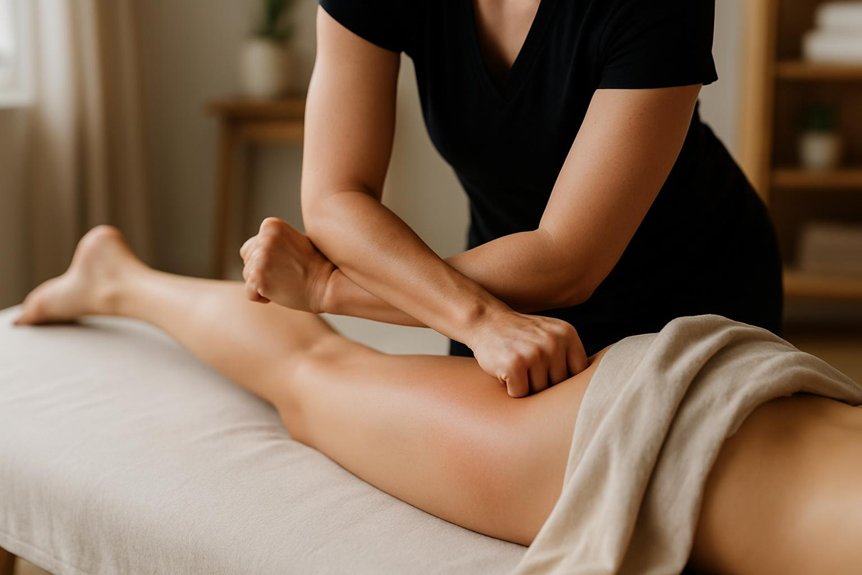
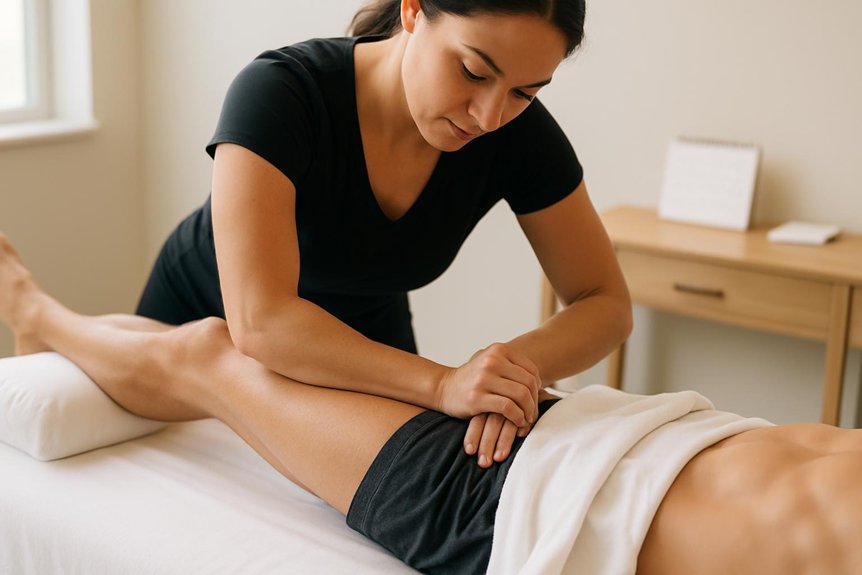
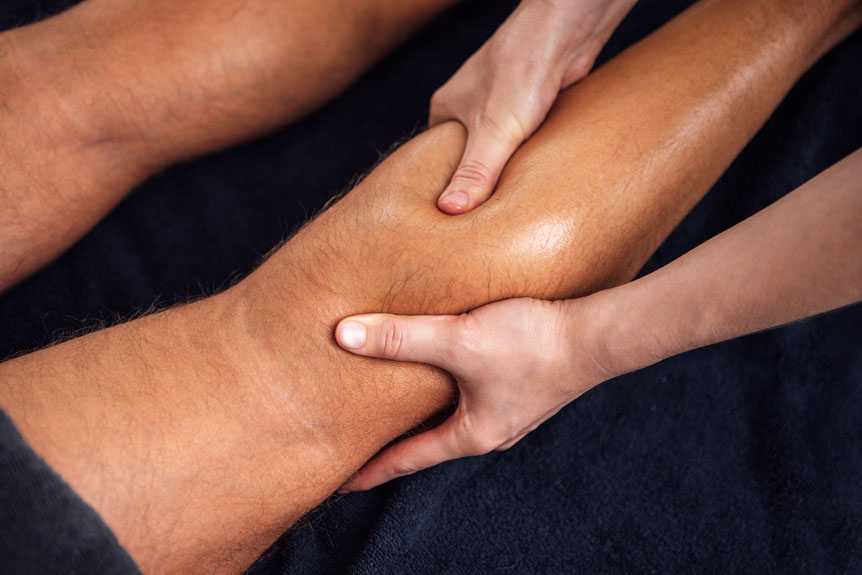
It uses slow, firm pressure to address muscle adhesions and deeper layers of soft tissue.
When symptoms are stable and training is moderate, a 2–4 weekly cadence often supports mobility and load tolerance.
During heavy training blocks or after competition, some clients benefit from weekly care for short periods, combined with gentler techniques or sports massage.
Once goals are met, maintenance every 4–8 weeks may be sufficient.
Escalation is avoided if pain increases, bruising occurs, or sleep is disrupted; reassessment is recommended.
What Tight Hamstrings Mean for Intensive Tissue Massage?
Interpreting “tight hamstrings” requires distinguishing a simple sensation of stiffness from true muscle shortening, load-related soreness, or a protective increase in tone driven by the lumbar spine, pelvis, or neural tension. This distinction matters because deep tissue work targets tissue capacity and pain modulation, not just “loosening.”
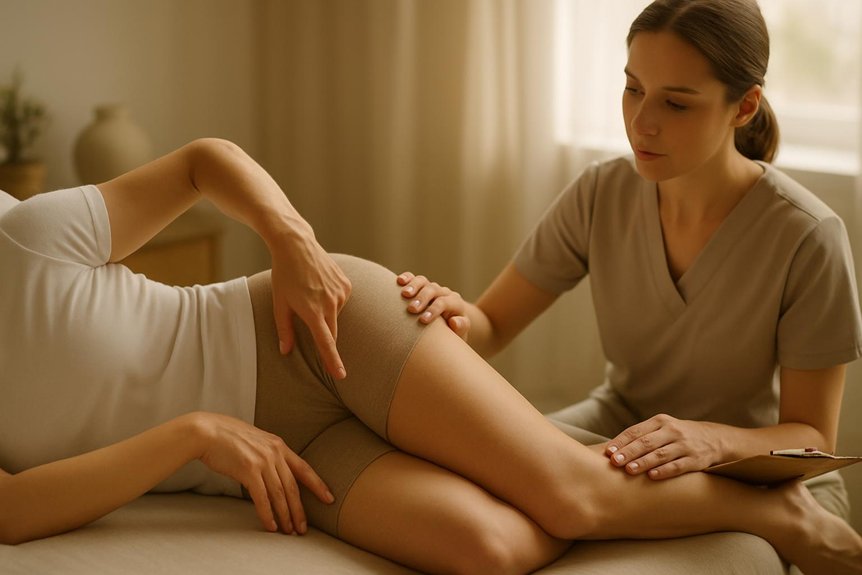
In Spa & Massage clinics, therapists assess movement quality, tenderness, and referral patterns to decide whether slow, sustained pressure, myofascial techniques, or gentler sports massage is safer and more effective. When tightness is protective, overly aggressive pressure can increase guarding or irritate the sciatic nerve.
Appropriate intensive tissue massage may reduce perceived tightness by improving local circulation, decreasing sensitivity, and restoring comfortable glide between muscle layers, while maintaining client consent, privacy, and clear communication throughout each stroke.
How Often Based on Mild, Moderate, or Severe Tightness?
Massage frequency for tight hamstrings should be matched to symptom severity and functional limitation, with reassessment guiding progression and avoiding excessive post-treatment soreness.
In Spa & Massage clinics, mild tightness is typically managed with less frequent sessions supported by home stretching, moderate tightness often benefits from a structured short-term schedule, and severe tightness may require closer spacing initially with careful load management.
If pain is sharp, worsening, or associated with swelling, bruising, or neurological symptoms, a conservative plan and medical review are advised before increasing deep tissue intensity or frequency.
Mild Tightness Schedule
For mild hamstring tightness, deep tissue work is typically scheduled every 2–4 weeks to reduce low-grade muscle tone and maintain normal range of motion without provoking post-treatment soreness. At Spa & Massage clinics across London, therapists keep pressure measured and responsive, using slow, targeted strokes to soften superficial guarding and support comfortable movement. This cadence suits clients who notice stiffness after sitting, commuting, or light training, yet have minimal pain and no functional limitation.
Between sessions, clients are advised to use gentle heat, hydrate, and perform easy hamstring mobility—never forcing end-range stretch. Treatment should be deferred if there is acute swelling, bruising, sudden weakness, or suspected strain. Progress is reviewed each visit, adjusting depth to maintain trust and comfort.
Moderate Tightness Schedule
Moderate hamstring tightness typically warrants a shorter interval than a maintenance plan, particularly when stiffness is persistent, range of motion is measurably reduced, or training and daily activities are being affected.
A practical schedule is deep tissue or sports massage every 7–14 days for 3–6 sessions, then tapering as mobility and comfort improve.
At Spa & Massage clinics across London, therapists reassess tone, tenderness, and stretch tolerance each visit and adjust pressure to remain within a “strong but safe” intensity, avoiding post-treatment guarding.
Between sessions, clients are advised to hydrate, use gentle heat, and perform brief daily mobility and eccentric strengthening, as tolerated.
Treatment should be postponed and clinically reviewed if pain is sharp, radiating, bruising is excessive, or function declines.
Severe Tightness Schedule
Severe hamstring tightness often requires a closer treatment interval initially, particularly when range of motion is markedly restricted, gait or training mechanics are altered, or pain and protective spasm are present. In these cases, Spa & Massage therapists typically schedule deep tissue or sports massage every 5–7 days for 2–3 sessions, then reassess objectively (straight-leg raise, hip hinge tolerance, tenderness).
If symptoms settle, sessions usually move to every 10–14 days for another 2–4 visits, before shifting to monthly maintenance. Pressure is progressed cautiously; sharp, radiating, or nerve-like pain warrants stopping and clinical referral.
Between appointments, clients are advised to use gentle heat, hydration, and slow, pain-free stretching, avoiding aggressive foam rolling or intense exercise for 24–48 hours. Consent and comfort remain central throughout.
How Many Days Should You Wait Between Sessions?
For tight hamstrings, a typical evidence-informed interval between deep tissue sessions is 48–72 hours, with longer rest often advisable after higher-intensity work to allow tissue recovery and reduce post-treatment soreness.
In Spa & Massage clinics, therapists base timing on objective response—pain levels, range of motion, gait comfort, and whether tenderness resolves within a day or two.
A client is generally ready again when soreness is minimal, function is improving, and no new sharp pain, bruising, or swelling is present.
Ideal Rest Between Sessions
In most cases, allowing 48–72 hours between deep tissue sessions gives hamstring tissue time to recover from post-treatment microtrauma and reduces the risk of cumulative soreness or irritation.
For persistent tightness, weekly treatments are often appropriate, with frequency adjusted to training load, sleep, hydration, and day-to-day activity.
People in heavy sport blocks or with long-standing restriction may benefit from an initial phase of 1 session every 5–7 days, then tapering to every 2–4 weeks for maintenance.
Shorter gaps (24–48 hours) are generally reserved for lighter work or combined approaches, such as gentle sports massage and mobility, rather than repeated deep pressure.
At Spa & Massage clinics across London, therapists set rest intervals to protect tissue while supporting comfort and progress.
Signs You’re Ready Again
Often, the clearest indicator that another deep tissue session is appropriate is that post-treatment tenderness has settled and normal hamstring function has returned—typically within 48–72 hours—with improved range of motion that holds between workouts and no increase in pain during walking, stairs, or training.
Additional readiness signs include a “good soreness” that resolves within a day, steady flexibility gains, and reduced protective guarding during stretching or intimacy-related movement. At Spa & Massage, therapists also look for stable sleep, hydration, and no bruising, swelling, or sharp, localised pain after the last visit.
A return of tightness that feels diffuse and muscular—not nerve-like tingling, numbness, or radiating pain—often supports rebooking. If symptoms worsen, or strength drops, waiting longer and clinical review are advised.
Should You Get Intensive Tissue Massage After Running or Gym?
Generally, intensive tissue massage after running or a gym session can be appropriate, but timing and intensity should be guided by tissue sensitivity, training load, and symptoms, as heavy pressure applied to already micro‑damaged muscle may exacerbate post‑exercise soreness in some individuals.
Spa & Massage typically advises waiting 6–24 hours after high‑intensity sessions, or choosing lighter sports massage or gentle flushing work on the day, especially for tight hamstrings.
If the legs feel warm, tender, or unusually fatigued, a lower-pressure approach supports circulation and comfort without overloading tissue.
Deep work is more suitable when stiffness persists into the next day, range of motion is restricted, or training continues to feel “held.”
Therapists should avoid aggressive stripping over acute pain, bruising, or swelling, and confirm hydration, sleep, and recovery needs.
Is Post-Massage Soreness Normal (and How Long)?
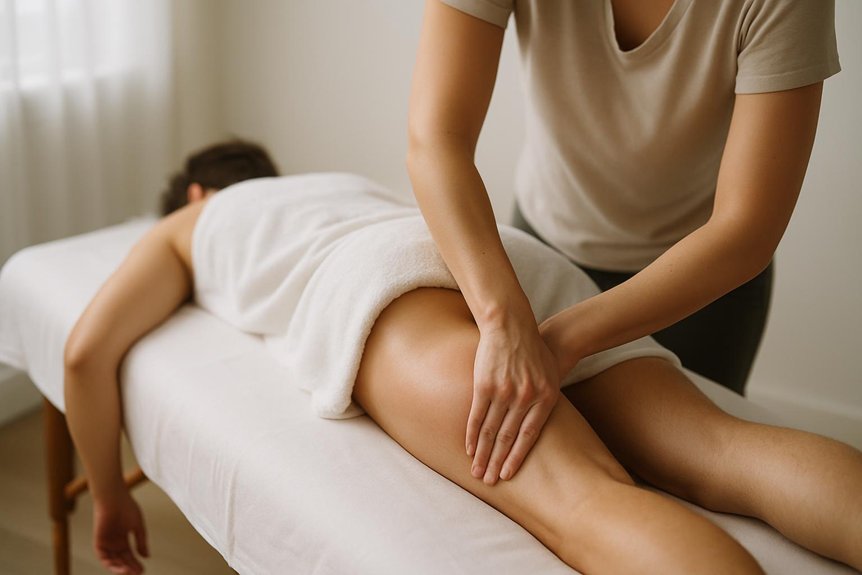
Mild post‑massage soreness can sometimes occur after deep tissue work on tight hamstrings and is usually a normal, self‑limiting response to sustained pressure and targeted mechanical loading of sensitised muscle and connective tissue.
It often feels like tenderness, heaviness, or a “worked” ache, particularly when sitting, walking, or stretching.
In most people, discomfort peaks within 12–24 hours and settles over 24–72 hours.
Spa & Massage therapists recommend simple aftercare: adequate hydration, gentle walking, light hamstring mobility (not forceful stretching), and warm shower or bath to support circulation and relaxation.
Some clients prefer a brief cold pack for 10 minutes if the area feels irritated.
If soreness persists beyond three days, intensity should be adjusted at the next session for comfort and trust.
Signs You’re Overdoing Intensive Tissue Massage
Post‑massage soreness that peaks within 12–24 hours and settles within 72 hours is typically expected after targeted deep tissue work on tight hamstrings; symptoms outside this pattern may indicate the treatment is being overdone.
Concerning signs include pain that intensifies after day two, sharp or burning sensations during touch, bruising that spreads, marked swelling, heat, or redness.
Reduced range of motion, limping, sleep disruption, or a feeling of “guarding” can suggest excessive tissue irritation.
Neurological symptoms—numbness, tingling, or radiating pain into the calf or foot—warrant prompt clinical review.
In Spa & Massage clinics, therapists monitor pressure tolerance, skin response, and post‑session function; persistent symptoms beyond 72 hours, or any systemic signs such as fever or malaise, should pause further sessions.
Stretches and Strength Work to Stop Hamstrings Tightening
Alongside intensive tissue massage, a structured programme of hamstring stretching and posterior‑chain strength work is often required to reduce recurrent tightness and improve tolerance to load. Evidence supports combining gentle mobility with progressive strengthening to improve tissue capacity, not just sensation.
Clients may use daily low‑intensity stretches (20–30 seconds, 2–4 reps) such as supine strap hamstring stretch, keeping the pelvis neutral and avoiding sharp pain or tingling. Strength work 2–3 times weekly can include Romanian deadlifts, hip bridges, and eccentric hamstring sliders, starting light and prioritising slow control. A warm‑up and gradual load increases reduce flare‑ups. At Spa & Massage clinics, therapists often pair treatment with personalised home plans and advise pausing exercises if pain, numbness, bruising, or cramping persists.
Conclusion
It can be a useful lever for persistent hamstring tightness, but frequency should be dosed like medicine—enough to change tissue behaviour without provoking irritation. For mild cases, periodic sessions may suffice; moderate or long-standing tightness often responds to a short, structured course with rest days between. Severe symptoms warrant slower progression and clinical screening. When paired with strengthening, mobility work, hydration, and sensible training load, massage becomes less a reset button and more a steady compass.