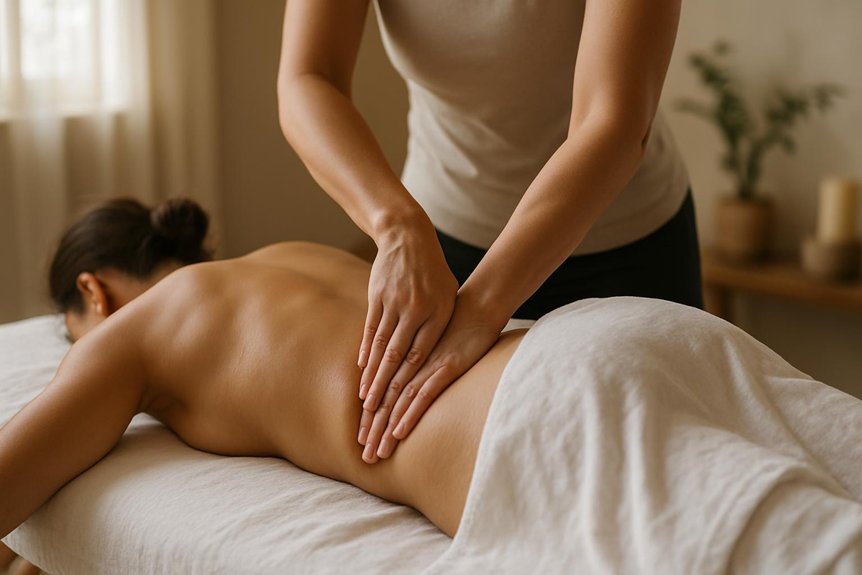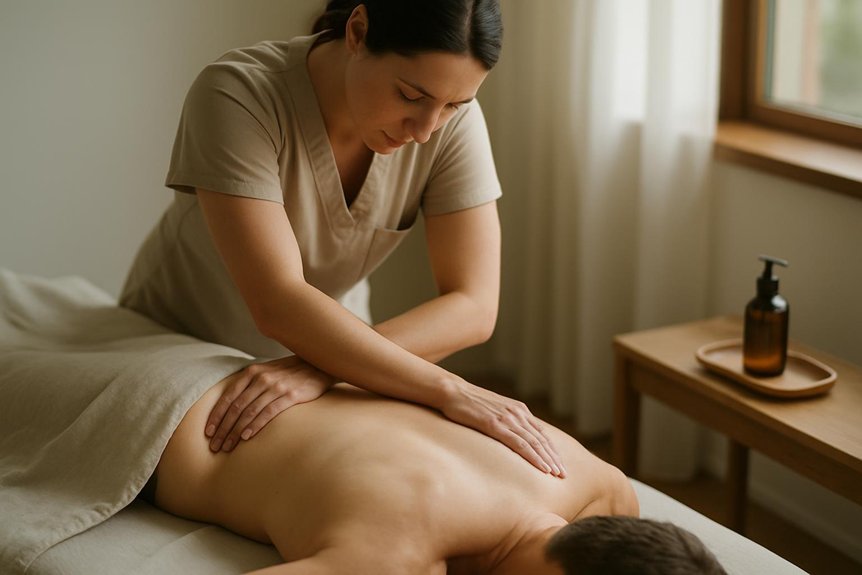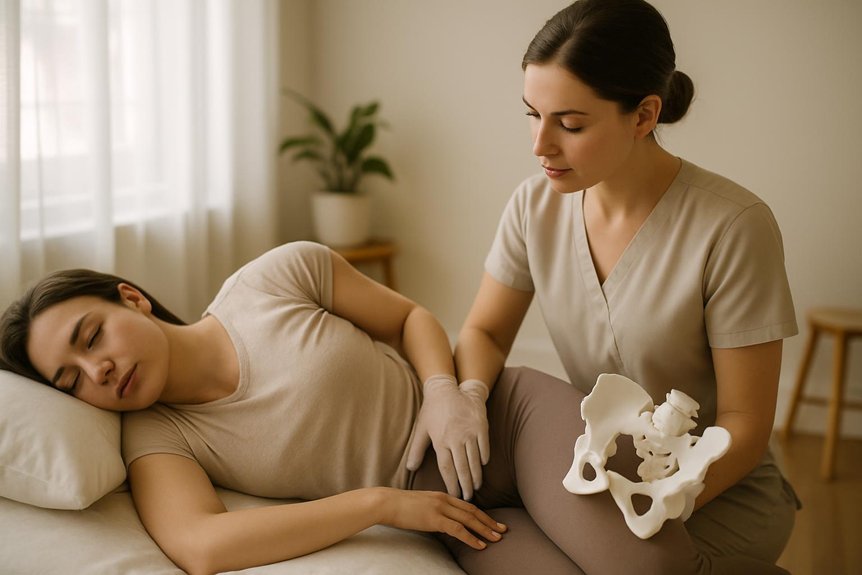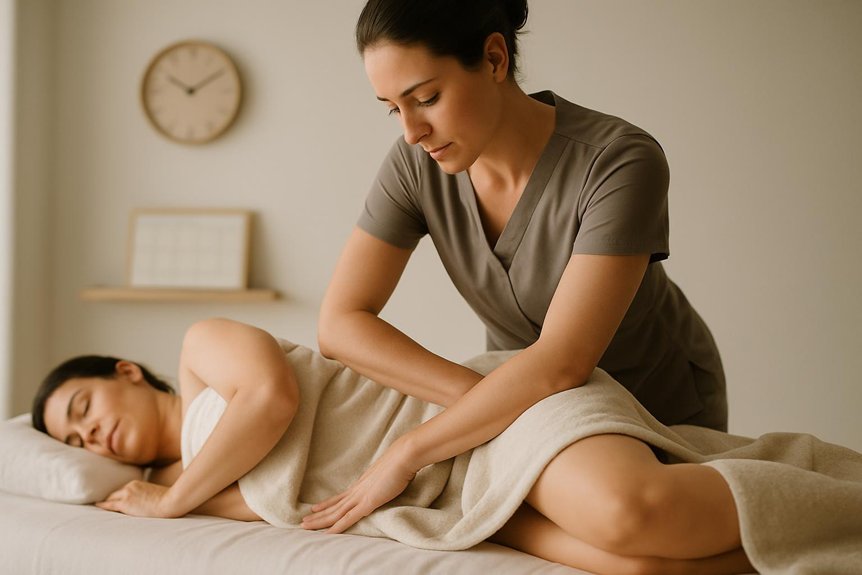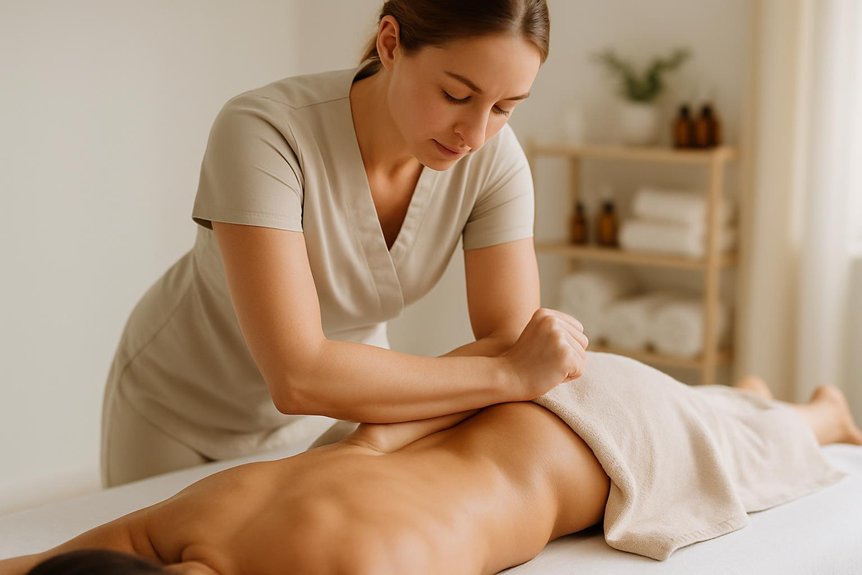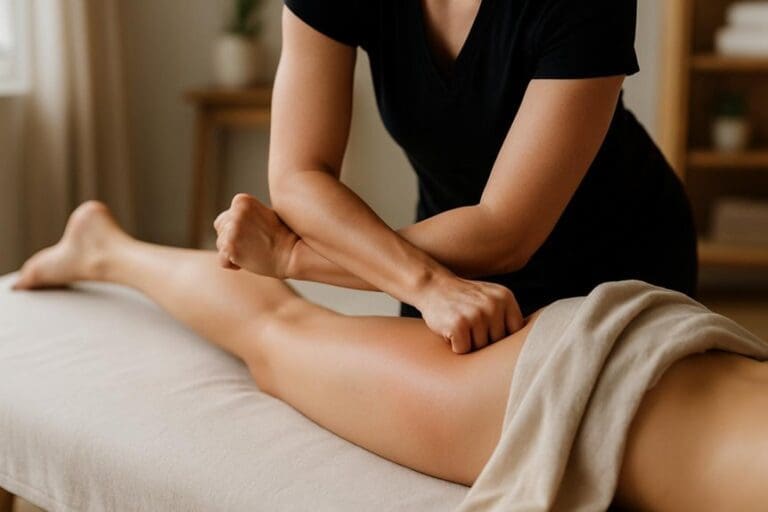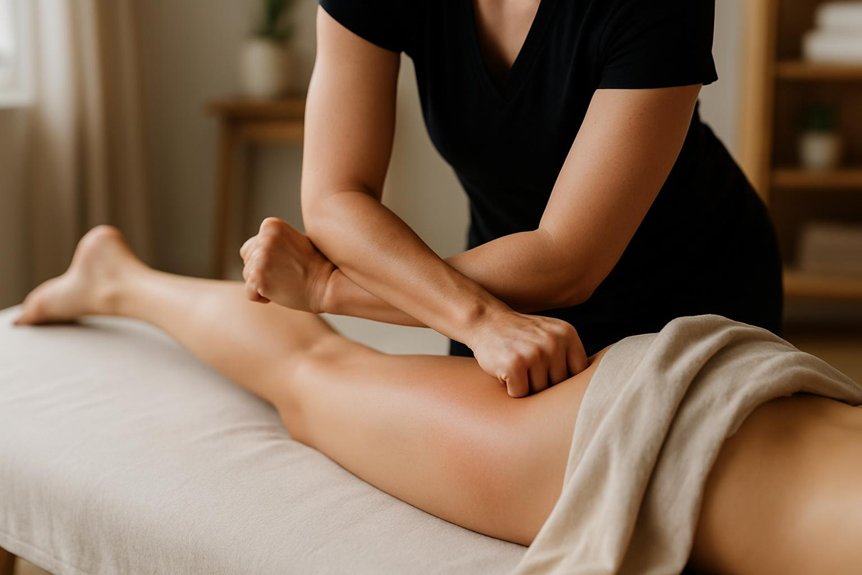
Deep tissue massage can help tight hamstrings when the restriction is mainly due to muscle and fascial tension rather than acute strain, nerve irritation, or joint pathology. It commonly reduces the sensation of tightness and improves short-term range of motion through neuromuscular effects and better tissue glide. Many clients notice a warmer, looser feel and easier hip flexion afterward, especially when paired with simple home mobility and load management. Further details clarify who benefits most and when it should be avoided.
Deep Tissue Massage for Tight Hamstrings: Does It Work?
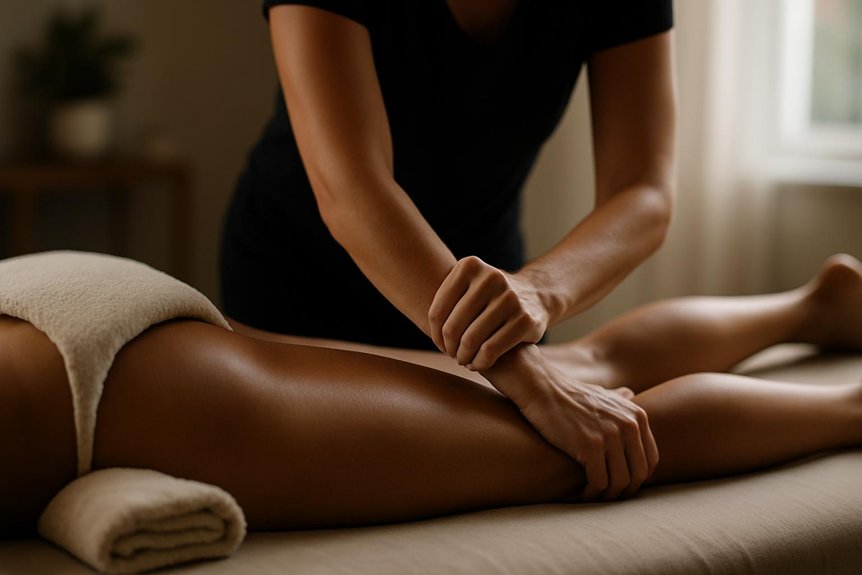
Addressing tight hamstrings with deep tissue massage can be effective when the restriction is driven by muscle and fascial tension rather than an underlying joint, nerve, or acute tendon injury. Evidence suggests manual pressure and slow strokes can reduce perceived tightness, improve short-term range of motion, and downshift protective guarding through neuromuscular effects. It also leverages deep tissue massage techniques that focus on sustained pressure and slow, deliberate strokes to target deeper layers of muscle.
At Spa & Massage London clinics, therapists assess movement and tenderness, then apply sustained, tolerable pressure along the hamstring bellies and attachment lines, often integrating myofascial release and targeted stretching. Clients typically report a warmer, looser feel and easier hip flexion after treatment; results are strongest when sessions are paired with simple home care.
Aftercare usually includes hydration, gentle walking, and low-load mobility, avoiding aggressive stretching that reproduces sharp pain or tingling.
Why Do Hamstrings Get Tight (and Who’s Most at Risk)?
In many London lifestyles, hamstrings become “tight” when prolonged sitting, repetitive training loads, or stress-driven guarding increases resting muscle tone and reduces comfortable hip flexion.
This may reflect true shortness, but often involves neural sensitivity, reduced blood flow, or altered pelvic mechanics from weak glutes, stiff hip flexors, or lumbar irritation.
Dehydration, poor sleep, and high stress can heighten protective tension, making stretching feel sharp rather than relieving.
Those most at risk include desk workers, cyclists, runners increasing mileage, strength trainees under-recovering, and people returning to exercise after breaks.
Pregnancy and postnatal changes may also shift pelvic position and load.
At Spa & Massage, therapists often note tighter hamstrings in clients with asymmetry, previous strains, or back pain patterns.
How Deep Tissue Massage Loosens Tight Hamstrings
Deep tissue massage can help loosen tight hamstrings by applying targeted pressure to reduce muscle adhesions and restore more normal tissue glide.
It also addresses restrictions in the surrounding fascia while supporting local circulation, which may improve oxygen and nutrient delivery and aid recovery after activity.
At Spa & Massage clinics across London, therapists tailor pressure and technique to the client’s tolerance and goals to promote safer, more comfortable gains in hamstring mobility.
Muscle Adhesion Release
With repeated training, prolonged sitting, or past strain, tight hamstrings can develop myofascial adhesions—sticky, fibrous cross-links between muscle fibres and surrounding fascia that limit normal tissue glide and contribute to stiffness and pulling sensations.
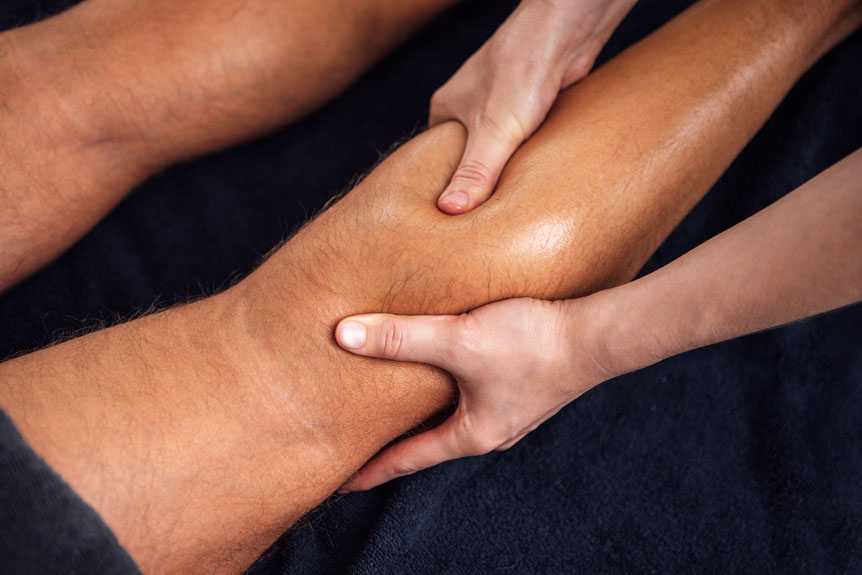
Deep tissue massage targets these restricted zones with slow, specific pressure and directional strokes designed to encourage tissue lengthening and improved glide.
At Spa & Massage, therapists assess tenderness, range, and referral patterns, then work progressively—often combining sustained compression and careful stripping along the hamstring line—to release “stuck” fibres without overwhelming the nervous system.
Clients may notice a warm, spreading ease and a sense of unwinding as sensitivity reduces.
Follow-up usually includes gentle movement and hydration guidance, supporting comfort and longer-lasting mobility between sessions.
Fascia And Circulation Boost
Beyond the muscle fibres themselves, tight hamstrings often reflect fascial restriction and reduced local perfusion. Deep tissue techniques can load the fascia slowly, encouraging viscoelastic change and reducing protective tone around the posterior thigh. As glide improves between fascial layers, clients often feel the area soften and lengthen with less pulling during hip flexion.
Improved circulation may also support recovery. Sustained pressure and rhythmical stripping strokes can enhance local blood flow and lymphatic return, helping clear metabolites that sensitise tissue. At Spa & Massage clinics across London, therapists pace pressure to the client’s breath and comfort, maintaining a steady, intimate sense of safety while targeting hamstring fascia, gluteal attachments, and the posterior knee.
Aftercare commonly includes hydration, light walking, and gentle stretching to consolidate warmth and ease.
When Deep Tissue Massage Isn’t Right (Red Flags)
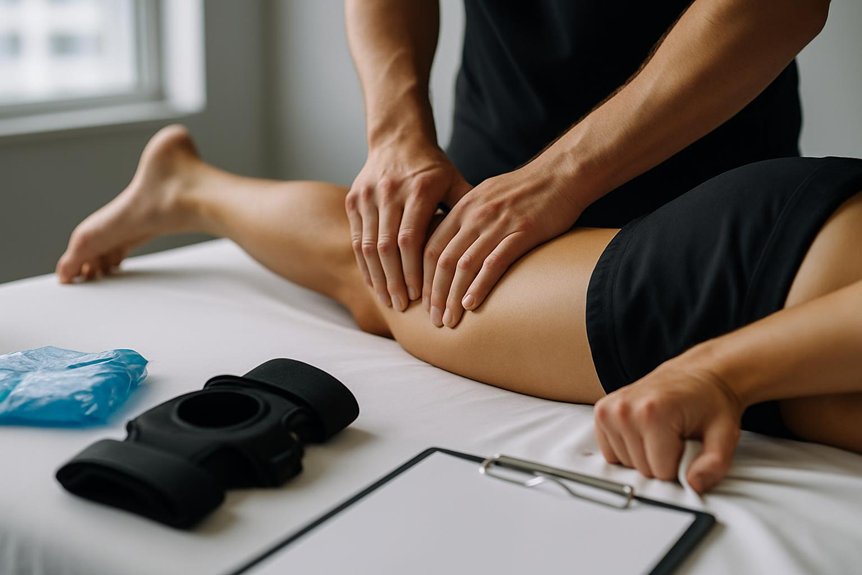
When might deep tissue massage for tight hamstrings be the wrong choice? It may be inappropriate with suspected acute strain, sudden “pop,” bruising, significant swelling, or sharp pain on walking, as deeper pressure can aggravate tissue damage.
Red flags also include fever, unexplained weight loss, severe night pain, recent surgery, uncontrolled hypertension, clotting disorders, anticoagulant use, or a history of deep vein thrombosis, where vigorous work may increase risk.
Skin infection, open wounds, varicose vein tenderness, or numbness/tingling radiating below the knee warrant medical review first.
At Spa & Massage clinics in London, therapists screen, ask consent, and adjust touch; if discomfort exceeds “good pain,” pressure is reduced or treatment postponed. Pain is never a test.
Deep Tissue vs Sports Massage for Hamstrings
For tight hamstrings, deep tissue massage and sports massage can both be appropriate, but they target different clinical aims and are selected based on symptoms, activity demands, and tissue irritability.
Deep tissue work prioritises slow, sustained pressure to reduce protective tone and improve glide through the hamstring–gluteal chain, often preferred when tightness feels constant, diffuse, and stress-related.
Sports massage is more performance-led, combining deeper strokes with faster, functional techniques to address post-training soreness, workload spikes, or recurring strains, and may suit clients needing readiness for running, cycling, or field sports.
At Spa & Massage clinics across London, therapists choose the least-irritating option first, adapting pressure, pace, and positioning so treatment feels safely intense, not bruising or guarded, and remains emotionally reassuring.
What to Expect in a Hamstring-Focused Session
In a hamstring-focused session at Spa & Massage, the therapist typically begins with a brief assessment and simple movement testing to clarify symptoms, relevant activity demands, and range-of-motion limits.
Treatment then applies targeted deep tissue techniques to the hamstring complex and related structures as tolerated, with pressure adjusted to maintain effective, safe discomfort rather than pain.
The session usually concludes with aftercare advice, including hydration, load management, and practical stretch guidance to support short- and longer-term changes in flexibility and function.
Assessment And Movement Testing
Before any deep tissue work begins, a hamstring-focused session at Spa & Massage typically starts with a brief assessment and movement testing to identify the most likely drivers of tightness and guide a safe, targeted treatment plan. The therapist reviews symptoms, training load, sitting time, prior injury, and any red flags, then clarifies comfort boundaries and preferred draping for privacy.
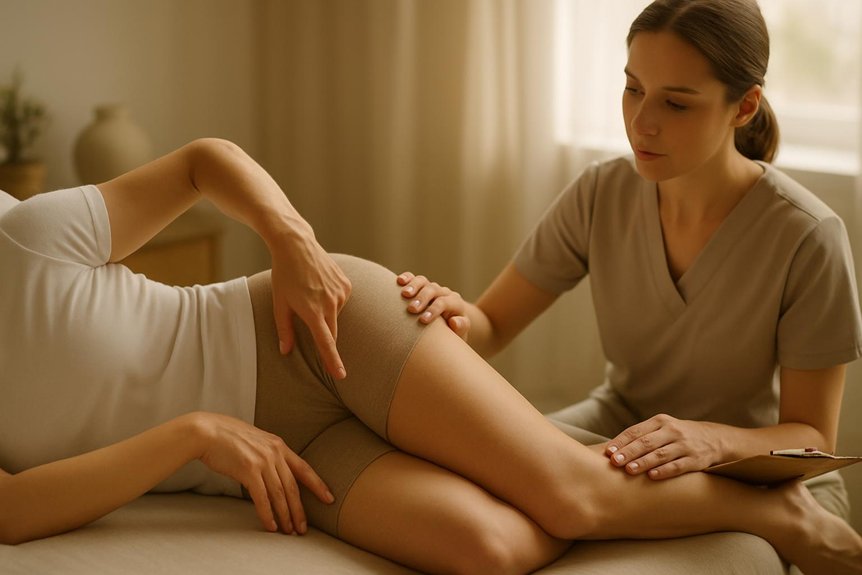
Posture and pelvic position may be observed, followed by gentle range-of-motion checks such as hip flexion, knee extension, and straight-leg raise, noting side-to-side differences. Simple functional tests—hinge pattern, squat depth, and glute activation—help distinguish hamstring guarding from hip flexor stiffness, lumbar referral, or neural tension. Findings are explained clearly, with consent checked before proceeding further.
Targeted Hamstring Tissue Work
Findings from the assessment inform where pressure is applied and which structures are prioritised during targeted hamstring tissue work.
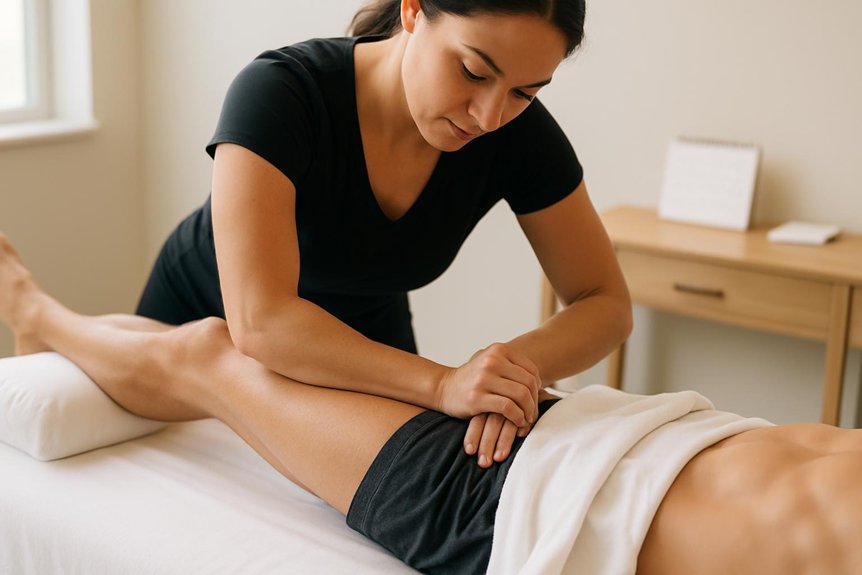
In Spa & Massage clinics, the session typically begins with slow, warming strokes to increase local circulation and prepare sensitive tissue, then progresses to deeper, specific contact along the biceps femoris, semitendinosus, and semimembranosus. Therapists may use forearm or elbow pressure, always paced to the client’s breath and comfort, aiming to reduce tone and improve glide between tissue layers.
Trigger point work can be applied to referral patterns felt behind the knee or into the gluteal fold.
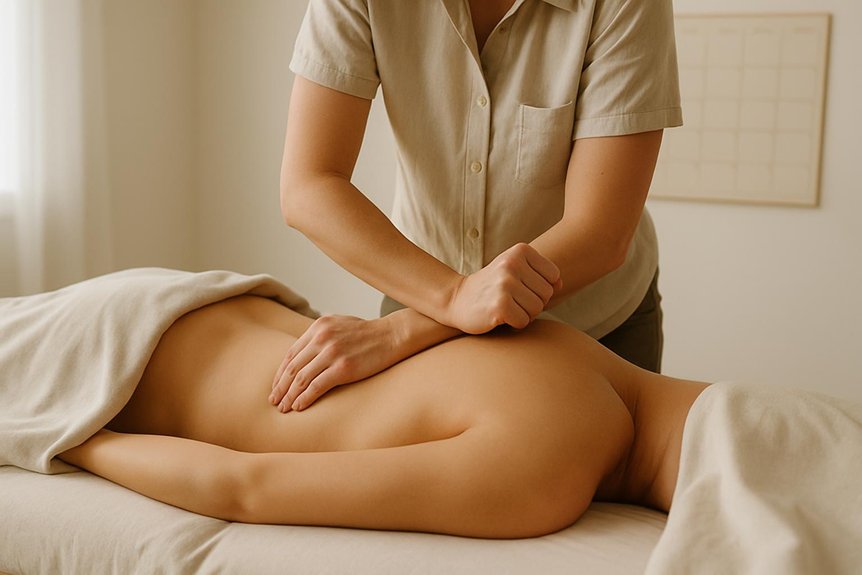
Communication stays continuous, and pressure is adjusted so the work feels close, safe, and effective. Draping preserves warmth, privacy, and ease.
Aftercare And Stretch Guidance
After a hamstring-focused deep tissue session, aftercare typically centres on supporting tissue recovery and maintaining the length and glide gained during treatment.
Spa & Massage therapists usually advise steady hydration, gentle walking, and avoiding high-load sprinting or heavy deadlifts for 24–48 hours, as delayed-onset soreness can occur. Warmth later that day may help comfort; brief cold can be used if irritation feels sharp.
Stretching is kept low-intensity: a supported hamstring stretch or nerve-glide, 20–30 seconds, 2–3 rounds, staying below pain and pins-and-needles.
Slow nasal breathing and soft jaw help reduce protective tension.
Many clients are guided to add light glute activation to stabilise pelvic position and support lasting ease.
Reassessment at follow-up guarantees progress.
How to Keep Hamstrings Loose Between Massages (Aftercare)
Often, hamstrings tighten again within days of a deep tissue session if daily loading (prolonged sitting, running volume, strength work) exceeds current tissue tolerance, so structured aftercare is essential to maintain gains between appointments.
Spa & Massage therapists advise brief, frequent movement breaks: 2–3 minutes of walking and gentle hip hinging every 45–60 minutes of sitting.
Daily isometric hamstring holds (e.g., heel-dig bridges, 3–5 sets of 20–30 seconds) can reduce tone and build capacity without irritation.
Light neural mobility (slow, pain-free leg raises with ankle pumps) supports comfortable glide, while heat or a warm bath may ease protective guarding.
Hydration and adequate protein aid recovery.
Self-massage with a massage ball should feel “comfortably intense,” never sharp.
A follow-up sports massage can be scheduled as training load increases.
Conclusion
It can reduce perceived hamstring tightness by addressing myofascial restriction, trigger points, and load-related soreness, particularly when combined with mobility and graded strengthening. In one randomized trial, massage improved hamstring flexibility by about 4–5° of straight‑leg‑raise range immediately after treatment, illustrating a measurable short‑term change. It is best used as part of a plan that also targets prolonged sitting, running volume, and hip control, while screening for red flags or acute injury.