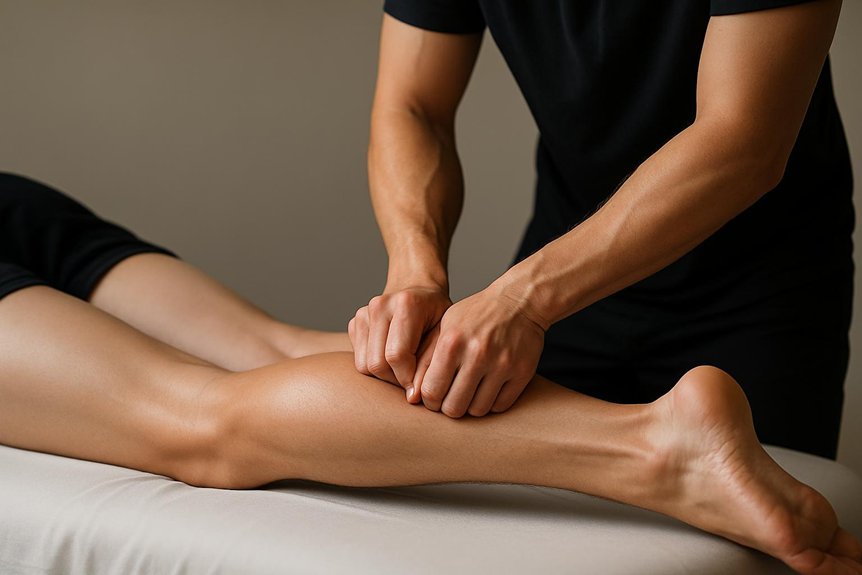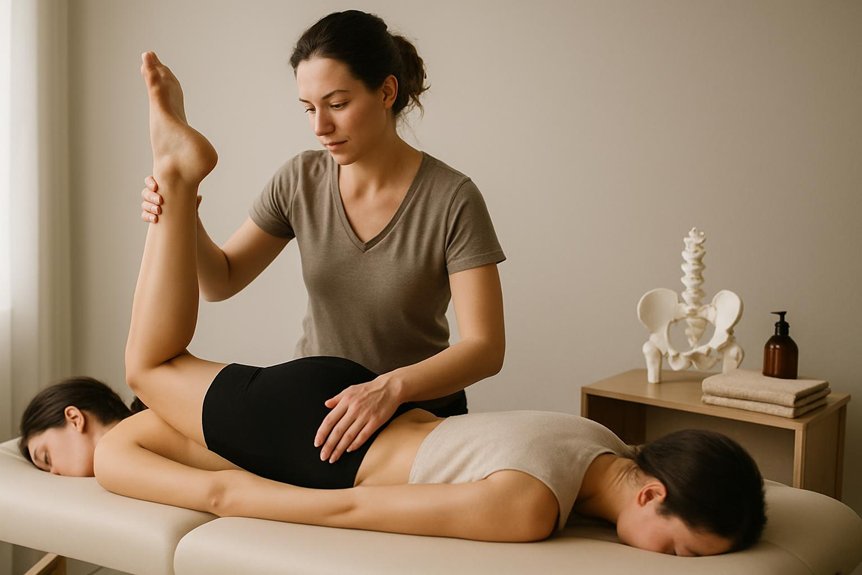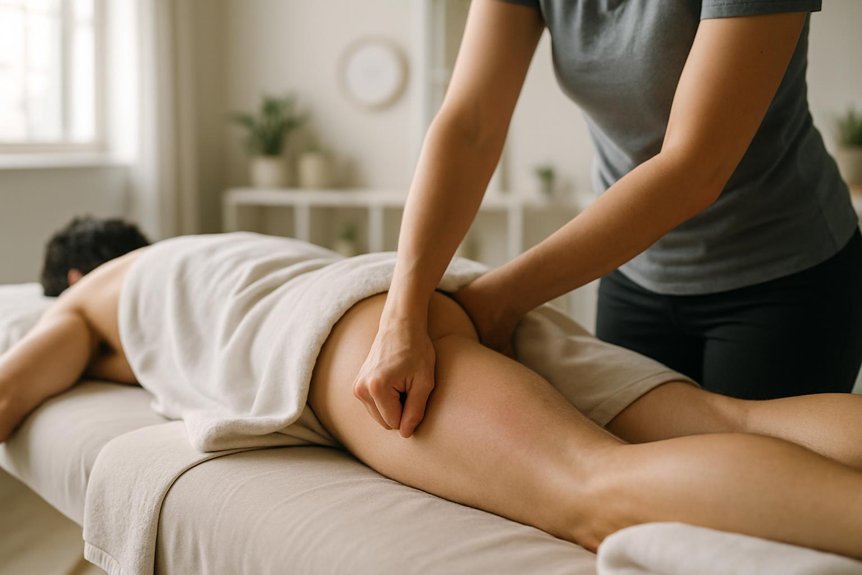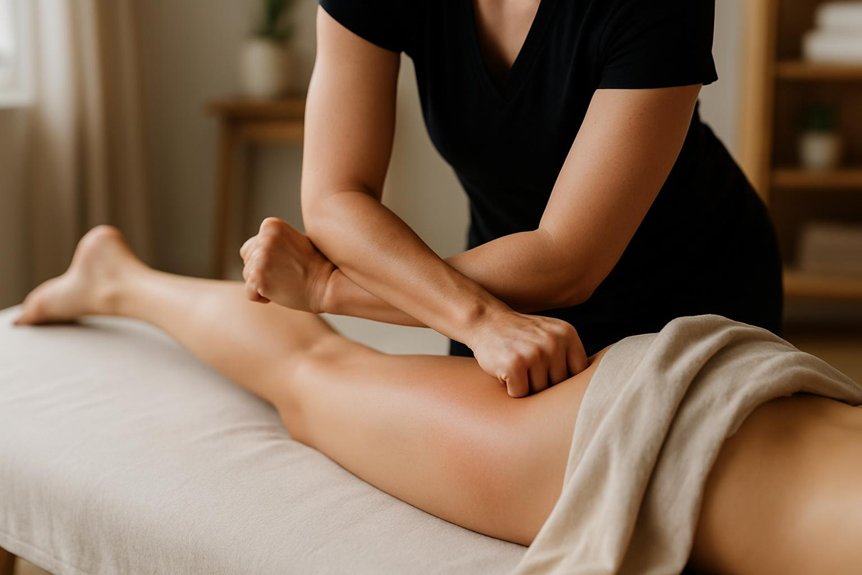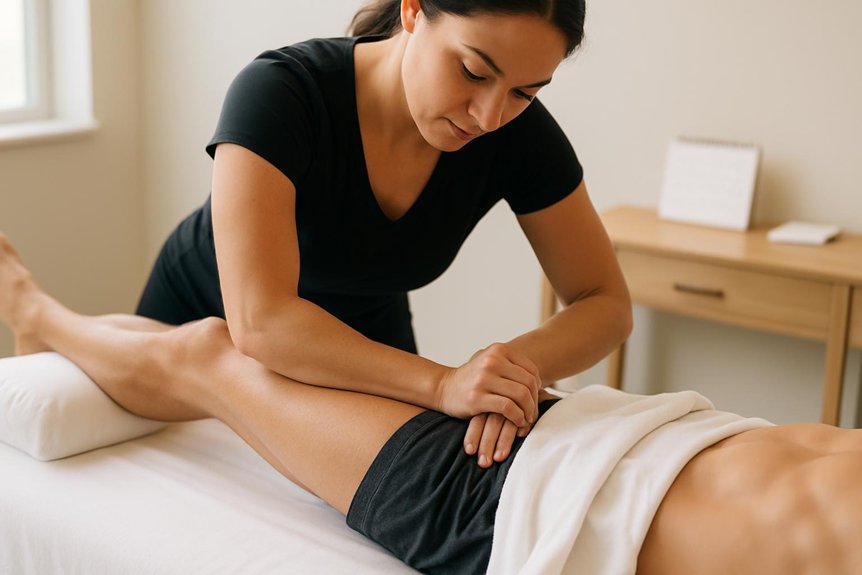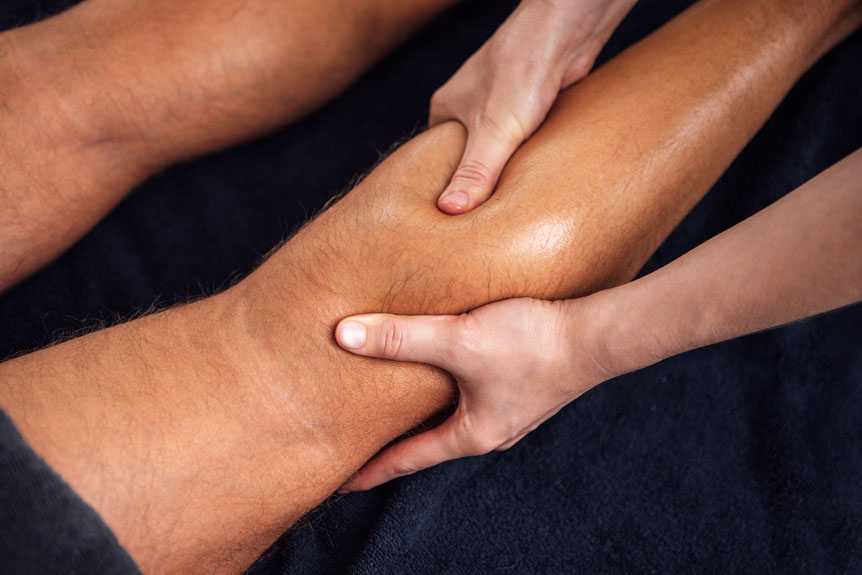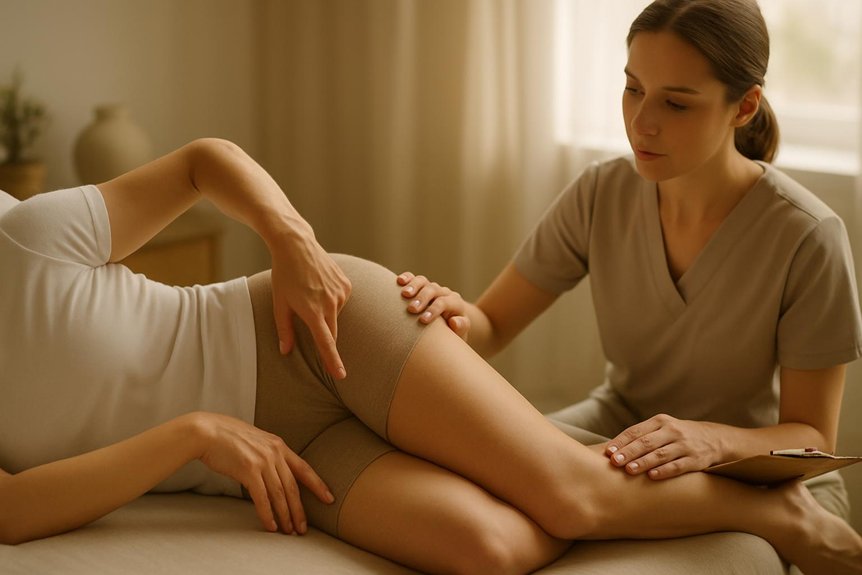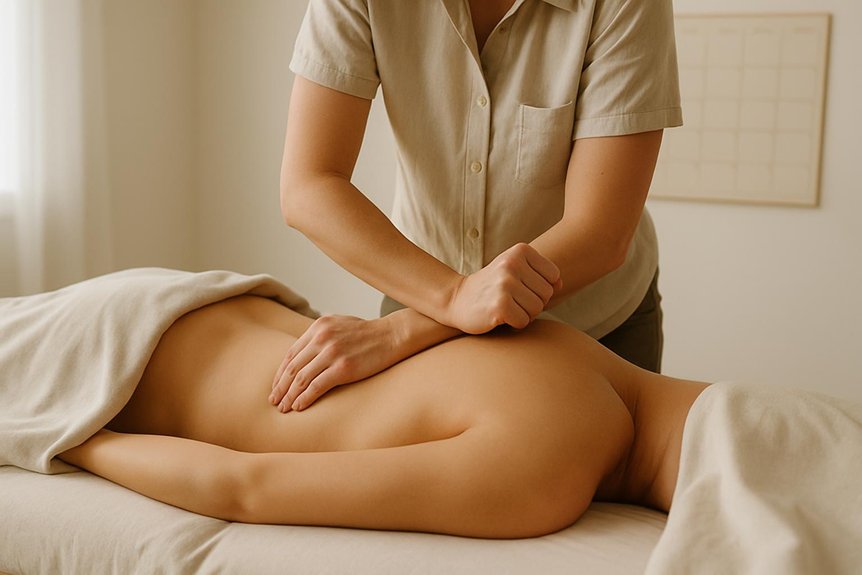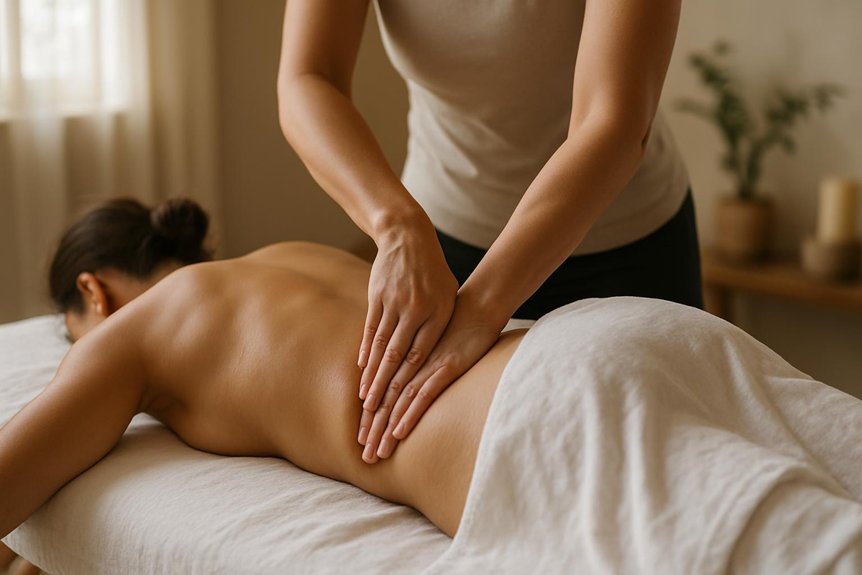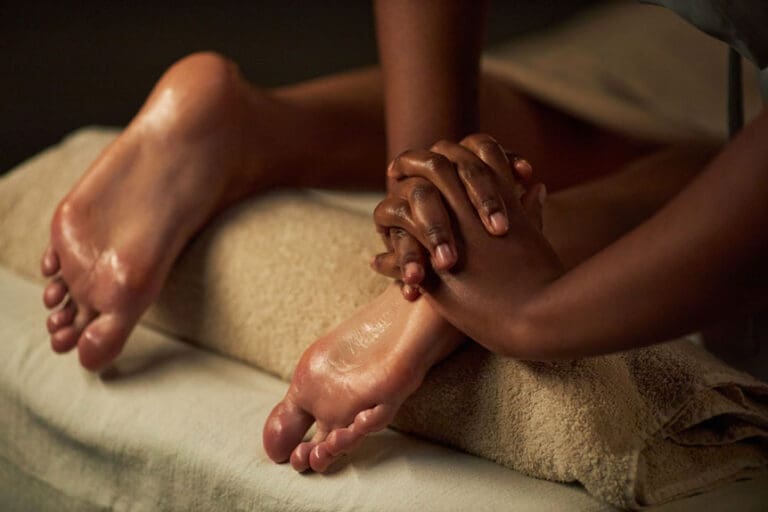
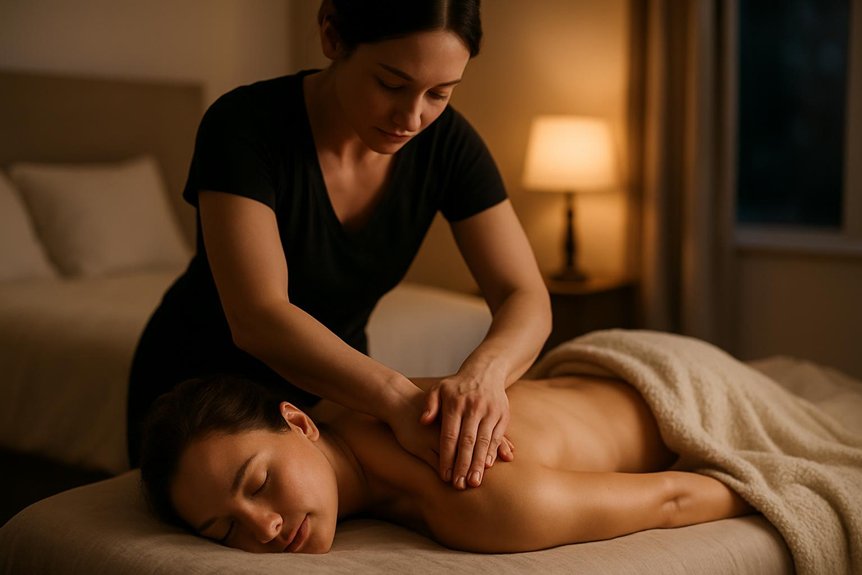
It can support better sleep by reducing pain-driven arousal and lowering stress physiology when applied at an appropriate intensity. Slow, sustained pressure can decrease chronic muscle tension, trigger-point sensitivity, and protective guarding that often feel worse at night, while promoting parasympathetic activity, calmer breathing, and a lower heart rate. Many clients do best scheduling treatment about 2–4 hours before bedtime and following calming aftercare to extend the effect. Further guidance can clarify timing, technique, and safety.
Can It Improve Your Sleep?
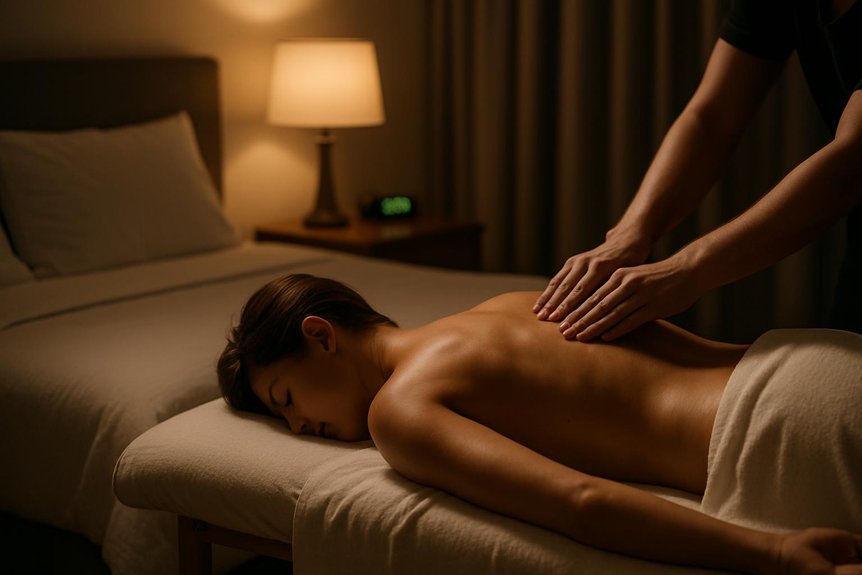
How might deep tissue massage influence sleep quality? Evidence suggests it may reduce musculoskeletal pain, downshift stress physiology, and support parasympathetic activity—factors linked with easier sleep onset and fewer night awakenings. For some people, targeted work on chronically tight areas can lessen discomfort that otherwise keeps the body alert in bed.
At Spa & Massage clinics across London, therapists assess posture, activity load, and tenderness, then apply slow, sustained pressure within the client’s comfort, adjusting intensity to avoid post-treatment overstimulation. Many clients report feeling calmer, heavier, and more settled afterward, which can translate into a more intimate sense of safety at night. Intensive tissue massage uses slow, firm techniques to address chronic muscle tension and may help the body feel more physically at ease before bedtime.
For best results, sessions are paired with hydration, gentle stretching, and a quiet wind-down routine before sleep.
Deep Tissue vs Relaxing Massage: Which Helps Sleep?
Sleep improvements after massage often depend on whether the primary barrier is pain-related tension or heightened arousal from stress.
It targets deeper muscle and fascia, and may suit clients whose sleep is disrupted by persistent knots, postural strain, or exercise-related soreness.
By easing mechanical discomfort, it can make lying still feel safer and more comfortable through the night.
Relaxing massage uses lighter, rhythmic strokes to support parasympathetic settling, and may better fit clients who feel “wired” at bedtime or who need gentle, nurturing touch to unwind.
At Spa & Massage clinics across London, therapists assess sleep patterns, tenderness, and pressure tolerance, then tailor depth, pace, and focus areas.
Many clients do best with a blended approach: targeted deep work followed by slow, soothing finishing strokes.
How Does It Reduce Stress for Sleep?
It can often reduce the stress load that keeps clients in a state of heightened arousal at night by downshifting nervous system activity and easing pain-driven vigilance. Slow, sustained pressure stimulates parasympathetic tone, supporting a lower heart rate and calmer breathing, which can make the shift to sleep feel safer and more intimate.
Evidence suggests massage may lower perceived stress and modulate cortisol while supporting serotonin and dopamine pathways linked to restfulness. In Spa & Massage clinics across London, therapists use paced contact and clear consent, helping clients release guarded holding patterns without feeling overwhelmed.
This therapeutic alliance matters: when clients feel held, heard, and in control, hypervigilance drops. Aftercare such as hydration, low light, and gentle nasal breathing can extend calm into bedtime.
Can It Ease Tight Muscles at Night?
Night-time muscle tightness commonly accumulates from prolonged sitting, repetitive loading, and stress-related guarding, often becoming more noticeable when the body is still.
At Spa & Massage clinics across London, it is used to address hypertonic areas with slow, targeted pressure that can reduce local tension and improve comfort before bed.
Client-centred bedtime aftercare—such as gentle stretching, hydration, and brief heat application where appropriate—is typically recommended to help maintain release and support easier settling at night.
How Night Tension Builds
Over the course of the evening, muscular tension commonly accumulates as prolonged sitting, screen use, commuting posture, and residual training load keep the neck, shoulders, lower back, hips, and calves in a low-grade contracted state. This sustained activation reduces normal lengthening, increases perceived stiffness, and can heighten sensitivity when the body finally becomes still.
As bedtime nears, cooler ambient temperature and reduced movement may further expose tight bands, while mental load and sympathetic arousal can promote jaw clenching and shallow breathing, reinforcing tone through the upper chest and shoulders. Many clients at Spa & Massage describe a “wired but tired” feeling, with difficulty finding a comfortable position and frequent micro-adjustments. Tracking evening triggers—desk time, late workouts, or prolonged scrolling—helps personalise care in London clinics.
Deep Tissue Muscle Release
For many individuals, targeted intensive tissue massage can reduce the muscle guarding and trigger-point sensitivity that make evening tightness feel most pronounced. By applying slow, sustained pressure along deeper layers of fascia and muscle, therapists help downshift protective tone and improve local circulation, which may lessen the “restless” pull felt when lying still.
Clinical observations and emerging research suggest that reducing nociceptive input from taut bands can support parasympathetic activity, making it easier to settle. At Spa & Massage clinics across London, treatment is client-led: pressure is calibrated to remain within a tolerable, intimate “good discomfort,” and areas commonly linked to night tension—neck, shoulders, hips, calves—are addressed with precision. Many clients report a softer, looser body sensation before sleep.
Bedtime Aftercare Tips
After a deep tissue session, bedtime aftercare can influence whether loosened tissues stay calm enough to reduce the “tight-at-night” sensation. Spa & Massage therapists advise a warm shower or heat pack for 10–15 minutes, then gentle diaphragmatic breathing to downshift the nervous system. Hydration supports circulation; alcohol and heavy meals may increase nighttime discomfort.
To prevent rebound tightness, clients are guided to perform slow, pain-free stretches (20–30 seconds) for hips, chest, and calves, followed by a short walk to clear metabolic by-products. In bed, side-lying with a pillow between the knees or under the ankles helps neutral alignment. A light, unscented oil self-massage over treated areas can feel intimate and soothing, while avoiding deep pressure for 24 hours.
Can It Reduce Pain That Wakes You?
Pain that disrupts sleep is often linked to active trigger points, local nerve compression, or low‑grade inflammatory irritation.
In Spa & Massage clinics across London, therapists use deep tissue techniques to target trigger points, reduce mechanical pressure on sensitive tissues, and support more comfortable movement patterns that may lessen night waking.
The following section outlines how these approaches can help calm inflammatory pain signals and improve overnight symptom control in a client‑centered way.
Targeting Trigger Points
Waking repeatedly due to muscular discomfort is often linked to myofascial trigger points—hyperirritable “knots” within taut muscle bands that can refer pain and intensify with prolonged, static sleep positions.
It may help by applying slow, specific pressure and sustained friction to soften these bands, improve local circulation, and reduce protective muscle guarding that can flare at night.
At Spa & Massage clinics across London, therapists assess patterns of referred pain and tailor pressure to what feels safely intense, never overwhelming.
Treatment often focuses on common sleep disruptors in the neck, shoulders, hips, and calves, then follows with gentle lengthening strokes to support comfort.
Many clients report fewer painful wake-ups and easier settling, especially when paired with hydration, heat, and brief stretching before bed.
Easing Nerve Compression
In many cases, night-time discomfort that repeatedly interrupts sleep reflects transient nerve irritation from soft-tissue compression rather than a primary sleep disorder. It may help by reducing local muscle tone and adhesions that narrow tissue spaces around peripheral nerves, easing radiating ache, tingling, or numbness that surfaces when the body settles.
At Spa & Massage clinics across London, therapists assess posture, sleeping position, and symptom patterns, then use slow, targeted pressure along involved muscle groups, with careful pacing to avoid provoking sensitivity. When compression is reduced, clients often report fewer “wake-from-pain” episodes and easier resettling.
Practical aftercare includes gentle nerve-glide movements, heat to relaxed areas, and pillow support that keeps joints neutrally aligned. Persistent weakness, worsening numbness, or bladder changes warrant urgent medical review.
Calming Inflammatory Pain
For many clients, night-time flare-ups are driven less by “tight muscles” and more by low‑grade inflammation that sensitises local tissues and amplifies pain signals at rest. It may help by improving local circulation, reducing protective muscle guarding, and supporting parasympathetic down‑regulation, which can lower perceived pain and make it easier to stay asleep.
Evidence suggests massage can reduce pain and stress hormones while improving sleep quality in some populations, though results vary with condition and dosage. At Spa & Massage clinics across London, therapists screen for inflammatory red flags, then use slow, measured pressure and pacing that feels safe and contained, avoiding aggressive work during acute flare-ups.
Aftercare typically includes warmth, hydration, and gentle mobility before bed.
How Long Before Bed Should You Book Deep Tissue?
To support sleep rather than stimulate the nervous system, it is typically best scheduled 2–4 hours before bedtime.
This window allows post-treatment physiological arousal (temporary tenderness, increased circulation, sympathetic activation) to settle while preserving parasympathetic calming and pain relief that can make it easier to drift off.
At Spa & Massage clinics across London, therapists assess sensitivity, stress load, and training volume to choose pressure and pacing that feel close, safe, and unhurried.
For clients prone to next-day soreness, earlier evening or late afternoon is often preferable; for highly anxious clients, a gentler deep-tissue approach may be booked closer to bed. Late-night appointments are avoided when intensity is high or stimulants are used.
What Should You Do After Deep Tissue for Better Sleep?
Scheduling intensive tissue massage 2–4 hours before bedtime creates a useful settling period; the next step is using that window to reinforce the body’s shift into recovery.
In Spa & Massage clinics, therapists advise steady hydration and a light, protein‑forward snack if needed, supporting tissue repair and reducing overnight cramping.
A warm shower or bath can prolong vasodilation and soften residual guarding; heat should feel comforting, not stimulating.
Clients benefit from gentle diaphragmatic breathing and slow stretching only within pain‑free range, avoiding aggressive mobility work.
Screen exposure and intense exercise are best minimised to protect melatonin and autonomic downshift.
For intimacy and calm, a dim room, clean linens, and quiet touch—such as applying a small amount of neutral oil to tense areas—can cue safety and sleep.
Who Should Avoid Intensive Tissue Massage Before Bedtime?
In certain cases, intensive tissue massage close to bedtime can be counterproductive or clinically inappropriate. It may be best avoided by clients with acute inflammation or fresh injury, unexplained pain, fever, or active infection.
Those using anticoagulants, with bleeding disorders, recent surgery, osteoporosis, or a history of clotting should seek medical clearance, as deeper pressure can raise bruising or thrombotic risk.
People prone to migraines, vertigo, or strong sympathetic activation may find post-treatment soreness or heightened alertness interferes with sleep.
During pregnancy, deep tissue techniques late in the day should be replaced with pregnancy massage. At Spa & Massage, therapists screen these factors and may recommend gentler aromatherapy or reflexology instead.
Conclusion
It may act like a reset button for a body stuck in “on,” easing knots that tug at posture and pain that interrupts sleep. By engaging deeper muscle and fascia, it can dampen stress reactivity and support a steadier shift toward parasympathetic calm. For clients whose nights are fractured by tight shoulders, low back discomfort, or persistent tension, outcomes may be most noticeable. Timing, hydration, and aftercare matter; for some, intensity is best avoided.