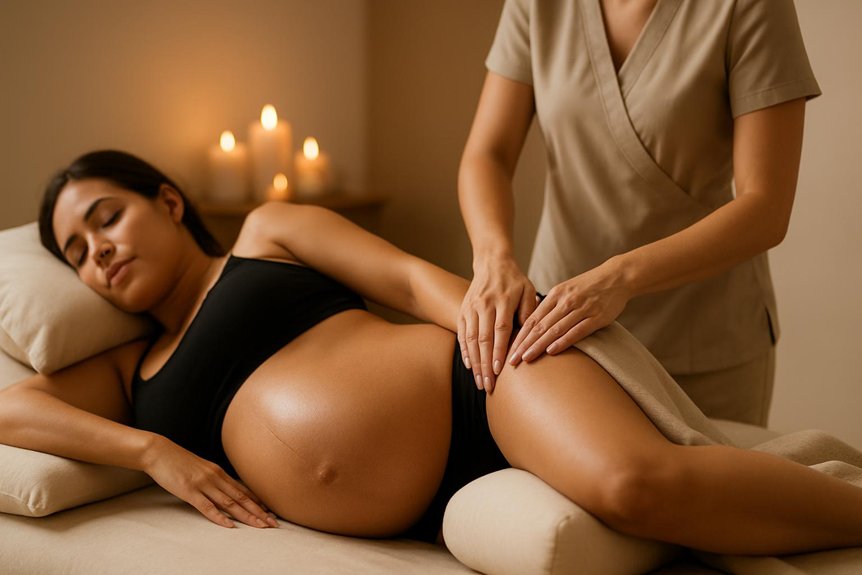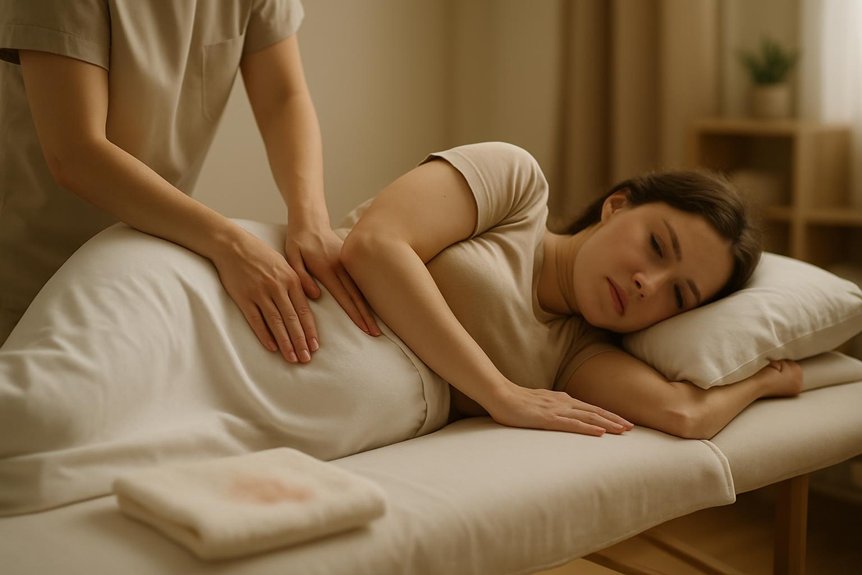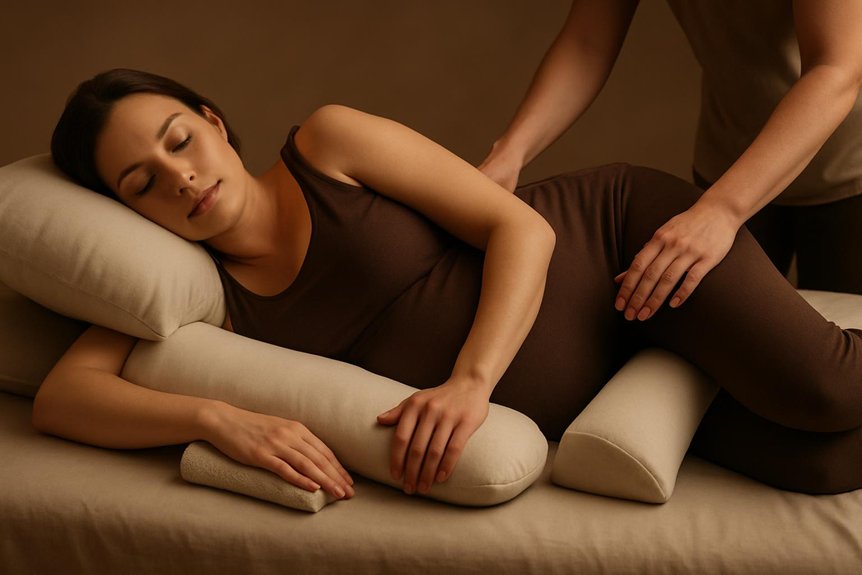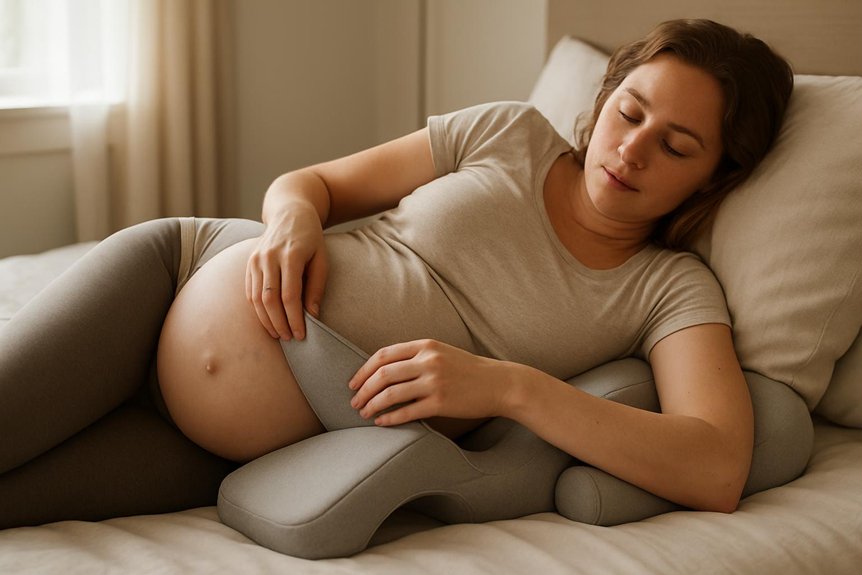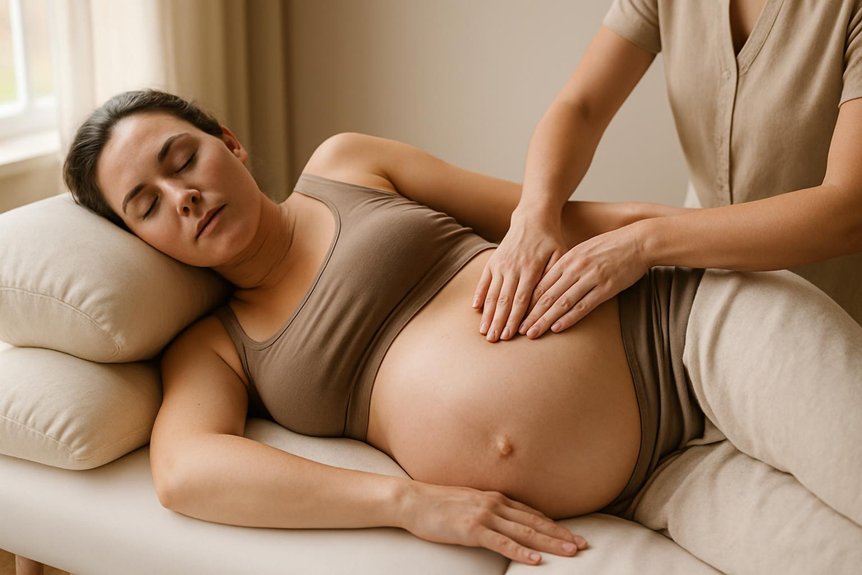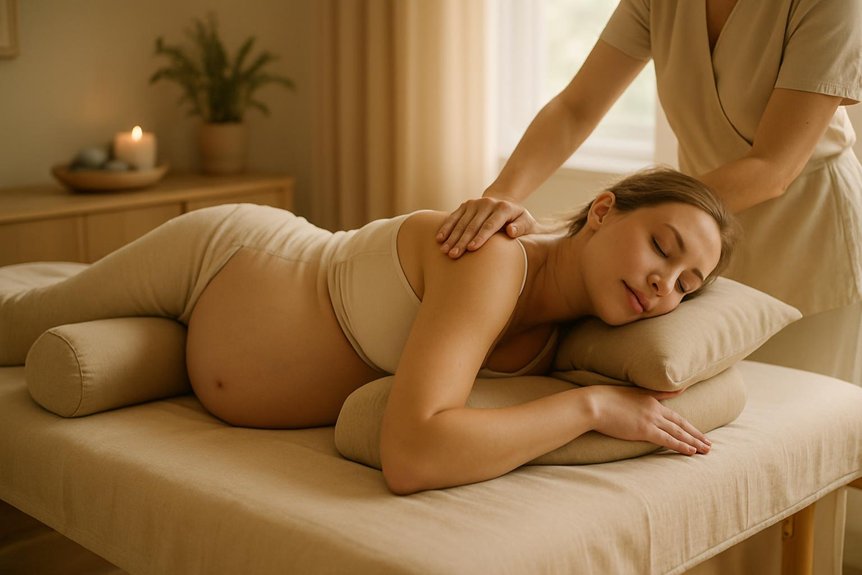
Prenatal massage can help reduce anxiety in pregnancy by activating the relaxation response, supporting calmer breathing, and easing stress‑related tension in the jaw, shoulders, hips, and back. Safety depends on trimester and health status, so pressure and positioning are adapted, often using side‑lying bolsters and avoiding deep abdominal work. Massage should be postponed with fever, infection, unexplained pain, suspected DVT, bleeding, leaking fluid, or signs of preterm labour unless cleared by a clinician. More helpful details follow.
Can Prenatal Massage Reduce Pregnancy Anxiety?
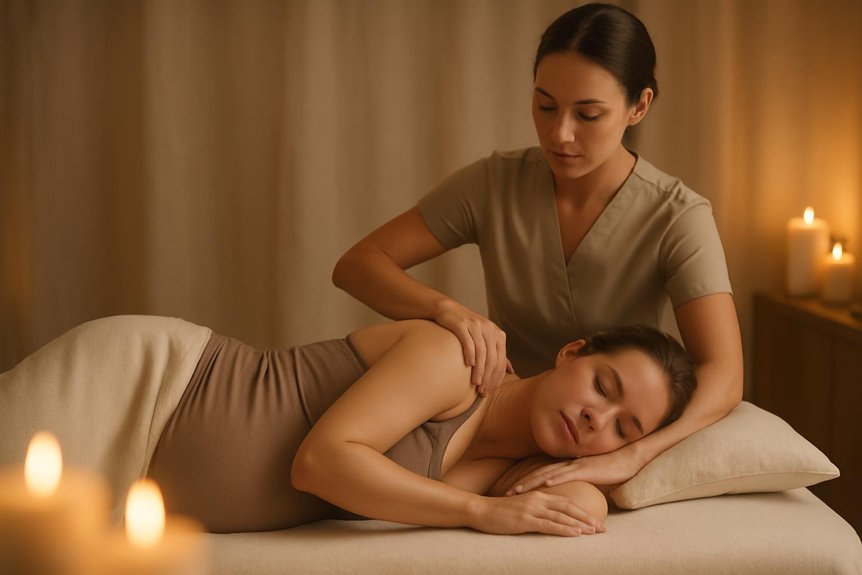
Easing the nervous system can be an important part of managing pregnancy-related anxiety, and prenatal massage is often used for this purpose.
Research suggests gentle, properly adapted massage may lower perceived stress, improve sleep, and support mood by promoting relaxation and easing muscular tension—factors that can amplify worry.
Prenatal massage is also associated with the wider benefits of pregnancy massage for expecting mothers, supporting comfort and wellbeing as the body changes.
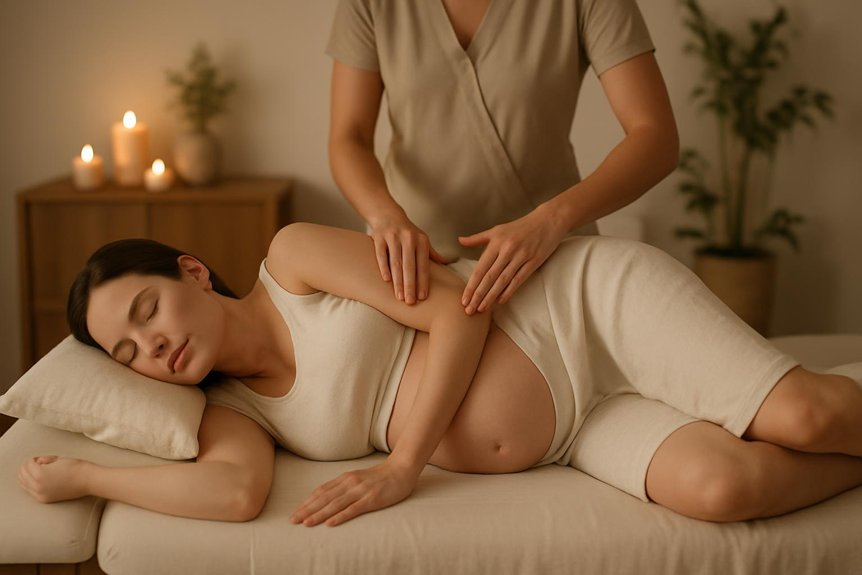
At Spa & Massage clinics across London, therapists use slow, reassuring strokes, comfortable side-lying support, and unscented or pregnancy-appropriate oils when requested, helping clients feel held and safe.
Massage is not a replacement for mental health care, but it can be a grounding complement to midwife guidance, talking therapy, and breathwork. Clients are encouraged to share concerns, keep pressure light-to-moderate, and stop immediately if anything feels uncomfortable.
Is Prenatal Massage Safe in Each Trimester?
While prenatal massage may help calm the nervous system and ease anxiety, many expectant clients understandably ask whether it is safe at every stage of pregnancy. Evidence supports massage when adapted to trimester-specific physiology and delivered by trained therapists using gentle, side-lying positioning and light-to-moderate pressure.
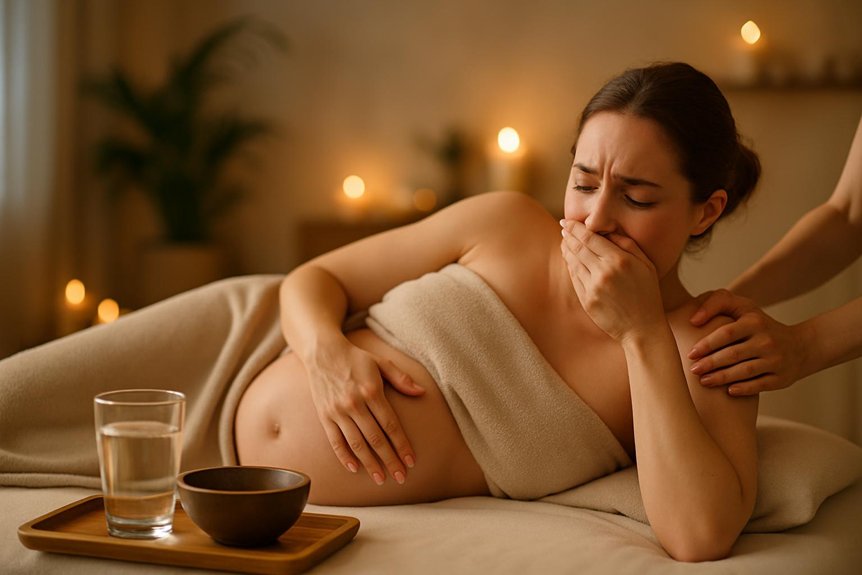
In the first trimester, sessions are typically shorter and focused on comfort, hydration, and easing nausea-related tension; at Spa & Massage, therapists avoid deep abdominal work and keep the pace soothing.
In the second trimester, many clients tolerate longer treatments, with extra support pillows to cradle hips and lower back as the body changes.
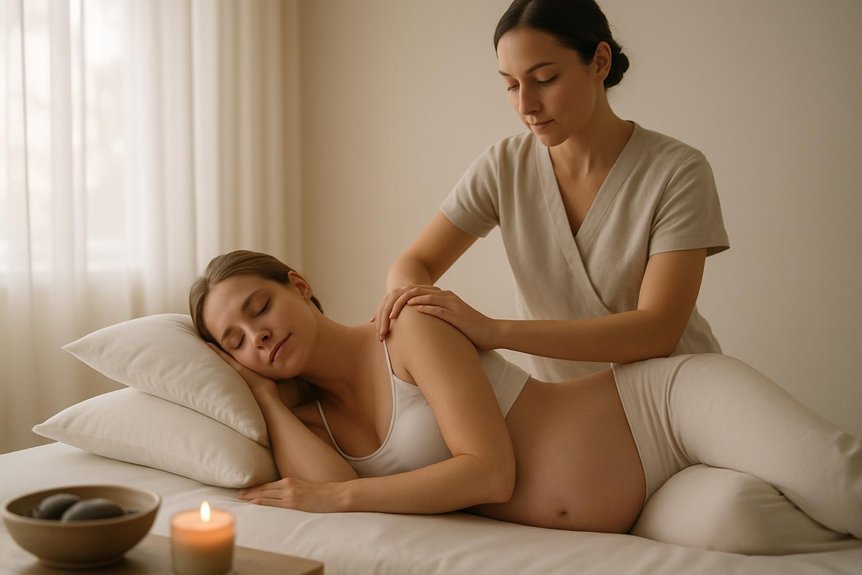
In the third trimester, side-lying massage helps reduce swelling and back strain, with slow, grounding strokes and careful bolstering to protect circulation and breath.
When Should You Avoid Prenatal Massage?
Prenatal massage is not appropriate when there are medical contraindications or when a pregnancy is considered high risk, and guidance from a midwife or obstetric team should come first.
Conditions such as unexplained vaginal bleeding, suspected preeclampsia, fever or infection, severe swelling, acute abdominal pain, or a history of preterm labour may require avoiding massage or postponing it until medical clearance is given.
At Spa & Massage, therapists prioritise safety and will adapt or defer treatment whenever symptoms or risk factors suggest that hands-on therapy could add unnecessary risk during pregnancy.
Medical Contraindications
Given the physiological changes of pregnancy, there are situations where massage should be postponed or avoided entirely to protect both parent and baby. Spa & Massage advises deferring treatment with fever, contagious illness, vomiting/diarrhoea, or a new unexplained rash.
Massage should also wait if there is severe, persistent headache, sudden swelling, fainting, or shortness of breath, as these warrant prompt medical review. Active vaginal bleeding, leaking fluid, or regular painful contractions require urgent obstetric assessment, not spa care.
Local contraindications include open wounds, fresh burns, severe eczema flare, or suspected deep vein thrombosis (hot, swollen, painful calf). Recent surgery, injectable anticoagulants, or poorly controlled hypertension should be cleared by a clinician.
In all cases, tenderness and consent guide care.
High-Risk Pregnancy Situations
Recognising that “high-risk” can mean different things at different stages of pregnancy, massage should be approached more cautiously—and sometimes avoided—until a midwife or obstetrician confirms it is appropriate.
Caution is advised with a history of recurrent miscarriage, vaginal bleeding, placenta praevia, pre‑eclampsia, uncontrolled hypertension, insulin‑dependent diabetes with complications, cervical insufficiency, or signs of preterm labour.
Multiple pregnancy, severe swelling, sudden headache, visual changes, fever, or chest pain also require urgent medical review rather than treatment.
At Spa & Massage, therapists pause or modify care if risk factors are disclosed, prioritising side‑lying support, gentle pressure, and shorter sessions only when cleared.
This protects both parent and baby while still honouring the need for calm, safe touch.
How Does Prenatal Massage Calm Anxiety?
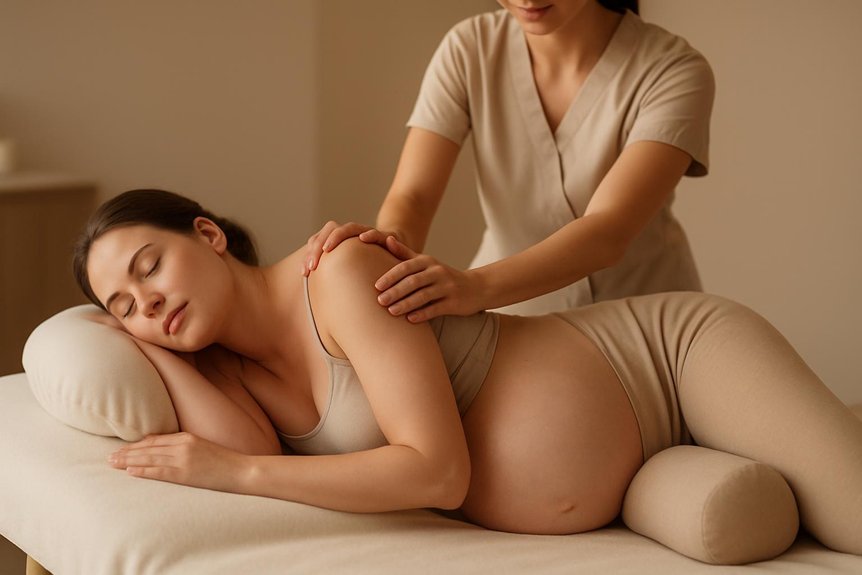
Prenatal massage can help calm anxiety by supporting the body’s relaxation response, which is linked in research to lower stress markers and improved perceived wellbeing.
At Spa & Massage clinics, therapists use gentle, pregnancy-safe positioning and pressure to ease muscle tension that can reinforce anxious feelings through pain, poor sleep, and shallow breathing.
This approach is always adapted to each stage of pregnancy and any medical guidance, prioritising comfort and safety throughout.
Activates Relaxation Response
Often, anxiety in pregnancy is maintained by a “fight-or-flight” stress response, and a well-delivered prenatal massage can help shift the nervous system into the relaxation response instead. Gentle, consistent touch can support vagal activity, slow breathing, and reduce stress hormones, helping the body feel safe enough to soften.
At Spa & Massage clinics across London, therapists use pregnancy-safe positioning and calm, steady pacing to encourage parasympathetic settling without overstimulation. Many clients notice a quieter mind, warmer hands and feet, and an easier ability to rest after treatment. Sessions are adapted to trimester, symptoms, and medical guidance; pressure, draping, and time on the table are adjusted for comfort.
This safer, slower state can make worry feel less gripping and more manageable between appointments.
Eases Muscle Tension
Tension held in the jaw, shoulders, lower back, and hips can amplify pregnancy anxiety by feeding physical discomfort back into the nervous system and making it harder to settle.
Prenatal massage helps by softening guarded muscles, easing trigger points, and improving circulation so the body receives a clearer signal of safety. When pain drops, breathing often deepens and thoughts feel less urgent, which supports calmer mood.
At Spa & Massage clinics across London, therapists use pregnancy-safe positioning, gentle to moderate pressure, and supportive bolsters to reduce strain on the pelvis and ribs. Strokes are paced slowly to encourage release without overstimulation.
Unscented or pregnancy-appropriate oils are used, and clients are invited to communicate continuously. Persistent pain, contractions, or medical concerns require midwife or GP guidance first.
What Happens in a Prenatal Massage Session?
Typically, a prenatal massage session begins with a brief consultation to confirm gestational stage, medical history, current symptoms (such as anxiety, sleep disruption, back or pelvic discomfort), and any guidance from a midwife or GP, so the therapist can tailor the treatment safely.
In Spa & Massage clinics, positioning is adapted—usually side-lying with supportive bolsters—to protect comfort and circulation.
The therapist uses slow, moderate-pressure strokes, avoiding contraindicated areas and adjusting pressure as sensitivity changes.
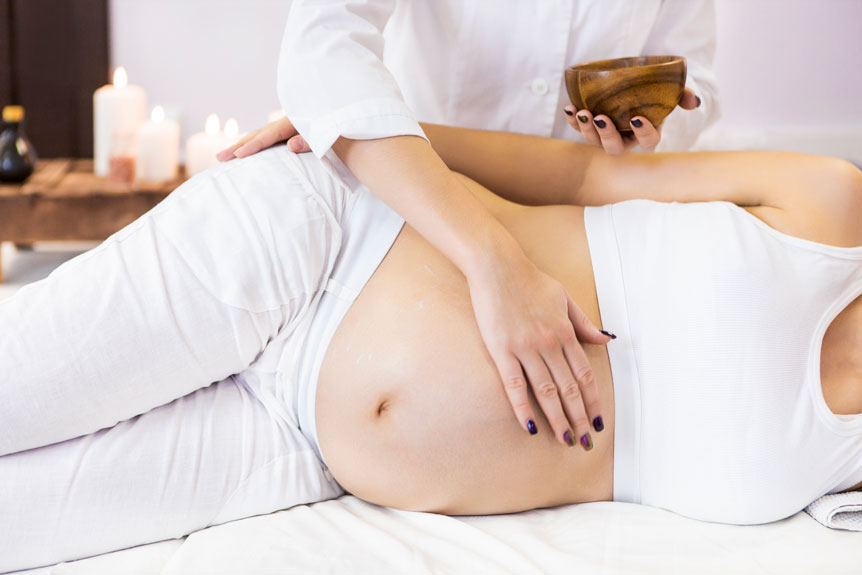
Unscented or pregnancy-safe aromatherapy blends may be offered, with consent and patch-awareness.
The room is quiet and warm, encouraging steady breathing and a sense of held safety.
Throughout, consent is ongoing: check-ins, clear draping, and pauses as needed, so relaxation feels intimate, respectful, and grounded.
How Often Should You Book Prenatal Massage (and What to Do at Home)?
For many pregnant clients, a regular prenatal massage schedule can support calmer mood, better sleep, and more manageable aches, but the safest frequency depends on trimester, symptom intensity, and any guidance from a midwife or GP.
At Spa & Massage London clinics, many clients book every 2–4 weeks for steady support, increasing to weekly during flare-ups (e.g., hip or back pain, restless sleep) when pregnancy is uncomplicated. Shorter, gentler sessions can suit the first trimester; later trimesters often benefit from consistent maintenance and careful positioning.
Any bleeding, preeclampsia, DVT risk, fever, or unexplained pain warrants medical clearance first.
At home, therapists suggest warm baths, side-lying pillow support, slow breathing, gentle calf and shoulder stretches, hydration, and magnesium-rich meals, plus brief self-massage with unscented oil.
Conclusion
Prenatal massage may help ease pregnancy anxiety by lowering perceived stress, improving sleep, and reducing muscle tension, particularly when delivered by trained therapists using pregnancy-appropriate positioning and pressure. It is not a cure-all, but can act like an anchor in changing waters—supporting regulation of the nervous system and comfort between appointments. Safety remains central: suitability varies by trimester and health history, and medical guidance is essential with complications, bleeding, or high-risk conditions.