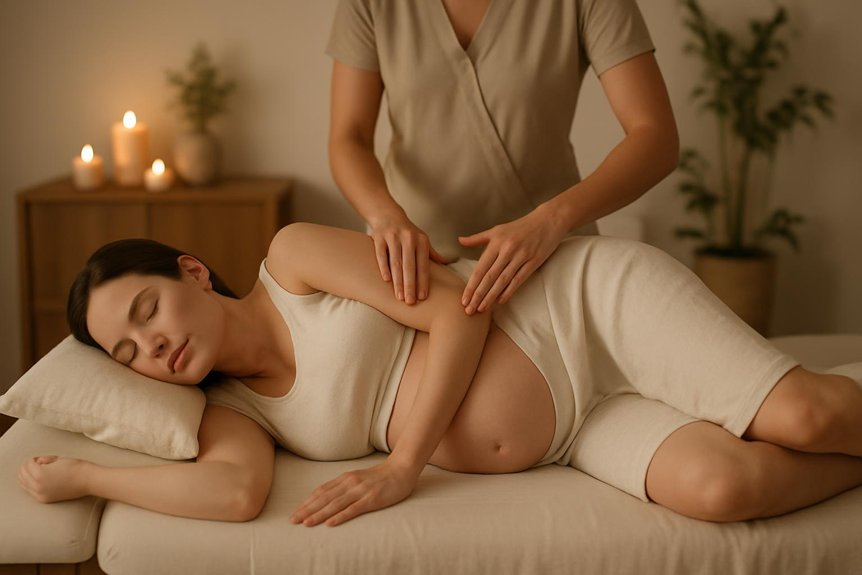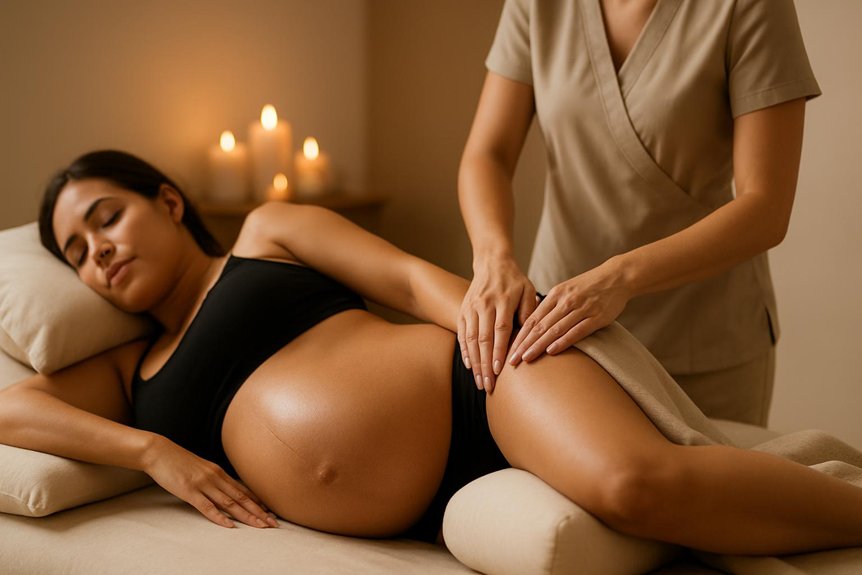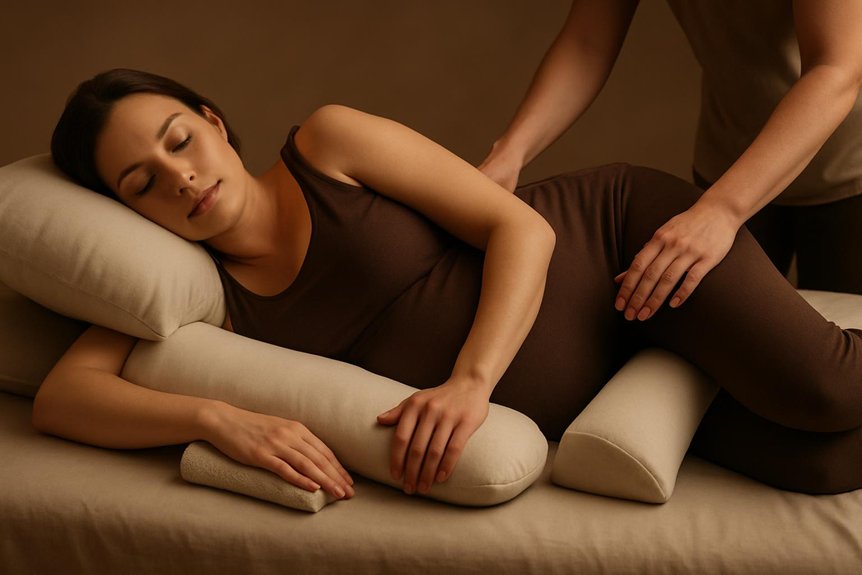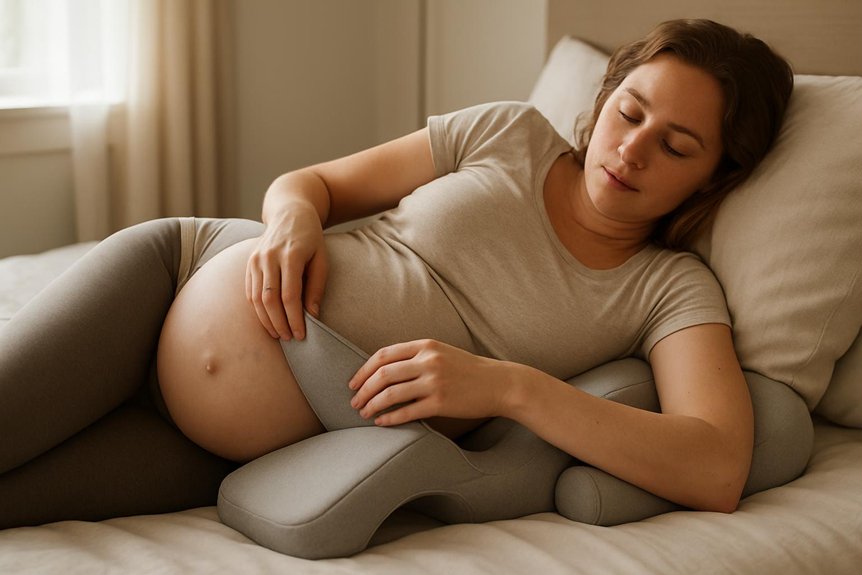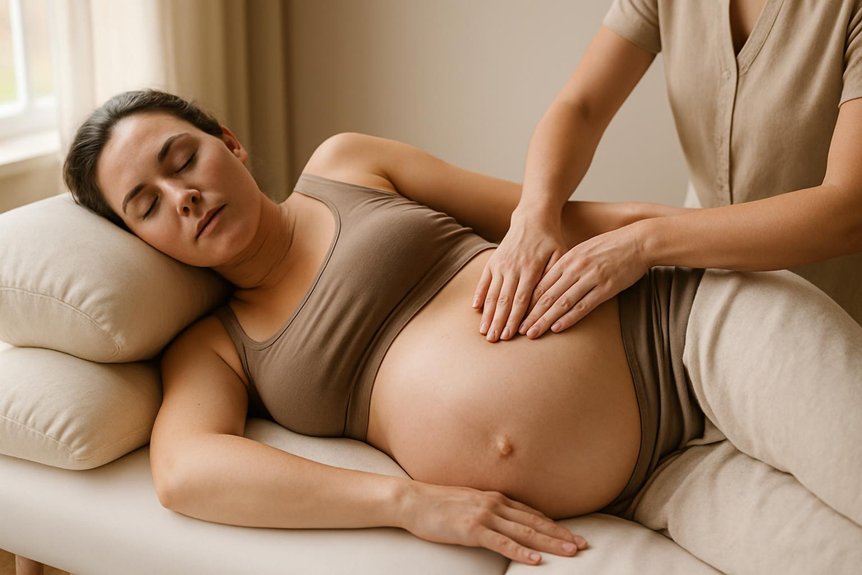

Prenatal massage can help insomnia in pregnancy by lowering stress hormones, calming the nervous system, and easing back, hip, and leg tension that often triggers night waking. It may also improve circulation and reduce swelling, making side-lying sleep more comfortable, especially in the third trimester. Massage is generally safe in low-risk pregnancies when provided by a trained therapist using pregnancy-appropriate positioning, but it should be avoided without medical clearance with bleeding, pre-eclampsia concerns, fever, or infection. More guidance follows.
Can Prenatal Massage Help Pregnancy Insomnia?

For many expectant parents, insomnia can feel like an unwelcome part of pregnancy, driven by hormonal shifts, physical discomfort, and heightened stress. Evidence suggests prenatal massage may support sleep by lowering stress hormones, easing muscle tension, and calming the nervous system, which can reduce nighttime waking and help the body settle.
At Spa & Massage clinics across London, therapists adapt pressure and positioning to relieve common sleep disruptors such as back ache, hip tightness, and leg heaviness. Many clients describe deeper breathing, a quieter mind, and a softer shift into rest after treatment. Massage may also encourage circulation and reduce swelling, improving comfort in bed. As part of the broader benefits of pregnancy massage, this supportive care can help expecting mothers feel more relaxed and physically at ease as their bodies change.
For best results, sessions can be paired with gentle evening routines and simple hydration as recommended by therapists.
When Is Prenatal Massage Safe (and When Not)?
Improved sleep is only truly helpful when any hands-on treatment is appropriate for the stage of pregnancy and the individual’s health profile. Prenatal massage is generally considered safe for low‑risk pregnancies when delivered by trained therapists, using side‑lying support, gentle pressure, and unscented or pregnancy‑safe oils, as used in Spa & Massage clinics across London.
It should be avoided or postponed without medical clearance in cases of vaginal bleeding, suspected pre‑eclampsia, severe swelling, fever, infections, uncontrolled hypertension, high‑risk pregnancy, or a history of preterm labour. Deep pressure on the abdomen is avoided, and work on legs is approached cautiously when clot risk is a concern.
A brief intake and comfort check helps keep touch soothing, respectful, and secure.
Why Pregnancy Insomnia Changes by Trimester
Across pregnancy, insomnia tends to shift by trimester because the drivers of disrupted sleep change as hormones, anatomy, and day‑to‑day discomforts evolve.
In the first trimester, rising progesterone can cause daytime sleepiness yet fragment night sleep, while nausea, frequent urination, and worry about early pregnancy can keep the mind alert.
In the second trimester, symptoms often ease and sleep may stabilise, but vivid dreams, heartburn, and growing sensitivity in hips and lower back can still interrupt rest.
In the third trimester, the physical load increases: baby’s movements, breathlessness, pelvic pressure, leg cramps, and reflux commonly peak, and safe side‑lying can feel restrictive.
At Spa & Massage clinics, therapists often hear that reassurance, comfort, and practical bedtime positioning support feel most needed then.
How Prenatal Massage Can Help You Sleep
During pregnancy, a well‑delivered prenatal massage can support better sleep by easing the physical discomforts and stress responses that commonly keep the body alert at night. Research suggests massage can lower perceived anxiety and muscle tension, supporting parasympathetic “rest‑and‑digest” activity that helps the mind settle at bedtime. By relieving low‑back, hip, and shoulder tightness, it may reduce night waking caused by positional aches.
At Spa & Massage clinics across London, therapists use pregnancy‑safe positioning, light‑to‑moderate pressure, and steady, nurturing strokes to encourage a sense of being held and safe. Many clients notice calmer breathing, slower thoughts, and less restless leg discomfort after a session.
Therapists also advise hydration and gentle stretching to prolong comfort, and to check with a midwife if complications exist.
How Often to Book Prenatal Massage for Sleep
Often, the most sleep-supportive prenatal massage schedule is one that matches symptom intensity and trimester changes while staying within pregnancy-safe guidelines.
For many pregnant clients, Spa & Massage therapists suggest starting with a session every 2–4 weeks in the second trimester, then moving to fortnightly—or weekly when insomnia, hip pain, or restlessness peaks in the third trimester.
Shorter, regular treatments can be gentler on sensitive tissues while reinforcing relaxation cues before bedtime.
Frequency should be reduced if there is swelling, headache, dizziness, or any medical concern, and increased only with midwife or GP agreement when risks exist.
In Spa & Massage clinics, side-lying positioning and pregnancy-safe oils help maintain comfort and closeness while supporting calmer nights.
Conclusion
Prenatal massage may support better sleep in pregnancy by easing muscular tension, lowering perceived stress, and improving comfort—factors commonly linked with insomnia. Like turning down a dimmer switch, it can help the body shift toward calmer breathing and rest. Evidence suggests benefits for pain and anxiety, though results vary and it is not a stand‑alone cure. Safety should guide decisions: seek trained prenatal therapists, follow trimester-appropriate positioning and pressure, and avoid massage when contraindications are present.