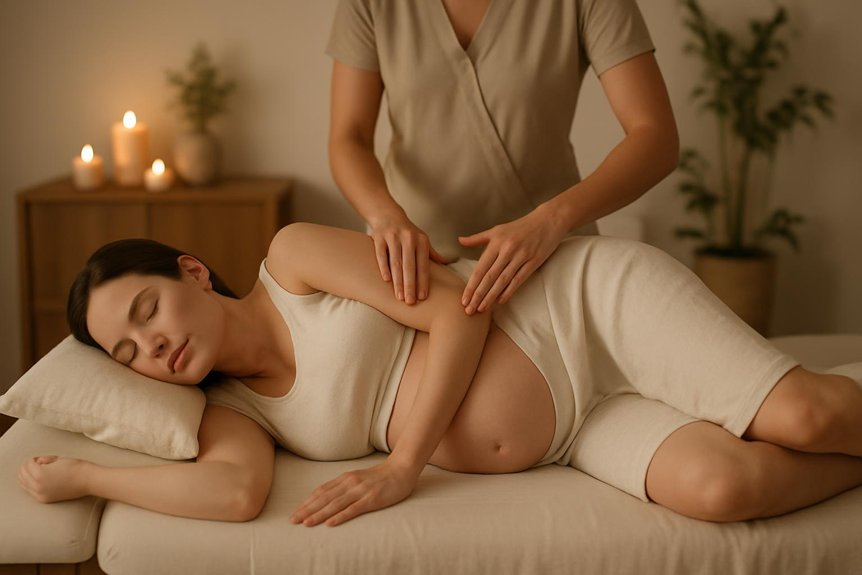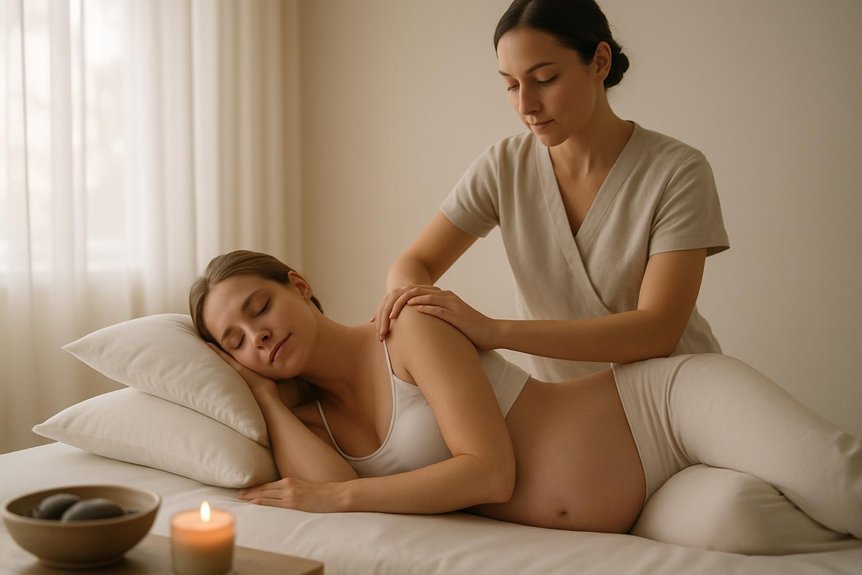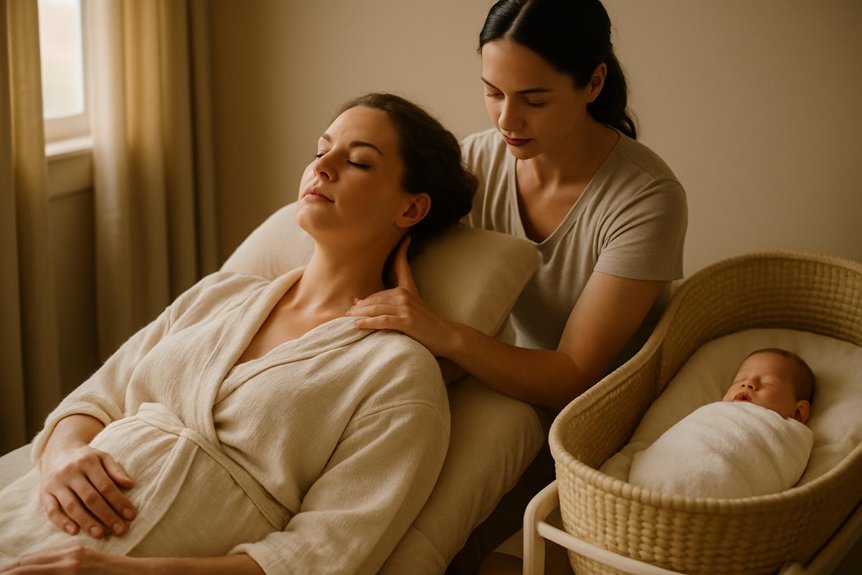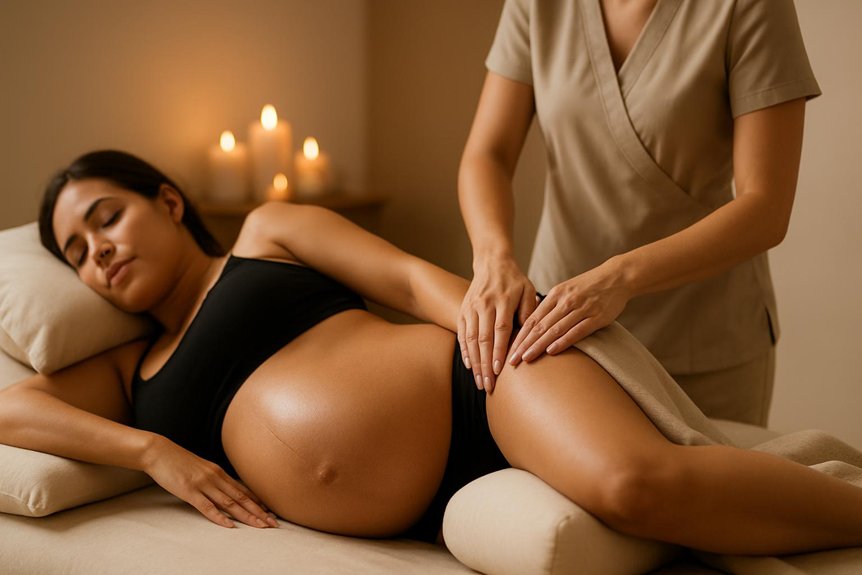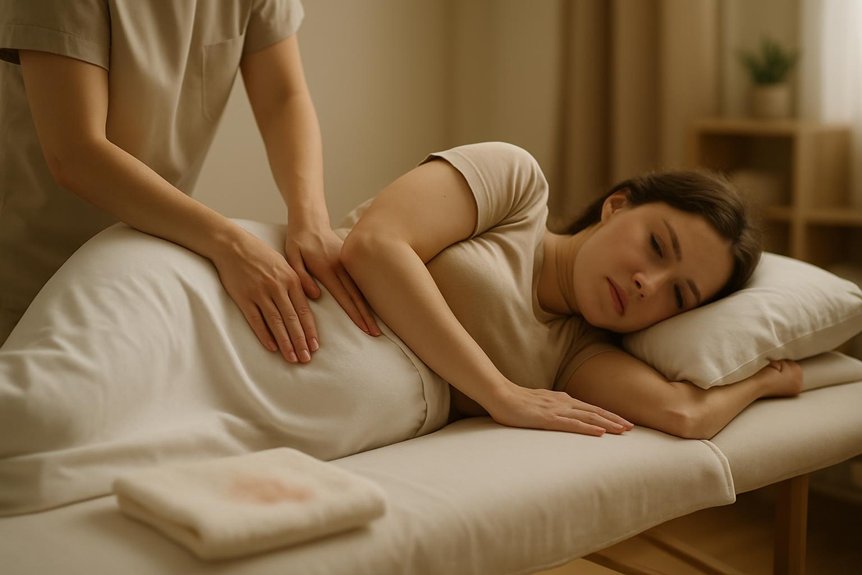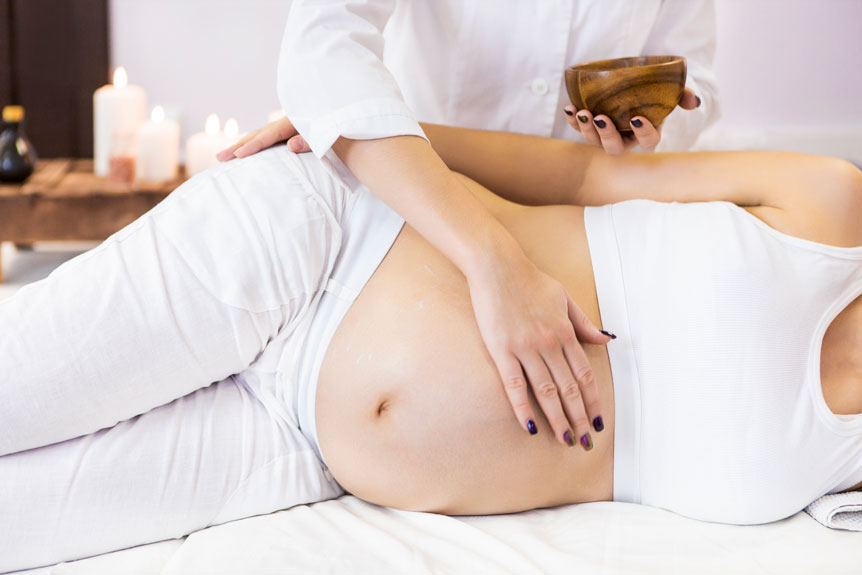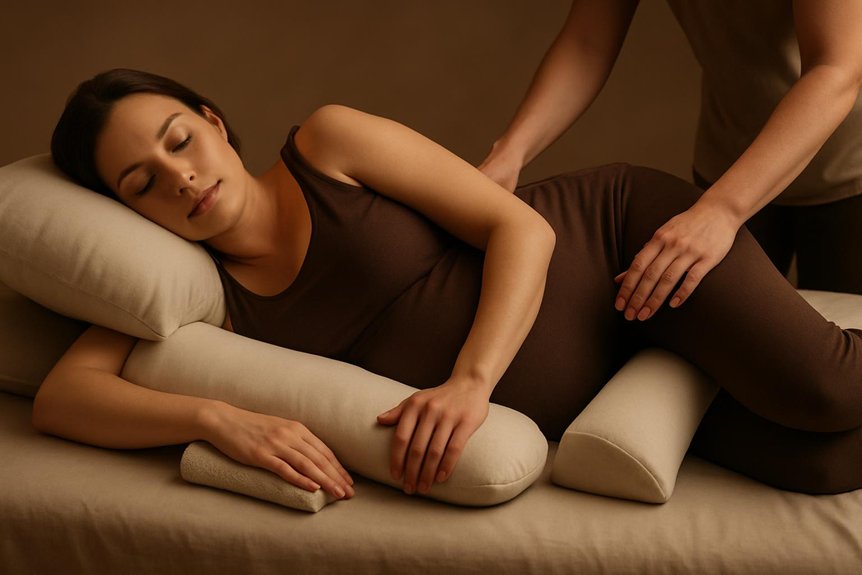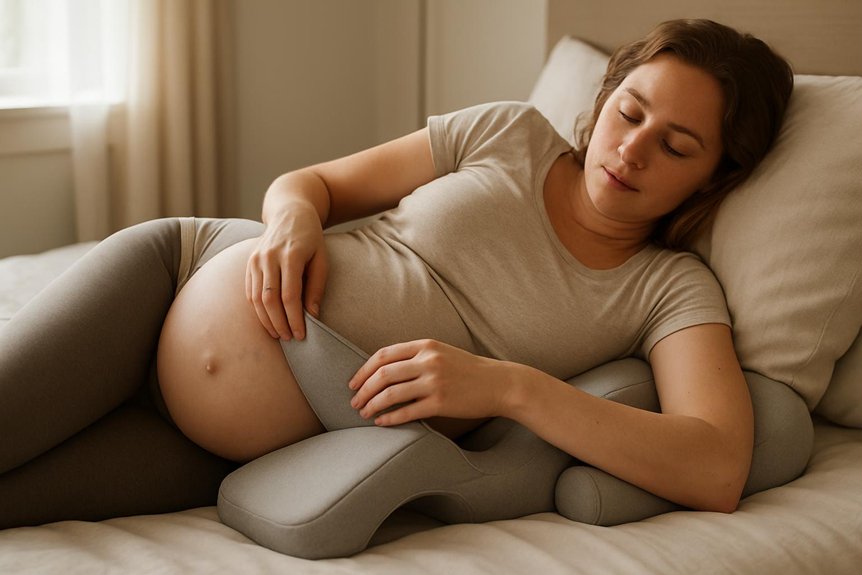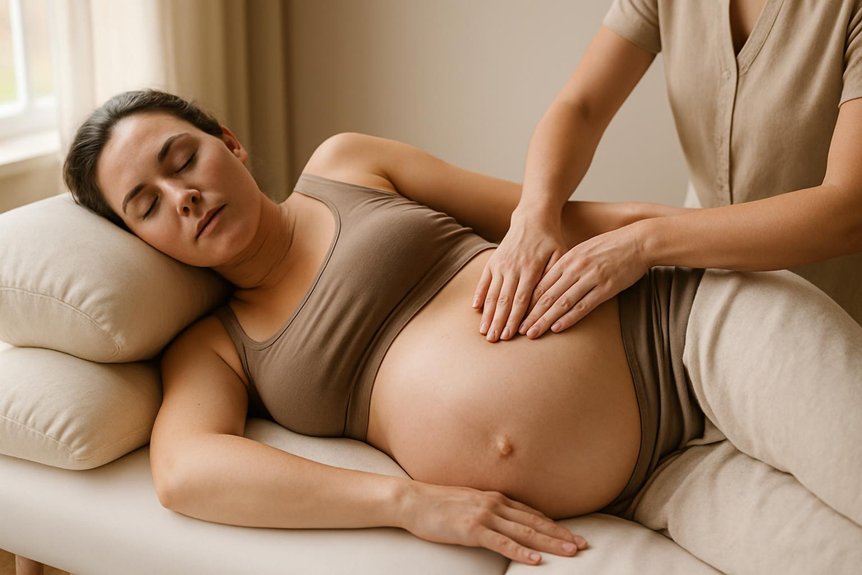
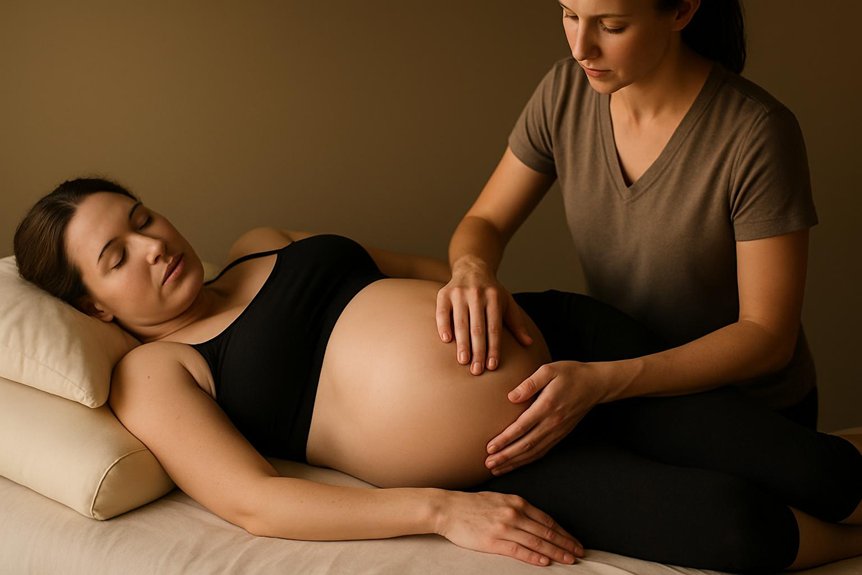
Prenatal massage can help ease round ligament pain by reducing surrounding muscle tension in the hips, low back, and inner thighs, which may lessen strain during movement. It cannot “treat” the ligament itself, but pregnancy-safe, side-lying techniques and light-to-moderate pressure can support relaxation, calmer breathing, and improved comfort with standing, walking, and rolling in bed. Sudden severe or persistent pain, bleeding, fever, or fluid leakage needs urgent medical assessment. More practical timing and safety guidance follows.
Can Prenatal Massage Relieve Round Ligament Pain?
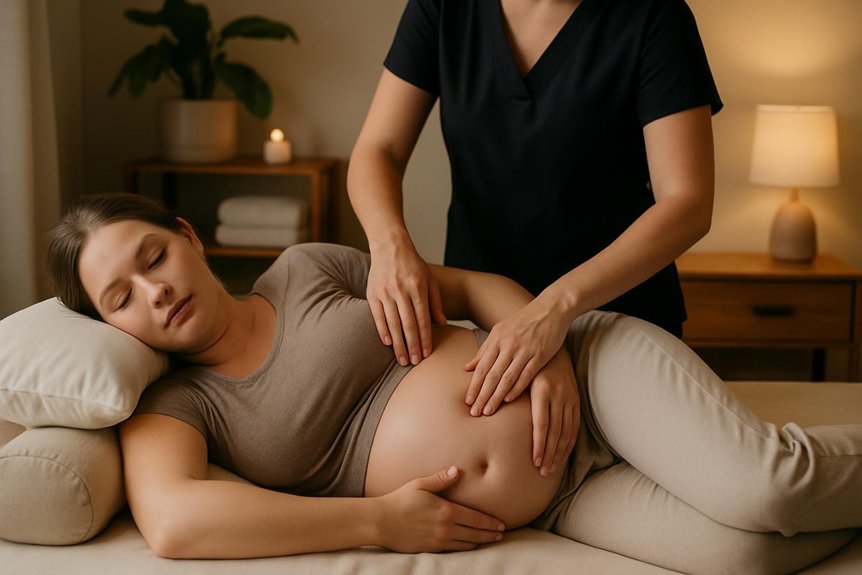
Although round ligament pain is a normal feature of pregnancy as the uterus grows and the pelvic ligaments stretch, prenatal massage may help relieve associated discomfort by reducing compensatory muscle tension in the hips, lower back, and abdomen and by supporting calmer breathing and overall relaxation.
While massage cannot “treat” ligaments directly, it can ease the surrounding tissues that often tighten to protect tender areas, improving comfort with movement and rest.
As part of the benefits of pregnancy massage, many expecting mothers find sessions support overall wellbeing by encouraging relaxation and easing everyday pregnancy-related aches.
At Spa & Massage clinics across London, therapists use pregnancy-safe positioning, light-to-moderate pressure, and slow, nurturing strokes, avoiding deep abdominal work and sensitive points. Care is tailored to trimester, medical history, and daily triggers.
Clients are encouraged to hydrate, change positions gently, and seek midwife advice for new, severe, or persistent symptoms.
What Does Round Ligament Pain Feel Like: and Is It Normal?
Often described as a brief, sharp or pulling pain low in the abdomen or groin—sometimes radiating toward the hip or inner thigh—round ligament pain commonly appears with sudden movements such as standing up, rolling in bed, coughing, or sneezing, and may ease with rest or a change of position.
It is considered a common, normal pregnancy sensation as the uterus grows and supporting ligaments stretch, especially in the second trimester, though it can occur earlier or later.
The discomfort is typically one-sided, short-lived, and more “twinge” than constant ache. Many people notice it more after activity, at the end of the day, or with a full bladder.
At Spa & Massage clinics, therapists encourage slow shifts, supportive side-lying rest, and gentle, consent-led comfort measures.
When Is Round Ligament Pain a Red Flag?
Round ligament pain is usually brief and position-related, but pregnancy-related abdominal or groin pain should be treated as a red flag when it is severe, persistent, worsening, or paired with other symptoms.
Urgent assessment is advised if there is vaginal bleeding, leaking fluid, fever, chills, faintness, severe headache, visual changes, chest pain, shortness of breath, painful urination, or reduced baby movements later in pregnancy.
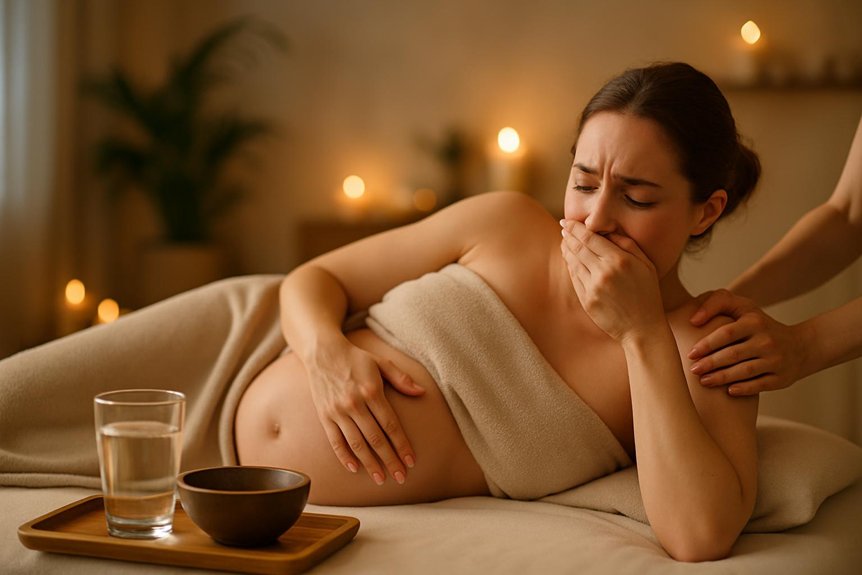
Sudden one-sided pain with shoulder tip pain, or pain with vomiting, may indicate non-obstetric causes needing prompt care.
Constant tightening, rhythmic cramps, back pressure, or pelvic heaviness can suggest preterm labour.
Spa & Massage encourages clients to contact their midwife, 111, or A&E if unsure, and to prioritise reassurance and safety.
How Does Prenatal Massage Help Round Ligament Pain?
With the body’s centre of gravity shifting and connective tissues under increasing load, prenatal massage can ease round ligament pain by reducing compensatory muscle tension in the hips, lower back, abdomen, and inner thighs, improving local circulation, and supporting calmer breathing patterns that lower overall pain sensitivity.
At Spa & Massage clinics, therapists use side-lying positioning, supportive bolsters, and gentle, targeted work to the glutes, hip flexors, adductors, and lumbar muscles, helping the pelvis move with less strain on the round ligaments. Slow, reassuring strokes encourage parasympathetic settling, which can reduce guarding and make everyday movements feel smoother. Light lymphatic techniques may also ease fluid retention that adds heaviness.
Pressure remains adaptable, respecting comfort, trimester, and any clinical guidance for safety.
When to Book Prenatal Massage for Round Ligament Pain?
In most cases, booking a prenatal massage is most useful when round ligament pain begins to interfere with everyday movement—such as walking, rolling in bed, standing from sitting, or getting in and out of a car—or when persistent hip, groin, or lower-back tension is driving protective “bracing.”
As symptoms commonly fluctuate across the second and third trimesters, many clients benefit from scheduling sessions proactively (e.g., every 2–4 weeks) during higher-demand periods, then adjusting frequency based on response and midwife/GP guidance.
At Spa & Massage London clinics, therapists advise booking sooner if pain is escalating, sleep is disrupted, or anxiety about movement is building.
Massage should be postponed and medical advice sought for bleeding, fever, sudden swelling, severe headache, or sharp one-sided pain.
Booking is ideal after clearance for prenatal massage.
Conclusion
Prenatal massage may ease round ligament pain by reducing tension in surrounding hip, pelvic, and abdominal-support muscles, supporting posture and calmer movement. When delivered by a properly trained therapist, it is generally considered safe for uncomplicated pregnancies and can complement guidance from a midwife or GP. However, persistent or severe pain, bleeding, fever, dizziness, or reduced fetal movement warrants urgent medical review. Used wisely, massage can be a helpful tool—while keeping safety front and centre.