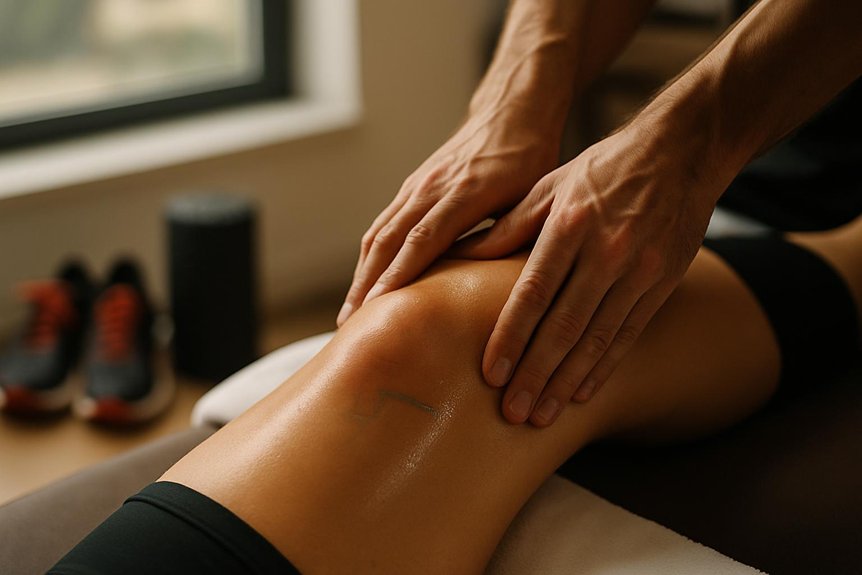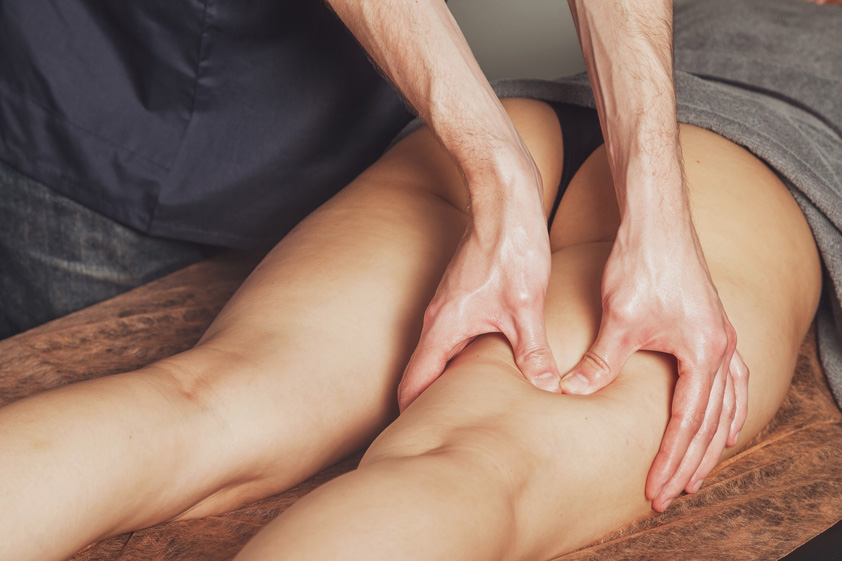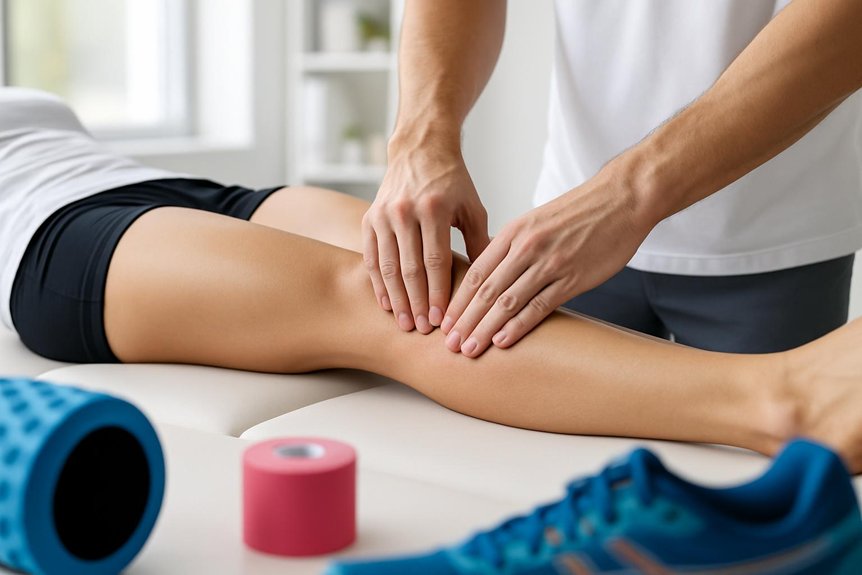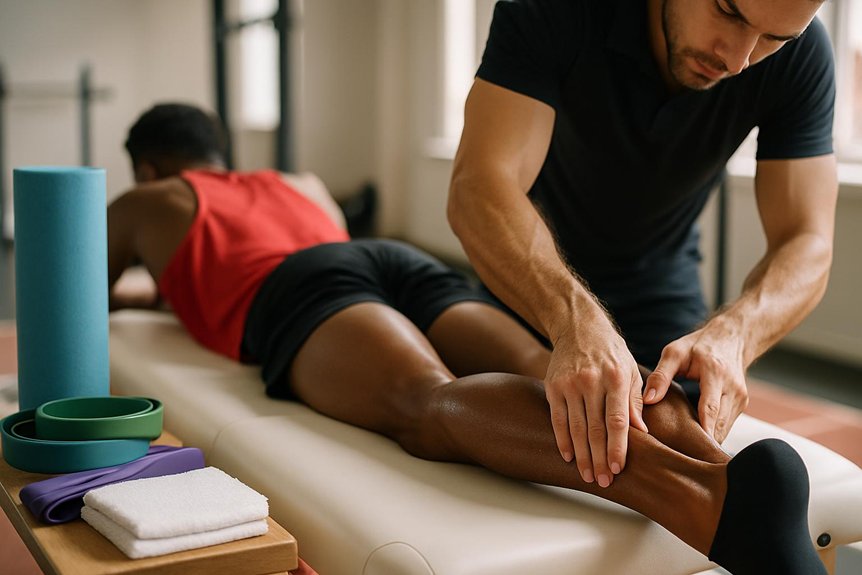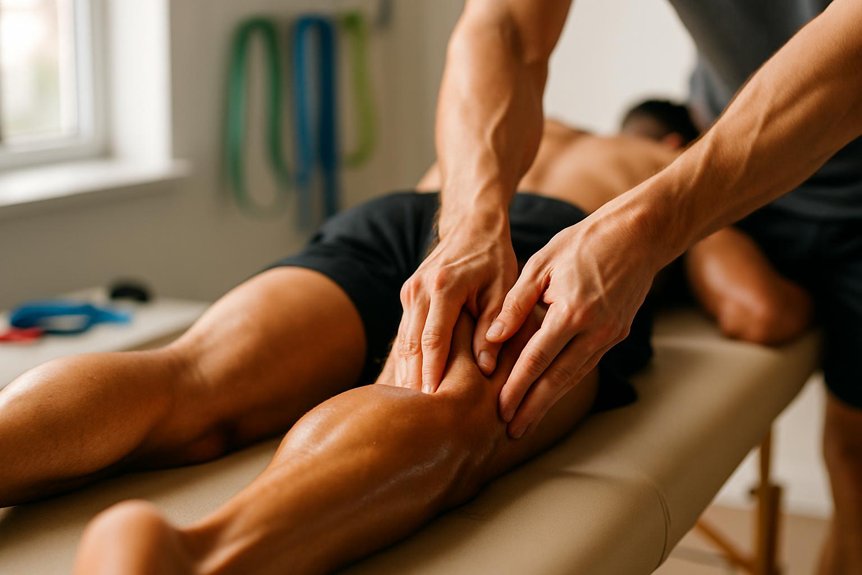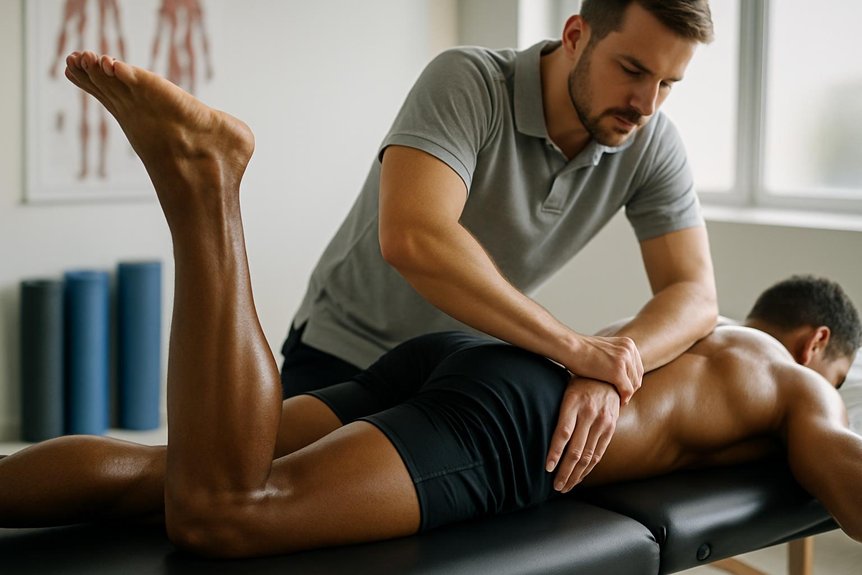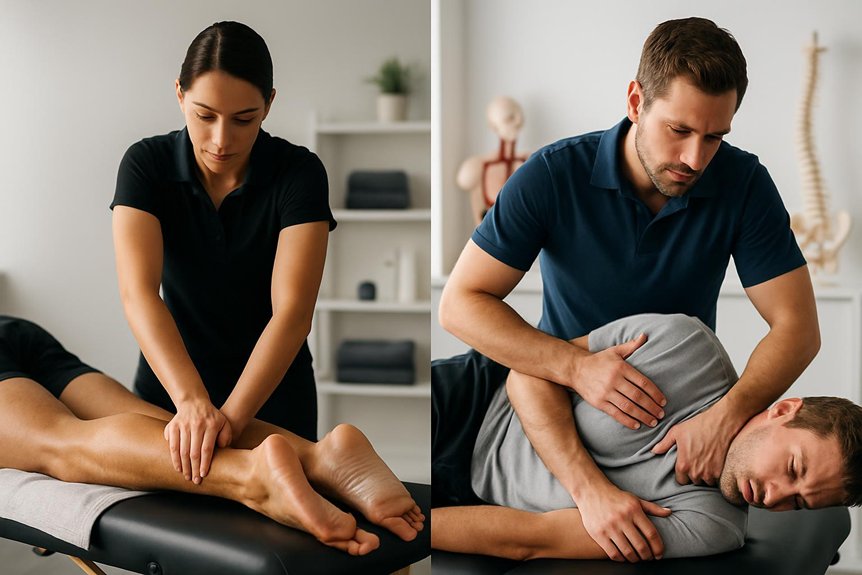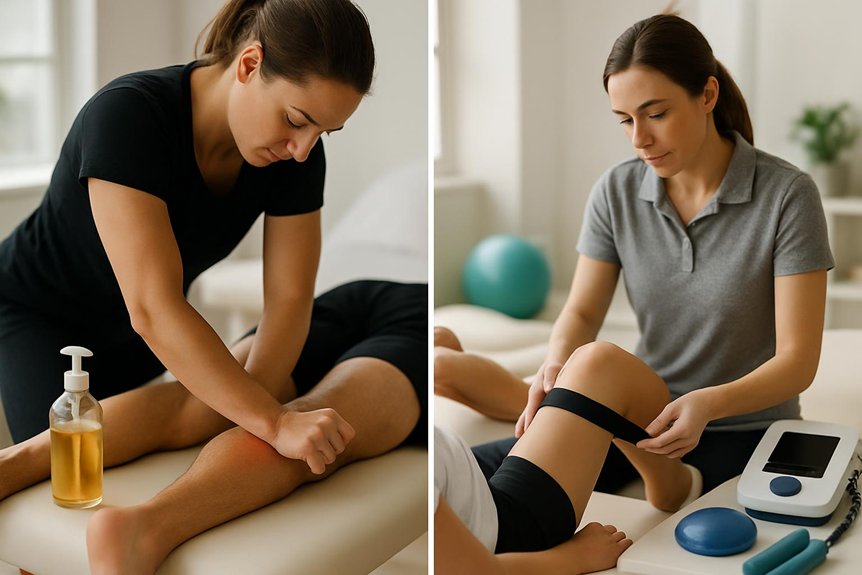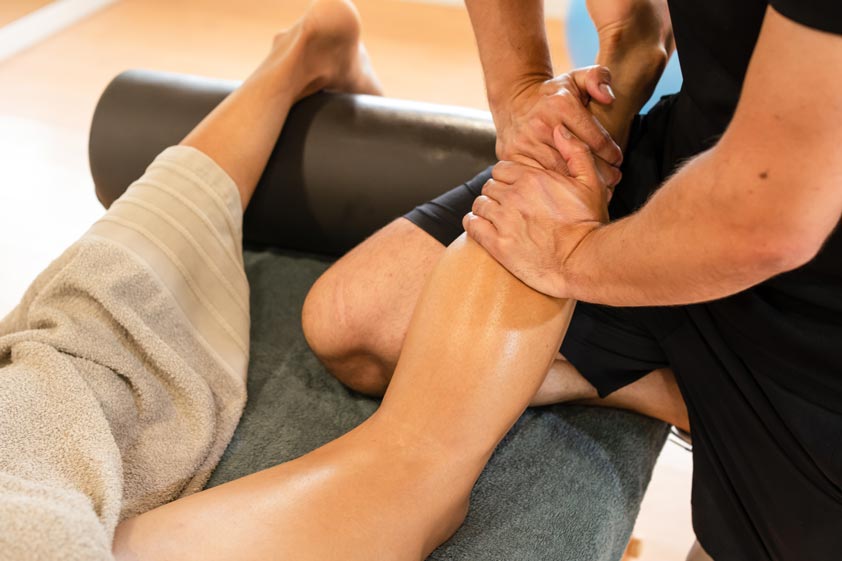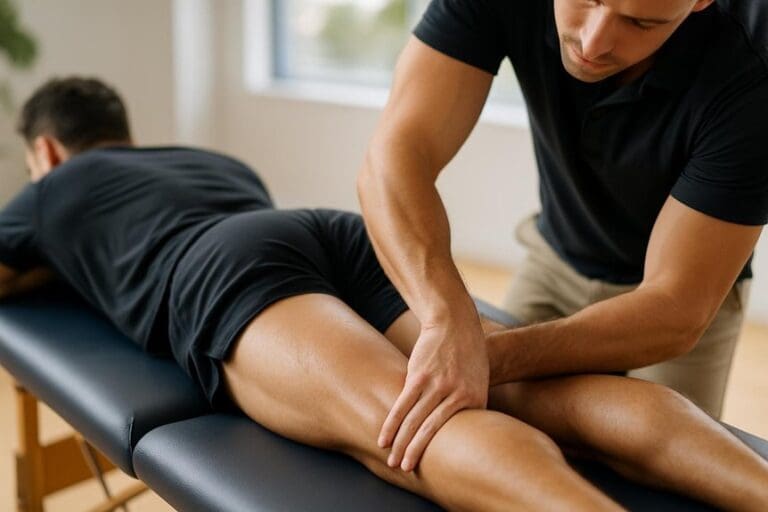
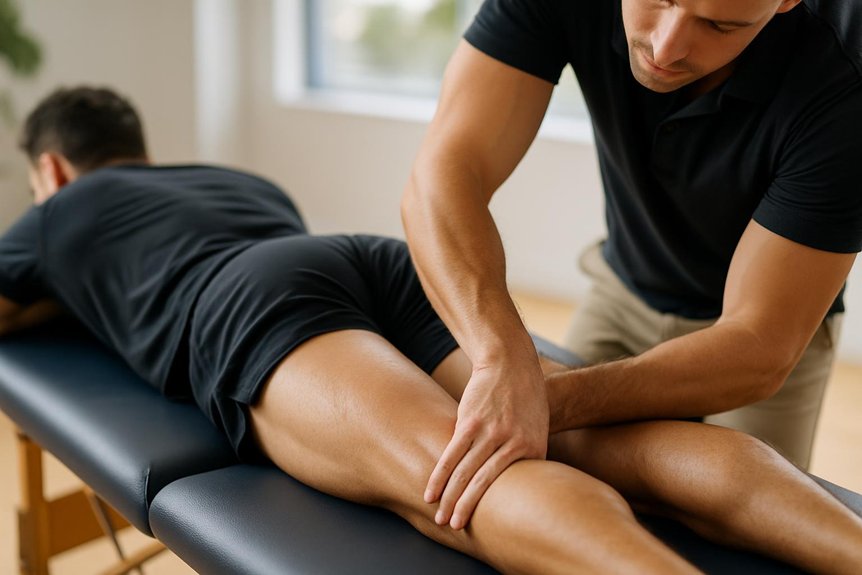
It can help hamstring tightness by reducing protective muscle tone and improving soft‑tissue glide in the posterior thigh, which often restores a more comfortable hip hinge and end‑range motion short term. Clinically effective, tolerable pressure and slow longitudinal strokes can increase perceived stretch tolerance, especially when paired with brief mobility work afterward. Tightness that follows a clear injury, bruising, or nerve-type symptoms needs assessment. The sections below explain causes, techniques, and session planning.
Can Sports Massage Help Tight Hamstrings?
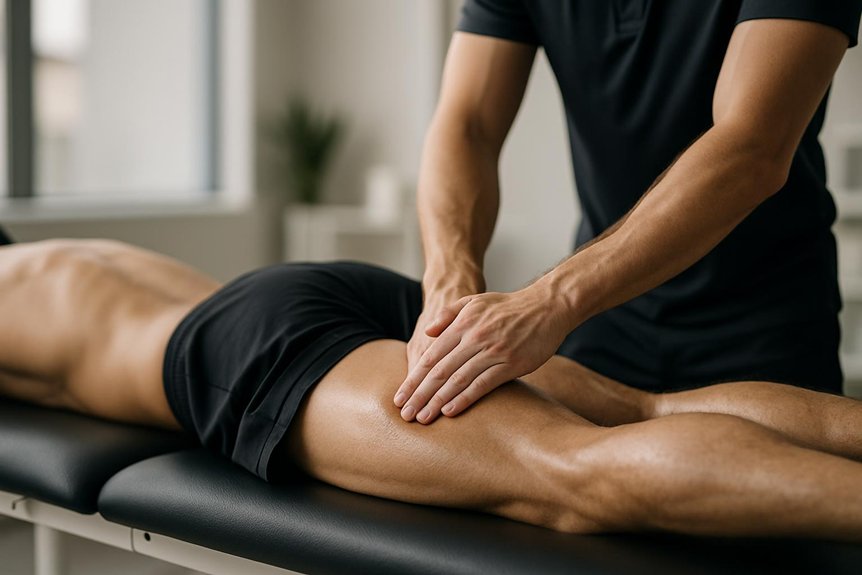
It can reduce hamstring tightness by addressing the soft‑tissue factors that commonly limit posterior‑thigh length and impair hip–knee mechanics. At Spa & Massage, therapists use targeted deep‑tissue strokes, myofascial release, and trigger‑point pressure to improve tissue glide, reduce protective tone, and restore comfortable end‑range.
Evidence suggests manual therapy can increase short‑term flexibility and perceived stretch tolerance, supporting cleaner stride, hinging, and squatting patterns. It is also associated with broader benefits for athletes, supporting performance and recovery demands alongside flexibility work. Treatment is tailored after palpation and movement checks, with pressure kept intimate and respectful while remaining clinically effective.
Many clients combine sessions with brief, guided home mobility—gentle active hamstring and hip‑flexor work—to help changes hold between visits. For recurrent tightness, a short course, then maintenance, is often recommended.
What Usually Causes Hamstring Tightness?
In practice, hamstring “tightness” most often reflects altered load distribution and neuromuscular guarding rather than a true shortage of muscle length. Common drivers include rapid spikes in running volume, hills or sprinting, and prolonged sitting that biases the pelvis and asks the hamstrings to stabilise more. Weak or delayed gluteal recruitment can shift hip-extension work into the hamstrings, while reduced ankle dorsiflexion or stiff hips can push more strain into the posterior chain during gait and hinging.
Fatigue and inadequate recovery also heighten protective tone, especially when stress and sleep are poor. At Spa & Massage clinics, therapists often find tender, overworked tissue near the sit-bone and mid-belly, consistent with repetitive load rather than “shortness” alone.
Is It Tight Hamstrings or a Strain/Nerve Issue?
How can a person tell whether persistent “tight” hamstrings reflect normal post-load tone or a more specific injury pattern?
A simple guide is behaviour over 24–48 hours: normal tone eases with gentle movement, heat, and sleep, and does not sharply limit stride, hinging, or speed. A strain more often follows a clear moment (sprint, kick, slip) with focal tenderness, pain on resisted knee flexion or lengthened positions, and bruising or swelling. Nerve-related symptoms tend to feel diffuse—burning, tingling, or electric pulling—often changing with spine position, prolonged sitting, or coughing, and may include back or calf symptoms.
Spa & Massage advises assessment when pain escalates, strength drops, or symptoms persist beyond a week.
How Does It Release Tight Hamstrings?
Once a strain or nerve-driven pattern has been ruled out, persistent hamstring “tightness” is usually treated as a modifiable mix of elevated resting tone, localised myofascial sensitivity, and reduced slide between tissue layers after heavy loading or prolonged sitting.
It helps by applying graded, tolerable pressure that downshifts protective guarding via the nervous system, improves local circulation, and changes pain perception, so movement feels freer rather than forced.
Slow, targeted contact can also hydrate and mobilise fascial interfaces, supporting better glide between hamstring, adductor, and posterior thigh tissues during hip hinge and running mechanics.
At Spa & Massage clinics, therapists reassess range, symptoms, and control throughout, then pair treatment with breathing and gentle active movements to reinforce relaxed length and restore confident function.
Which Athletic Massage Techniques Work Best for Hamstrings?
Targeted technique selection matters more than intensity when treating hamstring tightness with athletic massage.
Most benefit comes from combining slow, longitudinal deep-tissue strokes along biceps femoris, semitendinosus, and semimembranosus with focused myofascial release to reduce fascial drag and improve glide.
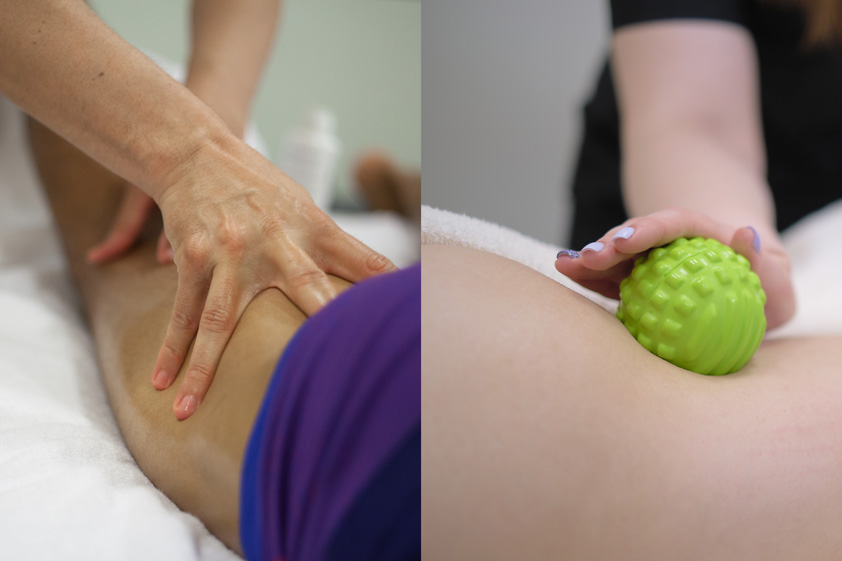
Trigger point compression is applied briefly to palpable taut bands, then followed by flushing strokes to restore comfortable circulation.
Cross-fibre friction around the proximal hamstring tendon may help when tenderness is localised near the sit bone, but it is used judiciously to avoid irritation.
In Spa & Massage clinics, therapists often add gentle muscle energy (contract–relax) to integrate the change into hip flexion and knee extension, keeping pressure communicative and consent-led throughout.
Athletic Massage vs Stretching: Which Helps More?
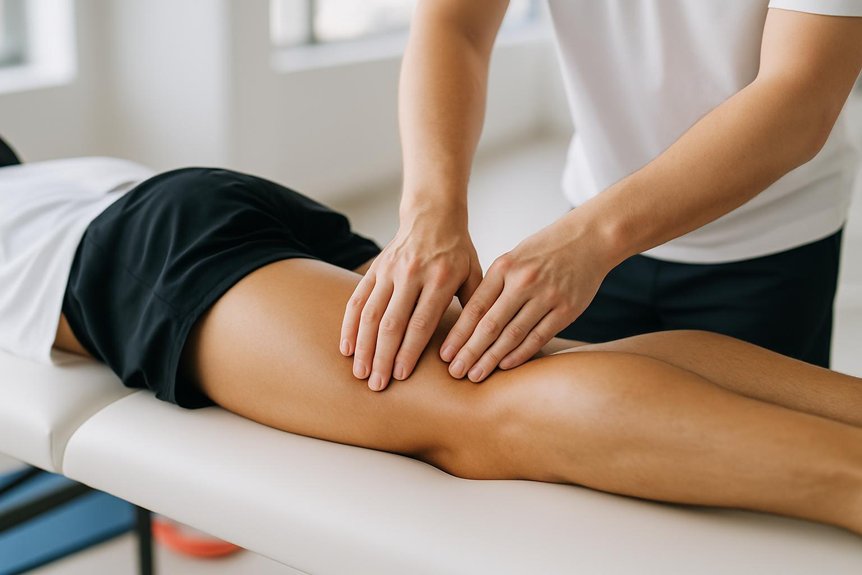
With effective manual techniques established, the practical question becomes whether athletic massage or stretching produces the greater change in hamstring tightness.
Evidence suggests stretching reliably improves range of motion when performed consistently, while athletic massage can reduce perceived stiffness and improve tolerance to lengthening, especially when muscle tone and trigger points dominate symptoms.
Functionally, massage may create a faster “window” for comfortable movement; stretching tends to consolidate gains over days and weeks.
At Spa & Massage clinics in London, therapists often pair a focused athletic massage with brief, low-load stretching to reinforce new length and improve hip-hinge mechanics.
For clients seeking a close, personalised approach, the decision is guided by irritability: guarded, sore tightness often responds best to massage first, then targeted stretching thereafter.
Will Athletic Massage for Hamstrings Hurt or Cause Soreness?
Athletic massage for hamstring tightness can sometimes feel uncomfortable and may be followed by mild, short-lived soreness, particularly when firm pressure is applied to hypersensitive trigger points or dense posterior-thigh fascia.
This response is typically similar to post-exercise tenderness and should settle within 24–48 hours when the dose is appropriate. Pain that is sharp, radiating, or worsening is not expected and may indicate excessive pressure or an underlying strain.
At Spa & Massage clinics, therapists monitor breathing, tissue tone, and client feedback to keep intensity within a tolerable, therapeutic range while supporting function—stride length, hip hinge control, and sitting comfort.
After treatment, many clients notice easier movement and reduced guarding, even if the area feels tender to touch.
How Many Athletic Massage Sessions Do You Need?
In practice, the number of sessions needed for hamstring tightness depends on symptom irritability, chronicity, training load, and whether restriction is primarily myofascial, neural, or related to a low-grade strain.
For recent, mild tightness, 1–2 athletic massage sessions may restore comfortable length and stride. For recurrent or training-related tightness, many clients benefit from 3–6 sessions, typically spaced 5–10 days apart, while strength and running volumes are monitored.
If symptoms include sharp pain, bruising, or notable strength loss, a modified approach and closer spacing may be used, with reassessment each visit.
At Spa & Massage clinics across London, therapists set goals around range, pain on stretch, and post-session function, adjusting pressure to keep the experience safe, close, and reassuring.
Aftercare and Prevention: Keep Hamstrings Looser Longer
After athletic massage, maintaining hamstring length and reducing symptom recurrence typically depends on consistent daily mobility and appropriate exposure to load.
At Spa & Massage, therapists commonly advise brief, structured mobility work (targeting hip flexion and knee extension control) alongside progressive training loads matched to recovery capacity to support tissue tolerance.
Ongoing monitoring of post-session soreness, sleep, hydration, and session spacing helps guide adjustments so flexibility gains translate into sustained function.
Daily Mobility Routine
Often, hamstring tightness persists not because the muscle is “short,” but because daily movement habits fail to restore normal hip-hinge mechanics and posterior-chain extensibility. A simple daily mobility routine can reinforce the gains of athletic massage and reduce protective tone.
Spa & Massage therapists typically suggest: 90/90 breathing with posterior pelvic tilt (1–2 minutes), then supine hamstring flossing using a strap (10–12 slow reps per side), keeping the knee softly unfastened.
Follow with a supported hip-hinge drill (dowel or wall tap, 8–10 reps) to retrain load sharing through glutes rather than lumbar flexion.
Finish with gentle calf-to-hamstring chain lengthening in a half-kneel (30–45 seconds per side). Intensity stays mild; sensation should feel warm, not sharp.
Training Load And Recovery
Beyond the treatment room, training load and recovery practices largely determine whether hamstring tone settles or rapidly returns. Sudden spikes in sprinting, hills, or deadlift volume increase tissue demand and can sustain protective tightness. A simple safeguard is progressive loading: increase weekly running intensity or strength volume by small, planned steps, and include eccentric hamstring work with adequate rest days.
Recovery should be treated as training: 7–9 hours’ sleep, hydration, and carbohydrate-protein intake to support repair. Many clients at Spa & Massage benefit most when athletic massage is scheduled after heavier sessions, not immediately before maximal speed work.
Therapists also advise gentle heat, walking, and low-intensity cycling to restore circulation without provoking further tone.
Conclusion
It can reduce perceived hamstring tightness and improve short‑term range of motion by modulating tone, pain sensitivity, and local tissue load; it is not a stand‑alone “lengthening” fix. Used well, hands-on release complements what it cannot replace: graded strengthening, mobility, and load management. A calm posterior thigh may coexist with weak hip control; a “tight” hamstring may mask neural irritation or a healing strain. Benefits are real—when paired with diagnosis and progression.