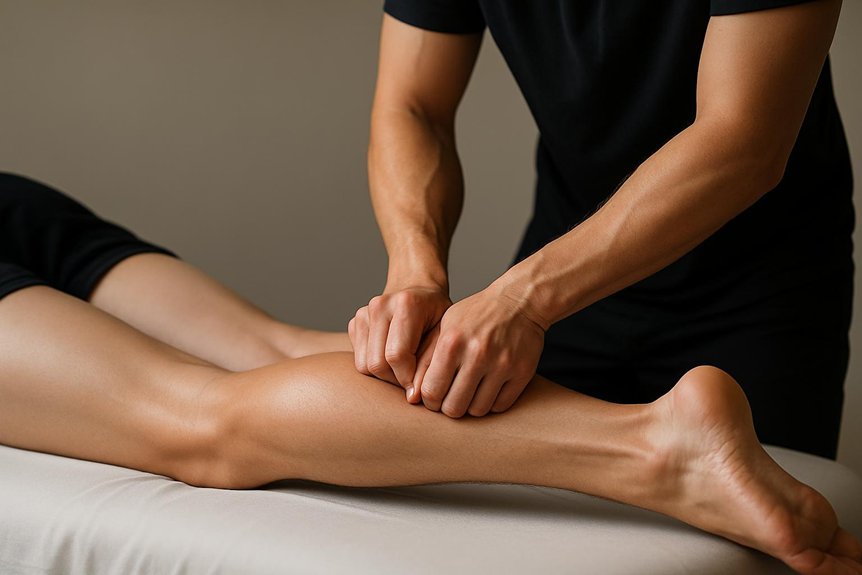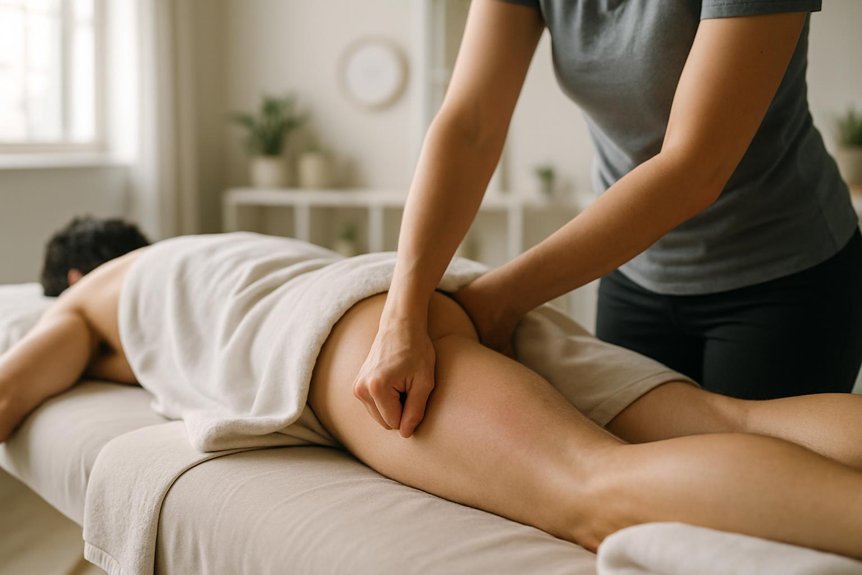

Clients can communicate deep tissue pressure clearly using a 1–10 scale, where 1 is very light and 10 is intolerable; many start around 6–7 and adjust as tissues warm or tenderness changes. They should pair the number with concise cues such as “a touch lighter,” “hold here,” or “deeper on the exhale,” plus descriptors like “dull ache” or “tender but manageable.” Sharp, burning, tingling, numb, or radiating sensations require immediate reduction. Additional guidance follows.
Use the 1–10 Scale for Deep Tissue Pressure

One simple tool can make deep tissue work safer and more effective: a 1–10 pressure scale. At Spa & Massage clinics across London, therapists invite clients to rate intensity, where 1 is very light contact and 10 is intolerable. The target is typically a therapeutic mid-range, adjusted by area and sensitivity. This shared language supports consent, reduces guesswork, and helps keep the session both effective and respectful.
Clients are encouraged to update the number as breathing changes, warmth builds, or tenderness appears. A “7” at the start may become “9” after sustained work. Clear ratings also help when shifting between muscle groups, near bony landmarks, or around scars. The scale keeps communication discreet, calm, and intimate without requiring detailed explanations. Deep tissue sessions often aim to relieve chronic tension by working into deeper layers of muscle and connective tissue, so communicating about deep tissue techniques helps match pressure to the intended outcome.
What Good Deep Tissue Pressure Should Feel Like
Good deep tissue pressure is typically described as strong yet manageable, allowing the client to breathe steadily and remain relaxed while the therapist works.
At Spa & Massage clinics, therapists look for signs of productive muscle release—such as a gradual softening of tension—rather than forcing through resistance.
Any sharp, shooting, burning, or tingling sensation may indicate nerve irritation and should be reported immediately so pressure or technique can be adjusted.
Strong Yet Manageable
Although deep tissue work is designed to reach deeper layers of muscle and connective tissue, appropriate pressure should feel strong yet clearly tolerable—often described as an “intense but relieving” sensation rather than sharp, electric, burning, or breath-stopping pain.
At Spa & Massage clinics across London, therapists look for steady breathing, relaxed hands and jaw, and a sense of “good ache” that the client can welcome.
The client should still be able to speak in full sentences and maintain a feeling of safety and consent, even when the work is close and personal.
If the body flinches, tightens, holds the breath, or the discomfort spikes, pressure is adjusted immediately.
A useful guide is 6–7/10 intensity: noticeable, controlled, and consistently manageable.
Productive Muscle Release
Noticeable release is the hallmark of productive deep tissue pressure: discomfort remains contained and steady while the targeted tissue gradually softens, warmth spreads, and movement begins to feel easier.
Breathing stays smooth, the jaw and shoulders unclench, and sensation shifts from “intense” to “therapeutic” within a few slow passes.
At Spa & Massage clinics across London, therapists invite clients to describe this change in real time—using simple cues such as “hold here,” “a touch lighter,” or “that’s melting.”
Productive pressure often feels like a deep, satisfying stretch that radiates through the muscle without escalating.
After a release, the area may feel tender yet calm, with improved range and a grounded sense of ease.
Hydration and gentle movement support lasting comfort.
No Sharp Nerve Pain
As tissue softens and the sensation shifts from intense to therapeutic, deep tissue work should still remain clearly muscular rather than neurological. Sharp, shooting, burning, tingling, or electric pain suggests nerve irritation and is not an acceptable “good hurt.” Clients should speak up immediately if sensation travels, causes numbness, or feels like a zap, especially near the neck, inner arm, rib edges, hip crease, or behind the knee.
At Spa & Massage, therapists treat that feedback as a safety signal: pressure is reduced, angle changed, or a different technique used to keep contact slow, warm, and grounded. The goal is strong, specific pressure that feels like a deep stretch or ache that eases with breath and leaves the body calm, not guarded.
What to Say About Deep Tissue Massage Pressure

How should pressure be described during a deep pressure massage? It should be communicated in precise, sensory terms that support comfort and safety. Spa & Massage advises clients to name pressure as “light,” “medium,” “firm,” or “very firm,” then add location and quality: “firm along the shoulder blade,” “steady compression on the glute,” or “slow, melting pressure in the neck.”
Helpful descriptors include “dull ache,” “stretch,” “warmth,” “release,” or “tender but manageable,” while avoiding vague cues like “harder” without context. Clients can also request tempo and contact style: “slower,” “more sustained,” “use forearm,” or “smaller, focused circles.” This allows the therapist to maintain close, respectful contact while tracking tolerance and keeping the session grounded and soothing.
When to Ask for Less or More Pressure
During deep pressure massage, clients should distinguish productive, controlled discomfort (“good pain”) from warning signs that pressure is excessive, such as sharp pain, numbness, tingling, or involuntary guarding.
At Spa & Massage clinics, therapists encourage clients to request less pressure immediately if these symptoms arise to protect tissue and maintain safe treatment.
Clients may request more pressure only when sensation remains tolerable, breathing stays steady, and the area softens without lingering pain.
Recognising “Good Pain
Distinguishing therapeutic intensity from harmful pain is essential in deep pressure massage. “Good pain” is typically a strong, focused sensation that feels productive—often described as tender pressure with a satisfying release, allowing steady breathing and relaxed jaw, shoulders, and hands.
It should stay local to the worked tissue and ease within seconds when pressure is reduced. At Spa & Massage clinics across London, therapists invite clients to rate intensity and request micro-adjustments; an ideal range is firm yet controllable, without bracing or holding the breath.
Clients may ask for more pressure when the body remains soft, the sensation stays warm and relieving, and movement feels freer afterward. Clear, intimate communication supports safety and deeper results.
Signs Pressure Is Too Much
Often, excessive pressure in a deep pressure massage is signalled by sharp, stabbing, burning, or electric sensations; pain that radiates, causes tingling or numbness, triggers breath-holding, jaw clenching, or full-body bracing; or discomfort that persists or escalates rather than easing when the therapist softens the contact.
At Spa & Massage, clients are advised to request less pressure if they cannot keep slow, steady breathing, if the tissue feels guarded, or if the mind shifts from pleasant intensity to alarm. New bruising, swelling, dizziness, nausea, or a “pins and needles” after-feel are safety flags.
Discomfort that lingers beyond 24–48 hours, limits normal movement, or disturbs sleep also suggests over-treatment. Clear wording helps: “Please lighten and stay more superficial,” or “That feels too sharp—move off that spot.”
When to Request More
Requesting more pressure is appropriate when the sensation is a steady, “good” intensity that allows relaxed breathing, a soft jaw, and no guarding, and when the tissue begins to yield rather than resist. A client may notice warmth, spreading comfort, and a sense of release without sharpness, numbness, or bracing.
At Spa & Massage, therapists invite clear, simple guidance such as “a little more, slowly,” or “deeper on the exhale.” Pressure should increase in small increments, with frequent check-ins, so the body can stay open and receptive. More pressure is often helpful after an area has been warmed with lighter strokes, when a knot feels defined but not inflamed. It should never be requested over fresh injury, tingling, or pain that steals breath.
Signs Deep Tissue Pressure Is Too Much

Although deep tissue work is designed to feel strong and targeted, pressure is considered excessive when it triggers protective or alarming responses rather than controlled, “productive” discomfort. Key signs include involuntary holding of breath, tensing, pulling away, or guarding the area instead of softening.
Sharp, stabbing, burning, or electric sensations; numbness or tingling; or pain radiating beyond the contact point indicate overload. Excessive pressure may also cause nausea, dizziness, sweating, or a sudden drop in comfort and trust—especially in intimate areas such as hips, glutes, abdomen, inner thighs, and chest-adjacent regions.
Persistent tenderness that disrupts sleep, significant bruising, or pain that worsens over 24–48 hours suggests the session exceeded healthy tolerance. At Spa & Massage, such cues merit immediate communication.
How Our Therapists Adjust Deep Tissue Pressure
At Spa & Massage, therapists routinely adjust deep tissue pressure in real time based on continuous observation of breathing, muscle tone, verbal feedback, and tissue response, prioritising safety and effective outcomes over intensity.
Pressure is increased in small increments, with pauses to let the nervous system settle and the tissue soften. If guarding, sharp pain, or breath holding appears, depth is reduced, angle is changed, or work shifts to slower warming strokes.
Therapists vary tools—forearm, elbow, knuckles, or open palm—and refine direction with the muscle fibres to avoid compressing sensitive structures.
Target areas are approached gradually, using sustained contact and steady rhythm to maintain a sense of trust and closeness. Consent and comfort guide each passage, especially around hips, glutes, and inner thigh boundaries.
What to Share After Your Deep Pressure Massage
Pressure is only part of a safe, effective deep tissue treatment; what is reported afterwards helps the therapist refine future sessions and manage any delayed responses. Spa & Massage encourages clients to share how the body feels over the next 24–72 hours: soreness level, bruising, warmth, tingling, headache, or improved ease of movement.
They should note which areas felt tender yet relieving, and which felt sharp, numb, or guarded, especially around the neck, ribs, low back, and abdomen. It helps to report hydration, sleep quality, and emotional settling, as deep work can feel intimate and releasing.
Any unexpected pain, swelling, dizziness, or radiating symptoms should be disclosed promptly so pressure, pacing, and aftercare can be adjusted safely.
Conclusion
Clear, ongoing communication keeps deep pressure massage both effective and safe. A simple 1–10 pressure scale supports shared expectations, while real-time feedback helps prevent guarding, nerve irritation, or next-day flare-ups. One useful benchmark: pain researchers often report that scores above 7/10 correlate with reduced tolerance and poorer participation in care. By naming sensations (“sharp,” “burning,” “productive ache”), adjusting breathing and positioning, and debriefing after treatment, clients and therapists can optimise outcomes while protecting tissue.