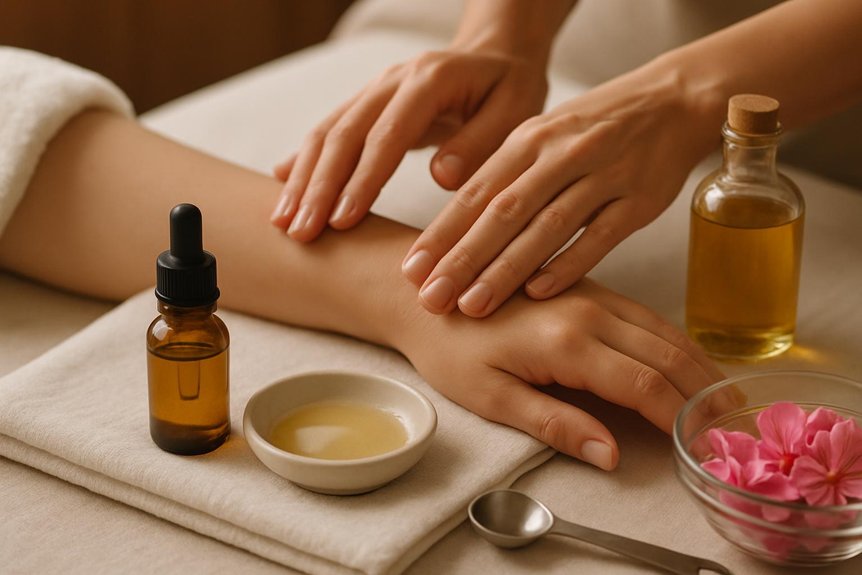
Ginger essential oil can be safe for aromatic massage when it is properly diluted, patch tested, and used on healthy, intact skin. Most practitioners keep full-body dilution around 0.5–1% and avoid higher concentrations that can cause stinging or excessive warmth. It should not be applied to broken, inflamed, or freshly shaved areas, and heat therapies are usually reduced. Extra caution is advised for pregnancy, breastfeeding, children, and anticoagulant use. Further guidance explains screening and aftercare.
Is Ginger Oil Safe for Essential Oil Massage?
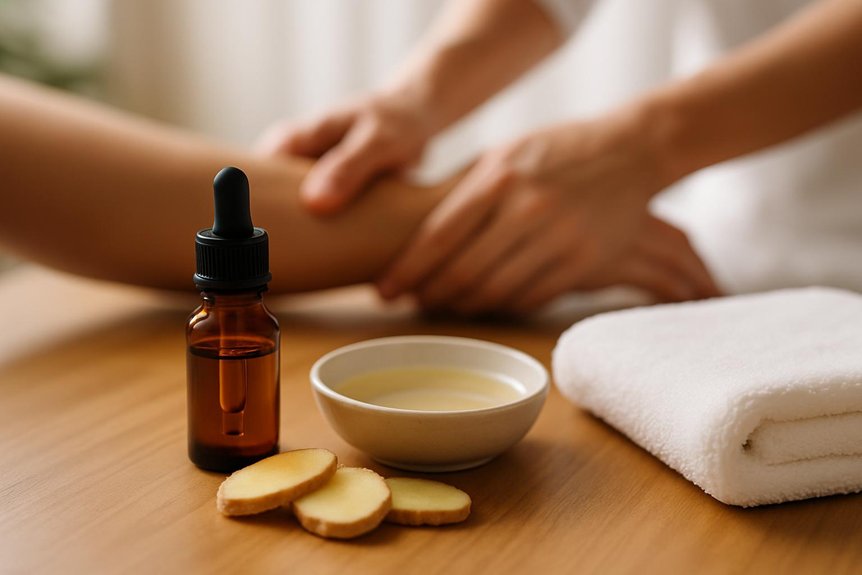
When is ginger oil safe to use in an aromatic massage? It is generally appropriate for healthy adults when skin is intact, no known ginger allergy exists, and the client wants a warming, sensual sensation.
Evidence and clinical experience suggest ginger can irritate skin, so a patch test and conservative use are prudent.
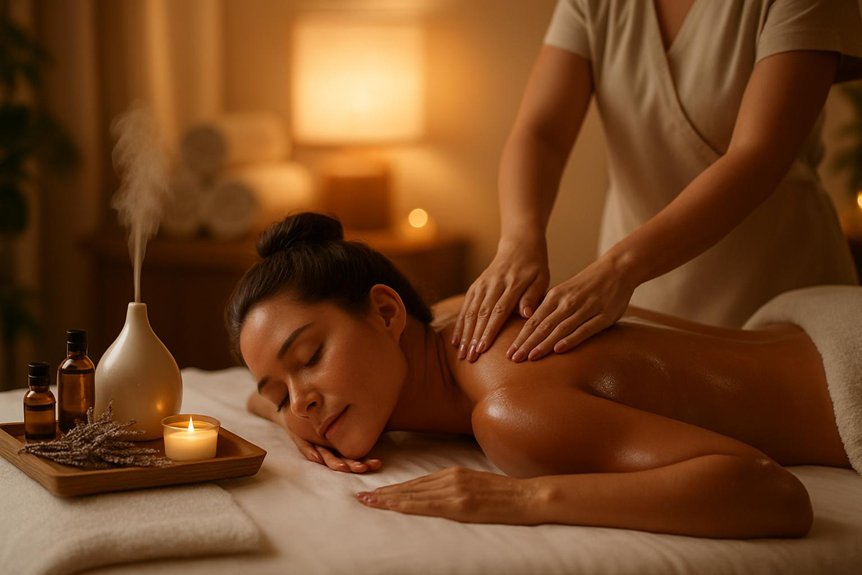
It can help you relax, and incorporating aromatherapy massage tips may support a more comfortable, calming experience.
In Spa & Massage clinics across London, therapists screen for asthma, eczema, migraines, and fragrance sensitivities, and they avoid ginger oil on inflamed areas, after shaving, or with heat therapies.
Extra caution is advised in pregnancy, breastfeeding, anticoagulant use, and with children; medical guidance may be needed.
If redness, burning, or dizziness appears, treatment should stop and skin should be washed with a carrier oil, then water.
How to Dilute Ginger Essential Oil for Massage
For a warming ginger massage that remains skin-safe, proper dilution in a carrier oil is essential because ginger essential oil can be irritating at higher concentrations. Spa & Massage therapists typically keep ginger at 0.5–1% for full-body aromatherapy and up to 2% only for small, short-term areas on robust skin.
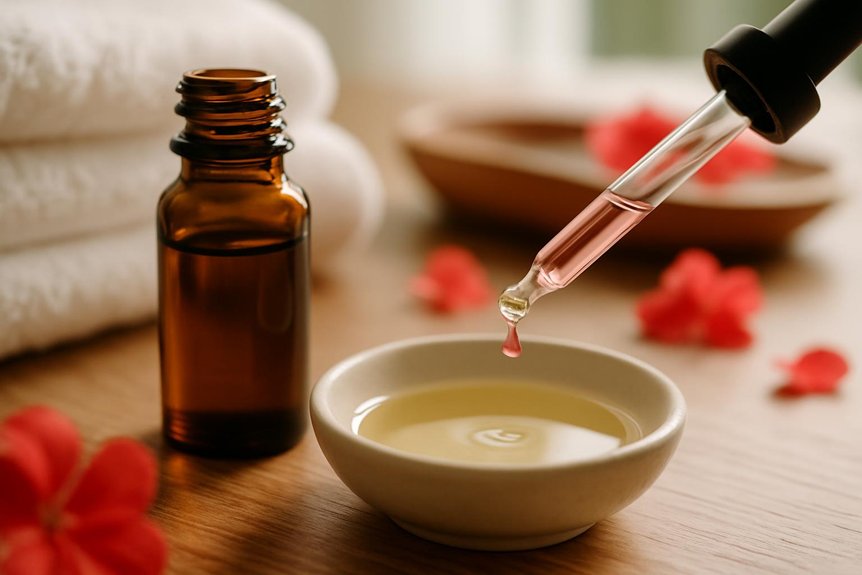
Practically, that equals 1–2 drops per 10 ml carrier (0.5–1%), or 4 drops per 10 ml (2%). Suitable carriers include fractionated coconut, sweet almond, or jojoba; richer options like avocado suit dry skin for a more sensual glide. The blend should be measured, mixed thoroughly, and applied sparingly, increasing only if warmth feels comfortable. Avoid mucous membranes and freshly shaved or broken skin.
How to Patch Test Ginger Oil Before Massage
Patch testing is often the safest way to check that a ginger oil blend is tolerated before it is used in an aromatic massage, because ginger essential oil can trigger irritation or sensitisation in some people even at correct dilution.
At Spa & Massage, therapists advise preparing the same diluted blend intended for treatment in a carrier oil. A pea-sized amount is applied to clean, dry skin on the inner forearm or behind the ear, then covered with a breathable plaster.
The area is kept dry and undisturbed for 24 hours, checking at 1 hour and again at 24 hours for redness, itching, burning, swelling, or blistering. Any reaction means the blend should not be used, and the skin should be gently washed with soap and water.
If in doubt, a therapist can guide.
Ginger Oil on Skin: Benefits and Risks in Massage
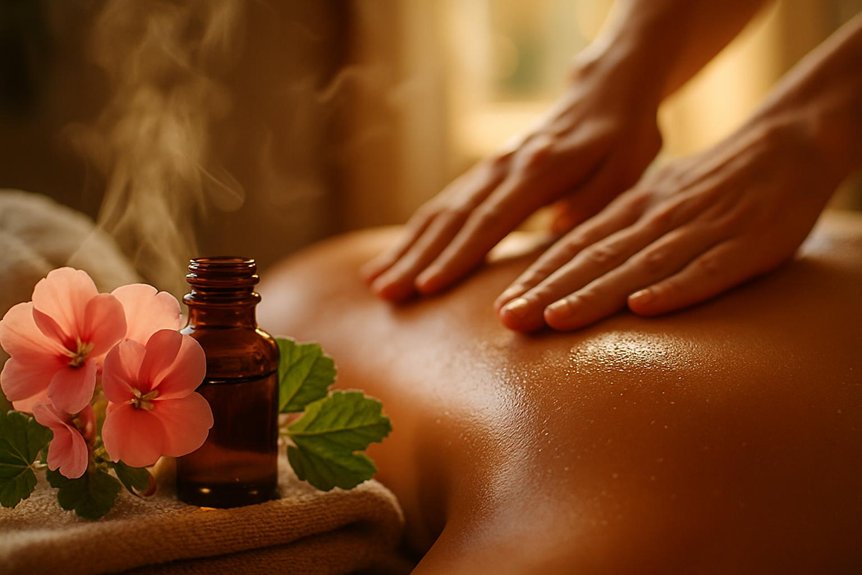
In aromatic massage, ginger essential oil is sometimes chosen for its warming sensation and potential to support local circulation and ease feelings of muscular stiffness.
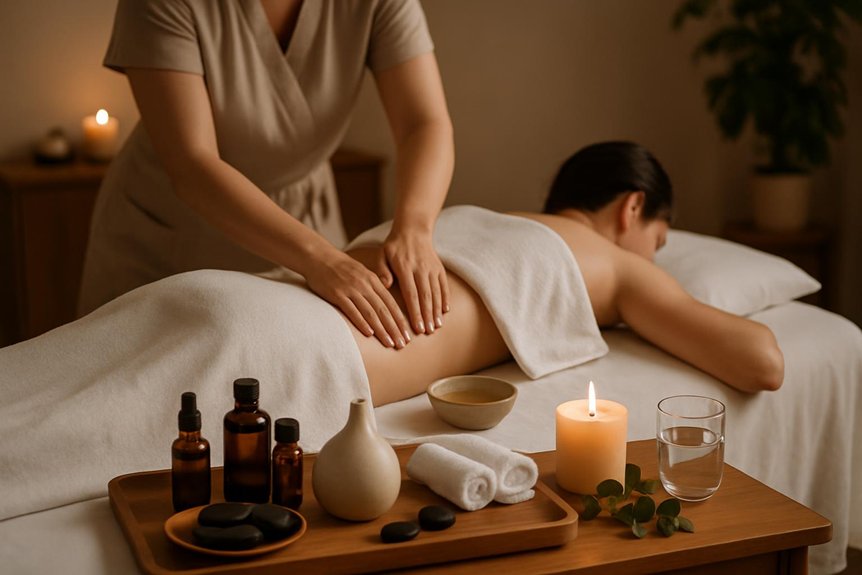
In Spa & Massage clinics, therapists typically dilute it in a carrier oil so the glide stays sensual and comfortable while the skin barrier is respected. Many clients enjoy the cosy heat, especially during deep tissue or sports-focused sessions, where perceived tightness can soften and relaxation deepens.
Risks are primarily irritation and sensitisation: ginger can feel hot, sting, or redden skin, particularly on delicate areas. Over‑concentration, occlusion under blankets, or friction from vigorous strokes can intensify burning.
Therapists monitor sensation, adjust pressure and dilution, and avoid applying to broken or freshly shaved skin. Aftercare includes hydration and noting any delayed itching or rash.
Who Should Avoid Ginger Oil Massage?
Skin warmth can be pleasant, but the same heating and rubefacient effects that make ginger oil appealing also increase the risk of irritation in certain people.
Those with very sensitive or reactive skin, eczema, psoriasis, rosacea, or a compromised skin barrier should generally avoid ginger oil massage. It is also not recommended for clients with known fragrance sensitivities, a history of contact dermatitis, or multiple allergies.
Extra caution is advised during pregnancy, while breastfeeding, for children, and for anyone with asthma or migraines triggered by scent.
Clients taking anticoagulants, managing bleeding disorders, or preparing for surgery should seek medical guidance first.
In Spa & Massage clinics, therapists screen contraindications, offer gentler blends, and can choose unscented options.
Ginger Oil Side Effects: Irritation and Allergy Signs
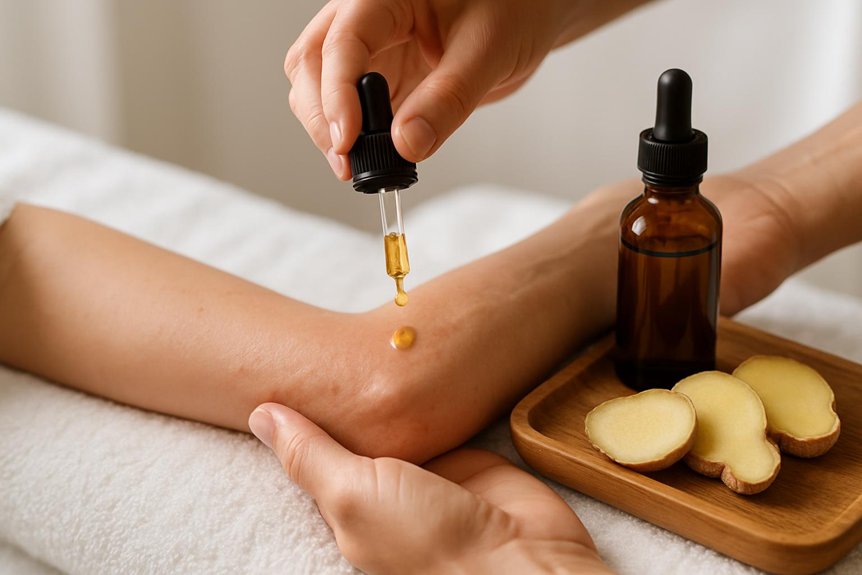
Due to its naturally warming constituents, ginger oil can cause unwanted reactions when applied to the body, especially if the dilution is too strong or the skin barrier is already stressed.
Irritation may show as stinging, burning heat, redness, itching, or a blotchy rash where the oil was massaged; symptoms can appear during treatment or later that day.
Allergy signs are typically more pronounced: hives, swelling, spreading redness beyond the application site, or tightness in the throat or wheezing, which require urgent medical help.
In Spa & Massage clinics, therapists advise clients to speak up at the first hint of discomfort, as continuing can intensify inflammation.
People with eczema, rosacea, or recent shaving may react more readily.
Persistent symptoms warrant medical advice.
How We Use Ginger Oil Safely in Our Clinics
Across Spa & Massage clinics in London, ginger essential oil is used cautiously by prioritising appropriate dilution and, when indicated, patch testing to reduce the risk of irritation.
Therapists also screen clients for relevant contraindications—such as sensitive skin, pregnancy considerations, or known allergies—so the approach can be adapted or avoided where necessary.
During treatment, controlled application techniques are used, including conservative dosing, targeted placement, and close monitoring of skin response and client feedback throughout the massage.
Dilution And Patch Testing
For most clients, ginger essential oil is used only when it has been properly diluted and checked for tolerance, as it can be warming and irritating at higher strengths. At Spa & Massage clinics, therapists blend ginger into a neutral carrier oil at low concentrations, typically around 0.5–1% for full-body aromatherapy, increasing only if the skin and comfort response remain calm.
Before wider use, a patch test is offered: a small amount of the diluted blend is applied to a discreet area and the client is asked to notice heat, stinging, or redness over the next 24 hours. If sensitivity appears, ginger is reduced or avoided, and a gentler aromatic is chosen.
This careful approach helps clients feel close, safe, and deeply cared for.
Client Screening And Contraindications
In every ginger-oil aromatherapy session, Spa & Massage therapists begin with structured client screening because ginger essential oil can be strongly warming and may aggravate certain conditions. A brief consultation reviews allergies, asthma, migraine triggers, skin sensitivity, and any history of dermatitis or reactions to spicy botanicals.
Contraindications include broken or inflamed skin, active eczema or rosacea flares, fever, acute inflammation, or recent sunburn. Extra caution is used for pregnancy, breastfeeding, anticoagulant use, bleeding disorders, and uncontrolled hypertension, as warming oils and massage may increase local circulation.
Clients undergoing chemotherapy, radiotherapy, or taking multiple medications are asked for medical clearance. If screening suggests elevated risk, therapists recommend an alternative aroma or an unscented option to keep touch comfortable and safe.
Controlled Application Techniques
Once screening has confirmed ginger oil is appropriate, controlled application becomes the primary safeguard against irritation and excessive heat. At Spa & Massage clinics across London, therapists dilute ginger essential oil to conservative, skin-safe levels and blend it into a neutral carrier oil before any contact.
Application begins with a small “test glide” on a discreet area, then proceeds slowly, using light-to-moderate pressure and continuous movement to prevent pooling. Warming strokes are kept away from mucous membranes, broken skin, and recently shaved areas. Heat sources (hot stones, strong steam) are avoided or reduced when ginger is used.
Throughout the session, the therapist checks in quietly about warmth, tingling, or sensitivity, and adjusts concentration, pace, or area immediately if discomfort appears.
Conclusion
Ginger essential oil can be used safely in aromatic massage when handled with disciplined clinical care: low dilution, appropriate carrier oils, patch testing, and avoidance of broken or reactive skin. Therapists should screen for pregnancy, allergies, anticoagulant use, and inflammatory skin conditions, and tailor blends to individual tolerance and goals. Used responsibly, its warming aroma may support comfort and relaxation—yet careless application can provoke irritation in a heartbeat. Ongoing monitoring and clear aftercare preserve benefits while minimising risk.