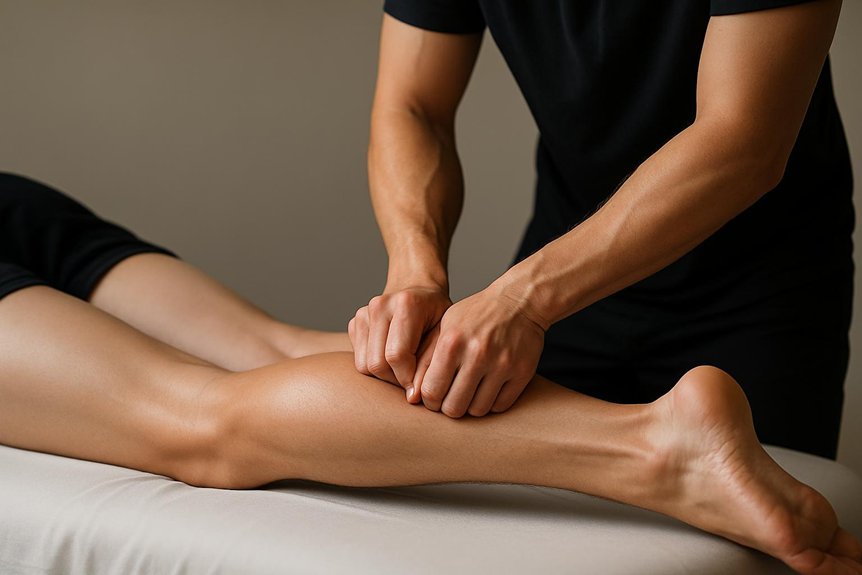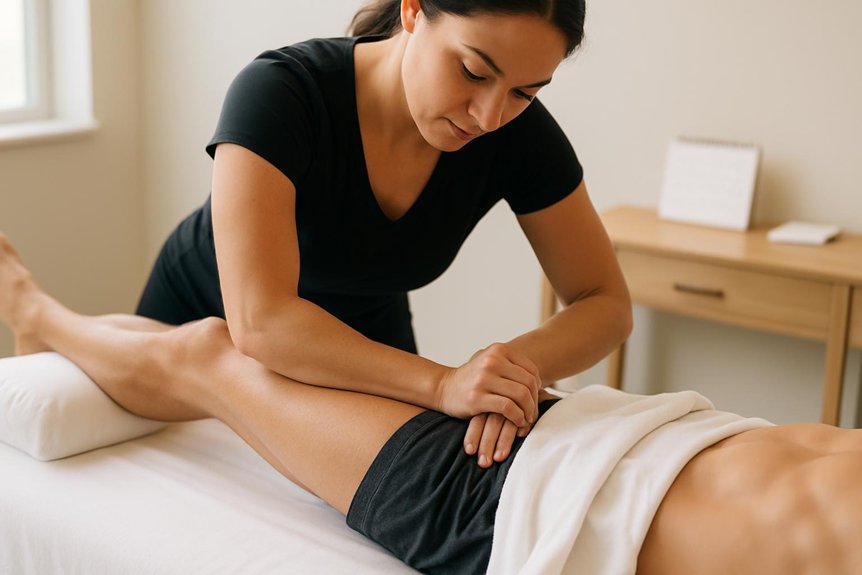

Before intensive tissue massage, the client should describe the exact low back location (central, one‑sided, sacroiliac, hip, or radiating into buttock/leg) and whether it is a pinpoint spot or broad ache. They should note pain quality (dull, sharp, burning), depth, pressure sensitivity, and any numbness, tingling, or weakness. Triggers, timing, and relieving factors should be shared. New bladder/bowel changes, saddle numbness, fever, trauma, or worsening leg symptoms warrant clinical review. Further guidance clarifies pacing, positioning, and aftercare.
Tell Us Where Your Lower Back Pain Is

Before any hands-on work begins, the therapist should be told exactly where the lower back pain is felt—central over the spine, to one side, across the beltline, or radiating into the buttock or leg—because location and referral patterns guide safe technique selection and pressure levels.
At Spa & Massage, precise mapping helps distinguish likely muscular sources from areas needing gentler contact, especially near the spine, sacroiliac region, or hip rotators. The client can indicate a fingertip-sized spot versus a broad ache, and whether one side feels guarded or tender to touch.
Mentioning any leg or buttock referral supports more cautious pacing and clearer consent around sensitive, intimate-feeling areas like glutes, while keeping draping secure and comfort central.
Because deep tissue work targets deeper muscle and fascia layers, clear communication about pain location helps maximize the benefits of deep tissue while minimizing unnecessary soreness.
Describe the Pain Before Deep Tissue Massage
Once the painful area has been clearly identified, the next step is to describe what the pain feels like, as quality and behaviour help determine whether deep tissue work is appropriate and how it should be applied.
A clear description should include whether sensations are dull, aching, sharp, stabbing, burning, throbbing, or cramping, and whether they feel superficial or deep.
Noting pressure sensitivity matters: pain that spikes with light touch may require a gentler approach, while a steady ache may respond well to slower, specific pressure.
Clients should mention any numbness, tingling, weakness, or radiating symptoms, as these can suggest nerve involvement and may change the plan.
At Spa & Massage, therapists use this language to tailor depth, pacing, and consent throughout.
Share Triggers, Timing, and What Eases It
When does the lower back pain start, and what reliably makes it better or worse? Clients should note timing (on waking, after sitting, during exercise, late afternoon) and whether it builds gradually or arrives sharply.
They can describe triggers such as prolonged sitting, bending, lifting, twisting, coughing, stress, or certain sleep positions, and whether heat, gentle movement, walking, stretching, breathwork, or rest helps.
They should share what aggravates it: deep pressure, fast pace, sustained pressure on the spine, or end-range stretches. At Spa & Massage, therapists use this detail to pace deep tissue work, choose positions that feel safe, and target supporting muscles rather than forcing painful ranges.
Mention any successful self-care and preferred pressure and tempo.
Tell Your Therapist About Any Warning Signs
Flagging warning signs early helps the therapist determine whether massage is appropriate and how cautiously to proceed.
Spa & Massage encourages clients to disclose red flags such as new bladder or bowel changes, saddle numbness, rapidly worsening leg weakness, severe night pain, fever, unexplained weight loss, or pain after significant trauma.
Also important are symptoms suggesting nerve involvement: sharp shooting pain below the knee, progressive numbness or tingling, or loss of balance.
Clients should mention known osteoporosis, recent spinal surgery, anticoagulant use, cancer history, inflammatory arthritis, or current infection, as these can change risk.
If pain is unrelenting, escalating, or paired with systemic symptoms, the therapist may recommend medical assessment before treatment.
Transparency supports safe, respectful care.
Agree Pressure, Positioning, and Aftercare Plan
Clear disclosure of red flags supports safe screening; the next step is to agree practical parameters for treatment so lower back tissues can be worked without aggravating symptoms.
At Spa & Massage, the therapist and client should confirm a pressure scale, with permission to reduce depth at the first sign of sharp, radiating, or guarding pain.
Positioning should prioritise comfort and spinal neutrality: side‑lying with pillows, or prone with abdominal support; bolsters under ankles may soften lumbar extension.
Heat, slow compression, and measured forearm work can replace intense stripping when sensitivity is high.
An aftercare plan should be set: hydrate, take a gentle walk, avoid heavy lifting for 24 hours, and note symptom response.
Persistent worsening warrants clinical review promptly.
Conclusion
Clear disclosure before intensive tissue massage acts like a map and a metronome: it locates the pain, sets the tempo, and guides safe pressure. When clients specify where symptoms sit, how they feel, what triggers or relieves them, and any red flags, therapists can choose techniques and positioning with clinical precision. History, imaging, and medications function like guardrails, reducing risk and improving outcomes. With a shared plan for pressure and aftercare, treatment becomes targeted, measured, and safer.