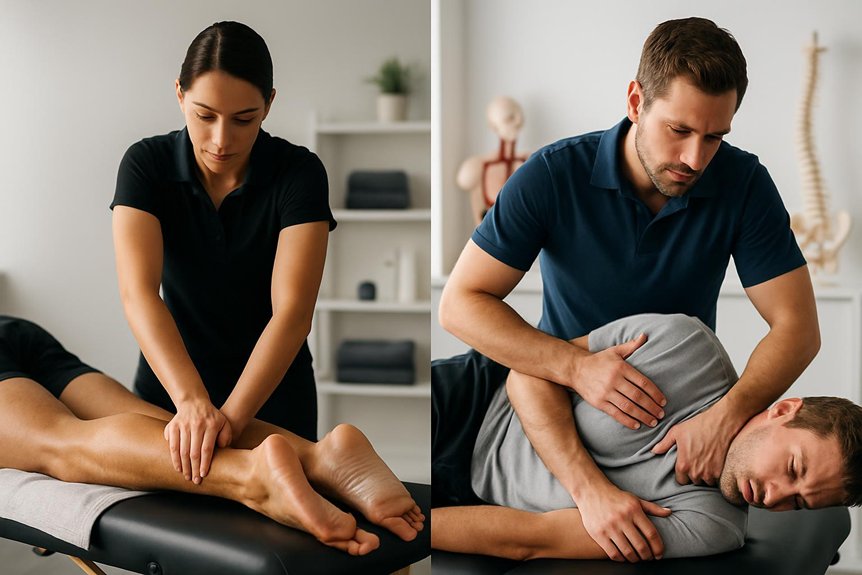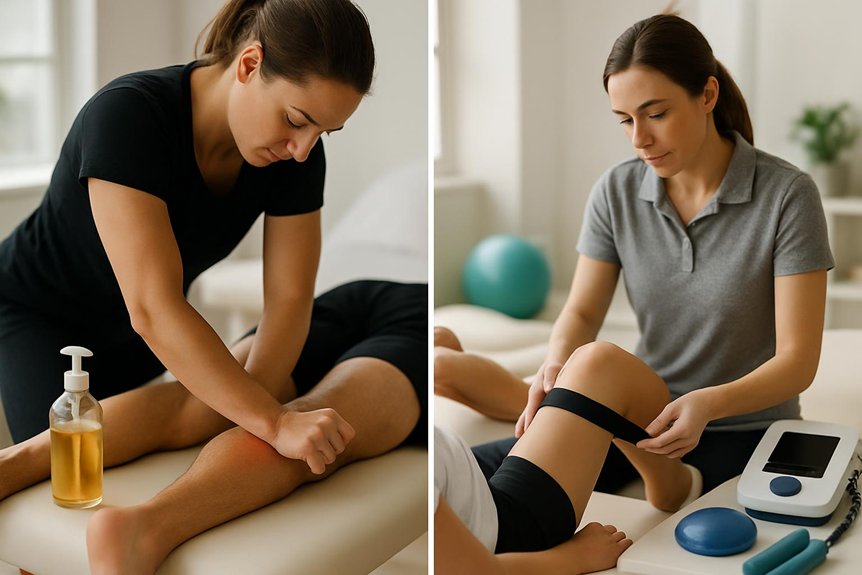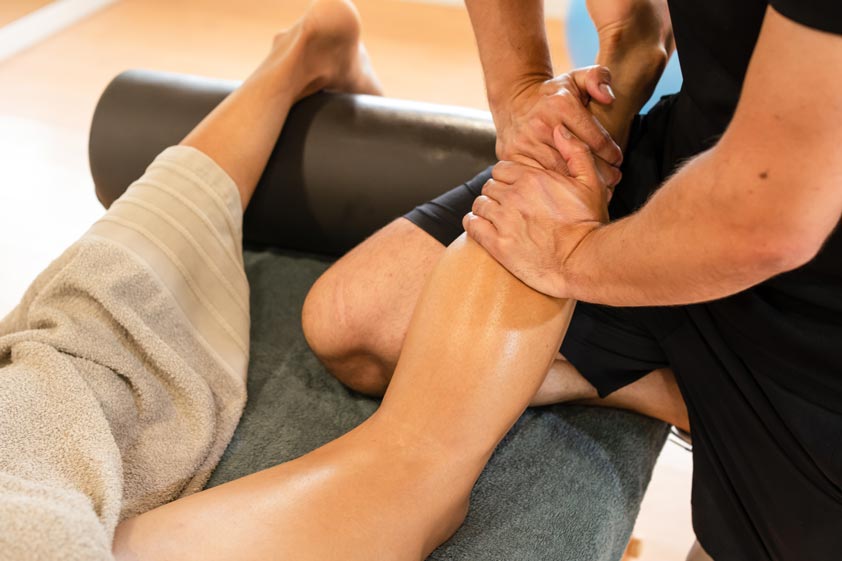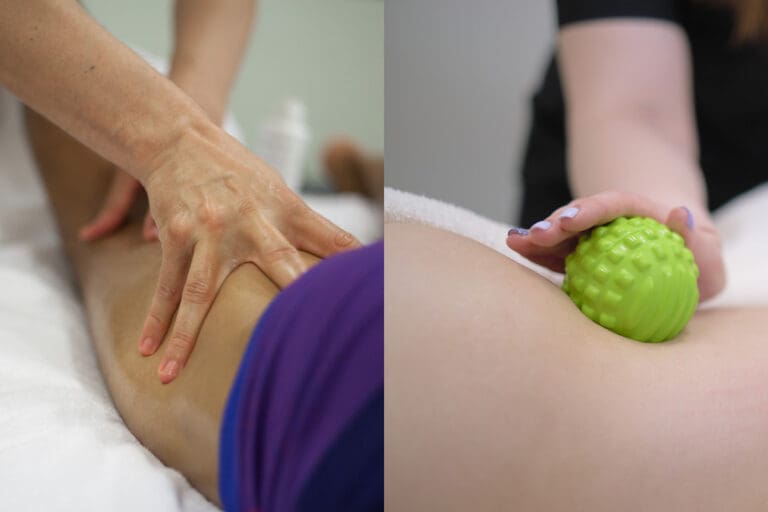
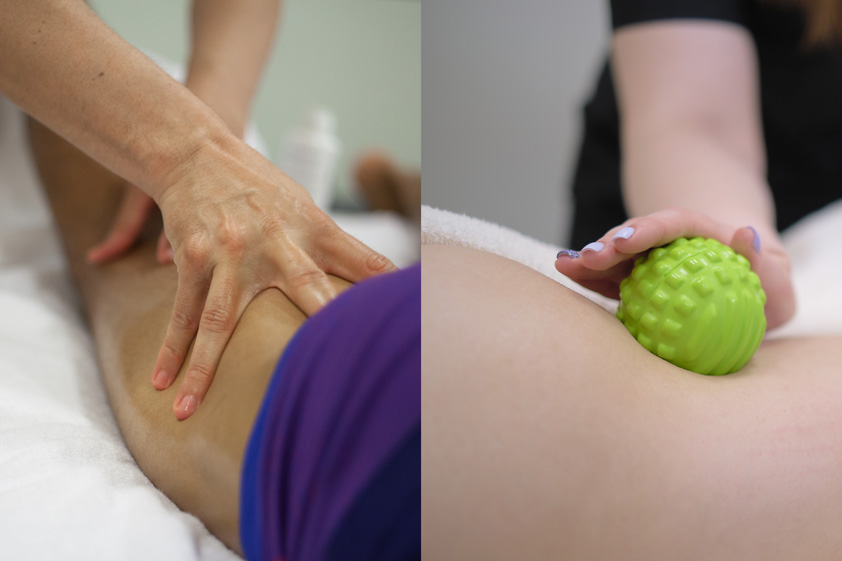
It suits athletes with load-driven muscle tightness, post-session soreness, or pre/post-event needs, using firm, rhythmic, directional strokes, compressions, and assisted stretching to improve short-term readiness. Myofascial release is preferred when movement feels “stuck,” symptoms spread beyond one muscle, or protective guarding and fascial stiffness limit glide, using slower, sustained holds and traction to restore easier range. Both are consent-led and can reduce pain and improve movement quality. The sections below clarify selection.
Performance Massage Vs Myofascial Release: Quick Choice Guide

When is sports massage the better choice, and when does myofascial release make more clinical sense? It suits athletes needing targeted work around training load: post-event soreness, delayed-onset muscle tenderness, and preparation for sessions where range and readiness matter. Myofascial release is often preferred when movement feels “stuck,” symptoms refer beyond one muscle, or long-held tension reduces smooth mechanics under load. It also supports athletic recovery by helping athletes manage training demands more consistently.
At Spa & Massage clinics across London, therapists screen goals, pain behaviour, and sport demands, then select the approach. If a client wants firmer, rhythmical pressure and clear performance intent, it is chosen. If the client needs slower, sustained contact to soften protective guarding and restore glide, myofascial release is chosen. Aftercare typically includes hydration, gentle mobility, and training modifications for 24–48 hours.
Performance Massage Vs Myofascial Release: Key Differences
In clinical practice, the key distinction lies in intent and tissue response: performance massage uses more dynamic, pressure-variable techniques (e.g., deep effleurage, petrissage, friction, and targeted compressions) to address load-related muscle soreness, tone, and short-term performance readiness, whereas myofascial release applies slower, sustained holds and skin-to-fascia engagement to reduce protective guarding and improve fascial glide across movement chains.
At Spa & Massage clinics across London, therapists assess palpatory texture, pain provocation, and movement quality to guide choice. It is typically more rhythmic, locally specific, and sensation-forward, often leaving a “worked” tenderness.
Myofascial release is quieter, longer-held, and system-oriented, aiming for a melt-like softening and easier range. Both can be delivered with close communication, consent-based pressure, and breath-coordinated pacing.
When Performance Massage Is Best for Tight Muscles
It is often the preferred option for “tight” muscles that are primarily load-driven—arising after heavy training, repetitive sport-specific patterns, or prolonged sitting that increases resting tone without clear fascial restriction. It suits athletes who feel dense, fatigued tissue, reduced range, or post-session soreness that eases with warmth and movement.
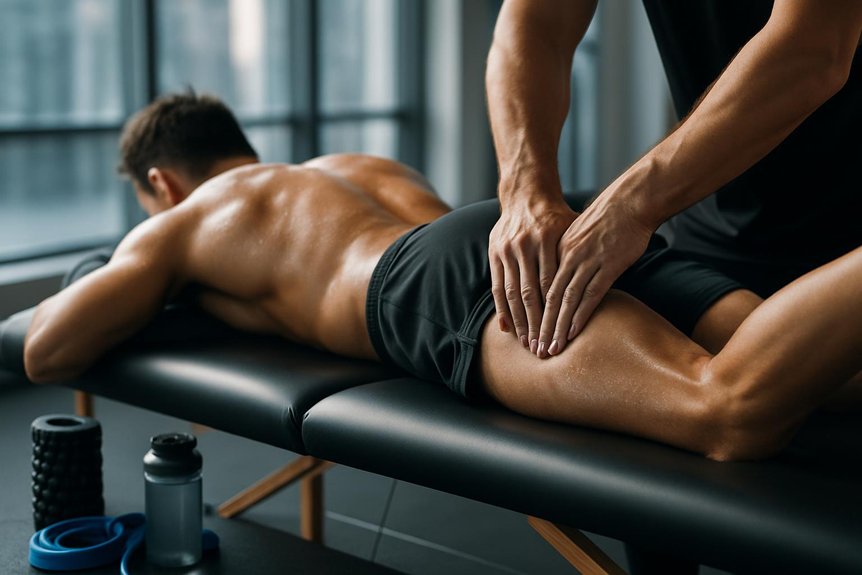
Clinically, targeted deep tissue work, compressions, and assisted stretching can downshift tone, improve short-term mobility, and support training continuity when paired with sensible load management. At Spa & Massage London clinics, therapists assess sport demands, palpate trigger points, and apply progressive pressure within a comfortable, consent-led threshold, aiming for relief without next-day “bruised” heaviness.
It is especially useful pre-event for activation and post-event for recovery, with aftercare emphasising hydration, gentle walking, and light mobility.
When Myofascial Release Is Best for Fascia Pain
Myofascial release is often most appropriate when an athlete presents with persistent fascia tightness and pain that follows a consistent, movement-restricted pattern rather than a single sore muscle.
By applying sustained, low-load pressure to the fascial system, the approach aims to reduce abnormal tissue tension and restore more efficient range of motion, which can support training continuity.
At Spa & Massage clinics across London, therapists typically select myofascial release when assessment indicates fascial restriction is the primary limiter of movement and symptom reproduction.
Persistent Fascia Tightness
Identifying persistent fascia tightness early is essential when pain feels diffuse, movement remains restricted despite rest, and the affected area is unusually sensitive to pressure.
In athletes, this can reflect reduced fascial glide and heightened protective tone following repetitive loading, long sitting, or incomplete recovery, making myofascial release the preferred option over conventional performance massage.
At Spa & Massage clinics across London, therapists use slow, sustained pressure and gentle shear to engage superficial and deep fascial layers, aiming to normalise tissue hydration and reduce nociceptive input.
Clients often report a “melting” release, warmth, and easier breathing as guarding settles.
Best results are seen when sessions are paired with hydration, easy walking, and avoiding heavy training for 24 hours, allowing the tissue to adapt without re-irritation.
Movement-Restricted Pain Patterns
In contrast to simple post-exercise soreness, movement-restricted pain patterns—where discomfort reliably appears at a specific point in a range of motion and eases only when the limb is unloaded—often indicate reduced fascial glide rather than isolated muscle fatigue. In these cases, myofascial release is often the better choice than traditional performance massage, because it targets stiffness within fascial layers that can tether movement and alter load transfer.
At Spa & Massage clinics across London, therapists assess the exact “catch point” in the athlete’s movement, then apply slow, sustained pressure and guided stretching to restore sliding between tissues. Evidence-informed practice suggests this approach can improve range, reduce protective guarding, and calm sensitised pain. Aftercare emphasises gentle mobility, hydration, and gradual reloading, keeping training confidence intact.
Techniques Compared: Performance Massage Vs Myofascial Release
Compare performance massage and myofascial release by focusing on how each technique targets tissue and adapts to athletic demand. Performance massage uses structured strokes—effleurage, petrissage, friction, and assisted stretching—to address muscle tone, circulation, and neuromuscular readiness around training cycles. Pressure is often deeper and more dynamic, following specific muscle groups involved in performance.
Myofascial release applies slower, sustained loading and gentle shearing to fascial layers, waiting for tissue creep and improved glide across planes. The intent is to reduce protective guarding and restore length without provoking post-treatment soreness.
At Spa & Massage clinics, therapists select the method after palpation and movement screening, blending both when appropriate. Communication stays close, consent-led, and athlete-specific.
Performance Massage Vs Myofascial Release for Common Issues
Choose the right modality by matching the complaint to the tissue behaviour: performance massage typically suits acute training-related muscle tightness, delayed-onset soreness, and pre-/post-event performance support, while myofascial release is often preferred for persistent “stiffness” linked to fascial restriction, reduced glide, or protective guarding.
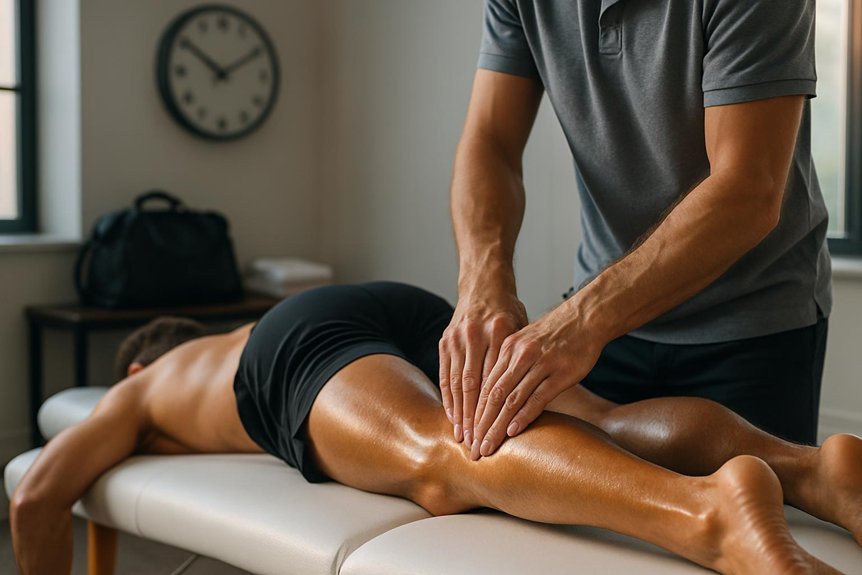
For runners with calf or hamstring overload, performance massage can target tender, overworked fibres and support short-term range and output.
For desk-bound athletes with neck, hip flexor, or plantar fascia tightness, myofascial release may better address global tension lines and movement asymmetry.
For tendinopathy or recurrent strains, either modality should be paired with progressive loading; manual work is adjunctive.
At Spa & Massage London clinics, therapists screen training load, sleep, and stress, then tailor pressure and pacing to help clients feel safe, held, and athletically ready.
What It Feels Like and How Sore You’ll Be
Matching the modality to the issue is only part of the decision; expected sensation during treatment and next-day soreness often determine what a client can tolerate around training.
It typically feels direct and “workmanlike”: firm strokes, friction, and sustained pressure that can register as productive discomfort, especially over tight muscle bellies or tendon junctions. Mild post-treatment tenderness for 24–48 hours is common, similar to delayed-onset muscle soreness, particularly after deeper work.
Myofascial release usually feels slower and more intimate: gentle to moderate stretch, melting pressure, and a gradual softening as fascia yields. Many clients report less next-day soreness, though localized sensitivity can occur when restrictions are dense.
At Spa & Massage, therapists monitor breath, guarding, and pain scale, aiming for tolerable intensity without compromising performance.
How We Tailor Performance Massage Vs Myofascial Release at Spa & Massage
Although both modalities can reduce pain and improve movement quality, Spa & Massage tailors performance massage and myofascial release through a structured assessment of training load, symptom behaviour, range-of-motion limits, and tissue reactivity.
When an athlete presents with post-session tightness, delayed-onset soreness, or performance dips, therapists prioritise performance massage: deeper, directional strokes, compressions, and assisted stretching to restore tolerance and circulation without provoking symptoms.
When pain is diffuse, protective guarding is high, or mobility is restricted by fascial stiffness, they shift to myofascial release: slower, sustained pressure, gentle traction, and breath-led pacing to downshift sensitivity and improve glide.
Pressure is calibrated minute-by-minute, with ongoing consent, close draping, and clear communication.
Home advice includes hydration, light movement, and simple self-release between sessions.
Conclusion
Like choosing between a foam roller and a scalpel, the right hands-on approach depends on what is “stuck.” Performance massage works like directed pressure along loaded muscle fibres, warming tissue, dispersing knots, and restoring power for training. Myofascial release moves more slowly, sinking into the connective web until it softens and length returns. In practice, symptom pattern and movement testing guide selection. At Spa & Massage, sessions are matched to goal, sport, and recovery timeline.