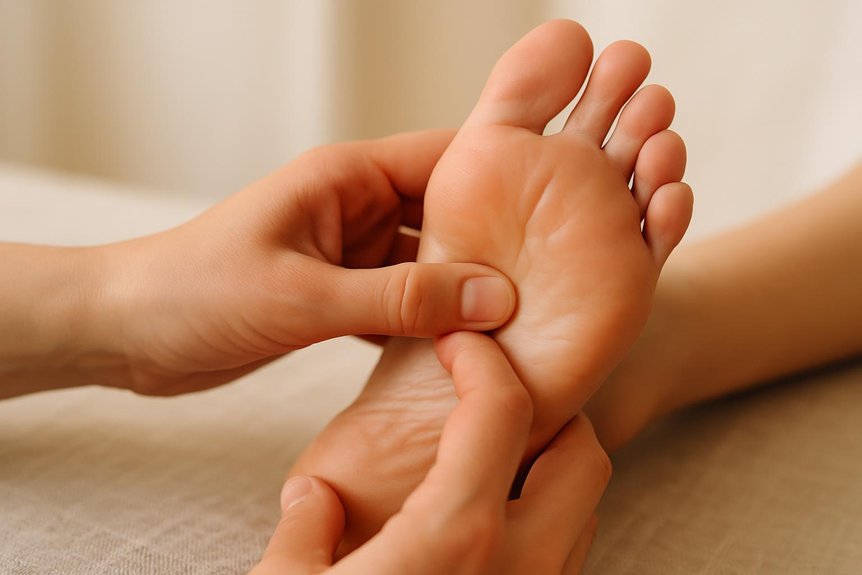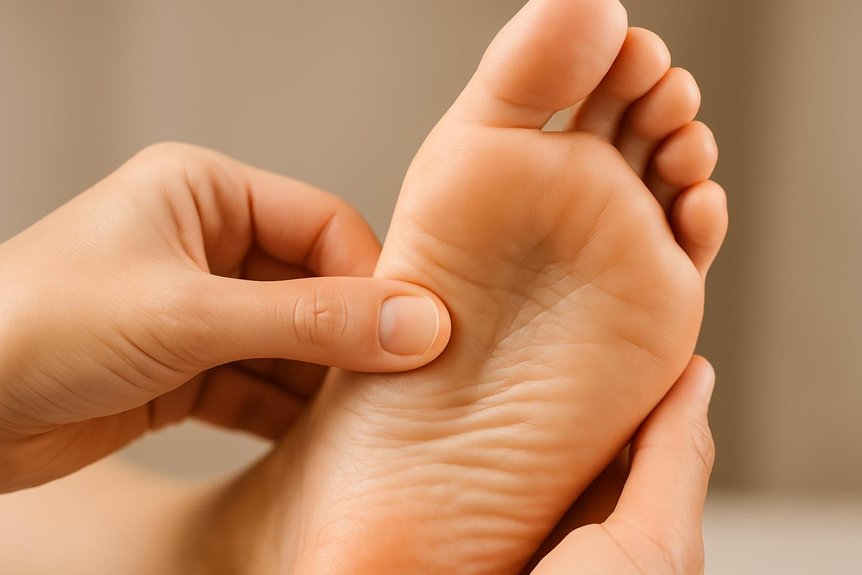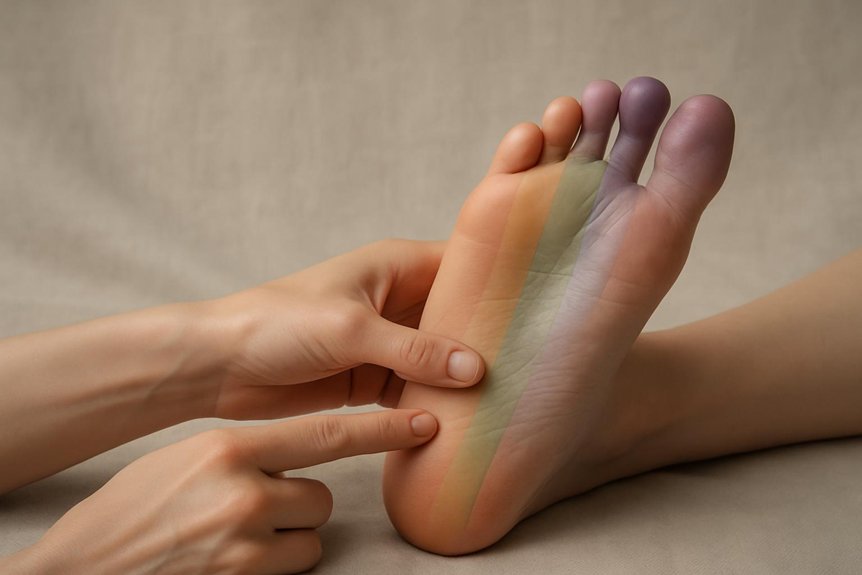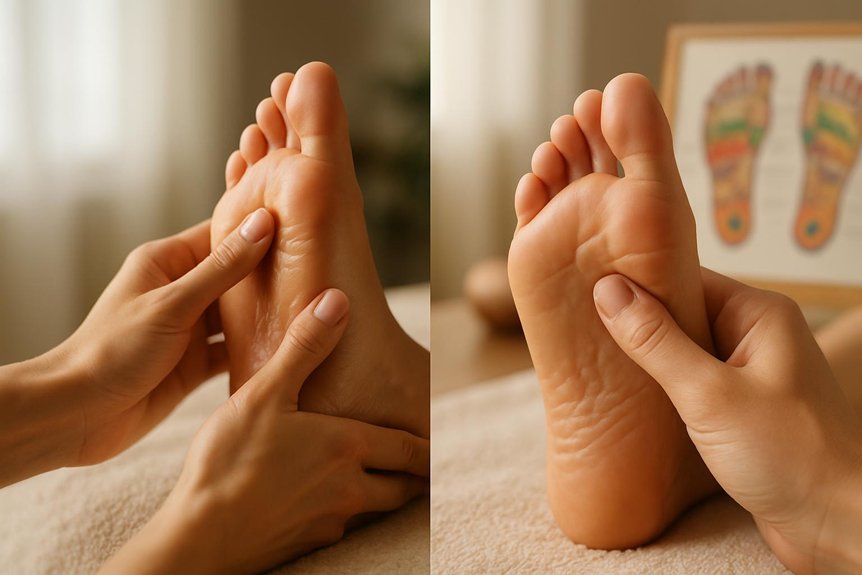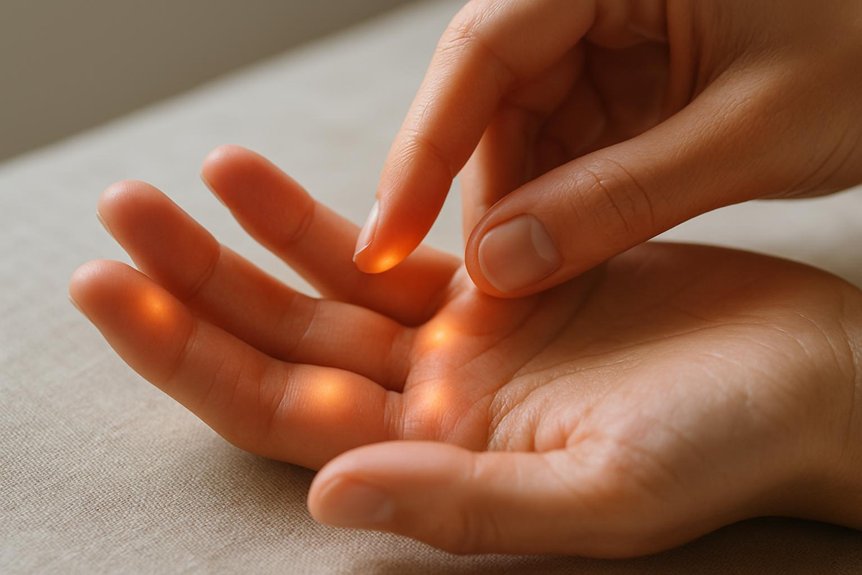
Sinus reflex therapy points are typically worked on the toe tips and upper toe pads, where maps associate the fleshy pads beneath the toenails with the nasal passages and sinus cavities. The big toe is often linked to midline nasal structures, while the smaller toes reflect surrounding sinus areas, extending slightly toward the ball of the foot. Similar points are used on fingertip pads when feet are unavailable. Additional guidance covers safe pressure and when to seek care.
Where Are Sinus Reflexology Points (Feet vs Hands)?
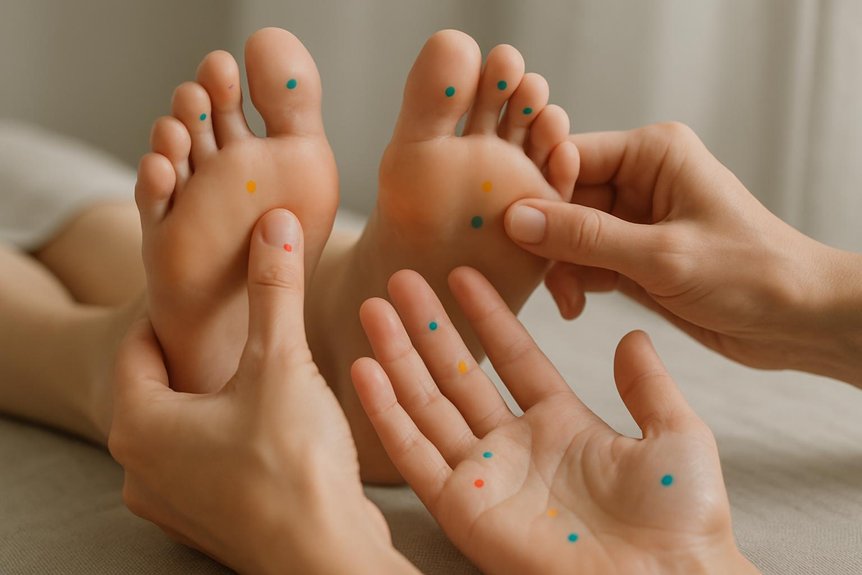
Where are the sinus reflex therapy points most commonly found—on the feet or the hands? In clinical reflex therapy practice, both maps are used, yet the feet are typically emphasised because they offer broader surface area and clearer landmarks for graded pressure.
Hand reflex therapy can be equally soothing when access to the feet is limited, or when clients prefer a more discreet, close-contact approach.
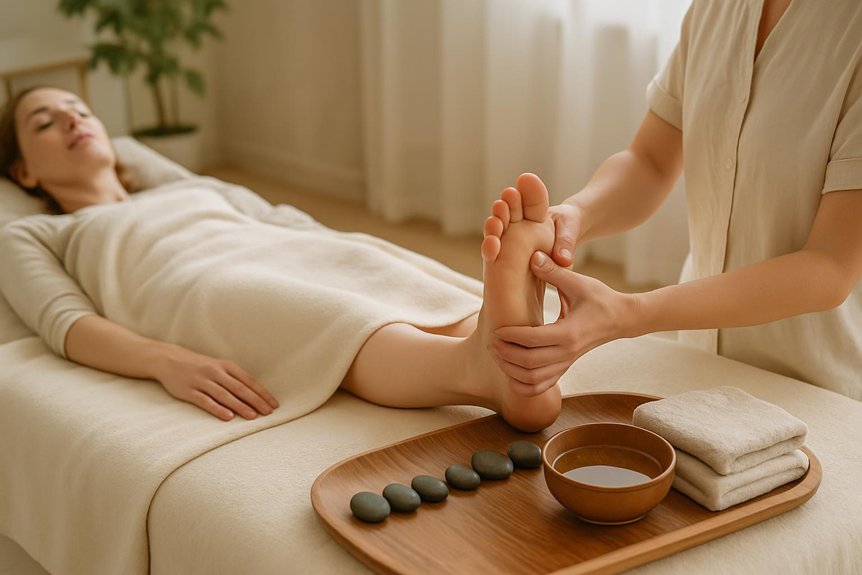
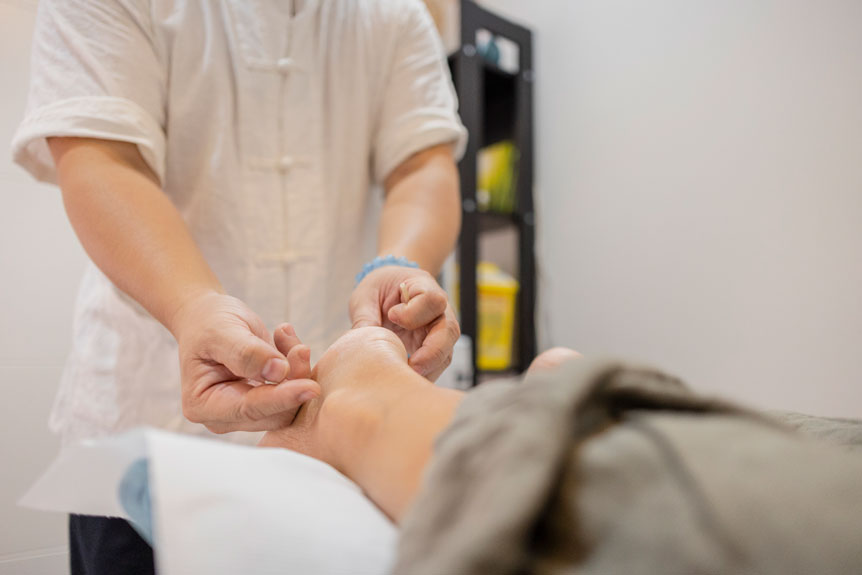
At Spa & Massage clinics across London, therapists select feet, hands, or both based on comfort, sensitivity, and goals. Anatomy-informed touch focuses on small zones associated with the nasal passages and facial sinuses, using slow, precise compressions rather than force.
Many clients appreciate the intimate rhythm of guided breathing, warmth, and steady pressure to encourage relaxation alongside sinus-ease.
It is often valued for its calming effects, helping many people discover the healing power of zone therapy through gentle, attentive touch.
Where Are the Sinus Zone Therapy Points on the Feet?
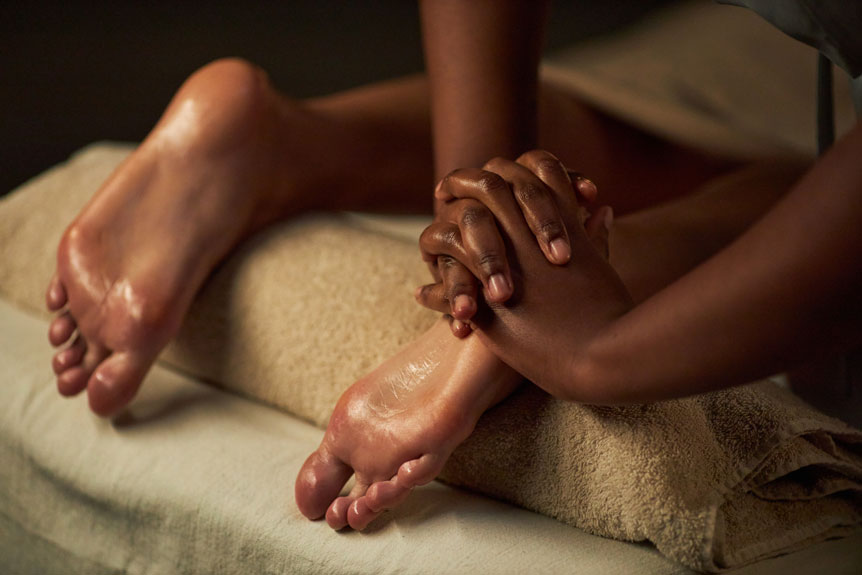
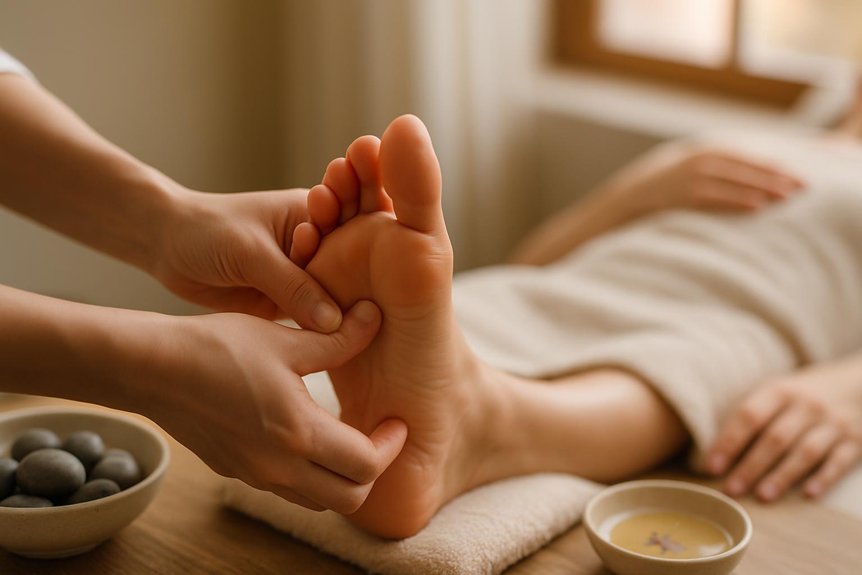
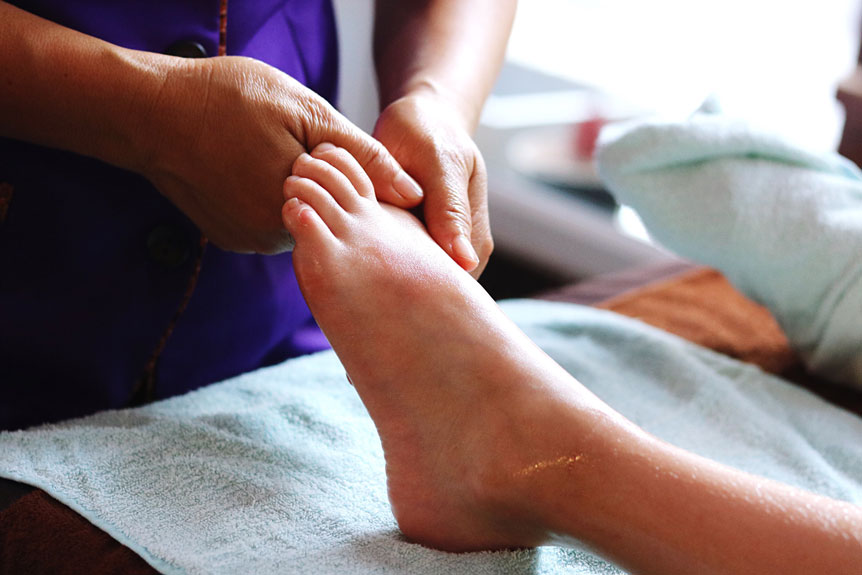
Most commonly, the sinus zone therapy points on the feet are located along the toe tips and upper toe pads—areas mapped to the nasal passages and facial sinuses.
In classical foot maps, the big toe relates closely to midline nasal structures, while the smaller toes correspond to surrounding sinus regions.
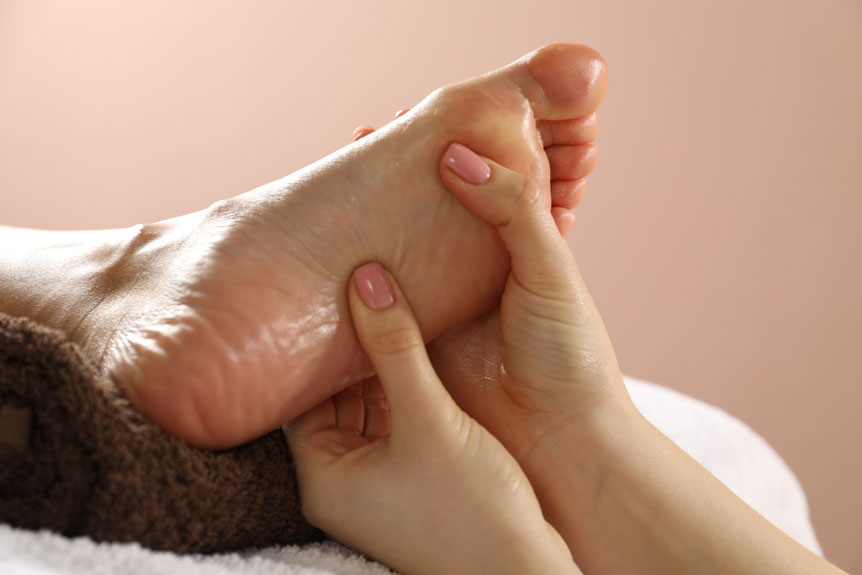
Practitioners typically work the fleshy pads just beneath each toenail and the upper surface of the toe pads, then trace slightly down toward the ball of the foot to follow related facial pathways.
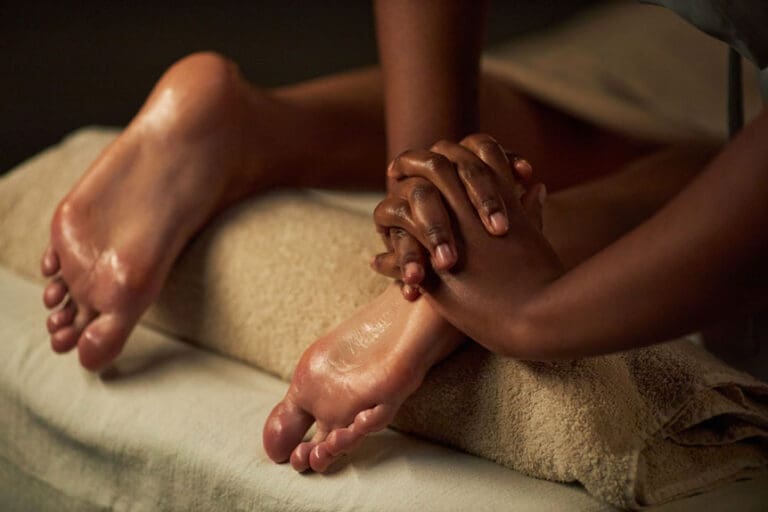
Pressure is applied with slow, confident thumb-walking or gentle circular holds, aiming for a “tender-but-safe” sensation rather than sharp pain.
At Spa & Massage, therapists tailor depth to comfort, encouraging calm breathing and warming the feet first.
Where Are the Sinus Zone Therapy Points on the Hands?
On the hands, sinus zone therapy points are typically mapped to the fingertip pads and the fleshy upper surface just beneath each nail, mirroring the toe-tip locations used on the feet.
In zone therapy charts used by Spa & Massage therapists, the central pad of each fingertip is associated with the nasal passages, while the edges nearer the index and middle fingers are often linked with the sinus cavities.
Additional hand mappings place the bridge-of-nose area along the midline of the thumb tip, with the thumb’s upper pad reflecting the frontal sinus region.
The webbing between thumb and index finger is commonly referenced as a supportive zone for facial and head tension patterns.
These locations can be integrated into a calming, client-centred zone therapy session across Spa & Massage’s London clinics.
How Do You Press Sinus Zone Therapy Points Safely?
With the fingertip and thumb-tip sinus zones identified, safe stimulation comes down to controlled pressure and clear comfort cues rather than force.
Pressure is applied with the pad of the thumb or index finger, angled slightly toward the nail bed, then eased into a slow “press–hold–release” rhythm. A comfortable intensity—often described as a tender, warming ache—is kept; sharp pain, numbness, or throbbing signals immediate reduction.
At Spa & Massage clinics, therapists favour short sets: 5–8 seconds per press, repeated 3–5 times per point, then a pause to let the tissue settle. Skin is supported with the opposite hand, breath is kept steady, and movements stay small to avoid joint strain.
Light oil may be used for glide.
When Are Sinus Zone Therapy Points Not Enough?
Sometimes, sinus zone therapy points provide only partial relief because congestion and facial pressure can stem from inflammatory, infectious, or structural causes that need targeted medical assessment rather than continued foot or hand work. It is not enough when symptoms last beyond 7–10 days, worsen after brief improvement, or include fever, thick green discharge, severe one-sided pain, dental pain, or reduced smell.
Immediate medical care is advised for swelling around the eyes, vision changes, stiff neck, or intense headache. Deviated septum, nasal polyps, allergies, and chronic rhinosinusitis may require diagnostics and specific treatment.
At Spa & Massage clinics, therapists encourage gentle support—breath-led pressure, hydration, and rest—while guiding clients to seek appropriate care, so touch remains comforting, safe, and effective.
Conclusion
Like a soft clearing of morning mist, sinus zone therapy aims to ease facial heaviness by working mapped points on the feet and hands linked in zone therapy theory to the nasal passages. Gentle, anatomy-informed pressure may invite warmth, subtle tenderness, and a sense of space behind the cheeks and brow, supporting calmer breathing and rest. Aftercare—water, quiet time, and monitoring symptoms—matters. If pain, fever, or persistent blockage lingers, medical assessment is essential.