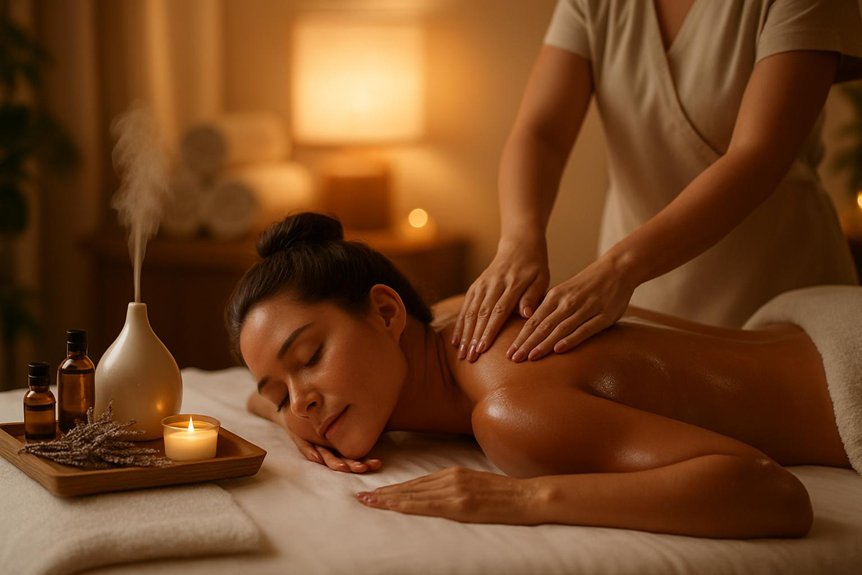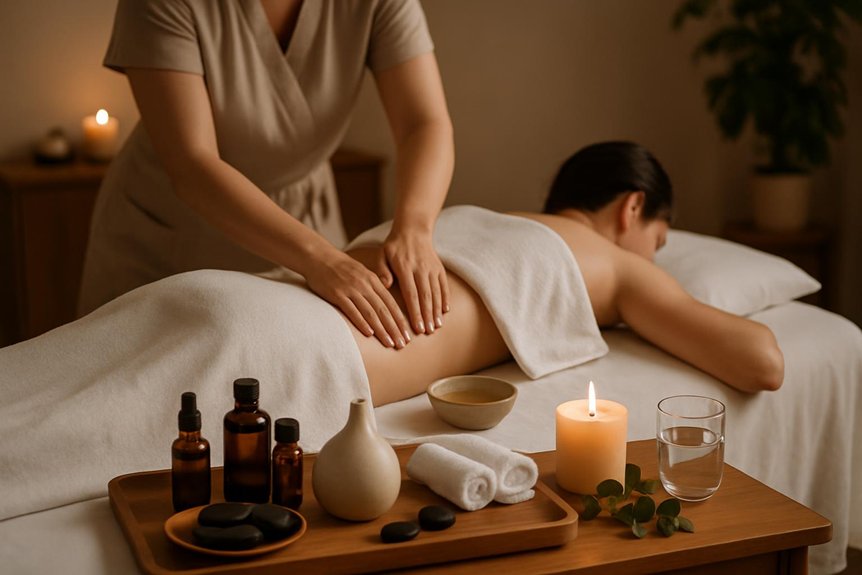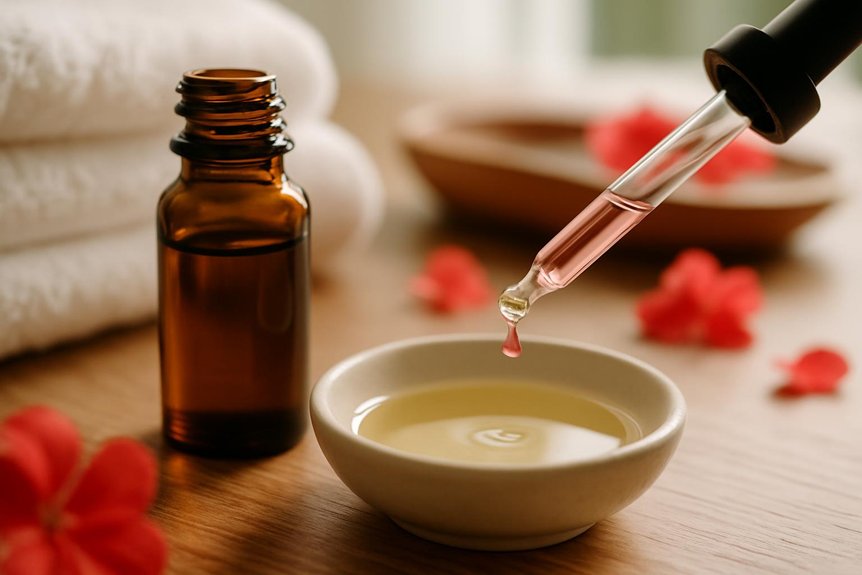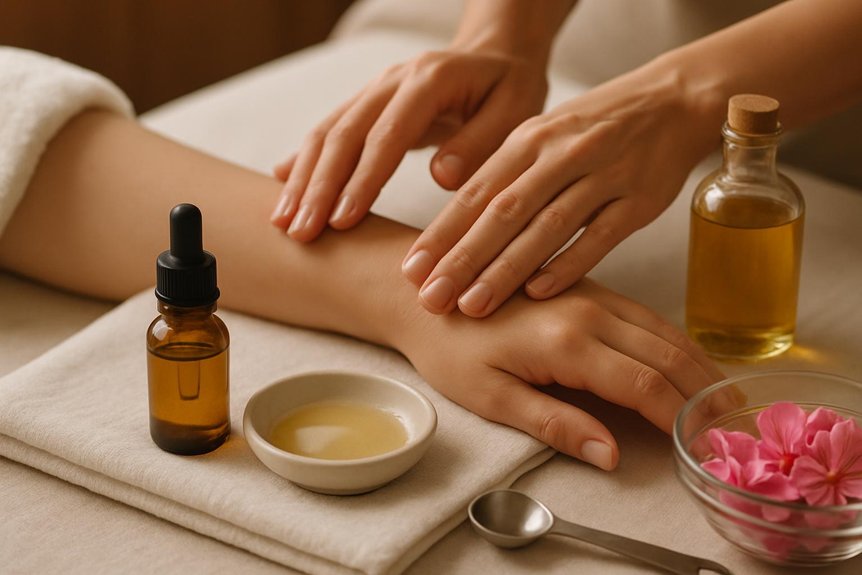

Rosemary essential oil in aromatic massage is typically diluted into a carrier oil to provide a crisp, herbaceous scent that may support alertness and mood while complementing hands-on techniques for muscle tension and circulation. Its warming, stimulating profile is often used on tight shoulders, calves, and lower back after exercise or postural strain, with effects varying by individual. Therapists keep diffusion subtle, prioritise consent, and avoid use in pregnancy, epilepsy, uncontrolled hypertension, asthma, or scent sensitivity; further details explain best use.
Rosemary Oil in Aromatic Massage: What It Does
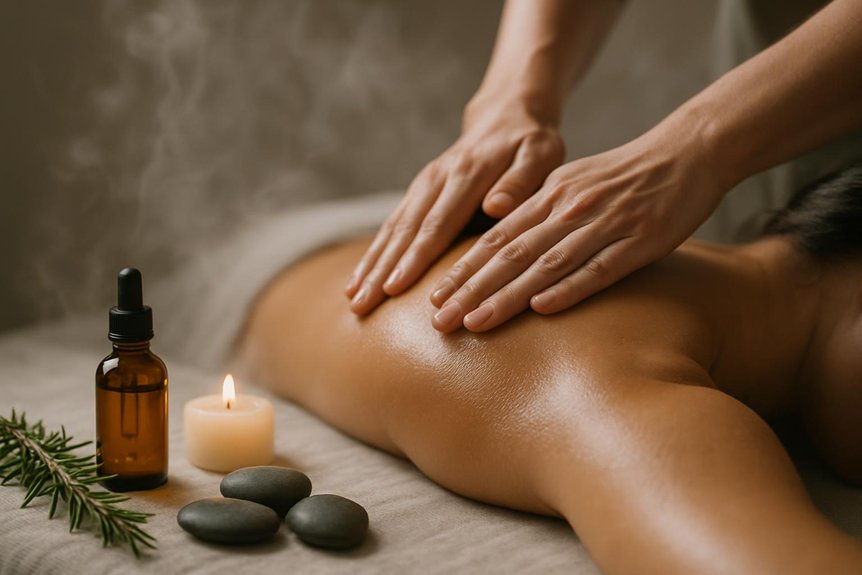
In aromatic massage, rosemary essential oil is used for its stimulating, clarifying aroma and its potential to support circulation, ease muscle tension, and reduce perceived fatigue when appropriately diluted and applied with therapeutic massage techniques.
A key part of aromatherapy massage is using scent intentionally to help you relax and heal alongside the hands-on work.
At Spa & Massage clinics across London, therapists often select it when a client wants a grounded yet uplifting atmosphere that supports focus and a “clear-headed” feeling during close, attentive touch.
Evidence suggests rosemary’s aroma may influence alertness and mood via olfactory pathways, though effects vary by person.
Safety remains central: it is always diluted in a carrier oil, patch-tested when indicated, and avoided or adjusted for pregnancy, epilepsy, asthma sensitivities, or certain medications.
Clients are invited to share preferences, boundaries, and comfort, so the blend feels supportive and intimate.
Rosemary Oil for Sore Muscles and Circulation
For clients seeking relief after exercise or long hours at a desk, rosemary essential oil is often chosen in aromatic massage for its warming, stimulating profile that may help reduce the sensation of soreness and support healthy circulation when appropriately diluted.
At Spa & Massage clinics across London, therapists may pair it with slow, grounding strokes and targeted deep-tissue or sports techniques to ease tight calves, shoulders, and lower back.
Emerging evidence suggests rosemary’s aromatic compounds can feel analgesic and improve local blood flow, though results vary by person.
For safety, it is blended into a carrier oil at low concentrations, avoided on irritated skin, and used cautiously during pregnancy, epilepsy, or uncontrolled high blood pressure.
Clients are advised to hydrate and rest afterward.
Rosemary Oil for Stress Relief and Clearer Focus
Breathing in rosemary’s crisp, herbaceous aroma during an aromatic massage is often associated with calmer mood and sharper mental clarity. Small clinical studies suggest rosemary’s scent may support alertness, working memory, and perceived energy, which can feel grounding when stress makes the mind feel crowded. The effect is subtle and varies by person, so expectations are best kept realistic and guided by how the client responds in the moment.
At Spa & Massage, therapists note some clients prefer rosemary when they want to stay present yet soothed—close to their own breath, body, and sensations. For safety, rosemary essential oil should be well diluted in a carrier oil and avoided on irritated skin. Caution is advised in pregnancy, asthma, or epilepsy; patch testing may help.
How We Use Rosemary Oil in Massage at Spa & Massage
With client goals and sensitivities in mind, Spa & Massage therapists use rosemary essential oil selectively within aromatic massage blends—typically to support mental clarity, postural fatigue, and a “reset” feeling without overly sedating the client. A brief consultation guides whether rosemary is suitable and how prominent it should be in the aroma.
In clinic, it is most often diluted at low, skin-safe levels into a carrier oil and paired with grounding notes to keep the experience calm and intimate. Therapists may emphasise slow, warming strokes across the upper back, neck, and scalp to ease desk-related tension while inviting steady breathing. Diffusion in the room is kept subtle so the scent stays close to the body.
Aftercare typically includes hydration and gentle neck-and-shoulder stretches to sustain clarity between sessions.
Who Should Avoid Rosemary Oil in Massage
Some clients should avoid rosemary essential oil in massage due to its stimulating profile and the higher risk of irritation or unwanted systemic effects in certain groups.
At Spa & Massage, therapists typically recommend avoiding it in pregnancy (unless specifically advised), in epilepsy or seizure history, and in poorly controlled high blood pressure, as stimulation may be unwelcome.
It may also be unsuitable for clients with asthma, fragrance sensitivity, migraine triggered by scent, or active dermatitis, eczema flares, or broken skin, where sensitisation is more likely.
Extra caution is advised for those on anticoagulants or with bleeding disorders, and for children.
Clients with known allergy to Lamiaceae plants should avoid.
A patch test and clear consent keep sessions intimate and safe.
Conclusion
Rosemary oil in aromatic massage is commonly used to support a refreshed, mentally alert feeling and to complement techniques aimed at easing muscular tension and encouraging comfortable circulation. Evidence remains mixed, so benefits are best framed as supportive rather than curative. In practice, therapists typically dilute it appropriately, patch-test when indicated, and tailor pressure and placement to client goals—then, like a well-timed telegram, check in often. It may be unsuitable for pregnancy, epilepsy, or sensitive skin.