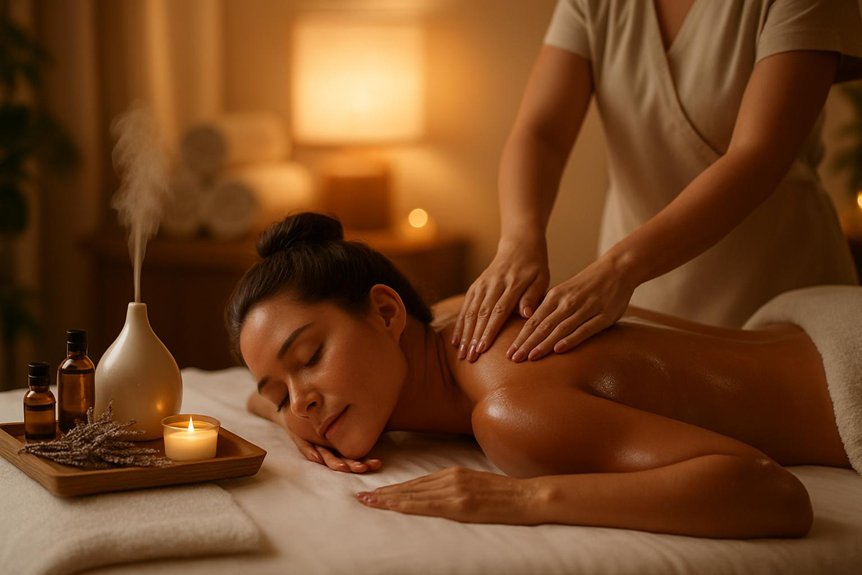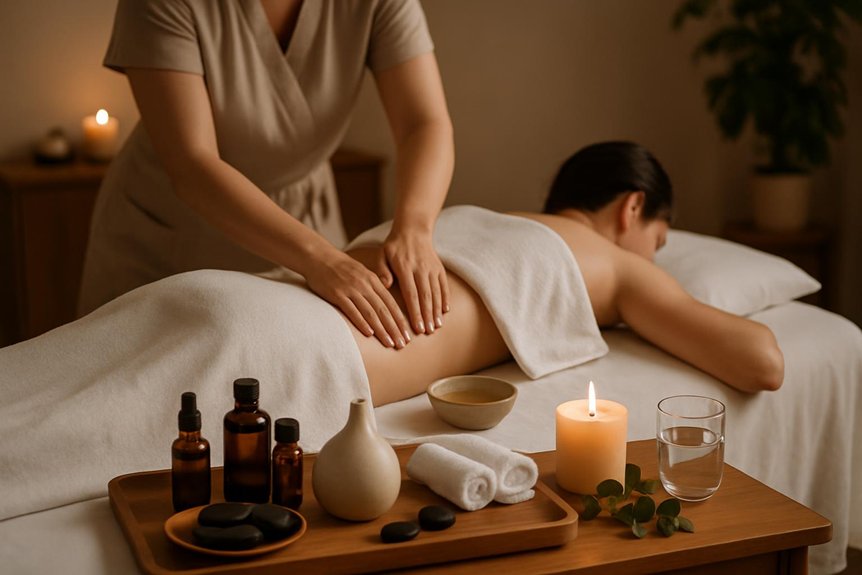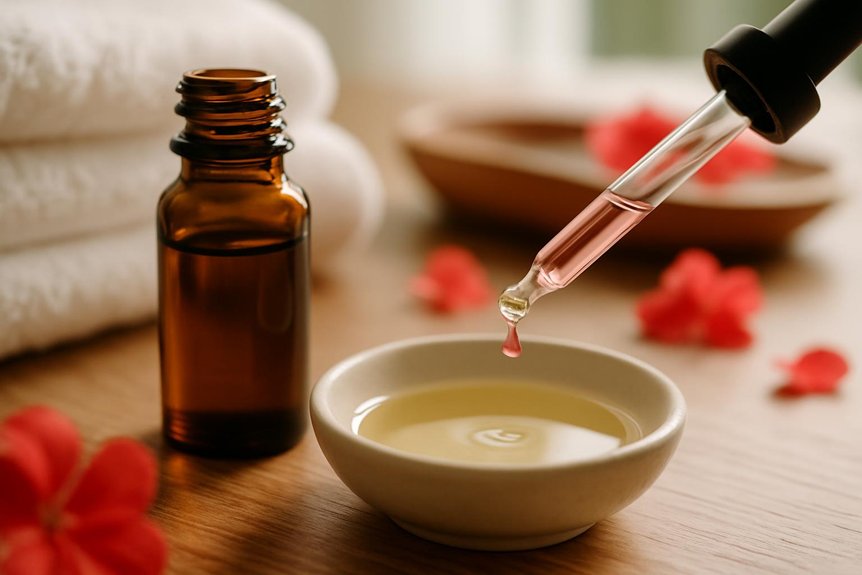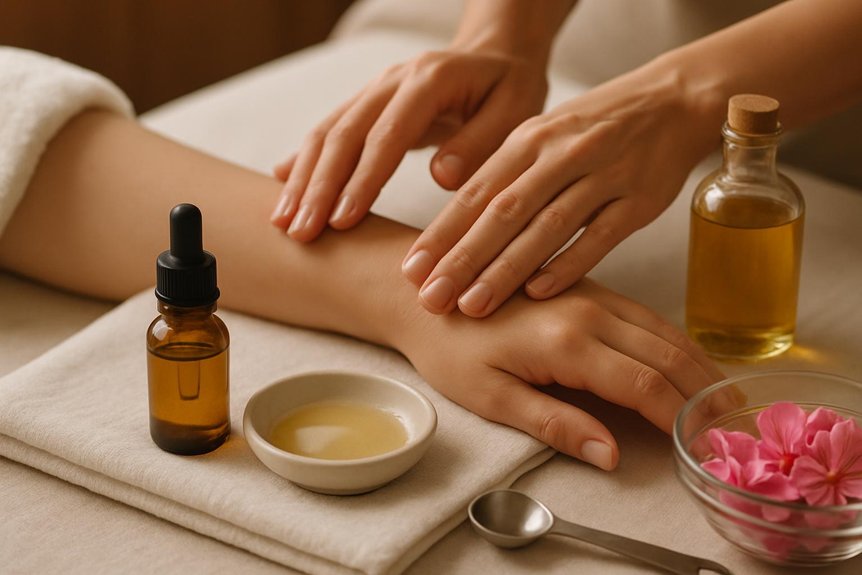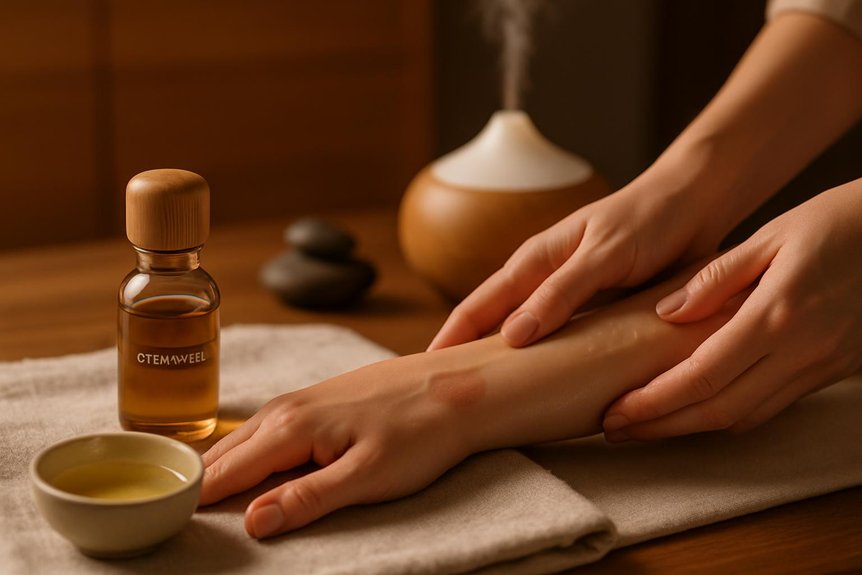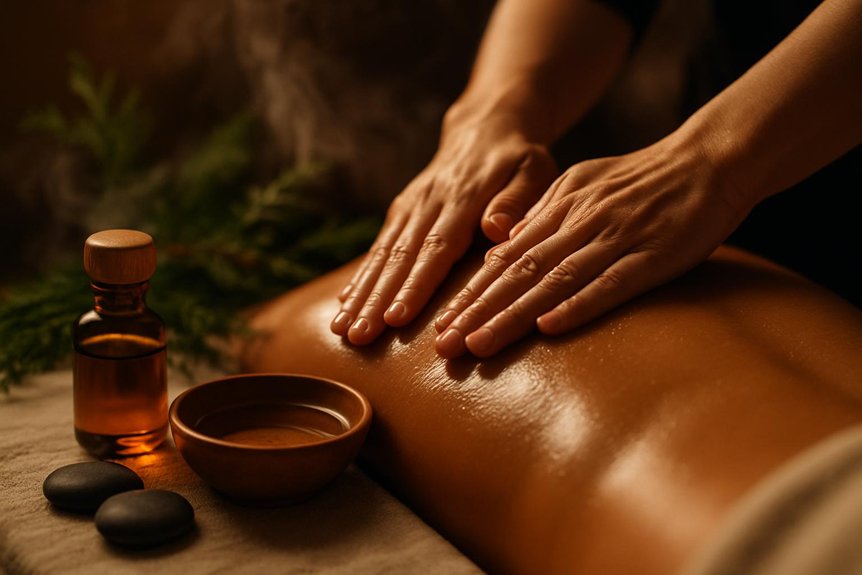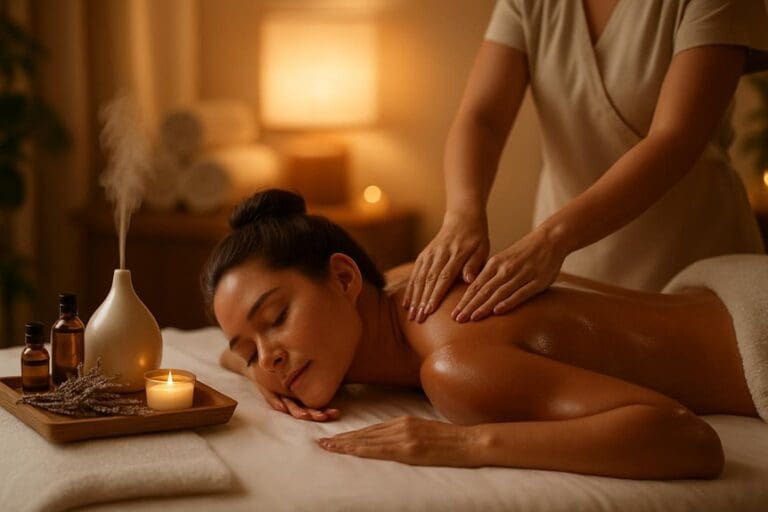
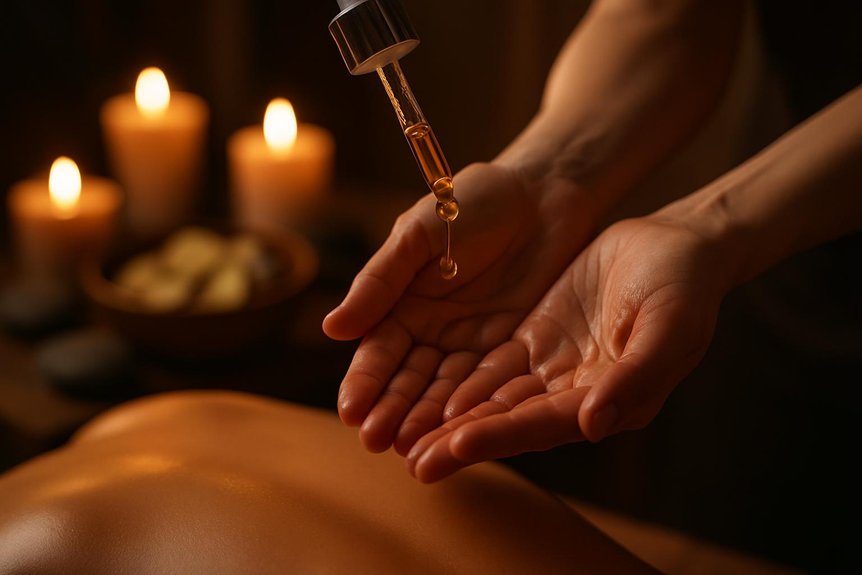
In aromatic massage, ginger essential oil (from *Zingiber officinale* rhizome) is used only in very low, well-diluted amounts to provide a warm, spicy aroma and a mild skin-warming sensation. Combined with slow, continuous massage strokes, it may support relaxation and temporarily ease the perception of muscle stiffness or minor aches, though evidence is mixed and effects are usually short-lived. Safe use requires patch testing and avoiding sensitive areas, with specific groups needing extra caution; further details clarify expected effects and aftercare.
What Is Ginger Oil in Aromatic Massage?
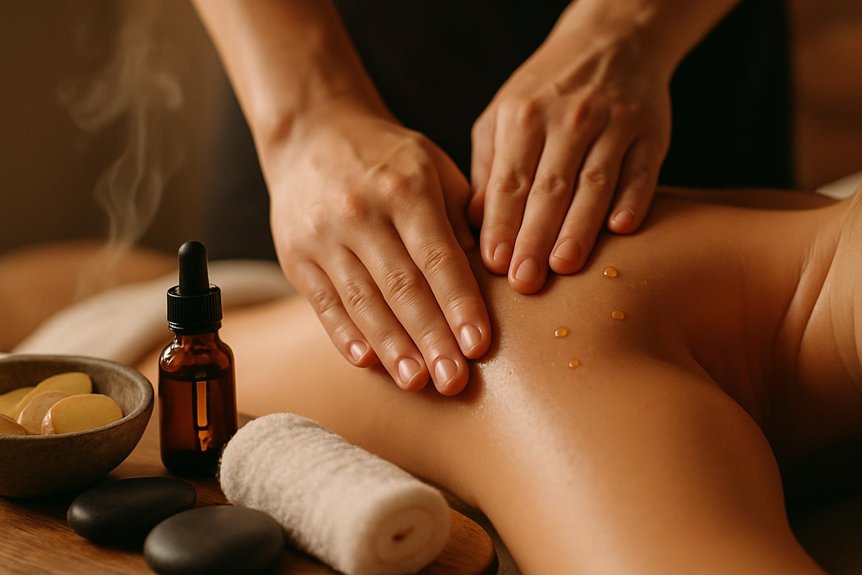
In aromatic massage, ginger oil refers to an essential oil distilled from the rhizome (root) of *Zingiber officinale* and used in very small, properly diluted amounts within a carrier oil.
It is valued for a warm, spicy aroma and mild skin-sensory “heating” effect, which some clients find grounding and sensual when applied with slow, continuous strokes.
Because essential oils are concentrated, safe use depends on low dilution, avoiding mucous membranes and intimate areas, and stopping if stinging, redness, or itching occurs.
At Spa & Massage clinics, therapists screen for pregnancy, asthma, sensitive skin, and anticoagulant use, and may recommend a patch test.
Evidence supports aroma-driven relaxation, while topical effects vary by individual and dilution.
For deeper relaxation, many therapists incorporate aromatherapy massage tips such as maintaining a calm room atmosphere and using smooth, unbroken strokes.
Can Ginger Oil Massage Ease Pain and Stiffness?
Ginger oil massage may help reduce the perception of pain and stiffness for some people, primarily through the combined effects of manual massage (improved circulation, reduced muscle tone, and short-term analgesia) and ginger’s warming sensory profile when correctly diluted.
Evidence is mixed, but some clients report easier movement and less “locked” feeling in the neck, shoulders, and lower back after treatment.
In Spa & Massage clinics, therapists use conservative dilution and slow, close contact strokes to support relaxation and comfort without irritation.
Ginger essential oil should not be applied neat, and extra caution is advised for sensitive skin, pregnancy, inflammatory skin conditions, or anticoagulant use.
If heat, redness, or burning develops, the oil is removed and the approach adjusted.
Benefits are typically short-term and best paired with tailored pressure.
Ginger Oil Massage and Circulation: What to Expect
Pain and stiffness relief is often linked to changes in local blood flow and tissue temperature, which leads to questions about whether a ginger oil aromatic massage can “boost circulation.”
Massage itself can temporarily increase superficial circulation and warmth in the treated area, while properly diluted ginger essential oil may add a mild warming sensation that some clients interpret as improved blood flow. Evidence supports short‑term, local effects rather than systemic vascular changes.
In Spa & Massage clinics, therapists apply light-to-firm strokes that encourage comfort, ease, and gentle heat in tight tissues. Clients can expect pinker skin, a cosy glow, and a subtle increase in pliability around worked muscles, typically lasting minutes to a few hours.
A patch test and correct dilution help minimise irritation, especially on delicate areas. Hydration and rest support aftercare.
Who Should Avoid Ginger Oil Massage Treatments?
When should ginger oil be avoided in an aromatic massage? It is generally contraindicated for clients who are pregnant, trying to conceive, or breastfeeding, unless a clinician has advised otherwise, as warming essential oils may increase sensitivity.
It should also be avoided with anticoagulant use, bleeding disorders, uncontrolled hypertension, active varicose inflammation, or recent surgery, due to ginger’s circulatory-stimulating profile.
Clients with eczema, rosacea, broken skin, or recent shaving should not receive ginger oil on affected areas because irritation and stinging can occur.
Those with asthma, fragrance sensitivity, or a history of allergic dermatitis should request a patch test or choose an unscented oil.
At Spa & Massage, therapists screen these risks before close-contact treatments.
Ginger Oil Massage Aftercare: Tips for Best Results
After an aromatic massage using ginger essential oil, aftercare should usually prioritise hydration, skin tolerance, and avoidance of additional heat to support recovery and minimise irritation.
At Spa & Massage clinics, therapists advise drinking water and resting for several hours, as ginger can feel warming and may amplify post-treatment flushing.
Showering should be lukewarm; hot baths, saunas, and vigorous exercise are best avoided for 12–24 hours.
Skin should be checked for redness, itching, or stinging; if present, the area should be washed with mild cleanser and cooled, and further essential oils avoided.
Clients should keep the treated areas lightly covered and avoid direct sun or exfoliation.
If symptoms persist or breathing changes occur, medical advice is recommended.
Conclusion
Ginger oil in aromatic massage is used to warm, to stimulate, and to comfort when appropriately diluted. It may support perceived ease in everyday muscle tension, stiffness, and fatigue, and it may promote a subjective sense of circulation and alertness. Benefits are contingent on correct concentration, controlled exposure time, and individual tolerance. It is not a substitute for medical care, and it should be avoided or adapted for pregnancy, allergy-prone, or reactive skin clients. Patch testing and aftercare are advised.