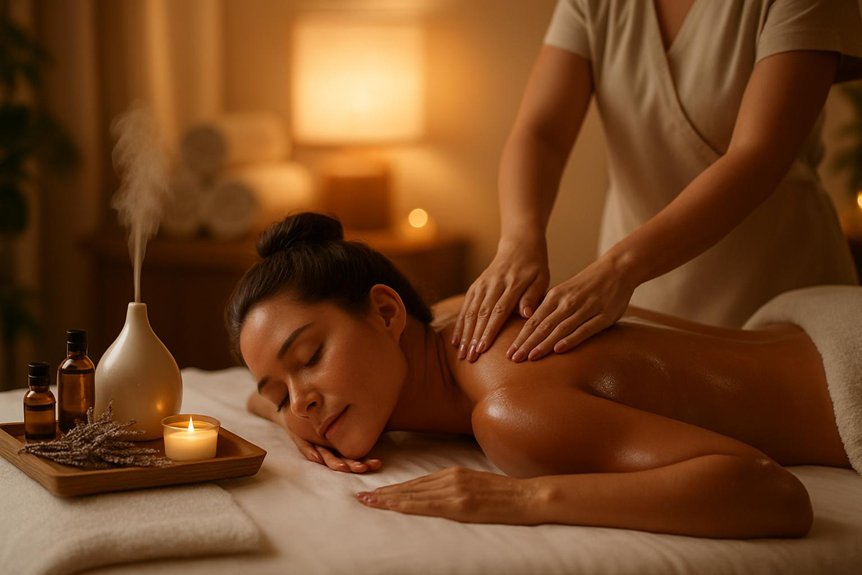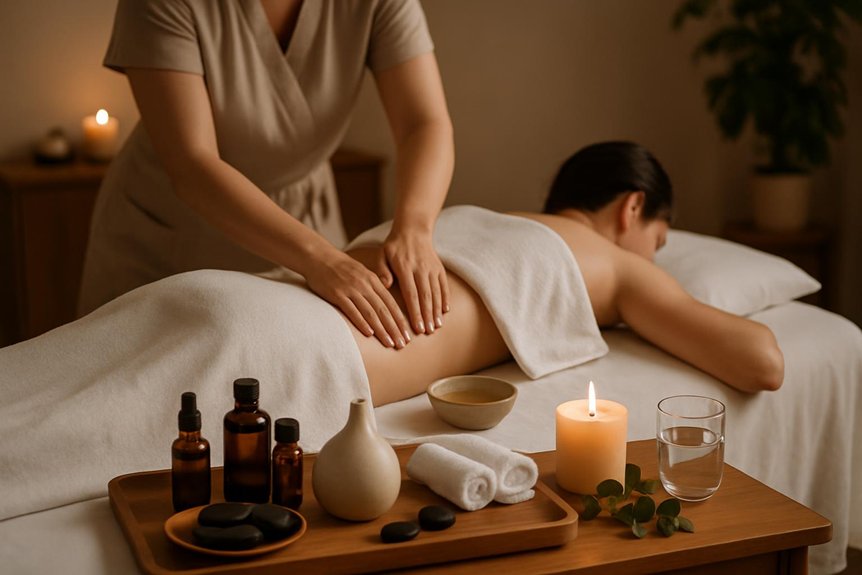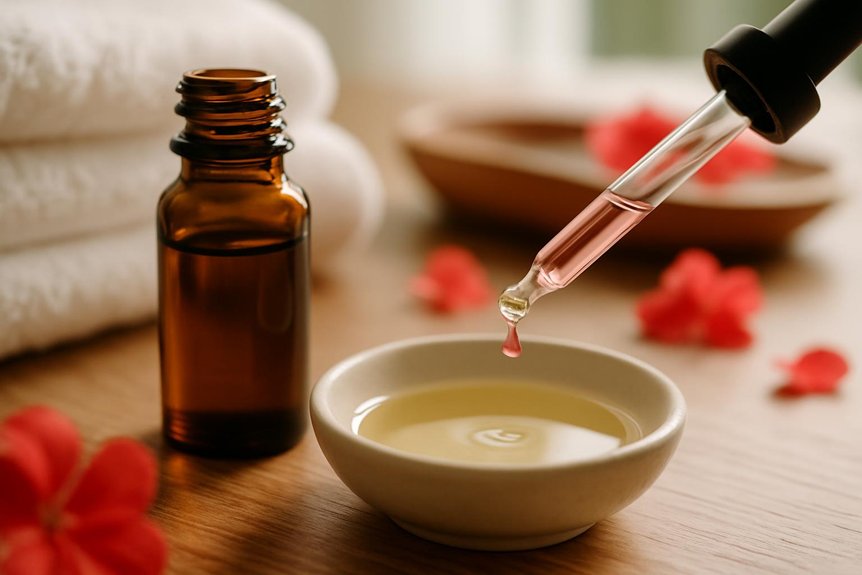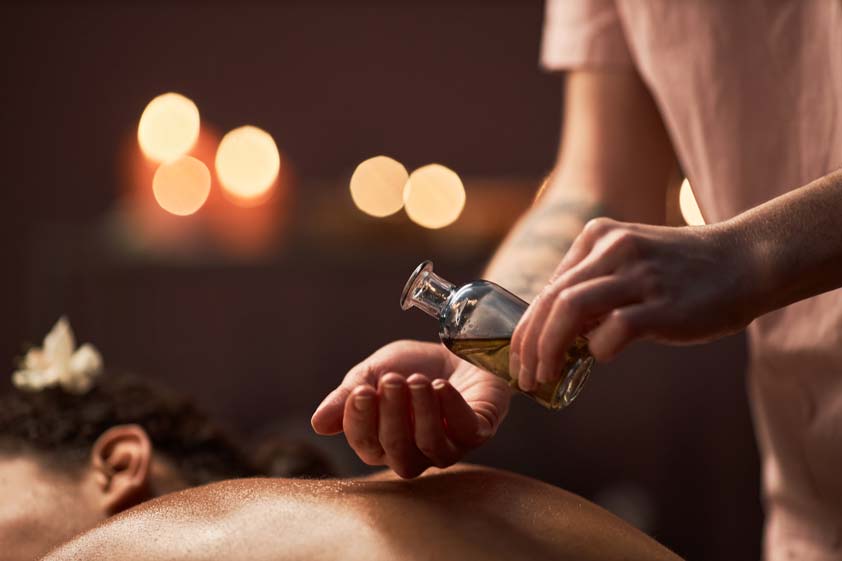
Peppermint oil in an aromatic massage provides a menthol-driven cooling sensation by activating cold-sensitive receptors (TRPM8), creating a light tingle and brief numbing without lowering skin temperature. Used at skin-safe dilutions (typically 0.5–1%) in a carrier oil, it can support short-term comfort in tight or sore muscles and enhance perceived freshness and alertness. The aroma may feel clarifying and promote a more “open” breathing experience. Safety, screening, and aftercare guidance are covered next.
What Does Peppermint Oil Do in an Aromatherapy Massage?
In aromatic massage, peppermint essential oil is used for its menthol-driven cooling effect and its characteristic crisp aroma, which together can influence both local tissue sensation and overall alertness.
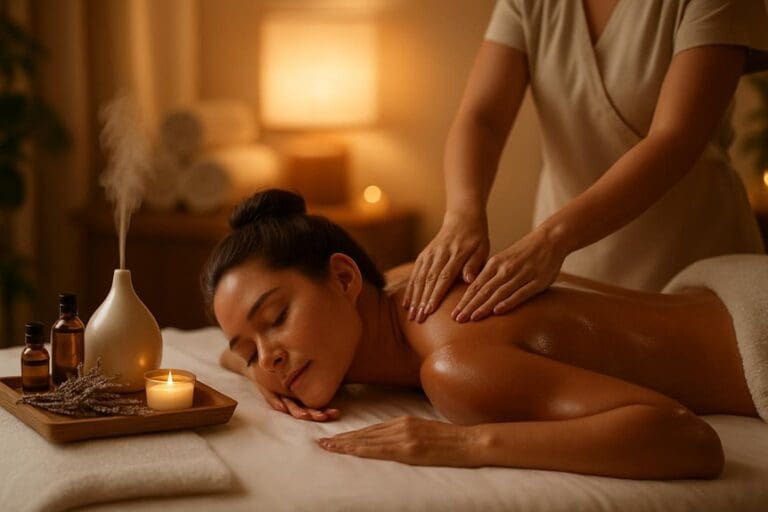
At Spa & Massage clinics across London, therapists dilute it into a carrier oil and apply it with measured pressure to support comfort during focused work.
Evidence suggests peppermint’s volatile compounds may modulate perceived pain and muscle tension via sensory pathways, while inhalation can promote wakefulness and reduce subjective fatigue.
It is often chosen when clients want a clearer head and a cleaner, more “open” breathing experience during treatment.
Therapists may also incorporate it alongside broader aromatic massage tips to help clients relax and heal during sessions.
Therapists tailor placement and concentration, avoid mucous membranes, and screen for sensitivity, pregnancy considerations, asthma triggers, and medication interactions.
How Does Peppermint Oil Feel on the Skin?
On the skin, properly diluted peppermint oil typically produces a noticeable cooling sensation with a mild tingle, reflecting menthol’s activation of cold-sensitive receptors.
Because sensitivity varies, Spa & Massage therapists screen for reactive or compromised skin and adjust or avoid peppermint oil if stinging, redness, or discomfort occurs.
In clinical practice, careful dilution in a carrier oil supports even absorption and helps minimise irritation while still achieving the intended sensory effect during aromatic massage.
Cooling Sensation And Tingle
Although often described as “cooling,” peppermint oil typically produces a distinct tingle on the skin because menthol activates cold-sensitive receptors (TRPM8), creating a cooling sensation without actually lowering skin temperature.
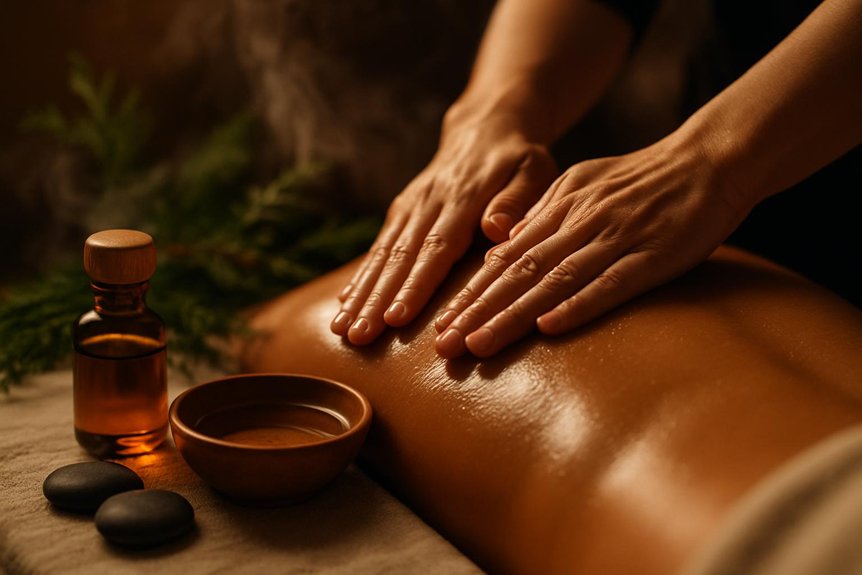
In aromatic massage, this can feel like a gentle, crisp wave moving across the area as the oil is warmed and spread by the therapist’s hands.
Many clients notice the sensation intensify briefly with friction, then settle into a clean, airy freshness that supports a sense of lightness and ease.
At Spa & Massage clinics, therapists may use peppermint in carefully diluted blends when a client wants a more invigorating, enlivening touch. The effect is often described as intimate yet clarifying—an alert, close-to-the-skin “breath” that complements slow, grounded strokes.
Skin Sensitivity Considerations
During aromatic massage, peppermint oil typically feels brisk and tingling, but it can also provoke irritation in sensitive skin because menthol and other constituents may stimulate nerve endings and compromise the skin barrier when used too strongly.
Clients may notice transient warmth, stinging, tightness, or redness, especially on thinner areas (inner arms, neck, décolletage) or recently shaved skin.
Those with eczema, rosacea, dermatitis, or fragrance sensitivity can experience heightened reactivity, including itching or a burning sensation that lingers beyond the session.
At Spa & Massage clinics across London, therapists monitor skin response throughout treatment and invite clients to describe comfort in real time, so touch remains soothing and close rather than distracting.
Any persistent discomfort should prompt immediate cleansing and professional advice promptly.
Dilution And Absorption
Skin reactivity to peppermint oil is strongly influenced by dilution level and the speed at which menthol-rich compounds absorb into the outer skin layers.
When correctly diluted in a carrier oil, it typically feels cool, lightly tingling, and briefly numbing, followed by a gentle warmth as circulation increases.
At higher concentrations, the same sensations can become sharp, stinging, or burning, particularly on thin skin or after shaving.
Absorption is faster with massage pressure, heat, and occlusion, so effects can intensify during close, slow bodywork.
In Spa & Massage clinics, therapists use conservative dilutions, patch-check when indicated, and avoid eyes, mucosa, and broken skin.
Clients are advised to report persistent redness, itching, or discomfort immediately, and to rinse with carrier oil, not water, if irritation occurs.
Is Peppermint Oil Safe for Everyone in Massage?
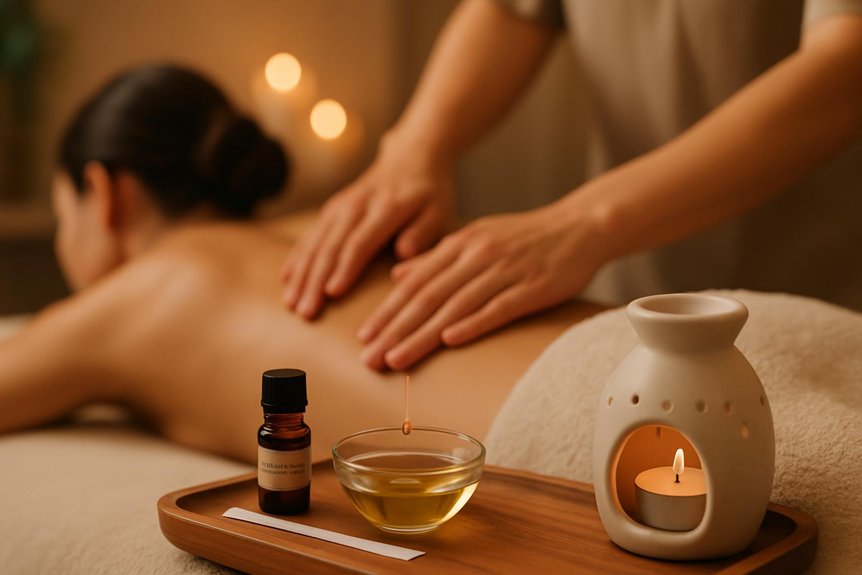
Peppermint oil is not appropriate for all massage clients, and in Spa & Massage clinics therapists screen for factors such as pregnancy, breastfeeding, asthma or airway sensitivity, migraine triggers, and a history of skin reactions before selecting it.
To reduce irritation risk, it should be correctly diluted in a carrier oil and patch tested when sensitivity is suspected, as undiluted or over-concentrated application can cause burning or dermatitis.
Additional precautions are required around the face and mucous membranes and when using heat, vigorous techniques, or treating children and medically complex clients.
Who Should Avoid Peppermint
Most clients tolerate peppermint essential oil well when it is properly diluted, but it is not appropriate for everyone in massage. It should be avoided in pregnancy (particularly the first trimester), during breastfeeding unless a clinician advises otherwise, and for infants and young children due to respiratory sensitivity. Clients with asthma, chronic cough, or fragrance-triggered headaches may react to menthol vapours and may prefer an unfragranced massage.
Those with epilepsy, significant cardiac arrhythmias, or uncontrolled hypertension should use caution, as stimulating oils can be overly activating. Peppermint is also unsuitable on broken skin and may aggravate eczema or rosacea. In Spa & Massage clinics, therapists screen for these factors and can guide clients toward gentler blends and a soothing, comfortable session.
Dilution And Patch Testing
Even when peppermint is appropriate for a client, safe use in massage depends on correct dilution and a brief tolerance check. At Spa & Massage clinics, therapists blend peppermint essential oil into a carrier oil at low concentrations (typically 0.5–1%) to reduce irritation while preserving the cooling, clarifying effect many clients enjoy. Higher strengths can trigger stinging, redness, or watery eyes, especially on the neck, chest, or inner arms where skin is thinner.
Patch testing is a simple safeguard: a small diluted amount is applied to a discreet area and observed for 10–15 minutes for burning, itching, hives, or discomfort. If any reaction appears, the blend is removed and an alternative oil is selected, keeping the session soothing and close, not overwhelming.
Special Considerations In Massage
In clinical massage practice, suitability for peppermint essential oil depends on the client’s health profile, skin sensitivity, and symptom goals rather than personal preference alone.
It is typically avoided for infants and young children, during pregnancy unless specifically cleared, and for clients with asthma, migraine sensitivity to strong aromas, or a history of contact dermatitis.
Peppermint may aggravate broken skin, recent shaving, eczema flares, or post-waxing areas, where the cooling sensation can feel sharp rather than soothing.
Medication use is also relevant: clients on anticoagulants, with reflux, or with cardiac rhythm concerns should disclose this, as systemic sensitivities vary.
At Spa & Massage clinics, therapists use conservative dilution, keep the face and décolletage exposure minimal, and offer unscented alternatives for close, relaxing work.
Benefits of Peppermint Oil in Aromatic Massage
Often selected for its cooling, clarifying profile, peppermint essential oil can enhance aromatic massage by supporting short‑term relief of muscle tension and exercise-related soreness, promoting a sensation of easier breathing, and improving perceived alertness without overstimulating the body.
In clinical practice, menthol-rich aromas may modulate discomfort perception while the cooling sensation helps clients feel “lighter” through tight areas, particularly after travel, deskwork, or training.
Many clients also report clearer headspace and reduced nausea-like sensations when inhaling peppermint during slow, grounded massage strokes. At Spa & Massage, therapists dilute peppermint appropriately in carrier oil to support skin comfort and maintain a soothing, close-to-the-body experience.
Used thoughtfully, it can create a clean, intimate feeling of refreshment while preserving calm and safety.
When Our Therapists Use Peppermint Oil at Spa & Massage
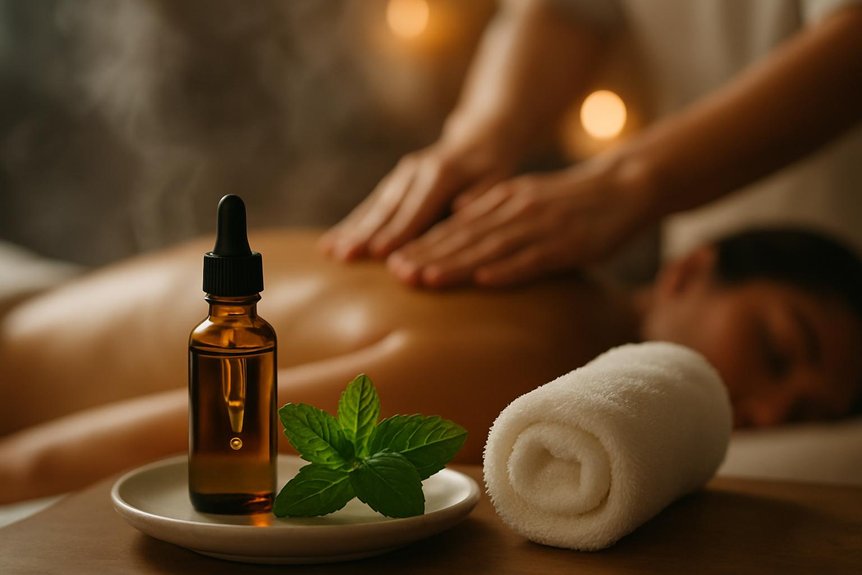
At Spa & Massage, therapists frequently incorporate peppermint essential oil when a client’s goals include post-exercise muscle comfort, a cooling sensation through tight areas, or a clearer, more “open” feeling in the upper chest and sinuses during an aromatic massage.
The oil is typically diluted to skin-safe levels and selected after a brief consultation to confirm preferences, sensitivities, and desired intensity.
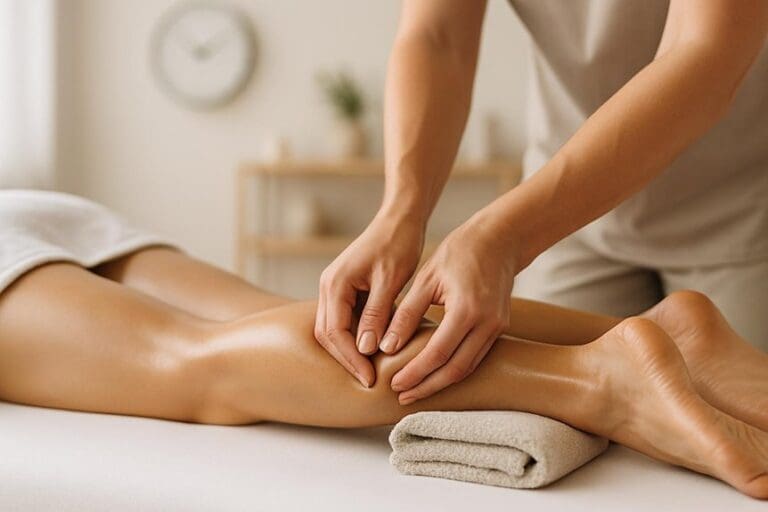
Clinicians may pair peppermint with deep tissue or sports techniques over calves, hamstrings, shoulders, and upper back, using slower strokes to reduce guarding while the menthol aroma supports perceived freshness.
For desk-related neck tension, small amounts may be used around the trapezius and scalp line, avoiding eyes and mucosa.
Pregnant clients are assessed individually and often offered alternatives.
Aftercare Tips After a Peppermint Aromatic Massage
After a peppermint aromatic massage, simple aftercare supports the treatment’s goals while minimising the chance of skin or sensory irritation from menthol.
At Spa & Massage, therapists advise drinking water, keeping the body warm, and avoiding hot showers or saunas for 6–12 hours, as heat can intensify the cooling sensation.
Clients should leave any residual oil on the skin for at least 30 minutes, then cleanse gently; avoid exfoliants, retinoids, or acids that day.
If tingling feels strong, a bland moisturiser can buffer the skin.
For comfort and closeness, quiet rest and slow breathing help integrate the session.
If redness, burning, or headache persists, clients should rinse thoroughly and contact the clinic for guidance.
Conclusion
Peppermint oil in aromatic massage acts like a brisk wind through a closed room—sharpening attention, lending a cooling touch, and easing the sense of heaviness many clients report. When properly diluted, it may support comfort in tense areas and promote a clearer, more open breathing experience. Because potency cuts both ways, suitability should be screened for sensitive skin, pregnancy, and medical conditions. With careful selection, aftercare, and monitoring, benefits can be maximised safely.