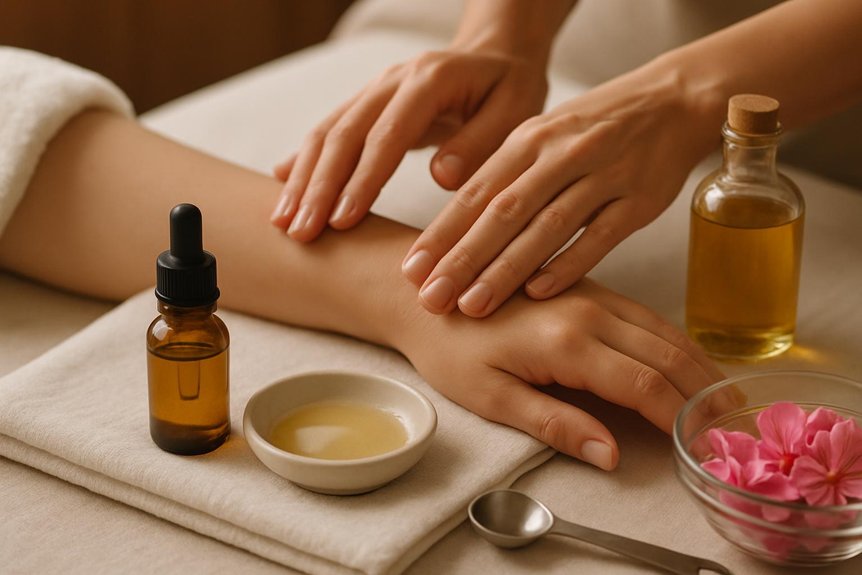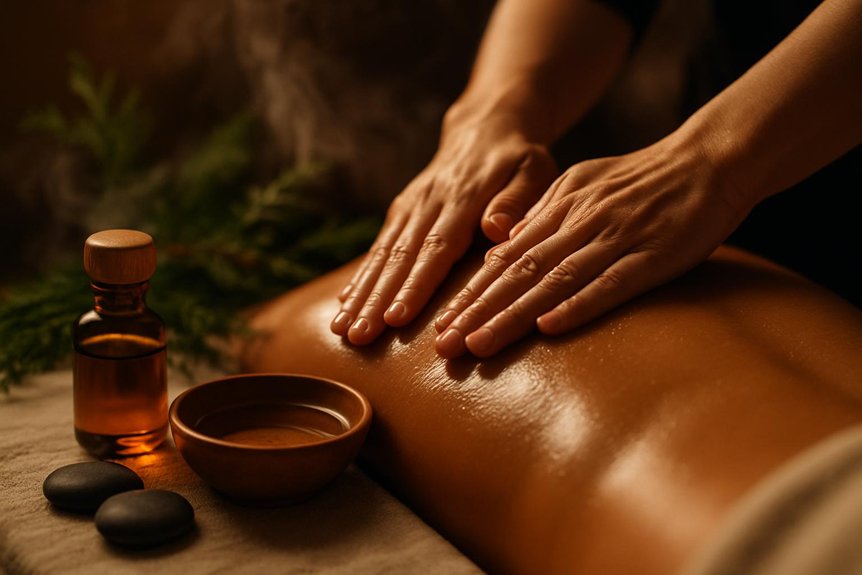
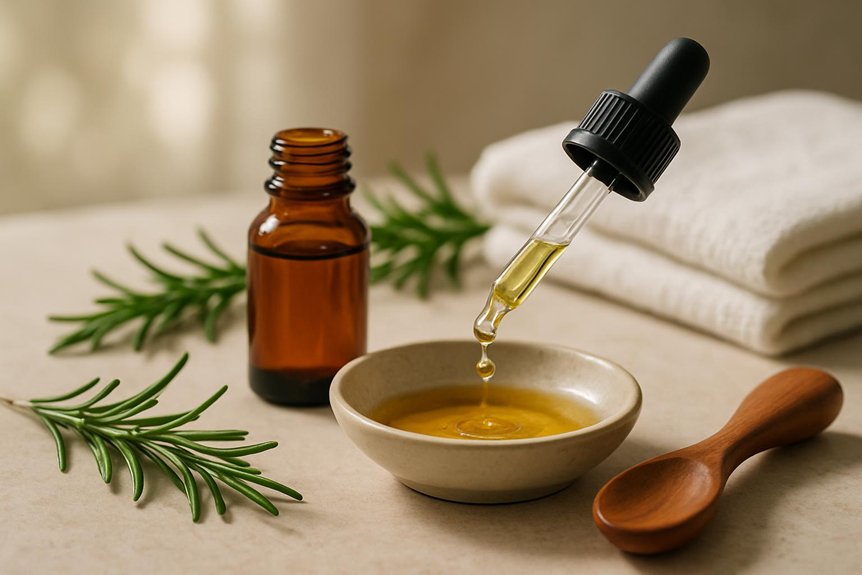
For aromatic massage, rosemary essential oil should be diluted in a carrier oil to about 1–2% for most adults (around 1–2 drops per 1 ml), starting closer to 1% for first-time use. Sensitive skin may suit 0.5–1% with a patch test, and rosemary should never be applied neat. Avoid use in pregnancy and use caution with epilepsy or uncontrolled hypertension. Suitable carriers include jojoba, grapeseed, or fractionated coconut, with more guidance ahead.
Rosemary Oil Dilution for Massage: Safe Percentages
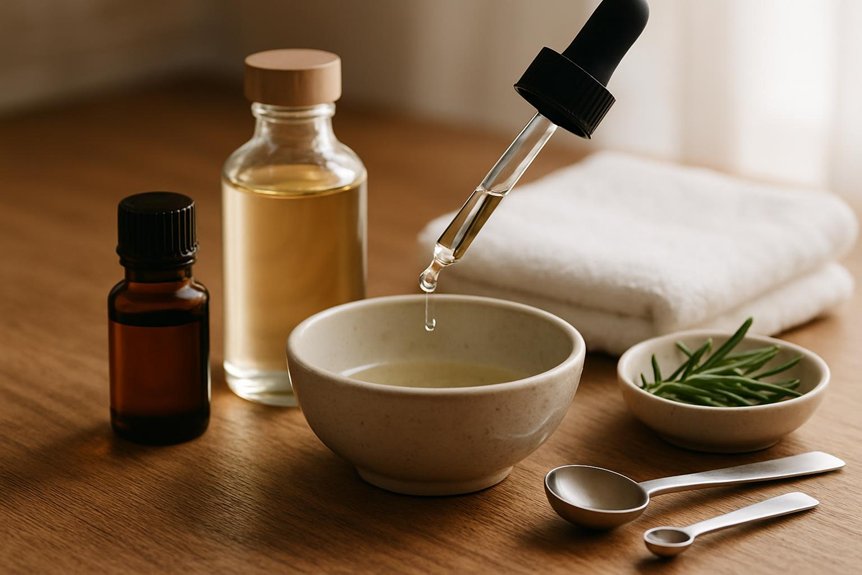
For most adults, rosemary essential oil should be diluted to 1–2% for full-body massage (about 1–2 drops per 5 ml / 1 tsp of carrier oil) to reduce the risk of skin irritation and sensitisation while still providing an effective aromatherapy experience; in Spa & Massage clinics, therapists typically start at the lower end and adjust only if the client’s skin tolerance and treatment goals indicate it is appropriate.
For a smaller area, a short, time-limited application may suit 2%, while a 0.5–1% blend is often kinder for sensitive skin.
Because this is part of Aromatherapy Massage, slow, soothing strokes and a calm environment can help the diluted blend feel more relaxing and restorative.
A patch test is advised, and the blend should never be used neat. Rosemary is generally avoided in pregnancy and used cautiously with epilepsy, uncontrolled hypertension, or known fragrance allergy. Comfort, consent, and aftercare guide every choice.
Best Carrier Oils for Rosemary Massage Blends
Once rosemary essential oil has been diluted to a skin-safe percentage, the choice of carrier oil becomes the next factor shaping how comfortable the blend feels, how easily it glides, and how well it suits different skin types.
At Spa & Massage clinics, therapists select carriers for slip, absorption, and sensitivity. Fractionated coconut offers a light, non-greasy glide suited to most clients and is often preferred for longer, close-contact work.
Jojoba, a wax ester, is stable and skin-friendly, making it a good option for reactive or acne-prone skin.
Sweet almond provides rich slip and is popular for relaxation massage, but should be avoided with nut allergy.
Grapeseed feels weightless and absorbs quickly for sports-focused sessions.
Apricot kernel suits drier skin. Patch-test before full-body use.
Drops-to-ml Cheat Sheet (Easy Dilution Ratios)
For safe aromatic massage, a simple drops-to-ml cheat sheet helps standardise rosemary essential oil dilutions and reduce the risk of skin irritation. At Spa & Massage clinics, therapists work to evidence-based percentage ranges and translate them into quick, practical examples (e.g., how many drops to add to 10 ml or 30 ml of carrier oil).
The ratios below offer an easy reference while keeping client factors—such as skin sensitivity, pregnancy, and medical conditions—central to every blend.
Drop-To-ML Ratios
Two practical numbers matter most when diluting rosemary essential oil for massage: millilitres and drops. In professional practice, 1 ml of essential oil is commonly treated as ~20 drops; because drop size varies by bottle and viscosity, Spa & Massage therapists treat this as an estimate and prioritise client comfort and skin response.
Using that convention, a 1% dilution equals 1 drop per 1 ml carrier (e.g., 10 drops in 10 ml). A 2% dilution equals 2 drops per 1 ml (20 drops in 10 ml). A gentler 0.5% dilution equals 1 drop per 2 ml (5 drops in 10 ml).
For sensitive skin or intimate, close-contact work, therapists typically stay at lower ratios and reassess during the massage for warmth, tingling, or redness.
Quick Dilution Examples
Three quick dilution examples cover most aromatic massage needs: for a 10 ml carrier base, 0.5% uses 5 drops of rosemary essential oil, 1% uses 10 drops, and 2% uses 20 drops (based on ~20 drops per 1 ml), with Spa & Massage therapists typically starting lower for sensitive skin, first-time clients, or larger treatment areas and adjusting only if the skin remains calm—no stinging, persistent warmth, or redness.
For 30 ml, these become 15, 30, or 60 drops; for 50 ml, 25, 50, or 100 drops.
In Spa & Massage clinics, rosemary is often kept closer to 0.5–1% for full-body work, while 2% may suit small, targeted areas. Patch testing and client feedback guide every blend. Avoid broken skin and eyes.
If Your Skin Is Sensitive: Safer Rosemary Dilution
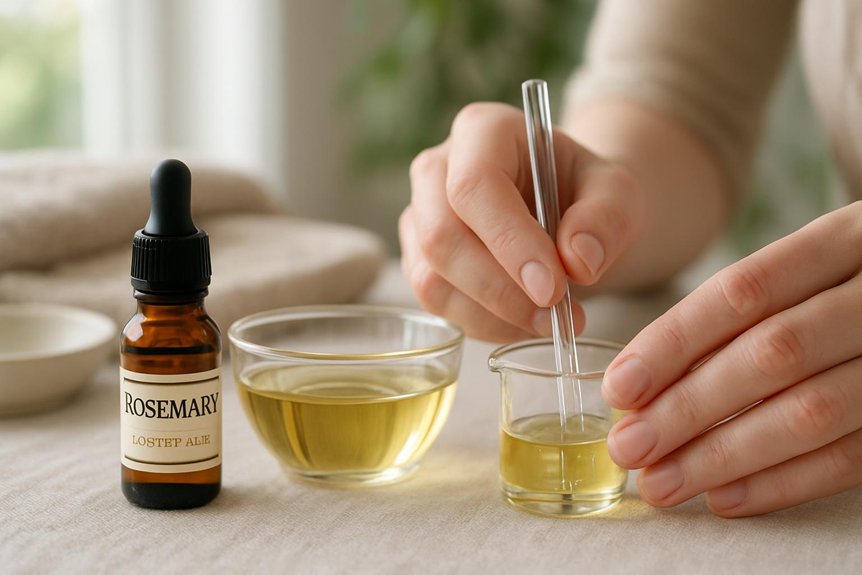
Often, people with sensitive or reactive skin tolerate rosemary essential oil best when it is diluted well below standard aromatic massage levels—typically around 0.5% in a suitable carrier oil (about 1 drop per 10 ml)—because lower concentrations reduce the likelihood of irritation while still providing a gentle aromatic effect.
At Spa & Massage clinics across London, therapists may begin even lower (0.25%) for first-time clients, then adjust only if the skin remains calm. A patch test on the inner forearm for 24 hours helps identify redness, itching, or warmth before full-body use.
Unscented, stable carrier oils are preferred, and the blend is kept away from broken skin and freshly shaved areas. If stinging occurs, it should be washed off and the dilution reduced or discontinued.
Rosemary Dilution for Sore Muscles and Pain Relief
For sore muscles and general pain relief, rosemary essential oil is typically kept at a conservative dilution of about 1–2% in a carrier oil to support comfort while minimising irritation risk.
In Spa & Massage clinics, therapists select the lowest effective ratio and adjust for the client’s skin sensitivity, treatment area, and session length, with patch testing and clear aftercare where appropriate.
For tight or overworked areas, rosemary is commonly blended into massage oils alongside other well-tolerated essential oils to create a balanced, client-centred formula for sports and deep tissue work.
Safe Ratios For Pain
For acute tenderness, reactive skin, or first-time users, therapists often start at 1% and adjust only if the client reports good tolerance.
Higher dilutions are not automatically better for pain and can increase irritation risk, especially on freshly shaved, sun-exposed, or broken skin.
A patch test, clear consent, and stopping if stinging or redness appears keep care intimate and safe.
Blending For Sore Muscles
Lower, skin-friendly dilutions that prioritise tolerance can still be effective when the goal shifts from managing reactive tenderness to easing post-exercise soreness.
At Spa & Massage, therapists typically start rosemary at 1% for most bodies (about 6 drops per 30 ml carrier), increasing only if the skin remains calm and the client prefers a more warming feel.
For sore muscles, rosemary is often paired with lavender for comfort and improved relaxation, or with sweet marjoram for a gentler, loosening effect; total essential oils should stay within the chosen dilution.
Blends are applied with slow, grounding effleurage and targeted forearm work to invite circulation without provoking inflammation.
Clients are advised to patch test, avoid broken skin, and pause use if stinging or redness appears.
Diluting Rosemary Oil Mistakes to Avoid (and Fixes)
Avoiding common dilution errors with rosemary essential oil protects skin integrity and helps guarantee aromatic massage remains both effective and comfortable.
The most frequent mistake is over-concentration; a safer fix is returning to 1–2% for full-body work (about 1–2 drops per 5 ml carrier).
Another error is adding essential oil directly to skin or bathwater; it should be premixed into a measured carrier oil to disperse evenly.
Using the wrong carrier can also cause drag or sensitivity; in Spa & Massage clinics, therapists select fresh, unscented, skin-friendly oils and patch-test when clients report reactivity.
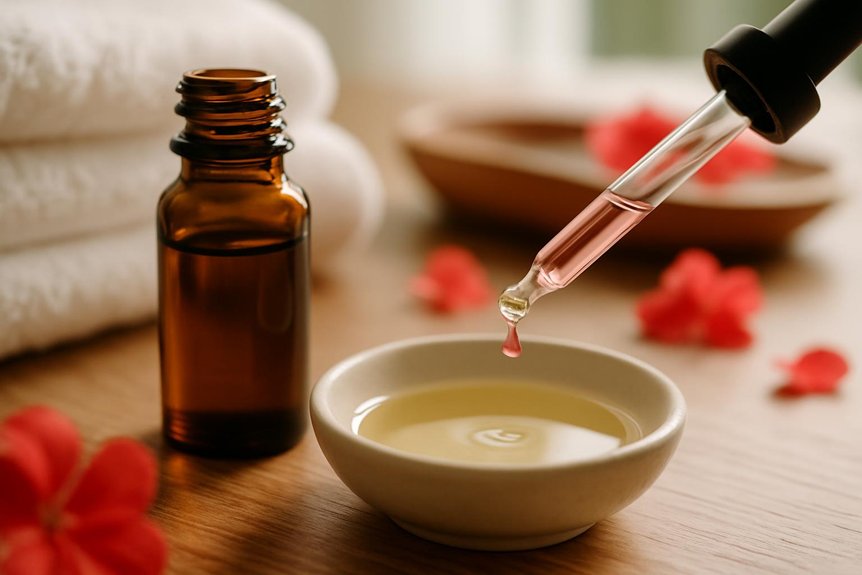
Finally, inaccurate measuring (free-pouring) increases risk; using droppers and labeled bottles keeps doses consistent and intimate touch reliably soothing.
Rosemary Massage Aftercare: What to Do Next
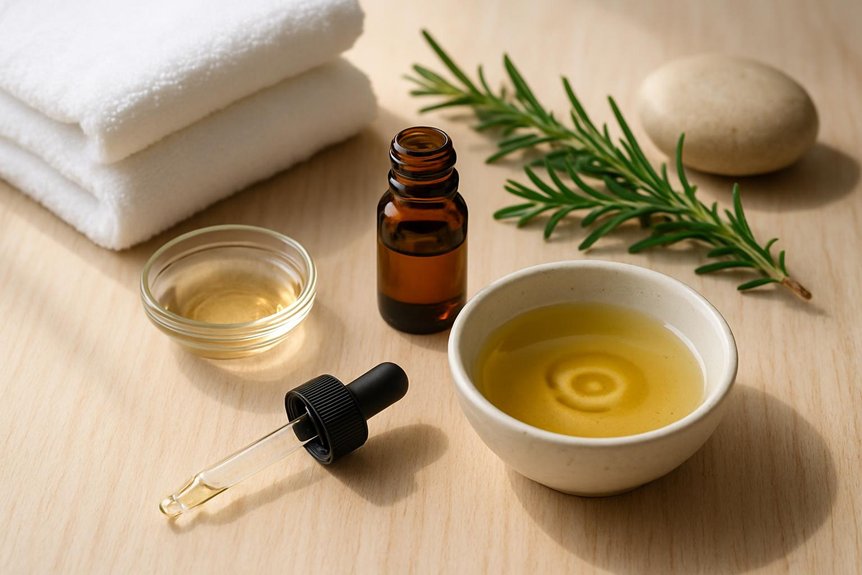
After a rosemary aromatic massage, a few simple aftercare steps help preserve the treatment’s benefits while reducing the chance of skin irritation or headache.
At Spa & Massage clinics, therapists advise drinking water, resting for 10–20 minutes, and keeping the treated skin warm and covered, especially in cooler London weather.
A lukewarm shower is usually fine; avoid hot baths, saunas, or intense exercise for several hours, as heat can increase absorption and sensitivity.
If the scent feels too strong, slow breathing and fresh air may settle nausea.
Any redness, itching, or burning should be washed with mild soap and cool water, then the oil avoided.
Persistent symptoms, asthma flare, or pregnancy concerns warrant medical advice and therapist follow-up promptly.
Conclusion
Diluting rosemary oil for aromatic massage is like tuning an instrument: the right percentage lets its crisp, herbaceous notes support comfort without overwhelming the skin. Using measured drops in a suitable carrier, adjusting for sensitive areas, and blending thoughtfully keeps the experience both effective and gentle. A patch test and clear contraindication checks act as a safety net, especially for pregnancy, epilepsy, or reactive skin. With careful aftercare, the benefits can linger like a calm, steady echo.