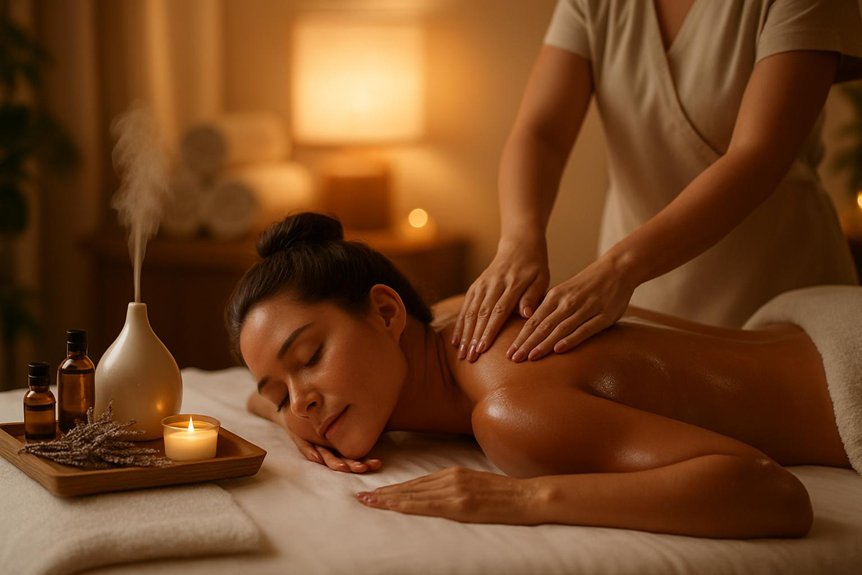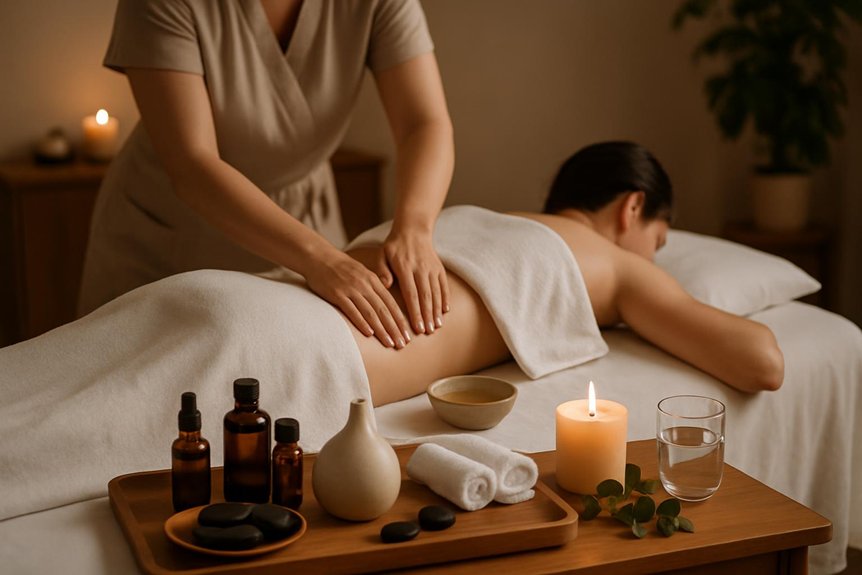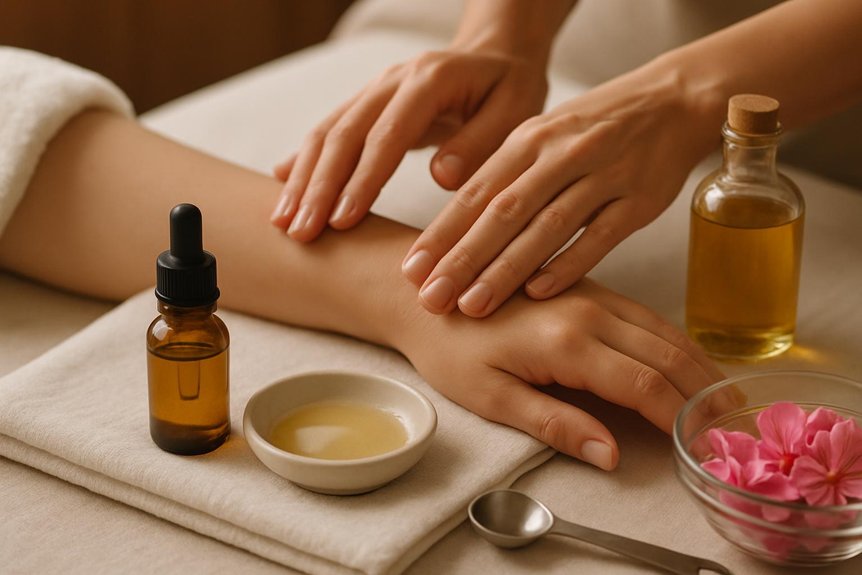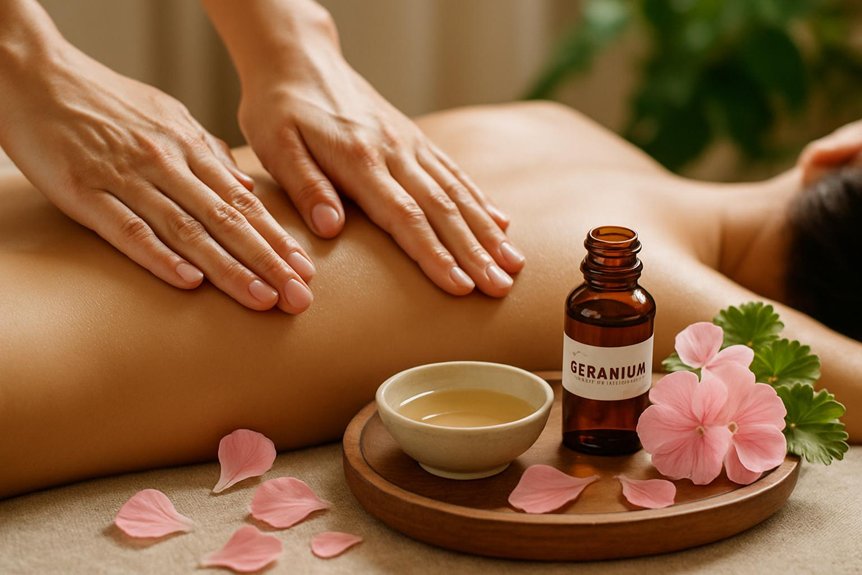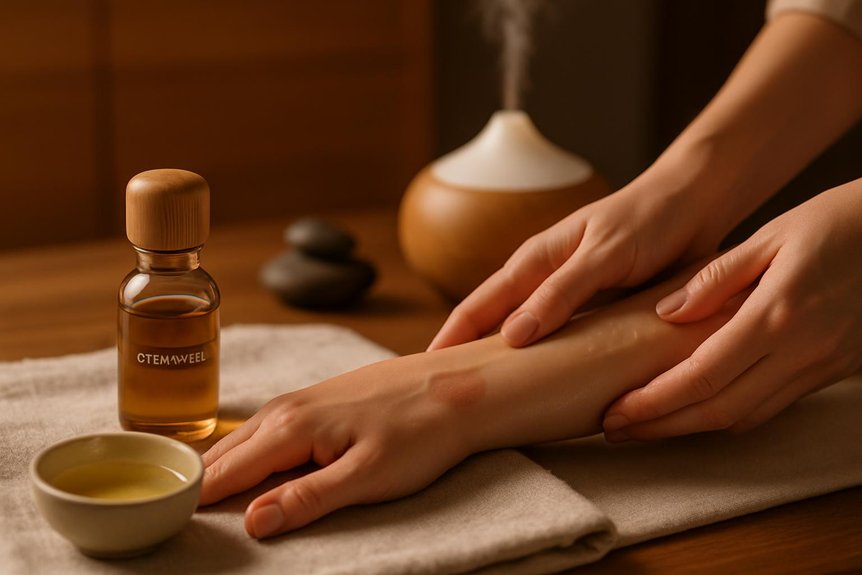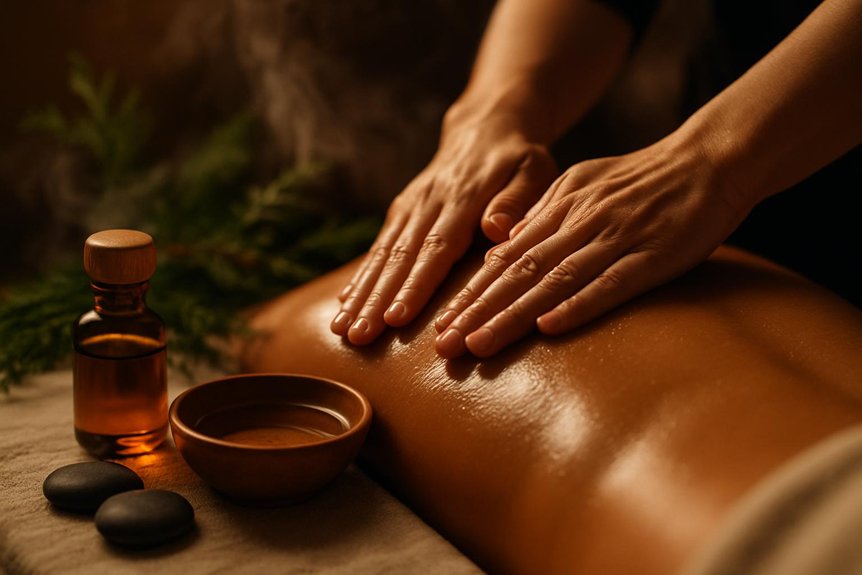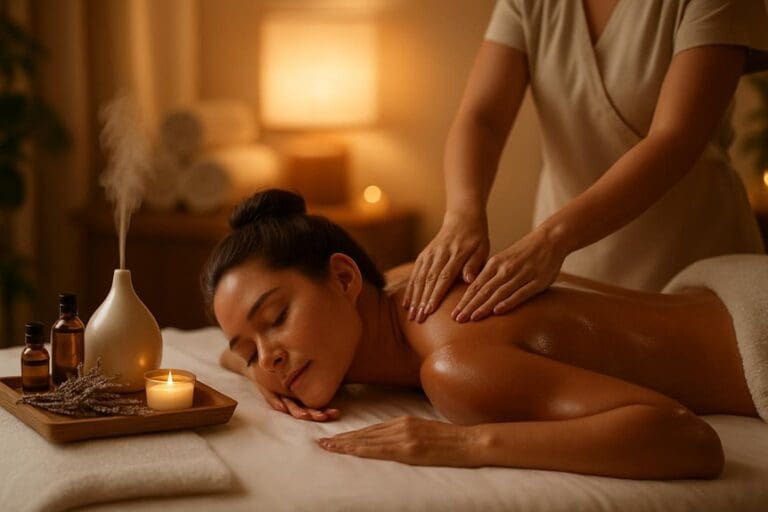
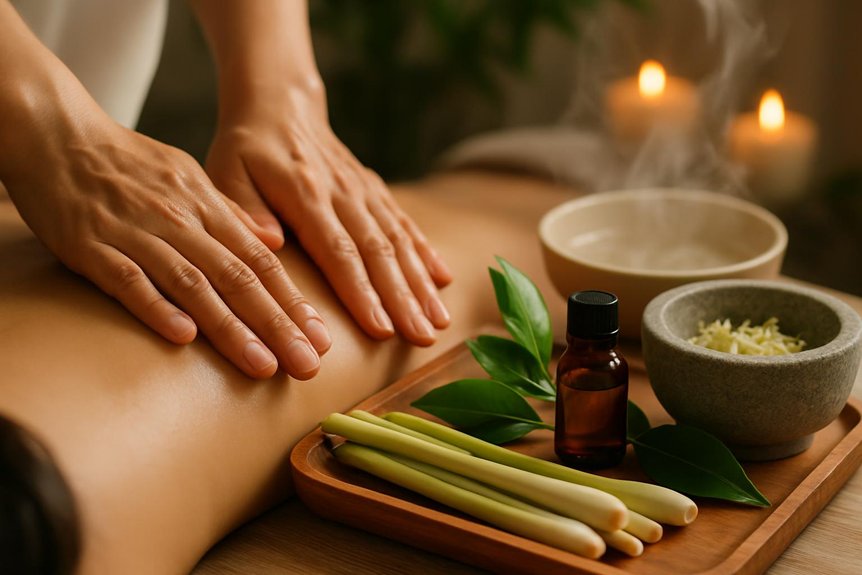
In aromatic massage, lemongrass presents a clean, sharp citrus aroma with a crisp green, grassy-herbal edge that can feel penetrating at first. It often evokes crushed stalks, lemon peel, and warm earth, giving an intimate sense of freshness on skin. As the oil warms, the scent softens into a smoother, creamy-lemon mid phase with dewy grass notes and a lightly woody base. Because it can sting or irritate, conservative dilution and patch testing are advised. Further guidance covers strength, blends, and exclusions.
What Does Lemongrass Smell Like in Massage?
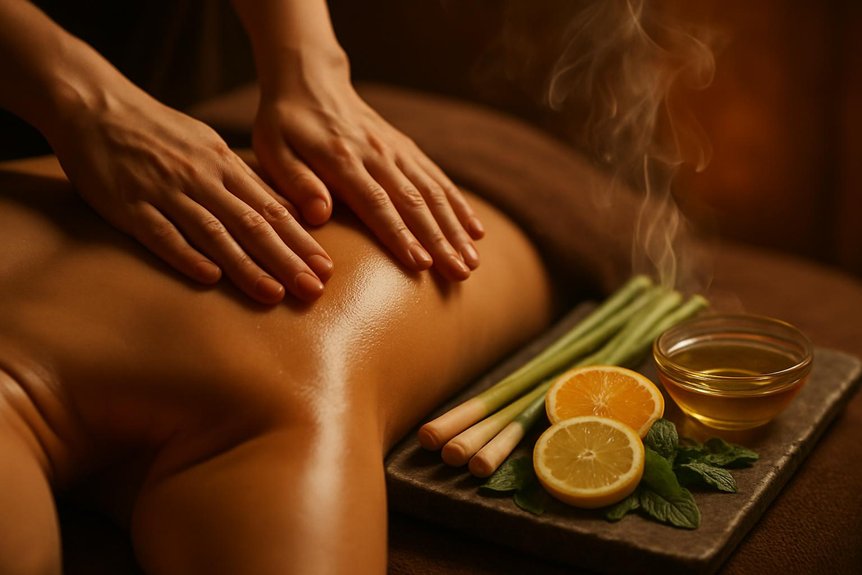
In aromatic massage, lemongrass typically presents as a clean, sharp citrus aroma with distinct grassy and slightly herbal notes.
It often reads as bright, freshly cut, and subtly peppery, with a crisp “green” edge that can feel clarifying during close, skin-to-skin bodywork.
The scent may evoke crushed stalks, lemon peel, and warm earth, creating an intimate sense of cleanliness without sweetness.
This bright profile is often used in aromatherapy massage to help clients relax and unwind during treatment.
At Spa & Massage clinics across London, therapists typically dilute lemongrass essential oil into a neutral carrier for smooth glide and controlled skin contact.
Because lemongrass can be sensitising, patch testing and conservative dilution are advised, especially for sensitive skin, pregnancy, or dermatitis.
Clients are advised to report tingling, redness, or discomfort promptly.
How Strong Is Lemongrass Scent During a Massage?
During an aromatic massage, lemongrass scent intensity is influenced by dilution level, room ventilation, skin warmth, and how much oil is used over time.
At Spa & Massage clinics, therapists adjust aroma strength by modifying the essential oil concentration and switching to a lighter application if the scent feels sharp, overpowering, or irritating.
Clients are routinely encouraged to report sensitivity early so the blend can be reduced or changed to maintain comfort and safety.
Scent Intensity Factors
At Spa & Massage clinics across London, the perceived strength of lemongrass aroma in an aromatic massage varies predictably with dilution level, diffusion conditions, and individual sensitivity.
Higher essential-oil concentration produces a sharper, citrus-green top note that can feel close and immediate on the breath.
Warmer skin and increased circulation volatilise aromatics faster, intensifying the scent around the neck, chest, and inner arms.
Room temperature, ventilation, and towel draping influence how long the aroma lingers near the face versus dispersing.
Oil base matters: lighter carriers release lemongrass more quickly; richer blends soften projection and extend dry-down.
Sensitivity is shaped by stress level, hormones, and nasal congestion.
Safety-wise, stronger exposure may provoke stinging, headache, or skin irritation in reactive clients.
Adjusting Aroma Strength
With a few controlled variables—dilution, carrier choice, and room airflow—the lemongrass scent in an aromatic massage can be set anywhere from a faint, clean citrus-green veil to a sharper, close-range top note that is noticeable on the breath.
At Spa & Massage, therapists adjust intensity by lowering the essential-oil percentage, selecting a more neutral carrier oil, and limiting diffusion so the aroma stays on the skin rather than filling the room.
For closer intimacy, application is kept to pulse points and broad muscle groups, allowing warmth and pressure to release scent gradually.
For sensitive clients, a patch test and conservative dilution reduce irritation risk, especially on freshly shaved or reactive skin.
Ventilation and towels also modulate lift and persistence across the session.
Why Lemongrass Smells Bright, Clean, and Citrusy
Why does lemongrass smell so bright, clean, and citrusy? The effect is largely driven by citral (a blend of geranial and neral), which delivers a sharp lemon impression without the sweetness of peel oils.
Supporting molecules such as limonene, geraniol, and myrcene add a green, lightly floral edge, creating a “freshly cut” cleanliness that reads as hygienic and uplifting during close-contact massage.
In Spa & Massage clinics, therapists describe it as crisp and clarifying, suited to clients who want a tidy, intimate scent that does not feel heavy.
Safety matters: lemongrass essential oil is potent and may irritate sensitive skin, so it is typically well diluted and avoided on compromised skin, and patch-testing is advised for reactive clients.
How Lemongrass Smell Changes on Skin Over Time
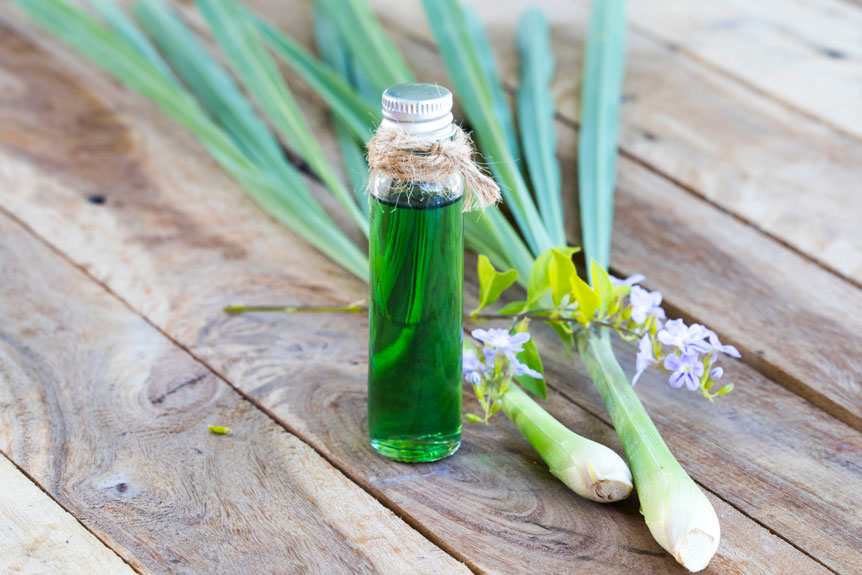
On initial application in an aromatic massage, lemongrass presents as a sharp, citrus top note that typically softens into a cleaner, greener mid-phase as it warms on the skin.
Over time, its perceived longevity varies with individual skin chemistry, the carrier oil used, and factors such as hydration and body temperature, which can either accelerate evaporation or extend the scent trail.
In Spa & Massage clinics, therapists use appropriately diluted lemongrass and monitor skin response, as stronger concentrations may increase irritation risk as the aroma concentrates during dry-down.
Top Notes To Base
In aromatic massage, lemongrass typically presents as a bright, sharp top note at first contact—citrus-peel freshness with a green, slightly herbal edge—then softens within minutes as it warms on the skin.
As the top fades, the scent becomes rounder and more creamy-lemon, with a clean, dewy grass nuance that feels close and comforting under steady, gliding strokes.
In Spa & Massage clinics, therapists often blend lemongrass with gentle mid-notes (such as lavender or geranium) so the progression reads smooth rather than abrupt, supporting a calm, intimate atmosphere.
Over the session, a faint base emerges: warm, lightly woody, and subtly sweet, anchoring the brightness without heaviness.
Because lemongrass can be sensitising, careful dilution and patch awareness are standard.
Longevity And Skin Chemistry
Across the first 30–90 minutes after application, lemongrass tends to shift from a sharp, volatile citrus-grass burst to a softer, slightly sweet, clean “skin scent,” and the pace of that change varies with individual skin chemistry—heat, hydration level, natural oils, and pH all influence how quickly its bright top molecules evaporate or bind to the skin’s lipid layer.
On warmer, well-hydrated skin it can read smoother and more luminous; on drier skin it may turn brisk, then fade sooner. Fabric and hair often hold it longer than bare skin.
In Spa & Massage aromatherapy sessions, therapists dilute lemongrass appropriately and may blend it with longer-lasting oils to extend intimacy without harshness. A patch test is advised, and sensitised or freshly shaved areas should be avoided.
Lemongrass Massage Benefits: Mood, Energy, Muscles
Three effects are most often associated with lemongrass aromatic massage: a sharper mood, steadier energy, and reduced muscular heaviness.
The scent reads as clean citrus with a green edge, which many clients experience as mentally “clearing” during close, slow breathing on the couch.
At Spa & Massage, therapists often pair lemongrass with grounded pressure and unhurried strokes to support calm alertness rather than jittery stimulation, particularly for afternoon fatigue.
For muscles, the oil’s bright profile can make tight areas feel lighter as heat builds through deep tissue or sports-focused work, especially in shoulders, calves, and lower back.
Safety matters: lemongrass can irritate skin, so dilution and patch awareness are standard, and it is avoided on compromised skin.
Our Favourite Lemongrass Blends (Spa & Massage)
Building on lemongrass’s reputation for mental clarity, steady energy, and a “lighter” feel in tired muscles, Spa & Massage therapists most often use it as a top note within carefully balanced blends rather than as a solo oil.
For a clean, close-to-skin freshness, it is paired with lavender and bergamot, creating a bright opening that settles into soft calm. For post-work tension, it is combined with rosemary and black pepper, giving a crisp, warming edge that reads focused rather than heavy. For a more intimate unwind, ylang ylang and frankincense round the citrus into a smooth, resin-floral finish.
In clinics, blends are pre-diluted for bodywork and adjusted to client preference, keeping the aroma present yet never overwhelming on the breath.
When to Avoid Lemongrass Oil in Massage
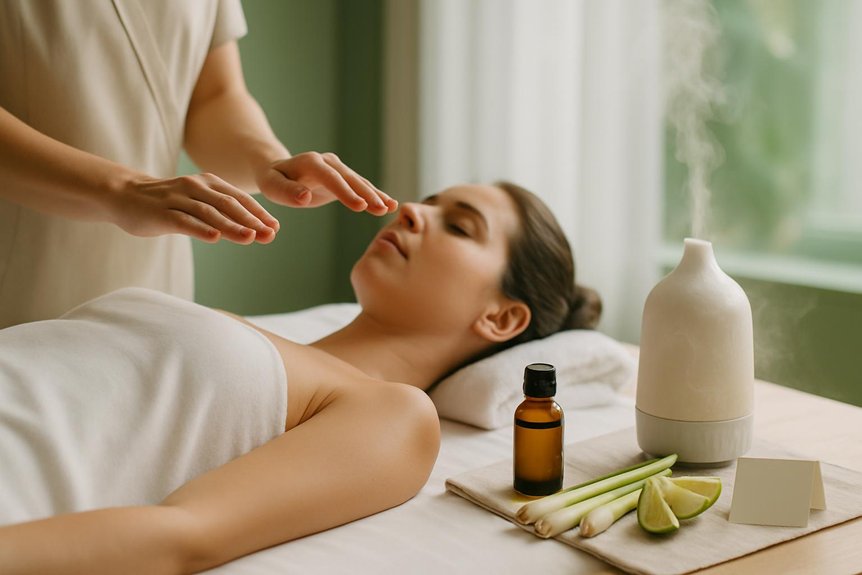
Often, lemongrass oil is best left out of massage when a client has reactive or compromised skin, as its sharp, citrus-herbal profile can coincide with stinging, warmth, or post-treatment redness.
It is also avoided on freshly shaved areas, eczema flares, sunburn, or after exfoliating treatments, where the skin barrier feels thin and tender.
In pregnancy massage and for clients with asthma, migraine sensitivity, or scent-triggered nausea, its bright, cutting top note can feel too penetrating in close contact.
At Spa & Massage clinics, therapists exclude lemongrass if a client uses retinoids, has recent peels, or reports irritation from citrus oils.
A patch test and low dilution are recommended; otherwise, gentler florals or grounding woods support comfort and calm.
Conclusion
In aromatic massage, lemongrass presents a bright citrus lift beside a crisp, grassy bite—clean yet vivid. Its initial “cut-through” can feel energising, while the base settles into a softer, soap-like freshness on warmed skin. This contrast—sharp at first, calm later—often supports perceived clarity and lighter mood alongside muscle ease. Yet the same potency that refreshes can irritate; careful dilution, patch awareness, and avoidance in sensitised clients remain essential.