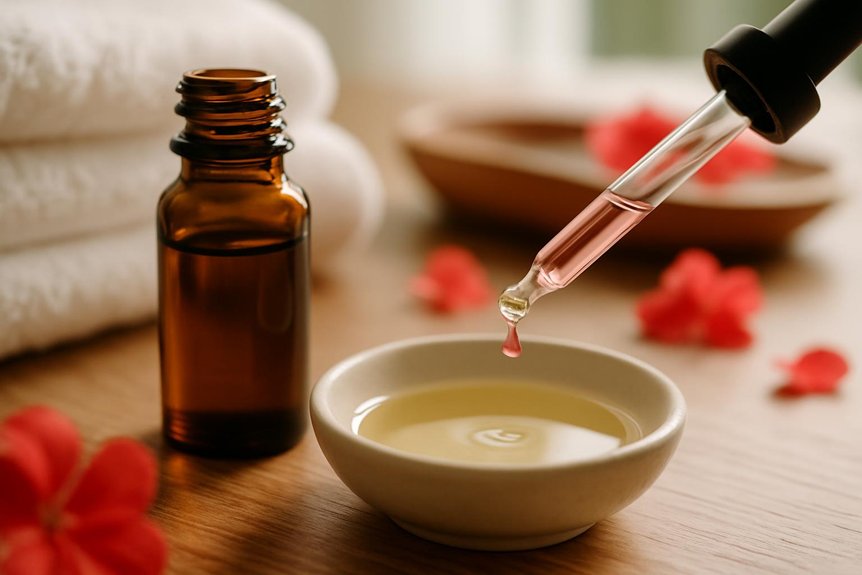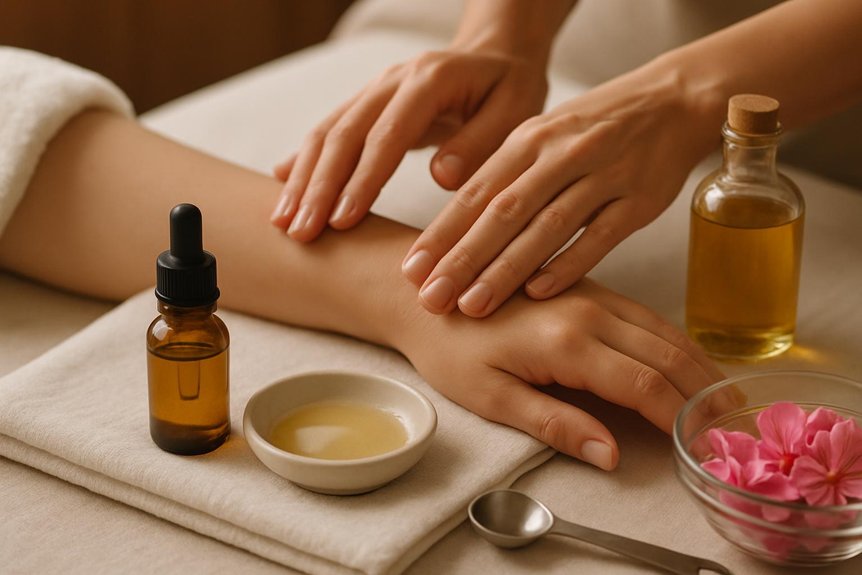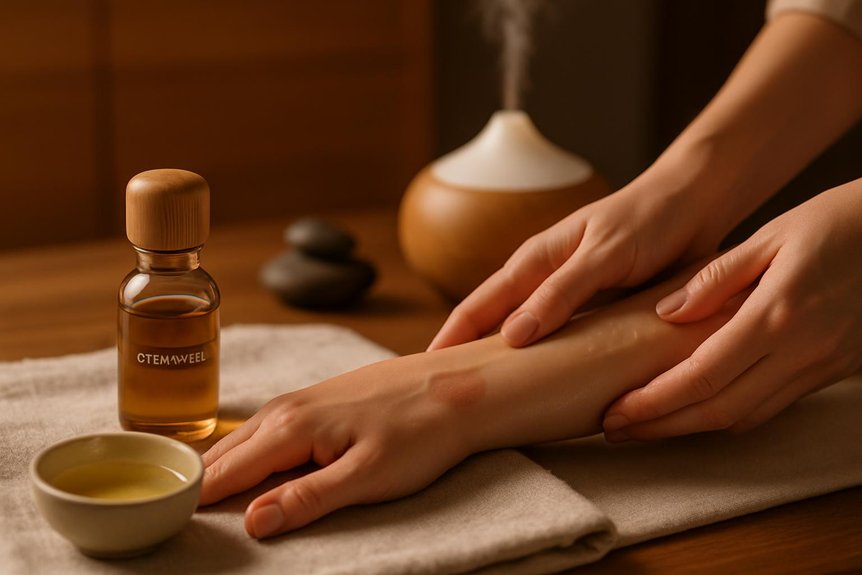
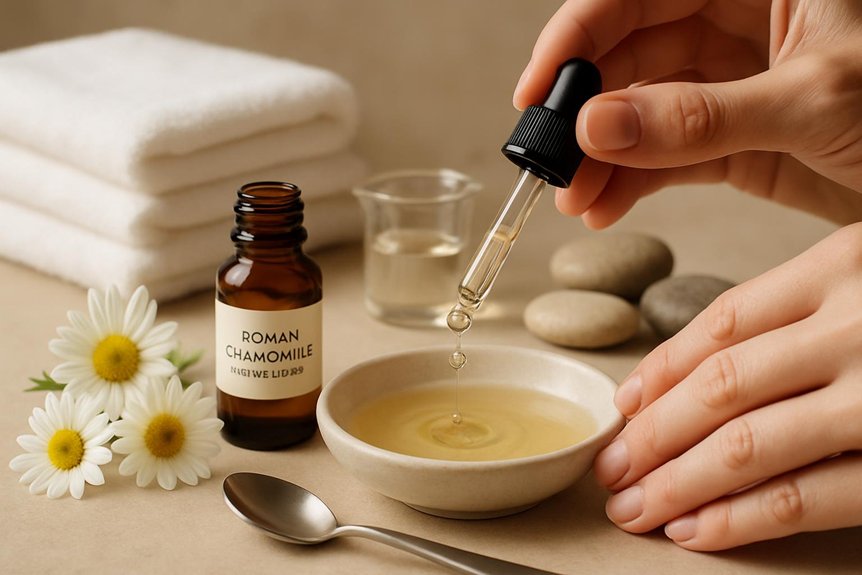
For aromatic massage, Roman chamomile essential oil is usually diluted to 0.5–1% in a carrier oil to support calm while minimising irritation risk. A practical guide is 10 ml carrier + 1 drop (0.5%) or 2 drops (1%); for 30 ml use 3 drops (0.5%) or 6 drops (1%). Choose a fresh, stable carrier such as jojoba or fractionated coconut, patch test for 24 hours, and store in dark glass; further guidance follows.
Safe Roman Chamomile Dilution for Massage
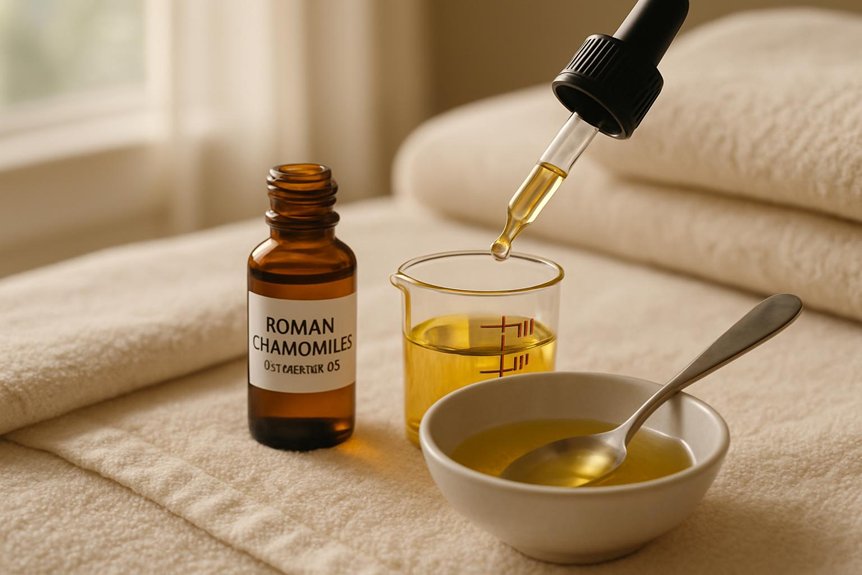
In professional aromatic massage, Roman chamomile essential oil should be diluted carefully to support relaxation without increasing the risk of skin irritation or sensitisation.
At Spa & Massage clinics, therapists assess skin history, allergies, pregnancy status, and medication use before selecting a conservative concentration in a suitable carrier oil, then apply with slow, intimate strokes that encourage calm breathing and a sense of safety.
Best practice includes patch testing when a client is new to Roman chamomile, avoiding use on broken or inflamed skin, and keeping the blend away from eyes and mucous membranes.
Clients with known sensitivities to botanicals should disclose this early.
After treatment, clients are advised to monitor for redness, itching, or warmth and to wash off immediately if reactions occur.
These precautions help clients relax and heal with aromatherapy massage techniques that prioritize comfort and safety.
Roman Chamomile Dilution Chart (10ml and 30ml)
Clear dilution ratios help translate conservative safety guidance into a repeatable, client-appropriate blend for aromatic massage. For Roman chamomile, Spa & Massage typically frames massage blends within 0.5%–2%, adjusted to skin sensitivity, treatment goals, and session length, with patch testing advised for reactive clients.
10ml blend: 0.5% = 1 drop; 1% = 2 drops; 1.5% = 3 drops; 2% = 4 drops.
30ml blend: 0.5% = 3 drops; 1% = 6 drops; 1.5% = 9 drops; 2% = 12 drops.
In clinic, therapists keep the aroma gentle for close-contact work, prioritising comfort, consent, and steady, nurturing touch rather than intensity.
Avoid use on broken skin, and reduce dilution during pregnancy.
Choose a Carrier Oil for Chamomile Massage
For Roman chamomile aromatic massage, the carrier oil should be chosen as carefully as the dilution, because it affects glide, absorption, and the risk of irritation.
In Spa & Massage clinics, therapists select evidence-informed options—such as jojoba, sweet almond, grapeseed, or fractionated coconut—based on the client’s skin type, allergies (especially nut sensitivities), and any dryness, sensitivity, or acne tendency.
A brief patch test and a preference check help make certain the blend feels comfortable on the skin and supports the intended treatment outcome.
Best Carrier Oils
Carrier-oil choice shapes how Roman chamomile performs in massage—affecting skin tolerance, glide, absorption, and the overall risk of irritation. At Spa & Massage, therapists favour cold‑pressed, fresh oils stored away from heat, because oxidation can increase sensitisation risk and shorten shelf life.
Jojoba offers stable, silky glide and keeps blends light for close, unhurried bodywork. Fractionated coconut stays clear and non‑greasy, making it practical for longer sessions and easy cleanup. Sweet almond provides a classic, cushioning slip for full‑body relaxation, while grapeseed feels lighter and absorbs faster, suiting those who prefer minimal residue. For richer intimacy and slower pace, avocado adds weight and nourishment, though it benefits from blending for smoother spread. Unscented, high‑quality oils preserve chamomile’s soft aroma and comfort.
Skin Type Considerations
On different skin types, the “best” carrier oil for Roman chamomile is the one that supports the skin barrier while minimising irritation risk and providing the right level of glide. At Spa & Massage, therapists assess sensitivity, breakouts, dryness, and any fragrance reactivity before blending, and keep dilution conservative for first-time clients.
For dry or mature skin, jojoba or sweet almond can feel nourishing and help reduce tightness; a small amount of rosehip may suit clients wanting a lighter, silky finish. For oily or acne-prone skin, grapeseed often provides slip without heaviness.
For very sensitive or eczema-prone skin, fragrance-free fractionated coconut or jojoba is commonly better tolerated; patch testing on the inner forearm is recommended. For pregnancy, use plain, low-allergen carriers and follow therapist guidance.
How to Dilute Roman Chamomile Oil (Step-by-Step)
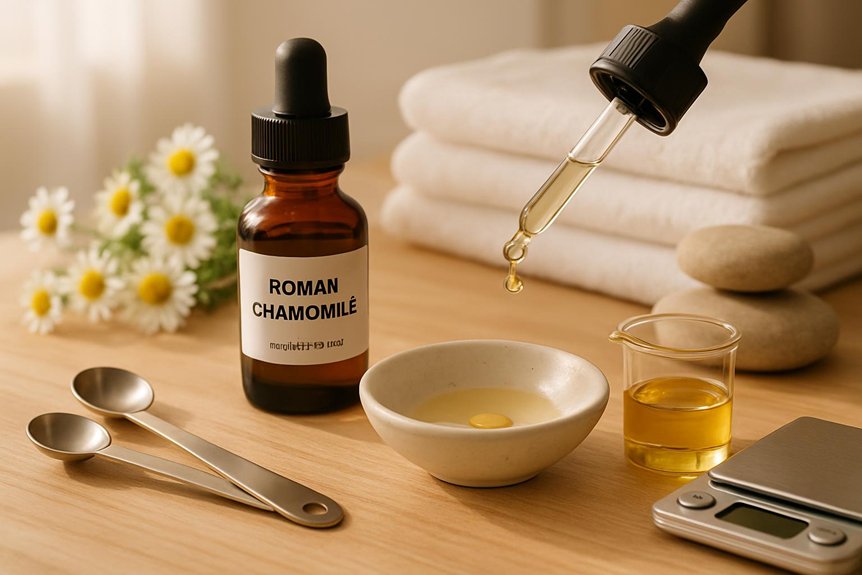
A safe Roman chamomile massage blend starts by selecting an appropriate carrier oil and an evidence-informed dilution ratio based on the client’s age, skin sensitivity, and treatment goals, as used in Spa & Massage clinics.
The process then requires accurate measurement of both oils and thorough mixing to guarantee consistent concentration across the bottle.
Finally, the blend should be stored in a clean, labelled container away from heat and light to preserve quality and reduce the risk of irritation.
Choose Carrier And Ratio
For a safe, skin-friendly aromatic massage blend, Roman chamomile essential oil is best diluted in a neutral carrier oil at a conservative ratio that reflects the client’s skin sensitivity, age, and treatment goals.
At Spa & Massage, therapists typically choose gentle, low-odour carriers (such as fractionated coconut, jojoba, or sweet almond) to let chamomile’s soft, comforting aroma remain close to the skin without feeling heavy.
For most healthy adults, a 1% dilution supports relaxation and tenderness (about 1 drop per 5 ml carrier); for very sensitive skin, facial work, or those new to essential oils, 0.5% is preferred.
A 2% dilution may suit limited-area tension work, only when well tolerated and no contraindications exist.
Measure, Mix, And Store
With a measured approach, Roman chamomile essential oil should be diluted by volume into a clean, dry bottle: select the target dilution (typically 0.5–1% for most aromatic massage needs), measure the carrier oil first (e.g., 10 ml), add the corresponding drops of chamomile (about 1 drop per 5 ml for 1%, or 1 drop per 10 ml for 0.5%), cap and roll the bottle between the palms to blend without aerating, then label with the ingredients and date and store sealed in a cool, dark place.
In Spa & Massage clinics, therapists also patch-test when appropriate and discard any blend that changes in scent, colour, or clarity.
For client comfort, a glass bottle is preferred, and droppers are kept hygienic. At Spa & Massage, blends are made fresh, used within 3 months, and kept away from heat and sunlight.
Roman Chamomile Dilution for Sensitive Skin
In sensitive-skin aromatic massage, Roman chamomile essential oil should be diluted conservatively to reduce the risk of irritation or sensitisation.
Spa & Massage therapists typically begin at 0.25–0.5% (about 1–3 drops per 20 ml carrier), increasing only if the client’s skin remains calm.
Fragrance-free, skin-supportive carriers such as jojoba or fractionated coconut are preferred, and the blend is kept simple to avoid cumulative allergen load.
A patch test on the inner forearm for 24 hours supports safer, more intimate work on areas like neck, décolleté, and hands.
Treatment is paused if stinging, redness, or itching occurs.
Aftercare includes gentle cleansing, moisturising, and avoiding heat and exfoliants for 24 hours post-treatment.
Roman Chamomile Dilution in Pregnancy (UK-Safe Guidance)
Pregnancy calls for an even more cautious approach to Roman chamomile dilution than sensitive-skin protocols, because physiological skin changes and heightened odour sensitivity can increase the likelihood of irritation or nausea.
In UK practice, Spa & Massage therapists typically keep facial use to 0.25% and body massage to 0.5% (about 1–3 drops per 30 ml carrier), avoiding the abdomen unless specifically indicated and welcomed.
A patch test on the inner forearm for 24 hours is advised, especially for clients with hay fever or plant allergies.
Use only occasional, short exposures, stop immediately if headache, queasiness, itching, or tightening sensations appear, and make certain informed consent at every step.
When in doubt, choose unscented carrier oil only.
Blend Roman Chamomile With Other Oils Safely
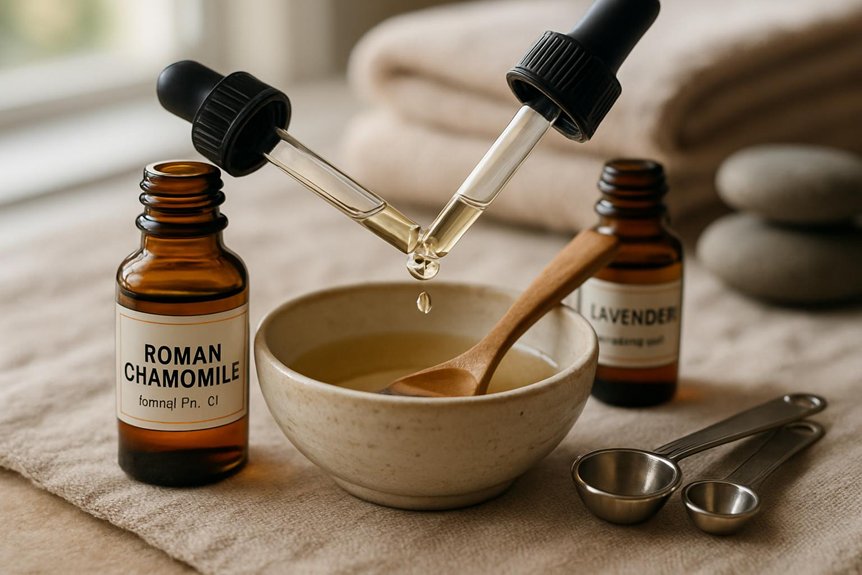
For aromatic massage, Roman chamomile is best treated as a supportive note within a well‑diluted blend rather than a stand‑alone “strong” oil.
In Spa & Massage clinics, therapists typically pair it with gentle, well‑tolerated oils to keep the scent soft, skin‑kind, and emotionally soothing. Suitable partners include lavender for relaxation, bergamot FCF for uplift, and frankincense for slower breathing and grounded presence.
Blending should stay within conservative total essential‑oil dilution, with chamomile kept as a minor percentage of the aromatic “topline” to reduce irritation risk and preserve comfort during prolonged touch. A simple approach is choosing one calming and one balancing oil, then dispersing them evenly into a stable carrier such as jojoba, grapeseed, or fractionated coconut oil.
Patch Test Roman Chamomile Blends (Allergy Checks)
Even gentle Roman chamomile blends can trigger skin reactions in some people, so a patch test is recommended before using any new combination for aromatic massage.
At Spa & Massage clinics, therapists advise applying a small amount of the diluted blend to clean skin on the inner forearm or behind the ear, then leaving it uncovered and dry.
The area should be observed for 24 hours for redness, itching, burning, swelling, or raised bumps. If any discomfort appears, the blend should be washed off with mild soap and cool water and not used on the body.
Extra caution is advised for clients with eczema, asthma, hay fever, or known plant allergies. Patch testing supports close, comfortable touch without surprises.
Store Diluted Roman Chamomile Oil (Shelf Life)
A well-made dilution of Roman chamomile essential oil stays safest and most effective when it is stored to minimise oxidation, contamination, and heat or light damage.
It should be kept in a dark glass bottle, tightly capped, labelled with date and dilution, and stored in a cool cupboard away from radiators and steamy bathrooms.
Hands, droppers, and pump tops should be clean, and double-dipping fingers into the bottle should be avoided to protect skin and scent.
Shelf life depends on the carrier oil: grapeseed often lasts 3–6 months, sweet almond 6–12 months, jojoba 1–2 years.
In Spa & Massage clinics, small batches are made for fresher, more skin-loving results.
Discard if odour turns sharp, rancid, or irritating.
Conclusion
Safe dilution of Roman chamomile for massage is not optional; it is the difference between calm comfort and avoidable irritation. By using conservative percentages, measuring accurately, selecting an appropriate carrier, and patch testing before full application, blends can suit sensitive clients and support informed use in pregnancy. Storage and clear labelling protect quality over time. Done properly, a well-diluted chamomile massage oil can feel *infinitely* gentler than neat application while still delivering a soothing experience.