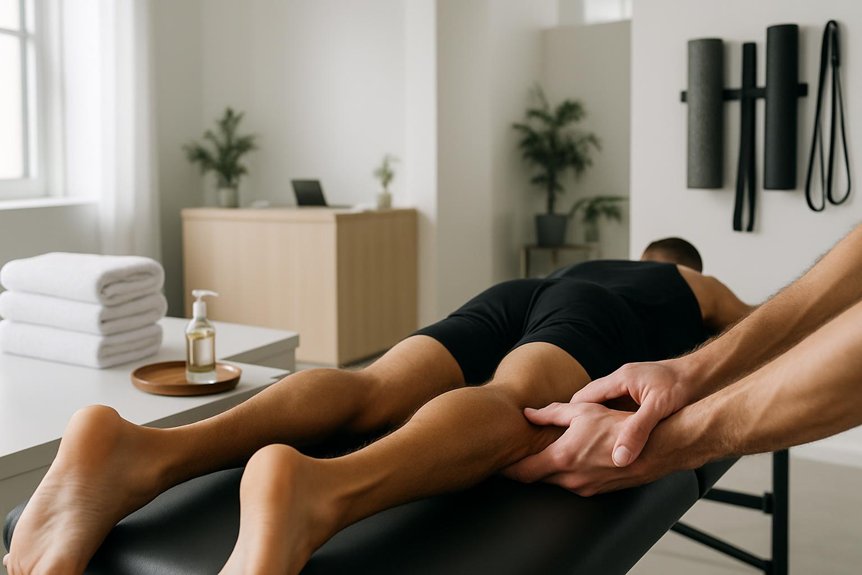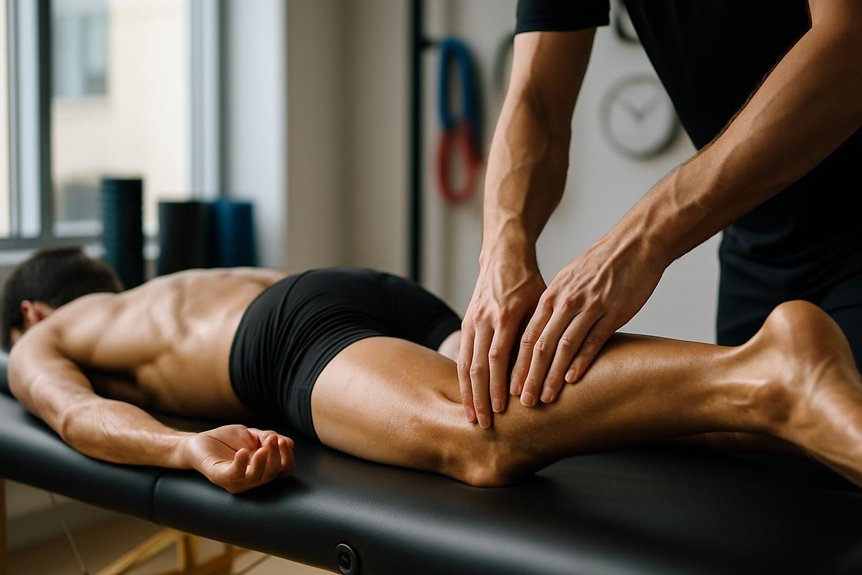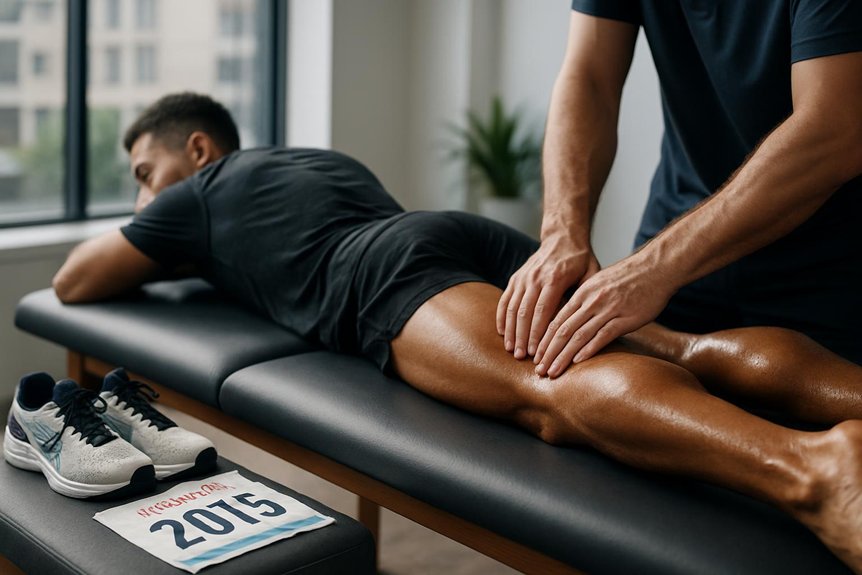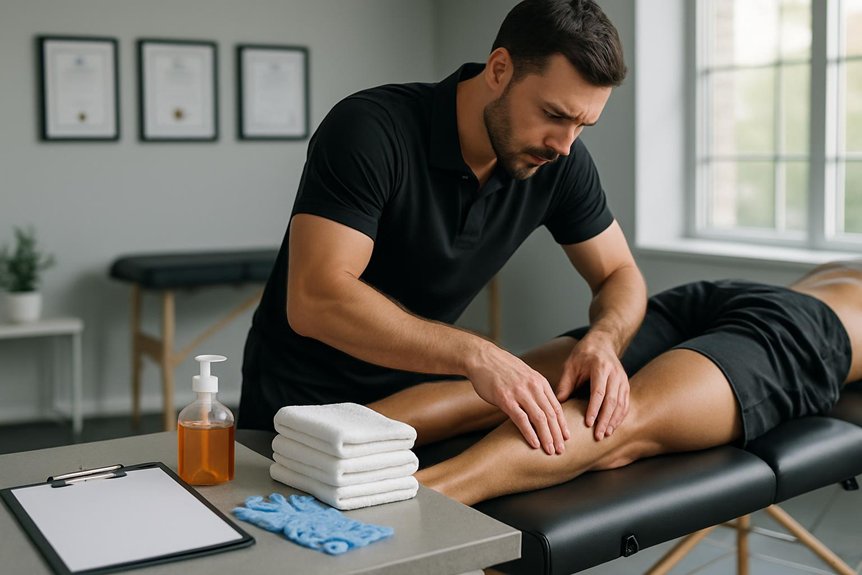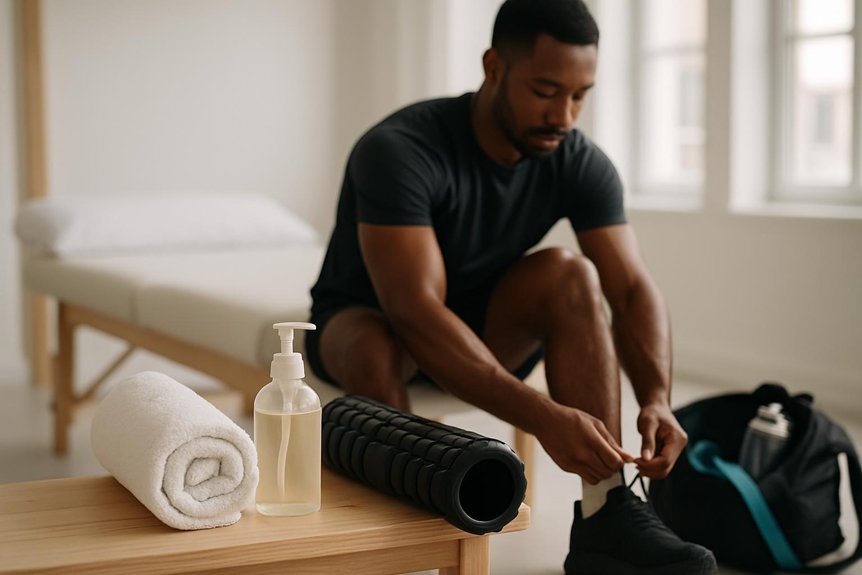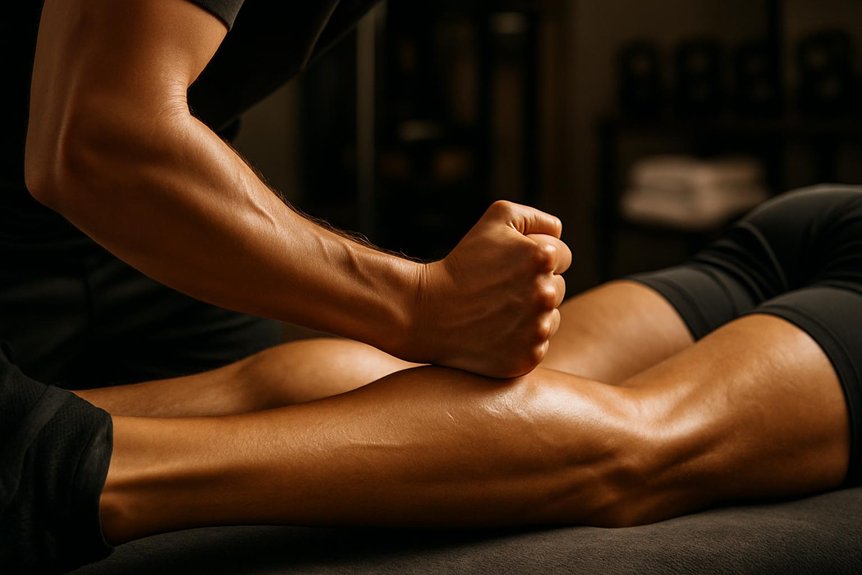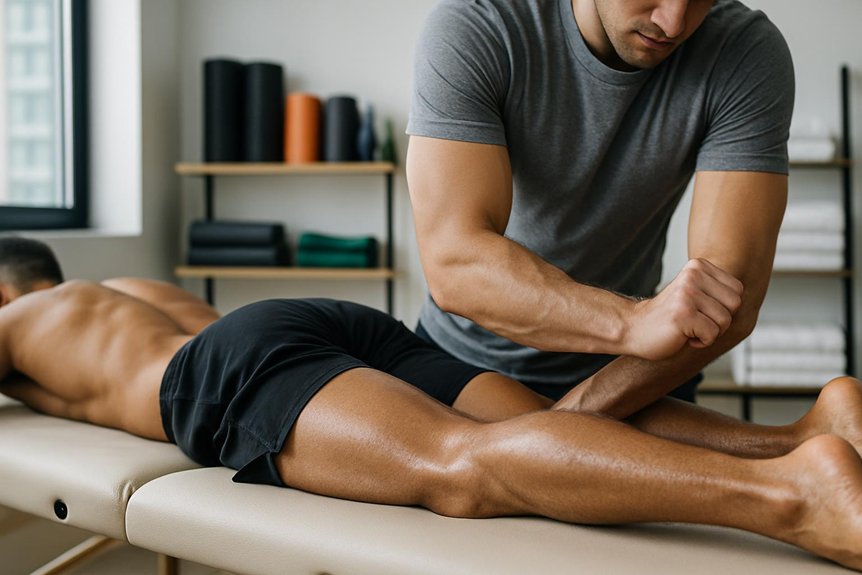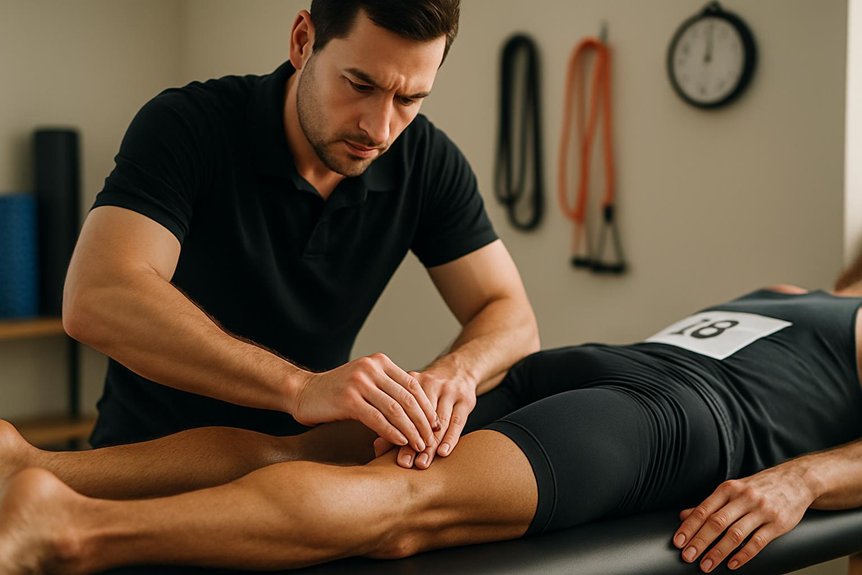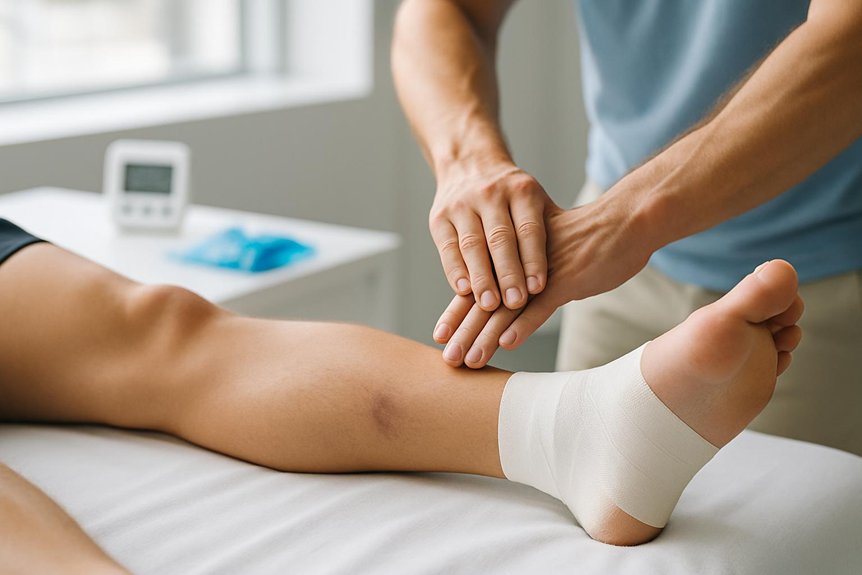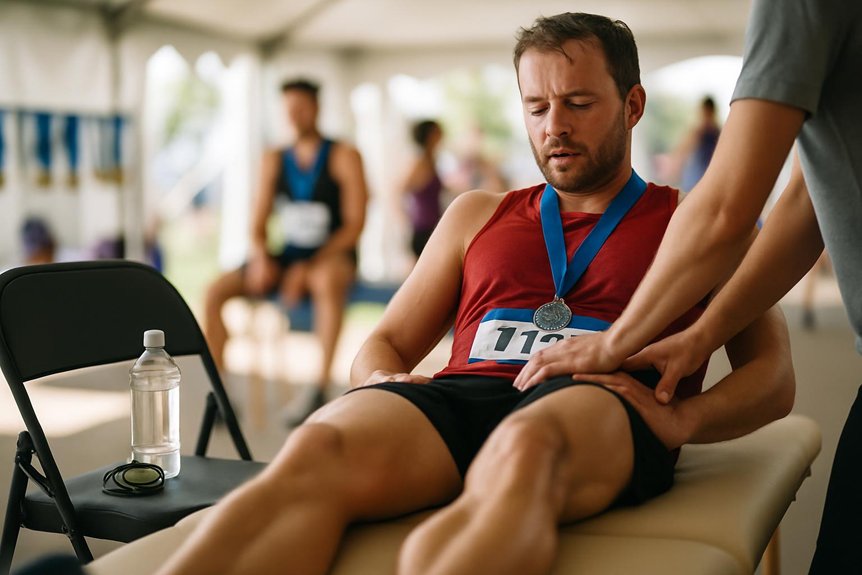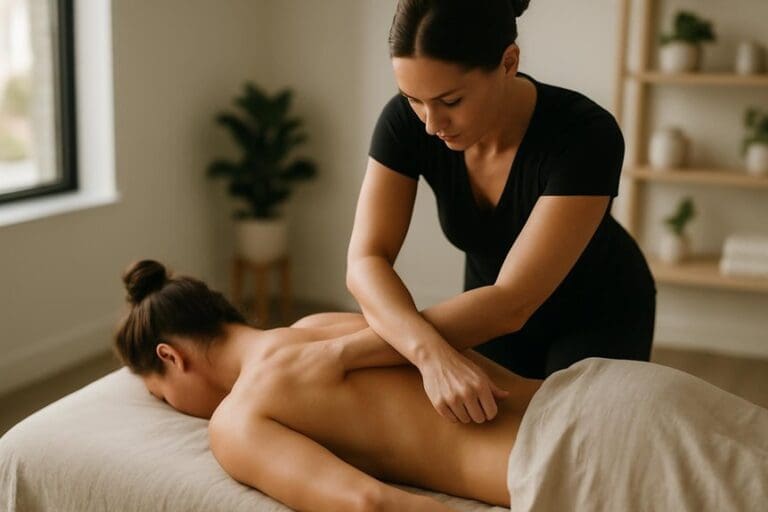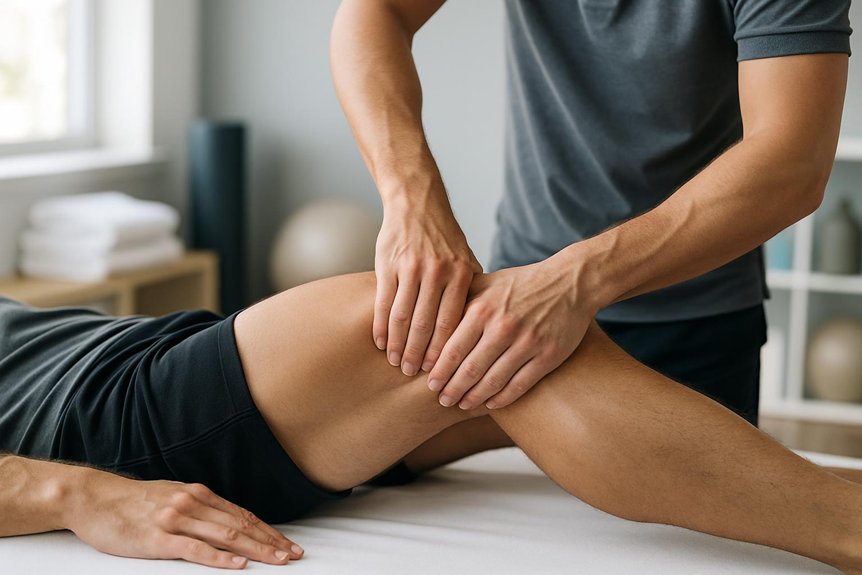
It can help hip flexor tightness by reducing protective muscle tone and improving tissue glide around the iliopsoas and rectus femoris, often increasing comfortable hip extension in the short term. Benefits are mainly neurophysiological (afferent input and reduced guarding) rather than “breaking adhesions.” Treating adjacent tissues such as TFL, adductors, and lumbar extensors can rebalance pelvic load and stride mechanics. Results often consolidate when paired with breathing, mobility, and hip-extension strength work. More detail follows.
Can Athletic Massage Loosen Tight Hip Flexors?
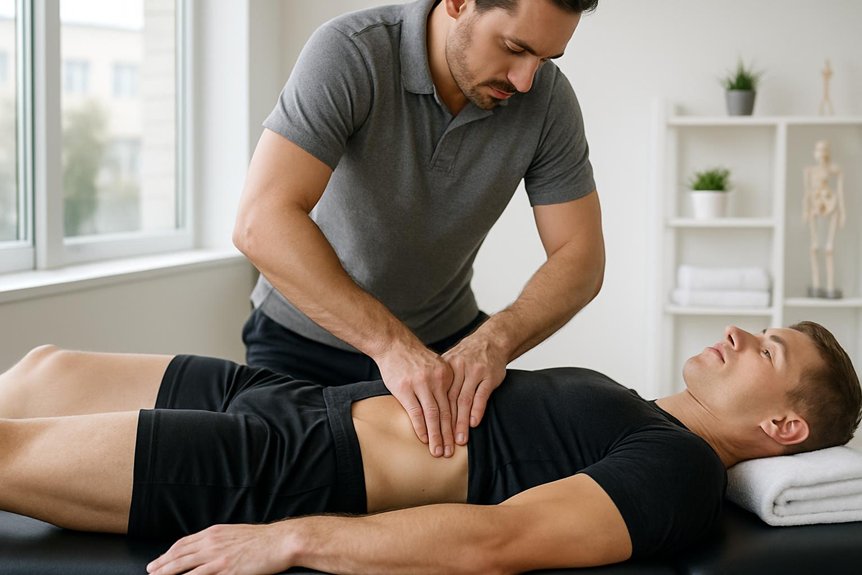
It can reduce hip flexor tightness by applying targeted mechanical pressure and movement to the iliopsoas and rectus femoris, helping modulate muscle tone, improve local tissue glide, and increase tolerance to hip extension.
By treating adjacent tissues—TFL, adductors, anterior hip capsule, and lumbar extensors—load is redistributed across the pelvis, often normalising anterior pelvic tilt mechanics and stride length.
Evidence supports short-term gains in range of motion and reduced protective guarding through neurophysiological modulation rather than “breaking adhesions.”
For athletes, these effects are often leveraged to support faster recovery and consistent training, aligning with Benefits of Sports Massage.
At Spa & Massage clinics across London, therapists combine slow compressions, stripping, and active release with paced diaphragmatic breathing to downshift sympathetic tone.
Many clients benefit most when sessions are paired with simple hip-extension drills and glute activation aftercare for lasting change.
What Does Hip Flexor Tightness Feel Like?
Hip flexor tightness typically presents as a persistent “pull” or pressure at the front of the hip or deep in the groin, most noticeable when standing tall, walking uphill, sprinting, or moving from sitting to standing.
Sensation often includes a pinching at the hip crease during hip flexion, or a dull ache after prolonged sitting.
Biomechanically, it may feel like the pelvis is being drawn forward, increasing lumbar extension and creating a “compressed” feeling in the low back.
Some people notice reduced hip extension—stride feels shorter, glutes feel harder to engage, and the front of the thigh feels overworked.
Tender, ropey bands may be palpable just inside the bony hip point.
At Spa & Massage, therapists assess these patterns sensitively, respecting comfort and boundaries.
Tight or Weak Hip Flexors: How to Tell
Clinically, hip flexor “tightness” often presents as limited hip extension, anterior hip pinching, and increased lumbar lordosis, whereas true weakness more often shows as reduced hip flexion torque with compensations such as pelvic tilt, lumbar extension, or overuse of the TFL and low back.
Simple home screens—such as a Thomas test for hip extension range and a controlled supine straight-leg raise or standing march hold for strength and lumbopelvic control—can help differentiate the pattern.
At Spa & Massage, therapists use these biomechanics cues to guide athletic massage focus and corrective advice, targeting whether tone reduction or load-tolerance support is most appropriate.
Common Tightness Warning Signs
Often, tight or underperforming hip flexors show up less as front-of-hip “pain” and more as predictable movement compensations: reduced hip extension during walking or running, an anterior pelvic tilt with increased lumbar lordosis, and a tendency to over-recruit the lower back and quads when lifting the knee or rising from a chair.
Additional warning signs include a “pinching” sensation at the front of the hip at end-range flexion, discomfort during prolonged sitting, and stiffness when first standing or climbing stairs.
Many clients also notice shortened stride length, difficulty maintaining a neutral pelvis in split-stance positions, and tenderness on palpation near the iliopsoas/rectus femoris attachments.
In Spa & Massage clinics, therapists screen these patterns and pair athletic massage with targeted mobility work to restore smoother hip mechanics.
Weakness And Compensation Clues
How can a hip flexor feel “tight” yet test weak? When the iliopsoas is lengthened and under-recruited, the nervous system may increase resting tone for stability, creating a “tight” sensation without true shortness.
Biomechanically, weakness often shows up as compensation: lumbar extension during leg lift, rib flare, anterior pelvic tilt, or gripping in the TFL, rectus femoris, or adductors.
Walking and running may look like shortened stride, heavy heel strike, or hip hiking, as the body avoids clean hip flexion.
Many people also report pinching at the front of the hip because the femoral head is not well centred.
At Spa & Massage, therapists note these patterns during movement and palpation before treatment begins.
Quick Self-Tests At Home
Compensation patterns such as lumbar extension, rib flare, and TFL or rectus femoris “gripping” can make a hip flexor feel tight even when it is underperforming, so simple screening at home helps separate true shortness from poor recruitment.
One option is the Thomas test: lying at the edge of a bed, hug one knee; if the hanging thigh cannot drop neutral or the knee straightens, rectus femoris or iliopsoas stiffness is likely.
A second is a 90/90 march: supine, hips and knees at 90°, gently lift one heel; if the low back arches or quads dominate, control is lacking.
A third is a 30‑second single‑leg bridge; cramping in the front hip suggests overuse.
In Spa & Massage clinics, findings guide athletic massage.
How Does Athletic Massage Release Hip Flexors?
Release of tight hip flexors with athletic massage is achieved by reducing tone in the iliopsoas and rectus femoris while improving glide between the hip flexor fascia and adjacent tissues.
Mechanically, slower, loaded pressure can modulate neuromuscular guarding via afferent input, lowering resting activity and allowing fuller hip extension without lumbar compensation.
Tissue effects are best understood as improved shear and hydration in fascial planes, reducing “sticking” that perpetuates anterior pelvic tilt and stride restriction.
Locally, improved perfusion and reduced nociceptive sensitivity can make lengthening tolerable, supporting better motor control of gluteals and deep abdominals.
At Spa & Massage clinics across London, assessment-led work targets the client’s specific movement pattern, keeping pressure precise, respectful, and closely communicated for safe, intimate comfort.
Best Athletic Massage Techniques for Hip Flexors
For hip flexor tightness, Spa & Massage therapists commonly prioritise iliopsoas release techniques and targeted trigger point work to reduce resting tone and improve anterior hip extension mechanics.
Iliopsoas work is applied progressively with precise palpation and controlled pressure to influence deep hip flexion tissue without provoking protective guarding.
Trigger point hip work focuses on clinically relevant referral patterns and local sensitivity, aiming to normalise load transfer through the pelvis and reduce compensatory lumbar overuse.
Iliopsoas Release Techniques
In athletic massage practice, iliopsoas release targets a deep hip flexor complex (psoas major and iliacus) that influences lumbar spine position, anterior pelvic tilt, and hip extension mechanics during walking, running, and lifting.
At Spa & Massage clinics, therapists assess breathing, pelvic control, and tenderness near the inner front hip, then use slow, angled sinking pressure through the abdominal wall just medial to the ASIS, staying superficial to viscera and respecting comfort. Release is paired with gentle hip extension positioning, encouraging length without lumbar compression.
Diaphragmatic breathing and softening on exhale reduce guarding and improve tissue glide. Short, repeated holds (20–40 seconds) are preferred over aggressive digging to minimise protective spasm.
Aftercare includes hydration, warm shower, and brief hip flexor stretches within pain-free range.
Trigger Point Hip Work
Mapping hip-flexor trigger points can clarify why “tightness” presents as anterior hip pinching, low-back pulling, or referred ache into the groin and thigh.
Trigger point hip work targets hyperirritable bands in iliopsoas, rectus femoris, and TFL that increase resting tone and anteriorly tilt the pelvis, compressing the hip. At Spa & Massage clinics, therapists use slow, sinking pressure and short, specific compressions, staying just inside a tolerable “good pain,” then pairing release with gentle active hip extension to recalibrate length-tension. Breathing cues reduce guarding and improve tissue glide.
Treatment also checks adductors and glute med/min for satellite points that perpetuate femoral internal rotation.
Aftercare: hydration, heat, and light walking to maintain neuromuscular downshift.
How Many Sessions for Hip Flexor Relief?
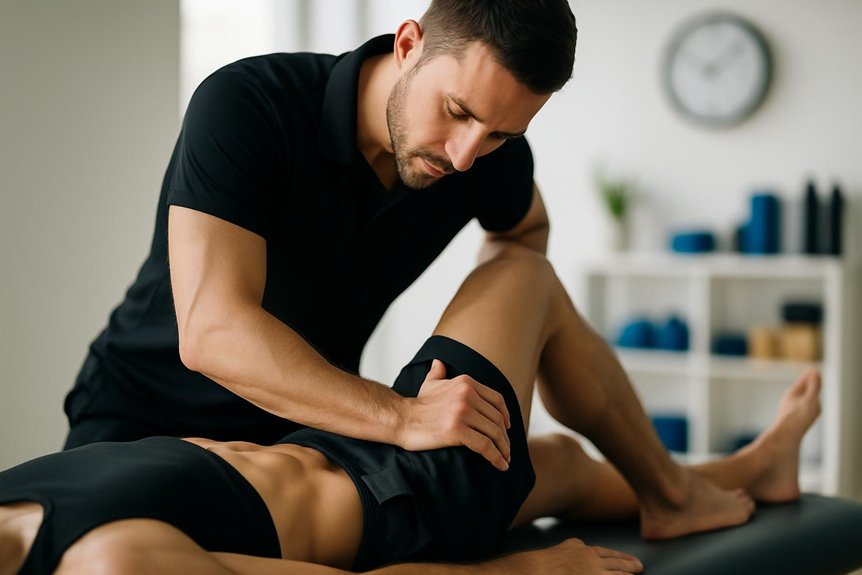
Most clients notice meaningful hip flexor relief within 2–6 athletic massage sessions, but the appropriate number depends on the driver of tightness—adaptive shortening from prolonged sitting, overload from running/cycling, or protective tone secondary to lumbar/pelvic mechanics.
In Spa & Massage London clinics, therapists reassess hip extension, anterior pelvic tilt, and pain with resisted hip flexion each visit to gauge dose-response.
For desk-related stiffness, 2–4 sessions often reduce resting tone and improve stride length.
For sport overload or recurrent “pinching” at the front of the hip, 4–8 sessions may be needed to desensitise trigger points and normalise tissue glide around iliopsoas and rectus femoris.
If symptoms reproduce with lumbar extension or sacroiliac loading, longer blocks (6–10) are common, paired with clinical referral when indicated.
Aftercare to Stop Hip Flexors Tightening Again
Hip flexors commonly retighten after athletic massage when the original load drivers—prolonged hip flexion from sitting, high-volume running/cycling, or anterior pelvic tilt mechanics—remain unchanged.
Effective aftercare targets tissue capacity and pelvic control, not just “stretching.” Spa & Massage therapists recommend brief hourly movement snacks: 60–90 seconds of hip extension (split-stance lunge), glute activation (bridge holds), and gentle thoracic rotation to reduce compensatory lumbar extension.
Training days benefit from a dynamic warm-up, then post-session downregulation: slow nasal breathing and supported hip flexor lengthening without pinching the front hip. Hydration and sleep support recovery signalling.
Many clients maintain results with self-myofascial release to quads/TFL, followed immediately by hip extension strength (step-ups, deadlifts) to lock in new range while staying comfortable.
When Hip Flexor Pain Needs Medical Advice
Aftercare strategies can reduce repeat tightening, but persistent or worsening anterior hip/groin pain may indicate tissue injury or joint pathology that sits outside the scope of massage alone. Medical advice is prudent if pain follows a sudden sprint, kick, or slip, or if a “pop,” bruising, or rapid swelling suggests a strain or tendon injury.
Red flags include night pain, fever, unexplained weight loss, numbness, progressive weakness, or pain radiating below the knee. Inability to bear weight, a locked hip, marked loss of range, or sharp groin pain with rotation may reflect labral or femoroacetabular impingement.
At Spa & Massage, therapists screen movement patterns and palpation findings; if symptoms do not settle within 7–10 days, or worsen after treatment, referral is recommended.
Conclusion
It can reduce hip flexor tightness by improving local tissue extensibility, modulating pain, and restoring hip–pelvic mechanics that become restricted with prolonged sitting or repetitive training. When paired with movement re-education and progressive loading, short-term gains in hip extension and stride can translate into more efficient gait and less lumbar compensation. However, it is not a magic bullet: persistent pain, weakness, or neurological symptoms warrants medical assessment to rule out joint or nerve drivers.