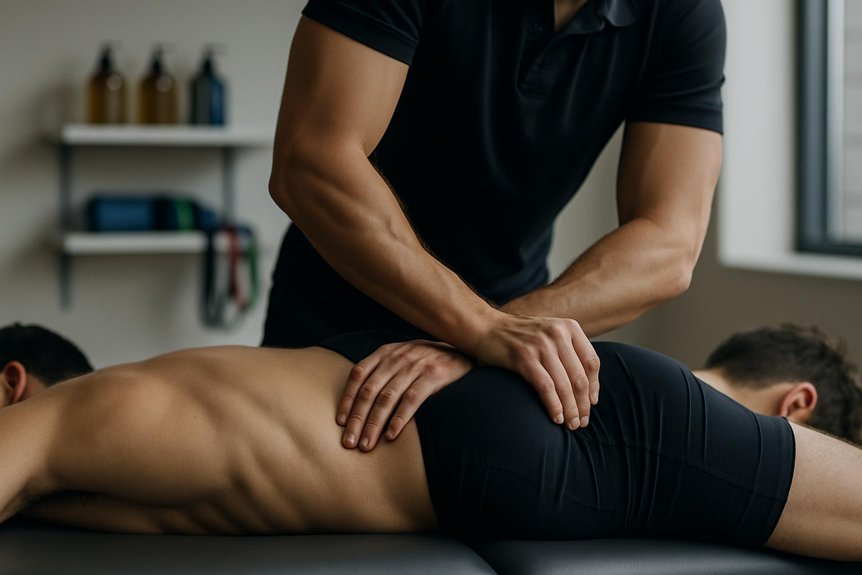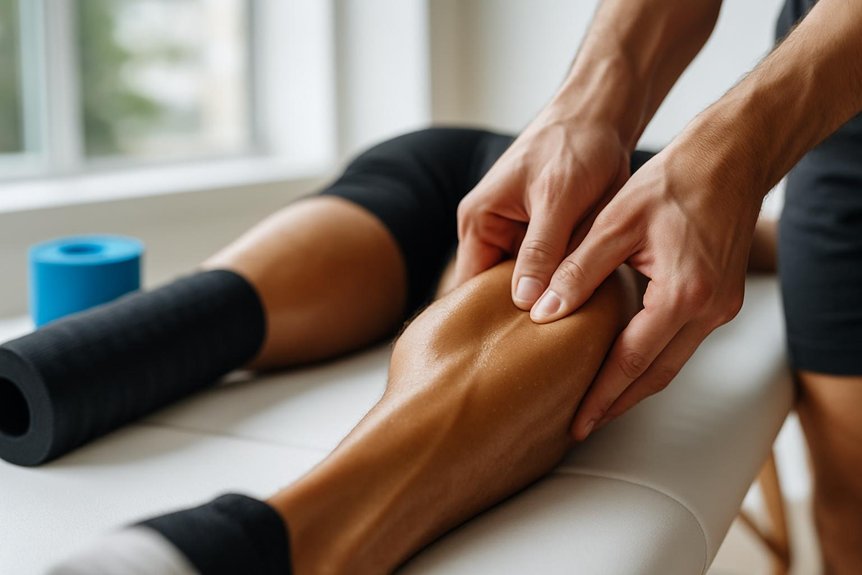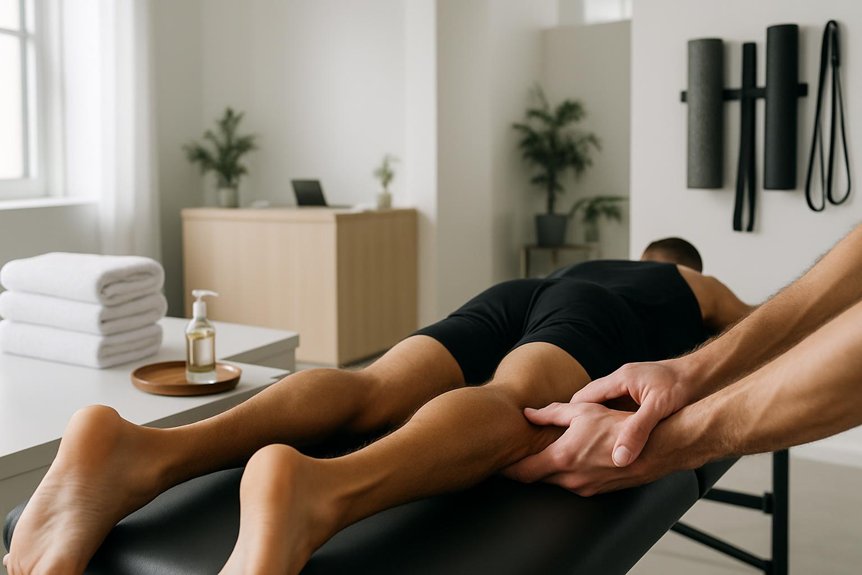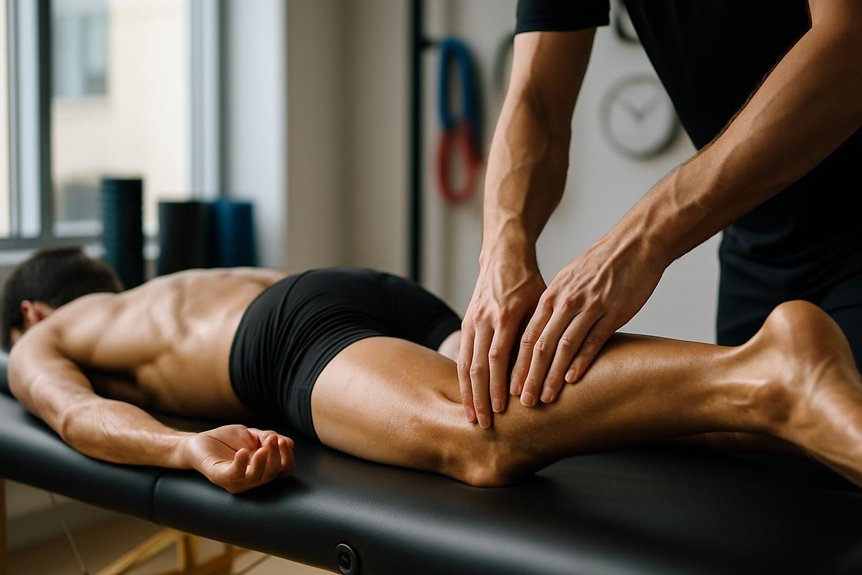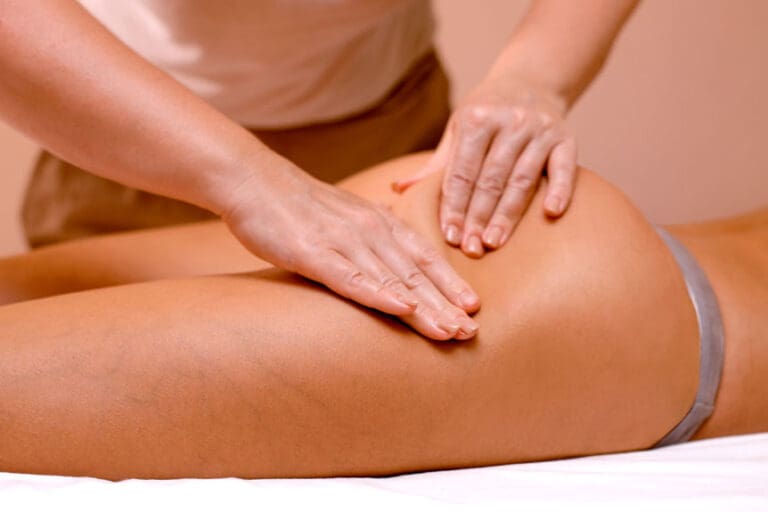
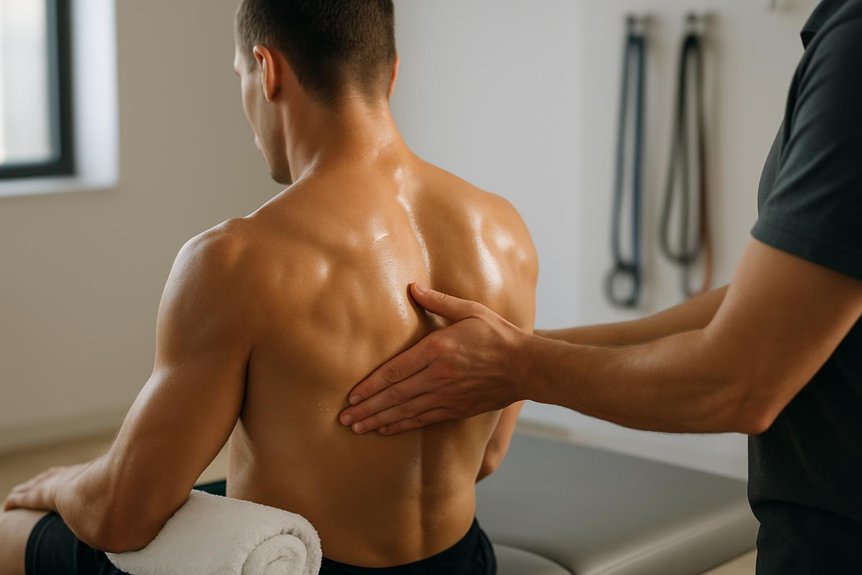
It can help shoulder tightness by reducing myofascial restriction and localized muscle hypertonicity in common contributors such as the upper trapezius, levator scapulae, pectorals, and rotator cuff. Techniques including deep-tissue strokes, trigger-point work, and gentle stretching may provide short-term pain relief and improved range of motion, especially when paired with targeted strengthening and mobility exercises. Sudden severe pain, marked weakness, or arm tingling warrant medical assessment. Further sections outline causes, best techniques, and aftercare.
Can It Help Shoulder Tightness?
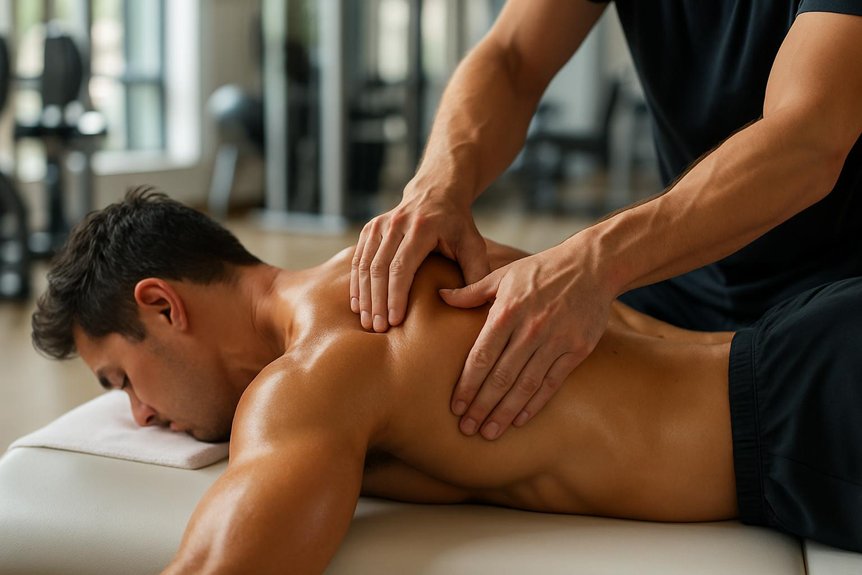
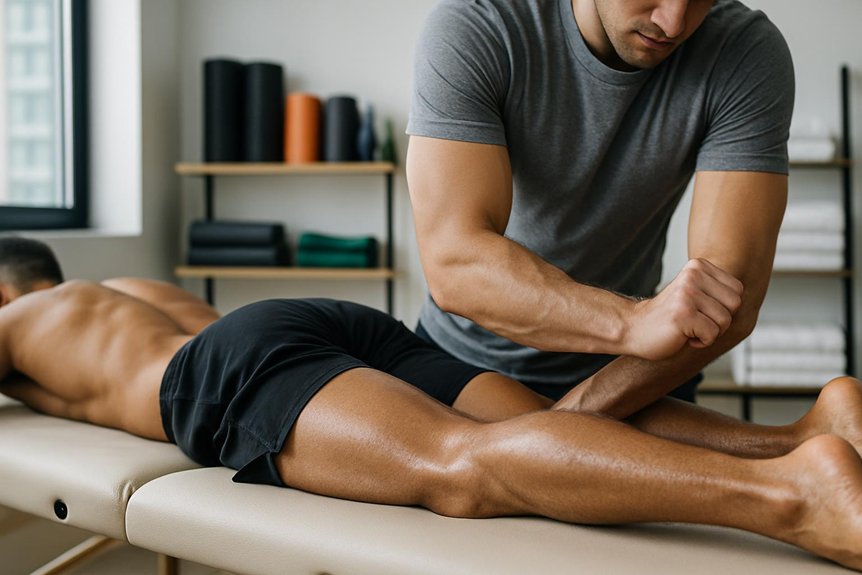
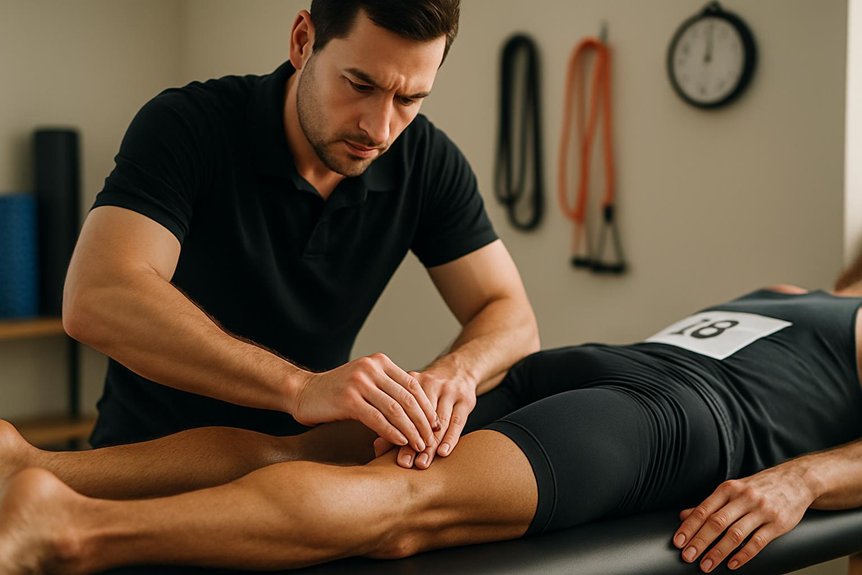
In many cases, athletic massage can help reduce shoulder tightness by addressing myofascial restriction, localised muscle hypertonicity, and overload in common contributors such as the upper trapezius, levator scapulae, pectoralis major/minor, and rotator cuff.
At Spa & Massage, therapists combine targeted deep-tissue strokes, trigger-point work, and gentle stretching to improve tissue glide, modulate pain, and support scapular and glenohumeral mechanics.
Evidence suggests manual therapy can provide short-term pain relief and range-of-motion gains, especially when paired with exercise.
Many clients benefit most when treatment is matched to aggravating activities (desk posture, lifting, training volume) and followed by simple home drills: thoracic extension, pec stretches, and rotator cuff activation.
Pressure is kept within comfortable, intimate boundaries for safety.
This approach also aligns with broader benefits of sports massage for athletes by supporting recovery and maintaining training consistency.
When Is Shoulder Tightness a Red Flag?
When does shoulder tightness signal something more than muscular overload? It becomes a red flag when it is sudden, severe, worsening, or paired with systemic symptoms. Urgent review is advised if tightness follows trauma, includes visible deformity, marked weakness, loss of range, night pain that is unrelieved by rest, or numbness/tingling spreading into the arm or hand.
Chest pressure, breathlessness, sweating, jaw or left-arm pain require emergency assessment. Persistent pain with fever, unexplained weight loss, or a history of cancer also warrants prompt medical evaluation.
In Spa & Massage clinics, therapists screen for these signs and may pause treatment, recommending GP, physiotherapy, or A&E as appropriate. Safety and trust remain central.
What Causes Shoulder Tightness (Desk, Stress, Training)?
Why do shoulders so often feel “tight” in modern life? Common drivers include sustained desk posture, stress-related muscle guarding, and training loads that outpace recovery.
Prolonged sitting with a forward head and rounded upper back can reduce thoracic mobility and alter scapular control, leaving the upper trapezius and pectorals overactive while deep neck flexors and lower traps underperform.
Psychological stress can increase sympathetic arousal and pain sensitivity, prompting protective bracing that feels like stiffness.
In training, heavy pressing, overhead work, or repetitive pulling may irritate rotator cuff tendons or overload posterior shoulder tissues, especially with limited warm-up or poor technique.
At Spa & Massage clinics, therapists often notice these patterns during assessment in London clients.
How Does It Relieve Tight Shoulders?
Shoulder tightness driven by desk posture, stress-related guarding, or training overload is often maintained by a combination of elevated muscle tone, myofascial restriction, and altered scapular mechanics rather than a simple “lack of stretching.” It can help by reducing protective muscle guarding and improving local tissue glide in commonly overloaded areas such as the upper trapezius, levator scapulae, pectoralis minor/major, posterior cuff, and latissimus dorsi, which may ease perceived stiffness and allow more efficient shoulder and thoracic movement.
At Spa & Massage, therapists also use clinical palpation to locate tender, overactive bands and calm the nervous system’s “bracing” response. This can improve pressure tolerance, reduce pain-related inhibition, and restore smoother scapulohumeral rhythm during reaching and lifting. Clients often feel immediate softness, with best results when paired with gentle breathing, posture breaks, and graded strengthening.
Which Athletic Massage Techniques Work Best for Shoulders?
Targeted manual techniques tend to outperform general “relaxation” work for shoulder tightness because they address specific tissue restrictions and movement faults around the scapula, thoracic spine, and rotator cuff.
At Spa & Massage, therapists commonly combine myofascial release along pectoralis minor, upper trapezius, and latissimus to reduce anterior shoulder pull, with trigger point pressure to infraspinatus and subscapularis to ease referred ache.
Deep tissue stripping to levator scapulae and rhomboids can restore smoother scapular glide.
When tolerated, cross-fibre friction over the rotator cuff tendons supports tendon load-management by improving local tissue tolerance.
Gentle thoracic mobilisation and scapular setting cues help the nervous system “allow” new range, keeping touch precise, slow, and reassuring.
After Massage: How to Keep Shoulders Loose
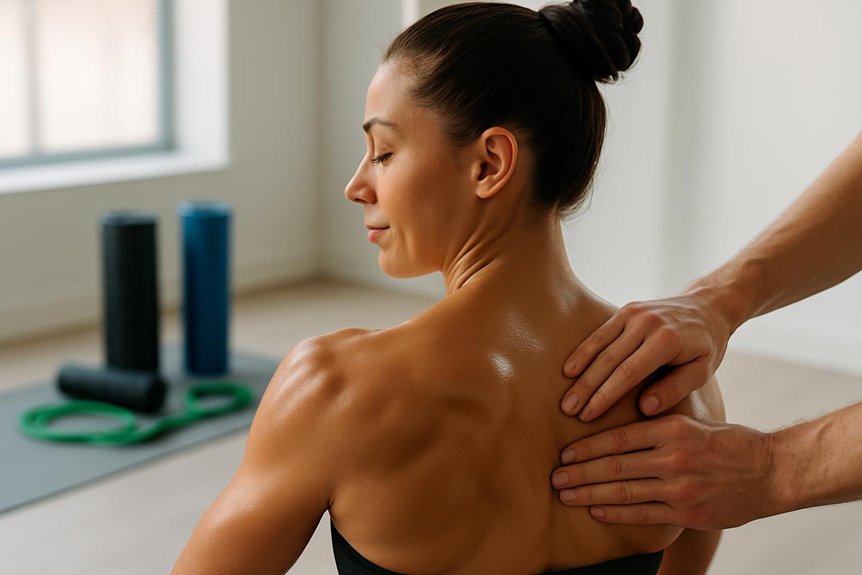
After massage, shoulder looseness is best maintained through immediate, low-load mobility that reinforces the improved tissue extensibility and restores controlled range of motion.
At Spa & Massage clinics across London, therapists typically recommend a brief post-massage mobility routine (e.g., gentle active movements and scapular control drills) to reduce rebound stiffness and support neuromuscular coordination.
Long-term results depend on daily shoulder care habits—regular posture breaks, graded strengthening, and sleep/desk setup adjustments—to address the mechanical drivers of tightness between sessions.
Post-Massage Mobility Routine
In the hours and days following an athletic massage, a short, structured mobility routine helps consolidate tissue changes, maintain range of motion, and reduce the likelihood of stiffness returning. At Spa & Massage clinics, therapists typically advise 6–10 minutes, 1–2 times daily, staying below a 3/10 stretch discomfort.
Sequence: 1) Diaphragmatic breathing with ribs expanding, 60–90 seconds, to reduce protective tone. 2) Shoulder pendulums, 30 seconds each direction. 3) Wall slides with a gentle reach, 8–10 slow reps. 4) Open-book thoracic rotations, 6 reps per side, to unload the shoulder. 5) Scapular clocks (small controlled shoulder-blade movements), 5 cycles each way.
Movements should feel smooth and reassuring, never sharp or pinching.
Daily Shoulder Care Habits
A short post-massage mobility sequence can preserve range of motion, but day-to-day behaviours largely determine whether shoulder tightness returns. Spa & Massage advises micro-breaks every 30–45 minutes: soften the ribs, let the shoulder blades glide down and around, and breathe slowly into the lower chest to reduce guarding.
Daily loading matters: 2–3 sets of rows, external rotations, and serratus-focused wall slides build tolerance and reduce recurrent tone. Sleep also counts; side-sleepers can hug a pillow to keep the top shoulder from collapsing forward.
Hydration and gentle heat may improve comfort, while avoiding repeated end-range stretching prevents irritability. Many clients maintain looseness by booking periodic athletic massage to reassess tissue response and progress home care safely.
Conclusion
Shoulder tightness can be likened to a drawbridge left half‑raised: traffic slows, detours appear, and strain shifts elsewhere. Athletic massage may help lower that bridge by modulating tone, improving local circulation, and reducing myofascial sensitivity, supporting safer movement when paired with exercise-based rehabilitation. Yet a stuck bridge sometimes signals structural threat; persistent pain, night symptoms, weakness, or neurological signs warrant assessment. With targeted treatment, graded loading, and posture breaks, function tends to normalise.