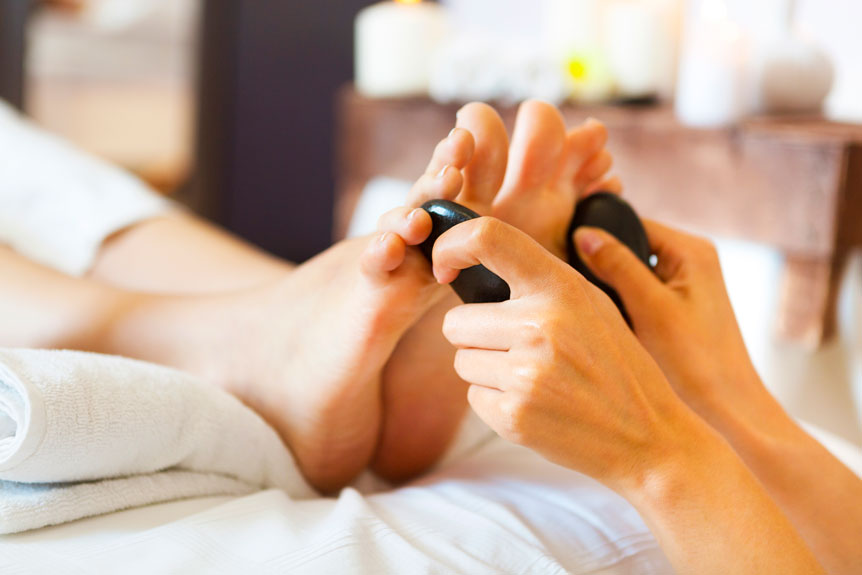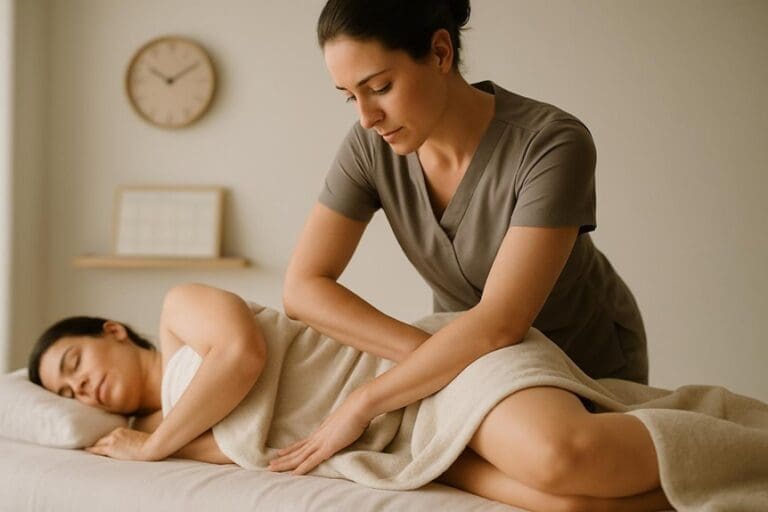
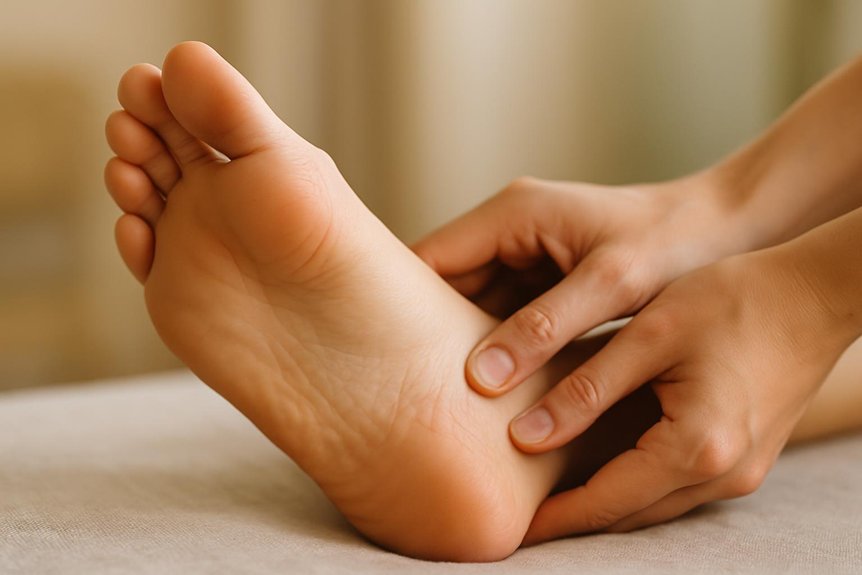
Digestive reflex therapy points are mapped areas on the feet and hands that practitioners stimulate with controlled thumb- and finger-walking pressure to support relaxation and comfort that may ease stress-related digestive tension. On the feet, the stomach sits mainly on the left inner arch below the ball, the liver and gallbladder on the right upper arch, and the intestines and colon loop through the central arch and heel edge. Hand maps place similar zones across the thenar mound and mid-palm. Next come safe pressure, contraindications, and session flow.
What Are Reflexology Points for Digestion?
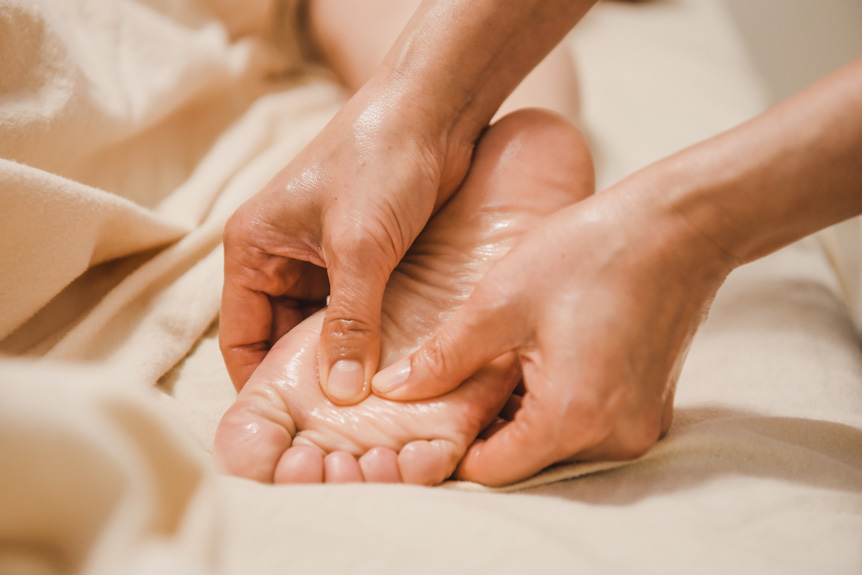
In reflex therapy, specific points on the feet—and sometimes the hands—are mapped to the digestive system and are worked with controlled thumb- and finger-walking pressure to support comfort and function. These “digestion reflexology points” refer to zones associated with the stomach, intestines, liver, gallbladder, and related nerves and circulation.
At Spa & Massage clinics, therapists treat these areas with measured pressure, slow pacing, and breath-led pauses, adjusting depth to sensitivity. The aim is to promote relaxation responses that can ease stress-related digestive tension and support regularity. Evidence suggests zone therapy may reduce perceived discomfort and anxiety, though it is not a replacement for medical care.
Clients are guided to notice warmth, softening, and subtle abdominal release, and to hydrate afterwards. Many people explore zone therapy for its potential healing power as a supportive, relaxation-focused approach.
Where Are Digestion Zone Therapy Points on the Feet?
On a digestive zones foot map, digestion-related reflexes are generally organised across the mid‑foot arch and upper sole, giving therapists clear landmarks for locating stomach and intestine areas.
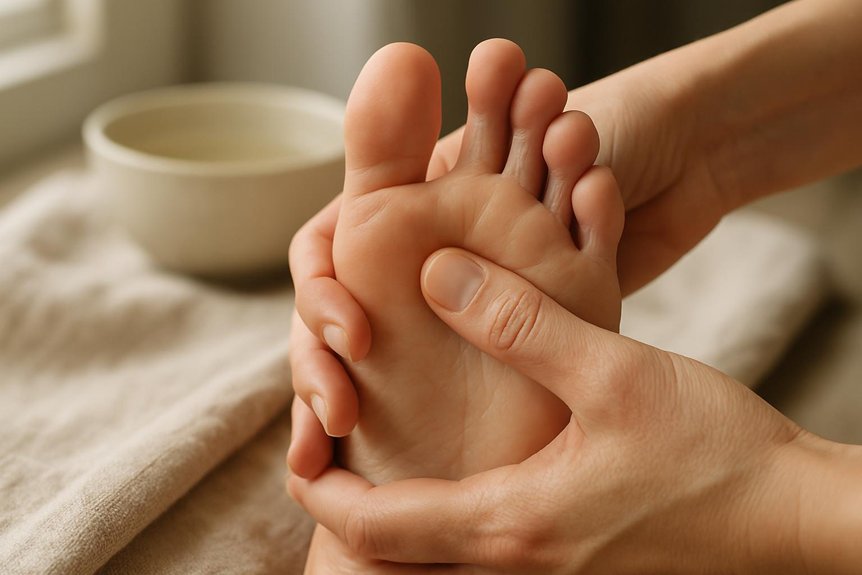
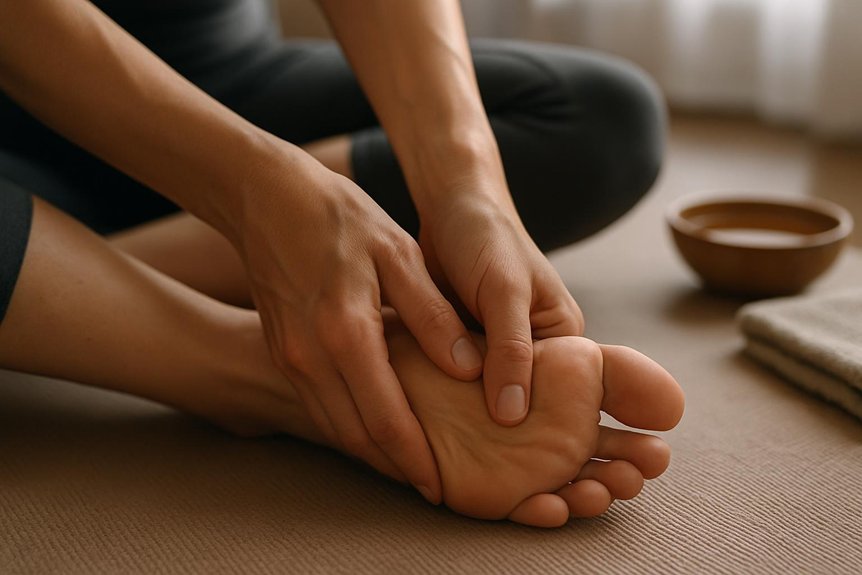
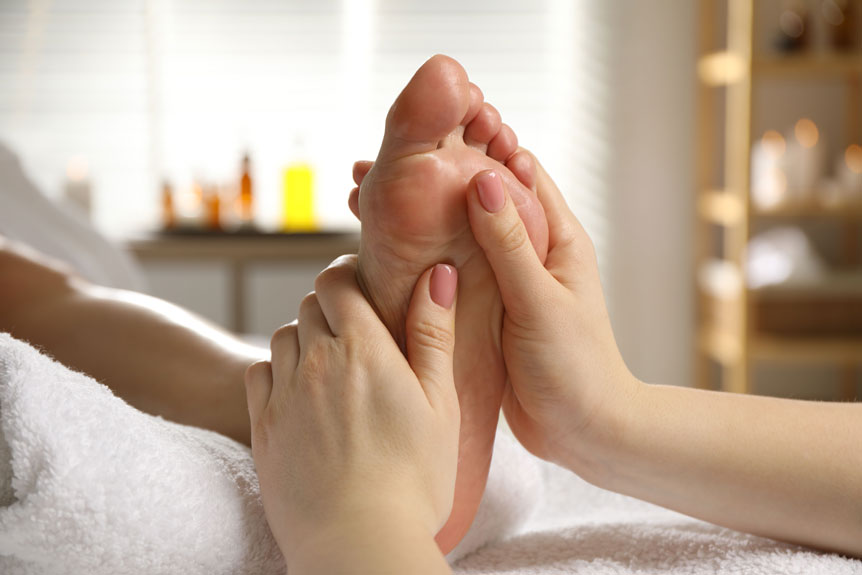
Technique-specific work typically uses measured thumb-walking pressure along the medial arch and across the plantar surface to target these zones while monitoring client comfort and sensitivity.
Liver and gallbladder reflex points are most often mapped on the right foot’s upper arch/ball area, and sessions at Spa & Massage apply systematic, tolerable pressure to these points in line with individual needs and current zone therapy practice.
Digestive Zones Foot Map
At a glance, digestion-related zone therapy points are concentrated along the inner edge and central arch of each foot, reflecting key structures of the gastrointestinal tract in standard zone therapy foot maps. Practitioners typically read the right foot as mirroring upper abdominal influences and the left foot as mirroring lower abdominal influences, then confirm tender, “grainy,” or resistant tissue as a working guide rather than relying on charts alone.
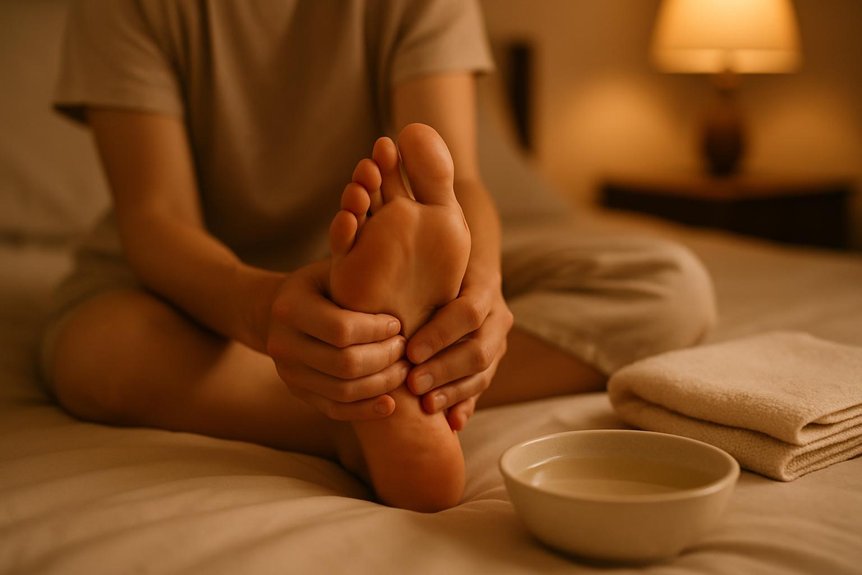
In Spa & Massage clinics, therapists use slow thumb-walking and gentle hook-and-back-up pressure through the arch, keeping contact warm and steady to support comfort and trust. Pressure is adjusted to a “strong but soothing” sensation, with paced breathing encouraged. For self-care, clients can trace the inner arch with the thumb for 60–90 seconds per area, avoiding sharp pain.
Stomach And Intestine Areas
Follow the arch from the ball of the foot toward the heel to locate the main stomach and intestine zone therapy areas.
The stomach zone sits mainly on the left foot’s inner arch, just below the ball; the small intestine tracks through the central arch; the colon forms a loop around the arch edges, with the descending section more on the left and the ascending more on the right.
In Spa & Massage zone therapy sessions, therapists use slow thumb-walking and gentle, sustained pressure, adjusted to the client’s breath and comfort.
Evidence for zone therapy is mixed, so it is positioned as supportive care for relaxation and perceived digestive ease, not medical treatment.
Clients are encouraged to hydrate, notice tenderness, and pause if pain, fever, or acute abdominal symptoms are present.
Liver Gallbladder Reflex Points
Foot‑map orientation helps locate the liver and gallbladder reflex points quickly: in zone therapy, the liver zone is primarily on the right foot, spanning the upper arch beneath the ball (most prominent toward the inner half), while the gallbladder point sits slightly more lateral on the same foot, just under the ball toward the outer edge.
At Spa & Massage clinics, therapists typically warm the area with slow effleurage, then apply thumb-walking in short passes, working 30–60 seconds per line and pausing for tenderness. Pressure is kept “comfortably deep,” aiming for a softening response rather than pain. Evidence for zone therapy is mixed, so it is framed as supportive care for relaxation and perceived digestive ease. Aftercare includes hydration, gentle walking, and noting any changes for the next session.
Where Are Digestion Zone Therapy Points on the Hands?
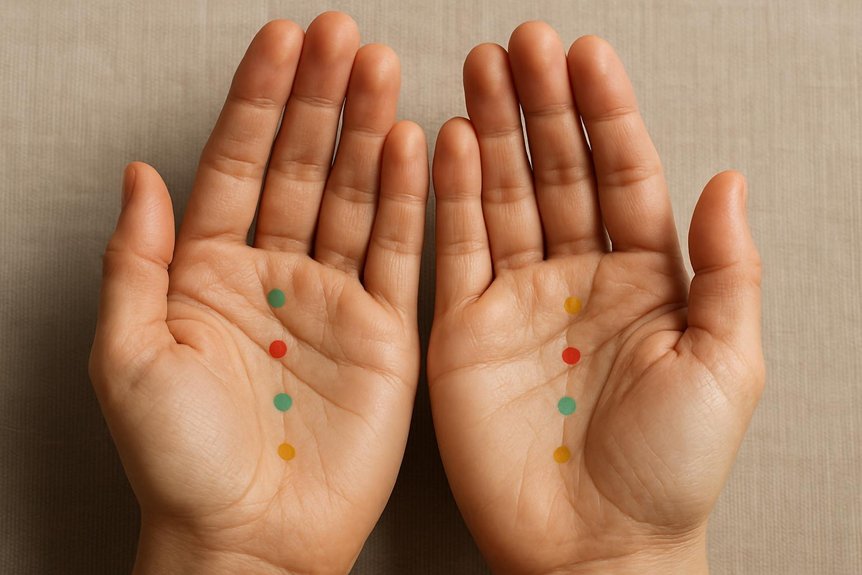
Where, exactly, are the digestion-related zone therapy points on the hands? In hand zone therapy, digestive reflexes are commonly worked along the palm’s central “gut line” and under the finger pads.
Practitioners typically locate the stomach reflex in the fleshy mound beneath the thumb (thenar area), with the small intestine mapped across the mid‑palm, and the colon traced around the palm’s outer border from the base of the little finger down toward the wrist and across the heel of the hand.
At Spa & Massage clinics, therapists use slow thumb‑walking and gentle circular pressure to explore these zones, staying within comfortable intensity and watching for tenderness, warmth, or softening.
Clients are encouraged to breathe steadily and communicate sensations throughout.
How Does It Map Digestion on Feet and Hands?
In zone therapy, digestion is typically mapped to specific digestive zones on the feet and, in a scaled format, on the hands, allowing therapists to apply targeted thumb-walking and sustained pressure based on client symptoms and tolerance.
Hand reflex map basics place the stomach and small intestine through the mid-palm and the colon along the outer edge, while the feet mirror these structures across the arches and heels.
At Spa & Massage clinics, therapists read reflex charts to standardise point location and pressure sequencing, then adjust technique according to client feedback and any relevant health considerations.
Digestive Zones On Feet
Across modern zone therapy practice, digestion is commonly “mapped” onto specific zones of the feet and hands to guide technique and pressure placement. On the feet, the upper arch beneath the ball is treated as the stomach and pancreas area; the right upper arch corresponds to the liver and gallbladder.
The central arch is used for small intestine work, while the lower arch and heel edge relate to the colon, traced from the right heel (ascending) across (transverse) to the left heel (descending/sigmoid).
At Spa & Massage, therapists typically use slow thumb-walking, sustained pressure, and gentle circular holds, staying within client comfort. Clients are invited to breathe deeply, allowing warmth and closeness to build.
Evidence supports relaxation benefits; symptom relief varies, so sessions are positioned as supportive, not curative care.
Hand Reflex Map Basics
On the hands, digestive reflex points are commonly mapped along the fleshy pads beneath the fingers and through the centre of the palm, offering a practical option when foot work is not comfortable or accessible.
Zone therapy charts typically align the upper palm with stomach and diaphragm areas, while the mid‑palm corresponds with small intestine pathways and the lower palm nearer the wrist reflects colon regions. Along the thumb edge, mapping often mirrors oesophagus and stomach entry.
At Spa & Massage, therapists use slow, grounded thumb-walking and gentle finger rotations, adjusting pressure to client feedback to support comfort and relaxation.
For home care, brief, warm-handed contact, steady breathing, and light circular pressure across the mid‑palm can be soothing, especially during stress-related digestive discomfort. This approach complements foot-based work without replacing medical care.
Reading The Reflex Charts
Hand reflex maps offer a convenient way to work with digestive reflexes, and reflex charts provide the structured reference needed to locate the same pathways on both feet and hands with consistency.
Charts typically mirror anatomy: stomach and pancreas near the thumb/ball, liver and gallbladder on the right side, intestines across the mid‑palm/arch, and the colon tracing a frame around them.
To read a chart, first note left–right organ placement, then use bony landmarks (thumb pad, metacarpals, heel) to scale positions to the client’s hand or foot.
In Spa & Massage clinics, therapists confirm locations by gentle palpation, watching for tenderness or texture change, then apply slow “walking” pressure 30–60 seconds per point, checking comfort and breath.
How Do You Stimulate Digestion Zone Therapy Points Safely?
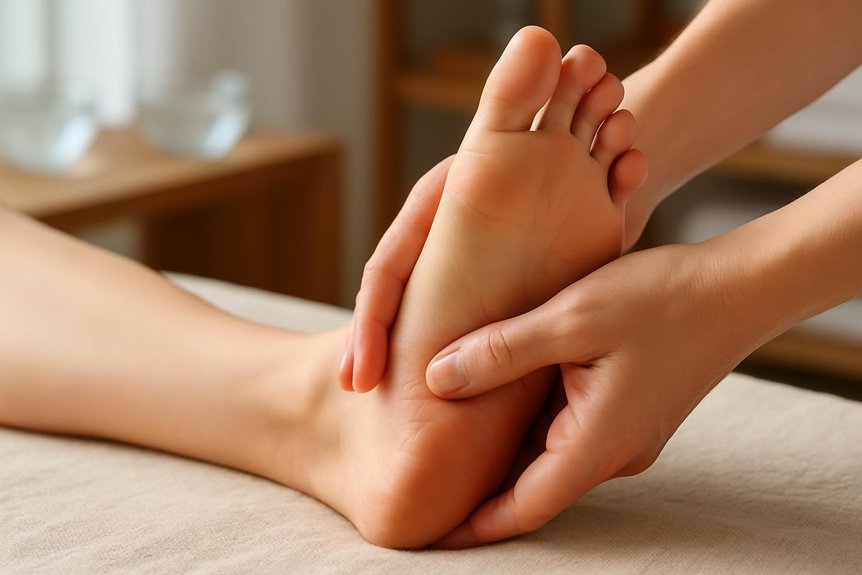
For safe stimulation of digestion-related zone therapy points, pressure should be gentle-to-moderate, applied gradually, and kept within a comfortable “good pressure” range rather than pain.
At Spa & Massage, therapists typically begin with slow warming strokes across the sole, then use thumb-walking to trace the stomach and bowel zones, pausing briefly on tender spots while keeping breathing steady and relaxed.
Pressure is reduced if the tissue feels guarded, and held for 3–5 seconds before easing off.
Work is usually performed in small circles or short passes, always moving with a calm rhythm to support comfort and trust.
Sessions finish with light sweeping strokes and a few ankle rotations to settle the nervous system and leave the body feeling held.
When Should You Avoid Zone Therapy for Digestion?
When, exactly, should digestion-focused zone therapy be avoided? At Spa & Massage, therapists advise postponing work on abdominal and bowel-related foot zones during fever, vomiting, acute diarrhoea, suspected food poisoning, or severe unexplained abdominal pain—symptoms needing medical assessment.
It should also be avoided over broken skin, infected blisters, fungal flare-ups, or fresh bruising on the feet, where pressure can aggravate tissue.
Clients with unmanaged diabetes-related neuropathy, severe peripheral vascular disease, or a history of blood clots should seek medical clearance, as sensation and circulation risks change how safely pressure can be applied.
Pregnancy, recent surgery, inflammatory bowel disease flare, or cancer treatment warrant prior clinician approval and adapted pressure choices.
Always stop if nausea, dizziness, or sharp pain appears.
What Happens in a Digestion Zone Therapy Session at Spa & Massage?
In practice, a digestion-focused zone therapy session at Spa & Massage begins with a brief consultation to screen for red flags, clarify digestive symptoms (such as bloating, constipation, reflux, or stress-related discomfort), and agree pressure preferences and contraindications.
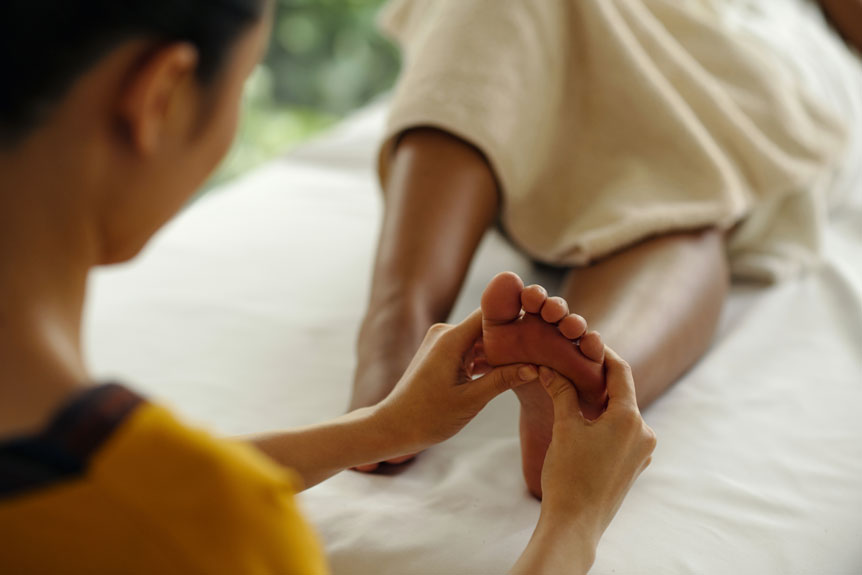
The client then settles in a calm room, fully clothed, with feet supported and warmed. A light, hypoallergenic balm is applied, followed by slow “thumb-walking” and finger rotations across mapped zones linked to the stomach, small and large intestine, liver, gallbladder, and diaphragm.
Pressure is graded, staying comfortably intense and never sharp; sensitive areas are eased with sustained holds and gentle circles. Breathing cues and a quiet pace support relaxation, which can reduce stress-driven gut tension.
Aftercare includes hydration, noting bowel changes, and booking follow-ups.
Conclusion
Zone therapy points for digestion may sound like a shortcut: press the “stomach” on the foot, and dinner behaves. Ironically, the most consistent outcome is less mystical—structured pressure, paced breathing, and a calmer nervous system that can make digestive symptoms feel more manageable. When delivered with comfortable, technique-specific thumb-walking and hand holds, clients often report reduced tension and bloating. It is not a cure, but it is a practical, low-risk adjunct when appropriate.