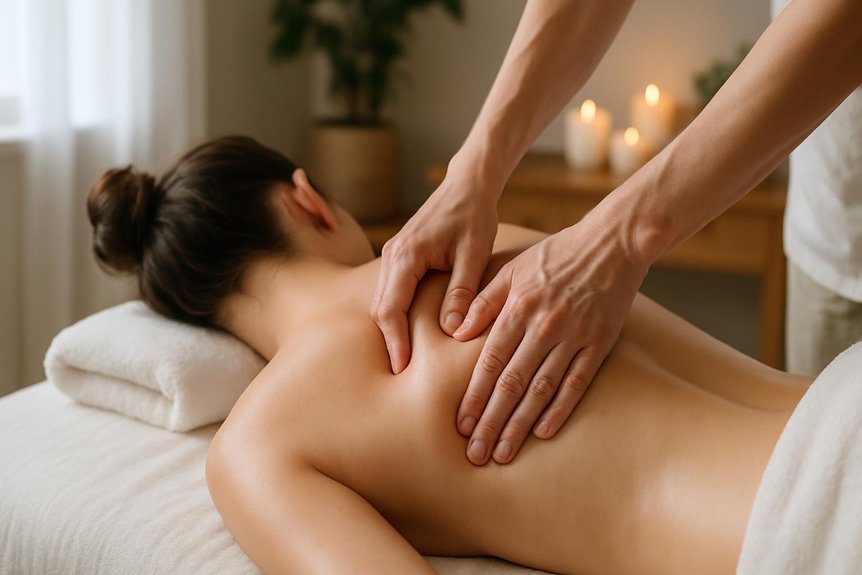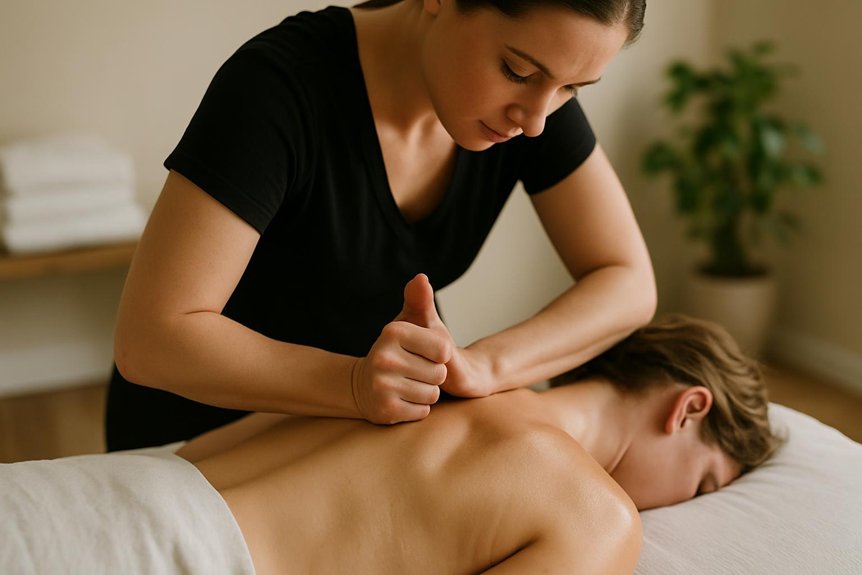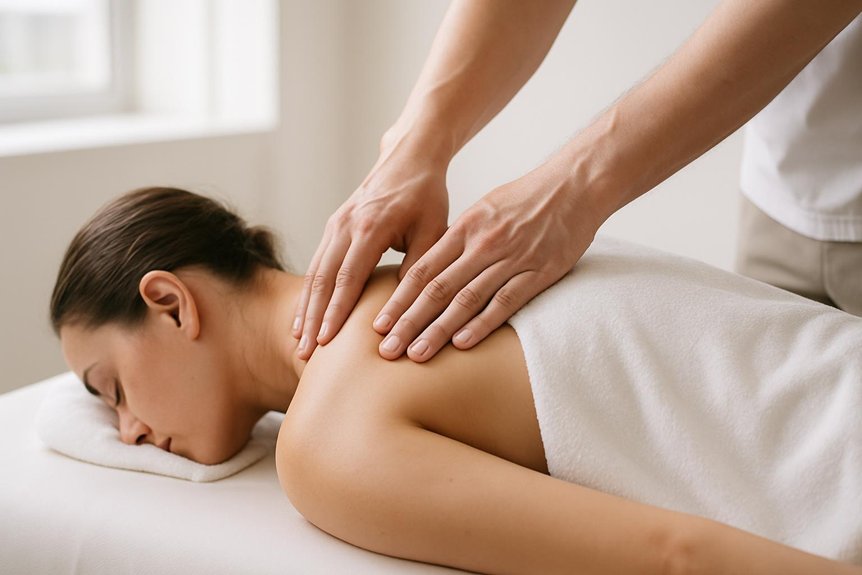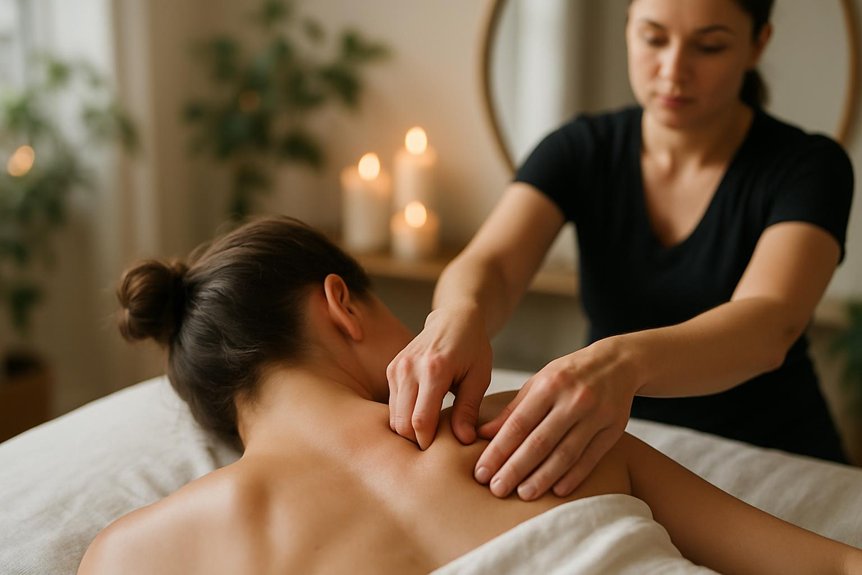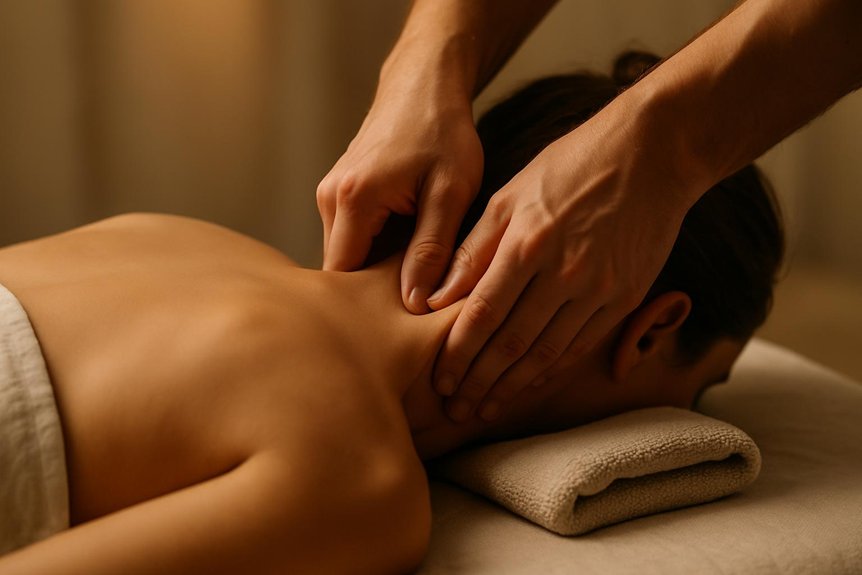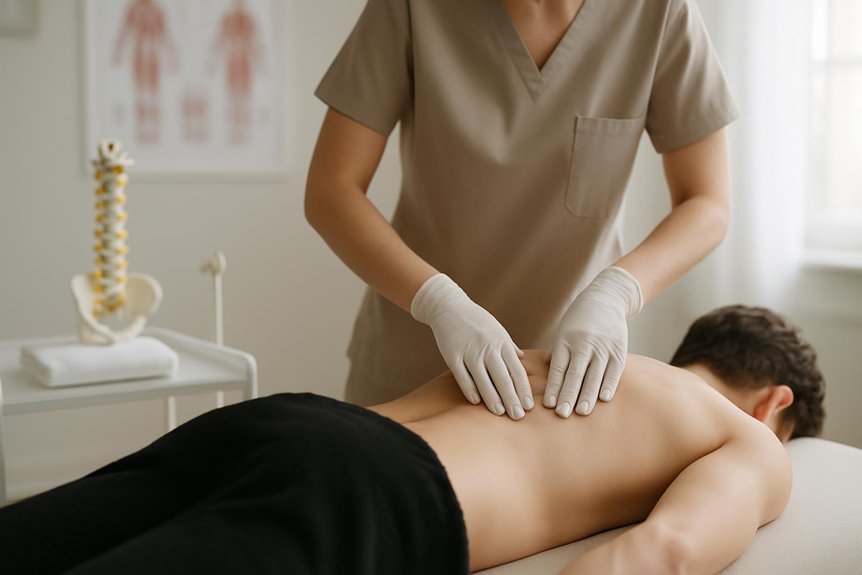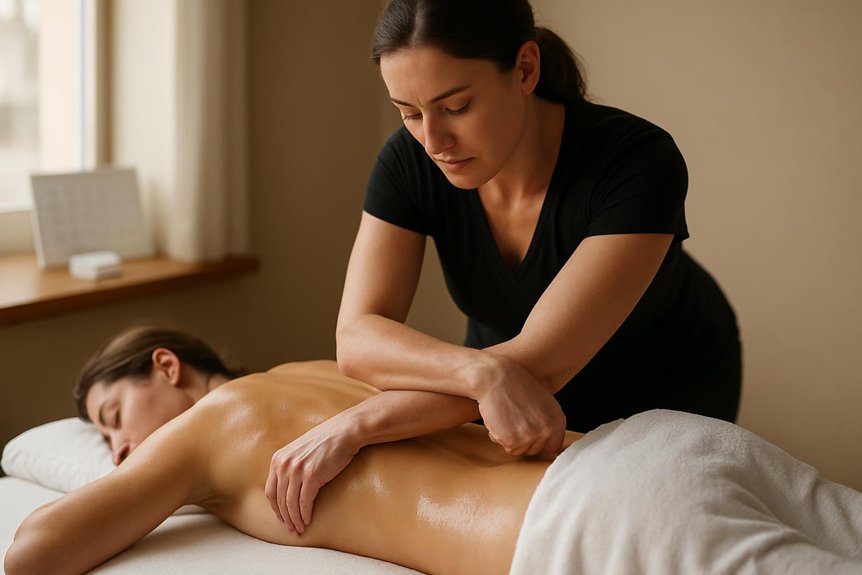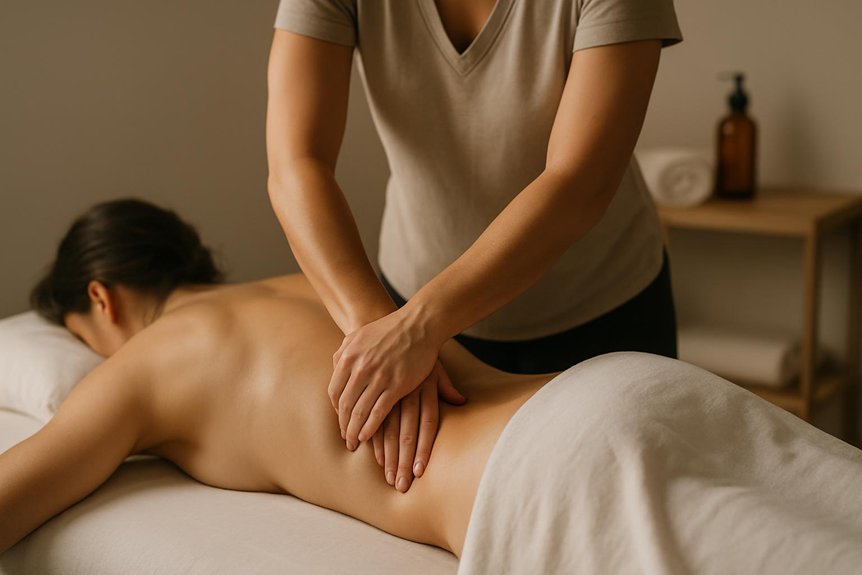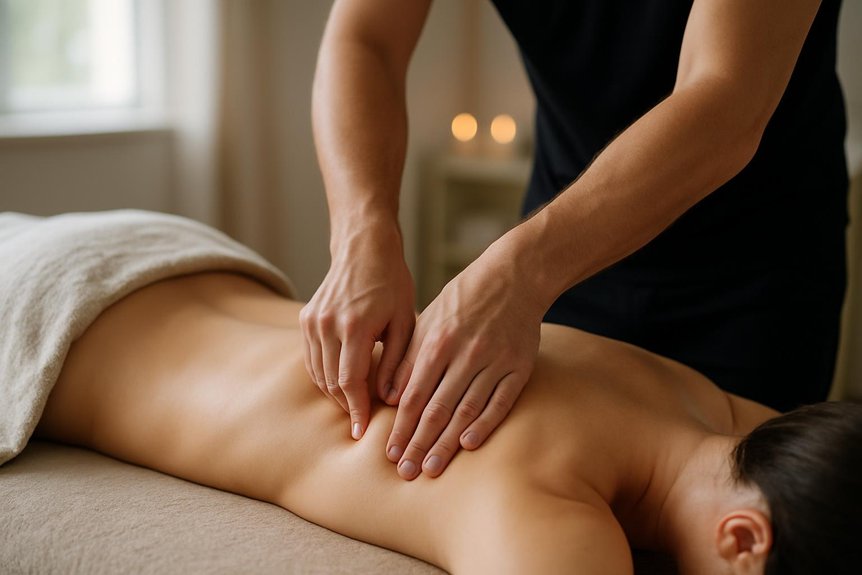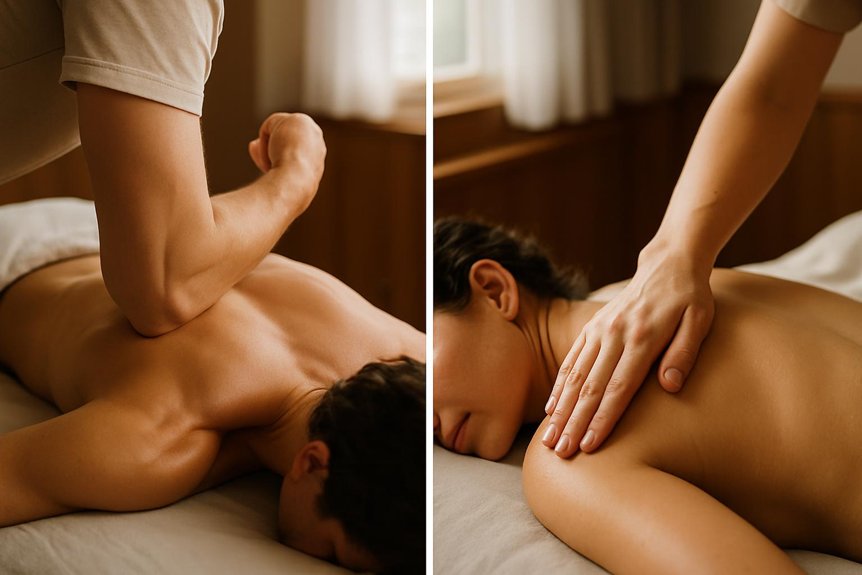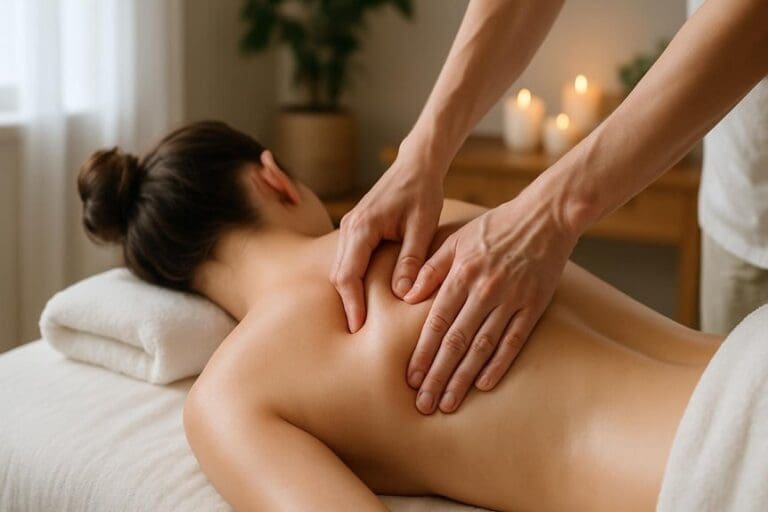
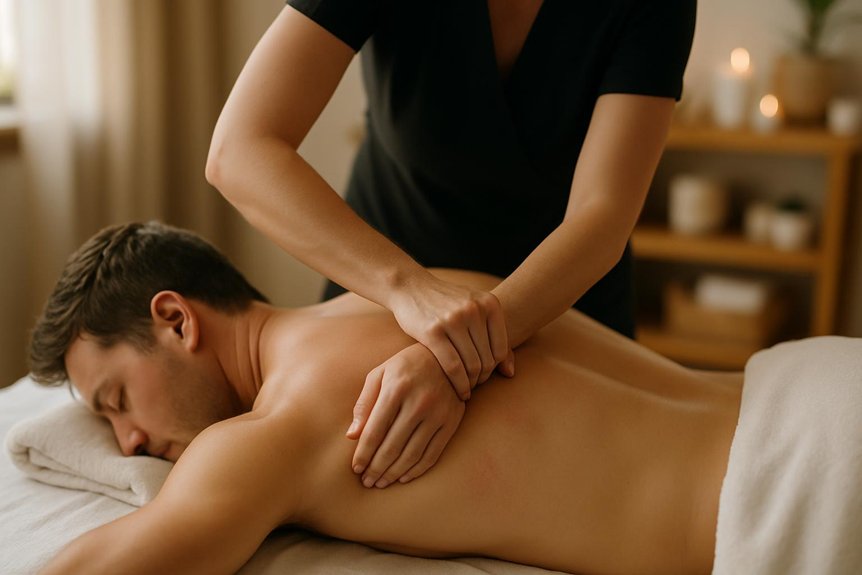
Intensive tissue massage can help tight shoulders by using slow, sustained pressure to reduce persistent tension and fascial restriction in key areas such as the upper trapezius and levator scapulae. Targeted compression and cross-fibre work may soften adhesions, improve local circulation, and decrease protective guarding, which can support smoother shoulder mobility. Pressure should feel like a tolerable “good ache,” not sharp or numbing pain. Further guidance on suitability, session planning, aftercare, and simple mobility drills follows.
Can Deep Tissue Help Tight Shoulders?
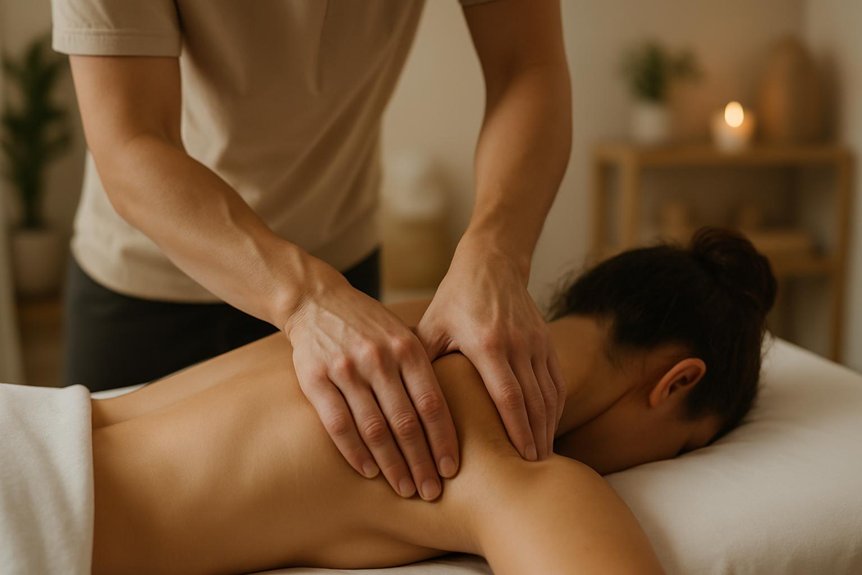
In many cases, deep tissue massage can help relieve tight shoulders by addressing the muscular and fascial restrictions that commonly build up in the upper trapezius, levator scapulae, and surrounding tissues. Slower, targeted pressure may reduce protective guarding, improve local circulation, and support freer shoulder and neck movement. Evidence-informed care typically combines firm work with attentive pacing so clients feel held and safe, not forced. Deep tissue work often uses slow, sustained pressure to reach deeper layers and help ease persistent tension patterns.
At Spa & Massage clinics across London, therapists assess tenderness, range, and comfort, then tailor depth to the client’s goals. Many clients notice a lighter, more open sensation after treatment, with benefits often improving through a short series. For best results, therapists may include gentle stretching, heat, and simple aftercare advice such as hydration and easy shoulder mobility work.
Why Do Shoulders Get Tight?
For many people, shoulder tightness develops when everyday load exceeds what the neck-and-shoulder muscles can comfortably tolerate.
Prolonged desk work, driving, and phone use often encourage a rounded posture, increasing demand on the upper trapezius and levator scapulae.
Stress can heighten protective muscle tone via the nervous system, so the shoulders subtly “brace” even at rest.
Strength imbalances—strong chest muscles with weaker mid-back stabilisers—may further pull the shoulders forward, reducing comfortable range of motion.
Previous injury, poor sleep positions, and reduced regular movement can also sensitise tissues and restrict glide between muscles and fascia.
At Spa & Massage, therapists frequently see these patterns in London clients and advise brief movement breaks and posture variation daily.
How Deep Tissue Loosens Tight Shoulders
Intensive tissue massage can help loosen tight shoulders by applying slow, sustained pressure to target deep muscle knots and adhesions that commonly restrict the upper back and shoulder girdle.
By reducing excessive muscle tone and improving tissue glide, this approach may support better shoulder mobility and more comfortable movement patterns.
At Spa & Massage clinics across London, therapists tailor pressure and technique to the client’s tolerance and goals to promote measurable ease of motion and lasting relief.
Targeting Deep Muscle Knots
Targeting stubborn shoulder knots often requires reaching beyond surface tension into the deeper layers of muscle and fascia where trigger points commonly form.
In tight shoulders, these knots often sit in the upper trapezius, levator scapulae, and the rotator cuff, referring discomfort into the neck, arm, or between the shoulder blades.
Intensive tissue massage uses slow, specific pressure and cross-fibre work to soften adhesions, improve local circulation, and reduce protective guarding, which can calm pain signalling.
At Spa & Massage clinics across London, therapists first palpate to locate tender bands, then apply graded pressure in close communication, staying within a “good ache” that feels safe and grounding.
Clients are encouraged to breathe steadily as the tissue yields and warmth returns.
Improving Shoulder Mobility
Beyond easing soreness, shoulder mobility often improves when deep tissue work restores normal glide between muscle, fascia, and the shoulder capsule.
By addressing adhesions in the upper trapezius, levator scapulae, pectoralis minor, and rotator cuff, movement can feel smoother and less “caught” during reaching or lifting. Therapists at Spa & Massage use slow, specific pressure and myofascial techniques to reduce protective guarding, helping the scapula and humeral head track more efficiently. This can support better range of motion without forcing painful stretches.
For many clients, the most noticeable change is easier overhead reach and a softer, more open chest and neck.
After sessions, gentle mobility drills and warm compresses are recommended to maintain tissue elasticity.
Is Deep Tissue or Sports Massage Better for Shoulders?
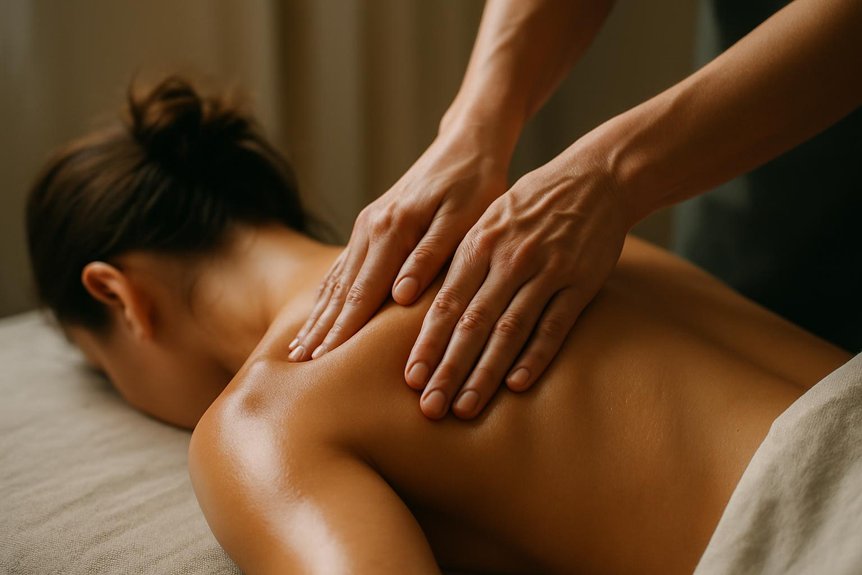
Choosing between deep tissue and sports massage for shoulder tension depends on the client’s goals—such as reducing persistent postural tightness versus supporting training load, recovery, or a specific strain.
Deep tissue typically applies slower, sustained pressure to address deeper layers and trigger points around the upper trapezius, levator scapulae, and rotator cuff region, while sports massage more often combines targeted soft-tissue work with mobility-focused techniques suited to performance demands.
At Spa & Massage, therapists assess symptoms, activity levels, and shoulder function to recommend the most appropriate approach, or a tailored blend, based on what is most likely to improve comfort and movement.
Treatment Goals And Fit
For tight shoulders, the better fit between deep tissue and sports massage depends on the client’s primary goal—pain relief from chronically held tension, or performance-focused recovery and movement.
Deep tissue is often best when the shoulder girdle feels constantly “held,” with persistent ache, stress-linked bracing, or desk-related overload; treatment aims to reduce protective muscle tone, ease tenderness, and support calmer breathing and sleep.
Sports massage tends to suit clients training regularly or returning to activity, where the goal is quicker recovery, improved shoulder function, and confidence in movement between sessions.
At Spa & Massage clinics across London, therapists clarify goals, screen symptoms, and tailor pressure and pacing so the work feels both effective and safely close.
Many clients blend both approaches over a plan.
Technique Differences For Shoulders
In clinical practice, the key technique difference is that intensive tissue massage targets sustained, deeper-layer shoulder tension with slow, specific pressure, while sports massage uses a more varied toolkit—including faster strokes, compressions, and movement-based work—to restore function under load.
Deep tissue work commonly focuses on the upper trapezius, levator scapulae, and rotator cuff attachments, using sustained holds and friction to influence restricted fascia and trigger points, often felt as “good pain” that stays tolerable.
Sports massage more often blends flushing strokes with targeted releases, then integrates range-of-motion and muscle energy techniques to coordinate scapular control and reduce protective guarding.
At Spa & Massage clinics, therapists track tissue response breath-by-breath, adjust depth continuously, and use minimal, skin-friendly oil to maintain precise grip.
When To Choose Which
When is intensive tissue massage the better option for tight shoulders, and when does sports massage make more sense?
Deep tissue is often chosen when discomfort feels deep, persistent, or “stuck,” with dense knots in the upper trapezius, levator scapulae, or between the shoulder blades. At Spa & Massage clinics across London, therapists use slow, sustained pressure to soften adhesions and restore comfortable range, ideal for desk-related tension and long-standing restriction.
Sports massage tends to suit shoulders stressed by training, frequent lifting, or repetitive overhead work. It combines targeted compression, assisted stretching, and movement-based techniques to improve tissue readiness, circulation, and recovery.
Many clients prefer sports massage pre‑event, during heavy training blocks, or when soreness flares after workouts. A consultation guides the safest, most soothing choice.
When Deep Tissue Isn’t the Right Choice
Despite its effectiveness for chronic shoulder tightness, intensive tissue massage is not always the safest or most appropriate option, particularly where pain is acute, inflammation is present, or underlying medical factors may be contributing to symptoms. In these situations, firm pressure can aggravate irritated tissues and delay recovery.
It may be unsuitable with recent injury, suspected rotator cuff tear, nerve symptoms (numbness, tingling, radiating pain), infection, fever, unexplained swelling, bruising, blood-clot risk, or while taking anticoagulants. Pregnancy, osteoporosis, and some autoimmune or vascular conditions also require modified care.
At Spa & Massage, therapists prioritise comfort, consent, and pacing; they may recommend gentler options such as aromatherapy, pregnancy massage, or targeted sports techniques, and advise medical assessment when symptoms are atypical.
How Many Deep Tissue Sessions for Tight Shoulders?
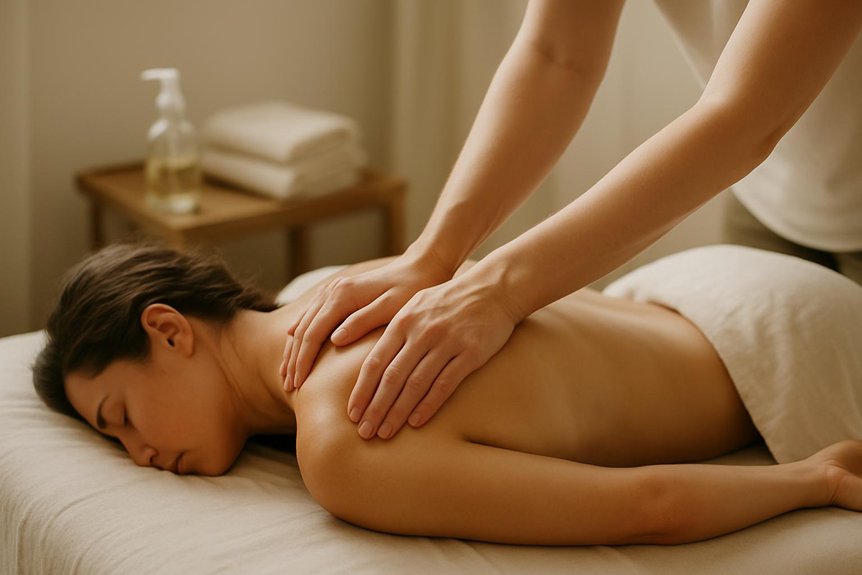
For most clients, meaningful and lasting shoulder release tends to require a short course of deep tissue sessions rather than a single treatment.
At Spa & Massage clinics across London, therapists typically suggest 3–6 sessions to address long‑standing tension, spaced weekly or fortnightly to allow tissue adaptation and recovery.
Newer, mild tightness may settle in 1–3 visits, while desk-bound patterns or stress-related guarding often need a steadier plan.
Progress is usually judged by reduced pain, easier range of motion, and improved posture between appointments, not just immediate looseness.
After the initial course, maintenance every 4–8 weeks helps prevent recurrence.
Each plan is adjusted after assessment and ongoing feedback, keeping the work effective, respectful, and personally attuned.
What Does a Deep Tissue Shoulder Massage Feel Like?
How does a deep tissue shoulder massage actually feel in practice? Most clients notice slow, deliberate pressure that sinks through superficial layers to address stubborn knots around the upper trapezius, levator scapulae, and rotator cuff.
Sensations can range from “good pain” to intense tenderness, but it should remain tolerable and breathable; sharp, shooting, or numbing pain signals that pressure should be reduced.
In Spa & Massage clinics, therapists frequently warm tissues with lighter strokes, then use forearms, thumbs, and sustained compression to encourage a gradual release.
Clients often feel heat, spreading ache, or referred sensations into the neck or arm as trigger points ease. Afterwards, shoulders may feel looser, heavier, and calmer, with mild post-treatment soreness for 24–48 hours.
Stretches to Keep Shoulders Loose Between Sessions
After a deep tissue shoulder massage has eased stubborn knots and restored movement, day-to-day habits will largely determine how long that relief lasts.
Spa & Massage therapists suggest brief, gentle stretches that respect comfort and breathing: doorway pec stretch (forearm on frame, turn chest away) for 20–30 seconds each side; upper‑trapezius stretch (ear toward shoulder, opposite hand anchored) for 20 seconds; levator scapulae stretch (look to armpit, light diagonal pull) for 20 seconds.
Add scapular retractions: draw shoulder blades “into back pockets” for 10 slow reps to reinforce postural support.
A seated thoracic extension over a chair back can open the upper spine for 5 breaths.
Stretches should feel intimate, easing—never sharp.
Aftercare After a Deep Tissue Shoulder Massage
In the hours following a deep tissue shoulder massage, simple, evidence-informed aftercare helps sustain improved mobility and reduces the likelihood of post-treatment soreness.
At Spa & Massage clinics, therapists advise steady hydration, a warm shower, and gentle shoulder circles rather than intense exercise for 24 hours to support circulation and tissue recovery. A light walk can help.
If tenderness appears, a cool compress for 10–15 minutes may calm sensitivity; heat is often better after the first day for lingering stiffness.
Sleep with the neck supported and avoid prolonged hunching at screens. Clients can add slow diaphragmatic breathing to soften guarding and maintain a sense of calm connection in the upper chest and shoulders.
Persistent sharp pain warrants clinical review.
Conclusion
It can be a useful option for tight shoulders when tension sits in deeper muscle and fascia, supporting circulation, easing discomfort, and restoring smoother range of motion. Yet outcomes depend on the cause—posture, workload, stress, or injury—and on matching the pressure and technique to the client’s needs. What would it feel like to finally let the shoulders drop away from the ears? Combined with aftercare, mobility work, and assessment when needed, results are more sustainable.