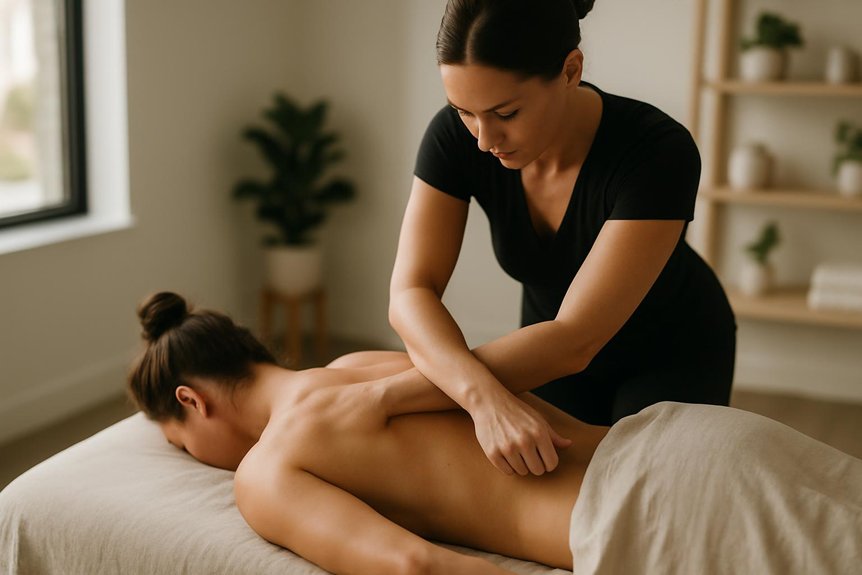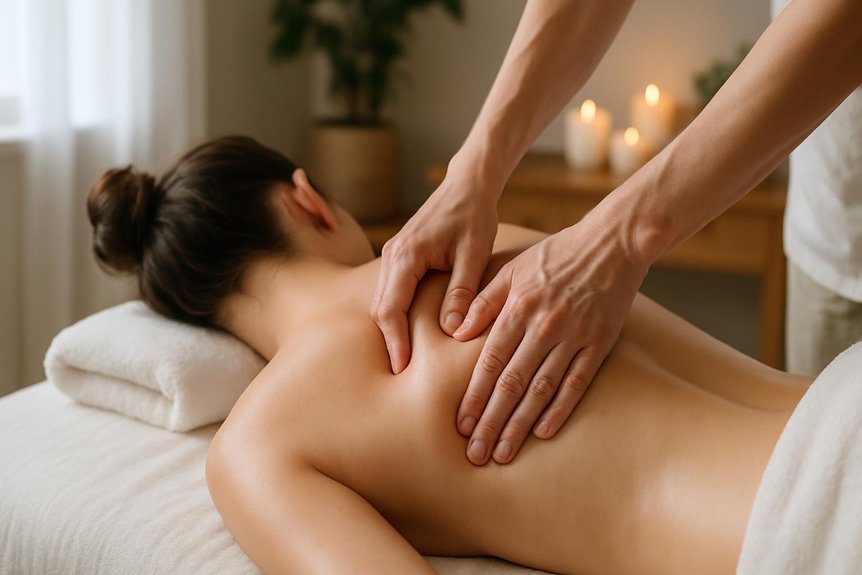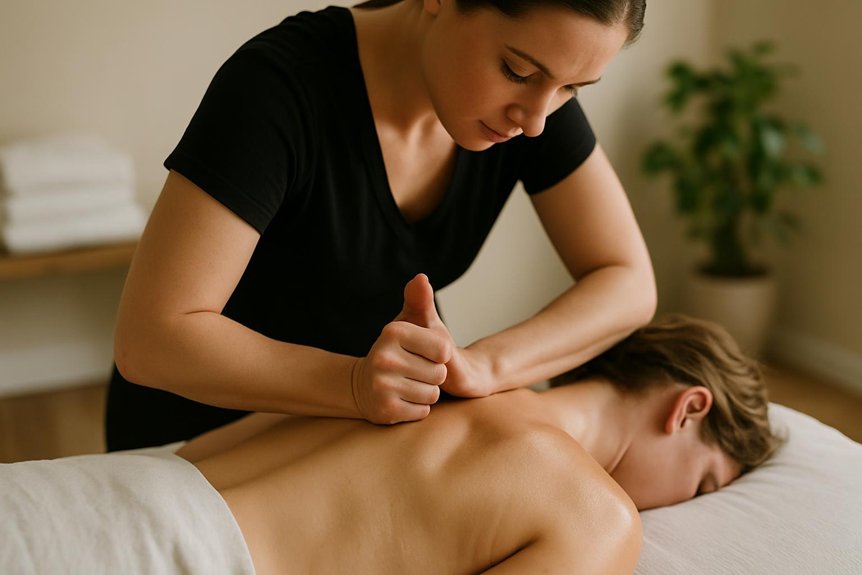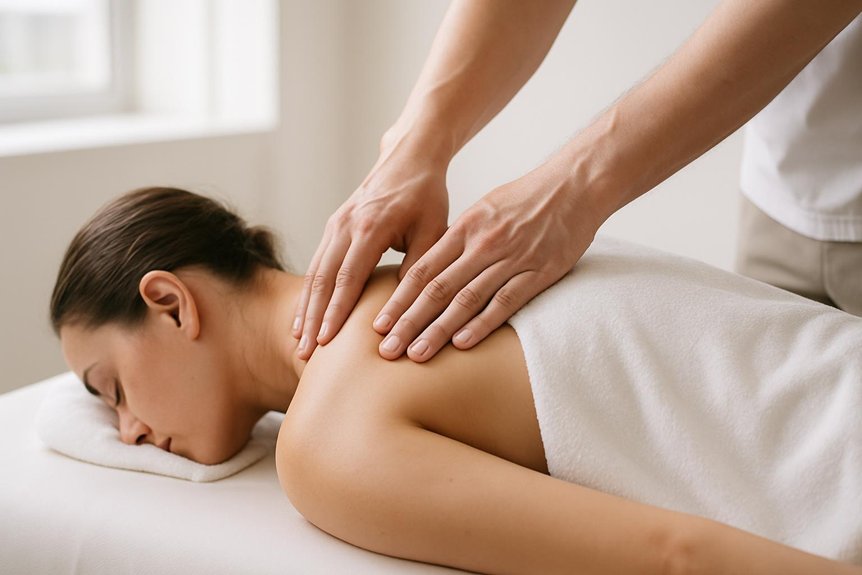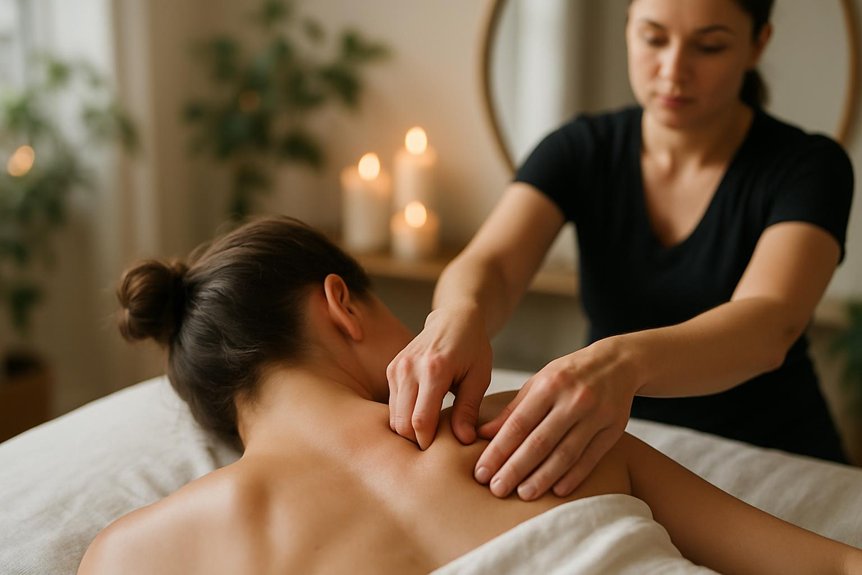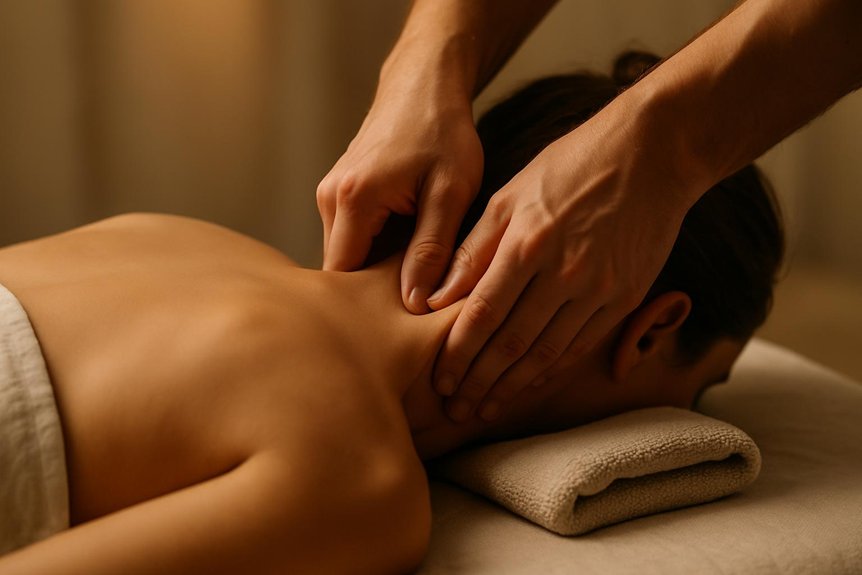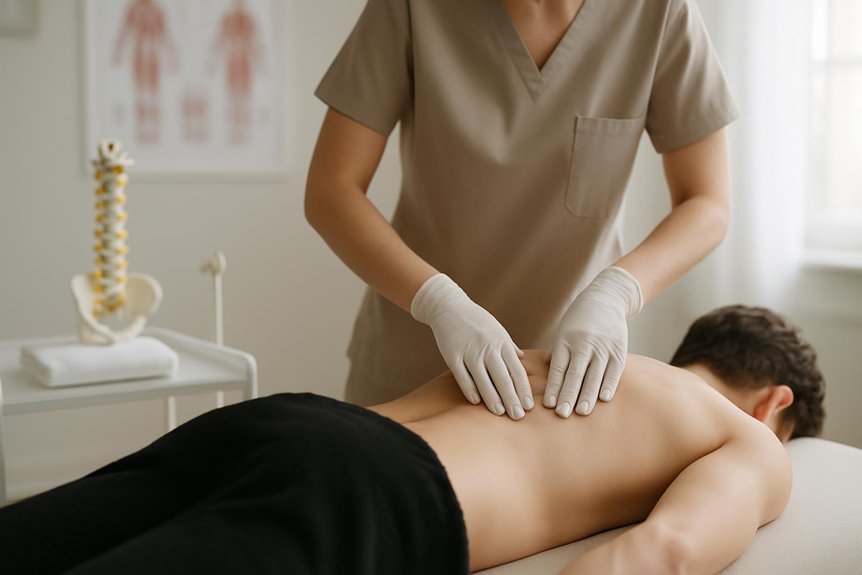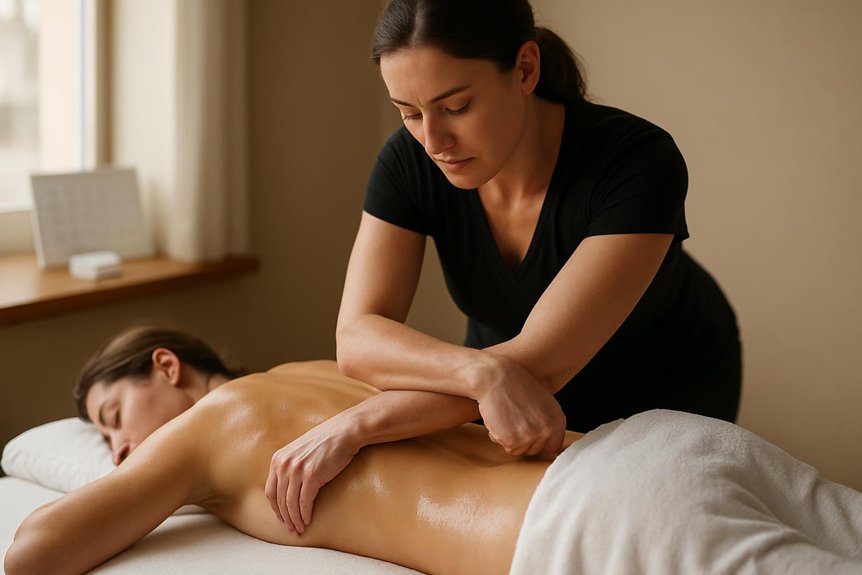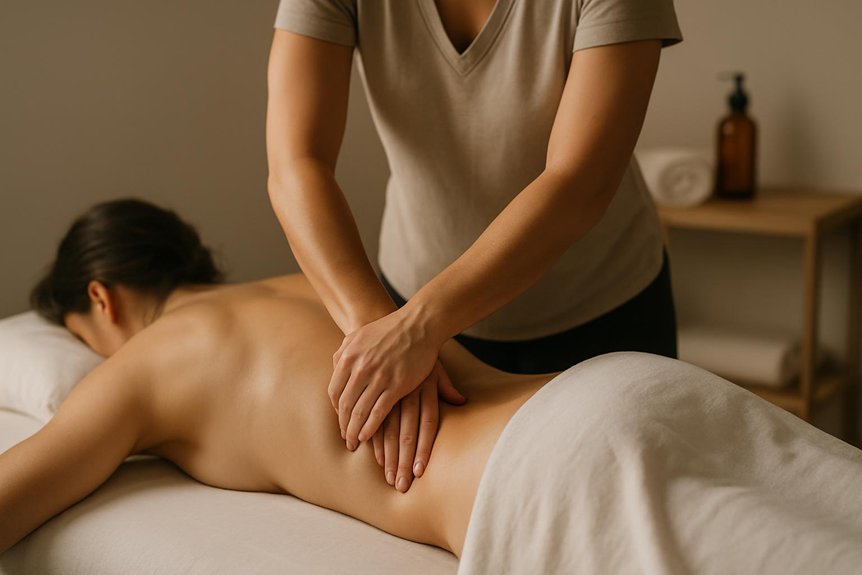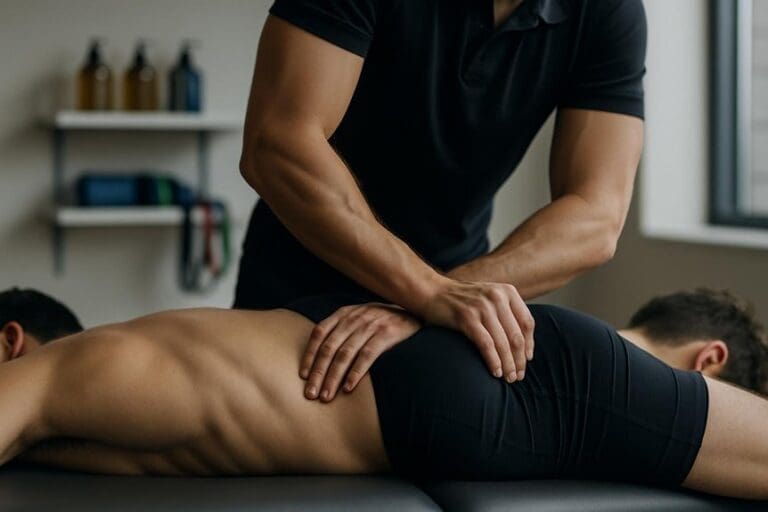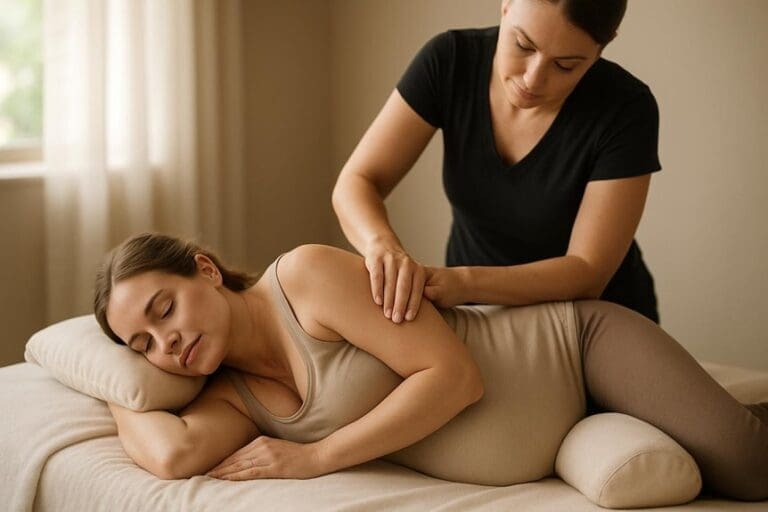
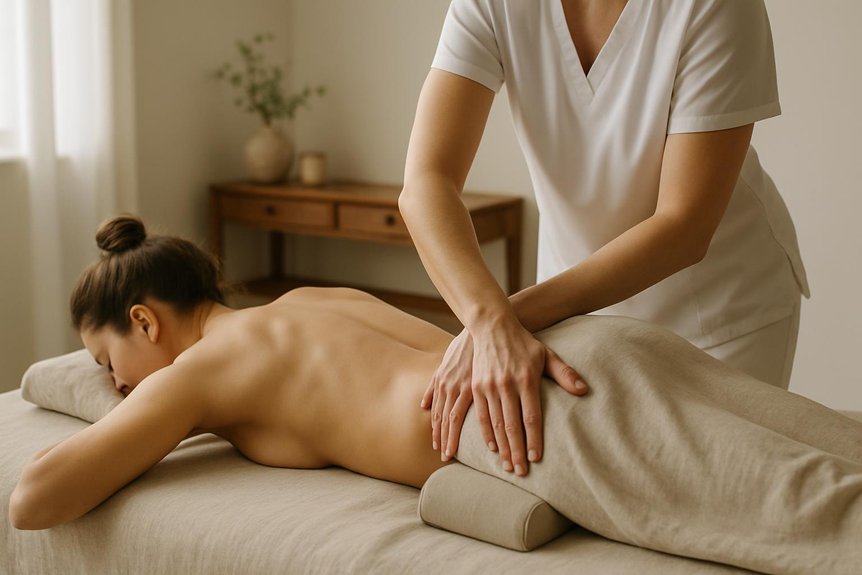
Intensive tissue massage can help tight hips by reducing myofascial stiffness and protective neuromuscular guarding, improving comfort and usable range of motion. It is most relevant when prolonged sitting, repetitive sport loading, or stress elevates baseline tone in the iliopsoas, rectus femoris, gluteals, deep external rotators, TFL, and adductors. Sessions typically use slow stripping, trigger-point holds, cross-fibre work, and pin-and-stretch with pressure guided by breathing and feedback. Further details cover aftercare, maintenance, and booking indicators.
Can It Loosen Tight Hips?
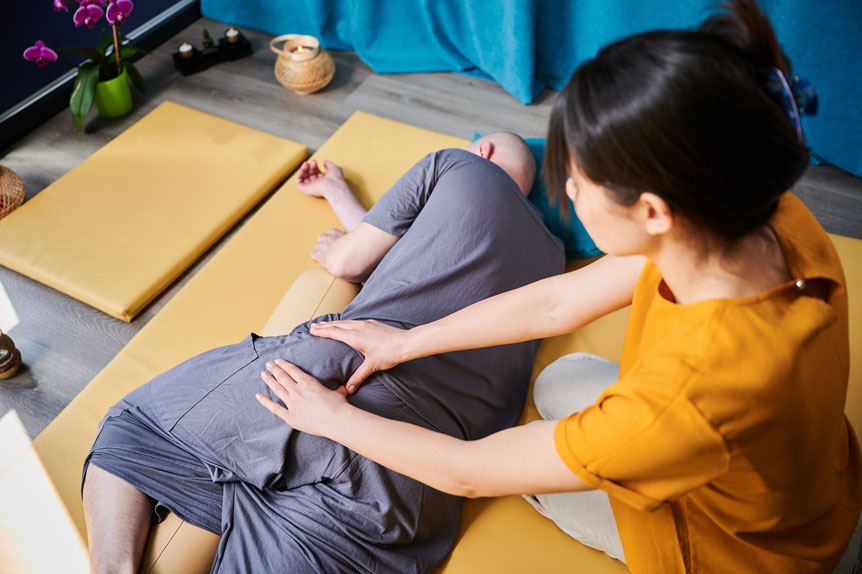
In many cases, intensive tissue massage can help loosen tight hips by reducing myofascial restriction and lowering resting muscle tone in key structures around the hip joint. Targeted work to gluteus medius/minimus, piriformis, TFL, adductors, and hip flexors may improve tissue glide and hip range of motion, while calming protective guarding. This approach draws on deep tissue massage techniques that use slower, more specific pressure to address deeper layers of muscle and fascia.
At Spa & Massage clinics, therapists typically combine slow, sustained pressure, cross-fibre friction, and myofascial release, titrating depth to client breath and feedback to remain therapeutic and comfortable. Treatment often includes compressions and gentle pin-and-stretch to restore length without provoking soreness. Brief post-treatment reassessment of flexion, internal rotation, and abduction guides dosing. Many clients report warmer, freer movement and easier closeness during daily and intimate positions.
What Causes Tight Hips (Desk Work, Sport, Stress)?
Sitting for prolonged periods, repetitive sport loading, and sustained psychological stress are among the most common drivers of perceived “tight hips,” largely through adaptive changes in tissue length-tension behaviour, myofascial stiffness, and protective neuromuscular guarding.
With desk work, sustained hip flexion and reduced gluteal activation can increase anterior hip compression and alter pelvic control, often felt as deep, close-set restriction during walking or standing.
With sport, repeated accelerations, kicking, or heavy squatting can create local tissue irritability and heightened tone, especially when recovery, sleep, or mobility exposure is limited.
Under stress, sympathetic arousal and shallow breathing can raise baseline muscle activity and pain sensitivity, amplifying tightness without frank shortening.
At Spa & Massage clinics, therapists screen movement and load history to identify these patterns.
Which Hip Muscles Does Deep Tissue Target: and How?
From a tissue-specific perspective, intensive tissue massage for tight hips is typically directed at the hip flexors (iliopsoas and rectus femoris), adductors, gluteal complex (gluteus maximus/medius/minimus), deep external rotators (piriformis, obturators, gemelli), and the tensor fasciae latae/iliotibial tract interface, using slow, high-load strokes to reduce myofascial stiffness and neuromuscular guarding.
In Spa & Massage clinics, therapists apply sustained stripping and cross-fibre friction along the iliopsoas pathway and proximal adductors, then decompress the gluteal fascia with forearm pressure and focused trigger-point holds.
Posterior hip rotators are approached with small, deliberate pressure angles to improve glide around the greater trochanter.
TFL/ITB work emphasises lateral hip contact and fascial shear rather than aggressive band “rolling,” supporting comfortable range and smoother hip mechanics.
What to Expect From Deep Tissue for Tight Hips
At Spa & Massage, a deep tissue session for tight hips typically begins with an initial assessment of symptoms, movement limits, and relevant health history to set clear, measurable goals.
The therapist then applies targeted techniques—such as slow fascial strokes, sustained compression, and trigger point work—while calibrating pressure to tolerance and tissue response to support improved range of motion and reduced pain.
Aftercare is provided to consolidate results, with guidance that may include hydration, heat or gentle mobility work, and short-term activity modifications based on the client’s presentation.
Initial Assessment And Goals
Before any deep tissue work begins, a structured assessment is used to identify the specific drivers of hip tightness and set measurable treatment goals.
At Spa & Massage clinics, therapists take a brief health history, screen for contraindications, and clarify the client’s comfort boundaries and preferred level of closeness during treatment. Postural observation and movement checks (hip flexion/extension, rotation, gait, and pelvic control) help distinguish myofascial restriction from joint irritability or load-related sensitivity.
Palpation then maps tone, tenderness, and referral patterns across gluteals, hip flexors, adductors, and lateral hip tissues.
Goals are agreed in objective terms—range of motion targets, pain ratings, sitting tolerance, or training capacity—plus session-to-session feedback markers. This plan guides focus without overstepping limits.
Techniques, Pressure, And Aftercare
With the assessment complete, deep tissue work for tight hips typically combines slow, sustained myofascial strokes with targeted trigger-point compression and graded stretching to reduce excessive tone and improve hip excursion without provoking joint irritation.
At Spa & Massage clinics, therapists modulate pressure from firm to deeply specific, staying within a “strong but safe” sensation that allows relaxed breathing and softening rather than guarding.
Common targets include iliopsoas-adjacent fascial planes, TFL/ITB, gluteus medius/minimus, deep rotators, and adductors, with careful draping and clear consent to preserve privacy while permitting close, accurate contact.
Aftercare emphasises hydration, short walks, and heat if soothing; intense exercise is deferred 24 hours.
Gentle hip flexor and piriformis stretches, plus self-massage with a ball, sustain results and comfort.
5 Daily Stretches to Keep Hips Loose After Massage
Often, tight hips return within days of a deep tissue session unless range-of-motion work is repeated daily to reinforce the mobility gains and reduce protective muscle guarding.
Spa & Massage therapists advise brief, pain-free mobility twice daily: 60–90 seconds per side, slow nasal breathing, gentle exhale into range.
Prioritise kneeling hip-flexor stretch with posterior pelvic tilt to bias iliopsoas; keep ribs stacked.
Add supine figure‑4 glute stretch to reduce piriformis tone; maintain neutral spine.
Use 90/90 hip rotations, 6–10 controlled reps, to retrain internal/external rotation.
Finish with adductor rock-backs, hips back, spine long, to unload groin tension.
Stop if sharp pain, numbness, or pinching occurs in the front hip.
When to Book a Deep Tissue Hip Massage in London
In clinical terms, booking a deep tissue hip massage in London is most appropriate when hip tightness persists for more than 7–10 days despite consistent mobility work, or when it measurably limits function—such as reduced hip extension during gait, painful restriction in squatting, or compensatory low‑back load during sitting and training.
It is also indicated after sudden increases in running, lifting, or desk time, or when palpation reveals tender, ropey tone through gluteus medius/minimus, TFL/ITB, adductors, or iliopsoas.
At Spa & Massage clinics across London, therapists assess range, symptom behaviour, and referral patterns, then apply slow, sinking strokes, friction, and targeted trigger-point compression to invite release without overwhelming the nervous system.
Booking is deferred with acute swelling, fever, suspected fracture, or unexplained night pain.
Conclusion
Intensive tissue massage may reduce perceived hip tightness by altering muscle tone and improving glide between fascial layers around the pelvis. Yet the decisive change often appears later: improved hip extension, easier squatting, less lumbar compensation. Results depend on accurate targeting of iliopsoas, TFL, gluteals, adductors, and rotators, plus post‑session loading through mobility and strengthening. Soreness can occur; acute injury or systemic risk requires caution. The question is not whether it works—but what follows.