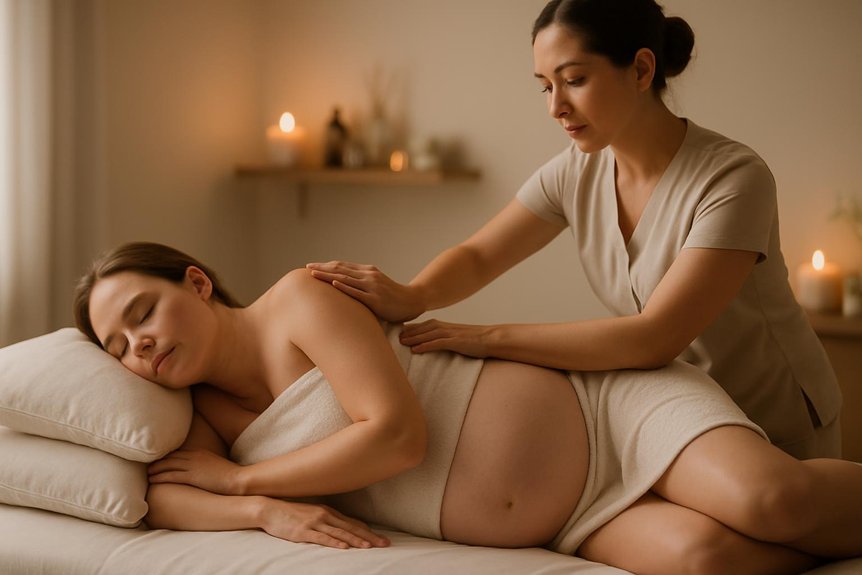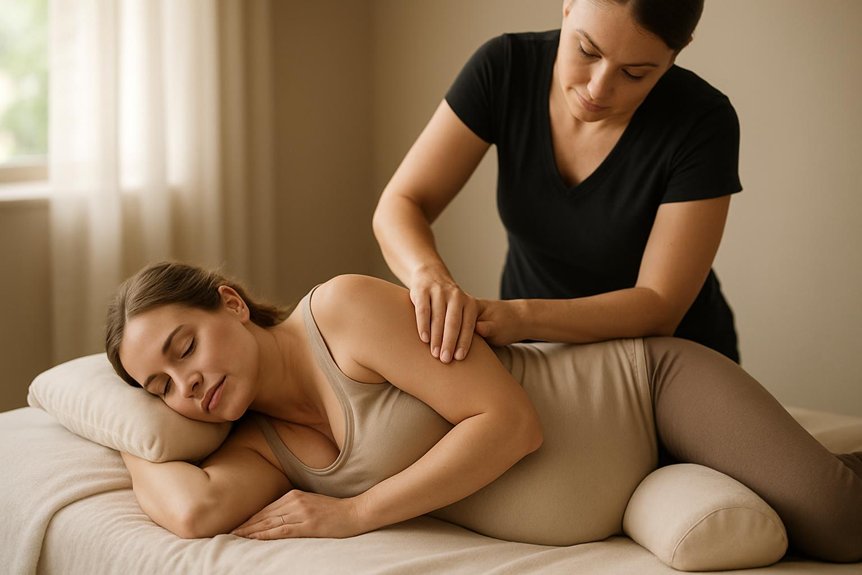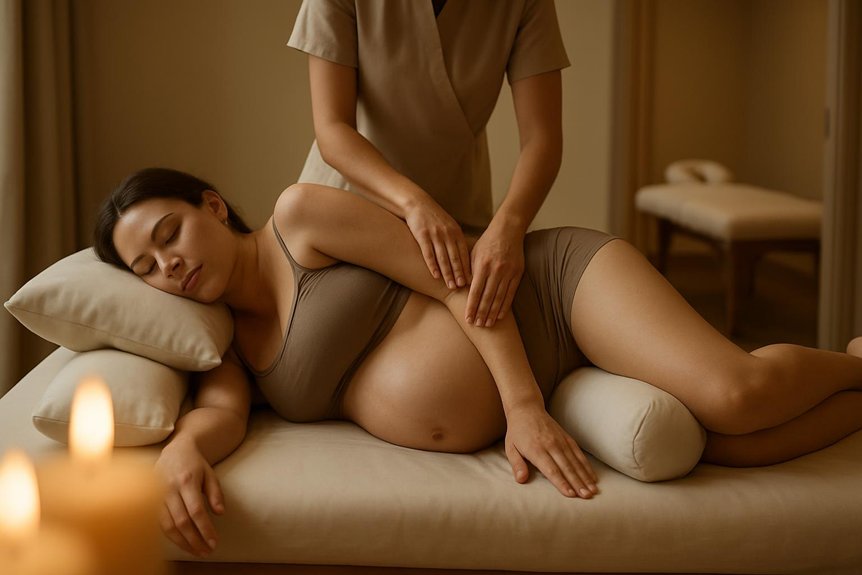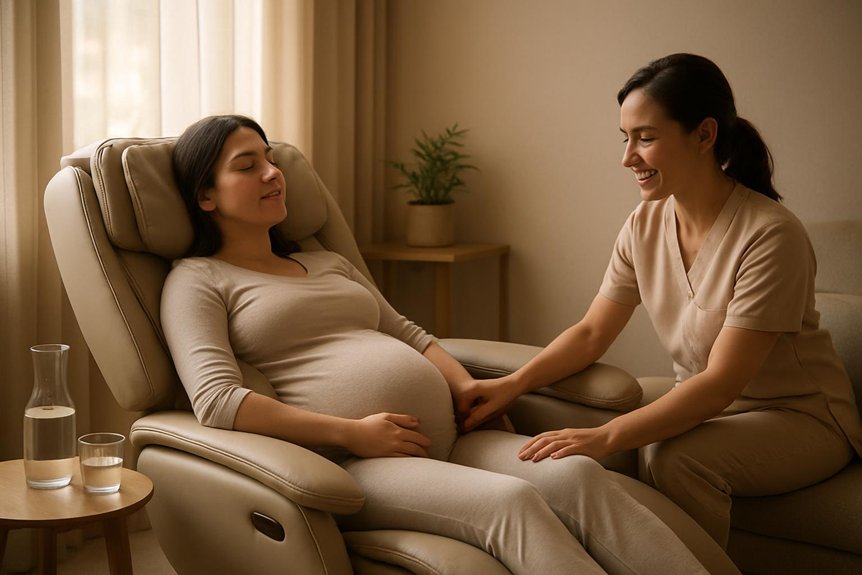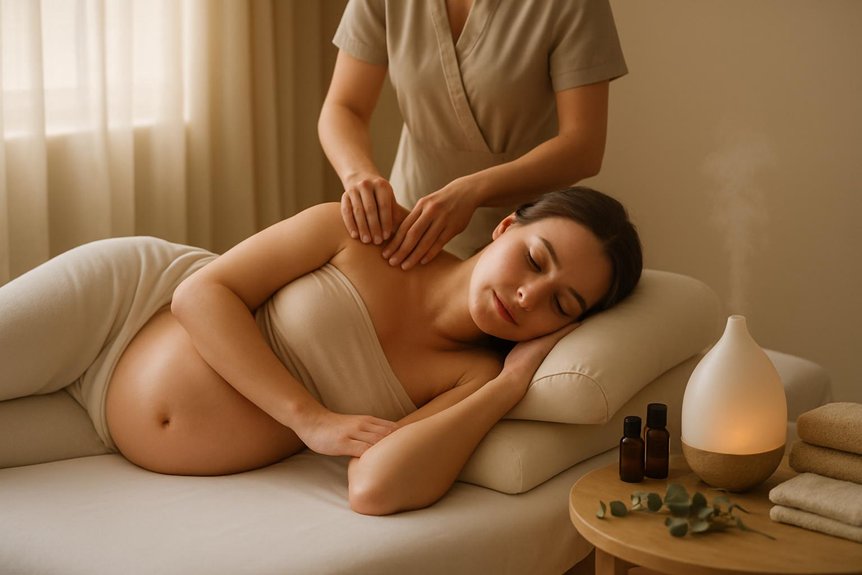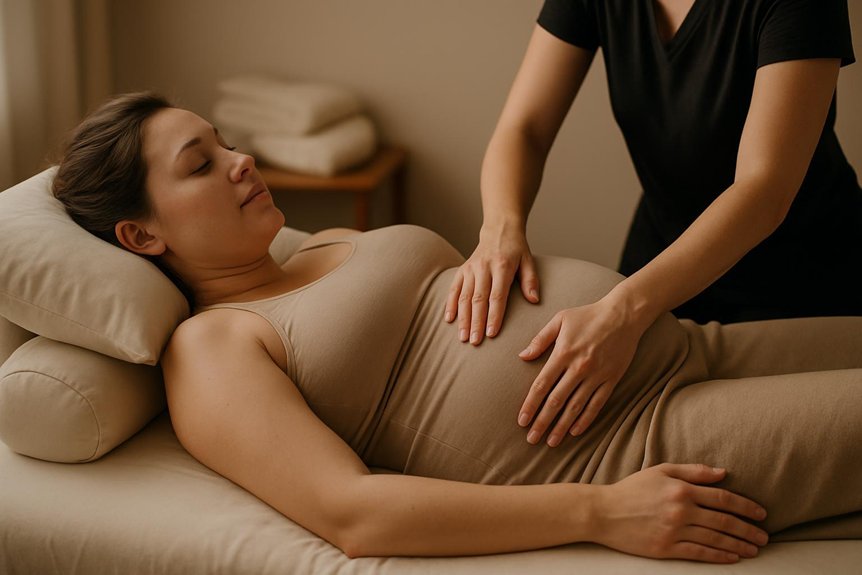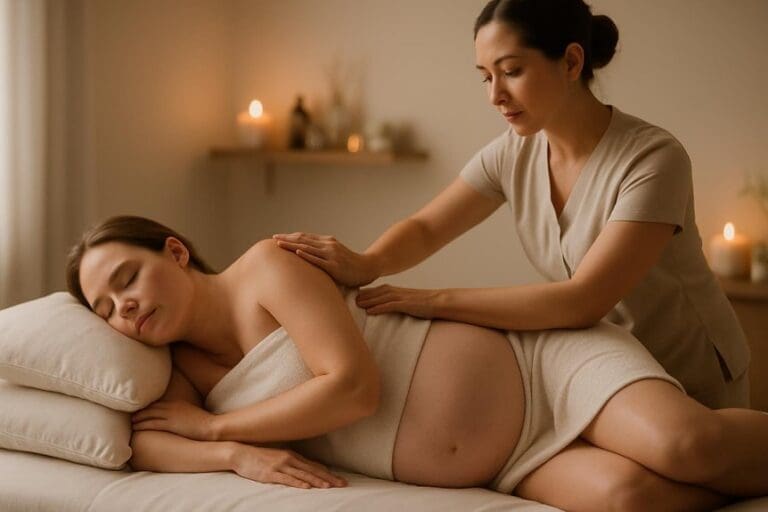
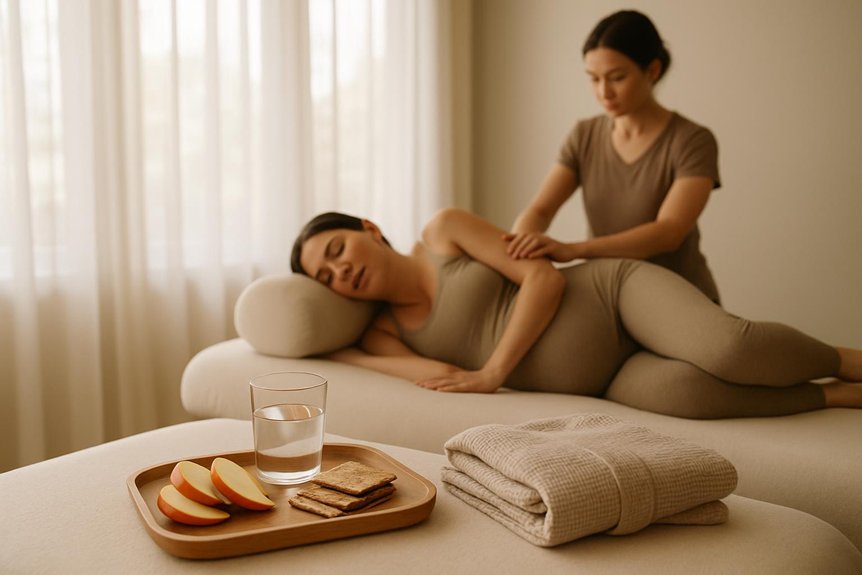
A small, familiar snack about 60–90 minutes before a prenatal massage is usually most comfortable, while a larger meal may sit better 2–3 hours beforehand for those with reflux or bloating. Heavy meals right before treatment can worsen nausea, heartburn, gas, or lightheadedness in side-lying positions. Balanced carbohydrate-and-protein options and steady hydration in small sips tend to be best. Key food choices, timing tips, and warning signs are covered next.
Should You Eat Before a Prenatal Massage?
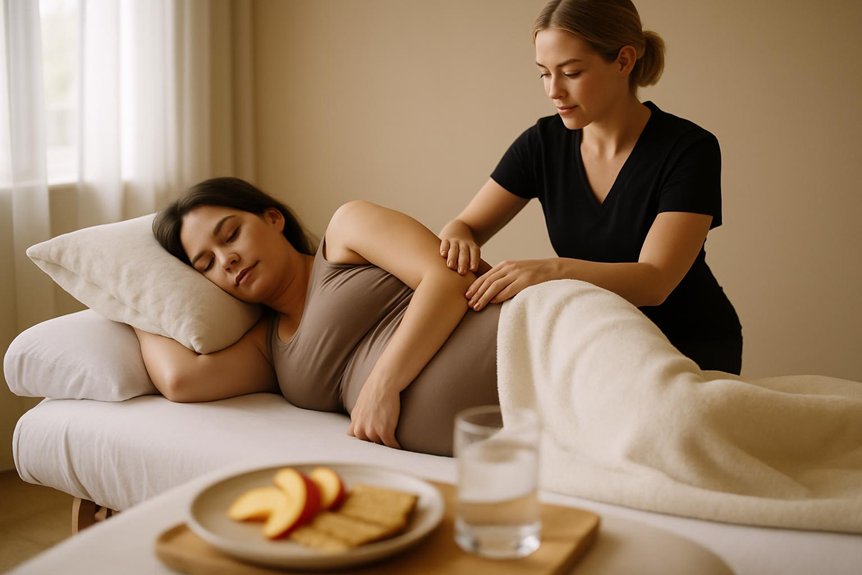
As a general rule, a full meal immediately before a prenatal massage is best avoided.
Pregnancy shifts digestion and blood flow; when combined with lying in supported side-lying positions, a heavy stomach can increase nausea, reflux, bloating, or lightheadedness. A comfortable body is more likely to soften into touch, helping relaxation and pain relief feel safe and intimate.
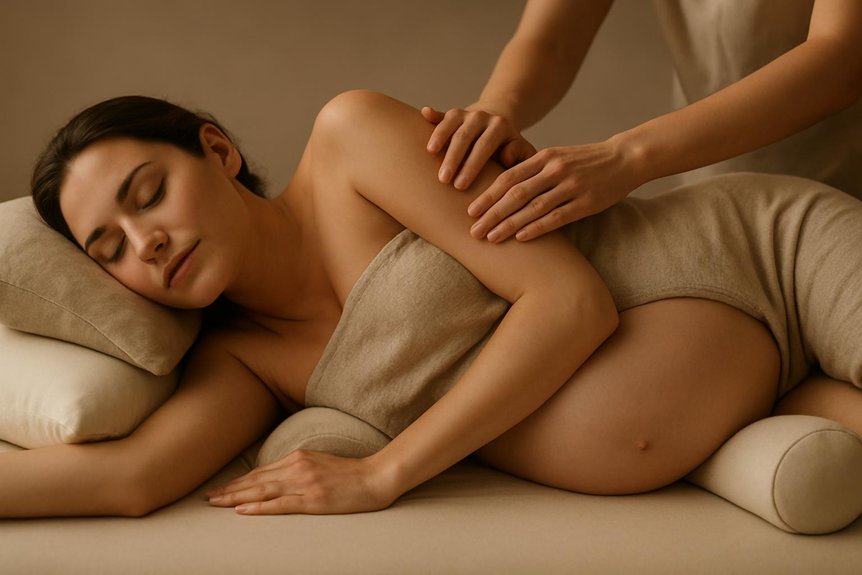
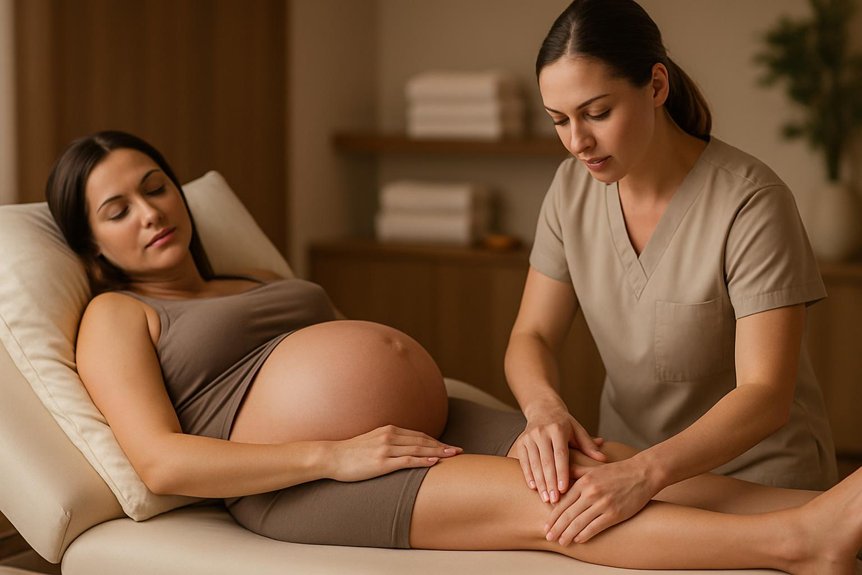
Prenatal massage can support comfort during pregnancy by easing tension and promoting relaxation, which are key benefits of pregnancy massage for many expecting mothers.
At Spa & Massage clinics across London, therapists encourage clients to arrive neither overly hungry nor uncomfortably full, and to mention heartburn, gestational diabetes, or dizziness.
Hydration is also important, since dehydration can worsen cramps and headaches.
If there are any concerns—reduced foetal movement, bleeding, fever, pre-eclampsia symptoms, or severe swelling—massage should be delayed and medical advice sought first.
When Should You Eat Before a Prenatal Massage?
For most people, the most comfortable timing is a light snack about 60–90 minutes before a prenatal massage, or a small meal around 2–3 hours beforehand.
This window helps reduce nausea, heartburn, and dizziness while avoiding the heavy, overly full feeling that can make side-lying positioning less pleasant.
People who experience reflux or frequent bloating in pregnancy may benefit from closer to the 2–3 hour range.
Those prone to low blood sugar may feel steadier with a small snack nearer the 60–90 minute mark.
Hydration is best addressed steadily through the day rather than right before the appointment to limit bathroom breaks.
At Spa & Massage London clinics, therapists can adjust bolstering for comfort if timing was imperfect.
What Should You Eat Before a Prenatal Massage?
In the hour or two before a prenatal massage, the most suitable choice is typically a small, bland snack or light meal that supports stable blood sugar without triggering reflux or nausea.
Options may include yogurt with oats, a banana with nut butter, wholegrain toast, a small bowl of porridge, or crackers with cheese. A balanced mix of carbohydrate and protein can reduce light‑headedness when turning on the table and help the body settle into calm, comfortable touch.
Hydration matters: sipping water or an electrolyte drink in small amounts is often better tolerated than large volumes at once.
At Spa & Massage clinics across London, therapists encourage clients to choose familiar foods and arrive feeling gently satisfied, not overly full. This supports relaxation and ease.
What Foods Should You Avoid Before a Prenatal Massage?
Often, the foods most worth avoiding before a prenatal massage are those that increase reflux, nausea, bloating, or blood‑sugar swings—common pregnancy sensitivities that can make lying comfortably on the table more difficult.
Greasy or fried meals, rich cream sauces, and very spicy dishes can worsen heartburn, especially when reclining. Large portions of beans, cabbage, onions, and fizzy drinks may increase gas and abdominal pressure.
Very sugary snacks and refined carbs can cause a quick rise and drop in energy, leaving some clients light‑headed during slower, soothing work. High‑caffeine drinks may heighten jitters and reduce relaxation.
At Spa & Massage clinics across London, therapists gently encourage clients to arrive neither stuffed nor hungry, so the body can soften and breathe.
What to Eat and Drink After a Prenatal Massage
After a prenatal massage, a light, balanced snack and steady hydration can support comfort and recovery without triggering nausea or reflux.
Spa & Massage therapists typically suggest water first, then an easy snack within an hour: yoghurt or kefir, a banana, oats, wholegrain toast with nut butter, or hummus with crackers for gentle protein and complex carbohydrates.
For swelling-prone clients, water or a low-sugar electrolyte drink may help replace fluids without excess caffeine.
Herbal teas should be pregnancy-safe and cleared with a midwife if uncertain.
Alcohol is avoided, and very spicy, greasy, or highly acidic foods can worsen heartburn.
If dizziness occurs, sitting, sipping fluids, and eating a small snack is advised before travelling home.
Conclusion
Eating before a prenatal massage is best guided by comfort and safety: choose a light snack, choose gentle foods, choose steady hydration. Aim to eat 60–90 minutes beforehand to reduce reflux and nausea while preventing low blood sugar. Avoid large, fatty, spicy, or gas‑producing meals that can increase pressure in side‑lying positioning. After treatment, rehydrate, eat a balanced bite, and rest—supporting circulation, supporting recovery, supporting maternal wellbeing.