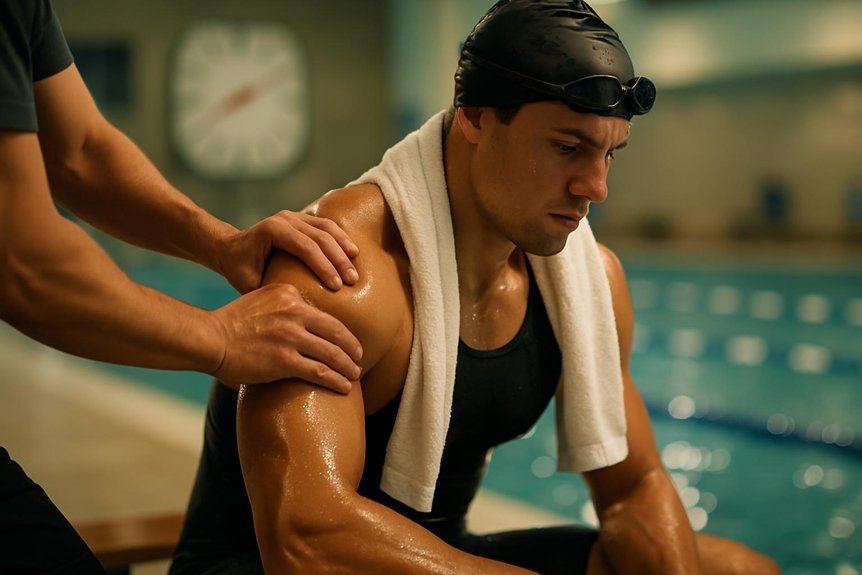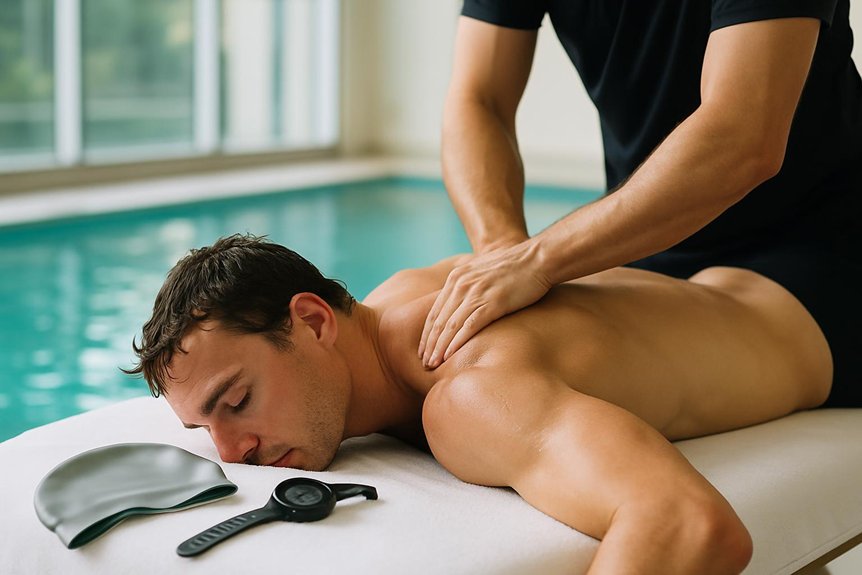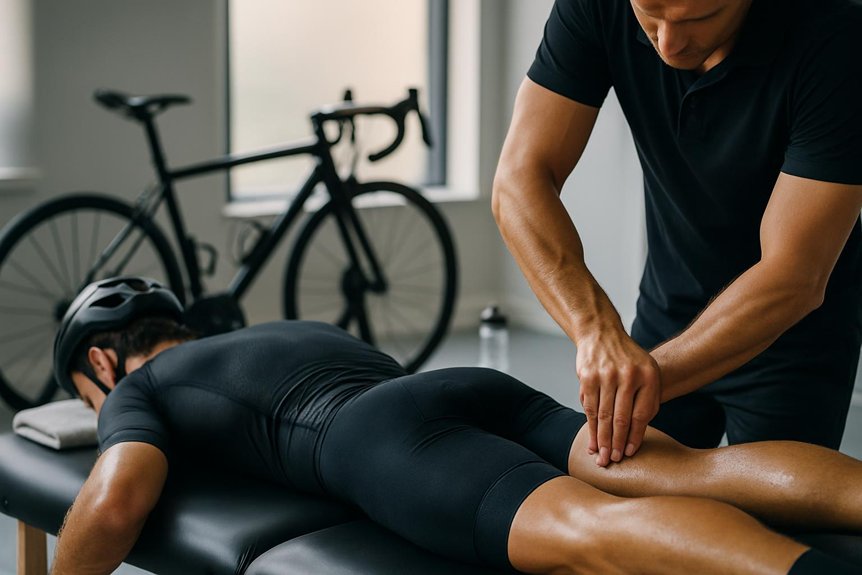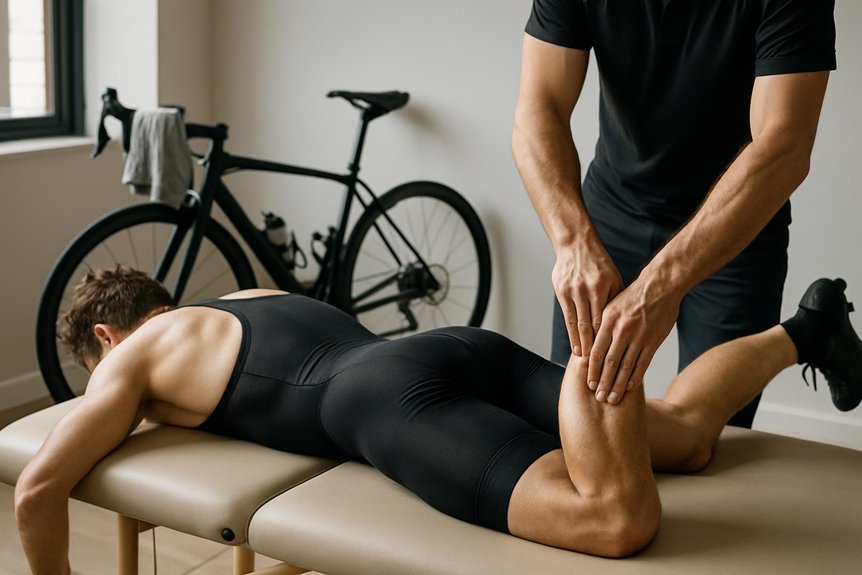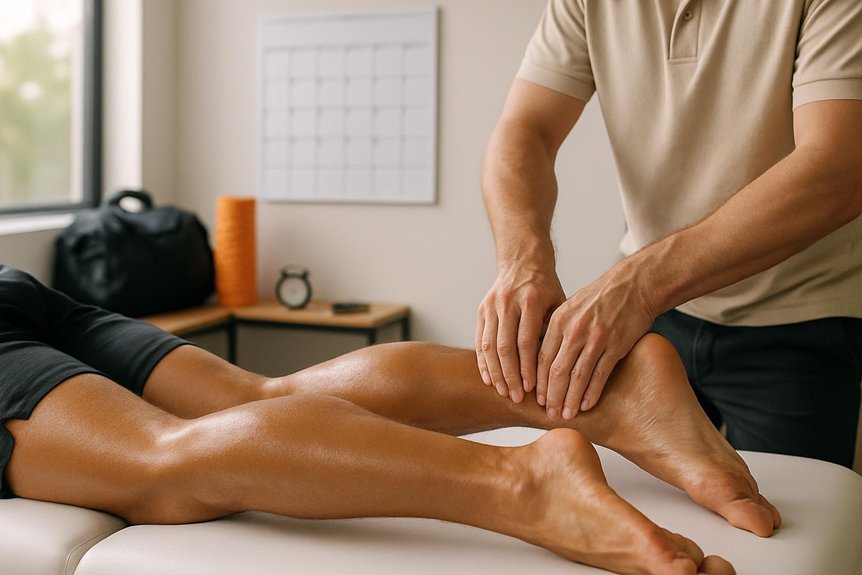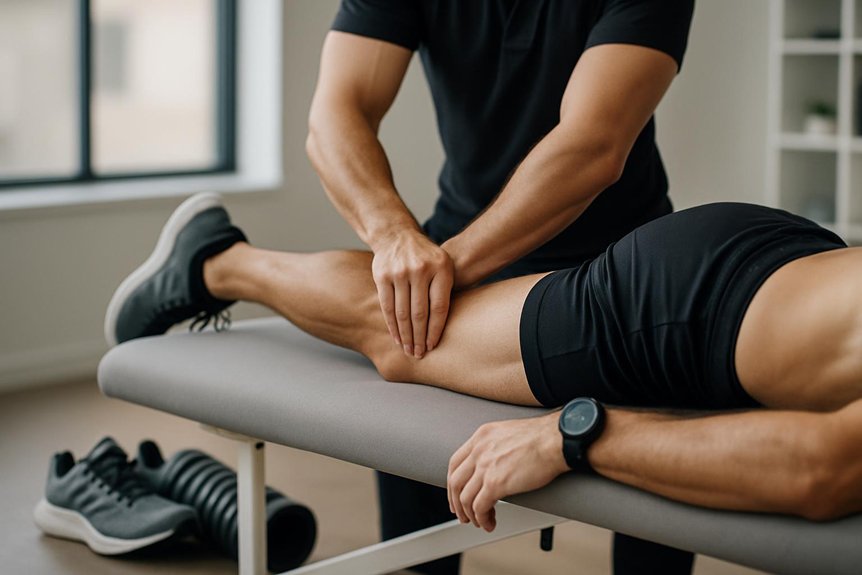
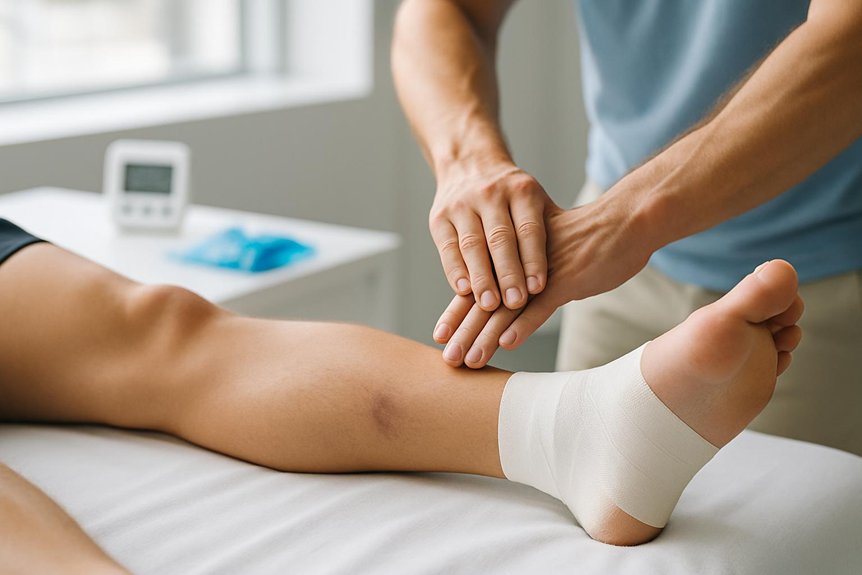
Deep athletic massage is generally avoided in the first 48 hours after an acute injury because early inflammation and bleeding risk can worsen bruising and swelling. During this period, only very light, soothing contact away from tender or bruised tissue may be tolerated, if no red flags are present. From days 3–7, brief light-to-moderate work around the area can reduce guarding if symptoms are settling. Deeper work typically waits 1–3 weeks, once swelling and function normalise. Further guidance follows.
Athletic Massage After Injury: Safety Checklist (Strains, Sprains, Bruises)
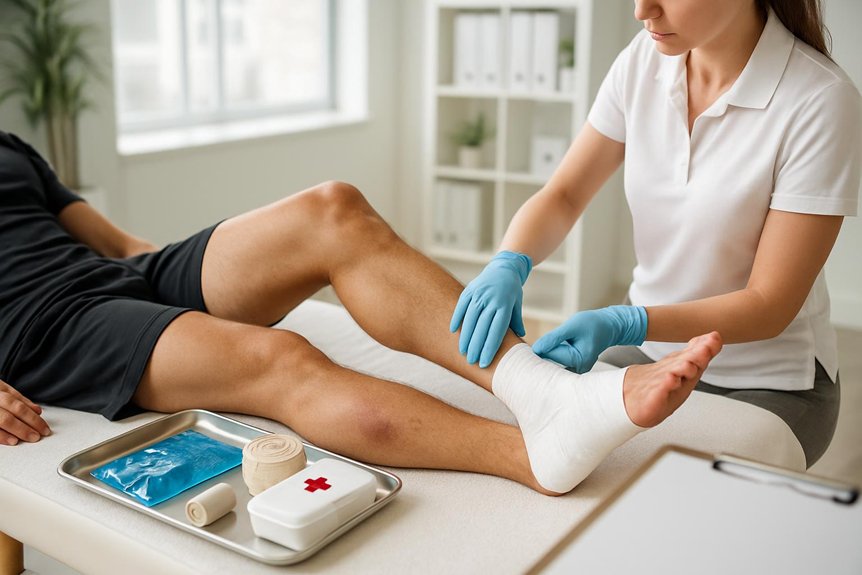
Before any hands-on work begins, an athletic massage after injury should be screened for contraindications and red flags to avoid worsening tissue damage.
For strains, sprains, and bruises, swelling, heat, severe pain, deformity, suspected fracture, numbness, spreading bruising, or reduced circulation warrant medical review and no massage.
Fever, infection, DVT risk, anticoagulants, or unexplained calf pain also contraindicate treatment.
When appropriate, Spa & Massage therapists obtain a brief history, assess range of motion, and confirm the client can tolerate light pressure without sharp pain.
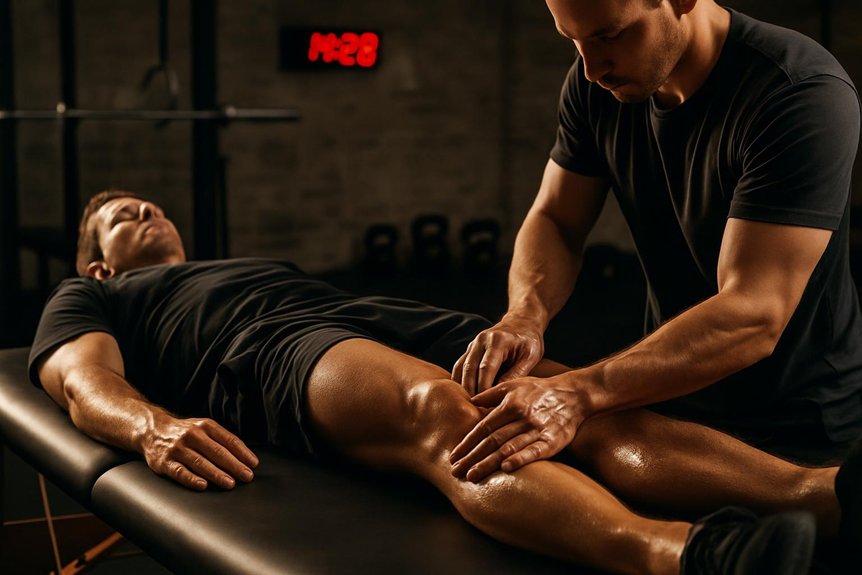
Work should avoid the acute bruised area, using gentle, proximal techniques, slow pacing, and clear consent.
As part of supporting performance and recovery, sports massage benefits can include improved circulation and reduced muscle tension when applied safely and at the right stage of healing.
Aftercare may include hydration, monitored soreness, and referral if symptoms escalate.
Can You Get Athletic Massage in the First 48 Hours?
In the first 48 hours after an injury, a traditional deep athletic massage is generally not recommended because acute inflammation, bleeding risk (with bruising), and pain sensitivity can be heightened, and firm pressure may aggravate tissue damage.
If hands-on care is desired, Spa & Massage therapists would typically keep contact very light and soothing, avoiding the injured site and any bruised or swollen tissue. Gentle, non-painful touch may help calm the nervous system and provide reassurance without disrupting early healing.
Treatment should stop if warmth, throbbing, sharp pain, or spreading bruising occurs.
Anyone with suspected fracture, significant loss of function, rapidly increasing swelling, or anticoagulant use should seek medical assessment first. In these cases, massage is deferred for safety.
Is Athletic Massage Helpful on Days 3–7?
After the first 48 hours, when acute bleeding risk and extreme tenderness typically begin to settle, carefully selected athletic massage techniques may be helpful during days 3–7 for some soft-tissue injuries. The aim is comfort, circulation support, and gentle down-regulation of protective muscle guarding, not “breaking up” tissue.
At Spa & Massage clinics, therapists typically use light-to-moderate pressure, slow strokes, and careful work around (not directly over) bruising, swelling, or sharp pain, while checking in frequently and adjusting to breath, tone, and sensitivity. Treatment is usually brief and targeted, prioritising reassurance and ease of movement.
Massage should be avoided if there is increasing swelling, heat, redness, fever, suspected fracture, severe loss of function, or unexplained night pain. Post-session, clients are advised to hydrate and monitor symptoms.
When to Resume Deeper Athletic Massage (Weeks 1–3)
Between weeks 1–3 after an injury, deeper athletic massage is typically considered only once swelling has clearly reduced and there is no increase in heat or throbbing after normal daily activity.
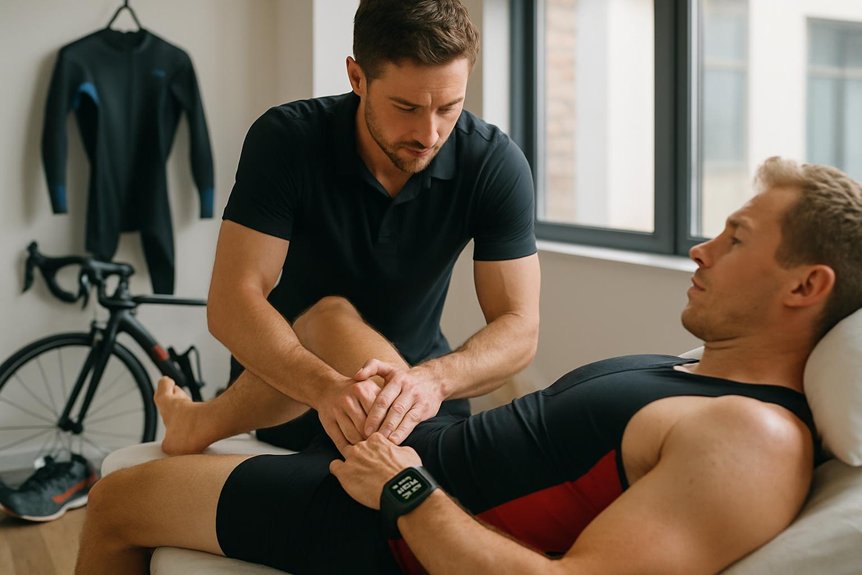
Therapists at Spa & Massage screen for pain-free movement and functional range (e.g., walking, lifting the limb, or sport-specific patterns) to confirm tissue tolerance before increasing intensity.
Pressure is then progressed gradually—starting with moderate techniques and reassessing during and after treatment—stopping if pain, swelling, or bruising returns.
Swelling Reduction Milestones
Swelling typically needs to show a clear, sustained downward trend before deeper athletic massage is reintroduced in weeks 1–3.
Clinically, this means circumference measurements are stable or decreasing across 48–72 hours, skin temperature is normalising, and pitting oedema is minimal.
Bruising should be settling rather than spreading, with no new pooling after light activity.
Any increase in heat, redness, or rapid swelling suggests ongoing inflammation and warrants postponement and medical review.
At Spa & Massage clinics across London, therapists look for tissue that accepts gentle compression without rebound swelling and for reduced protective guarding around the area.
If swelling is fluctuating day to day, deeper pressure is avoided; instead, sessions stay light, soothing, and close, supporting comfort and drainage without provoking irritation.
Pain-Free Movement Checks
How can deeper athletic massage be reintroduced safely in weeks 1–3? Spa & Massage therapists use pain-free movement checks to confirm tissue tolerance before any deeper work.
The client should complete gentle, controlled active range-of-motion of the injured region and adjacent joints without sharp pain, guarding, or increasing warmth. Discomfort up to mild (about 2/10) that settles within 12–24 hours is generally acceptable; worsening pain, night pain, bruising, or renewed swelling signals delay and medical review.
Strength tests should be submaximal and symptom-free, such as a light isometric contraction held 5–10 seconds.
In-clinic, therapists also assess tenderness, texture, and ease of glide while maintaining a respectful, close communication style, checking consent and comfort continuously.
Gradual Pressure Progression
Once pain-free movement checks are consistently passed and post-treatment symptoms remain stable, deeper athletic massage can be reintroduced in weeks 1–3 using a strict, graded pressure progression.
At Spa & Massage, therapists typically begin at light–moderate depth, limiting duration and avoiding direct compression of the injury site, then increase intensity only if there is no delayed soreness, swelling, heat, or sharp pain within 24–48 hours.
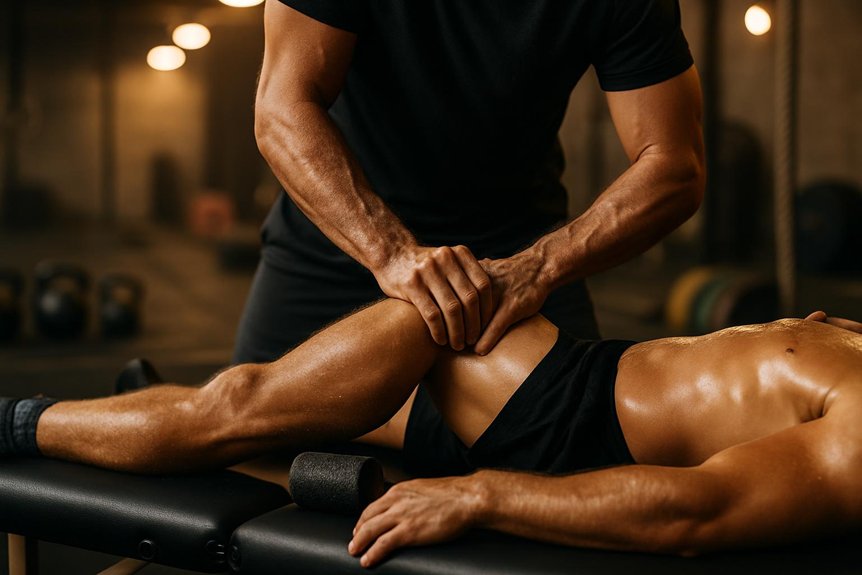
Pressure is advanced in small steps: broader forearm or palm contact first, then more specific thumb or elbow work later, always staying within a comfortable, “good pressure” range.
Tender points are approached slowly, with controlled breathing and clear consent.
Any symptom flare, bruising, or loss of function signals regression and reassessment or referral.
When to Avoid Athletic Massage and Seek Medical Help
In the context of injury management, athletic massage should be avoided when red-flag symptoms suggest an acute or medically significant condition. These include suspected fracture or dislocation, rapidly increasing swelling, severe unrelenting pain, deformity, inability to bear weight, loss of sensation or strength, or a cold/pale limb.
Massage is also contraindicated with fever, spreading redness, open wounds, suspected infection, unexplained bruising, blood-clot risk (new calf pain, warmth, swelling, breathlessness), uncontrolled bleeding, or recent surgery without medical clearance.
If symptoms persist beyond 7–10 days, worsen, or disrupt sleep, prompt assessment is advised.
At Spa & Massage, clients are encouraged to pause treatment and seek GP, urgent care, or A&E guidance before resuming hands-on work safely.
How Our Therapists Tailor Post-Injury Athletic Massage in London
After red flags have been excluded and symptoms are stable, post-injury athletic massage can be used as a structured adjunct to rehabilitation rather than a generic “work it out” session. At Spa & Massage London clinics, therapists begin with a brief clinical history, pain behaviour, swelling/heat checks, and range-of-motion testing to guide dosage.
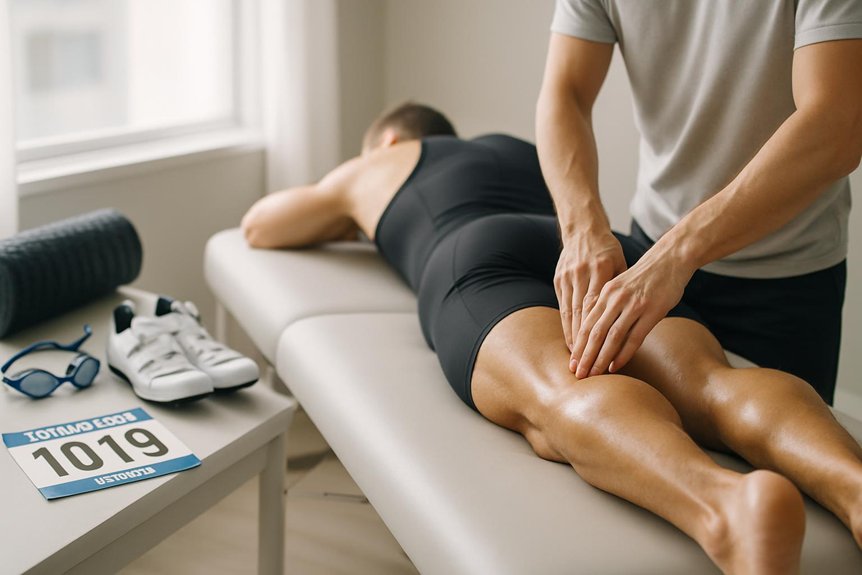
Early sessions prioritise gentle effleurage, lymphatic-style strokes, and light myofascial work to reduce guarding and support circulation, avoiding direct pressure over acute tenderness or bruising. As tolerance improves, techniques progress to deeper tissue and targeted friction only where appropriate, coordinated with strengthening and mobility plans.
Pressure is continually calibrated through consent-led communication, so clients feel held, safe, and listened to. Aftercare includes hydration, heat/ice guidance, and symptom monitoring.
Conclusion
Athletic massage after injury should be timed to tissue healing, not discomfort alone. In the first 48 hours, deep work may amplify bleeding, swelling, and pain; only gentle, non-provocative techniques may be considered. From days 3–7, cautious surrounding-area treatment and light drainage-style work can support comfort without stressing repair. Deeper techniques are typically deferred until weeks 1–3, once signs of acute inflammation settle. Ignoring red flags can derail recovery a thousand times over.