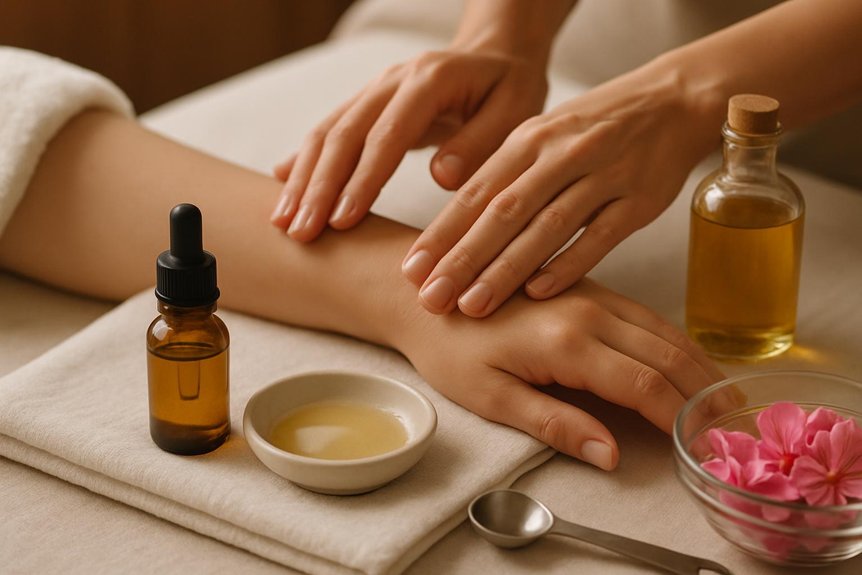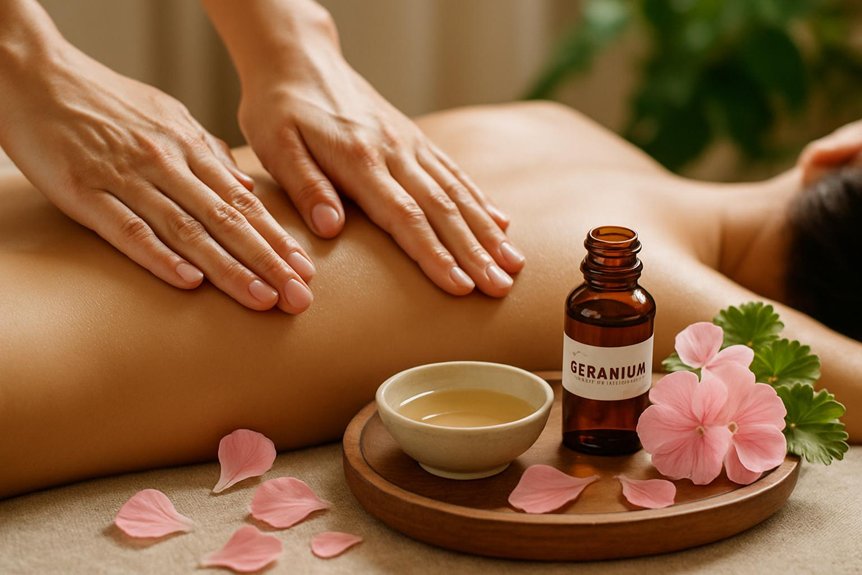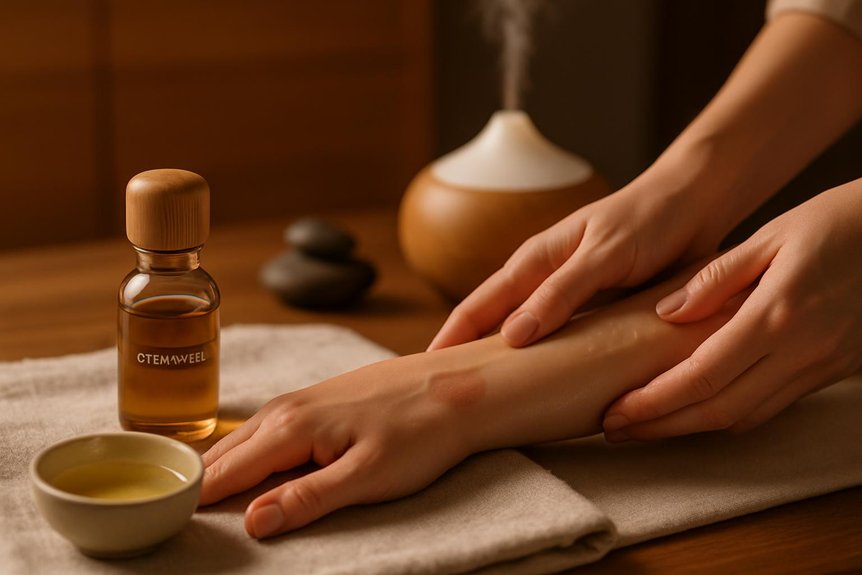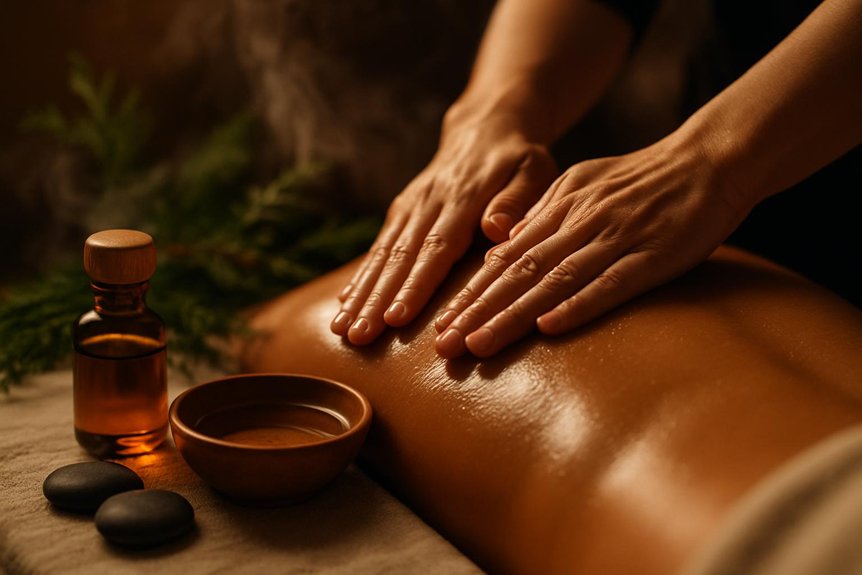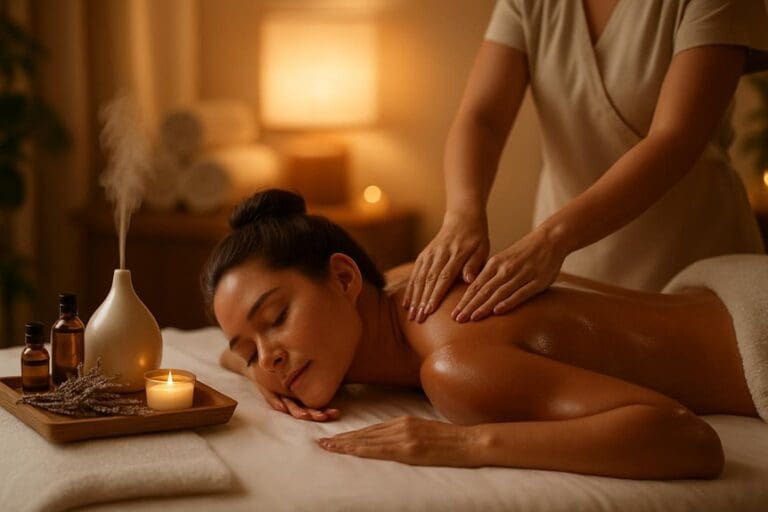
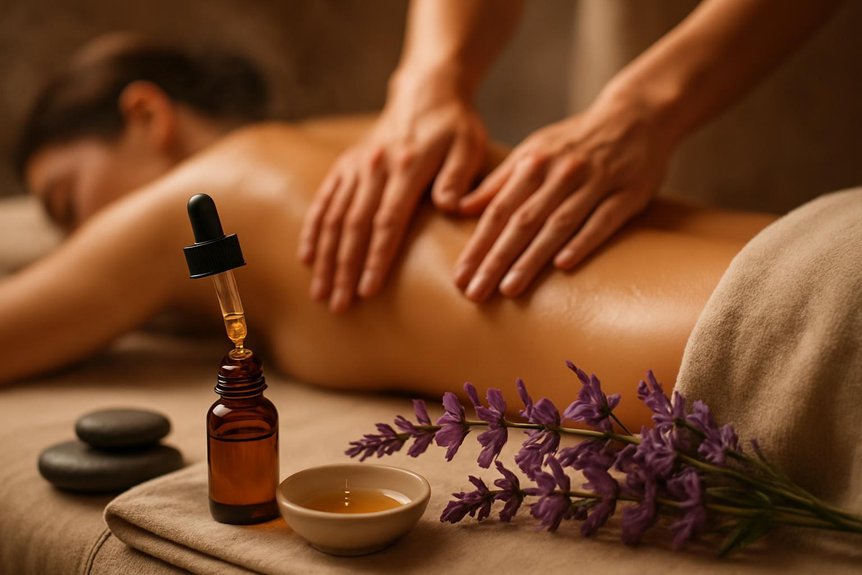
In aromatic massage, clary sage essential oil is mainly used for its calming, herbaceous aroma and its perceived ability to reduce stress and promote relaxation. When properly diluted (typically 1–2%) and applied with slow, grounding strokes, it may help soften muscle tension and support a smoother shift into sleep. Some clients choose it during PMS or cycle-related tension for emotional steadiness, but it is commonly avoided in pregnancy and hormone-sensitive conditions. Further details cover blending, technique, and screening.
What Is Clary Sage Oil Used for in Massage?
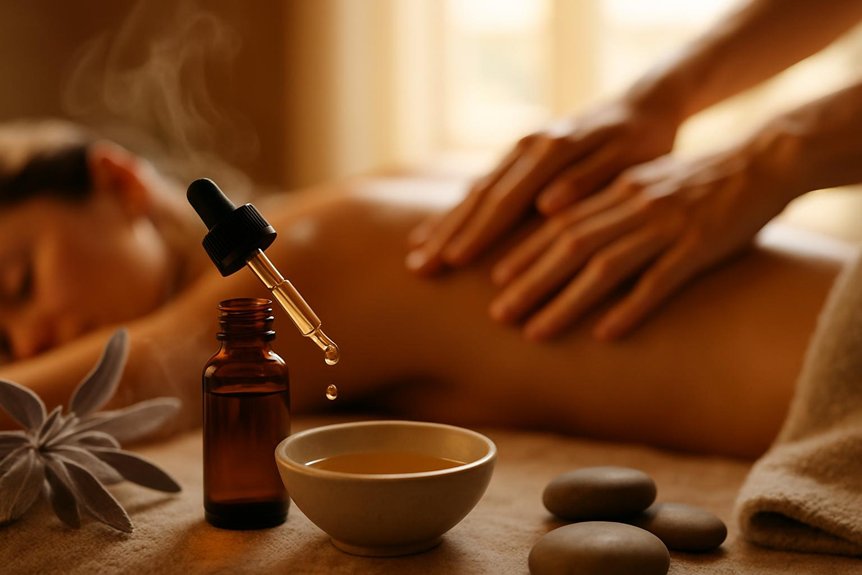
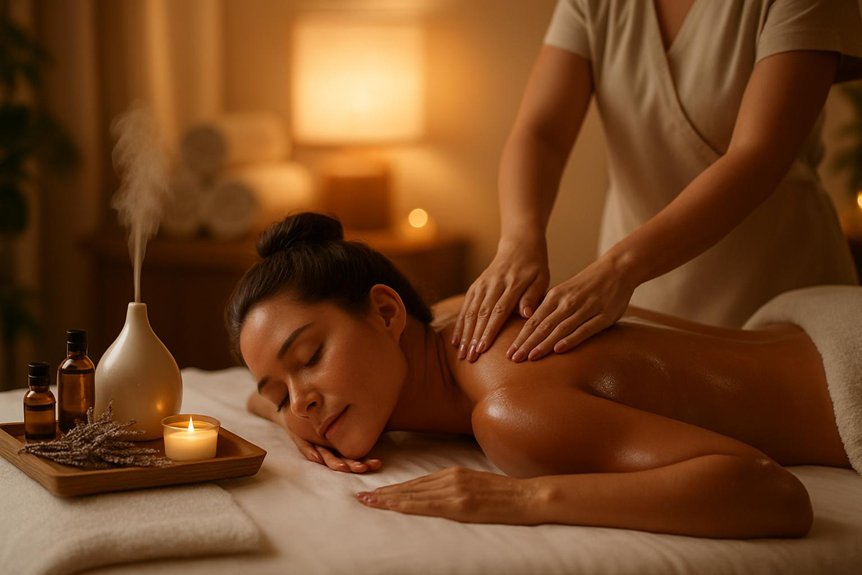
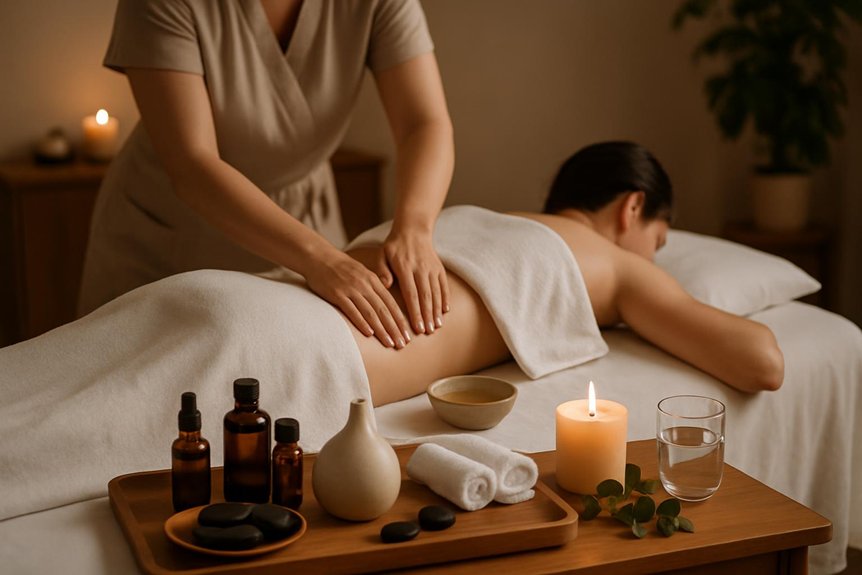
Supporting both physical ease and emotional balance, clary sage essential oil is used in aromatic massage to help reduce perceived stress, promote relaxation, and soften muscle tension through its calming scent and skin-safe dilution in a carrier oil.
In Spa & Massage clinics across London, therapists may choose it when clients want gentler, more nurturing touch alongside focused work on the neck, shoulders, lower back, or hips.
Its herbaceous, slightly sweet aroma can enhance a sense of closeness and comfort without overpowering the room.
To relax and heal, many people pair it with aromatherapy massage techniques that support a calmer mind and body.
Use is guided by consultation, patch-safety, and conservative dilution (typically 1–2%), avoiding broken skin and eyes.
Clients who are pregnant, breastfeeding, prone to hormone-sensitive conditions, or using sedatives are advised to disclose this so alternatives can be selected.
Clary Sage Oil Massage for Stress and Sleep
Clary sage oil is commonly selected in aromatic massage to support stress management, with emerging evidence suggesting its aroma may promote relaxation and improved mood.
In Spa & Massage clinics, therapists may incorporate properly diluted clary sage into a calming treatment plan and adapt pressure, pacing, and breathing cues to help clients shift toward better sleep and a steadier sense of calm.
Safety remains central, so suitability is checked in advance—particularly for pregnancy, hormone-sensitive conditions, and medication use—and clients are guided on simple aftercare to maintain the relaxing effects.
Stress Relief With Clary Sage
When stress lingers in the body, a carefully planned aromatic massage using clary sage essential oil can help shift the nervous system toward a calmer state and support more settled sleep.
At Spa & Massage clinics across London, therapists often pair clary sage with slow, grounding strokes and paced breathing to reduce muscle guarding and invite a softer, more connected sense of ease.
Evidence suggests clary sage aroma may help lower perceived stress and support relaxation.
For safety, it is diluted to skin-safe levels, patch testing is considered for sensitive clients, and it is avoided or adapted during pregnancy, with low blood pressure, or when sedation is undesirable.
Sessions are tailored to boundaries and comfort, with discreet check-ins so touch feels secure, warm, and unrushed throughout.
Better Sleep And Calm
In the evening, a clary sage–based aromatic massage can be used to encourage calmer nervous-system activity and smoother shift into sleep.
Emerging evidence suggests clary sage aroma may support relaxation by modulating stress responses, and massage itself can reduce somatic tension and perceived anxiety—two common barriers to restful nights.
At Spa & Massage clinics across London, therapists keep pressure slow and grounding, with long strokes over shoulders, chest, abdomen, and feet to invite a sense of safety and closeness without overstimulation.
Oil is diluted appropriately and patch-safety is considered; clary sage is avoided in pregnancy unless specifically approved, and clients with low blood pressure or taking sedatives are screened.
Aftercare includes warm hydration, dim light, and avoiding alcohol late to preserve calm.
Clary Sage Oil Massage for PMS and Cycle Tension
For many people, the days leading up to a period bring a predictable mix of lower‑abdominal heaviness, low‑back ache, breast tenderness, and irritability linked to hormonal shifts and heightened muscle tension. In aromatic massage, clary sage oil is often chosen for its comforting aroma and potential to support emotional steadiness; small clinical studies suggest it may help ease perceived stress and improve mood.
At Spa & Massage clinics across London, therapists typically dilute clary sage in a neutral carrier and apply slow, grounding strokes to encourage parasympathetic calm and a sense of being held. Clients are invited to choose pressure, positioning, and boundaries, keeping the experience intimate yet respectful.
Safety matters: avoid use in pregnancy, with hormone‑sensitive conditions, or if headaches worsen; patch‑test first.
Clary Sage Oil Massage for Muscle Aches and Cramps
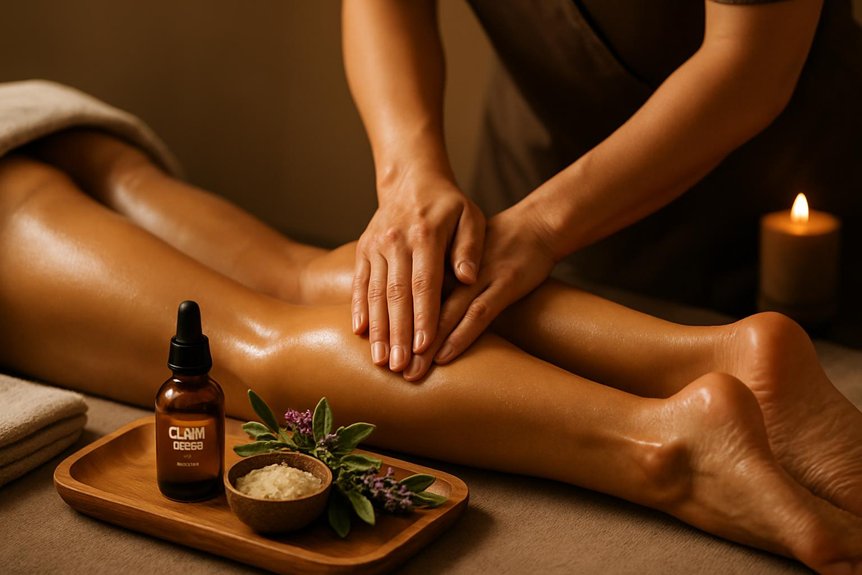
Aching muscles and sudden cramps are common reasons clients seek aromatic massage, and clary sage oil is often selected for its calming scent alongside reported antispasmodic and analgesic properties. In Spa & Massage clinics, it may be considered for post-exercise tightness, neck and shoulder guarding, or low-back discomfort where relaxation supports comfort and range of motion.
Evidence for essential oils is mixed, so benefits are framed as adjunctive: easing perceived pain, reducing stress-driven muscle holding, and supporting a soothing parasympathetic shift. Safety remains central—clary sage is diluted appropriately, patch concerns are checked, and it is avoided where contraindicated, including pregnancy unless specifically advised.
Clients are encouraged to notice tenderness, heat, or swelling and to seek medical advice if symptoms persist or worsen quickly.
How Our Therapists Use Clary Sage Oil Blends
With client comfort and safety as the priority, therapists at Spa & Massage use clary sage oil as part of carefully diluted aromatherapy blends chosen to match the treatment goal—most often easing stress-driven muscle holding and supporting relaxation rather than “treating” a medical condition.
Before application, therapists complete a brief consultation and, where helpful, invite the client to smell-test a few options, supporting consent and preference.
In clinic, clary sage is typically combined with gentle carrier oils and paired with complementary essential oils for calming or grounding, while keeping total dilution within professional guidelines.
The blend is applied with slow, reassuring strokes to encourage parasympathetic “downshifting,” alongside focused work on shoulders, jaw, lower back, or hips. Therapists monitor skin response, breathing, and feedback throughout, adjusting pressure, pace, or scent.
Who Should Avoid Clary Sage Oil Massage?
Clary sage oil massage may not be appropriate during pregnancy or breastfeeding due to limited safety evidence and its potential to influence uterine tone and maternal hormones.
Caution is also advised for clients with hormone-sensitive conditions (such as oestrogen-dependent cancers, endometriosis, or fibroids), as clary sage contains constituents with possible endocrine activity.
At Spa & Massage clinics across London, therapists screen for these factors during consultation and, where needed, recommend a safer alternative blend or a different treatment approach.
Pregnancy And Breastfeeding
During pregnancy and breastfeeding, clary sage oil is generally treated as a “caution” essential oil because its active constituents may have hormone-like effects and can be overly stimulating for some people.
For this reason, it is typically avoided in routine pregnancy massage, especially in the first trimester, unless a qualified clinician specifically advises otherwise.
In Spa & Massage clinics, therapists prioritise gentle, grounding blends and can offer pregnancy massage using safer alternatives and very light dilution, tailored to comfort and scent sensitivity.
Breastfeeding clients may also prefer to avoid clary sage on the chest area to reduce the chance of transfer to the baby and to prevent skin irritation.
A patch test and clear consent support a calm, connected experience.
Hormone-Sensitive Conditions
For clients with hormone-sensitive conditions, clary sage oil is best approached conservatively because its phytoestrogen-like activity may be inappropriate where hormone signalling needs to be minimised. This caution is commonly applied to histories of oestrogen-receptor–positive breast cancer, certain uterine or ovarian cancers, endometriosis, fibroids, or unexplained abnormal uterine bleeding, as well as when a clinician has advised avoiding oestrogenic herbs or products.
In Spa & Massage clinics, therapists complete a detailed consultation and will usually select a different essential oil blend, or offer an unscented massage, when any hormone-related risk is disclosed. If a client is taking endocrine therapies (e.g., tamoxifen) or undergoing fertility treatment, written clearance from their medical team is recommended before using clary sage aromatherapy.
Conclusion
Clary sage oil in aromatic massage is often chosen as if it were a tiny herbal “reset button” for modern life: one whiff and the inbox, PMS, and shoulder knots are expected to apologise. In reality, evidence supports its calming scent and potential to aid relaxation and perceived comfort—when used properly diluted and tailored to the client. A good therapist screens for pregnancys low blood pressure, allergies, and sensitivity, and keeps expectations realistic: soothing, not miraculous.