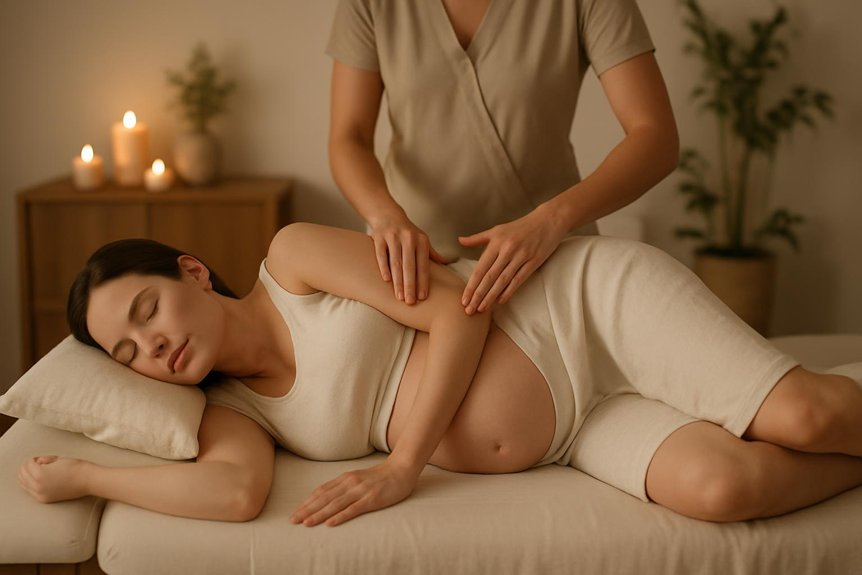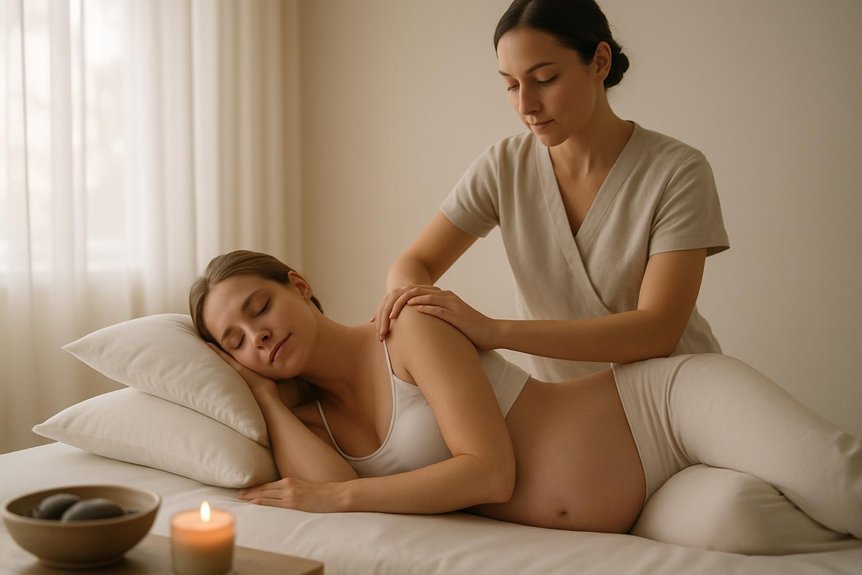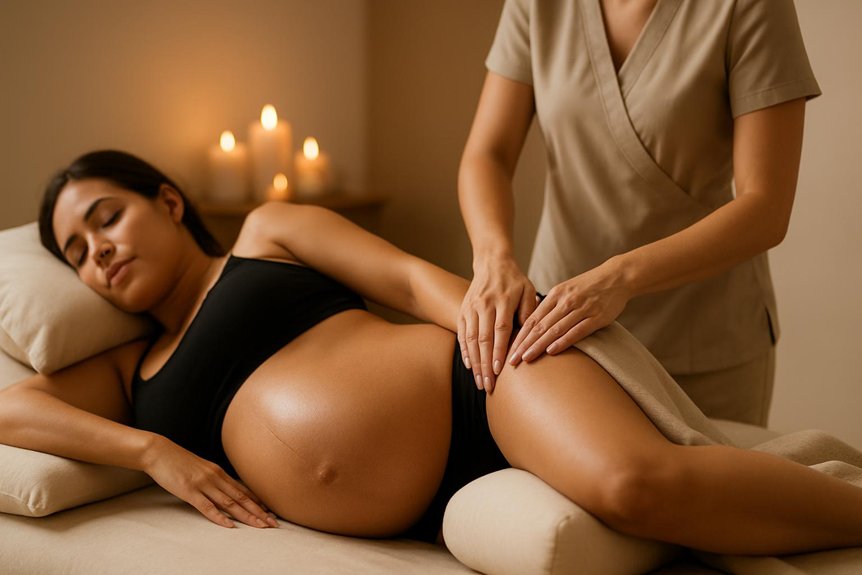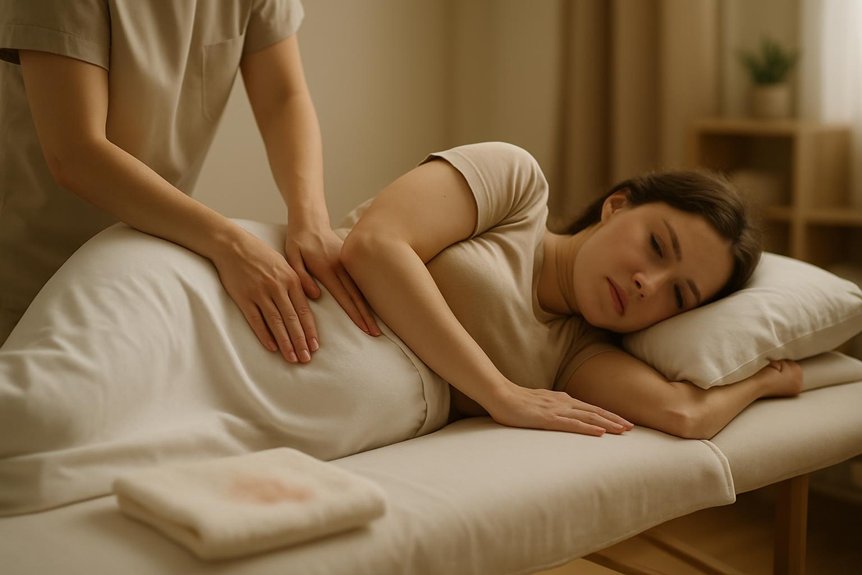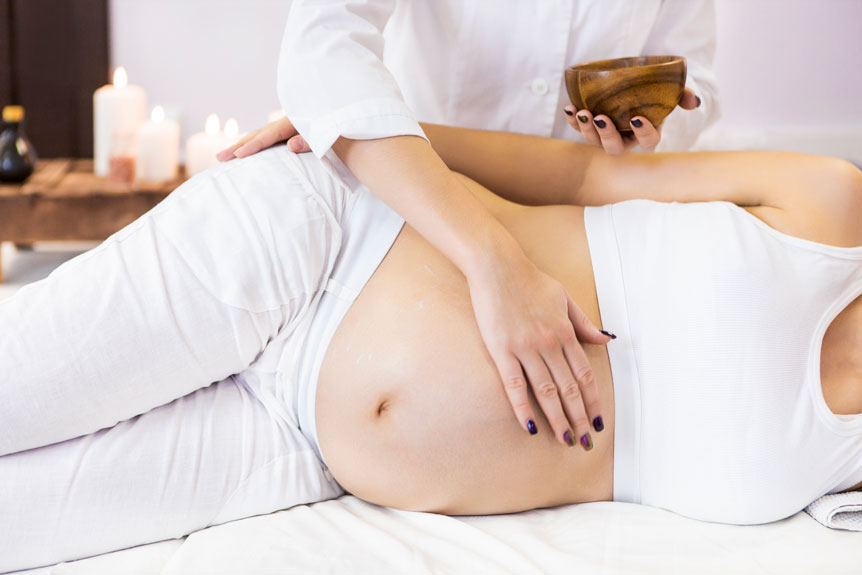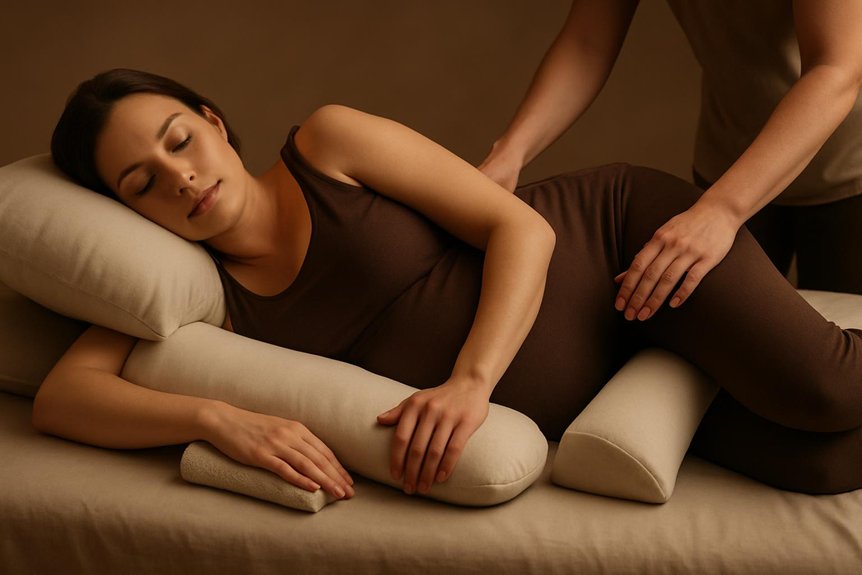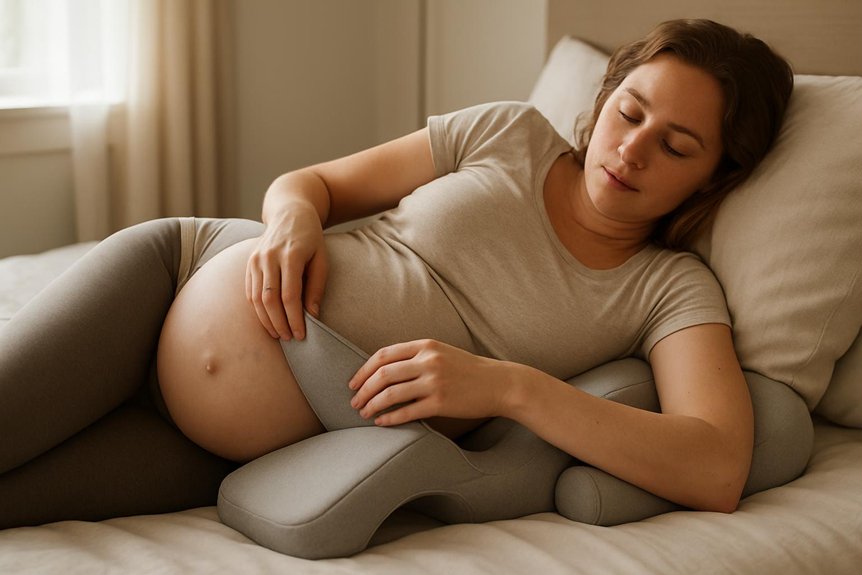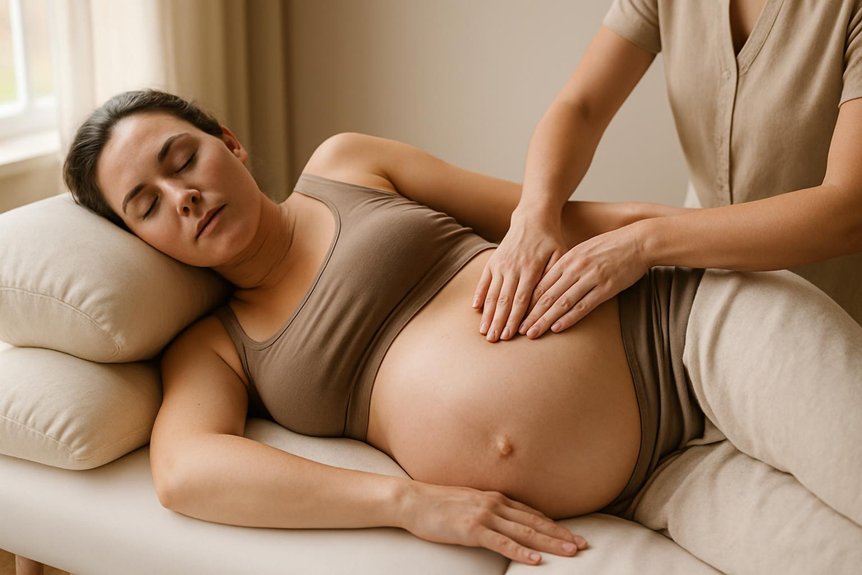
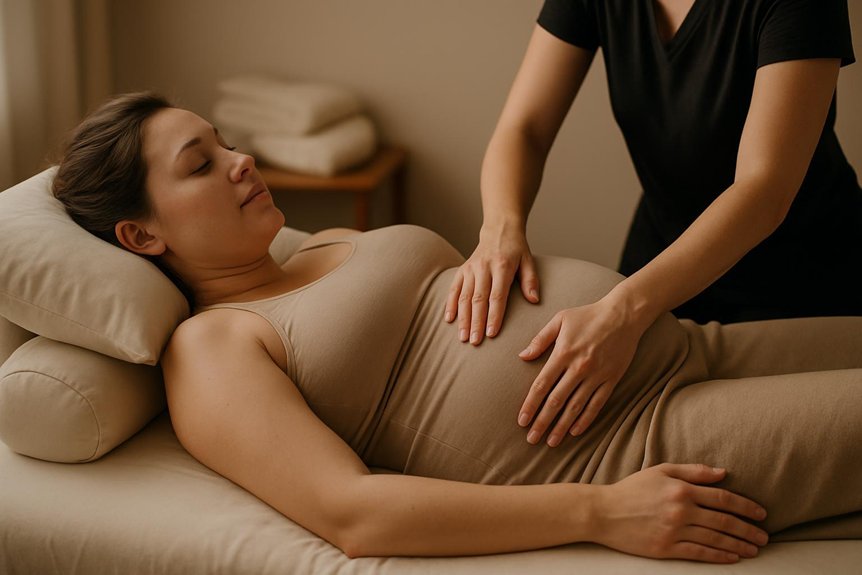
Prenatal massage may support postpartum recovery by easing pregnancy-related muscle tension, improving circulation, and reducing perceived stress and anxiety before birth. Side-lying, bolstered positioning and slow, light-to-moderate strokes can help relieve pelvic girdle, hip, and lower-back discomfort and may improve sleep, which can bolster early parenting resilience. It should be avoided or deferred in high-risk pregnancies or with symptoms like heavy bleeding, severe headache, sudden swelling, fever, or reduced fetal movement. More guidance on safety, timing, and therapist communication follows.
Can Prenatal Massage Help Postpartum Recovery?
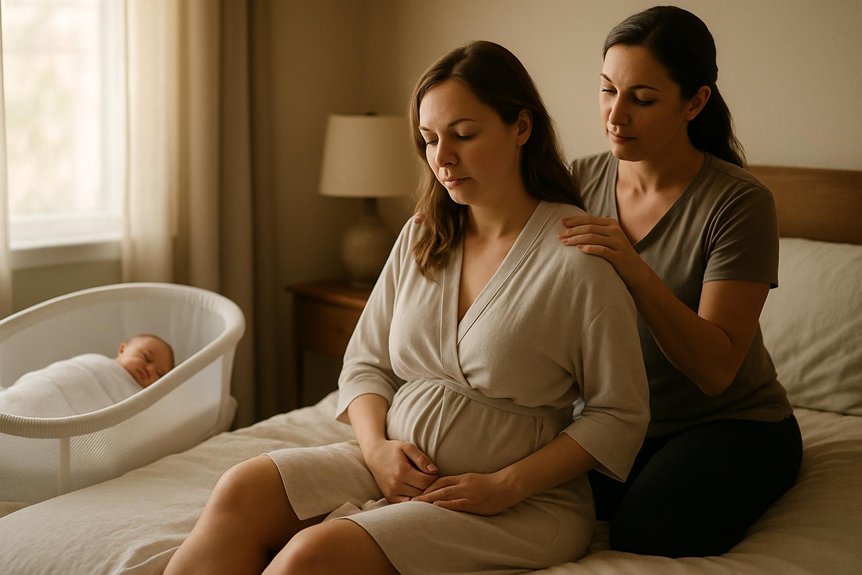
While postpartum recovery begins after birth, prenatal massage can support it by reducing pregnancy-related muscle tension, improving circulation, and helping manage stress and sleep—factors linked to how well the body copes with the physical demands of labour and early parenting.
Evidence suggests massage may ease back and pelvic discomfort, reduce perceived anxiety, and improve rest, which can leave clients feeling more resourced for birth and the weeks after.
It can also support relaxation response by calming the nervous system, which is one of the key benefits of pregnancy massage for expecting mothers.
At Spa & Massage clinics across London, therapists tailor prenatal massage with supportive positioning and slow, nurturing pressure to invite comfort without overstimulation.
Many clients report less heaviness in the legs, softer shoulder tension, and a calmer nervous system. That steadier baseline can make early feeding, lifting, and soothing feel more manageable, supporting gentle reconnection with their body.
Prenatal Massage Safety: When to Avoid It
Prenatal massage is generally well tolerated, but it should be avoided or postponed when a pregnancy is high risk—such as with preeclampsia, placenta complications, threatened preterm labour, significant bleeding, uncontrolled hypertension, or other serious medical concerns.
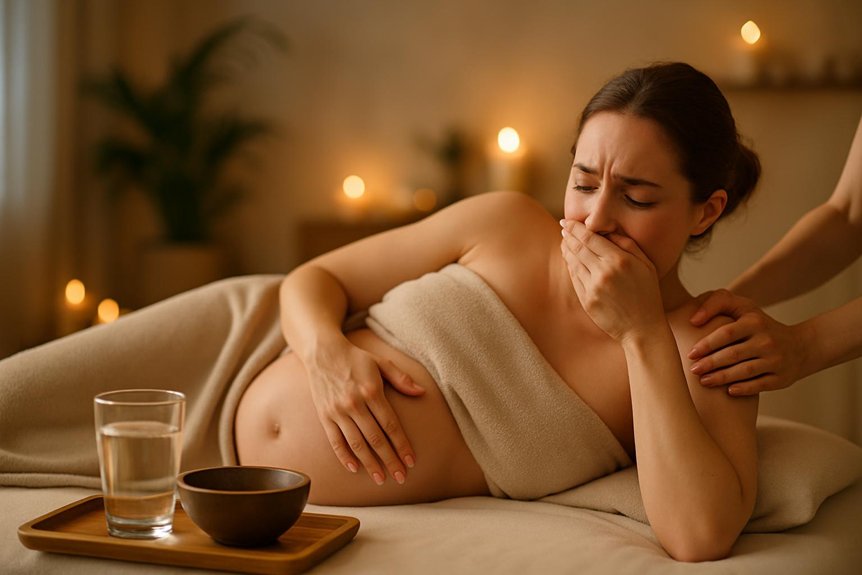
In these situations, medical clearance from a midwife or obstetric clinician is advised before any hands-on treatment, and symptoms like sudden swelling, severe headache, dizziness, fever, or reduced fetal movement warrant prompt medical review.
At Spa & Massage, therapists prioritise screening and adaptation, and will recommend deferring treatment until it is clearly safe for both parent and baby.
High-Risk Pregnancy Conditions
Massage can often be a supportive part of pregnancy wellbeing, but it is not appropriate for everyone—particularly when a pregnancy is classed as high risk. Conditions commonly treated with extra caution include pre‑eclampsia or significant hypertension, placenta praevia or unexplained bleeding, threatened preterm labour, severe swelling or sudden headaches/visual changes, suspected deep vein thrombosis, insulin‑dependent or poorly controlled gestational diabetes, and multiple pregnancy with complications.
Evidence-informed practice prioritises avoiding increased circulatory load, pressure over the abdomen, and techniques that could intensify uterine activity or mask urgent symptoms. At Spa & Massage, therapists take a gentle, client-led approach and will decline treatment when symptoms suggest elevated medical risk, helping clients feel held, listened to, and protected while focusing on rest, comfort, and safety.
When To Seek Medical Clearance
High‑risk conditions are not the only reason a pregnant client may need a GP or midwife’s approval before booking a treatment. Medical clearance is advised after any vaginal bleeding, suspected leaking waters, fever, new swelling, persistent headache, dizziness, fainting, severe abdominal pain, reduced fetal movements, or sudden shortness of breath—symptoms that may signal urgent complications rather than normal pregnancy discomfort.
It is also sensible when there is a history of clotting disorders, recent surgery, medication changes, or hospital admission. In early pregnancy, many clinicians recommend confirming viability before massage.
At Spa & Massage, therapists pause treatment if anything feels “off” and encourage a quick check‑in with a clinician so care remains soothing, intimate, and safely restorative for both parent and baby.
Postpartum Symptoms Prenatal Massage May Reduce
Often, targeted bodywork during pregnancy is associated with a smoother postpartum period by easing some of the physical and stress-related symptoms that commonly persist after birth. Evidence suggests prenatal massage may help reduce perceived stress, anxiety, and sleep disruption by supporting parasympathetic calming and lowering muscle tension.
Many new parents also report less headache frequency, gentler jaw and neck tightness, and reduced swelling when circulation and lymphatic flow are supported safely. At Spa & Massage, pregnancy sessions prioritise side-lying positioning, light-to-moderate pressure, and careful avoidance of high-risk techniques, with therapists checking comfort throughout.
While massage is not a treatment for postpartum depression or medical complications, it can complement clinical care by improving relaxation, body confidence, and the felt sense of being held and understood.
Pelvic, Hip, and Back Relief During Pregnancy
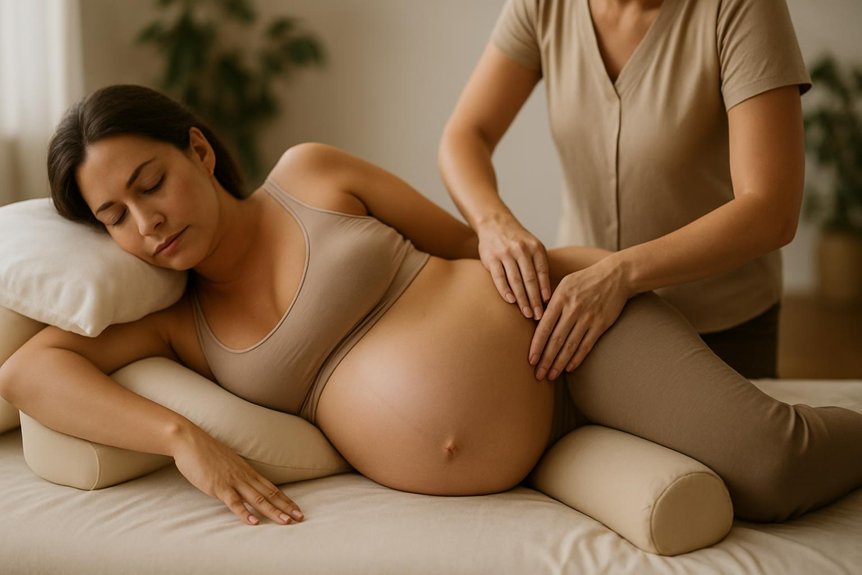
As the pelvis subtly shifts to accommodate a growing bump, many pregnant people develop pelvic girdle discomfort alongside hip and lower‑back strain, driven by postural change, altered gait, and increased load on stabilising muscles and joints. Evidence supports gentle massage to ease muscular guarding and improve comfort when tailored to pregnancy physiology.
At Spa & Massage clinics across London, therapists use side‑lying positioning with supportive bolsters, avoiding deep pressure over the abdomen and sacrum. Treatment typically focuses on gluteals, hip rotators, quadratus lumborum, and adductors, using slow, grounding strokes and careful trigger‑point work only when appropriate. Clients are advised to report pain that is sharp, radiating, or accompanied by numbness, and to seek midwife or GP input before massage if risk factors exist. Brief aftercare includes hydration, short walks, and heat avoidance.
Prenatal Massage for Better Sleep and Calmer Mood
Many pregnant people experience disrupted sleep and heightened emotional strain, and prenatal massage can be a safe, supportive option to help settle the nervous system and ease the physical tension that keeps the body on alert.
Gentle, side-lying work can lower perceived stress and promote parasympathetic “rest-and-digest” activity, which may make it easier to fall asleep and stay asleep.
At Spa & Massage clinics across London, therapists use slow, grounding strokes and carefully tailored pressure to soothe overworked muscles and invite a steadier breath.
Many clients also find that mindful touch helps soften irritability and worry, creating a calmer baseline before birth. When performed by trained practitioners and adapted to each trimester, prenatal massage is typically well tolerated and can complement good sleep habits.
What to Tell (and Ask) Your Massage Therapist
For prenatal or postpartum massage, clients are safest when they share key health details such as gestational age, any pregnancy or birth complications, current symptoms (e.g., swelling, headaches, pelvic pain), medications, and relevant medical advice.
They should also ask clear questions about positioning, pressure level, contraindications, and how comfort will be monitored throughout the session, since evidence-based practice prioritises adapting techniques to changing physiology.
At Spa & Massage clinics across London, therapists routinely invite this information and use it to tailor treatment and aftercare in a calm, supportive way.
Key Health Details To Share
Before the first treatment begins, a brief, honest health check-in helps a pregnancy or postpartum massage stay both comfortable and clinically appropriate.
At Spa & Massage, clients are asked to share gestational age or weeks postpartum, birth type (vaginal or caesarean), healing status of any scars or stitches, current bleeding patterns, and any pelvic pain, diastasis recti, or prolapse symptoms.
Key medical details include pre-eclampsia history, high blood pressure, clotting disorders, DVT risk, gestational diabetes, infections, fever, or recent complications, plus any medications, supplements, and analgesics.
They should also mention breastfeeding, sleep deprivation, and stress levels, as these shape pressure choice and pacing. Clients can ask how information guides positioning, and treatment goals.
Questions About Comfort And Safety
How comfort and safety are handled in a prenatal or postpartum massage depends on what the therapist is told—and what the client feels able to ask in the moment.
Helpful questions include: Which positions will be used, and can bolsters support hips, belly, or breasts? What pressure is appropriate today, and how will it be adjusted if tenderness, swelling, or pelvic sensitivity appears? Can any areas be avoided, including the abdomen or chest, while still feeling cared for? What signs mean a pause is needed—dizziness, shortness of breath, cramping, or sharp pain?
At Spa & Massage clinics, therapists invite clear consent and check in often, using pregnancy-safe oils and gentle techniques when indicated. Clients should ask about therapist training, session length, and aftercare, especially with stitches, diastasis, or mastitis.
When to Start Postpartum Massage After Birth
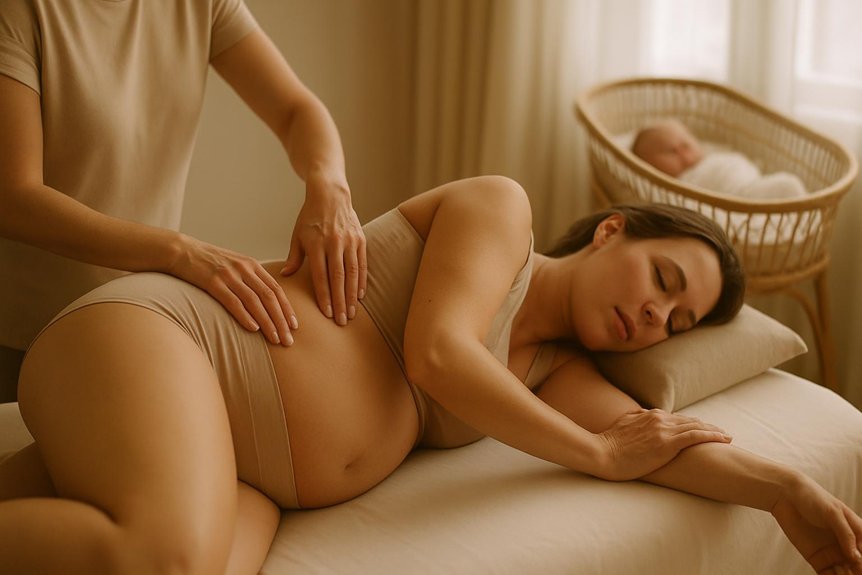
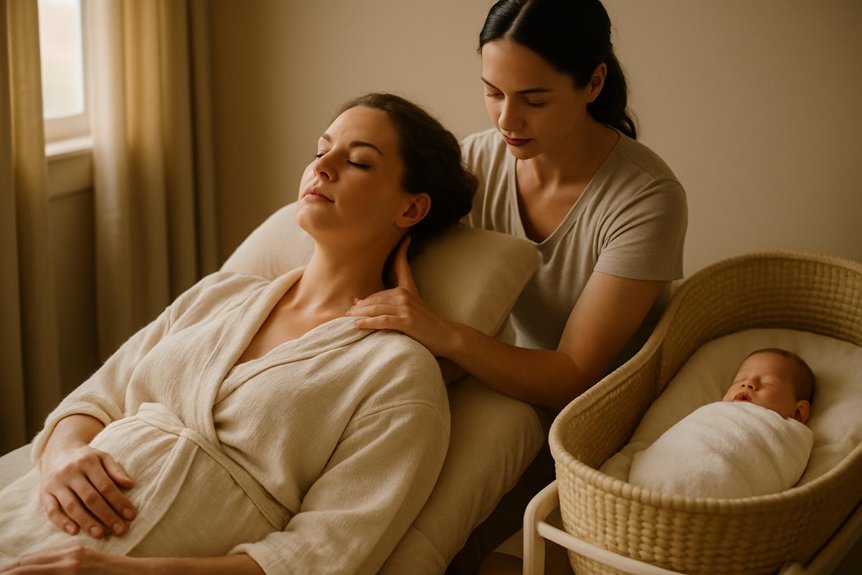
In the days and weeks after birth, the safest time to begin postpartum massage depends on medical factors such as the type of delivery, bleeding levels, pain, and overall recovery.
After an uncomplicated vaginal birth, gentle, short sessions may be appropriate once bleeding is light and the parent feels comfortable, often within 1–2 weeks, with midwife or GP approval.
After a caesarean, most clinicians advise waiting until the incision is closed and tenderness has settled, commonly 6–8 weeks; scar work should start only when cleared.
At Spa & Massage, therapists begin with soothing aromatherapy strokes and supported side-lying positioning to protect the abdomen and pelvic floor.
They avoid deep pressure, heat, and essential oils contraindicated in breastfeeding.
Any fever, heavy bleeding, calf pain, or worsening swelling warrants medical review first.
Conclusion
Prenatal massage is not a guarantee of an easier postpartum period, yet evidence suggests it may help by easing pregnancy-related muscle strain, supporting sleep, and lowering stress—factors linked to recovery. The impact depends on timing, medical context, and a properly trained therapist using pregnancy-adapted techniques. Some people should avoid it or need clearance. The most important step comes next: clear communication and a cautious plan, including when postpartum massage can safely begin.