Aromatherapy massage is generally safe during pregnancy when it is adapted for the pregnant body and delivered by a trained prenatal therapist. Best practice uses gentle pressure, supportive side-lying positioning, and pregnancy-appropriate essential oils at very low dilution, or unscented carrier oil if nausea or sensitivity occurs. Treatment should be deferred in the first trimester unless advised by a midwife or GP, and avoided with bleeding, severe pain, fever, dizziness, or reduced fetal movements. Further guidance covers oil choices and aftercare.
Is Aromatherapy Massage Safe During Pregnancy?
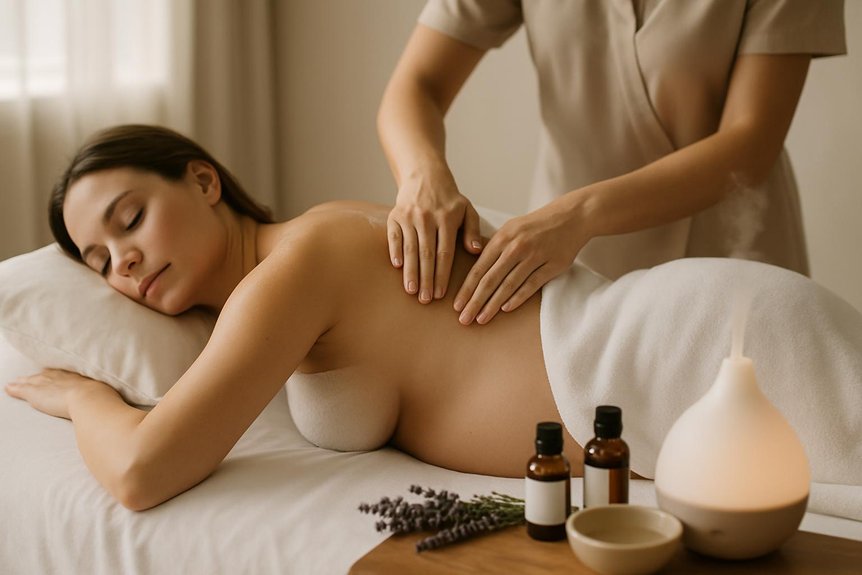
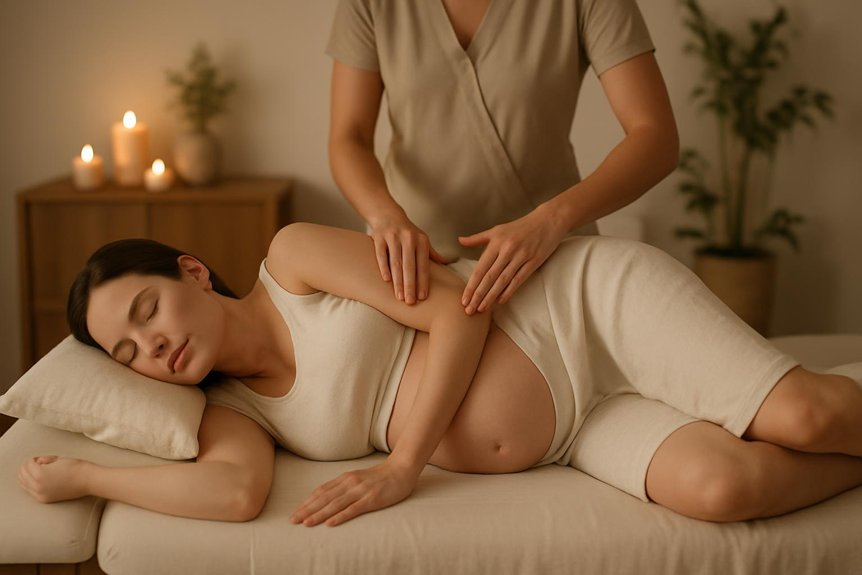
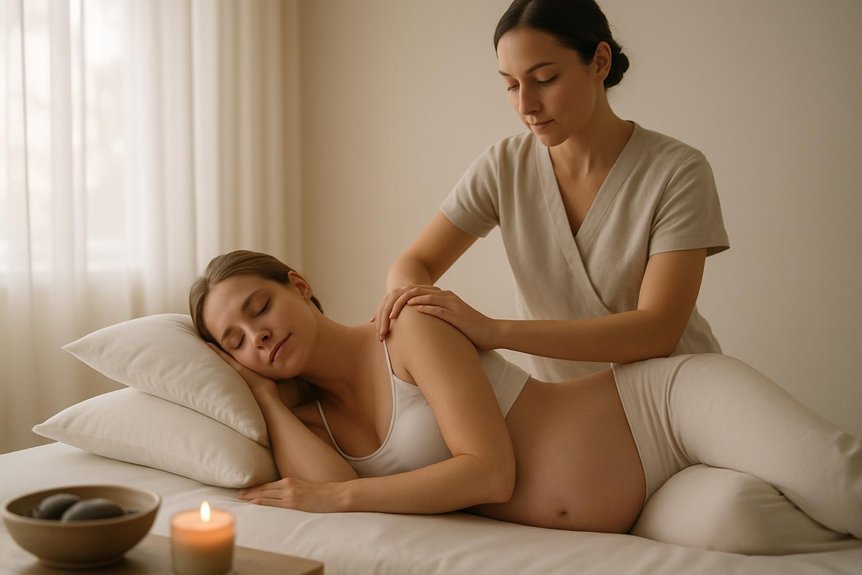
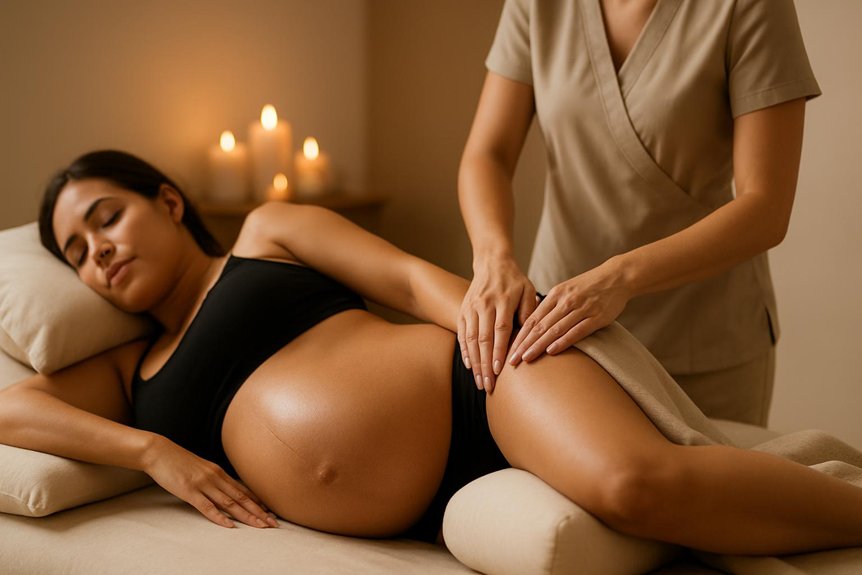
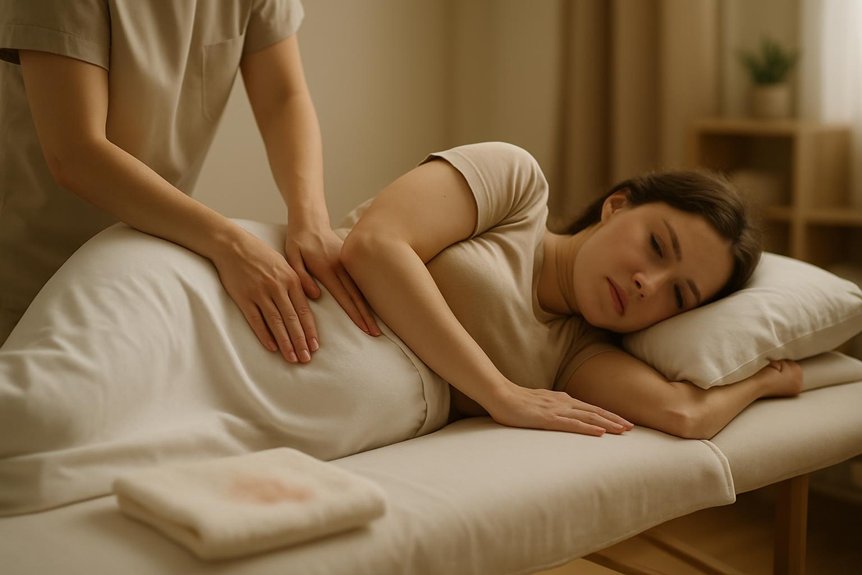
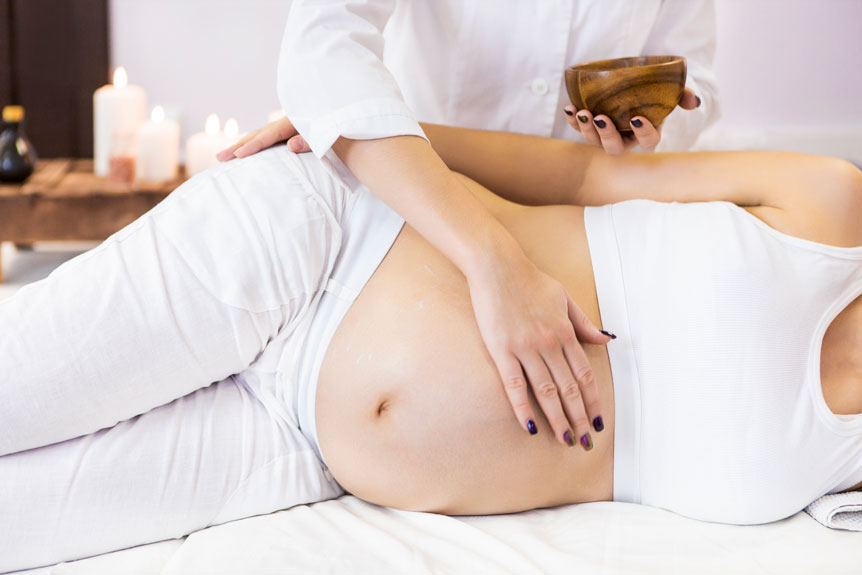
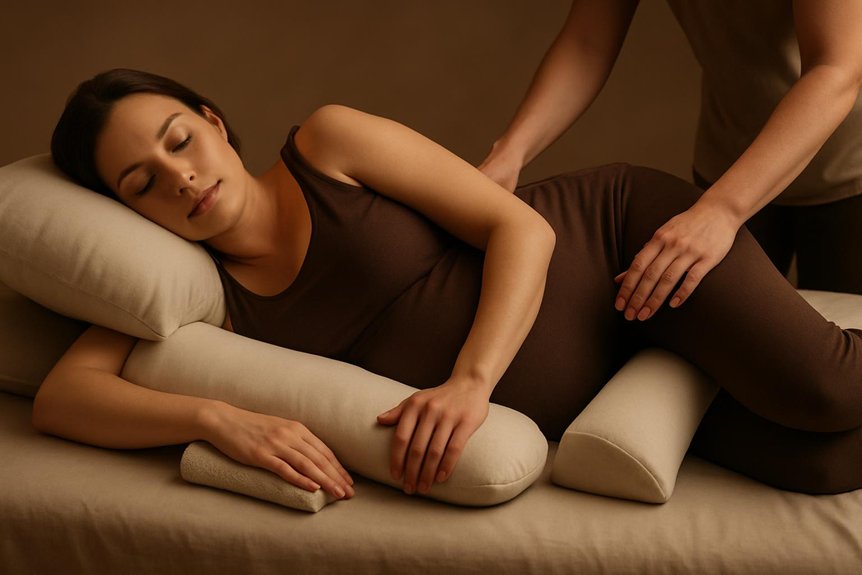
An aromatherapy massage can be safe during pregnancy when it is specifically adapted for the pregnant body and delivered by a trained therapist using pregnancy-appropriate techniques and carefully selected essential oils.
Evidence-informed practice prioritises comfort, gentle pressure, and positioning that supports circulation and reduces strain.
At Spa & Massage clinics across London, therapists begin with a brief consultation, then tailor touch, bolstering, and oil dilution to the client’s trimester, sensitivity, and preferences.
Many choose softly scented blends or unscented carrier oils to minimise nausea and skin reactivity.
Relax and heal with aromatherapy massage tips that emphasise calm breathing, slow rhythms, and a soothing environment.
When appropriately adapted, clients commonly report relief from muscular tension, lower-back discomfort, and stress, alongside improved sleep and a calmer connection to body and baby.
Aftercare focuses on hydration, slow rising, and noticing any changes in comfort.
When Should You Avoid Aromatherapy Massage in Pregnancy?
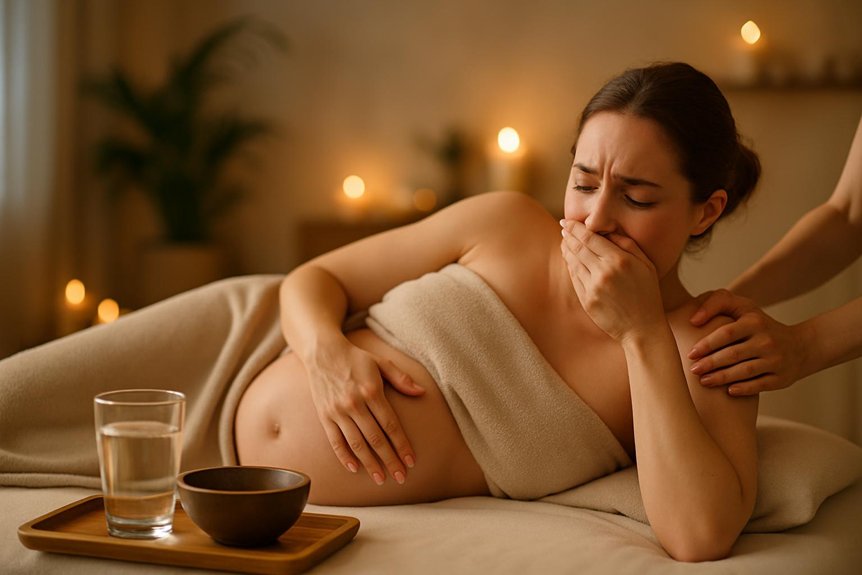
Even when aromatherapy massage is adapted for pregnancy, there are situations where it should be postponed or avoided to protect both parent and baby. It should be deferred in the first trimester unless a midwife or GP advises otherwise, and avoided with bleeding, severe abdominal pain, fever, vomiting, dizziness, or reduced fetal movements.
Medical review is essential for pre-eclampsia symptoms (severe headache, visual changes, sudden swelling), uncontrolled hypertension, clotting disorders, placenta praevia, preterm labour signs, ruptured membranes, or a history of recurrent miscarriage.
Local skin infection, unexplained rash, or acute musculoskeletal injury also warrant postponement.
At Spa & Massage, therapists pause treatment whenever a client feels unwell, breathless, or emotionally overwhelmed, and prioritise calm, consent-led touch.
Pregnancy-Safe Oils (and Oils to Avoid) for Aromatherapy Massage
In pregnancy, essential oils require a more conservative, safety-led approach because changes in skin sensitivity, smell aversion, and circulation can alter tolerance and because some oils have constituents associated with uterotonic, hormone-like, or irritant effects.
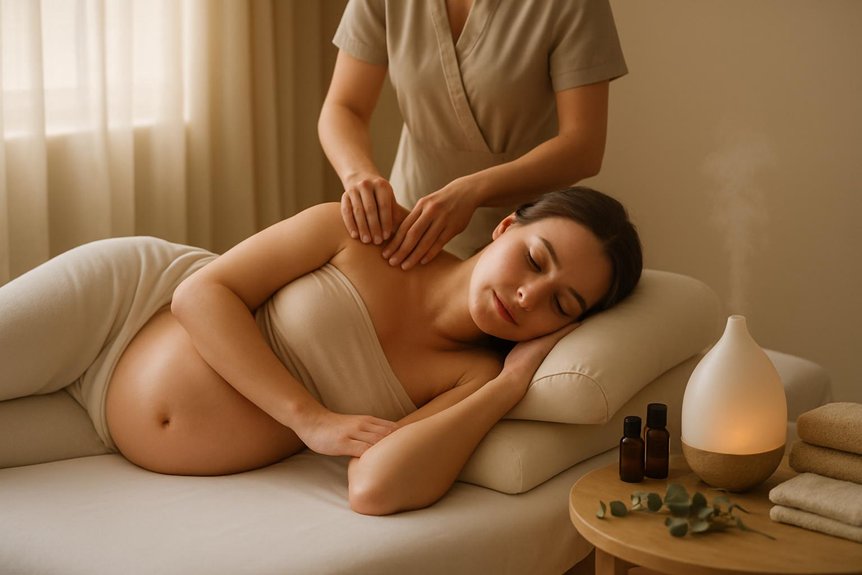
At Spa & Massage, therapists typically favour gentle options such as lavender (Lavandula angustifolia), mandarin, sweet orange, frankincense, and rose in very low dilution, always paired with nourishing carrier oils like sweet almond or grapeseed for a soft, intimate glide.
Oils commonly avoided include clary sage, rosemary, cinnamon bark, clove, thyme, oregano, peppermint (high menthol), wintergreen, and “hot” or strongly stimulating blends, as well as any undiluted application.
Patch testing, minimal drops, and client-led scent preference keep touch comforting and safe.
How Does Pregnancy Aromatherapy Massage Change by Trimester?
Across the three trimesters, pregnancy aromatherapy massage is adapted to reflect shifting physiology, symptom patterns, and comfort needs, with safety and client tolerance guiding every decision.
In the first trimester, many therapists at Spa & Massage keep pressure light, favour shorter sessions, and use only pregnancy-appropriate, low-dilution oils to minimise nausea triggers and skin sensitivity.
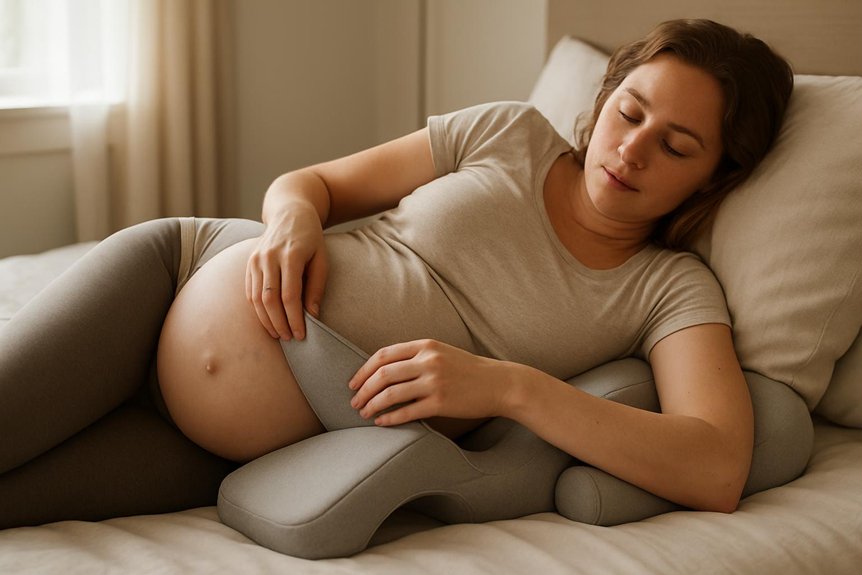
In the second trimester, positioning becomes more side-lying with supportive bolsters; work often focuses on hips, mid-back, and legs as posture changes and circulation shifts.
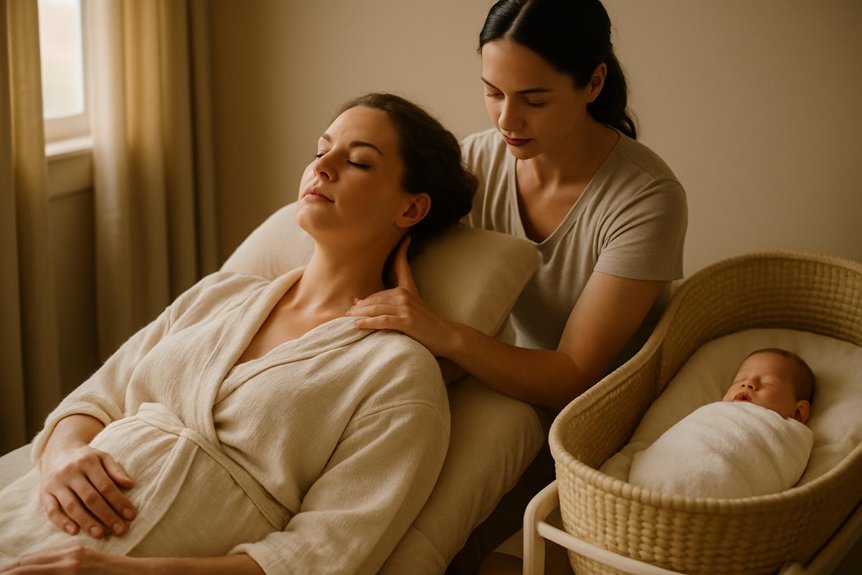
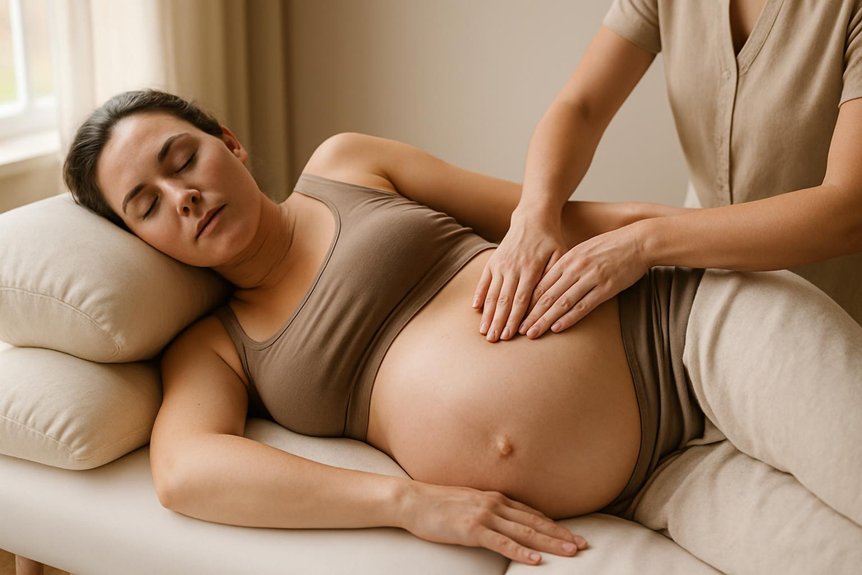
In the third trimester, sessions prioritize comfort, breath, and gentle drainage-style strokes for swelling, avoiding deep abdominal work and sustained pressure around vulnerable areas.
Throughout, essential oils are selected conservatively, patch-tested when needed, and adjusted to the client’s scent tolerance and emotional needs.
How to Book a Pregnancy-Safe Aromatherapy Massage in London
With pregnancy safety as the priority, booking a pregnancy-safe aromatherapy massage in London starts by choosing a clinic that provides dedicated prenatal treatments delivered by appropriately trained therapists and clear contraindication screening.
At Spa & Massage, clients can book across six London locations and should note gestational week, symptoms, and any medical advice.
A brief health consultation should confirm trimester, blood-pressure issues, bleeding, pre‑eclampsia risk, thrombosis history, or complications requiring GP or midwife clearance.
The therapist should explain positioning (side‑lying with support), pressure limits, and oil selection; in Spa & Massage clinics, pregnancy-appropriate dilutions and cautious essential-oil choices are used, with fragrance-free options available.
Booking is safest when time is allowed for questions and consent, ensuring calm, close-to-home reassurance.
Aftercare: What to Do After an Aromatherapy Massage While Pregnant
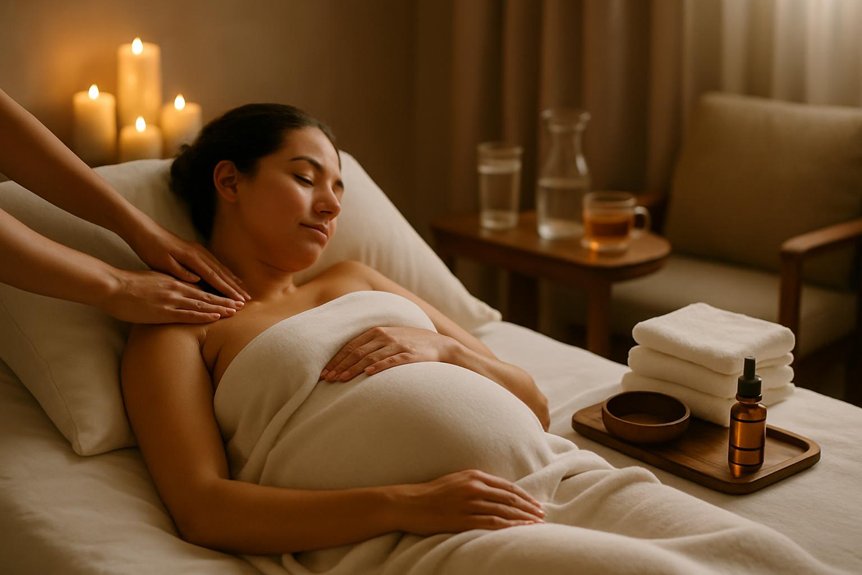
After a pregnancy-safe aromatherapy massage, aftercare should prioritise hydration and rest to support circulation, comfort, and the body’s natural recovery.
At Spa & Massage clinics across London, therapists recommend drinking water, taking a gentle break, and avoiding strenuous activity for the remainder of the day.
It is also important to monitor symptoms—such as dizziness, headache, uterine tightening, reduced fetal movement, rash, or unusual swelling—and seek medical advice promptly if anything feels concerning, with practical support measures tailored to the individual.
Hydrate And Rest
In the hours following an aromatherapy massage during pregnancy, prioritising hydration and rest supports normal physiological recovery and comfort.
Pregnancy increases fluid needs, and massage may leave clients feeling warm or slightly drowsy, so sipping water or herbal tea can help maintain circulation and ease post-treatment lightness.
Spa & Massage therapists encourage a calm shift: avoiding rushing back to busy streets, choosing gentle movement, then settling into a comfortable side-lying position with supportive pillows.
A short nap or early night can enhance the relaxation response and help muscles stay supple.
Warm, light food may feel grounding.
If a bath is desired, a lukewarm shower is generally preferable to avoid overheating.
Monitor Symptoms And Support
Noticing how the body responds in the hours and day following an aromatherapy pregnancy massage helps distinguish normal post-treatment effects from symptoms that need support. Mild sleepiness, thirst, or gentle muscle warmth can be expected, especially after tension has eased.
New or worsening abdominal pain, vaginal bleeding, reduced fetal movement, persistent dizziness, shortness of breath, headache, swelling, itching, or a rash should be treated as a prompt to stop using any scented products and seek medical advice. At Spa & Massage clinics, therapists advise noting which oils were used, any skin changes, and how baby’s movements feel, then sharing this with a midwife or GP.
For emotional support, quiet touch, slow breathing, and a warm (not hot) bath can maintain calm. If concerns arise, booking a check-in call is recommended.
Conclusion
Aromatherapy massage in pregnancy can be safe and soothing when timing, positioning, and essential oil selection are handled with care. Because sensitivities and circulation change, some oils and techniques should be avoided—especially early on and in higher-risk pregnancies. The safest approach is low dilution, gentle pressure, and treatment by a therapist trained in prenatal massage, ideally aligned with midwife or GP advice. With the right safeguards, relaxation need not come at the expense of peace of mind.