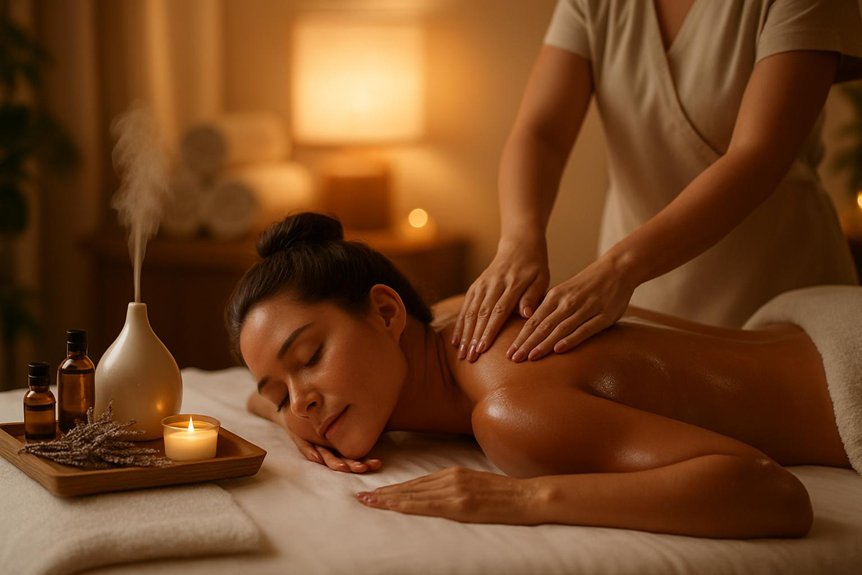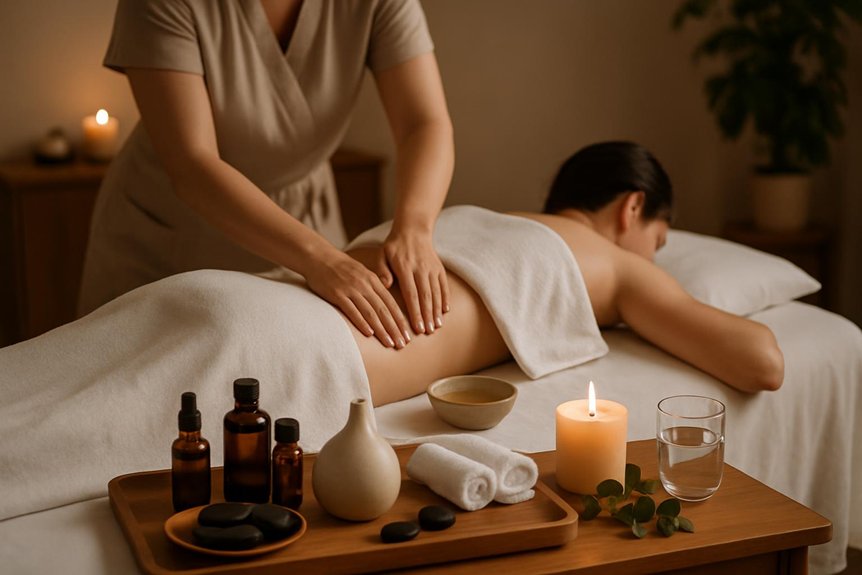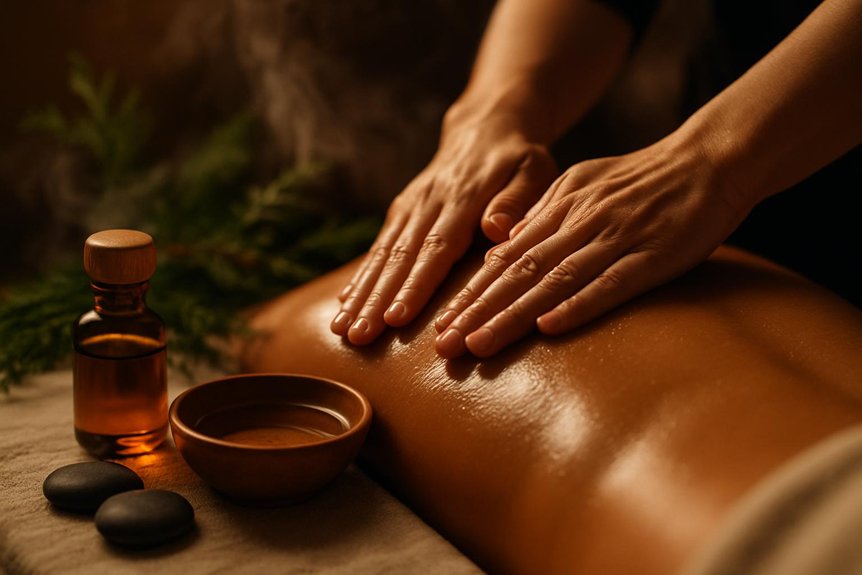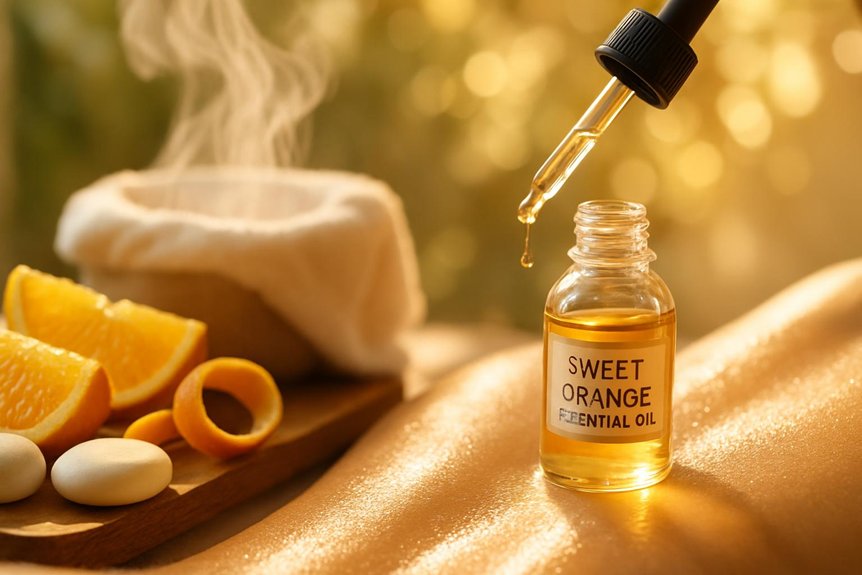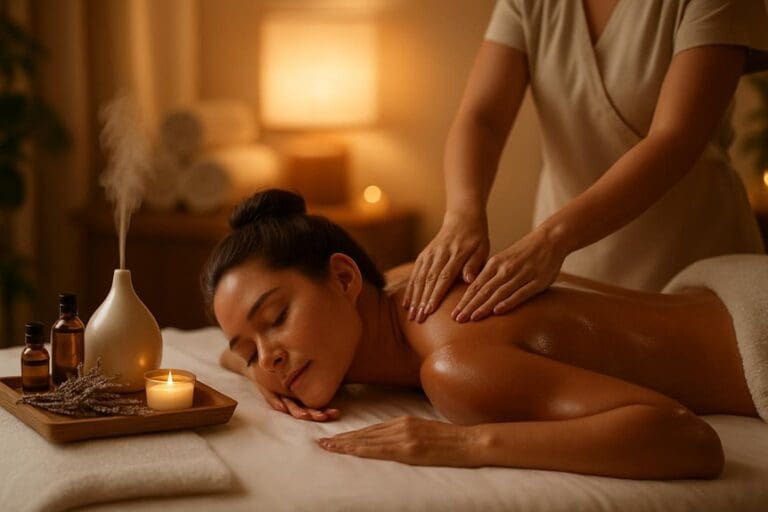
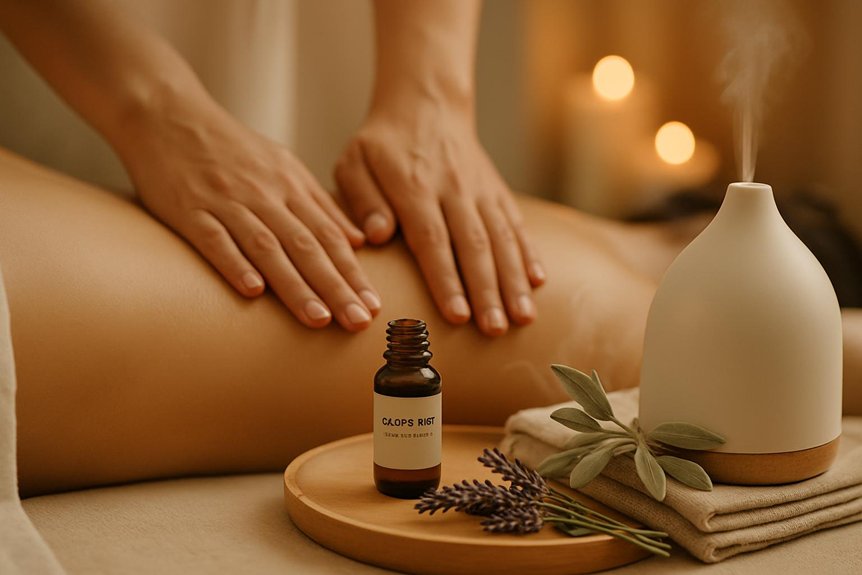
In aromatic massage, clary sage smells herbaceous and green at first, with a crushed-leaf clarity that settles quickly on warm skin. It moves into a softly sweet, tea-like, faintly floral heart without heaviness. The dry-down becomes warm, earthy, and subtly musky, sometimes with an amber or wine-like nuance and a powdery, intimate clean softness. Used at conservative 1–2% dilution, it stays skin-close; patch-testing and pregnancy/hormone screening are advised. More practical comparisons and blending options follow.
What Does Clary Sage Smell Like?
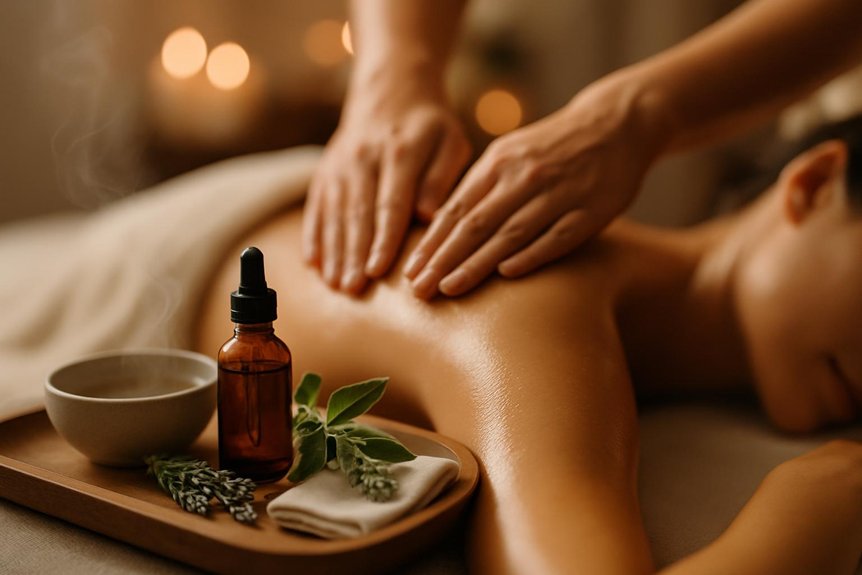
Often described as both herbaceous and softly sweet, clary sage has a clear, green opening—similar to crushed leaves—followed by a warm, earthy heart with subtle floral and tea-like nuances.
In aromatic massage, this profile tends to read as clean yet enveloping, with a faint musky softness that lingers close to the skin rather than projecting sharply.
At Spa & Massage clinics across London, therapists describe it as grounding and gently sensual, useful when a client wants calm without drowsiness.
It’s often paired with aromatherapy massage techniques to help clients relax and heal through scent and touch.
For safety, it is used only in properly diluted massage blends and avoided on irritated or broken skin. Clients are advised to mention sensitivities, asthma, or pregnancy so a suitable aromatic option can be selected and patch-tested if needed.
How Strong Is Clary Sage in Massage Oil?
In massage oil, clary sage typically reads as a medium-strength aroma: noticeable on application, then settling into a softer, skin-close warmth as the carrier oil absorbs.
The perceived intensity depends on dilution, room temperature, and where it is applied; warmer areas (neck, chest, lower back) tend to diffuse it more quickly, creating an enveloping, private cocoon rather than a loud “perfume” trail.
At Spa & Massage clinics, therapists keep clary sage within professional aromatherapy ranges so it remains sensual and soothing without becoming cloying or headache-triggering.
Clients sensitive to fragrance may prefer a lighter blend or shorter inhalation exposure.
Patch testing is advised, and clary sage is typically avoided in pregnancy unless specifically assessed by the therapist.
Clary Sage Vs Lavender: Which Smells Calmer?
How does “calmer” register on the nose when comparing clary sage with lavender? Lavender typically reads as cleaner and more linear: cool, herbaceous-floral, with a soft camphor edge that many people associate with bedtime quiet.
Clary sage tends to feel warmer and more enveloping: musky-green, faintly sweet, with an amber, wine-like nuance that can suggest emotional release rather than simple sedation.
In Spa & Massage aromatherapy sessions, therapists often note lavender as the safer first choice for clients seeking predictable calm, while clary sage suits those wanting a more intimate, loosening comfort.
Both should be well diluted in carrier oil, patch-tested for sensitive skin, and avoided around eyes; pregnancy requires therapist guidance.
What Does Clary Sage Blend Well With?
With its warm, musky-green, faintly sweet profile, clary sage pairs best with oils that either brighten its herbal core or round its amber-like softness—commonly citrus notes such as bergamot or sweet orange for lift, florals such as lavender or geranium for balance, and grounded bases such as frankincense or cedarwood for depth.
At Spa & Massage, therapists often build “skin-close” blends by combining clary sage with ylang ylang or jasmine for a velvety, sensual finish, then anchoring with sandalwood or patchouli to keep the aroma slow and lingering.
For a cleaner, more breathable impression, clary sage can be softened with chamomile or rose, then lightly sparked with petitgrain.
Safety remains central: typical dilution is 1–2% in carrier oil, patch-testing is advised, and pregnancy requires clinician guidance.
Why Can Clary Sage Smell Different on You?
Clary sage can register as softly herbal, tea-like, or musky-sweet on different individuals because skin chemistry and local heat change how its volatile aroma molecules evaporate during massage.
The perceived scent also shifts with dilution in carrier oil, the specific blend used, and where and how it is applied—faster-warming areas may lift sharper top notes first, while cooler areas hold deeper tones longer.
In Spa & Massage clinics, therapists patch-check sensitivities, use skin-safe dilutions, and adjust blend and application method to keep the aroma consistent and comfortable.
Skin Chemistry And Heat
In the treatment room, the perceived scent of clary sage can shift noticeably from one person to the next because skin chemistry and body heat alter how its aromatic molecules evaporate and develop. Warmer skin increases volatility, so the first impression may read brighter and more herbal before settling into soft, musky sweetness.
Skin pH, sebum level, and hydration influence how quickly aroma disperses and which notes linger; drier skin can make the scent feel sharper, while oilier skin may amplify ambered warmth. Circulation changes during massage also raise local temperature, subtly “opening” the fragrance as the body relaxes. At Spa & Massage, therapists observe these shifts and monitor for sensitivity, pausing if redness, itching, or headache appears. A patch test may be advised.
Dilution, Blend, And Application
Depending on dilution level, accompanying oils, and method of application, the same clary sage essential oil can present as crisp-herbal, softly floral, or warm and musky on different individuals.
At Spa & Massage clinics, therapists typically dilute to 1–2% in a neutral carrier; lower dilution keeps the scent airy, while richer dilution feels rounder, more skin-like, and lingering.
Blending shifts tone: bergamot or lavender lifts it into a clean, intimate freshness; sandalwood or frankincense deepens it toward resin and warm linen.
Application also changes diffusion—broad strokes over warmed muscles amplify sweetness, while targeted work (neck, wrists, décolletage) concentrates the “close-to-you” note.
Patch testing and avoiding eyes, mucosa, and broken skin reduce irritation and scent distortion.
Who Usually Enjoys Clary Sage’s Aroma?
Clary sage typically appeals to people who prefer herbal‑floral aromas with a soft sweetness and a lightly musky, tea-like finish.
In Spa & Massage clinics, it is often chosen by clients seeking a deeper sense of calm during aromatic massage, particularly when stress or mental fatigue is prominent.
As with any essential oil, therapists assess scent preference and suitability first, using conservative dilution and avoiding use when contraindications or sensitivities are identified.
Lovers Of Herbal Florals
At first inhale, clary sage presents a soft herbal-floral profile—green, slightly sweet, and faintly tea-like—with a musky undertone that reads as grounding rather than sharp.
It often appeals to clients who enjoy botanicals that feel clean yet sensual: those drawn to lavender’s floralness, geranium’s rosy edge, or herbaceous notes that suggest warm skin and linen.
In Spa & Massage aromatherapy sessions, this preference is common among people who want fragrance to enhance closeness without becoming perfumey or cloying.
Therapists typically blend clary sage at low dilution and patch-test when there is fragrance sensitivity, keeping the aroma intimate and controlled.
It is generally avoided during early pregnancy, and clients with hormone-sensitive conditions are advised to seek clinical guidance before use.
Clients Seeking Deep Calm
For clients seeking deep calm, clary sage’s aroma is typically favoured by those who find overtly bright or citrus-led scents overstimulating and instead respond best to soft, enveloping herbal warmth.
Its profile reads as velvety green-herbal with a muted floral body and a faint, musky sweetness that settles close to the skin.
At Spa & Massage, it is often chosen for evening appointments, stress-held breathing patterns, and clients wanting a quieter internal “volume” during slow effleurage and grounding holds.
Therapists keep dilution conservative, encourage a brief inhalation check, and monitor for headache sensitivity or scent aversion.
It is generally avoided in pregnancy and used cautiously with hormonal conditions unless approved.
Aftercare focuses on hydration, warm layers, and unhurried adjustments home.
Choosing Clary Sage for Your Massage in London
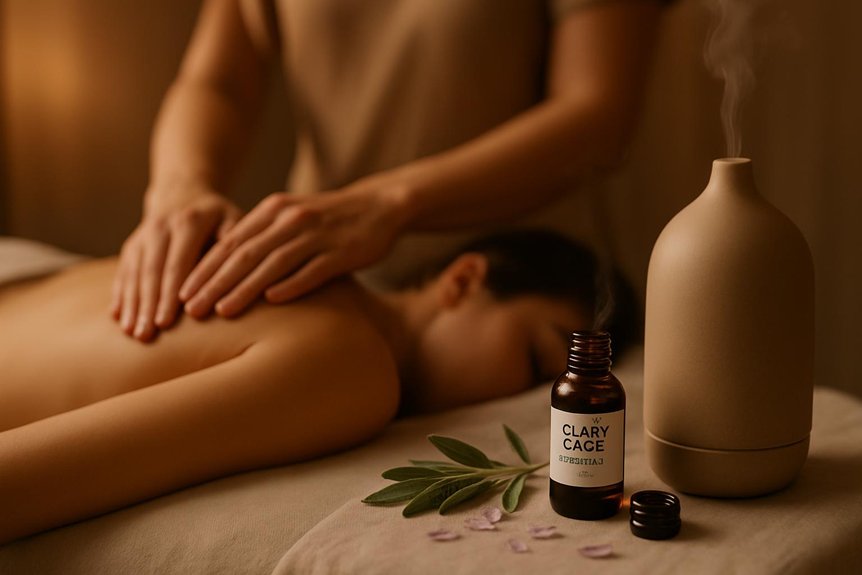
In the context of a London aromatic massage, clary sage essential oil is often selected when a client needs calm without heaviness, with an herbaceous, softly floral scent that settles quickly on the skin and in the breath.
At Spa & Massage clinics across Crouch End, Bayswater, Chiswick, Earl’s Court, Belsize Park, and Richmond, therapists choose it for evening sessions, high mental load, or tenderness around sleep.
The aroma reads as clean green leaves with a faint warmth, then a powdery, intimate softness.
In practice, it is diluted precisely and used in slow, grounding strokes to encourage unguarded exhalation.
Safety screening matters: it is avoided in pregnancy unless specifically indicated, and clients are asked about hormone-sensitive conditions and medication.
Patch testing is advised for reactive skin.
Conclusion
Clary sage in aromatic massage is best understood as a steady compass: herbaceous sweetness, soft florals, and a warm, tea‑earth base that guides the senses without dominating them. Its apparent strength depends on dilution and carrier, and it may read cleaner or muskier as skin chemistry and heat shift volatility. Blends can refine its profile, while patch testing and appropriate dosing reduce irritation risk. For London clients, it signals calm with modern clarity.