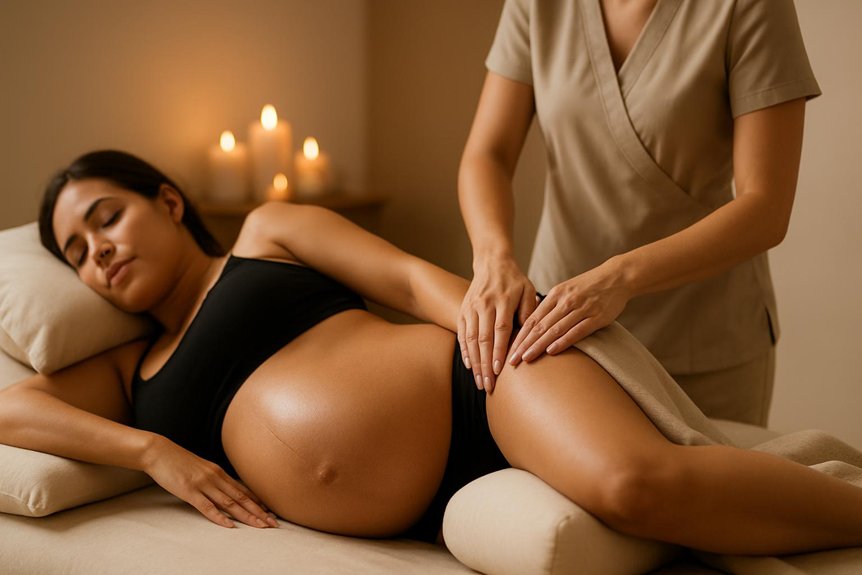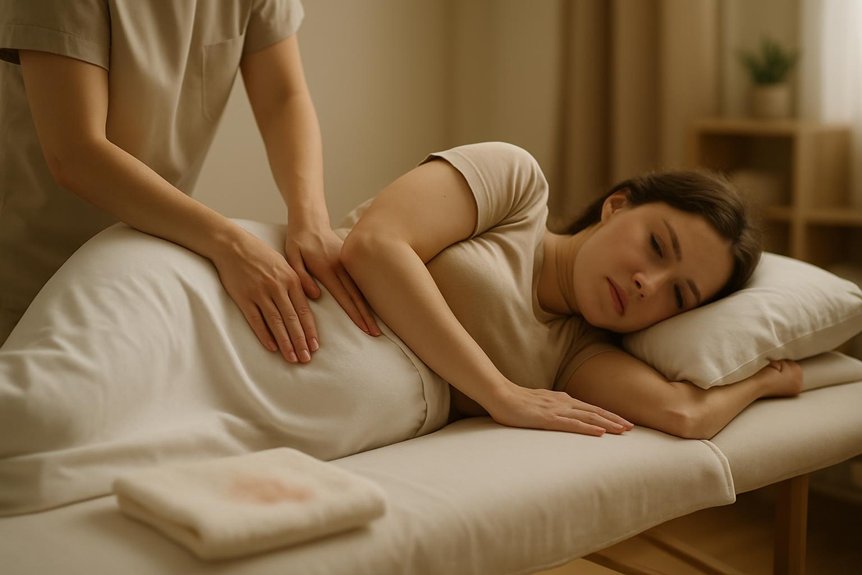
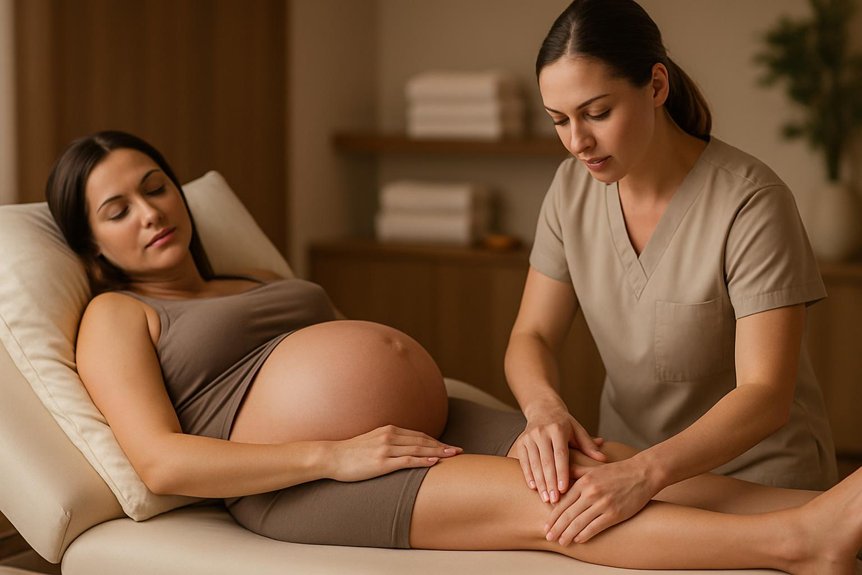
Lymphatic drainage massage is generally considered safe in uncomplicated pregnancy when it uses feather-light, rhythmic strokes, pregnancy-appropriate side-lying positioning, and is delivered by a properly trained therapist. It may help ease mild swelling in ankles, legs, and hands and improve comfort, but it does not treat serious causes of swelling. Treatment should be avoided or postponed with suspected pre-eclampsia, reduced fetal movements, infection, or any signs of DVT. More guidance follows on screening and trimester adjustments.
Is Lymphatic Drainage Massage Safe During Pregnancy?
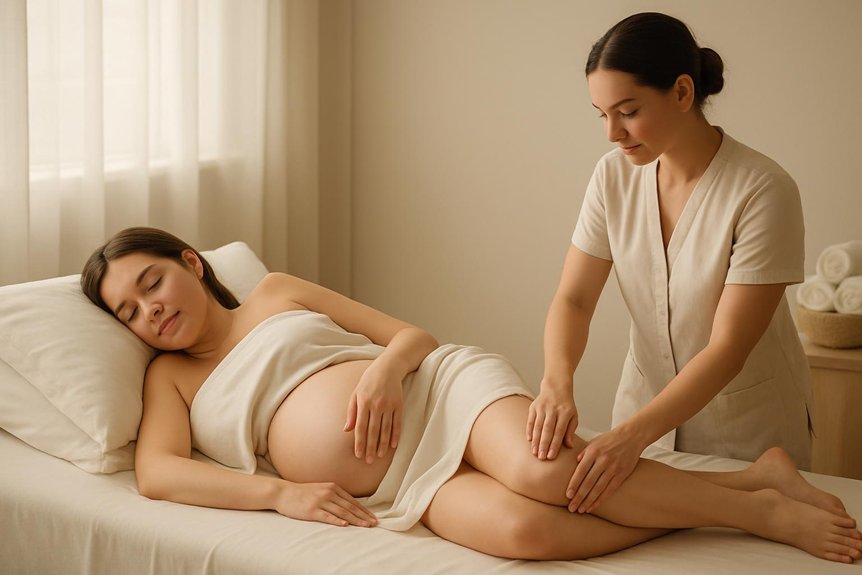
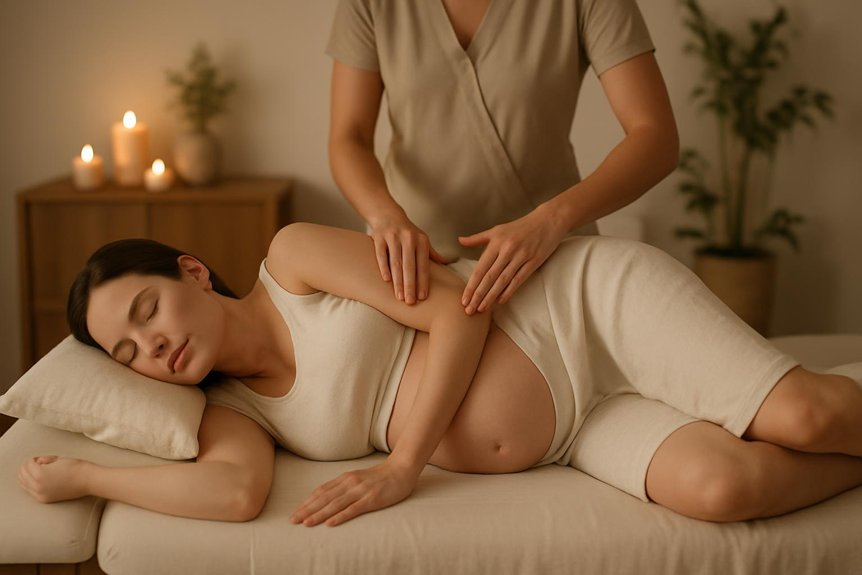
In most uncomplicated pregnancies, lymphatic drainage massage is generally considered safe when it is adapted for pregnancy and delivered by a properly trained therapist. It uses light, rhythmic strokes designed to support fluid movement and ease swelling, which many pregnant clients notice in ankles, calves, and hands. Evidence suggests gentle manual techniques can reduce discomfort and promote relaxation without deep pressure.
At Spa & Massage’s London clinics, therapists tailor positioning, pressure, and session length to trimester and symptoms, prioritising comfort, warmth, and privacy. Unscented or pregnancy-appropriate oils are used when desired, and communication is continuous so the client can feel held, not pushed. Aftercare typically includes water, gentle walking, and rest to sustain results.
For athletes who are pregnant, techniques informed by the benefits of sports massage can also support relaxation and help manage training-related discomfort when adapted appropriately.
When Should You Avoid Lymphatic Drainage Massage in Pregnancy?
Even though pregnancy-adapted lymphatic drainage is typically gentle, there are situations where it should be avoided or postponed to protect both parent and baby. It should not be booked without medical clearance in high-risk pregnancy, pre-eclampsia or suspected pre-eclampsia, unexplained swelling, severe headaches or visual changes, reduced fetal movements, vaginal bleeding, fever, or acute infection.
It is also avoided with suspected deep vein thrombosis, sudden one-sided leg pain, redness or warmth, shortness of breath, or chest pain—these require urgent assessment. Treatment is postponed over open wounds, skin infections, or active shingles, and caution is used with anticoagulants or uncontrolled heart, kidney, or liver disease.
At Spa & Massage, therapists screen thoroughly and liaise with a midwife when needed.
What Are the Benefits in Pregnancy (and What It Won’t Do)?
With the right screening and pregnancy-adapted technique, lymphatic drainage massage may help ease common fluid-related discomforts in pregnancy—such as mild swelling in the ankles, legs, and hands and a feeling of heaviness—by supporting the body’s natural lymph flow and relaxation response.
In Spa & Massage clinics across London, therapists use gentle, rhythmic strokes and comfortable side-lying positioning to promote softness and calm, which many clients find helps them feel lighter and more settled.
Benefits may include improved comfort, easier movement, and better sleep quality, alongside reduced tension from swelling. It is not a cure for pre-eclampsia, blood clots, or sudden severe swelling, and it will not “detox” the body or replace medical care. Persistent or one-sided swelling should be assessed promptly.
Lymphatic Drainage Massage by Trimester: What Changes?
Lymphatic drainage massage in pregnancy should be adapted by trimester to reflect changing physiology, comfort, and clinical risk, with a clear emphasis on safety and informed consent.
At Spa & Massage London clinics, therapists consider first-trimester factors (including symptom sensitivity and cautious screening), then make second-trimester adjustments such as supportive positioning and tailored pressure.
In the third trimester, precautions typically increase—especially around swelling patterns, blood-pressure concerns, and avoiding prolonged supine positioning—so care plans remain patient-centred and clinically appropriate.
First Trimester Considerations
During the first trimester, lymphatic drainage massage is approached cautiously because early pregnancy brings rapid hormonal and circulatory changes, alongside a higher baseline risk of nausea, dizziness, and fatigue.
In this stage, Spa & Massage therapists prioritise medical screening, consent, and comfort, advising clients to check with their midwife or GP if there is bleeding, severe cramping, history of miscarriage, or IVF/other higher‑risk care.
If treatment is appropriate, pressure is kept feather‑light, sessions are shorter, and positioning is adjusted to avoid overheating or triggering faintness.
Oils are used sparingly and chosen for sensitivity, as scent aversion is common.
Clients are encouraged to eat lightly beforehand, hydrate, and stop immediately if symptoms worsen.
Second Trimester Adjustments
As early pregnancy symptoms often settle, the second trimester typically allows lymphatic drainage massage to be delivered more consistently, while keeping safety screening and comfort at the forefront.
At Spa & Massage, therapists re-check medical history, blood pressure concerns, and any new swelling patterns, and proceed only with GP/midwife guidance when risk factors exist.
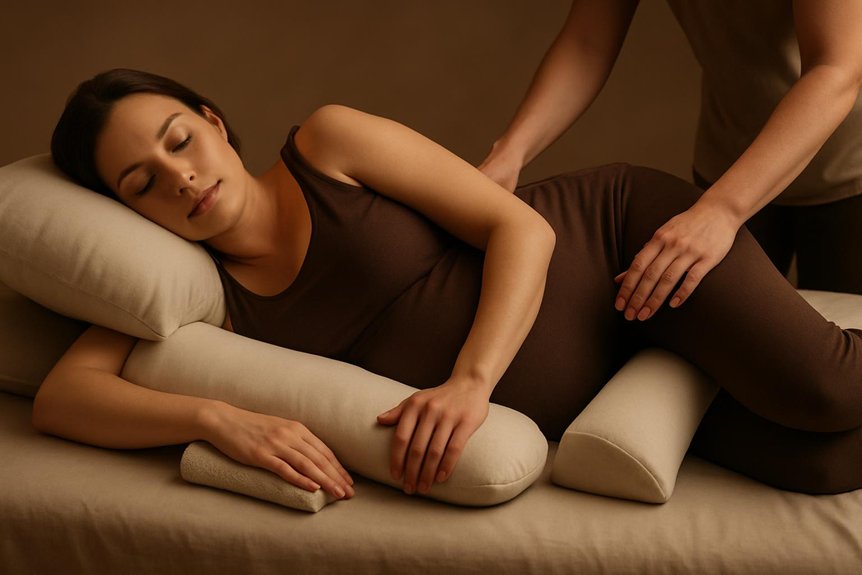
Positioning is adjusted for relaxation and circulation: side-lying with supportive pillows, avoiding prolonged flat-on-back time.
Pressure remains light, rhythmic, and slow, focused on encouraging fluid return in legs, ankles, and hands without deep work or painful strokes.
Unscented or pregnancy-appropriate oils are typically chosen to suit heightened sensitivity.
Sessions are paced with frequent check-ins, inviting the client to breathe, soften, and feel securely cared for throughout.
Third Trimester Precautions
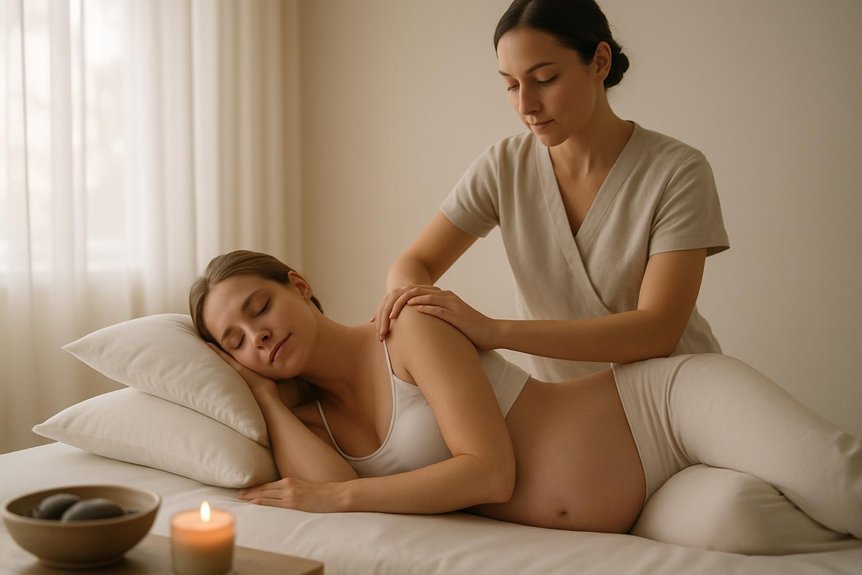
By the third trimester, comfort and clinical caution take priority, because increased abdominal size, breathlessness, and more pronounced swelling can change how safely lymphatic drainage massage is delivered. At Spa & Massage, therapists keep pressure feather‑light, avoid deep work, and position clients in side‑lying with supportive bolsters to reduce vena cava compression and help breathing.
Care is focused on ankles, calves, and hands, while the abdomen is generally avoided unless a midwife or doctor has advised otherwise. Sessions are shortened if dizziness, nausea, contractions, headache, sudden swelling, calf pain, or visual changes appear; these require medical review. Essential oils are used sparingly and only when pregnancy‑appropriate, with patch testing.
Aftercare includes hydration, gentle ankle pumps, and brief walks to support circulation and reduce pooling safely.
What Happens in a Pregnancy-Safe Lymphatic Drainage Session?
What should a pregnancy-safe lymphatic drainage session look like in practice? It begins with a brief, private consultation to confirm gestational age, symptoms, and any red flags (e.g., preeclampsia signs, DVT risk, infection), then informed consent.
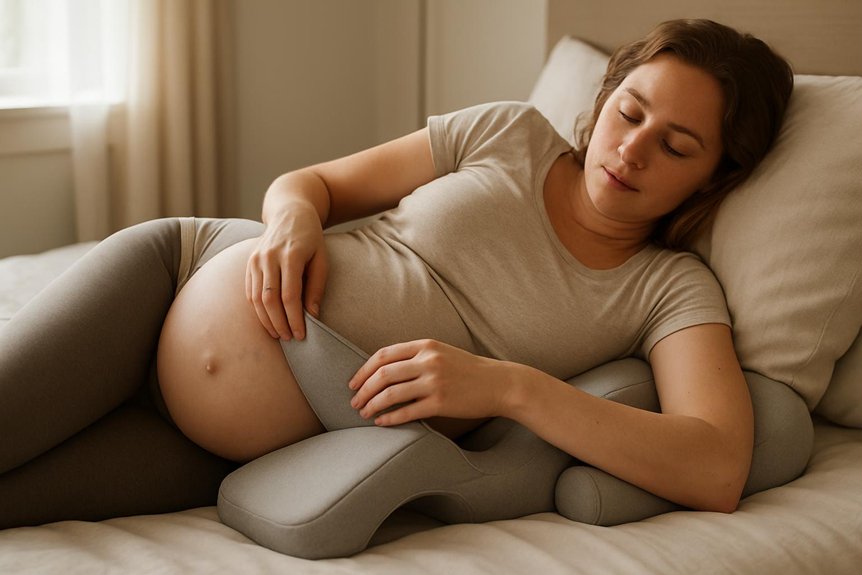
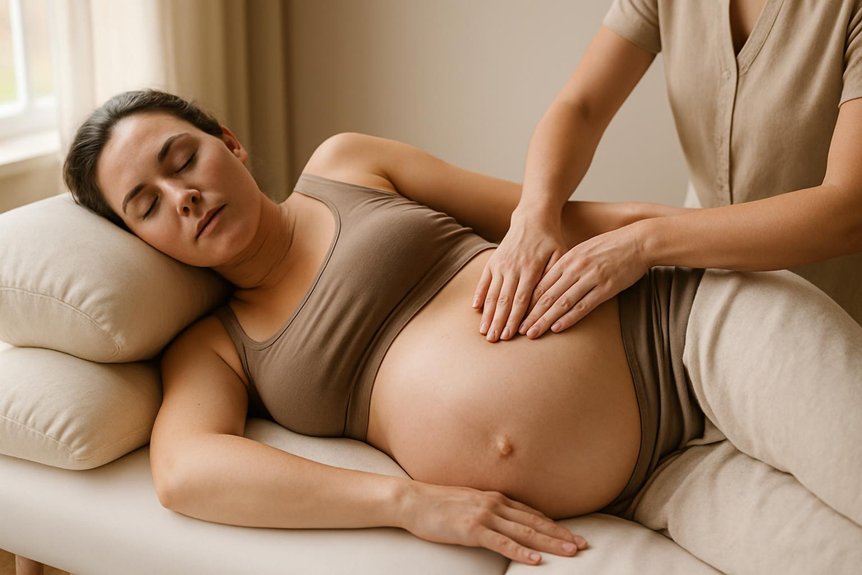
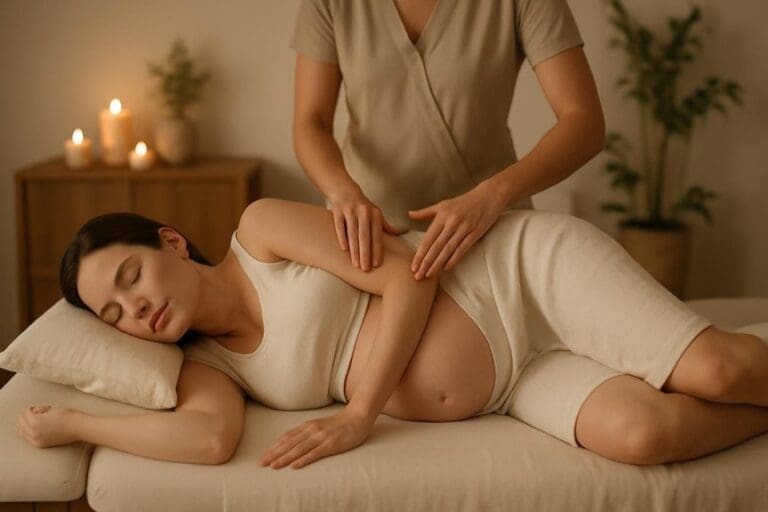
At Spa & Massage, positioning prioritises comfort and circulation—usually side-lying with supportive bolsters, avoiding prolonged supine time.
The therapist uses light, rhythmic strokes that follow lymph pathways, never deep pressure, and monitors breathing, temperature, and dizziness. Sensitive areas are approached conservatively; the abdomen is avoided unless specifically requested and clinically appropriate.
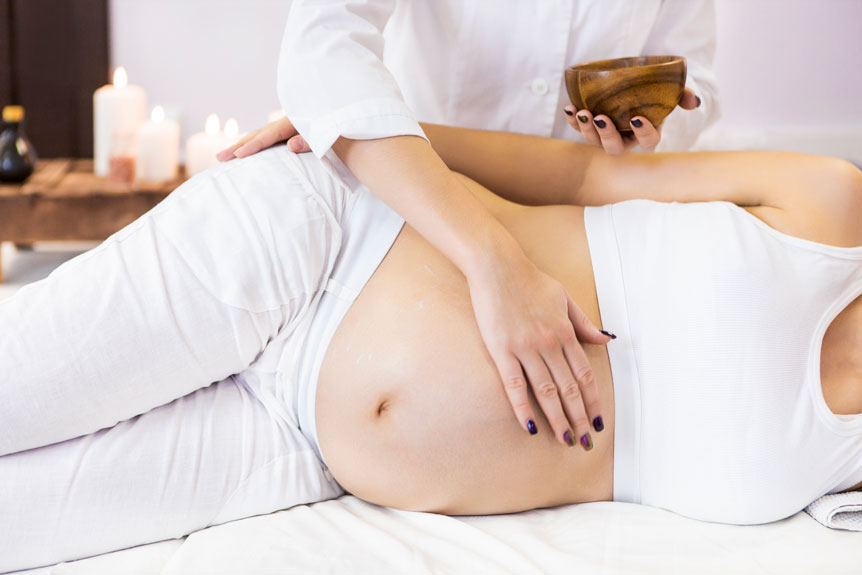
Unscented or pregnancy-appropriate oils are used, with patch-testing when needed. The session ends with slow grounding touch, hydration guidance, and advice to seek medical review if swelling is sudden, one-sided, painful, or paired with headache or vision changes.
Lymphatic Drainage vs Other Pregnancy-Safe Massage Types
Lymphatic drainage massage is typically lighter and more fluid-directed than standard pregnancy massage, which more often targets muscular tension and comfort while still adapting positioning and pressure for maternal safety.
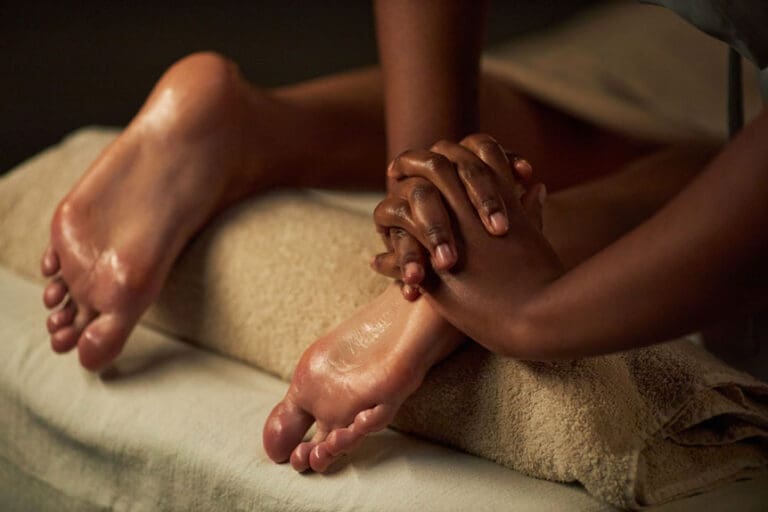
Reflexology can support relaxation and symptom relief for some people, but it works through focused foot (or hand) pressure and is not designed to promote lymph flow in the same way as manual lymphatic techniques.
In Spa & Massage clinics across London, therapists help clients choose between these options based on trimester, symptoms (such as swelling versus back/hip tension), and any medical guidance.
Lymphatic Drainage Vs Prenatal Massage
Often, the safest and most effective option in pregnancy depends on whether the primary goal is reducing swelling and fluid retention (where lymphatic drainage can help) or easing muscular tension, back pain, and general discomfort (where prenatal massage is usually more appropriate).
Lymphatic drainage uses very light, rhythmic strokes aimed at encouraging fluid movement, and is typically chosen for ankles, legs, and hands that feel puffy, especially later in pregnancy.
It is broader: it applies gentle-to-moderate pressure to soothe tight hips, shoulders, and the lower back, while supporting relaxation and sleep.
At Spa & Massage clinics across London, therapists screen for red flags, avoid deep work on the legs when risk factors exist, and use side-lying positioning for comfort and closeness.
Lymphatic Drainage Vs Reflexology
In pregnancy-safe bodywork, the choice between manual lymphatic drainage and reflexology hinges on the primary symptom and the client’s risk profile. Lymphatic drainage uses feather-light strokes to support fluid movement and can be preferable for ankle swelling, heaviness, or post-travel puffiness, while remaining gentle on sensitive tissues.
Reflexology focuses on the feet and may suit clients who want calm, sleep support, and nervous-system easing without full-body positioning; however, pressure must be moderate and specific areas avoided when pregnancy complications exist.
At Spa & Massage clinics across London, therapists screen for preeclampsia signs, DVT risk, varicose veins, and high-risk pregnancy before either treatment. Many clients enjoy combining a brief lymphatic sequence with soothing foot work for closeness and comfort.
Aftercare After Lymphatic Drainage Massage (Easy Home Tips)
Following a prenatal lymphatic drainage massage, thoughtful aftercare can support comfort, hydration, and steady fluid balance while keeping pregnancy safety front of mind. At Spa & Massage clinics across London, therapists advise drinking water regularly, then resting with legs slightly elevated to ease ankle and foot swelling.
Gentle walking or calf pumps can help circulation without strain; prolonged sitting is best broken up. A warm shower may soothe, while hot baths, saunas, and overheating are avoided.
Light, breathable clothing supports comfort, and salt-heavy meals are kept modest. If home self-massage is tried, it should be feather-light and directed toward the heart, never deep or painful.
Sudden one-sided swelling, headache, or visual changes warrant prompt medical review.
Conclusion
Lymphatic drainage massage can be safe in pregnancy when adapted and delivered by a qualified therapist, with medical clearance for higher‑risk conditions. It may ease mild swelling and discomfort, but it does not treat serious causes of oedema (e.g., pre‑eclampsia or thrombosis). For example, a 28‑week client with ankle swelling after standing all day may benefit from side‑lying, light-pressure lymphatic techniques and home elevation—while new one‑sided swelling, headache, or breathlessness warrants urgent review.