A massage chair is usually acceptable in an uncomplicated pregnancy when used briefly on low-intensity settings, with the abdomen kept completely free of pressure. Heat and vigorous vibration should be avoided because they may increase core temperature, nausea, or circulatory strain. Sessions are typically limited to 5–10 minutes, extending only to about 10–15 minutes if well tolerated, using an upright or gentle recline. Any cramping, bleeding, dizziness, fluid leakage, or reduced fetal movement warrants stopping and contacting a clinician. Further guidance covers trimester adjustments and safer settings.
Is a Massage Chair Safe During Pregnancy?
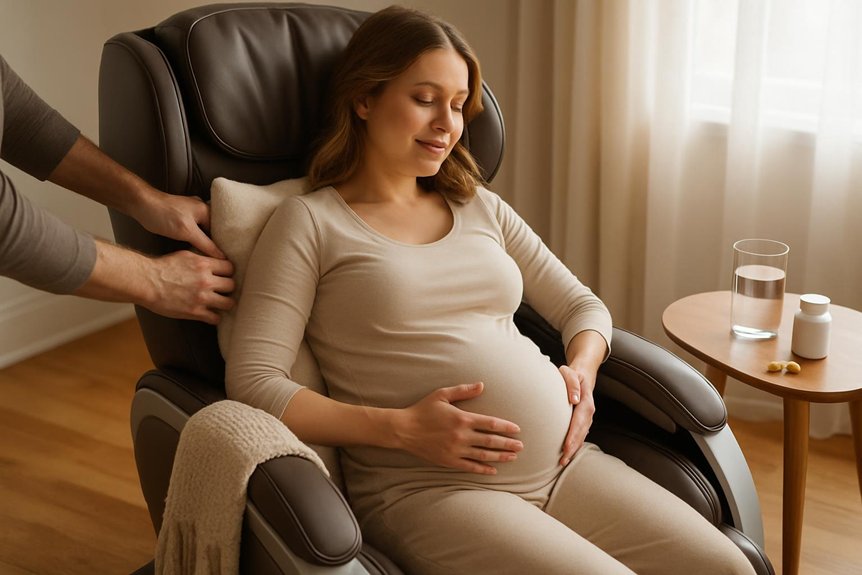
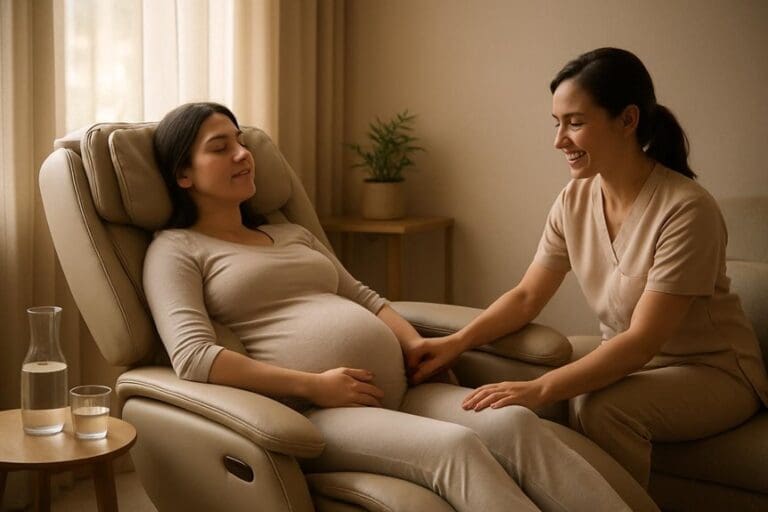
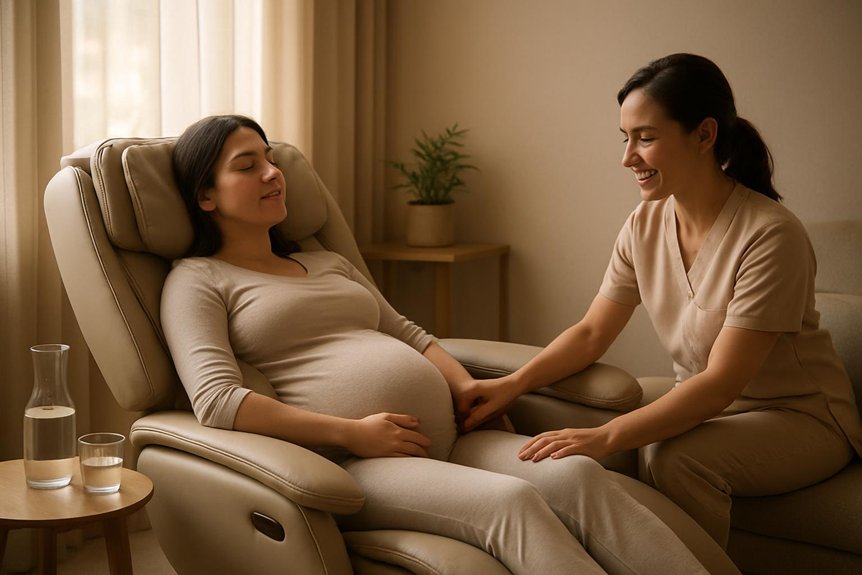
In most uncomplicated pregnancies, a massage chair can be used safely for short, low-intensity sessions, provided key precautions are followed.
Use should be comfort-led, avoiding pain, abdominal pressure, overheating, and vigorous vibration. Anyone with bleeding, severe abdominal pain, dizziness, high blood pressure, pre-eclampsia concerns, placenta problems, risk of preterm labour, or a history of pregnancy complications should avoid chair massage unless their midwife or doctor advises otherwise.
Hydration and slow position changes reduce light-headedness. Settings that elevate the legs modestly can support circulation, while excessive compression at calves should be avoided.
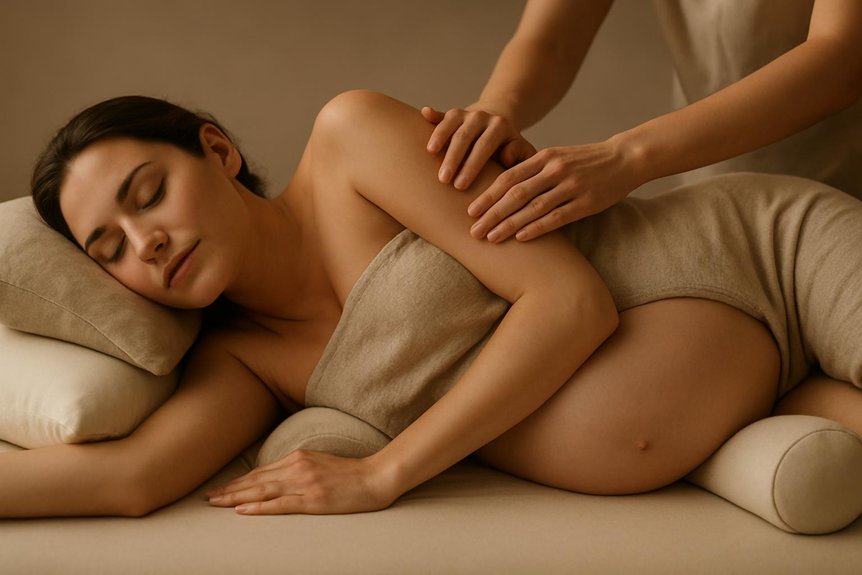
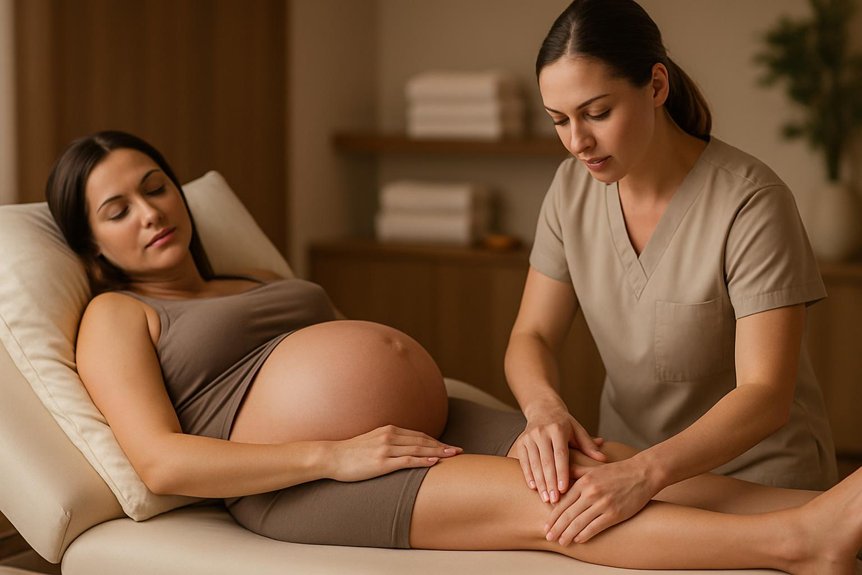
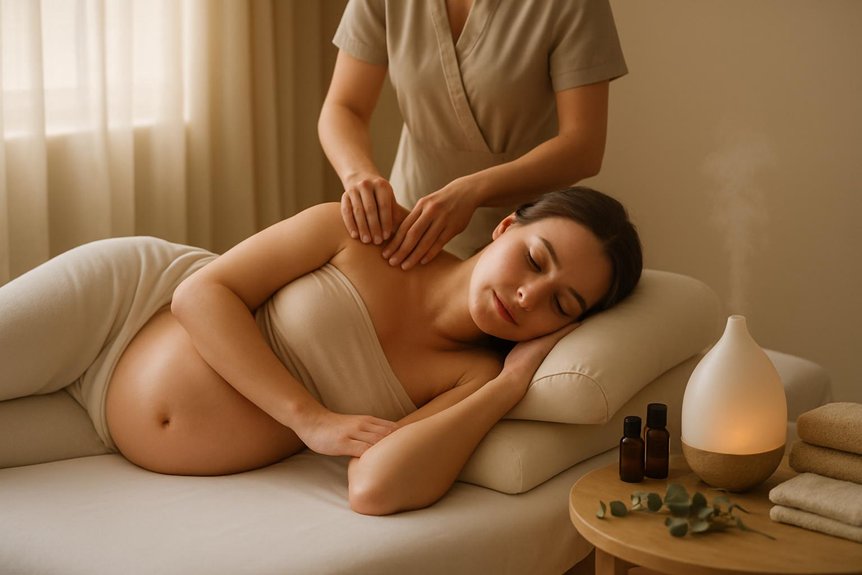
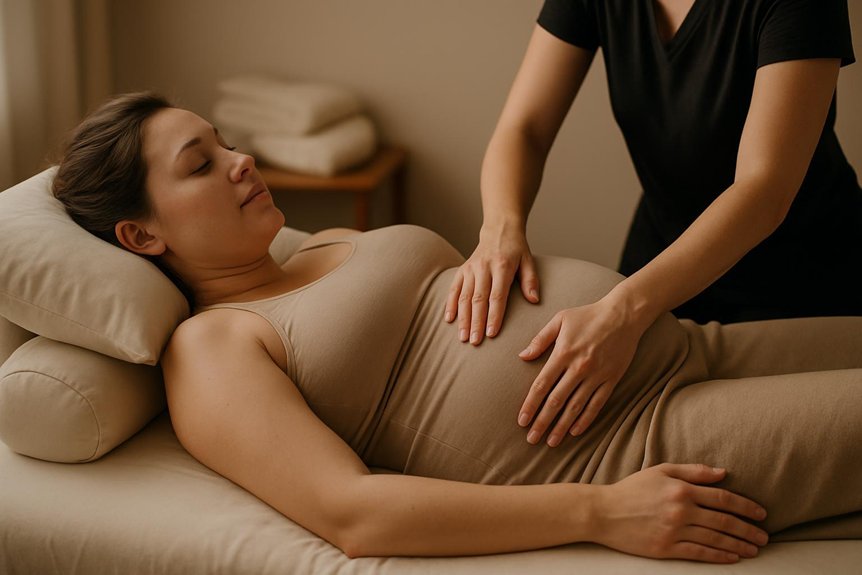
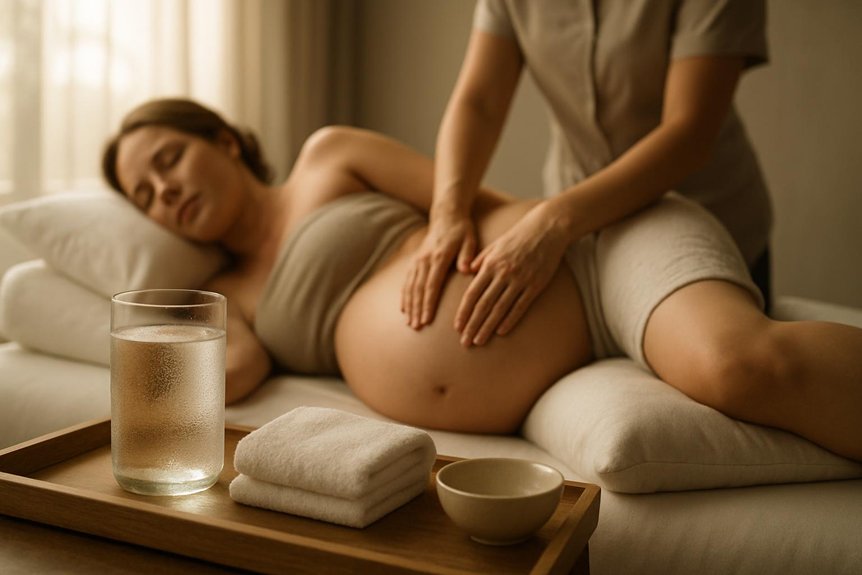
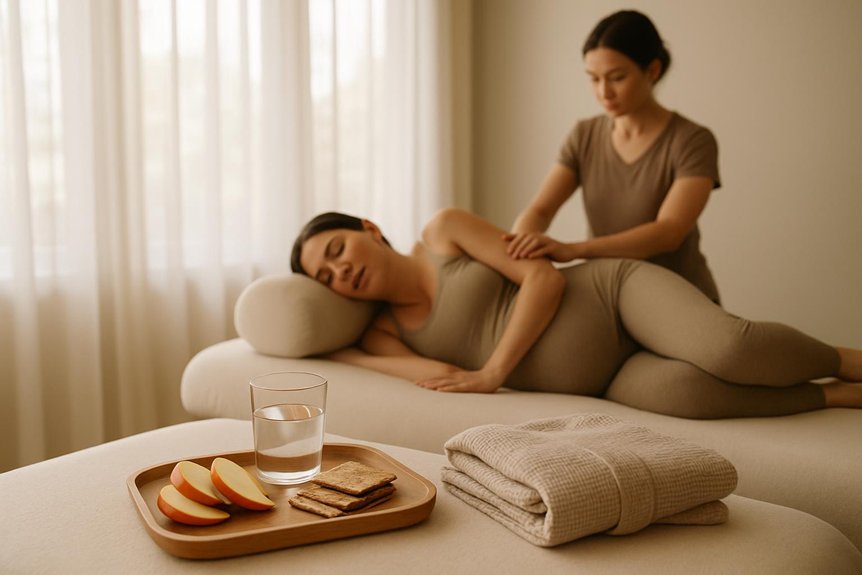
At Spa & Massage clinics across London, therapists prioritise side-lying prenatal massage when hands-on care is preferred, using supportive bolsters and gentle, reassuring pressure for safe, close relaxation.
When used appropriately, pregnancy massage is associated with reduced stress for many expecting mothers.
Massage Chair Safety by Trimester (and Why)
Overall safety for massage chair use in pregnancy depends not only on session length and intensity, but also on gestational stage, because physiological changes across the first, second, and third trimesters alter susceptibility to nausea, dizziness, overheating, venous compression, and circulatory strain.
In the first trimester, hormonal shifts and morning sickness can amplify light‑headedness; vibration and heat should be conservative, and any cramping or bleeding warrants avoidance and medical review.
In the second trimester, many tolerate gentle, supportive massage best; care should prioritise neutral spinal positioning and avoiding excessive abdominal pressure.
In the third trimester, a reclined, semi‑side‑lying posture is safer to reduce inferior vena cava compression and leg swelling; avoid strong percussive settings.
Spa & Massage therapists typically favour pregnancy‑specific positioning and low heat for comfort.
How Long Can You Use a Massage Chair While Pregnant?
Recommended massage-chair time during pregnancy should be trimester-specific, with conservative limits early on and careful positioning and shorter exposures as gestation progresses.
Session length is best kept brief and low-intensity, with scheduled breaks, and many clients are advised to prioritise clinician-led prenatal massage at Spa & Massage when symptom relief is needed.
Use should stop immediately if any warning signs occur—such as dizziness, nausea, abdominal cramping, vaginal bleeding, reduced fetal movement, shortness of breath, palpitations, or worsening pain—and medical advice should be sought.
Trimester-Based Time Limits
As pregnancy progresses, safe massage-chair time tends to decrease, with trimester-based limits guided by comfort, circulation, and sensitivity to pressure and heat.
In the first trimester, many clinicians advise minimal use because nausea, dizziness, and heat sensitivity are common; if used, settings should stay gentle and cool, stopping at any discomfort.
In the second trimester, tolerance is often better, yet prolonged compression of the lower back and calves can aggravate swelling; intermittent, low-intensity use is preferred.
In the third trimester, supine or reclined positions may reduce venous return; upright positioning and strict avoidance of strong kneading, vibration, and heat are emphasised.
Spa & Massage therapists in London encourage individualised risk screening and obstetric clearance for hypertension, preeclampsia risk, or preterm contractions.
Session Length Guidelines
Ten to fifteen minutes per session is a prudent upper limit for most uncomplicated pregnancies when using a massage chair, provided intensity and heat are kept low and the seated position supports neutral spinal alignment.
If comfort remains stable, sessions may be repeated once daily, ideally separated by several hours to reduce cumulative mechanical pressure and thermal exposure.
Longer use is generally discouraged because pregnancy increases sensitivity to compression, positional strain, and temperature shifts.
A practical approach is to begin with 5–10 minutes, reassess comfort, then extend only within the 15-minute cap.
In later pregnancy, shorter sessions often suit circulation and breath mechanics.
At Spa & Massage clinics across London, therapists typically favour brief, gentle intervals that prioritise relaxation, steady breathing, and a sense of safe, held support.
Warning Signs To Stop
Often, the safest limit on massage-chair use during pregnancy is set not by the clock but by early warning signs that indicate rising mechanical strain, overheating, or circulatory compromise. Use should stop immediately with dizziness, nausea, flushing, sweating, shortness of breath, palpitations, or a sudden headache.
New pelvic pressure, abdominal tightening, uterine cramping, vaginal bleeding, fluid leakage, reduced fetal movement, or back pain that sharpens rather than eases also warrants stopping and contacting a midwife or GP.
Any numbness, tingling, calf pain, or one-sided leg swelling should be treated as urgent. At Spa & Massage clinics in London, therapists advise keeping intensity gentle; if the body cannot fully relax, the chair is too strong. Comfort is the first safety metric.
Massage Chair Settings to Avoid When Pregnant
Several massage chair settings warrant avoidance during pregnancy because mechanised pressure, vibration, and heat can be difficult to dose accurately and may exacerbate common pregnancy risks such as hypotension, pelvic or lumbar discomfort, and nausea.
High-intensity “deep knead,” percussive tapping, and strong shiatsu nodes over the low back, sacrum, or abdomen should be avoided due to excessive focal pressure and potential symptom flare.
Prolonged full-body vibration and “jiggle” modes may worsen nausea or dizziness.
Heat functions—especially high temperature or extended lumbar heating—can raise core temperature and aggravate swelling.
Strong calf or foot compression programmes should be avoided if there is varicose veins, clot risk, or significant oedema.
Spa & Massage therapists typically favour gentle, manually titrated prenatal massage instead.
How to Sit Safely in a Massage Chair When Pregnant
In early and mid‑pregnancy, safe use of a massage chair depends primarily on positioning that preserves venous return and avoids abdominal or pelvic compression.
She should sit upright or in a gentle recline, keeping the pelvis neutral and the belly completely free of contact with pads, belts, or rollers.
A small cushion behind the mid‑back and a rolled towel under one hip can reduce vena cava pressure during longer sessions.
Feet should rest flat with knees slightly flexed; avoid crossing legs.
Arms should be supported to prevent shoulder bracing.
Intensity should remain light, focusing on upper back, shoulders, and calves, not the abdomen or deep lumbar.
At Spa & Massage, therapists advise short intervals, with slow breathing and frequent micro‑adjustments for comfort.
When to Stop Using a Massage Chair and Call Your Midwife
Massage-chair use in pregnancy should be stopped immediately if any warning sign occurs, and advice should be sought from a midwife before resuming.
Spa & Massage clinicians advise contacting a midwife for new or worsening abdominal or pelvic pain, vaginal bleeding or fluid leakage, reduced fetal movements, regular contractions, dizziness or fainting, shortness of breath, chest pain, severe headache, sudden swelling, or calf pain/swelling.
The following urgent-symptoms checklist clarifies which signs warrant same-day midwife review versus emergency assessment.
Warning Signs To Stop
Sometimes, the safest approach during pregnancy is to stop using a massage chair immediately and seek clinical advice if any concerning symptoms arise. Warning signs include vaginal bleeding or fluid leakage, new or worsening abdominal or pelvic pain, regular tightening that feels rhythmic, reduced fetal movement, dizziness, faintness, shortness of breath, chest pain, palpitations, severe headache, visual disturbance, sudden swelling of face or hands, fever, or nausea with sweating.
Stop as well if the massage feels overly intense, causes tingling, numbness, radiating pain, or uterine discomfort, or if the heat function raises core temperature.
At Spa & Massage clinics in London, therapists advise gentle pressure, cool settings, and immediate cessation if the body signals distress. Safety comes before relaxation, always.
When To Call Midwife
When should a midwife be contacted after using a massage chair in pregnancy? A midwife should be called if discomfort persists beyond a short rest period, if uterine tightness becomes regular, or if there is any concern that the session triggered a change in fetal movement patterns compared with usual.
Contact is also appropriate after any new back or pelvic pain that feels sharp, escalating, or function-limiting, or if dizziness, palpitations, or nausea do not settle with hydration and left-side lying.
If there is a history of placenta complications, preterm labour risk, hypertension, or clotting disorders, a midwife should advise before further chair use.
At Spa & Massage, therapists recommend pausing and seeking personalised clinical guidance before resuming intimate self-care.
Urgent Symptoms Checklist
How can a pregnant person tell the difference between normal postural discomfort and a warning sign during massage-chair use? Normal sensations are mild, easing within minutes after stopping and repositioning.
Stop immediately and call a midwife if any of these occur: vaginal bleeding, fluid leakage, regular cramping or tightening, reduced fetal movements, dizziness/fainting, shortness of breath, chest pain, severe headache, visual changes, sudden facial/hand swelling, persistent abdominal pain, fever, or new one‑sided leg pain/swelling (possible clot). Also stop for numbness, weakness, or sharp back pain radiating down a leg.
Spa & Massage advises side‑lying rest, hydration, and quiet monitoring for 30 minutes; if symptoms persist, seek urgent assessment rather than “pushing through.”
Conclusion
Massage chair use during pregnancy may be acceptable for some individuals when cleared by a midwife, using low intensity, no heat, and neutral positioning. Risk varies by trimester and by factors such as hypertension, bleeding, or preterm labour history. For example, a 28‑week patient with pelvic girdle pain used a chair for 10 minutes on gentle rolling without vibration; discomfort improved and no symptoms occurred. Any abdominal pain, dizziness, contractions, or reduced fetal movement warrants stopping and seeking advice.