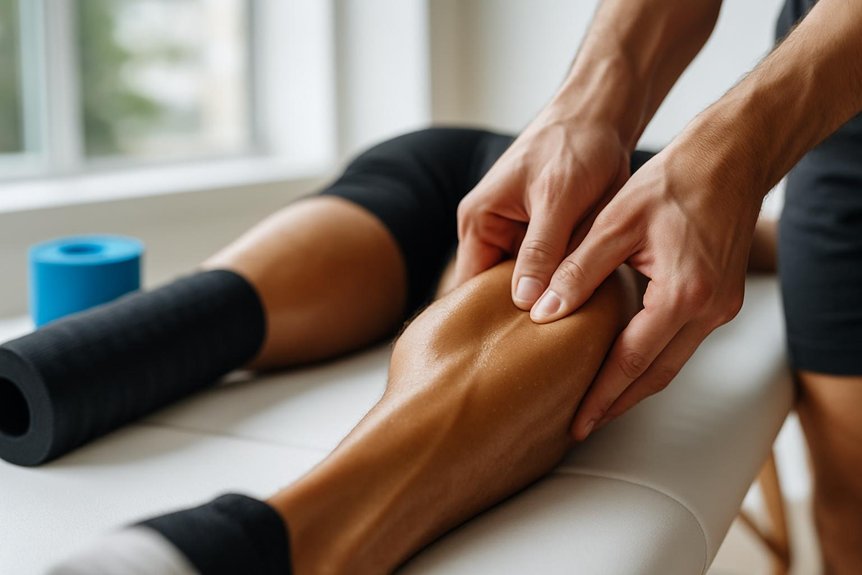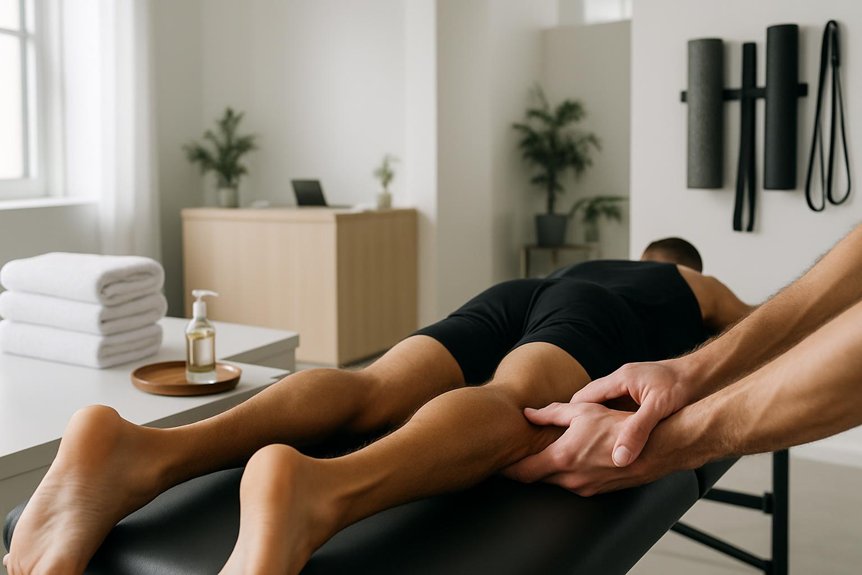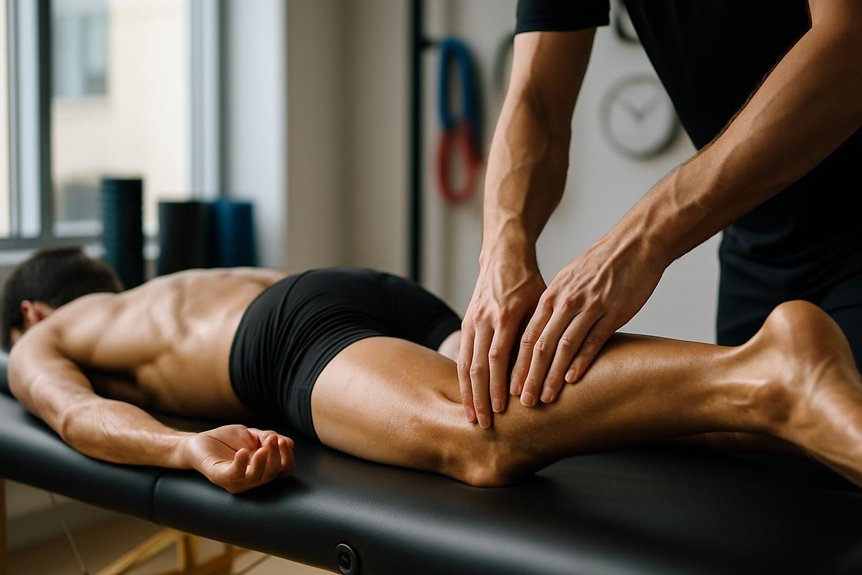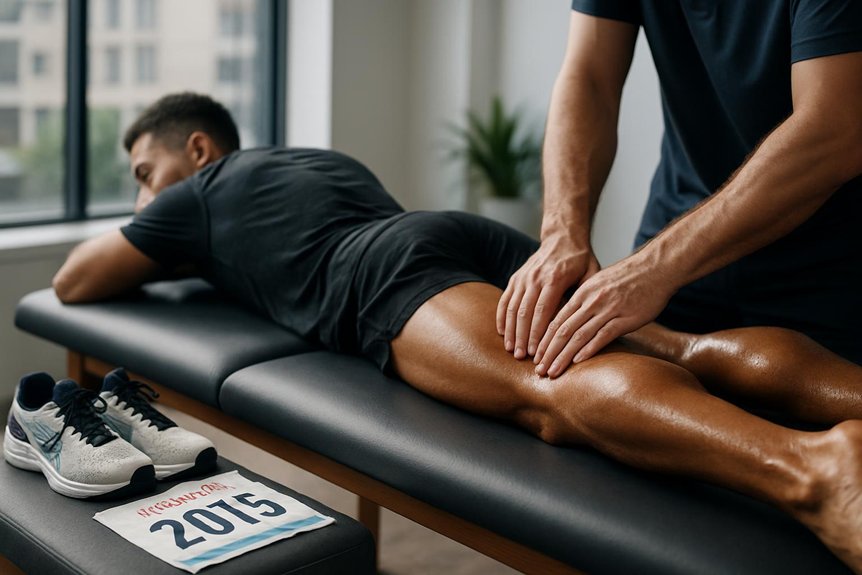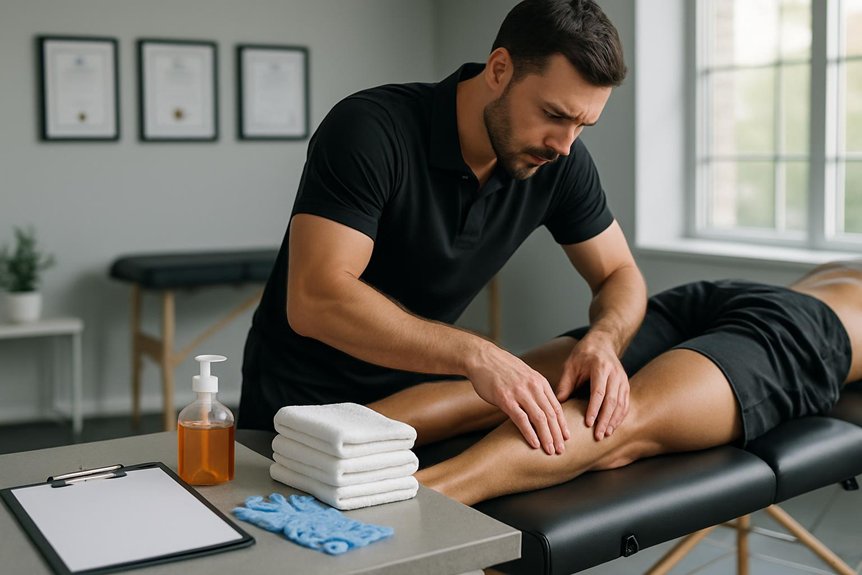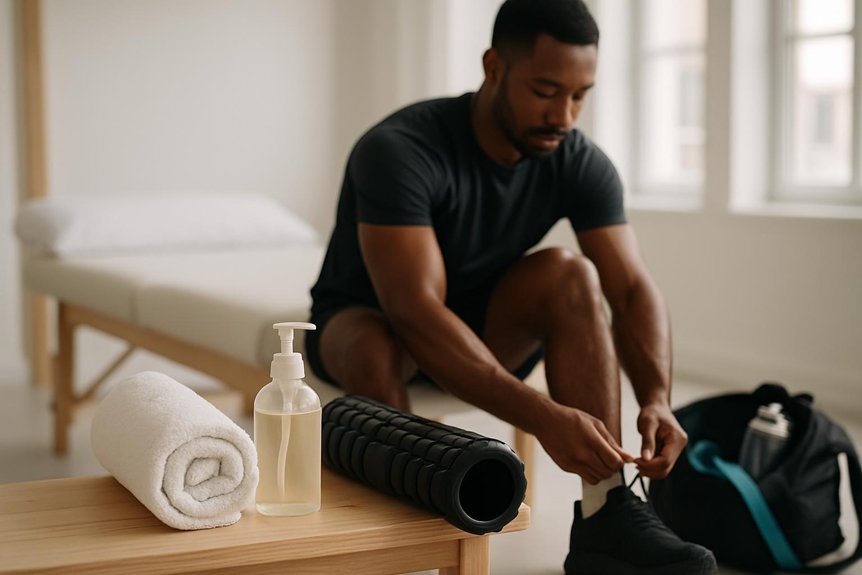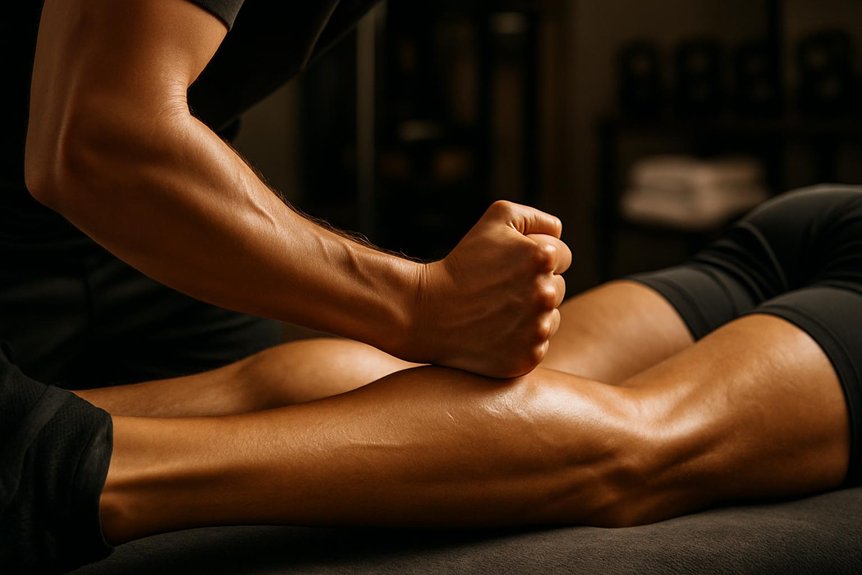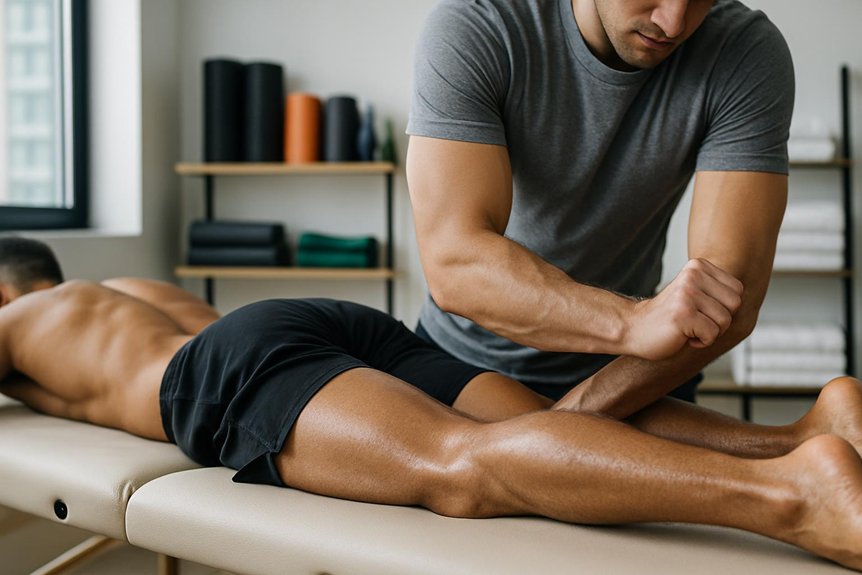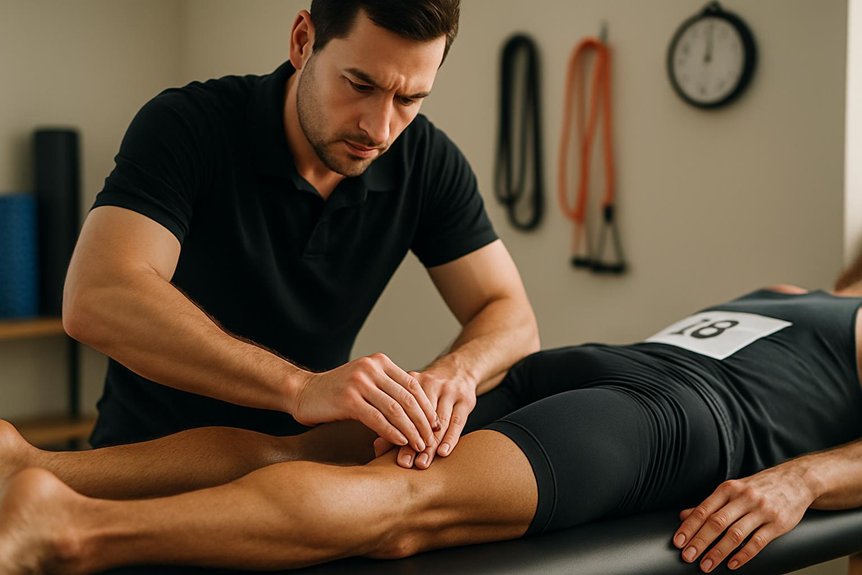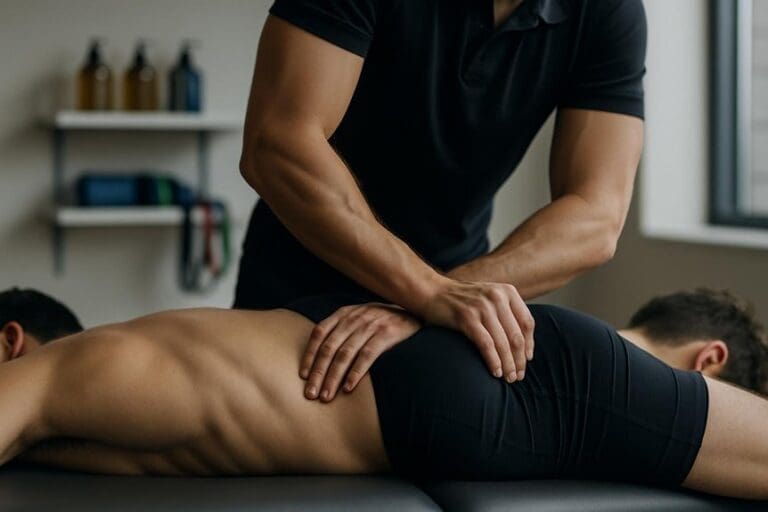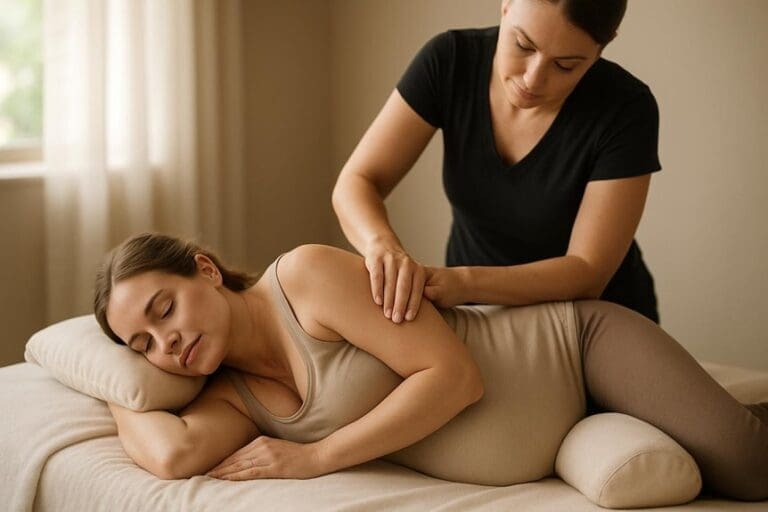
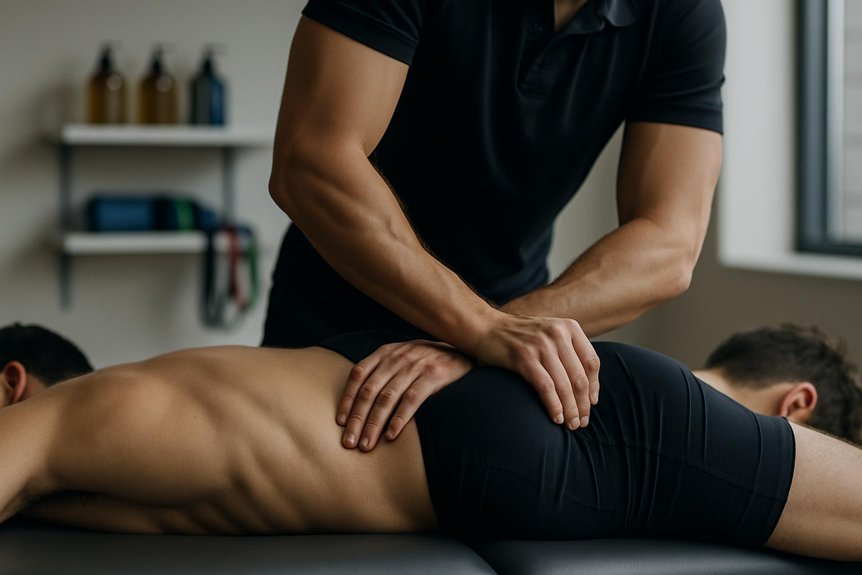
It can help tight glutes by reducing myofascial and neuromuscular tone through sustained, specific pressure, deep-tissue stripping, cross-fibre friction, and graded trigger-point compression to the gluteus maximus/medius and deep hip rotators. Slow strokes restore glide between fascial layers and improve local circulation, while pin-and-stretch or active movements reinforce length after release. Pressure is typically progressed to a strong-but-safe intensity with consent and symptom monitoring. Further sections outline causes, red flags, aftercare, and scheduling.
Can Sports Massage Relieve Tight Glutes?
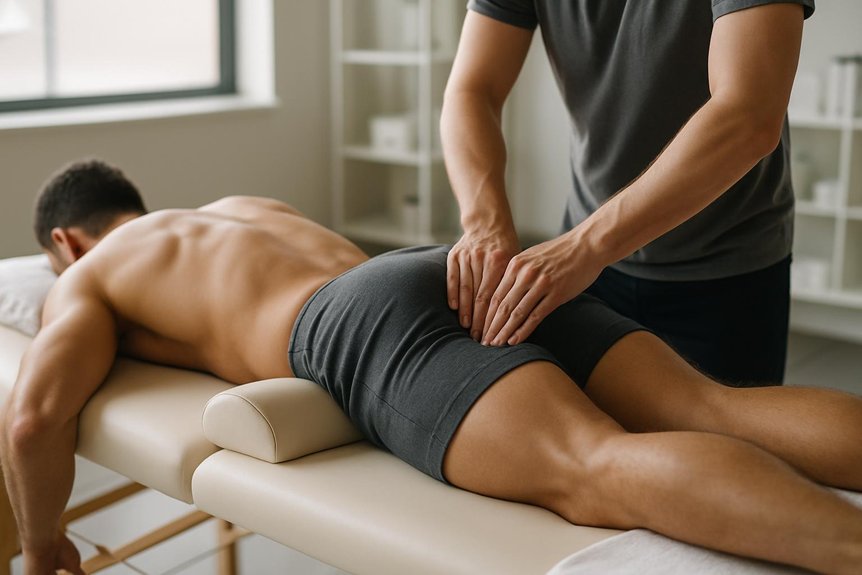
In clinical practice, it can reduce the sensation of tight glutes by decreasing myofascial tone, improving local circulation, and restoring normal glide between tissue layers.
At Spa & Massage clinics, therapists assess hip rotation and pelvic control, then apply slow, specific pressure to gluteus maximus/medius and deep external rotators to normalise tone. Technique may include sustained compressions, stripping along fibre direction, cross-fibre work near the greater trochanter, and trigger-point release, followed by active or pin-and-stretch movements to reinforce length and glide.
It’s also widely used for athletes because these techniques can support recovery by addressing muscle soreness and maintaining functional movement through the hips and pelvis as part of the broader benefits of performance massage.
Pressure is progressed to a “strong-but-safe” intensity, maintaining comfort and a sense of close, attentive care.
Aftercare typically includes hydration, gentle walking, and brief hip mobility, supporting reduced stiffness over 24–48 hours.
What Causes Tight Glutes and Glute Pain?
Tight glutes and glute pain commonly arise from prolonged sitting and inactivity, which reduce gluteal activation and increase compensatory loading through adjacent tissues.
They are also frequently linked to rapid changes in training load and strength imbalances that overload the hip extensors and external rotators.
Poor movement mechanics—such as lumbar overextension, hip internal rotation collapse, or suboptimal squat and gait patterns—can further sustain excessive tension and irritation in the gluteal complex.
Prolonged Sitting And Inactivity
Sitting for long periods reduces gluteal activation while holding the hips in sustained flexion, which can inhibit the gluteus maximus and medius and shift load to the hip flexors and lumbar stabilisers.
Over time, reduced hip extension and altered pelvic control may contribute to gluteal trigger points, referred ache, and a “tight” sensation despite weakness.
Prolonged pressure against the chair can also irritate local soft tissues and compress gluteal fascia, heightening sensitivity.
At Spa & Massage, therapists commonly assess hip range, pelvic position, and tenderness, then use performance massage techniques—slow myofascial release, trigger point compression, and deep tissue strokes—to restore glide and comfort.
Many clients are advised to take brief standing breaks, add gentle hip extension movements, and hydrate after treatment.
Training Load And Imbalances
Under higher training volumes, glute discomfort often reflects a mismatch between load, recovery, and movement control rather than simple “tightness.” Rapid increases in running mileage, heavy lower-body lifting, hill work, or repeated sprinting can create cumulative microtrauma and protective tone in the gluteus maximus/medius, while common imbalances—dominant hip flexors/adductors, limited hip internal rotation, poor pelvic stability, or underactive deep rotators—shift demand onto compensating fibres and perpetuate trigger points with referred ache into the hip or posterior thigh.
At Spa & Massage clinics, therapists often note tenderness at gluteal attachments and along the lateral hip when recovery is inadequate. Load management (10–20% weekly progression), sleep, and targeted strength for abductors/external rotators help. It may reduce tone, improve local circulation, and support comfortable return to training.
Poor Movement Mechanics
During running, lifting, or even stair climbing, suboptimal movement mechanics can drive excessive gluteal tone and pain by repeatedly loading the hip in poor alignment. Common contributors include hip drop, femoral internal rotation, overstriding, limited ankle dorsiflexion, and poor trunk control, which shift demand to the gluteus medius and deep rotators as stabilisers. Over time, protective guarding can feel like “tightness” and may sensitise local tissues.
At Spa & Massage, therapists screen functional patterns (single-leg squat, step-down, hinge) to identify the driver, then apply performance massage to reduce tone and improve glide in gluteal and lateral hip structures. Treatment is paired with precise cueing and corrective drills, supporting smoother, pain-limited movement without provoking symptoms further.
How Does Performance Massage Release Tight Glutes?
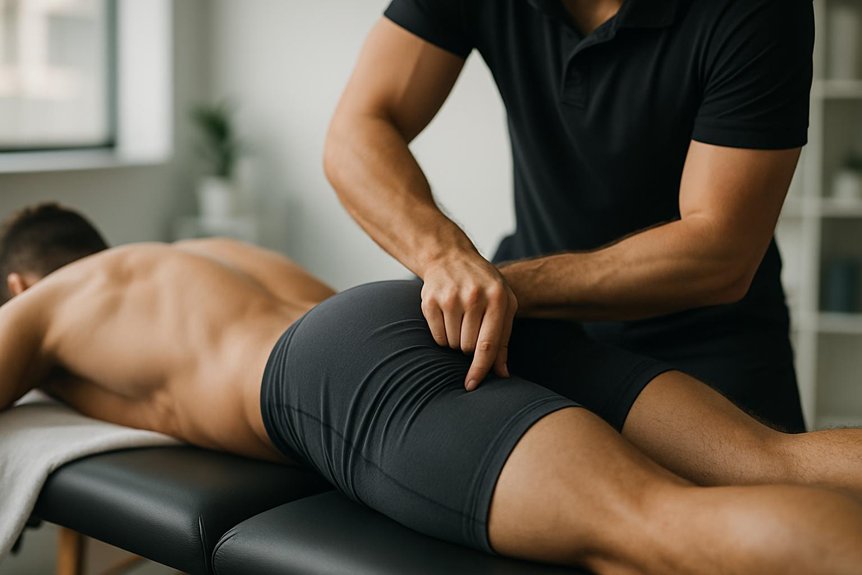
It can reduce gluteal tightness by combining trigger point deactivation with deep tissue mobilisation to address both neuromuscular tone and local tissue stiffness.
In Spa & Massage clinics, therapists apply sustained, tolerable pressure to active myofascial trigger points in the gluteus maximus/medius and related hip rotators, then use slow, specific strokes to mobilise restricted fascial planes and muscle fibres.
This technique-focused approach aims to normalise pain referral, improve hip range of motion, and restore load tolerance in the gluteal complex.
Trigger Point Deactivation
Identify the trigger points, and the glutes often start to “let go.” In clinical performance massage, tight glutes commonly involve hyperirritable nodules within taut bands of the gluteus maximus/medius or deep external rotators, which can refer discomfort into the hip, lower back, or posterior thigh and perpetuate protective muscle guarding.
At Spa & Massage, therapists palpate to confirm a local twitch response and reproduce familiar referral, then apply graded ischaemic compression or sustained pressure with slow, mindful breathing cues. Pressure is kept within a tolerable “good pain” range to downshift threat and normalise tone. Short, targeted compress-and-release cycles (20–60 seconds) are used, followed by gentle flushing strokes to support circulation. Clients are advised to hydrate and walk lightly afterward.
Deep Tissue Mobilisation
Once local trigger points have been calmed, persistent gluteal tightness is often maintained by densified fascia and shortened, poorly gliding fibres in the gluteus maximus/medius and deep hip rotators; deep tissue mobilisation targets these restrictions by restoring tissue extensibility and shear.
At Spa & Massage, therapists apply slow, sustained strokes and cross‑fibre friction, gradually loading tissue to tolerance while maintaining close, client-led communication.
Pressure is directed along sacral borders, iliac crest attachments, and the lateral hip, then into deeper rotators with precise elbow or knuckle contact.
Mobilisation is paired with guided diaphragmatic breathing and small hip rotations to improve glide and reduce protective guarding.
The aim is measurable: improved range, reduced tone, and more comfortable sitting, walking, and training, afterwards.
What Does a Glute Performance Massage Feel Like?
How does a glute performance massage typically feel in practice? Pressure is usually firm, targeted, and “good-pain” tolerable, focusing on gluteus maximus/medius and deep rotators.
Clients often notice a dense, gripping sensation as the therapist sinks slowly, then a spreading warmth as fibres soften. At Spa & Massage clinics, therapists use broad forearm compression, knuckle stripping, and sustained trigger-point holds, always within agreed comfort levels and with clear, ongoing consent.
Expect sensitivity near the sacrum, iliac crest, and outer hip, sometimes with referred sensations down the thigh. Breathing tends to deepen as guarding reduces.
After release, the area commonly feels lighter, more open through hip extension, and gently tender to touch for 24–48 hours.
When Are Tight Glutes a Sign of Injury?
In clinical terms, persistent glute tightness becomes more suggestive of injury when it is unilateral, disproportionate to recent training load, or accompanied by pain, weakness, altered gait, or neurological symptoms.
Red flags include sharp buttock pain, night pain, bruising, sudden loss of power, or pain radiating below the knee with numbness or tingling, which may indicate lumbar referral or sciatic involvement.
Local tenderness over the ischial tuberosity can suggest proximal hamstring tendinopathy; deep lateral ache with pain on single-leg stance may reflect gluteal tendinopathy.
In Spa & Massage clinics, therapists screen for these patterns and modify pressure if symptoms escalate, recommending medical assessment when progressive weakness, saddle numbness, or bowel/bladder changes are reported.
Aftercare: Stretches and Strength to Stay Loose
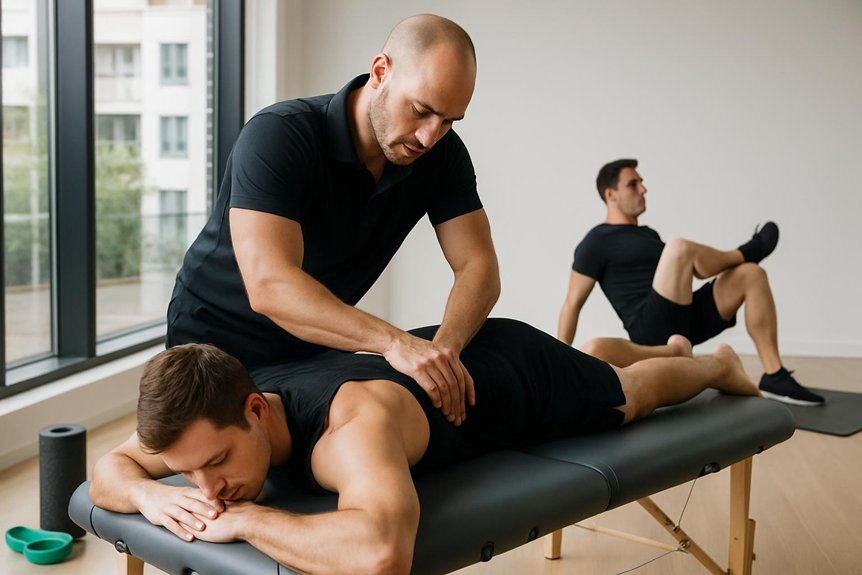
After a performance massage session, gluteal tone typically re-accumulates unless mobility and load tolerance are reinforced with targeted aftercare.
Spa & Massage therapists commonly prescribe 5–8 minutes of gentle stretching: supine figure‑4, hip flexor lunge, and a glute bias “pigeon” variation, each held 30–45 seconds with slow nasal exhale to downshift guarding.
For self-care, a warm shower then light oil-based self-massage can maintain tissue glide without provoking soreness.
Strength work should be low-irritability and precise: side‑lying clamshells, banded lateral walks, and hip bridges with a 2‑second pause, 2–3 sets of 8–12 reps, focusing on pelvic control and even pressure through the heels.
Symptoms should settle within 24 hours.
How Often Should You Book Performance Massage for Tight Glutes?
Often, ideal performance massage frequency for tight glutes is determined by symptom irritability, training load, and whether restriction is driven primarily by tissue tone, hip mobility deficits, or gluteal overuse.
In acute flare-ups, Spa & Massage therapists typically schedule 1 session weekly for 2–3 weeks, using slow deep-tissue strokes, trigger-point compression, and hip rotator release within a tolerable discomfort range.
For training-related tightness without pain, many clients do well every 2–4 weeks, timed after heavier running, lifting, or cycling blocks.
When symptoms stabilise, maintenance every 4–6 weeks supports ongoing mobility and reduces recurrence.
Frequency is reduced if soreness persists beyond 48 hours, sleep is disrupted, or bruising occurs.
Clinicians reassess each visit, pairing massage with home glute activation and hip mobility.
Conclusion
Ironically, the “stubborn” glutes often soften when treated with methodical pressure rather than force. It can reduce tone and tenderness through targeted compression, myofascial release, and trigger-point work, improving hip mechanics and stride efficiency—yet it is rarely a standalone cure. The lasting change comes from pairing treatment with load management, hip mobility, and progressive glute strength. When pain is sharp, neurological, or persistent, assessment is prudent, not optional.