Back massage is generally considered safe in the second trimester when the pregnancy is uncomplicated and the therapist is trained in prenatal massage, using side‑lying or well‑supported semi‑reclined positioning to protect circulation. Pressure is typically kept light to moderate and adjusted with frequent comfort check‑ins. It should be avoided with vaginal bleeding, leaking fluid, fever, persistent abdominal pain, reduced fetal movement, suspected pre‑eclampsia, uncontrolled hypertension, or DVT symptoms. Further guidance covers safer techniques and aftercare.
Can You Get a Back Massage in the Second Trimester?
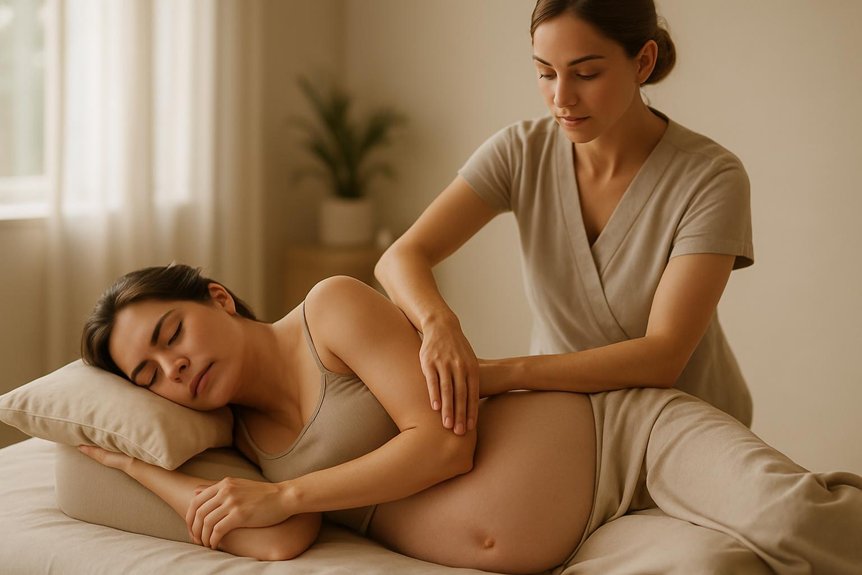
In most uncomplicated pregnancies, a back massage in the second trimester is generally considered safe when performed by a properly trained therapist using pregnancy-appropriate positioning and pressure.
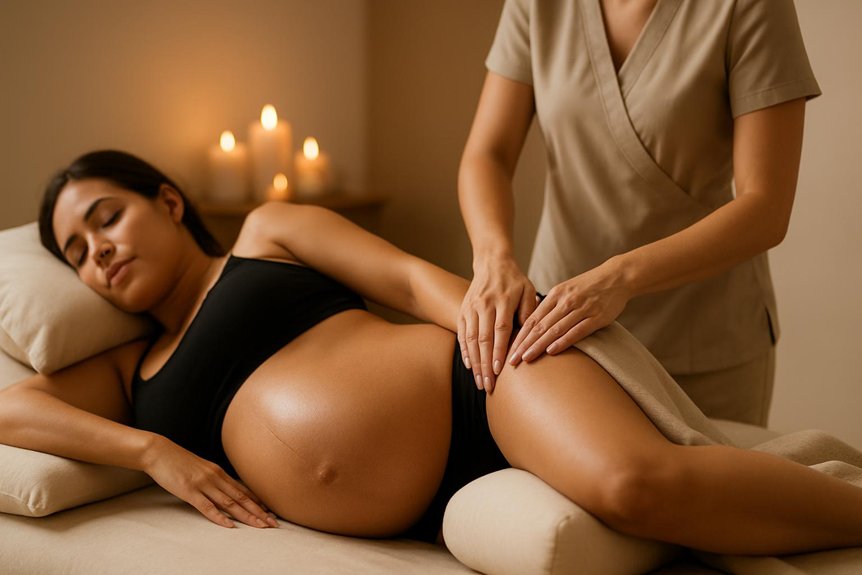
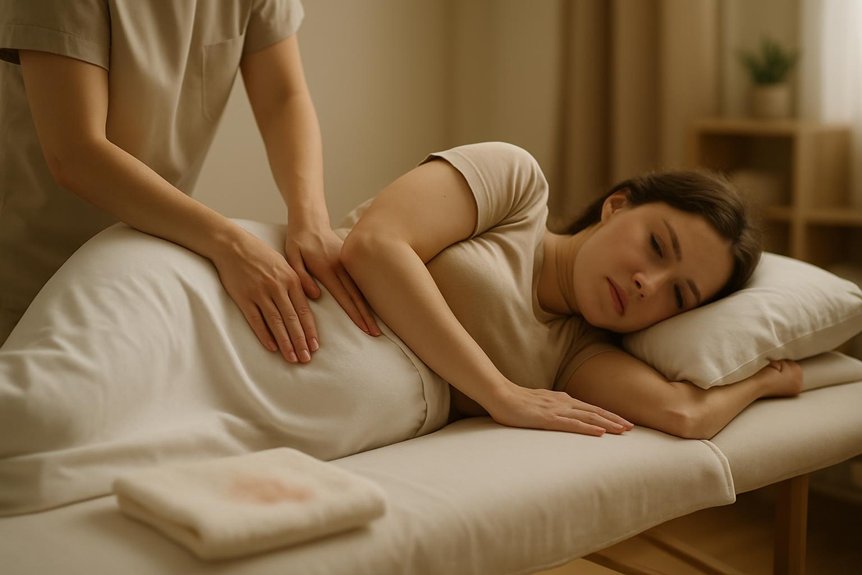
Evidence-informed practice emphasises gentle, supportive touch, with side-lying or propped positioning to maintain comfort and circulation while easing mid-back and lumbar tension as the body changes.
At Spa & Massage clinics across London, therapists begin with a brief consultation about symptoms, medical guidance, and preferred pressure, then tailor strokes to relax paraspinal muscles without deep, intense work.
Many clients find that slow, rhythmic massage helps reduce stress, improve sleep quality, and encourage a calmer connection with their changing body.
This is one of the well-known benefits of pregnancy massage for expecting mothers when it’s adapted to their changing needs.
Aftercare is simple: hydrate, move gently, and notice how the back feels over the next day.
When to Avoid a Second-Trimester Back Massage
As a precaution, a second-trimester back massage should be avoided or deferred when there are medical red flags or pregnancy complications that could make even gentle bodywork inappropriate without explicit guidance from a midwife or obstetric team.
This includes vaginal bleeding, leaking fluid, fever or infection, persistent abdominal pain, reduced fetal movement, severe headache or visual changes, sudden swelling, suspected pre-eclampsia, uncontrolled hypertension, DVT symptoms (one-sided calf pain/swelling), placenta complications, or a history of preterm labour.
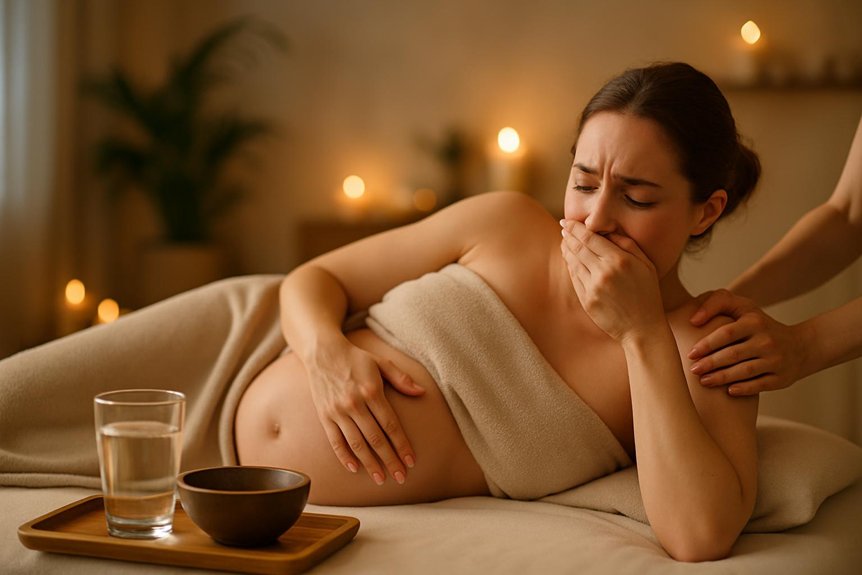
Massage should also wait after recent falls, procedures, or when contractions, dizziness, or nausea feel unusual.
At Spa & Massage clinics across London, therapists pause treatment if symptoms emerge, prioritise calm communication, and recommend medical review before rescheduling.
Consent and comfort remain central throughout.
Why Second-Trimester Back Massage Often Feels Best
For many pregnant clients, the second trimester is the “sweet spot” for back massage because early nausea and fatigue often ease while the bump is not yet large enough to make positioning difficult. Energy often returns, sleep may improve, and many feel more emotionally settled—making touch easier to receive and enjoy.
Physiologically, postural changes and loosening ligaments can start to load the lower back and hips; skilled, moderate-pressure work may ease muscle tension and support comfort. At Spa & Massage clinics across London, therapists keep sessions client-led, check in frequently, and adjust pressure to avoid tenderness or overstimulation.
Many clients also find calming rhythms and gentle aromatherapy oils help reduce stress and promote a sense of closeness to their changing body, without pushing limits.
Safest Positions for a Second-Trimester Back Massage
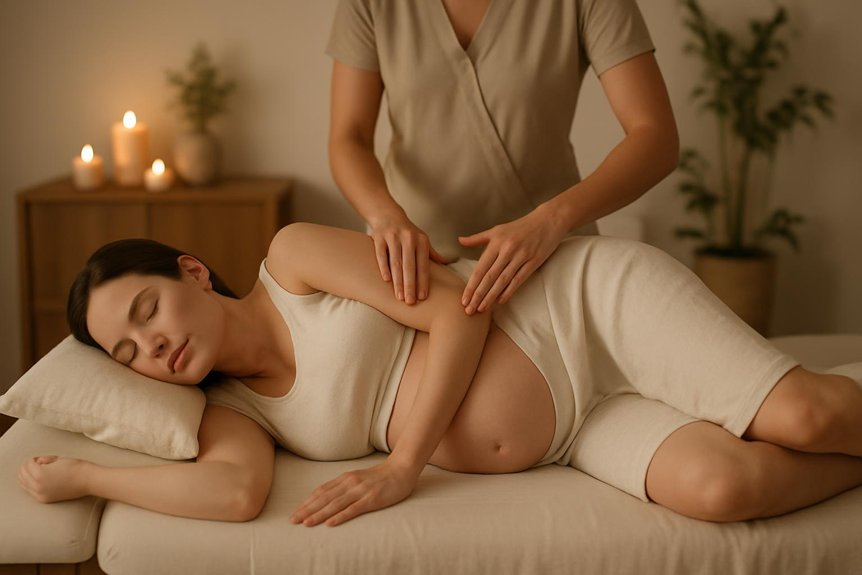
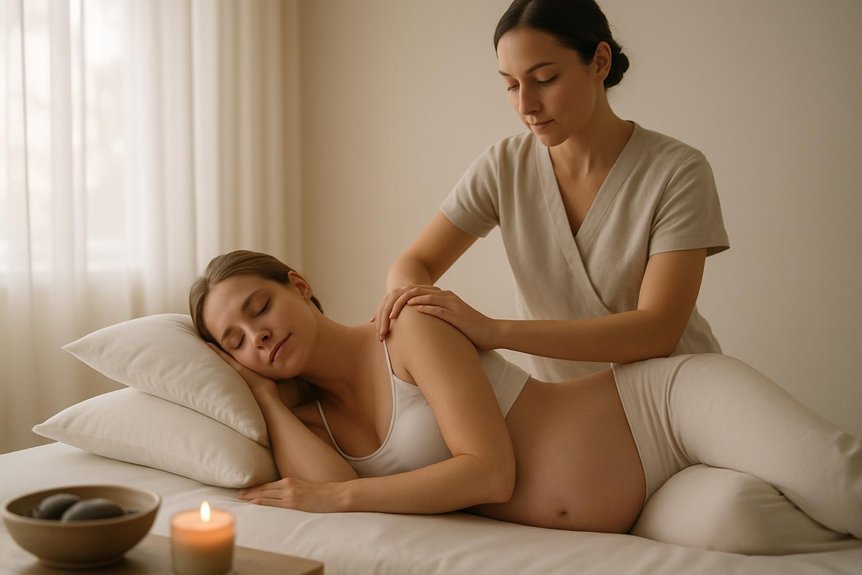
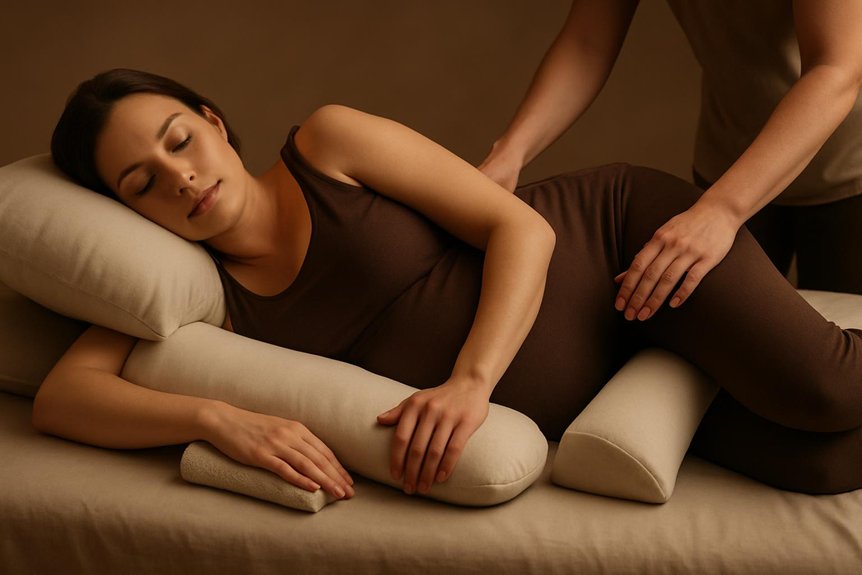
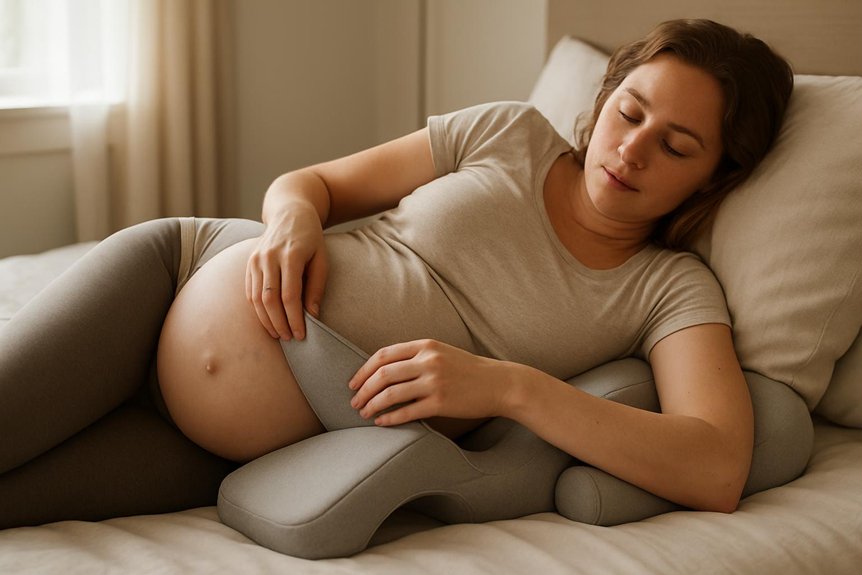
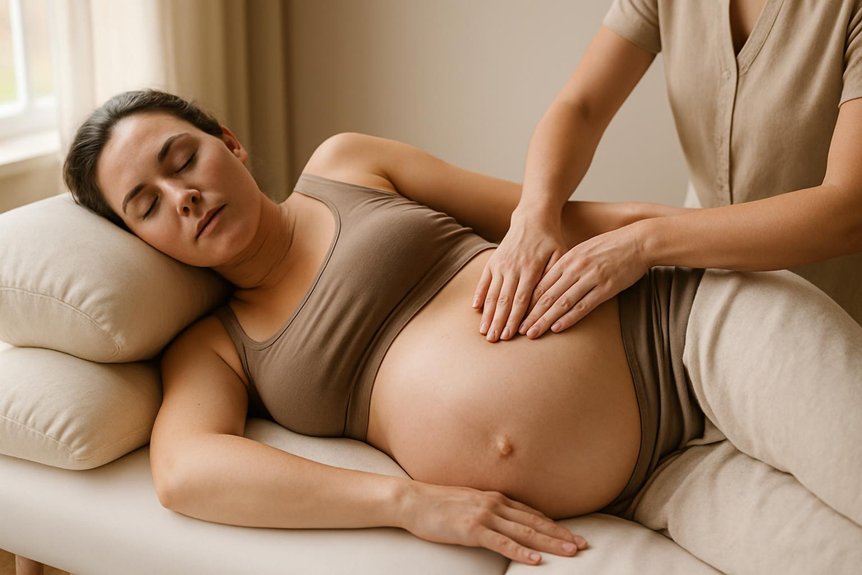
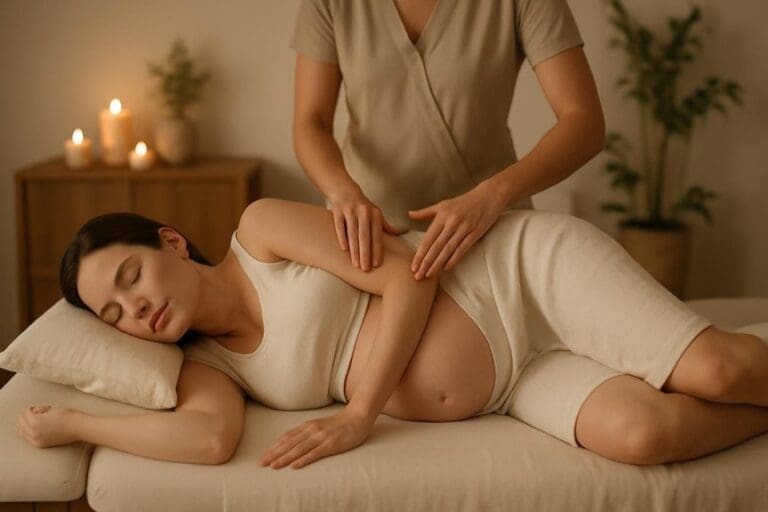
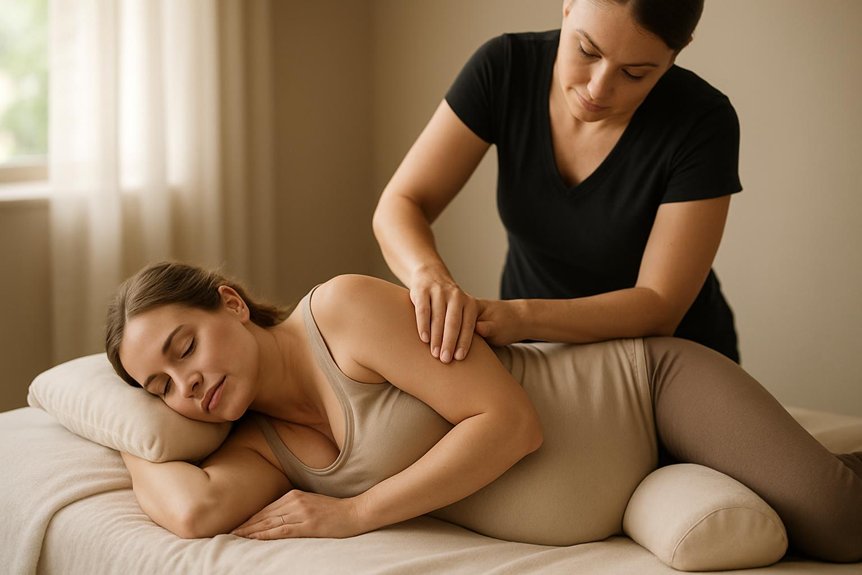
To minimise pressure on the abdomen and support healthy circulation, second-trimester back massage is typically performed in side-lying or a carefully propped semi-reclined position rather than flat on the back or front. Side-lying is widely considered safest, as it reduces vena cava compression and allows the lower back and hips to relax.
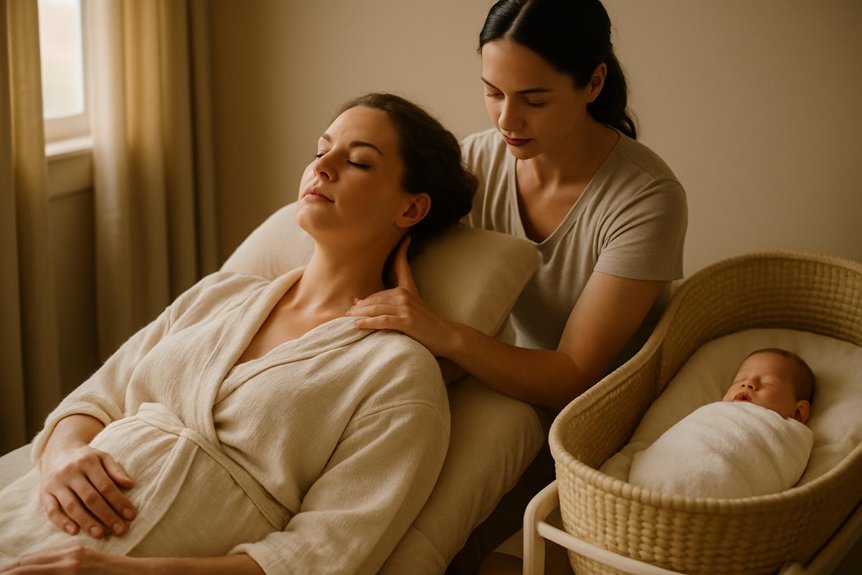
At Spa & Massage clinics across London, therapists use bolsters and pillows to support the head, bump, knees, and ankles so the spine stays neutral and the body feels held. Semi-reclined positioning can suit clients who prefer eye contact and a closer sense of connection, provided the torso is elevated and no dizziness occurs.
In all cases, comfort cues, steady breathing, and easy communication guide small adjustments throughout.
Pressure Levels for Second-Trimester Back Massage
Safe positioning creates the foundation for appropriate pressure during a second-trimester back massage. Once settled comfortably, pressure is best kept light-to-moderate, building gradually and guided by the client’s breath, tone, and verbal feedback. Deep, sustained force and aggressive elbow work are generally avoided, as pregnancy-related ligament laxity can make tissues feel “looser” while still vulnerable.
At Spa & Massage clinics across London, therapists use slow, nurturing strokes and broad contact to melt tension without provoking guarding or soreness later. Pressure should feel relieving, never sharp, hot, or numbing; any dizziness, nausea, abdominal tightening, or new pain warrants an immediate pause and adjustment. Many clients prefer softer pressure around the low back and firmer support through upper back and shoulders.
Where We Work to Relieve Pregnancy Back Pain
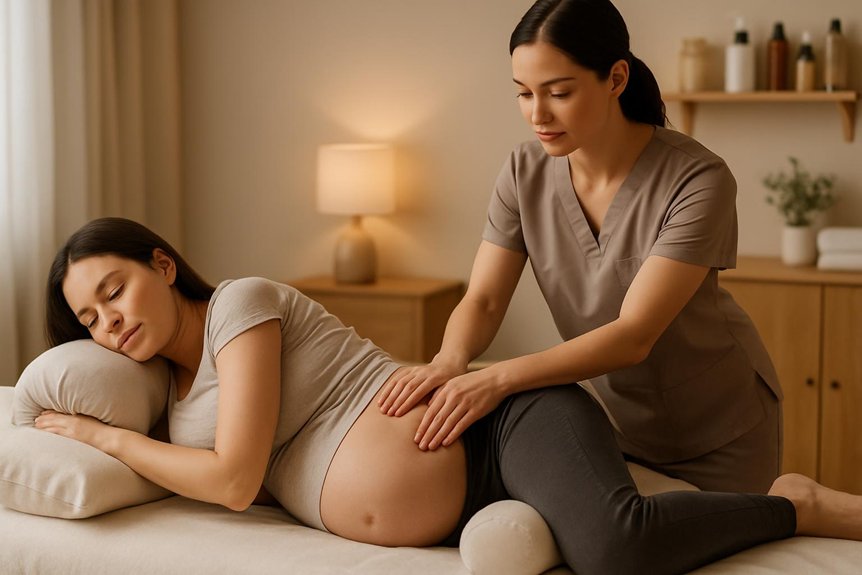
With the body’s centre of gravity shifting and postural load increasing, second-trimester back massage is typically most effective when it targets the muscle groups that compensate for pregnancy changes—rather than “chasing pain” in the exact sore spot. At Spa & Massage clinics across London, therapists commonly focus on the thoracic paraspinals and rhomboids to ease upper-back rounding, then the lumbar erectors and quadratus lumborum to reduce protective holding.
Work often extends to the gluteus medius/minimus and piriformis, as pelvic stabilisers frequently drive “low-back” discomfort, and to hip flexors and adductors to balance anterior pelvic tilt. Supportive, side-lying positioning helps maintain comfort and circulation.
Each session is adapted to symptom patterns, medical history, and tenderness, with continuous check-ins so care feels both safe and close.
Pregnancy-Safe Oils and Scents We Use
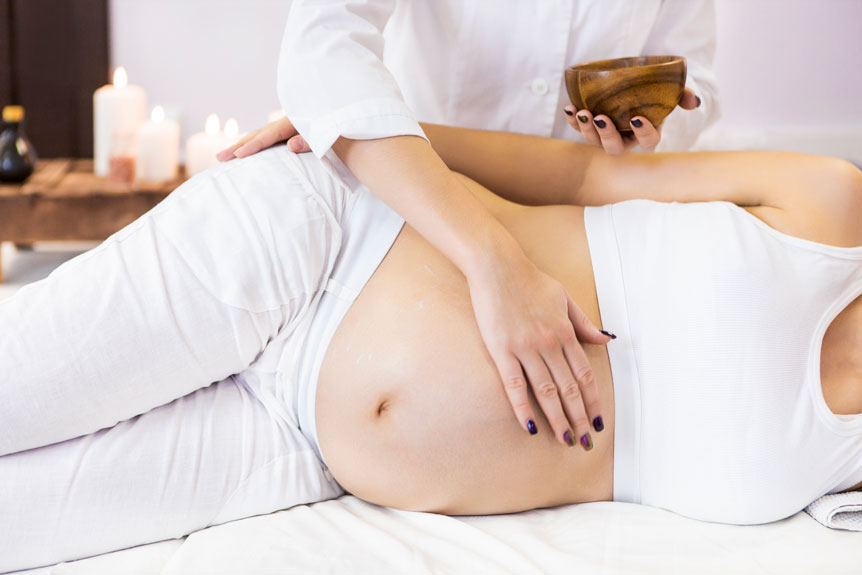
Targeted work on the back, hips, and pelvic stabilisers is only part of a comfortable second-trimester massage; the products used on the skin and the scents in the room also matter. At Spa & Massage clinics across London, therapists prioritise simple, pregnancy-appropriate carriers—typically fragrance-free, hypoallergenic oils that glide without heaviness and help protect a stretching, more reactive skin barrier.
When aromatherapy is requested, scent is kept subtle and reassuring, using low-dilution, pregnancy-suitable options and avoiding intense, sensitising or traditionally contraindicated essential oils. Diffusion is minimal; most aroma is delivered in the oil so it stays close to the body rather than filling the room. Patch-testing and swift switching to unscented products support comfort if nausea, headaches, or sensitivity arises during the session.
What to Tell Your Therapist Before a Prenatal Massage
Before a second-trimester prenatal massage begins, what information should be shared so the treatment can be adapted appropriately? The client should disclose gestational week, any high-risk flags (bleeding, contractions, preeclampsia signs, placenta issues), current medications, and whether midwife/GP has set activity limits. Prior pregnancy losses, IVF, or cervical concerns should also be mentioned, as these can change positioning and pressure choices.
At Spa & Massage clinics across London, therapists also ask about swelling, sciatica, pelvic or rib pain, headaches, numbness, and sleep comfort, plus preferred draping for a secure, intimate feel. Allergies and scent sensitivity matter, even with pregnancy-safe oils. Finally, the client should name “no-go” areas and desired focus so touch remains both soothing and respectful.
Aftercare for Second-Trimester Back Massage Results
After a second-trimester back massage, clients typically support longer-lasting relief by prioritising hydration and gentle movement, which can help maintain circulation and reduce next-day stiffness.
Spa & Massage therapists also encourage planned rest and, where appropriate, cautious use of warmth (not excessive heat) to ease residual tension safely during pregnancy.
Ongoing results are often reinforced by posture habits throughout the day, with simple alignment adjustments recommended to reduce strain on the lower back.
Hydration And Gentle Movement
Staying well hydrated and keeping the body gently moving can help maintain the benefits of a second-trimester back massage while supporting overall comfort. Adequate fluids support circulation and may reduce post-treatment light‑headedness; water is generally preferred, with caffeine kept modest if advised by a midwife.
Gentle movement helps the tissues stay supple and invites a lingering sense of ease through the back and hips. Spa & Massage therapists commonly suggest short, frequent walks, slow pelvic tilts, and simple shoulder rolls, stopping at any sign of dizziness, pain, uterine tightening, or spotting.
Movement should feel soothing rather than effortful, with steady breathing and relaxed jaw. If swelling, headache, or sudden shortness of breath occurs, medical advice is recommended promptly.
Rest, Heat, And Posture
Gentle movement and good hydration can help a second-trimester back massage “settle” into the tissues; the next focus is supporting recovery with rest, safe warmth, and posture habits that reduce re‑tightening through the lower back and hips.
After a session, many clients feel best with a short nap or early night, using side‑lying support: a pillow between knees and one under the bump. Heat can be soothing, but it should be gentle and local—such as a warm (not hot) compress on the low back for 10–15 minutes; avoid overheating, saunas, and hot tubs. Posture matters: keep ribs stacked over pelvis, soften locked knees, and take micro‑breaks from sitting.
At Spa & Massage clinics, therapists coach simple, comfortable cues tailored to pregnancy.
Conclusion
Second-trimester back massage is often appropriate, but the decision hinges on health history, symptoms, and skilled modification. With side-lying support, pregnancy-safe pressure, and careful avoidance of high-risk areas, many clients experience meaningful relief in the back, hips, and shoulders. Yet one detail still matters most: when to pause. New swelling, bleeding, severe headache, fever, dizziness, or persistent abdominal pain changes the plan. A qualified therapist will screen, adapt, and—if needed—delay treatment safely.