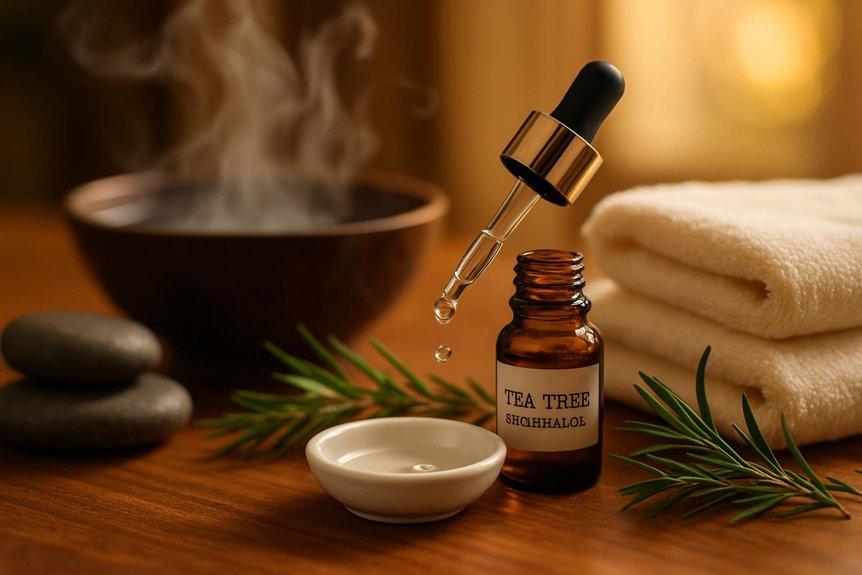
Tea tree oil in aromatic massage typically smells crisp, medicinal, and camphor-like, with clean green antiseptic notes that can seem sterile but invigorating. The initial impression is cool and clarifying, then dries down into a faint herbal finish as volatile terpenes (such as 1,8-cineole and terpinen-4-ol) evaporate quickly on warm skin. Undiluted oil can be sharply pungent, while proper dilution keeps it fresh and controlled. Further details explain intensity, feel, and precautions.
What Does Tea Tree Oil Smell Like in Massage?
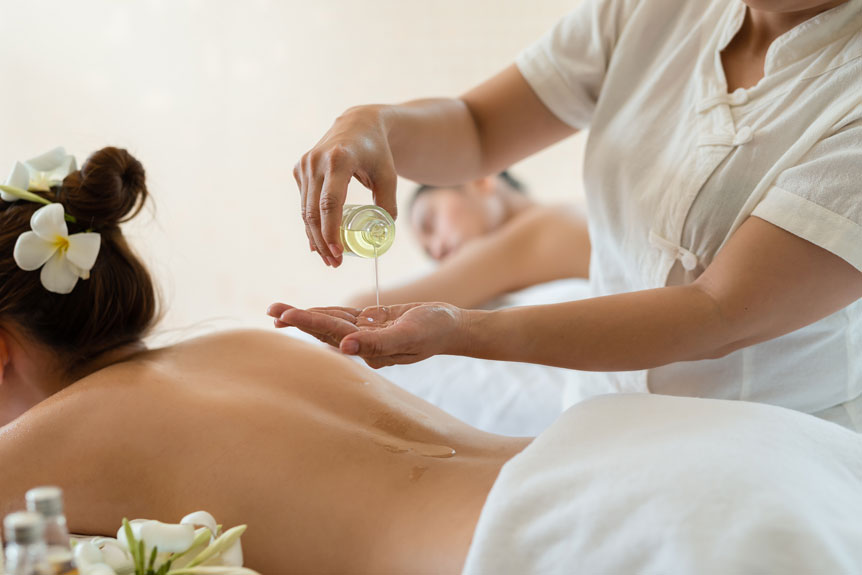
In many aromatic massages, tea tree oil presents a crisp, medicinal aroma that is immediately recognisable. The scent is sharp, camphor-like, and green, with clean antiseptic notes that can read as sterile yet invigorating.
On warmed skin, its volatility lifts quickly, creating a cool, clarifying first impression before softening into a dry, herbal finish. Evidence from aromatherapy practice associates tea tree’s terpene profile with a perceived “cleansing” character, which some clients find mentally bracing and grounding.
At Spa & Massage clinics, therapists typically dilute tea tree carefully and blend it with gentler oils to keep the fragrance close to the body, supporting an intimate, private sense of freshness while avoiding an overpowering, clinical room effect. For those looking to relax, therapists may apply aromatherapy massage tips to balance tea tree’s briskness with more soothing notes.
Why Does Tea Tree Oil Smell So Medicinal?
That crisp, antiseptic character many people notice in a massage is not an illusion but a direct result of tea tree oil’s chemistry. The aroma is driven by volatile terpenes—especially terpinen-4-ol, along with 1,8-cineole and α-terpineol—which the olfactory system often associates with clinical disinfectants and eucalyptus-like vapours. These molecules evaporate quickly at skin temperature and reach the nose during close, slow breathing, so the scent can feel “clean,” medicinal, and quietly assertive.
In Spa & Massage aromatherapy sessions, therapists dilute tea tree appropriately in a carrier oil and apply it with steady, skin-warming strokes. This controlled release keeps the experience intimate: pores open, breath settles, and the mind reads the scent as hygienic reassurance rather than perfumery.
Is Tea Tree Oil Scent Strong (and Does It Linger)?
How strong tea tree oil smells depends mainly on concentration and evaporation rate: undiluted oil is sharply pungent and can dominate the room within minutes, while the properly diluted blends used in Spa & Massage aromatherapy treatments read as clean and camphoraceous rather than overpowering.
Tea tree’s primary aromatic compounds are relatively volatile, so the initial “medicinal” lift is noticeable, then tapers as lighter notes disperse. In a ventilated treatment room, most clients perceive the peak within the first 5–10 minutes, followed by a softer, skin-adjacent freshness.
Linger is usually modest: on linens it can persist for a few hours; on the body it tends to fade sooner, especially after dressing. Spa & Massage therapists manage intensity through dilution, drop-count precision, and airflow to keep the scent close, intimate, and comfortable.
What Does Tea Tree Oil Feel Like in Aromatic Massage?
Once the initial camphoraceous note settles, tea tree oil in an aromatic massage is typically perceived more through skin sensation than room fragrance.
In dilution, many clients notice a clean, cooling glide that can feel mildly tingling, especially over warm, well-perfused muscles. This is consistent with tea tree’s volatile constituents producing a brief menthol-like freshness rather than lasting heat.
As strokes deepen, the sensation often reads as “clarifying”: skin feels lighter, pores less occluded, and the breath steadier.
In Spa & Massage clinics, therapists blend tea tree into a carrier to keep contact silky and intimate, supporting slow, connected effleurage and focused friction without stickiness.
After treatment, the skin commonly feels refreshed and quietly dry, not greasy.
Who Should Avoid Tea Tree Oil in Aromatic Massage?
Who should steer clear of tea tree oil in aromatic massage? Clients with a known allergy to tea tree or other essential oils, or a history of eczema, rosacea, or fragrance sensitivity, face higher risk of stinging, redness, and delayed rash.
Those with broken skin, recent shaving, or intimate-area irritation may experience a sharp, camphor-like “cool burn” and should avoid application.
Pregnancy and breastfeeding warrant caution; safety data are limited, so many prefer gentler oils.
People with asthma or migraine triggered by strong, medicinal aromas may find the scent tightening or nauseating.
At Spa & Massage, therapists patch-test when indicated, dilute precisely, avoid mucosa, and choose alternative blends when skin or breath reactions are likely.
Conclusion
Tea tree oil in aromatic massage reads like antiseptic air after rain: sharp, clean, camphor-edged. Its medicinal profile reflects terpene-rich chemistry, which can feel clarifying at low dilution yet overwhelming if undiluted or poorly blended. The scent often rises quickly, then fades to a faint, green residue on skin, moderated by carrier oils and co-blends. Sensations may include coolness and light stimulation. Prudent screening remains essential for sensitive skin, pregnancy, and allergy history.