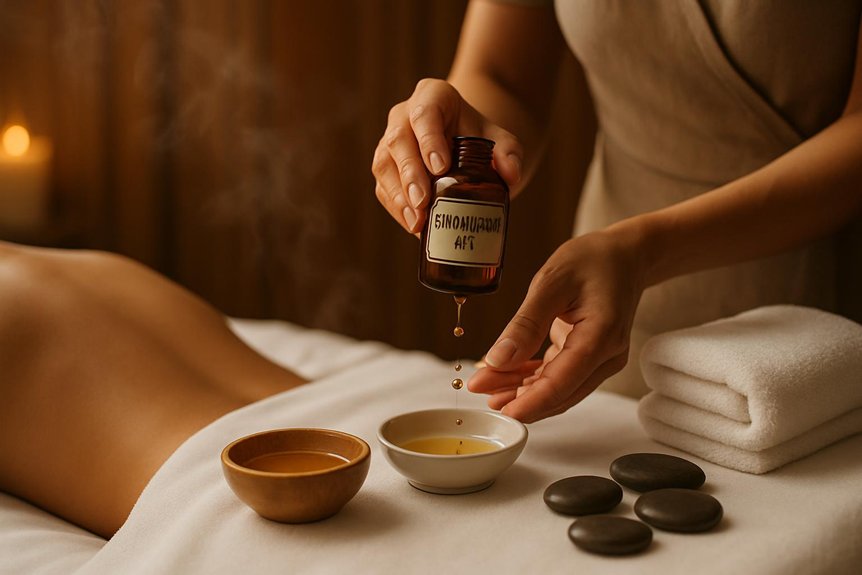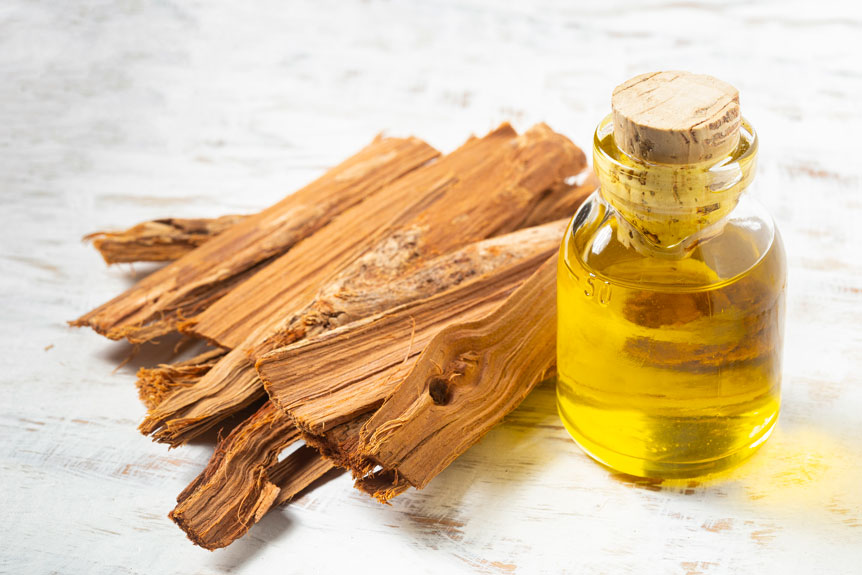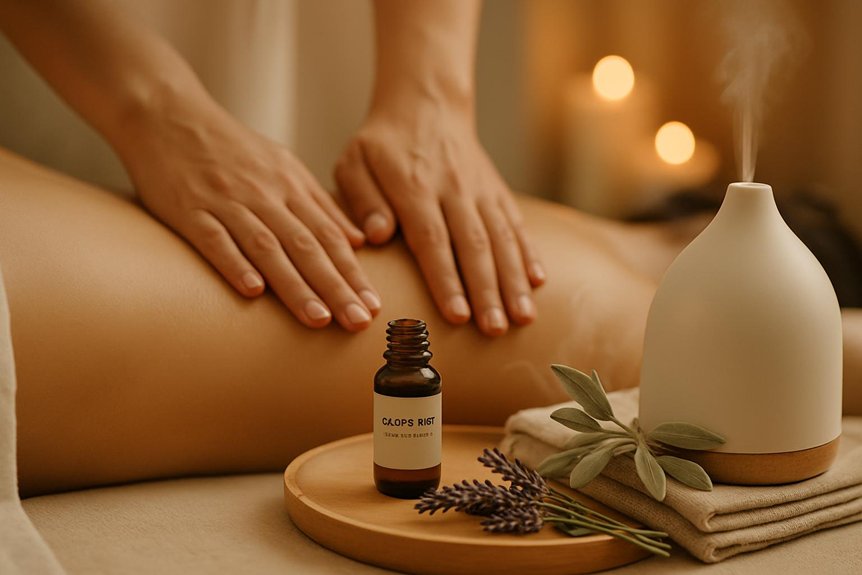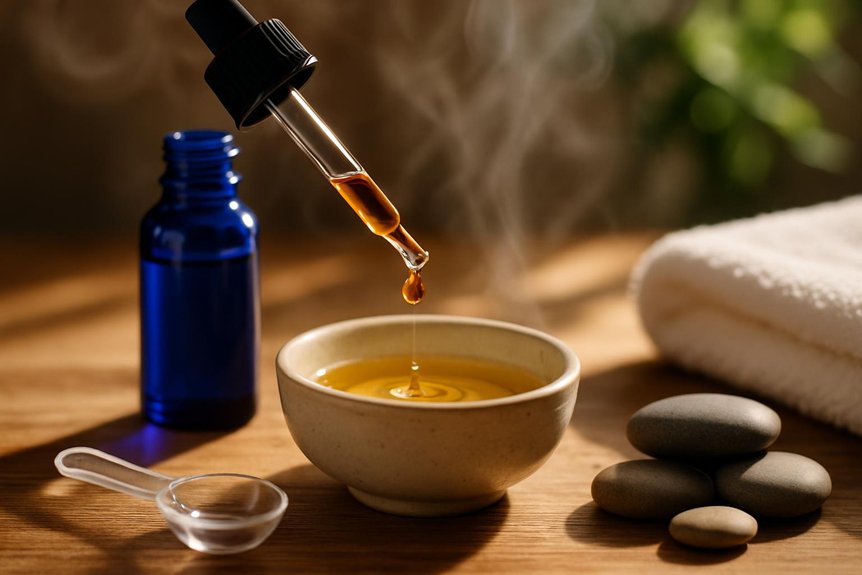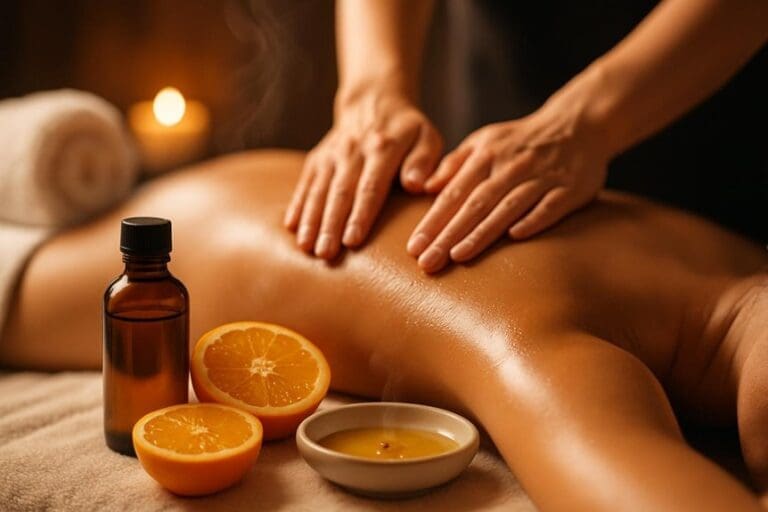
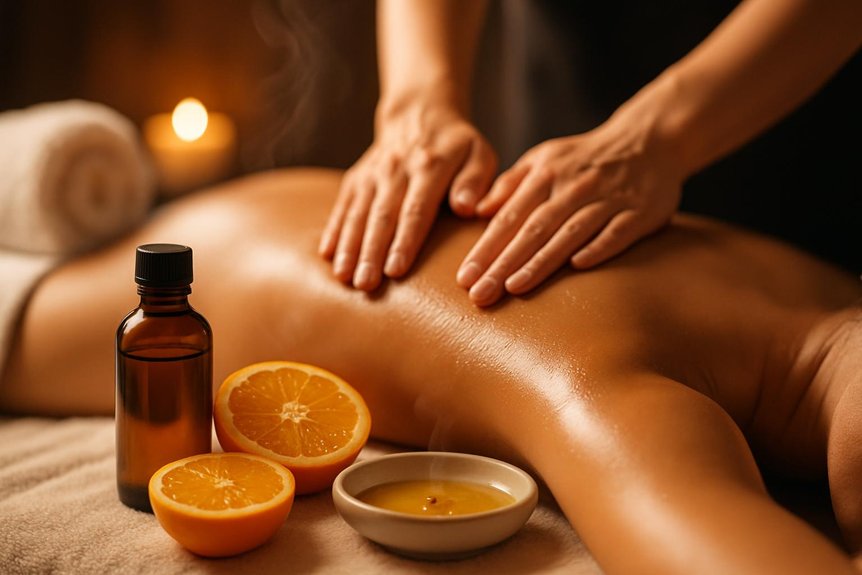
Sweet orange oil in aromatic massage is used mainly for its bright, familiar citrus scent, which can help ease perceived stress and support a more relaxed mood during hands-on work. As a top note, it offers an immediate uplifting aroma that may encourage slower breathing and softer muscle tone, making tight areas feel more workable. It is typically blended at low dilution (about 1–2%) and patch-tested when needed, with caution around photosensitivity, pregnancy, and scent sensitivity. Further guidance follows.
What Are Sweet Orange Oil’s Benefits in Massage?
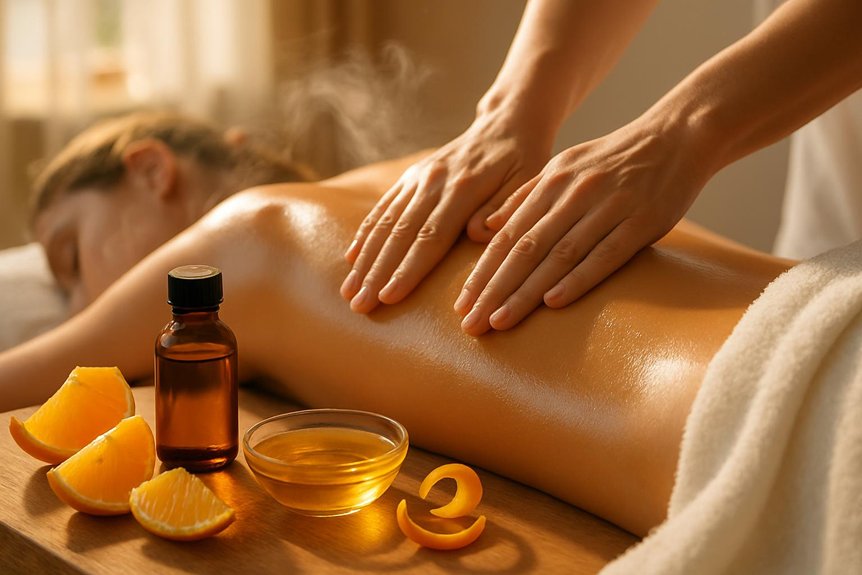
In aromatic massage, sweet orange (Citrus sinensis) essential oil is commonly used for its mood-supporting and gently soothing properties.
Evidence suggests citrus aromas can ease perceived stress and support relaxation, which may help clients settle into slower breathing and softer muscle tone during hands-on work.
Many clients also find it emotionally uplifting, supporting comfort and connection without feeling heavy.
For even more comfort, therapists may incorporate aromatherapy massage tips to help clients relax and heal throughout the session.
At Spa & Massage clinics, therapists may choose sweet orange within a personalised blend to complement deep tissue, sports, or pregnancy-safe relaxation goals.
It is typically diluted appropriately in a carrier oil and avoided on compromised skin; patch-sensitive clients are guided carefully.
Because citrus oils can increase photosensitivity, therapists advise avoiding UV exposure on treated areas for several hours after a session.
What Does Sweet Orange Oil Smell Like: and Why It Matters?
What does sweet orange oil smell like, and why does that matter in a massage setting? It typically presents a bright, sweet citrus aroma, like freshly peeled orange, with a light, clean finish.
In aromatic massage, scent shapes first impressions and comfort, so a familiar, “edible” fragrance can help clients feel safe and receptive to touch. At Spa & Massage clinics, therapists invite clients to smell a blotter first and choose intensity, since preferences and scent sensitivities vary.
Sweet orange is a top note, so it can feel immediate and vivid; blending with softer base notes can create a more enveloping, intimate atmosphere without becoming overpowering.
Safety remains central: only skin-safe dilutions are used, and fragrance is avoided when it provokes headaches, nausea, or irritation.
Can Sweet Orange Oil Reduce Stress and Uplift Mood?
Evidence from aromatherapy research suggests sweet orange oil’s bright citrus aroma may support perceived stress relief and gentle mood elevation, particularly when paired with calming touch.
At Spa & Massage clinics, therapists may use it in aromatic massage when a client’s goal is to feel more settled and emotionally uplifted, while checking for scent sensitivities and comfort throughout.
As with all essential oils, it is used properly diluted and avoided where contraindicated to keep the experience both relaxing and safe.
Aromatic Stress Relief
With its bright, citrus aroma, sweet orange essential oil is widely used in aromatic massage to support stress relief and a more uplifted mood.
Research on citrus aromatics suggests inhalation can help lower perceived stress and encourage relaxation by engaging olfactory pathways linked to emotion and the autonomic nervous system.
At Spa & Massage clinics across London, therapists often diffuse sweet orange or blend it into a carrier oil for slow, grounding strokes, inviting clients to breathe comfortably and stay present.
Client choice remains central: some prefer a lighter dilution or fragrance-free options.
Safety matters—sweet orange is typically well tolerated, yet it should be properly diluted, avoided on broken skin, and patch-tested for sensitivity.
Pregnancy or asthma warrants therapist consultation.
Mood-Boosting Effects
How far can a simple citrus aroma shift emotional state during a massage?
Evidence suggests sweet orange oil’s limonene-rich scent can reduce perceived stress and support a brighter mood, especially when paired with slow, soothing touch and calm breathing.
At Spa & Massage clinics across London, therapists may use sweet orange in aromatherapy blends for clients seeking gentle uplift, helping the mind settle while the body softens into the table.
Many clients report feeling lighter, more open, and emotionally held, without the heaviness some floral oils can bring.
Safety remains central: it is always diluted in a carrier oil, patch-tested when needed, and avoided on sensitised skin. Clients with asthma, migraines, or citrus allergies should disclose this beforehand.
Does Sweet Orange Oil Help Sore Muscles and Circulation?
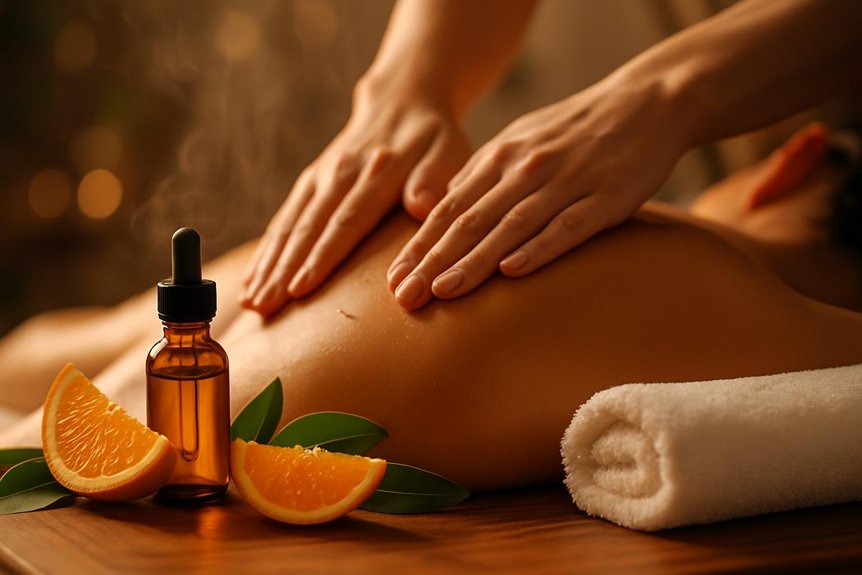
Evidence suggests sweet orange essential oil may offer gentle support for post-exercise muscle soreness when used in massage, primarily through its perceived soothing scent and when paired with appropriate hands-on techniques. In Spa & Massage clinics, therapists may include it in a properly diluted blend to encourage a comfortable sense of warmth and support healthy circulation, while monitoring skin sensitivity and client preferences.
Practical guidance includes blending it with a carrier oil at safe concentrations, patch testing when needed, and avoiding use on irritated skin or before sun exposure if photosensitivity is a concern.
Muscle Soreness Support
In the context of post-exercise or stress-related tension, sweet orange essential oil is often used in aromatic massage to support comfort and relaxation, which can indirectly ease the experience of muscle soreness.
Evidence suggests citrus aromas may help reduce perceived stress and improve mood; when paired with skilled touch, this can soften guarding and make tight areas feel more workable.
At Spa & Massage clinics across London, therapists may blend sweet orange at a safe dilution in a carrier oil and combine it with slow, reassuring strokes and targeted pressure based on client feedback.
Clients often describe a gentler sensation in overworked muscles and an easier return to movement afterward. Patch testing is advised for sensitive skin, and essential oils are avoided on broken skin and used cautiously in pregnancy.
Circulation And Warmth
With its bright, gently warming aroma, sweet orange essential oil is often included in aromatic massage to support a subjective sense of warmth and ease, which may complement circulation-focused techniques used for sore, heavy-feeling muscles.
Evidence suggests citrus aromas can influence perceived comfort and relaxation; however, claims that sweet orange “boosts circulation” directly are limited, and benefits are best framed as experiential when paired with skilled touch.
At Spa & Massage clinics across London, therapists may use sweet orange as part of a soothing massage to encourage gentle softening of guarded areas, helping clients feel more open and comfortably warmed through.
For post-exercise soreness, this can make deeper work feel kinder and more intimate without forcing intensity.
Safety matters: it should be properly diluted, and any irritation or sensitivity warrants stopping and reassessing.
Blending And Application Tips
That gently warming, comforting effect is most noticeable when sweet orange is blended and applied well, using massage techniques that suit the client’s soreness and tolerance.
At Spa & Massage clinics, therapists typically dilute sweet orange to 1–2% in a neutral carrier, often pairing it with lavender for settling tension or black pepper/ginger for deeper heat when circulation support is desired.
Application begins with slow, grounding effleurage to spread oil and invite the nervous system to soften, then shifts to targeted kneading and gentle friction around tight bands, avoiding sharp pain.
For post-exercise soreness, short, rhythmic strokes may be used to encourage flow without bruising.
Safety is central: patch testing is advised, eyes and mucosa are avoided, and sun exposure is limited after use.
Who Should Avoid Sweet Orange Oil in Massage?
For some clients, sweet orange essential oil is best avoided or used only under strict professional guidance during massage—particularly those who are pregnant or breastfeeding, have a known citrus allergy or asthma triggered by fragrances, have very sensitive or broken skin (including eczema flares), are taking photosensitising medicines, or have a history of reactions to essential oils.
Evidence and clinical experience indicate that cold‑pressed citrus oils can increase photosensitivity; clients planning sunbeds, holidays, or outdoor exposure should be cautious.
Those with migraine, nausea, or scent sensitivity may feel overwhelmed, reducing the sense of calm and closeness a session aims to create.
Children, older adults, and immunocompromised clients may require extra dilution or avoidance.
At Spa & Massage, therapists screen for medications, skin conditions, and past reactions, and will recommend fragrance‑free options when safer.
How Do We Use Sweet Orange Oil in Our London Clinics?
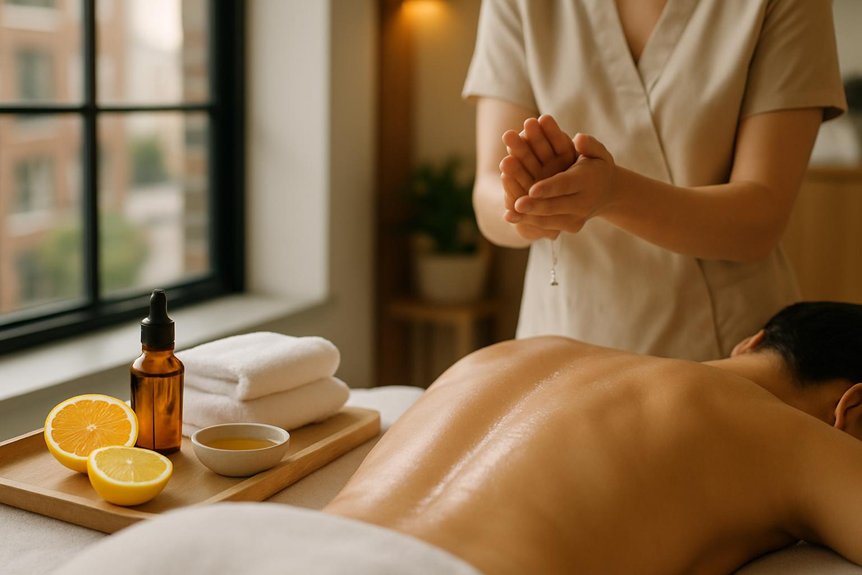
In Spa & Massage’s London clinics, sweet orange essential oil is used selectively within aromatic massage blends to support relaxation and uplift mood while maintaining strict safety controls. Therapists begin with a brief consultation, checking skin sensitivity, pregnancy status, asthma, and citrus allergies, then tailor the session to the client’s preferred intensity and emotional needs.
The oil is diluted into a neutral carrier at low concentrations and applied with slow, close-contact strokes across back, shoulders, and legs, often alongside grounding notes such as lavender or frankincense. Face application is avoided unless specifically assessed.
After treatment, clients are advised to avoid strong sun exposure on treated areas and to hydrate. Across Crouch End, Bayswater, Chiswick, Earl’s Court, Belsize Park, and Richmond, consistent protocols prioritise comfort, consent, and wellbeing.
Conclusion
Sweet orange oil is often claimed to “lift mood” in aromatic massage—but does the effect come from the oil, the massage, or both? Emerging evidence suggests citrus aromas may influence stress perception and relaxation, while touch therapy reliably supports nervous-system downshift. In practice, the safest conclusion is pragmatic: when properly diluted, patch-tested where needed, and avoided in photosensitive or sensitised clients, sweet orange can be a pleasant adjunct that improves comfort and treatment experience rather than a standalone cure.