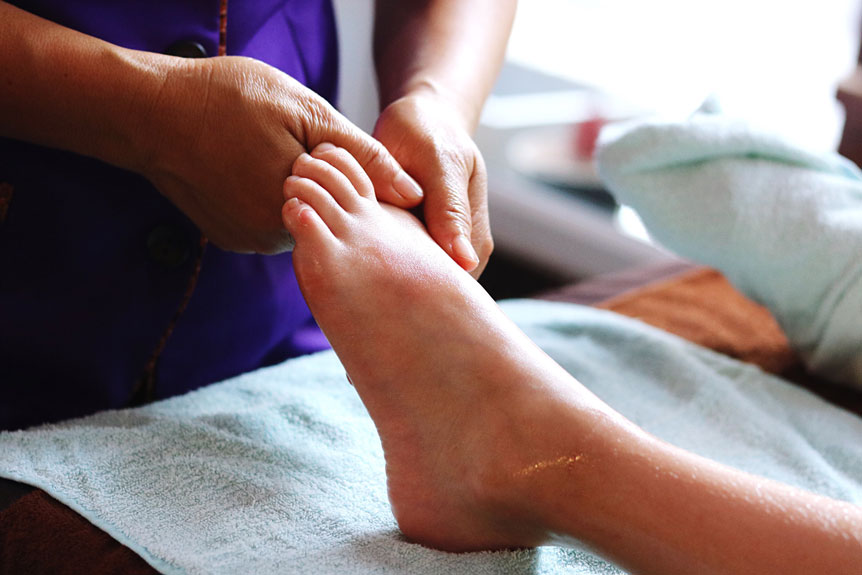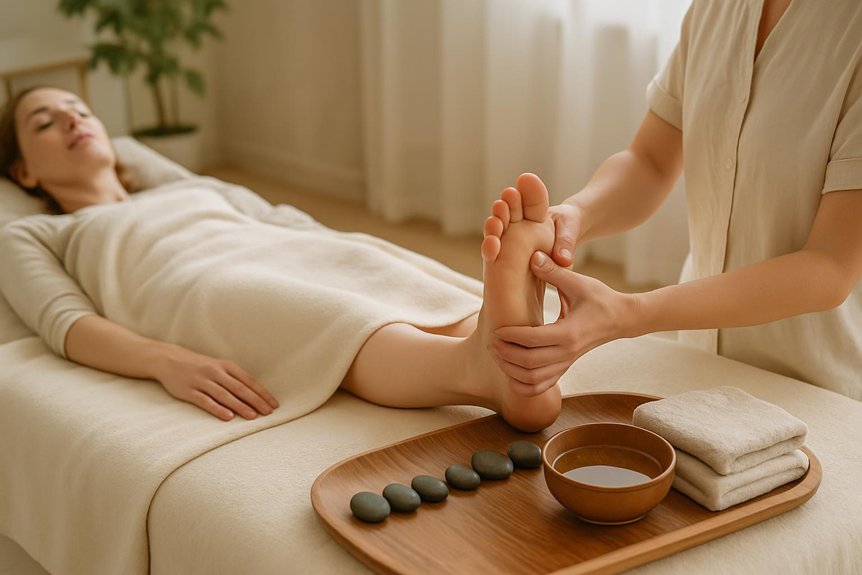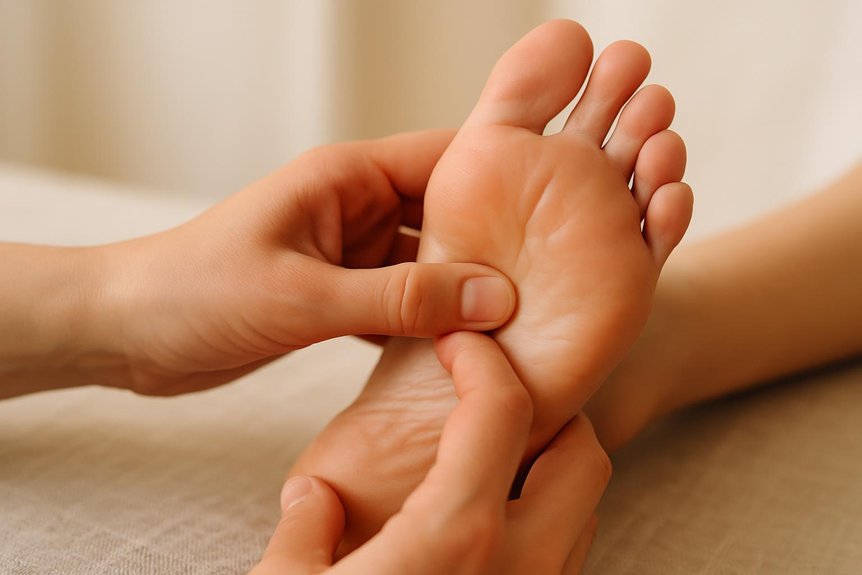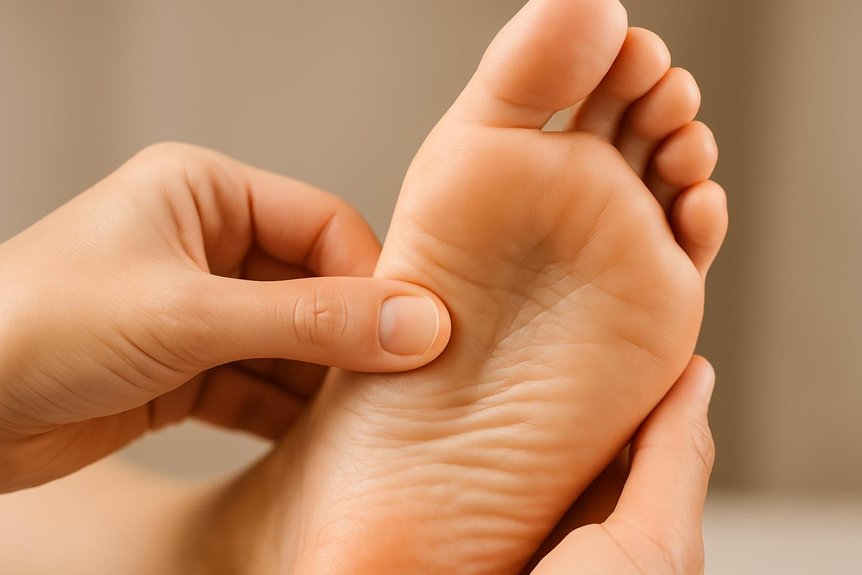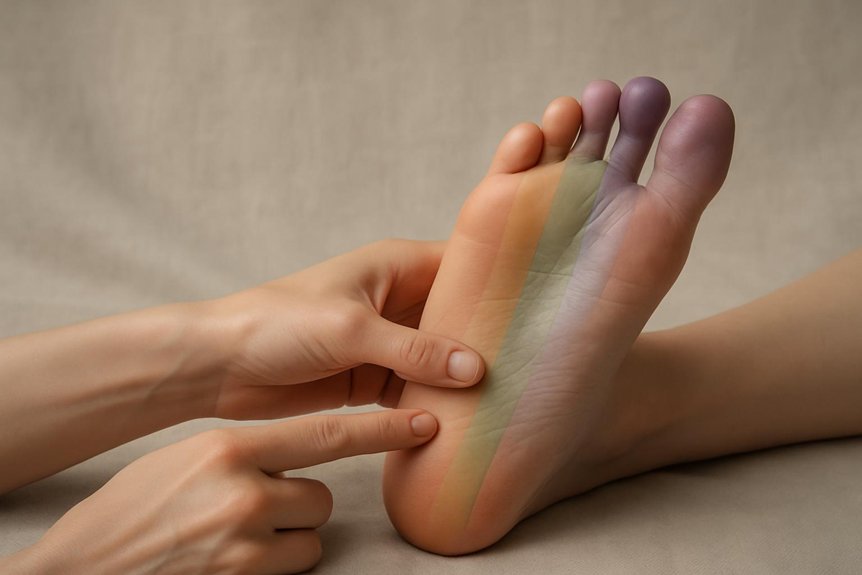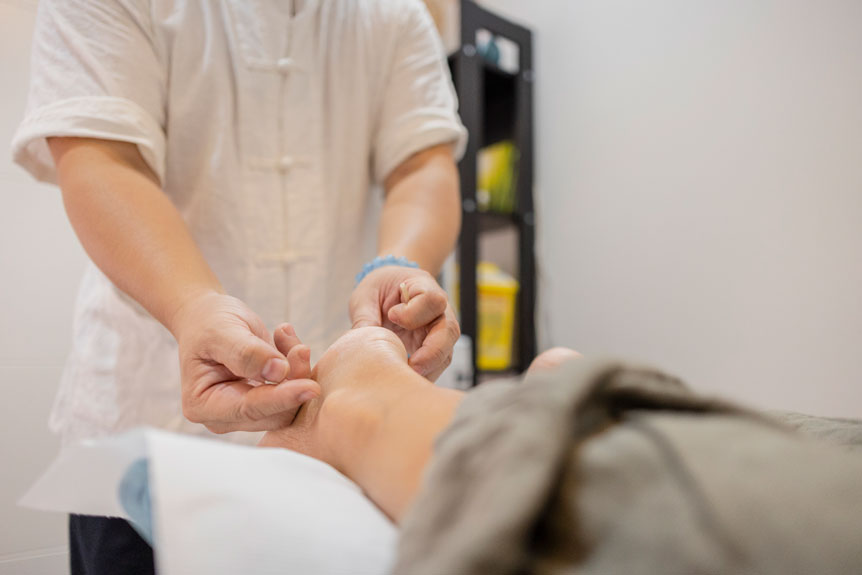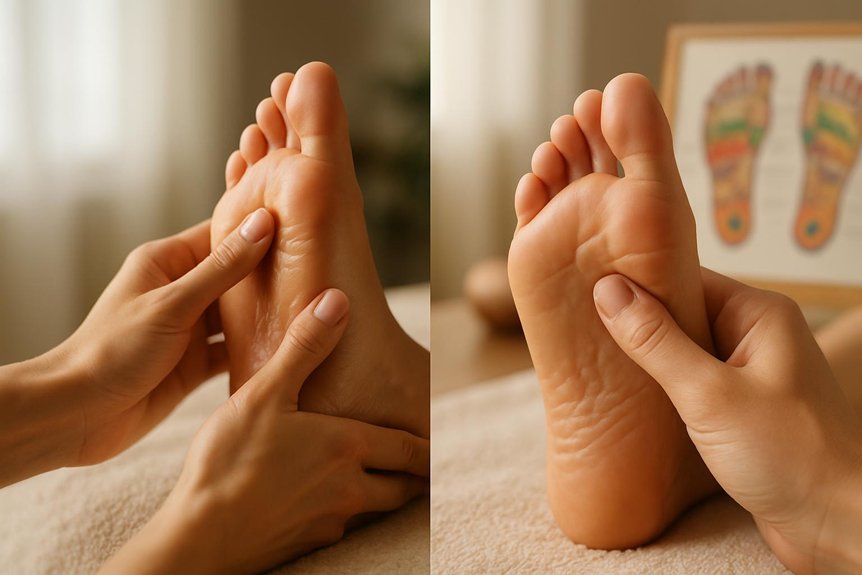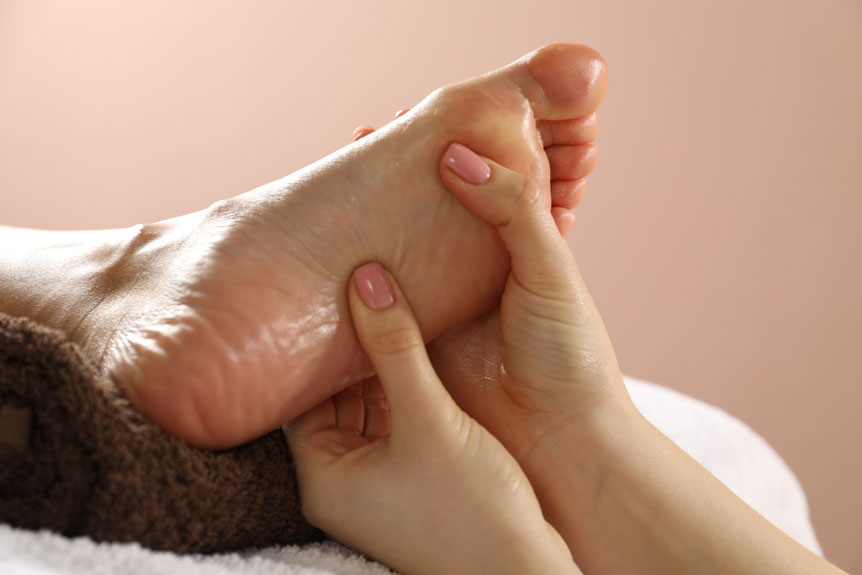
It is for headache relief uses light-to-moderate, steady pressure that feels comfortably tender, not sharp, with 30–60 seconds per point and a 10–15 minute total session. The practitioner warms the feet, then thumb-walks under the ball of the foot along the diaphragm line and pauses on the solar plexus point for three slow breaths. Small circles on the big toe pad and toe bases target head and sinus reflexes, while the inner arch “spinal line” supports neck tension. Further guidance covers headache types and red flags.
Reflexology Points for Headaches (Feet and Hands)
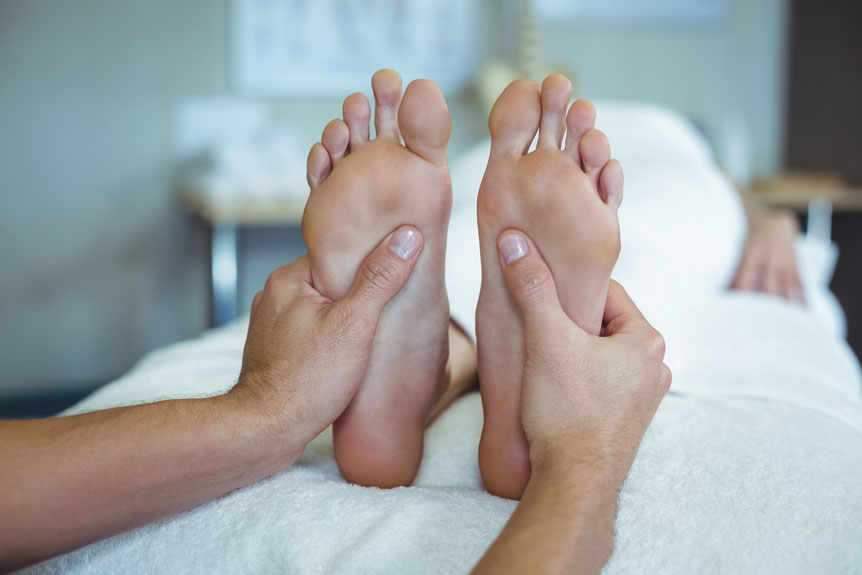
Often used as a targeted, low-impact approach, zone therapy for headache relief focuses on specific points on the feet and hands that correspond to the head, neck, and sinus areas; at Spa & Massage clinics across London, therapists apply controlled thumb-walking and steady pressure within a client’s comfort range, avoiding broken skin, acute inflammation, or high-risk situations (such as recent injury or certain circulatory conditions) and advising clients to stop if symptoms worsen or new neurological signs appear.
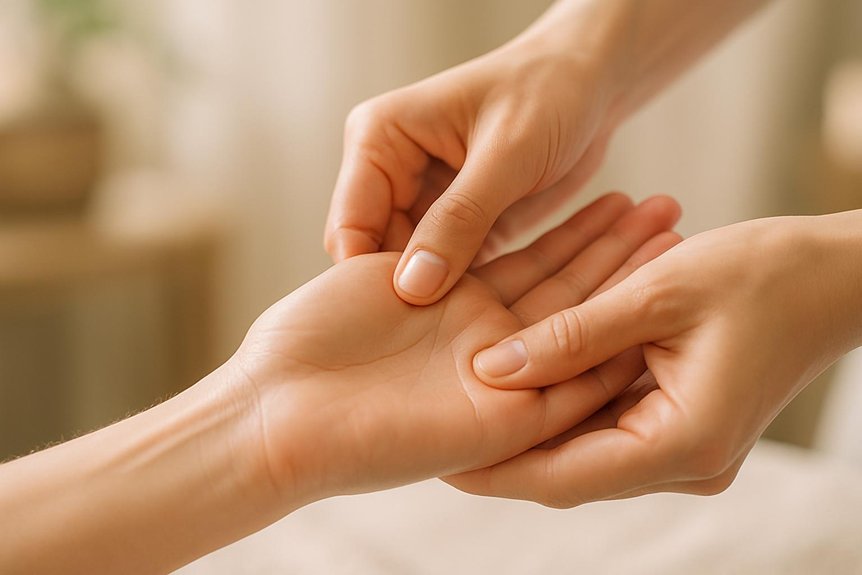
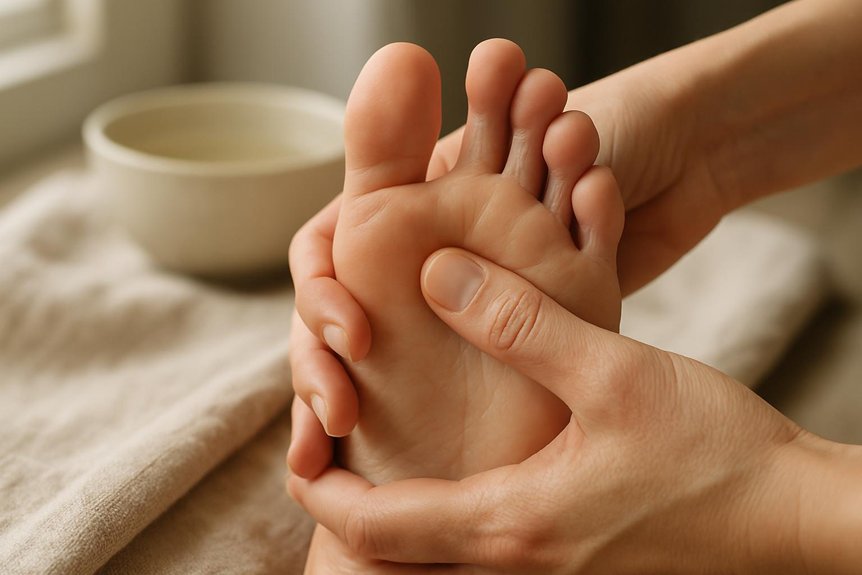
For head and sinus tension, attention commonly centres on the tips of all toes and fingers, then along the inner edge of each foot (spinal line) to address neck-related strain.
The base of the toes and the pads beneath them are worked for forehead and temple discomfort, while the webbing between thumb and index finger is often selected for facial tightness.
Many people explore zone therapy as part of discovering the healing power of zone therapy for overall wellbeing.
Before You Start: Pressure, Timing, and Comfort
Before applying zone therapy for headache relief, pressure, timing, and comfort should be set deliberately: use light-to-moderate, steady pressure that stays within a “comfortably tender” range rather than sharp pain, limit work on any single point to roughly 30–60 seconds with brief pauses, and keep the overall session short (about 10–15 minutes) to avoid overstimulation; in Spa & Massage clinics, therapists also adjust pressure for sensitivity, pregnancy, diabetes, or circulatory concerns and advise stopping immediately if dizziness, nausea, escalating pain, numbness, visual changes, or other unusual symptoms appear.
A calm, private setting supports ease: warm hands, relaxed shoulders, and unhurried breathing. Hydration beforehand and after can reduce post-treatment fatigue. Light oil or balm may improve glide; in Spa & Massage, hypoallergenic options are preferred. Comfort is the guide.
Step-by-Step Zone Therapy Routine for Headache Relief
With pressure, timing, and comfort set, a short zone therapy sequence can be applied to encourage relaxation through the feet and reduce headache intensity.
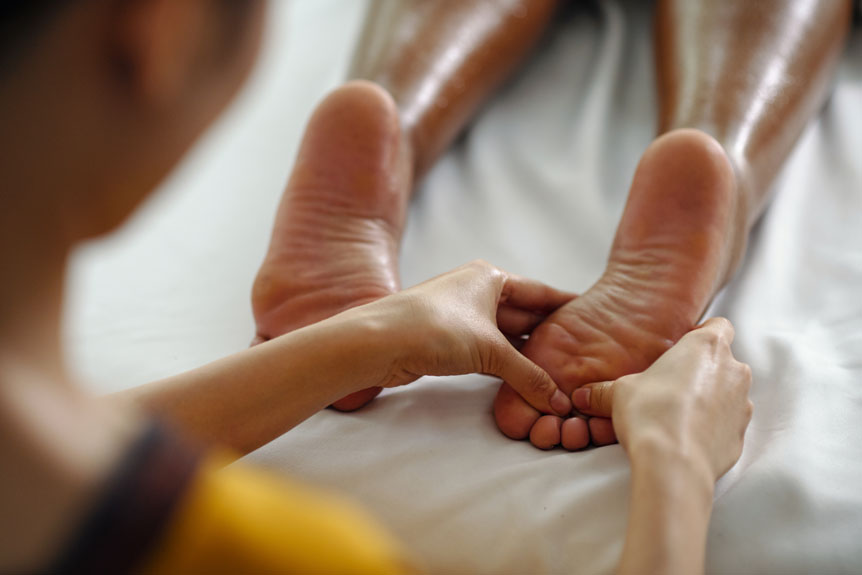
The client rests supine, knees supported, while the therapist warms each foot with slow effleurage from heel to toes. Using thumb-walking, steady pressure is applied along the diaphragm line under the ball of the foot, then across the solar plexus point at the centre, pausing for three calm breaths.
Next, the therapist works the big toe pad and sides with small circles, staying within a “pleasant tenderness” range.
The routine finishes by stroking down the medial arch to the heel and gently mobilising the ankle. In Spa & Massage clinics, pressure is reduced immediately if sharp pain, tingling, or nausea appears. Hydration and quiet rest follow.
Zone Therapy for Tension, Sinus, and Migraine-Like Headaches
Headache patterns can sometimes guide a zone therapy session, because tension-type, sinus, and migraine-like presentations tend to respond best to different pressure choices, pacing, and contraindication checks.
For tension-type discomfort, Spa & Massage therapists often prioritise slow thumb-walking through the neck/shoulder reflexes, then the head/brain area, keeping pressure moderate and steady.
For sinus-style pressure, they add gentle, precise work along the toe pads and toe bases (face/sinus reflexes), using lighter touch and longer holds to avoid irritation.
For migraine-like patterns, sessions typically stay quieter and slower, focusing on grounding zones (diaphragm/solar plexus and spine reflexes) with minimal stimulation and frequent check-ins.
A warm, unscented balm may be used sparingly, supporting comfort without overwhelming sensitivity in-clinic.
When Headache Symptoms Mean “Stop and Get Help”
In zone therapy, safety screening comes first, and certain headache presentations warrant an immediate pause and medical assessment rather than continued treatment. They include a sudden “worst ever” headache, new headache after head injury, fever with stiff neck, fainting, confusion, slurred speech, facial droop, weakness, numbness, vision loss, chest pain, or shortness of breath.
Red flags also include a new or changing pattern in pregnancy, severe headache with high blood pressure, or headaches that wake someone from sleep.
At Spa & Massage clinics, therapists stop hands-on work, keep the client comfortable and supported, and advise urgent GP, NHS 111, or emergency care as appropriate. It can soothe, but it should never replace timely medical diagnosis or treatment when warning signs appear.
Conclusion
Zone therapy for headache support is most effective when performed with steady, comfortable pressure and a consistent routine targeting head, neck, and sinus reflex points on the feet and hands. Sessions should prioritise relaxation, hydration, and symptom tracking, adjusting intensity to avoid tenderness or flare-ups. As the adage goes, “an ounce of prevention is worth a pound of cure”: early, gentle practice may reduce stress-driven patterns. Persistent, severe, or changing headaches warrant prompt medical assessment.