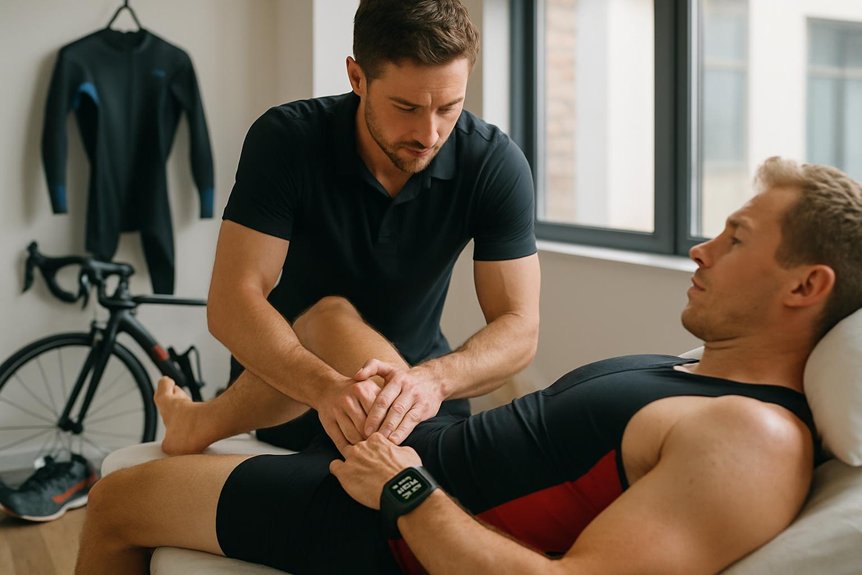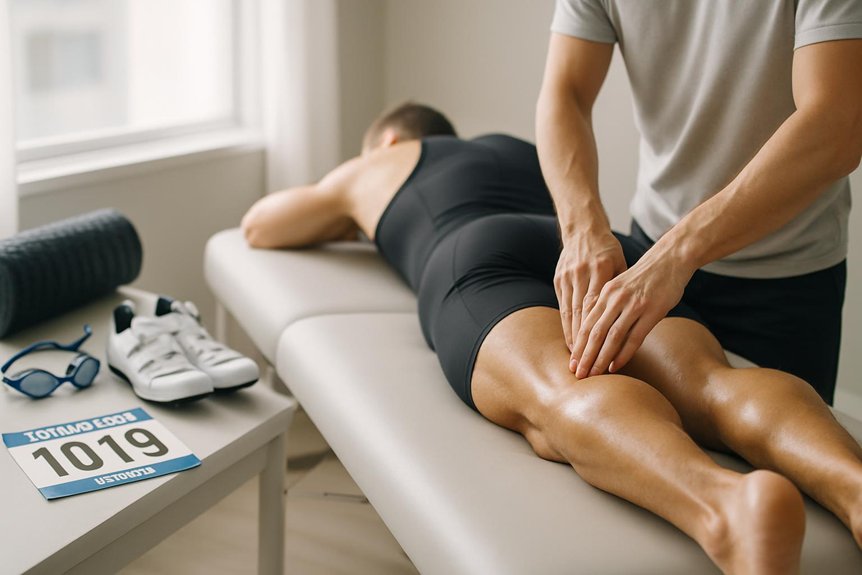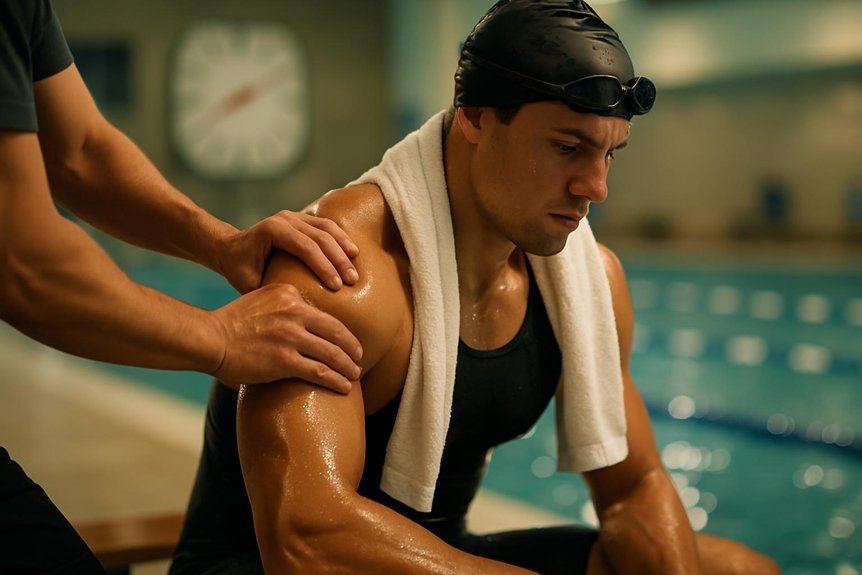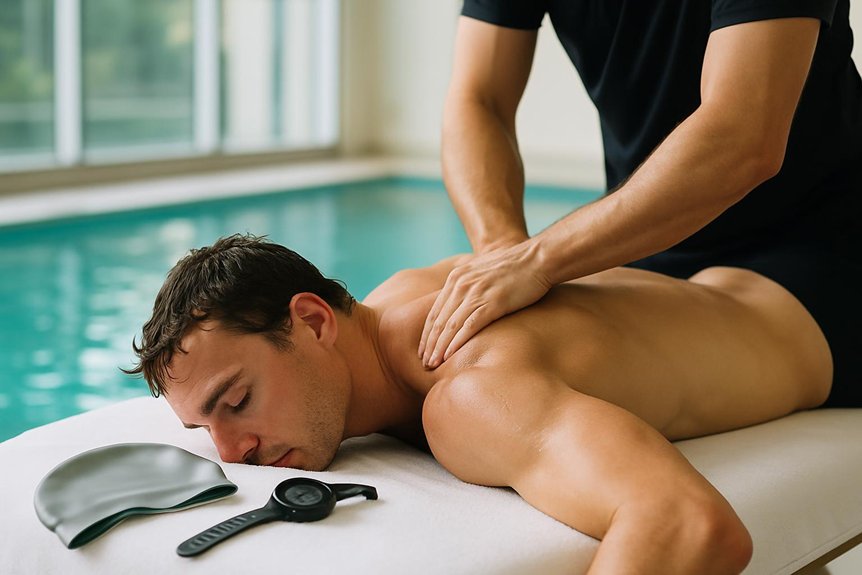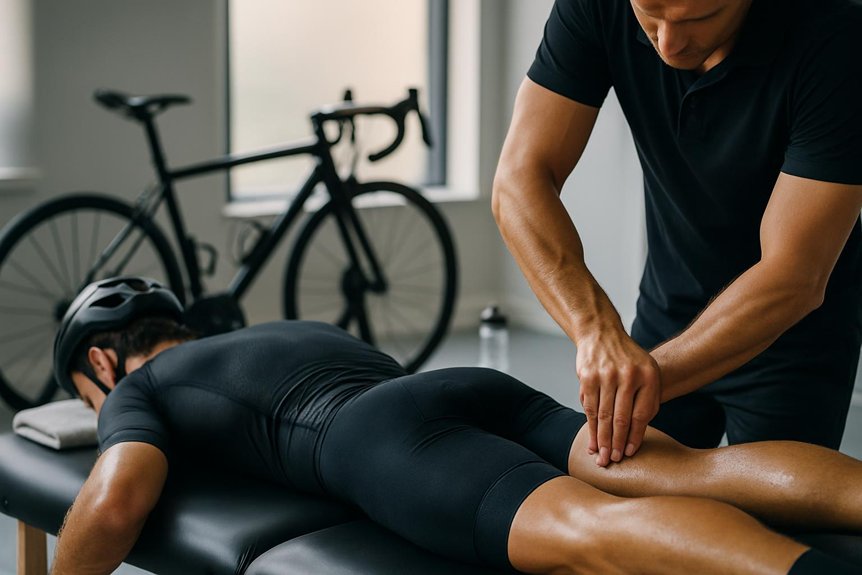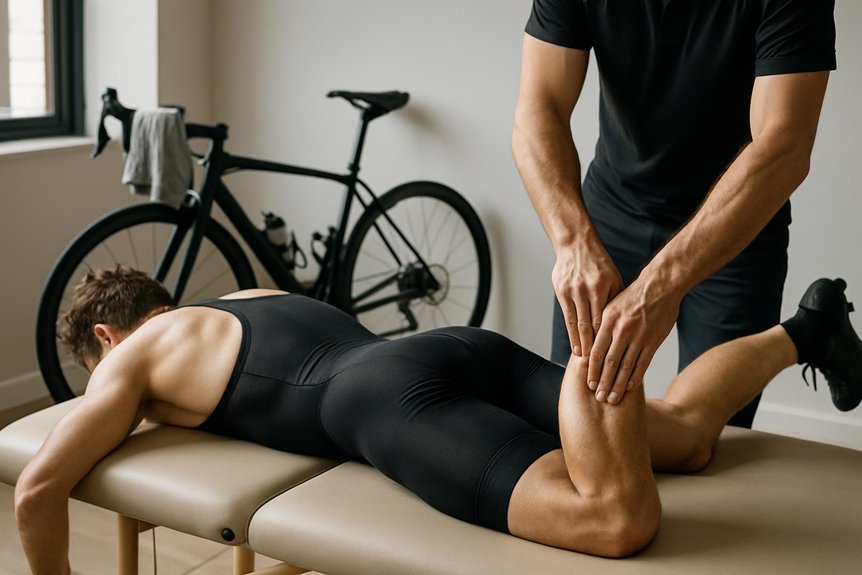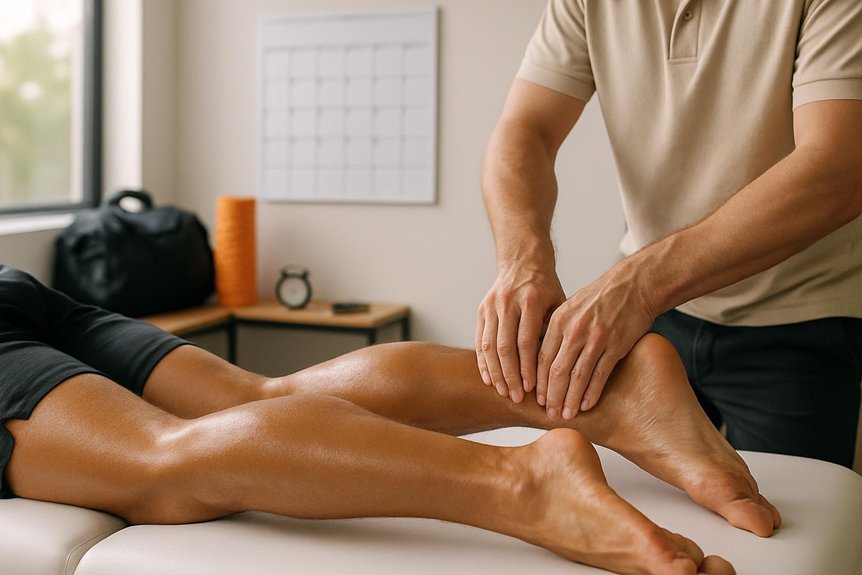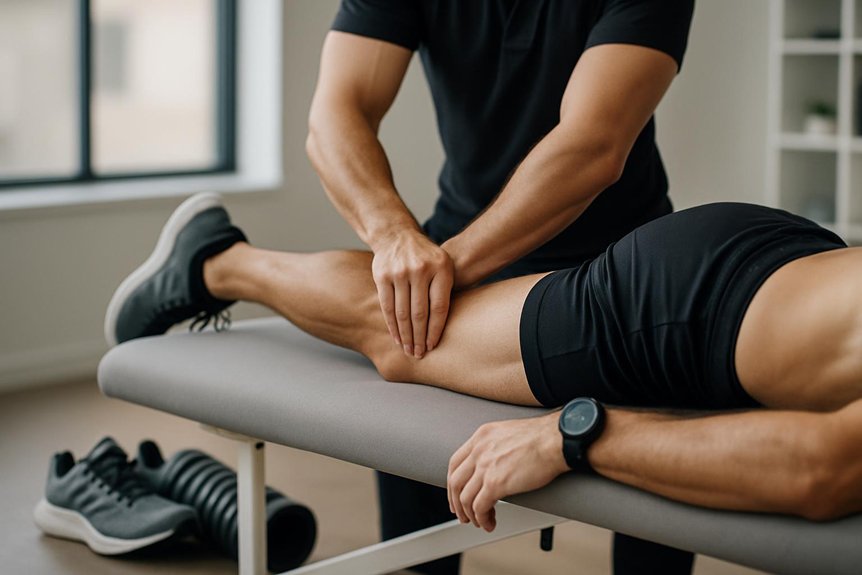
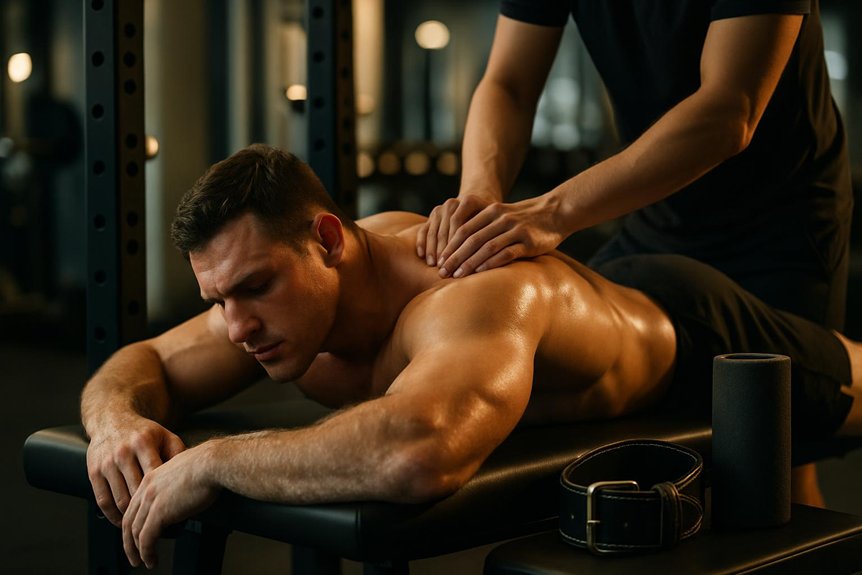
It can support recovery after lifting by reducing perceived soreness and stiffness, restoring local circulation, and normalising resting muscle tone. Rhythmic effleurage, controlled petrissage, and short compression-release “pumping” help fluid exchange and venous return, while slower pacing can down-regulate guarding. It is typically most comfortable within 24–72 hours post-session, when DOMS peaks, and pressure should be calibrated to avoid over-irritating sensitised tissue. Further details cover timing, techniques, and cautions.
Can It Speed Up Lifting Recovery?
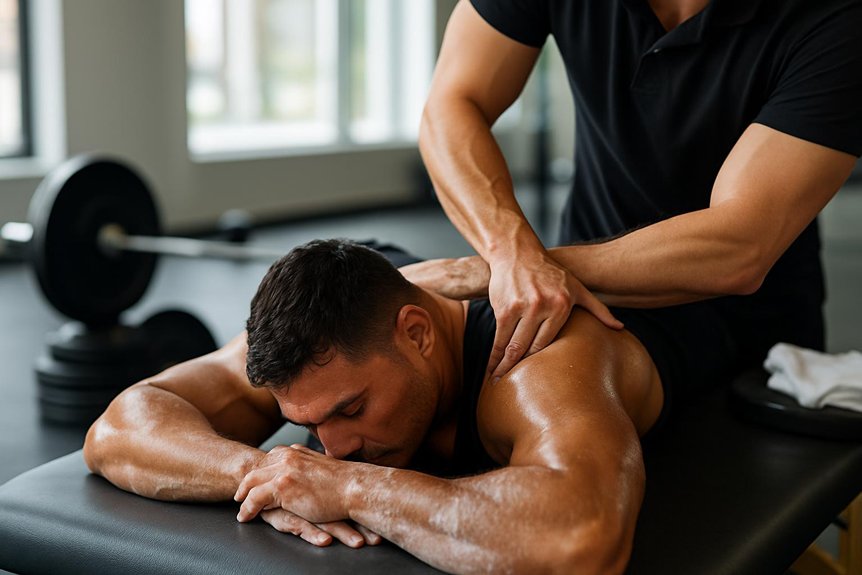
How quickly strength training soreness settles depends largely on how efficiently the body clears metabolic by-products, restores circulation, and normalises muscle tone—areas that performance massage can influence.
Evidence suggests well-dosed soft-tissue work can improve perceived recovery and readiness, especially when it reduces protective guarding and restores comfortable range of motion.
Because it’s designed around the needs of athletes, sports massage can be tailored to support performance and recovery demands specific to training cycles.
At Spa & Massage clinics, therapists use slow compressions, stripping along muscle fibres, and targeted trigger-point pressure around overloaded regions, then follow with flushing strokes to support local blood and lymph flow. Pressure is kept “strong but safe” to avoid adding strain.
Many clients find the combination of precise touch, steady breathing, and calm pacing helps the nervous system downshift, making the body feel supple sooner and training feel smoother.
What Post-Lift Soreness (DOMS) Can Performance Massage Help?
Delayed onset muscle soreness (DOMS) after lifting often presents as muscle tightness and next‑day stiffness, and performance massage is commonly used to address both.
At Spa & Massage, therapists apply targeted techniques such as effleurage, compression, and paced deep tissue work to reduce guarding and restore comfortable range of motion without overloading already sensitised tissue. These methods also support recovery by promoting local circulation and fluid exchange, which can help reduce the perception of soreness as the muscle settles post‑training.
Easing DOMS Muscle Tightness
Managing the tight, aching “day-after” feeling following a heavy session often comes down to restoring normal tissue glide and reducing protective muscle guarding.
It can help by calming sensitised tissue and improving the way layers move, which may ease the perceived “bind” that accompanies DOMS. At Spa & Massage clinics across London, therapists typically use slow, sinking effleurage to warm the area, then targeted myofascial release and broad compression along the muscle belly—avoiding aggressive, bruising pressure that can amplify soreness.
Gentle trigger-point holds may be added where a taut band is clearly felt, followed by light flushing strokes to support local circulation.
Aftercare is simple: hydrate, keep warmth on the area, and choose easy range-of-motion work.
Reducing Post-Lift Stiffness
After a heavy lifting session, stiffness often reflects short-term increases in muscle tone, local swelling, and reduced fascial glide rather than “damage” that needs aggressive work; performance massage can help by down-regulating guarding and restoring smoother tissue movement.
At Spa & Massage, therapists typically begin with slow, warming effleurage, then use measured myofascial release and gentle stripping along the muscle fibres to ease resistance without provoking tenderness.
Targeted work around hip flexors, glutes, calves, pecs, and lats can improve how joints “feel” through range, making the next day’s movement less creaky.
Brief trigger point pressure may be added when it refers comfortably and releases quickly.
Clients are advised to breathe deeply, stay relaxed, and book within 24–72 hours for best comfort.
Improving Recovery Blood Flow
Less stiffness often goes hand-in-hand with better local circulation, and this is where performance massage can support recovery from post-lift soreness (DOMS).
By applying rhythmic effleurage and controlled petrissage, a therapist encourages superficial blood flow and gentle venous return, which may help clear metabolic by-products and deliver oxygen and nutrients to tired tissue.
Evidence suggests massage can reduce perceived soreness and improve short-term function, even when structural muscle damage remains.
At Spa & Massage clinics, therapists often pair deeper, slow strokes along the muscle fibres with lighter flushing toward the heart, keeping pressure within a client’s comfortable, close-contact range.
Short bouts of compression and release can also “pump” fluid through tense areas.
Aftercare: hydrate, keep warm, and walk lightly for 10–15 minutes.
What Does Performance Massage Actually Do After Lifting?
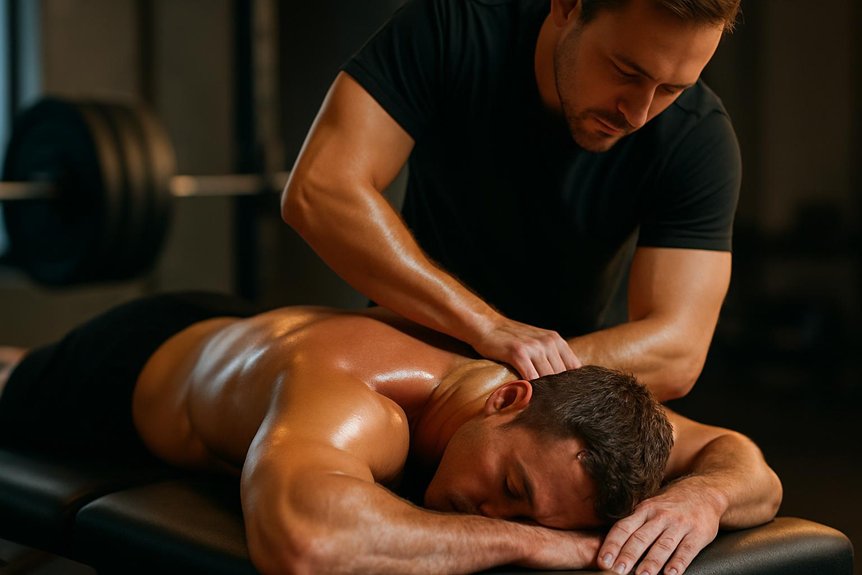
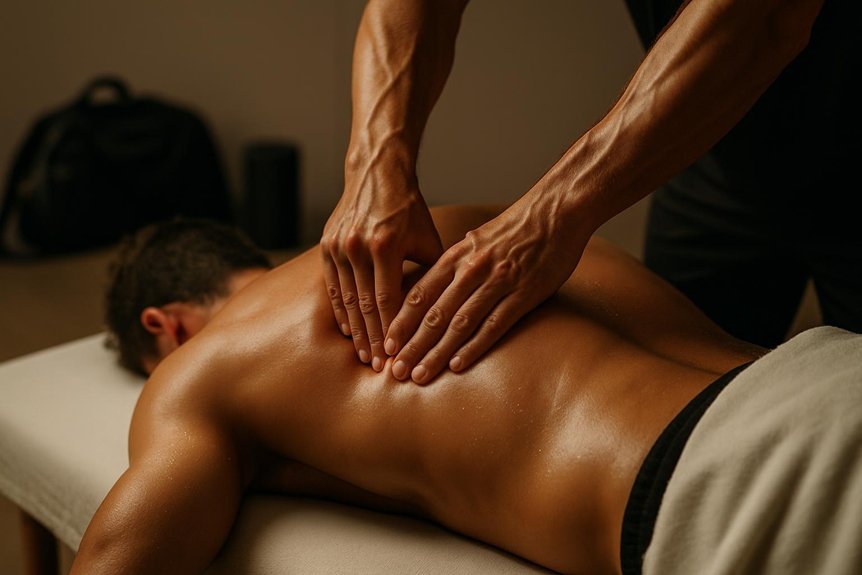
In the hours following a lifting session, performance massage targets the specific mechanical and neurological stress that heavy loading leaves in muscle and connective tissue.
A therapist uses slow, directional strokes and focused pressure to reduce resting tone, ease protective guarding, and improve glide between layers, which can help movement feel freer the next day.
Evidence suggests massage can meaningfully reduce delayed-onset soreness and support perceived recovery, likely via local circulation changes and downshifting of the stress response rather than “flushing” lactic acid.
At Spa & Massage clinics, therapists often combine compression, stripping, and gentle cross-fibre work around tight bands, then finish with calming effleurage to settle the nervous system.
Clients are encouraged to breathe, soften, and notice sensations for a more connected, intimate recovery experience.
Performance Massage vs Foam Rolling: Which Works Best (or Both)?
How does a hands-on performance massage compare with a foam roller when the goal is faster, more comfortable recovery after lifting? Evidence suggests both can reduce soreness and improve short-term range of motion, largely by calming sensitivity, easing tone, and restoring sliding between tissues rather than “flushing” lactic acid.
Foam rolling is self-directed and consistent: slow passes, brief pauses on tender points, moderate pressure, and controlled breathing support a soothing, intimate body check-in. Performance massage adds precision and adaptability. At Spa & Massage, therapists use tailored depth, fascial glides, and targeted trigger work around stressed areas, then downshift with slower strokes to settle the nervous system.
For many lifters, combining both works best: rolling maintains daily comfort; massage fine-tunes stubborn spots and movement quality.
When Should You Book Performance Massage After Lifting?
Timing matters because post-lifting performance massage can be used either immediately (lighter, circulation-focused techniques to reduce perceived soreness and maintain range of motion) or the next day (more targeted work once delayed-onset muscle soreness and tissue sensitivity are clearer).
At Spa & Massage, therapists typically match pressure and methods to training load and recovery goals, prioritising tissue tolerance over intensity.
Practical signs to book include persistent tightness that limits movement, escalating soreness beyond 24–48 hours, reduced performance in subsequent sessions, or focal areas that feel “stuck” despite mobility work.
Immediate Vs Next-Day Timing
Within the first few hours after a lifting session, the choice between an immediate performance massage and a next-day appointment should be guided by the training load, current soreness, and the goal of the treatment—downregulating the nervous system and restoring range of motion versus addressing delayed onset muscle soreness (DOMS) and residual stiffness once inflammation has settled.
An immediate session typically stays lighter: slow effleurage, diaphragmatic breathing cues, and gentle compressions to calm tone, support circulation, and ease protective tightness without provoking sensitised fibres.
Next-day work can be more specific: deeper stripping, friction around tendinous junctions, and targeted trigger-point holds, timed to when DOMS peaks and movement feels guarded.
At Spa & Massage clinics, therapists adjust pressure and pacing to keep tissue warm, safe, and comfortably intimate while supporting recovery goals.
Signs You Should Book
When, exactly, should a lifter book a performance massage after training? Clear signs include soreness peaking at 24–48 hours, stiffness limiting range of motion, “ropey” knots that don’t ease with warm-up, or lingering heaviness that changes lifting form. Booking is also prudent when sleep quality drops, joints feel cranky from tight surrounding tissue, or recovery between sessions keeps extending despite sound nutrition and hydration.
At Spa & Massage, therapists prioritise evidence-based, comfort-led deep tissue and sports techniques: slow flushing strokes to support circulation, then targeted pressure and myofascial work to soften adhesions without provoking protective guarding. Many clients schedule within 24–72 hours post-lift, or earlier for gentle, relaxing decompression.
Aftercare is simple: water, light walking, and heat if comfortable.
What to Expect in a Post-Lift Performance Massage Session
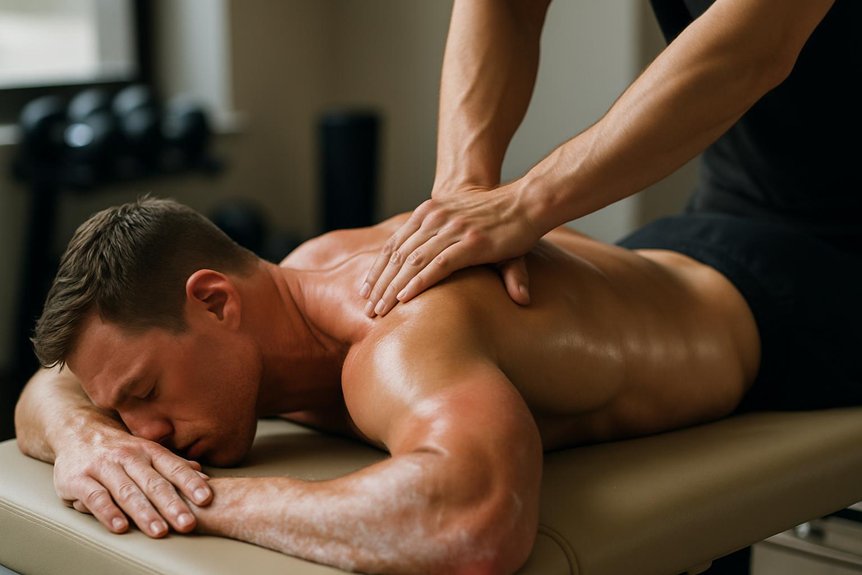
Often, a post-lift performance massage session at Spa & Massage begins with a brief assessment of the client’s training load, current soreness patterns, and any joint or tendon irritations, so the therapist can target recovery without aggravating fatigued tissue.
Pressure is then calibrated to tolerance and timing post-session, typically favouring slower effleurage for circulation, followed by targeted deep-tissue strokes, myofascial work, and friction where adhesions or tight bands are palpable.
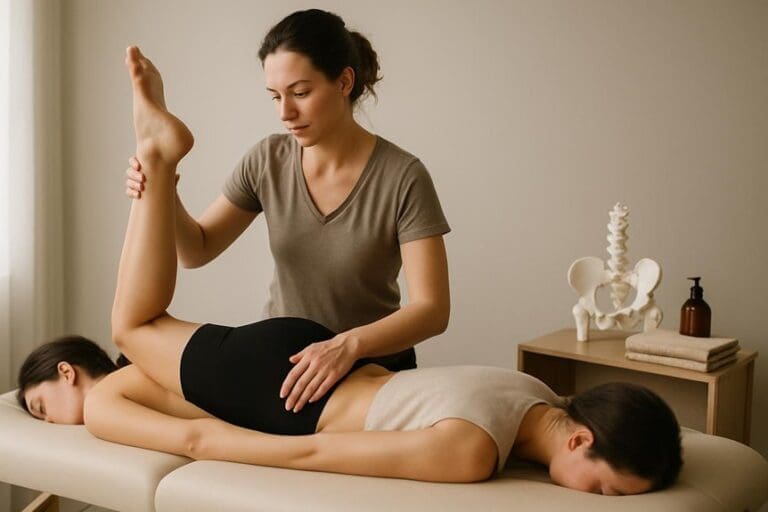
Passive range-of-motion and gentle stretching may be added to restore glide and reduce protective tone without chasing pain.
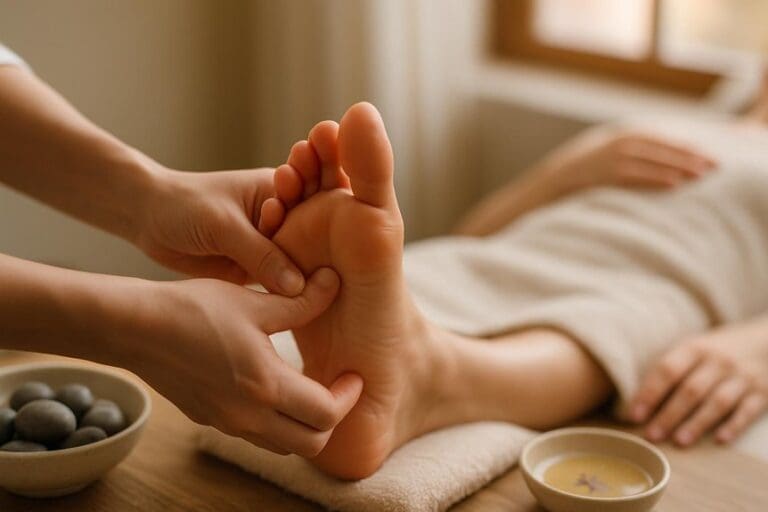
Many clients prefer warm oil to support tissue pliability and a calmer, more intimate parasympathetic response.
The therapist checks in regularly, keeping communication discreet and continuous.
Aftercare commonly includes hydration, light walking, and avoiding maximal loading for 24 hours.
Do Strength, Hypertrophy, and Powerlifters Need Different Work?
Post-lift performance massage is most effective when the treatment plan reflects the athlete’s training goal, because strength, hypertrophy, and powerlifting programmes create different fatigue patterns, tissue loading profiles, and recovery constraints. At Spa & Massage, therapists match pressure, pace, and duration to those demands while keeping the experience calm, private, and attentive.
Strength-focused lifters often benefit from slower deep tissue work and myofascial techniques to reduce tone around prime movers and restore comfortable range without over-stimulating.
Hypertrophy blocks typically create higher metabolic stress and DOMS; lighter-to-moderate flushing strokes, gentle compressions, and targeted trigger-point work support circulation and tenderness management.
Powerlifters commonly need precise attention to hips, thoracic spine, and shoulder girdle; brief, specific work plus joint-friendly mobilisations helps maintain positions for squat, bench, and deadlift mechanics.
When Is It a Bad Idea After Training?
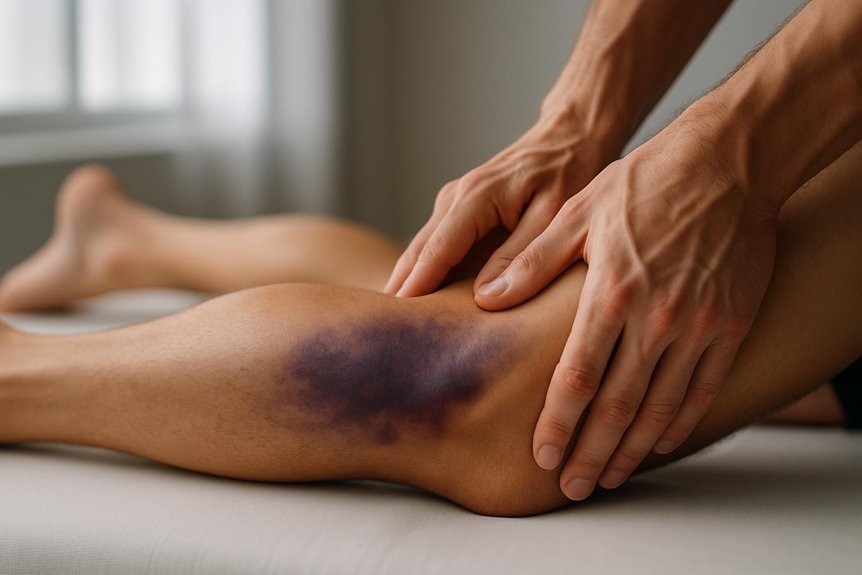
In some cases, performance massage immediately after training is a poor recovery choice because additional mechanical pressure can amplify tissue irritation or delay normal healing. It is best avoided after suspected strains, acute tendon pain, bruising, sharp “pinching” sensations, or swelling/heat, as these can indicate inflammatory load or minor tearing.
Heavy DOMS with marked tenderness may also respond better to gentle circulation work than deep stripping. People who feel dizzy, nauseated, or dehydrated post-session may tolerate touch poorly and should rehydrate first.
At Spa & Massage clinics, therapists screen for red flags, then choose lighter techniques—compressions, effleurage, and paced breathing—rather than aggressive trigger-point work. Recent injections, skin irritation, or anticoagulant use also warrant caution and modified pressure.
How Often Should You Get Performance Massage When Lifting?
Generally, the ideal performance massage frequency for people who lift depends on training volume, intensity, and recovery capacity, with most benefitting from one targeted session every 2–4 weeks and increasing to weekly during high-load blocks or when persistent tightness limits range of motion.
Evidence suggests massage supports perceived soreness and restores comfortable movement, especially when focused on overloaded tissues rather than full-body “flushes.” At Spa & Massage clinics, therapists typically use slow, deep strokes, myofascial release, and brief trigger-point work, then reassess joint range and breathing to keep pressure intimate but tolerable.
For beginners or DOMS-prone lifters, every 3–4 weeks is often sufficient; advanced lifters may schedule weekly or fortnightly.
Between sessions, clients are advised to hydrate, walk lightly, and avoid maximal lifting for 24 hours.
Conclusion
It can support recovery after lifting, though it is no silver bullet. Evidence suggests it may reduce perceived soreness, ease tension, and restore comfortable range of motion, especially when timed 24–72 hours post‑session and paired with sleep, nutrition, and sensible loading. Technique and pressure should match the training goal, tissue sensitivity, and current fatigue. Like a stitch in time, regular, well‑planned sessions may help lifters train consistently while avoiding flare‑ups and compensation patterns.