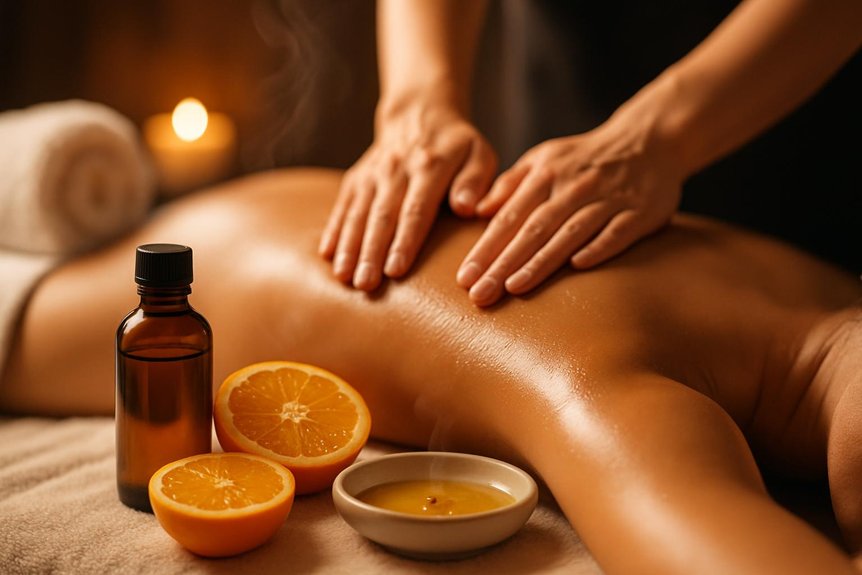
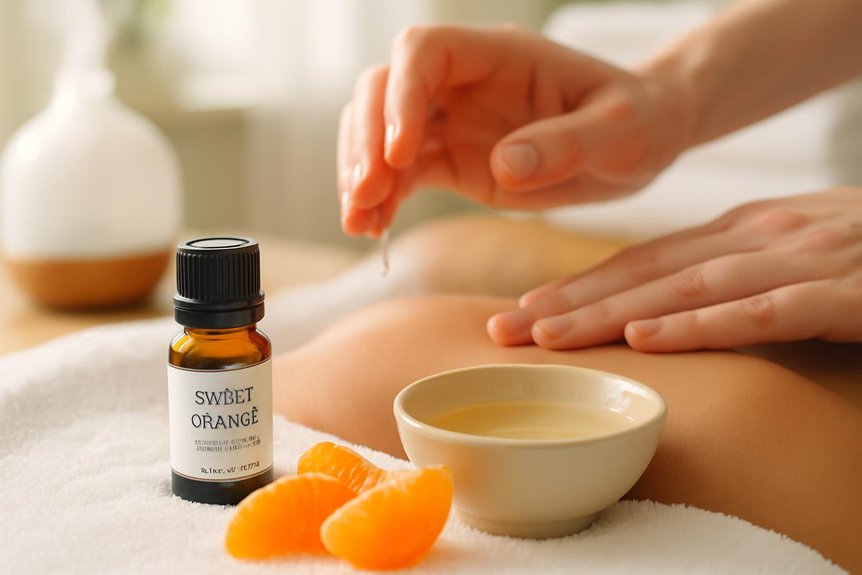
Sweet orange essential oil is generally safe for aromatic massage when it is fresh, properly diluted in a carrier oil, and patch-tested. Typical full-body dilution is about 1% (5–6 drops per 30 ml), with lower concentrations for sensitive areas. It may still irritate reactive, recently shaved, broken, or inflamed skin, and fragrance can trigger asthma or sensitivities. Undiluted use is avoided, and sunbeds or strong sun are best avoided for 12–24 hours. Further details cover screening, blending, and aftercare.
Is Sweet Orange Oil Safe in Aromatic Massage?
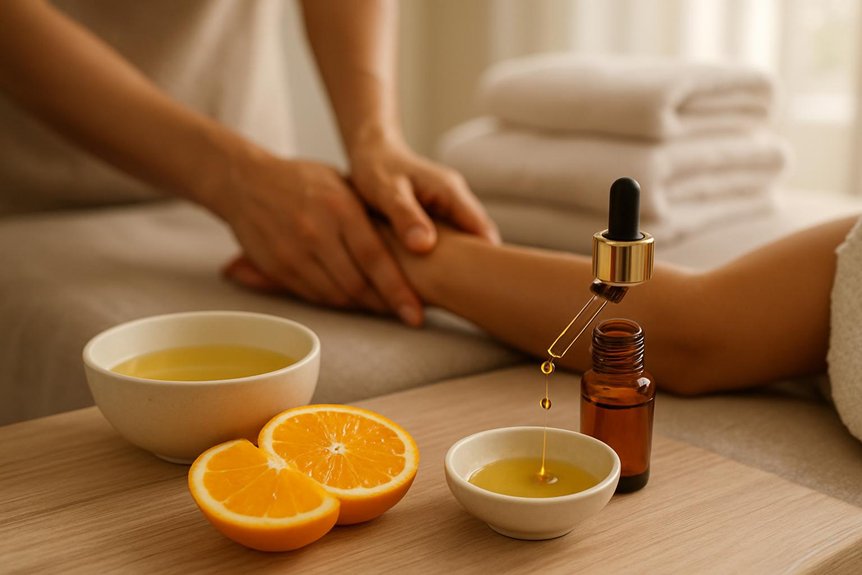
Sweet orange essential oil is generally considered safe for aromatic massage when it is properly diluted, patch-tested where appropriate, and selected with the client’s health history in mind.
Evidence supports its uplifting, calming scent, yet safety hinges on screening for citrus sensitivities, asthma triggers, eczema, and current medications.
Because expressed citrus oils can be phototoxic, Spa & Massage therapists advise avoiding direct sun or sunbeds on treated skin for 12–24 hours after a session.
Clients who are pregnant, breastfeeding, immunocompromised, or receiving oncology care should seek clinician approval before essential oils are used.
At Spa & Massage clinics, therapists use small, carefully chosen amounts and monitor comfort throughout, inviting feedback so the experience stays soothing, close, and respectful.
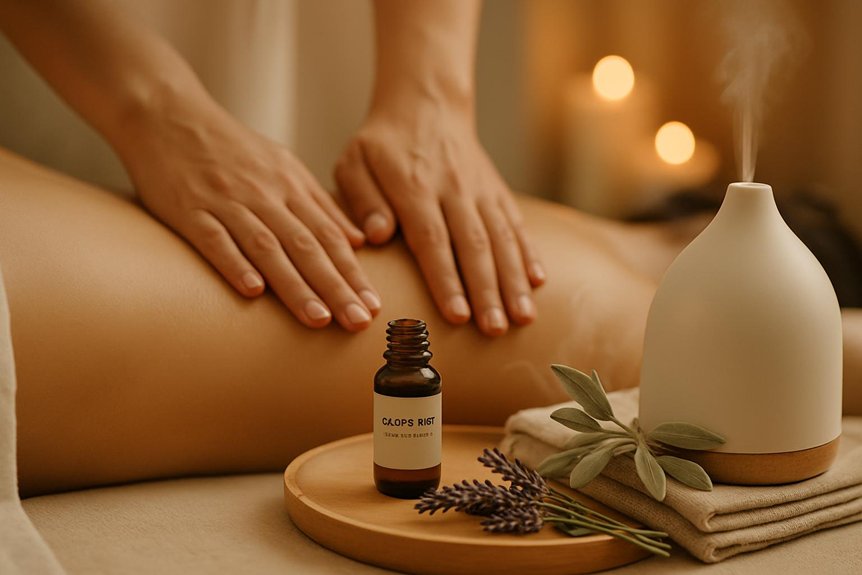
To relax and unwind, many clients find aromatherapy massage supports both comfort and calm when used thoughtfully.
How to Dilute Sweet Orange Oil for Massage
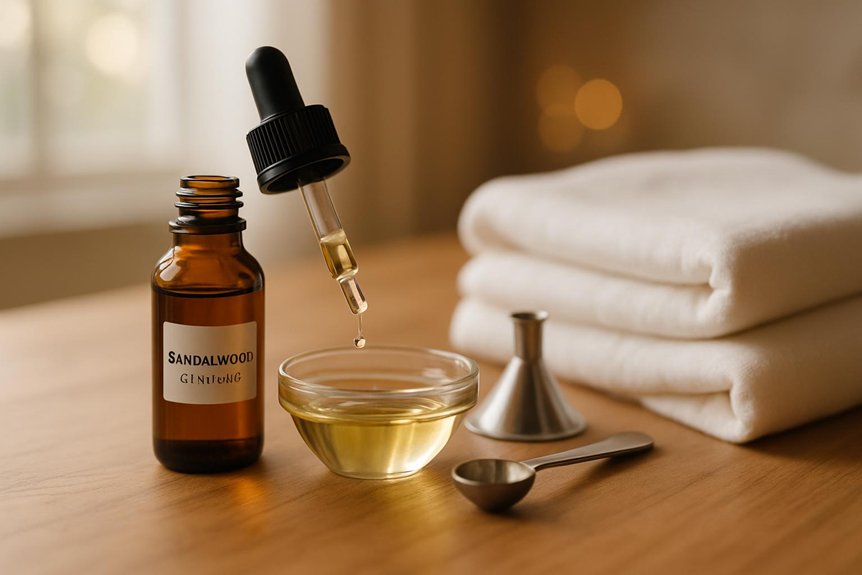
How should sweet orange essential oil be diluted for massage to balance aroma, comfort, and skin safety? Evidence-based aromatherapy practice typically uses low dilutions for full-body work: 1% for most adults (about 5–6 drops per 30 ml carrier oil), and 2% (10–12 drops per 30 ml) only when a stronger scent is desired and tolerated.
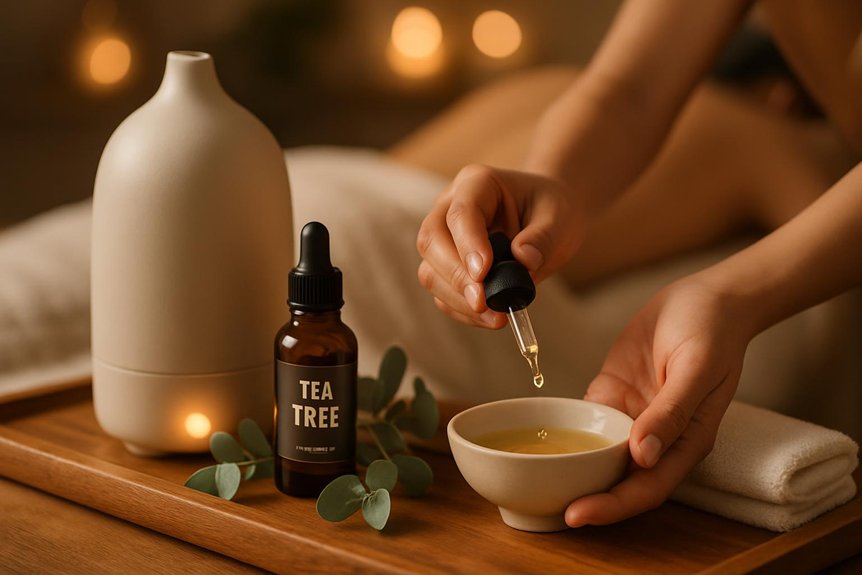
For facial or very sensitive-area massage, 0.5% (2–3 drops per 30 ml) keeps the touch gentle and close. In Spa & Massage clinics, therapists blend sweet orange into unscented, skin-compatible carriers, mix thoroughly, and apply with slow, warming strokes so aroma unfolds without overwhelming.
Patch testing a small area first supports personalised, intimate comfort.
When Sweet Orange Oil May Irritate Skin in Massage
In aromatic massage, sweet orange oil may irritate skin most often when a cold‑pressed oil triggers sensitivity (including phototoxic risk), when dilution is too strong due to measuring errors, or when the client has a reactive skin condition such as eczema or dermatitis.
At Spa & Massage clinics across London, therapists screen for these factors, use conservative dilutions, and patch-test or substitute oils when a client reports prior reactions.
Any stinging, redness, itching, or warmth during or after the massage is treated as a stop signal and the plan is adjusted to protect the client’s skin barrier.
Cold-Pressed Oil Sensitivity
Cold-pressed citrus oils can sometimes irritate skin during massage because they retain more naturally occurring compounds (such as waxes and furocoumarins) than distilled versions. Evidence suggests these constituents may increase the chance of stinging, redness, or delayed sensitivity, especially on recently shaved, dry, or reactive skin.
Photosensitivity is also a concern: furocoumarins can make skin more vulnerable to UV exposure.
At Spa & Massage clinics, therapists screen for sensitivities, recent sun exposure, and pregnancy, then select oils with a safety-first profile and patch-test when appropriate. If warmth, itching, or tightness develops during a session, the oil is removed promptly and the blend is switched to a gentler option.
Clients are advised to avoid sunbeds and strong sunlight afterwards.
High Dilution Mistakes
Even when a sweet orange oil is not particularly “hot” on the skin, irritation during aromatic massage often comes down to dosing errors rather than the oil itself.
The most common mistake is using too high a dilution, especially on freshly shaved areas or after exfoliation, when skin barrier function is reduced. Another is “topping up” the blend mid-session without re-measuring, creating hot spots that sting under warm hands and prolonged strokes. Citrus oils can also concentrate in the fold of the elbow, neck, or inner thigh if applied too heavily.
At Spa & Massage clinics, therapists measure drops precisely and typically keep facial and sensitive-area dilutions lower than body work. Clients should request a lighter blend and speak up immediately if warmth becomes prickly.
Reactive Skin Conditions
While sweet orange essential oil is generally well tolerated at appropriate dilutions, clients with reactive skin conditions—such as eczema, contact dermatitis, rosacea, psoriasis, or a history of fragrance sensitivity—may experience stinging, redness, or itching during aromatic massage because their skin barrier is already compromised.
In these cases, even low percentages can trigger irritation, especially on warm, freshly exfoliated, or broken skin.
At Spa & Massage clinics, therapists complete a careful consultation, avoid active flare areas, and may suggest an unscented carrier oil or a gentler, non-citrus blend.
A patch test (24 hours) is advised for sensitive clients.
If any discomfort arises during treatment, the oil should be removed promptly and the session adjusted.
Persistent reactions warrant medical advice before rebooking.
Is Sweet Orange Oil Phototoxic After Massage?
Sweet orange oil is not generally considered phototoxic after massage when it is properly diluted for skin use, because it contains very low levels of the furocoumarins associated with sun sensitivity.
Evidence reviews distinguish expressed citrus oils high in furocoumarins (notably bergamot) from sweet orange, which is typically low-risk.
In Spa & Massage clinics, therapists blend sweet orange into a carrier oil at conservative skin-safe percentages and avoid applying undiluted essential oil.
For intimate treatments involving larger body areas, clients are advised to treat the skin gently afterwards: avoid sunbeds and intense midday sun on freshly massaged areas for 12–24 hours, especially after exfoliation or heat.
Any redness, warmth, or tingling should prompt washing the area and pausing further exposure.
Who Should Avoid Sweet Orange Oil Massage?
In clinical-style aromatic massage, sweet orange essential oil is not appropriate for everyone. At Spa & Massage, it is avoided for clients with known citrus allergies, a history of contact dermatitis, asthma triggered by fragrance, or multiple chemical sensitivity.
It may be unsuitable during the first trimester of pregnancy, or for anyone currently unwell, feverish, or experiencing active skin inflammation, eczema flares, or broken skin at the treatment area.
Extra caution is advised for clients taking photosensitising medications or using topical retinoids, acids, or recent peels, because sensitised skin can react more readily.
Those who prefer a fragrance-free, deeply grounded session may feel overstimulated by bright citrus notes; in those cases, therapists select unscented or gentler alternatives.
What Is Sweet Orange Oil in Aromatic Massage?
A bright citrus essential oil, sweet orange (Citrus sinensis) is typically cold‑pressed from the peel and used in aromatic massage for its fresh scent and generally well‑tolerated profile when correctly diluted. In clinical practice, it is valued less for “magic” claims and more for how aroma can support relaxation, mood, and a sense of ease during close, caring touch.
Quality matters: genuine, well‑stored oil has a clean, sweet peel note; oxidised oil can smell stale and may increase skin reactivity. Because expressed citrus oils can be phototoxic in some cases, therapists consider concentration, skin sensitivity, and planned sun exposure. At Spa & Massage, clients are guided toward informed, consent‑led choices that feel safe, comforting, and personal.
How We Use Sweet Orange Oil in Our Clinics
Across Spa & Massage clinics in London, therapists use a structured, safety-led approach to sweet orange oil, including careful dilution and blending choices guided by the client’s goals, health history, and skin sensitivity.
Application is tailored to the treatment (such as aromatherapy, deep tissue, or pregnancy massage), with patch-testing or omission used when risk factors such as irritation or photosensitivity are identified.
Aftercare focuses on clear, practical guidance—particularly avoiding UV exposure on treated areas and monitoring for delayed skin reactions—so clients can benefit comfortably and safely.
Therapist Blending Approach
For aromatic massage at Spa & Massage clinics in London, sweet orange essential oil is typically used as a carefully diluted component within a bespoke blend rather than as a standalone oil.
Therapists select it for its gentle, uplifting scent, then balance it with complementary notes to suit the client’s desired mood and comfort level.
Blends are structured around safety: low, evidence-informed concentrations; fresh, correctly stored oils; and conservative choices for sensitive skin.
Each consultation considers allergies, asthma, migraines, pregnancy, medications, and current skin condition, and the therapist adjusts the formula accordingly.
Preference is honoured—some clients want a barely-there aroma, others a warmer, more enveloping presence—while the blend remains consistent, predictable, and designed for close, reassuring relaxation.
Application And Aftercare
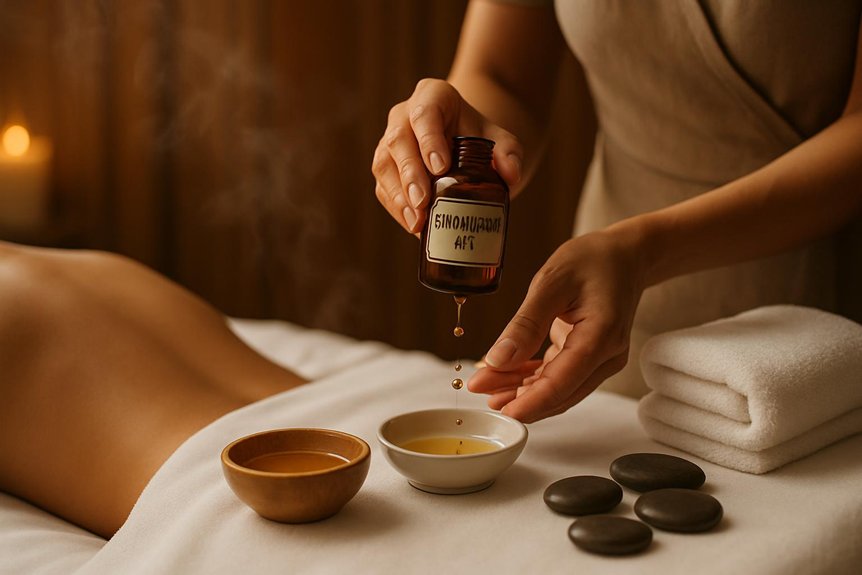
In practice at Spa & Massage clinics, sweet orange essential oil is applied only after a brief consultation and skin check, then incorporated into a carrier oil at a low, measured dilution and patch-tested when sensitivity is likely.
During massage, therapists use light-to-moderate pressure and avoid broken skin, freshly shaved areas, and mucous membranes, prioritising comfort and consent throughout.
Because expressed citrus oils can increase photosensitivity, clients are advised to keep treated skin out of strong sunlight and avoid sunbeds for 12–24 hours, especially if skin is fair or reactive.
Aftercare includes drinking water, allowing the nervous system to settle, and pausing exfoliants or active skincare on the area that day. Any warmth, itching, or redness should be washed off and reported promptly.
Aftercare Tips for Sweet Orange Aromatic Massage
After a sweet orange aromatic massage, simple aftercare steps help protect skin, support hydration, and maximise the treatment’s calming effects. At Spa & Massage clinics, therapists advise drinking water and keeping movements slow for a few hours to support circulation and reduce post-treatment light‑headedness.
Because citrus oils can be mildly photosensitising, clients should avoid direct sunbeds and strong sunlight on treated areas for 12–24 hours, unless the oil used is confirmed non‑phototoxic and properly diluted. A warm (not hot) shower is best; harsh exfoliation, saunas, and heavily fragranced products may irritate sensitised skin. If redness, itching, or tightness appears, a bland moisturiser and cool compress can soothe; persistent symptoms warrant medical advice. Intimate plans may feel best after rest.
Conclusion
Sweet orange essential oil can be safe in aromatic massage when used with appropriate dilution, quality control, and individual assessment. Skin irritation and allergy risk remain possible, so patch testing and conservative concentrations support better tolerance, especially for sensitive clients. Phototoxicity is generally low for expressed orange oil, yet sunlight avoidance after treatment is a prudent safeguard. Pregnancy, certain medical conditions, and reactive skin warrant extra caution or alternatives. In practice, safety is not one-size-fits-all; the proof is in the pudding.