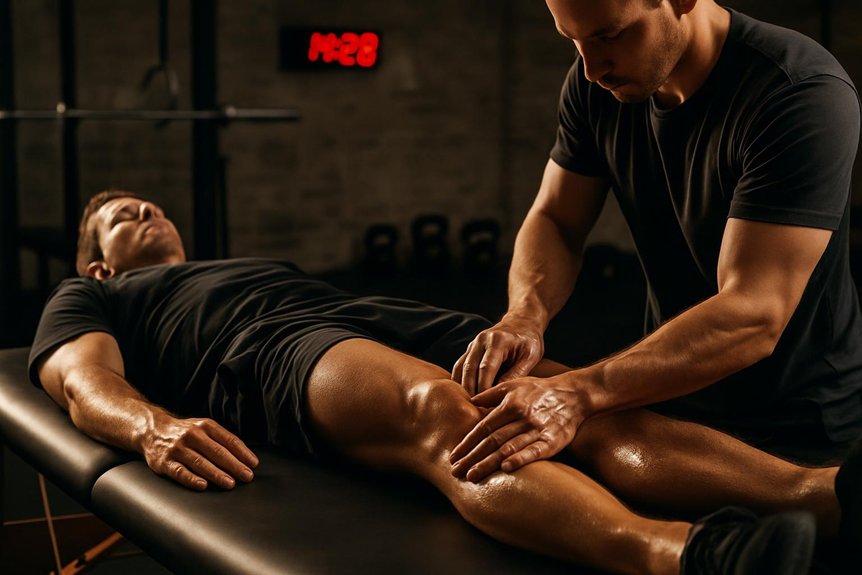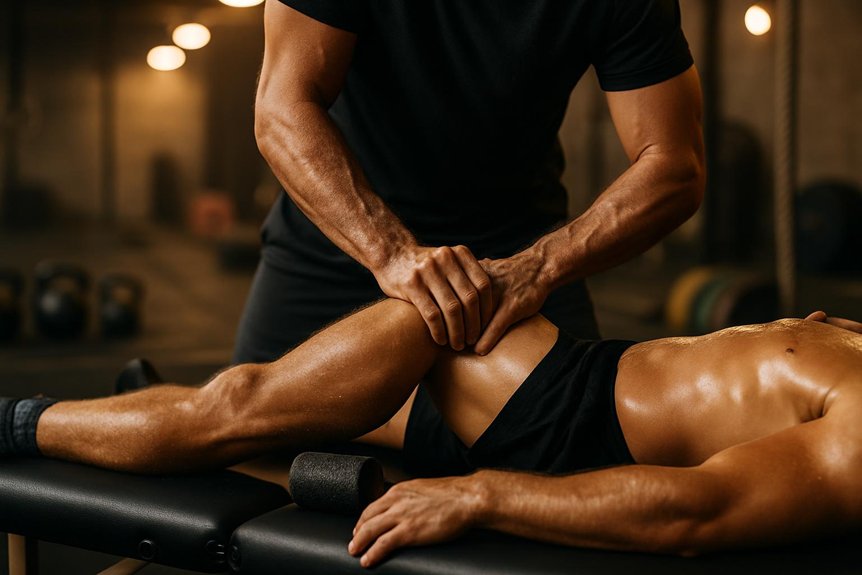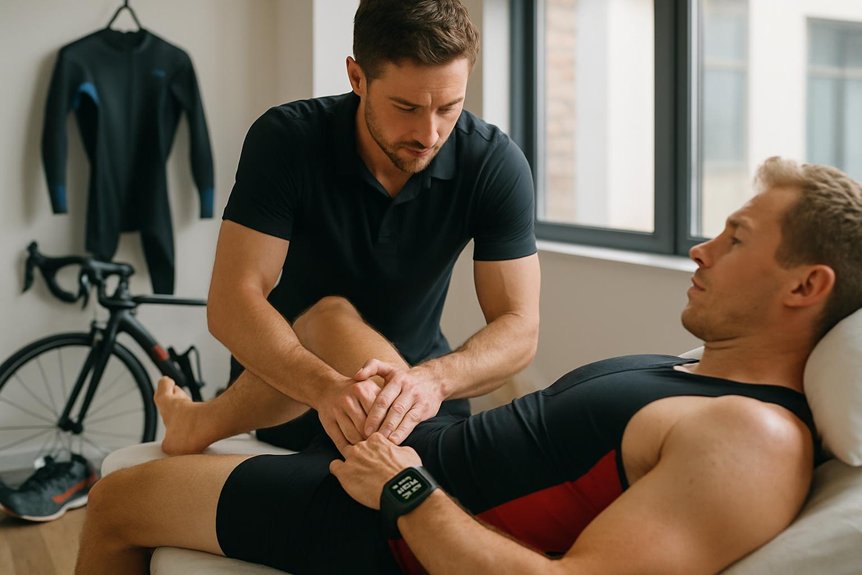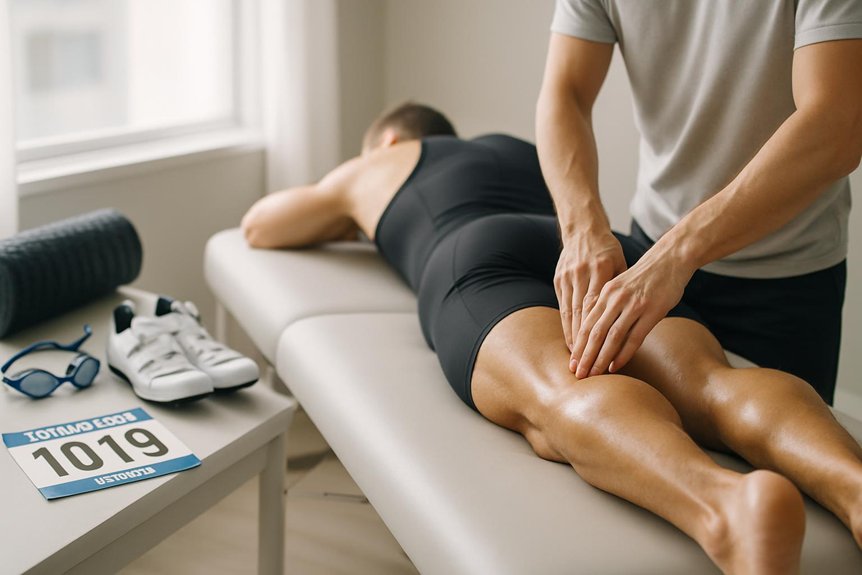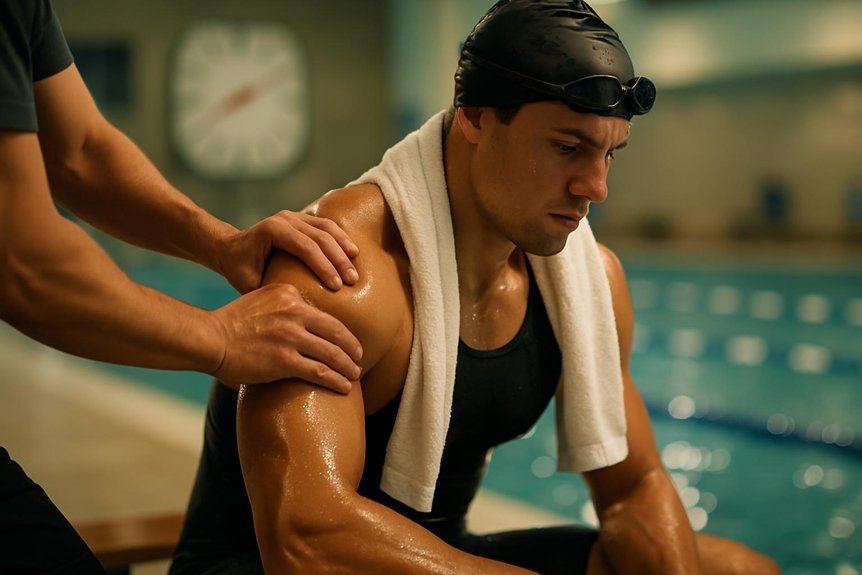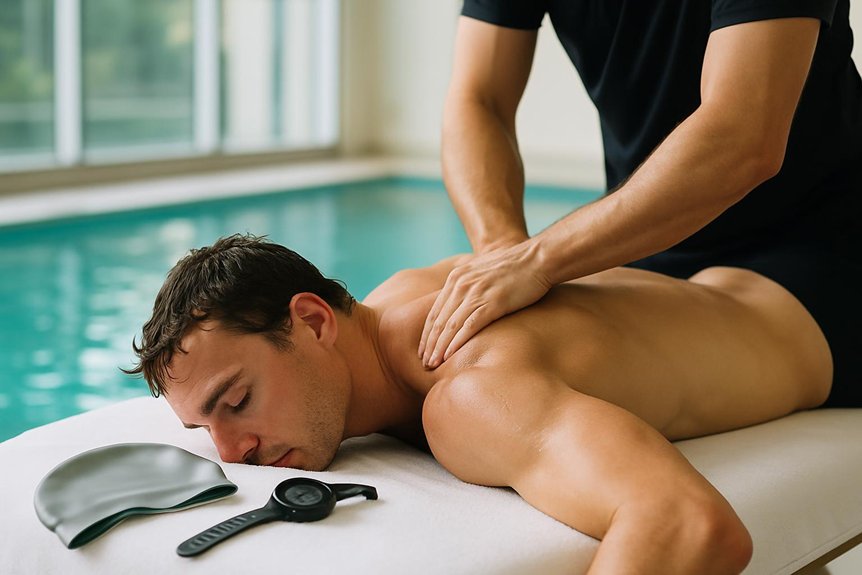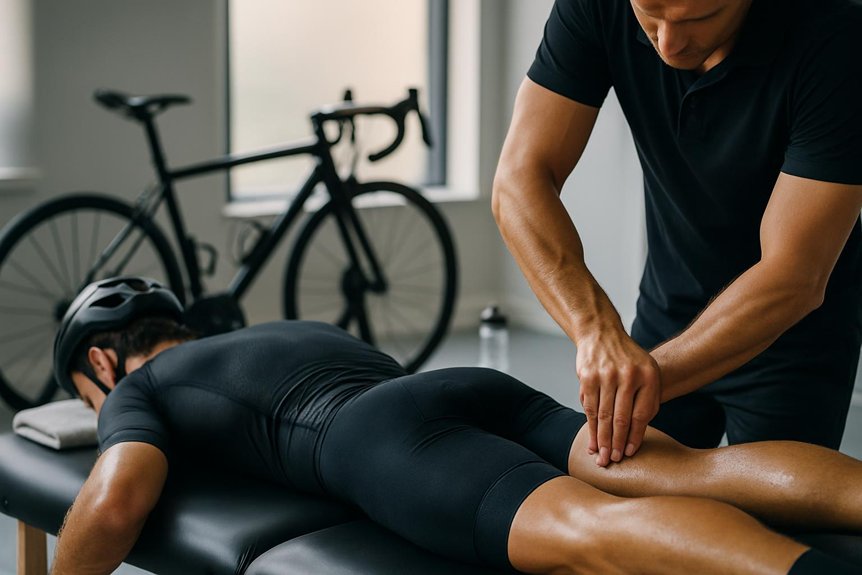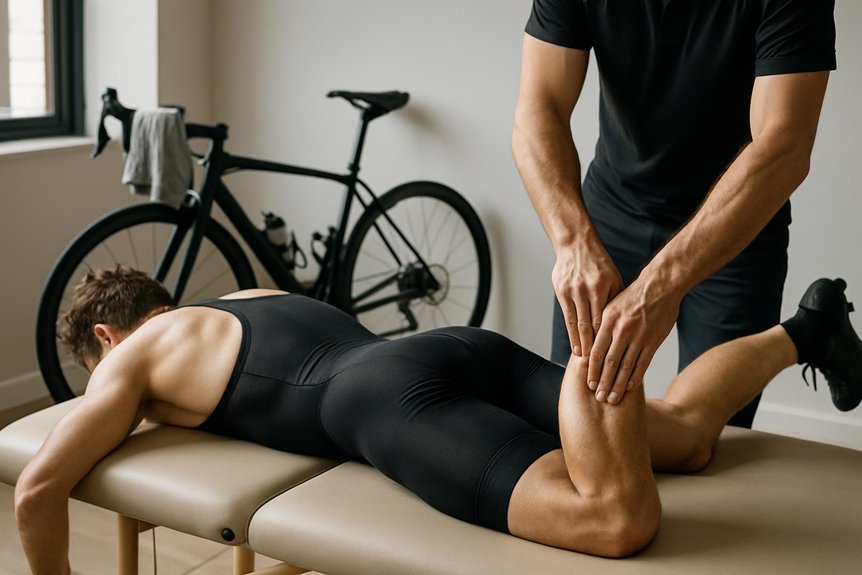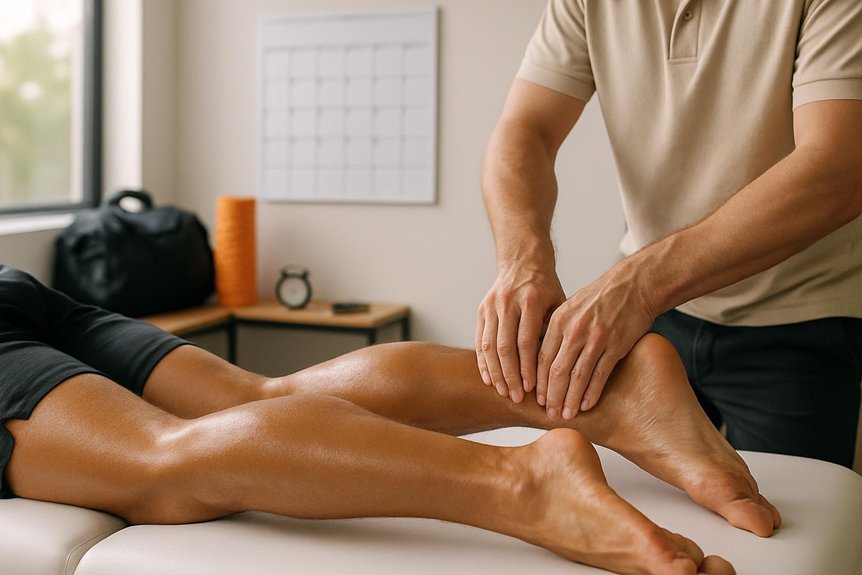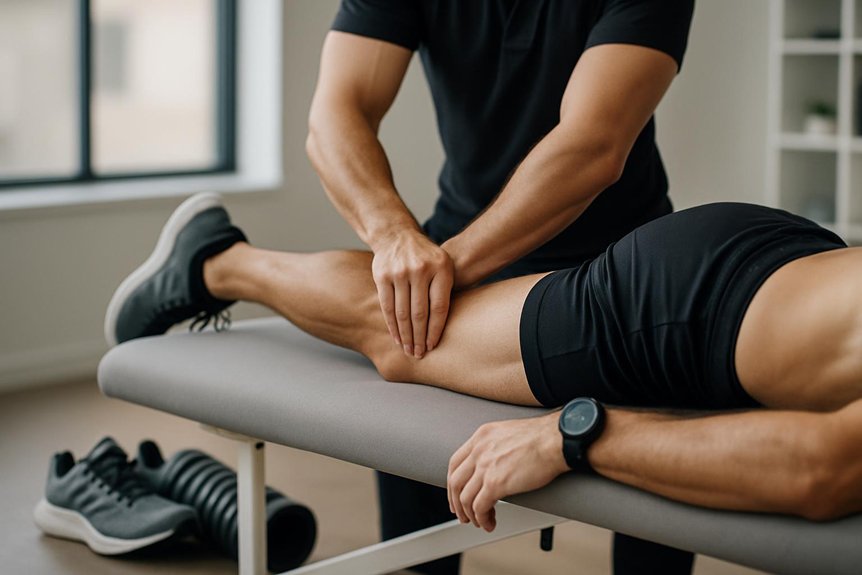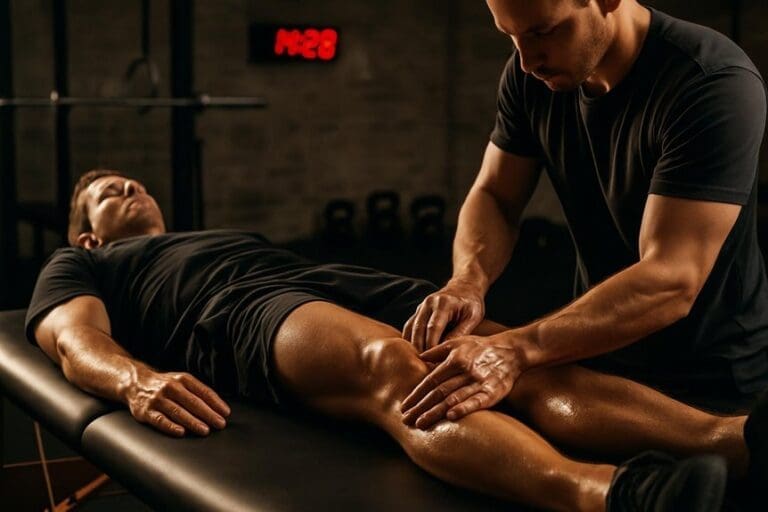
It can modestly reduce post-run muscle soreness and stiffness, especially DOMS, and help restore a comfortable range of motion. It typically uses slow, compressive strokes, rhythmic compression, and myofascial release with “deep but safe” pressure to downshift protective muscle tone without provoking bracing. Many runners benefit most when booked within 24–72 hours after hard sessions, with intensity adjusted to tenderness. Clear red flags (sharp, localised pain, swelling) warrant caution. Further details cover timing, techniques, and key target areas.
Can It Reduce Soreness After Running?
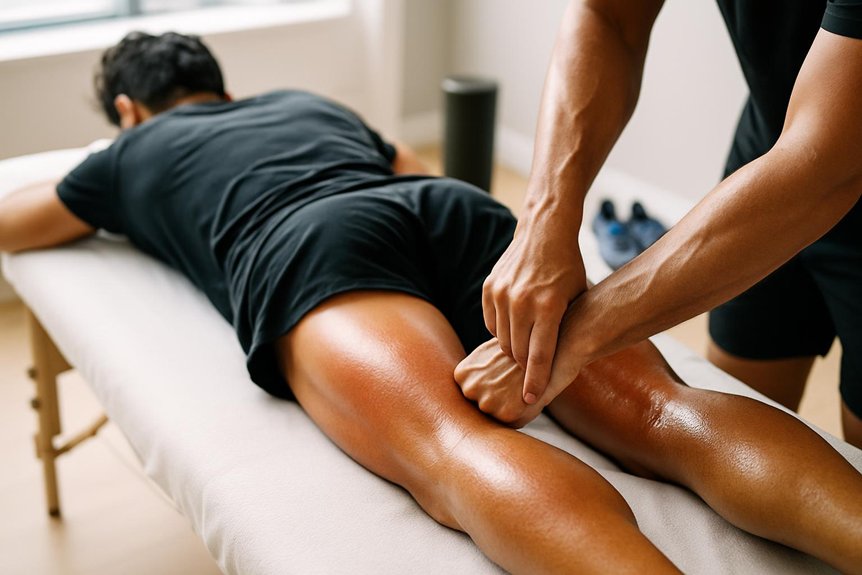
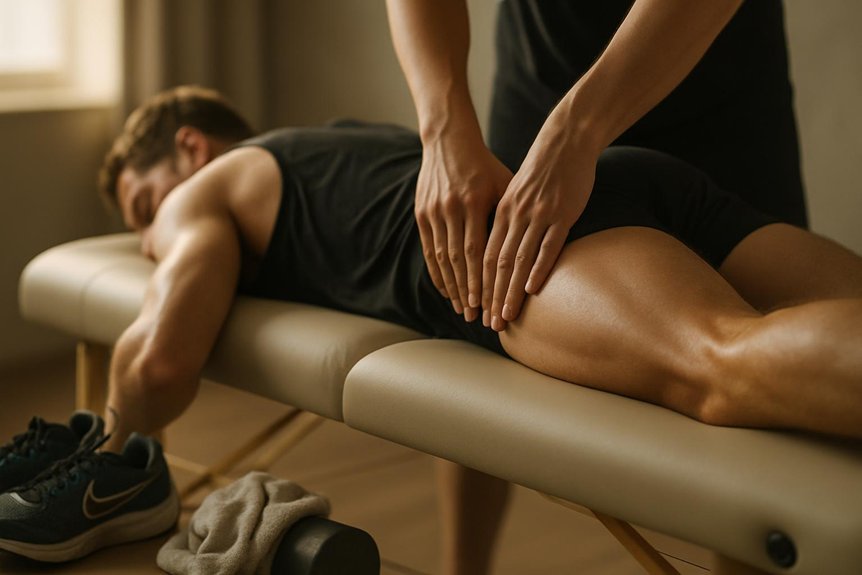
After a hard run, sports massage can reduce post-exercise soreness by targeting the specific soft-tissue stressors that contribute to delayed onset muscle soreness (DOMS). Evidence suggests it may modestly decrease perceived pain and stiffness while supporting range of motion, especially when timed within 24–72 hours.
Beyond soreness relief, it’s also valued for the broader benefits for athletes that it can support during training and recovery. At Spa & Massage clinics across London, therapists use athlete-led assessment, then apply slow deep-tissue strokes, compression, and myofascial release to calves, hamstrings, quads, glutes, and hip flexors—working along fibres, then across them to calm sensitised tissue. Pressure is kept “deep but safe,” allowing the nervous system to downshift rather than brace. Many runners pair treatment with hydration, gentle walking, and light stretching, so recovery feels personal, grounded, and confident.
Is It DOMS or a Running Injury?
Delayed onset muscle soreness (DOMS) typically presents 24–72 hours after a new or harder run as diffuse, bilateral tenderness and stiffness that improves with gentle movement, whereas injury is more often sharp, localised, unilateral, and worsens during running or persists at rest.
Athlete-focused screening should consider red flags such as swelling, bruising, altered gait, night pain, or loss of strength/range, which are not typical of DOMS and require load modification.
At Spa & Massage clinics across London, therapists use objective movement checks and targeted athletic massage techniques to support recovery, but they advise prompt clinical assessment when pain is escalating, focal, or function-limiting.
DOMS Vs Injury Signs
For runners managing post-session soreness, distinguishing delayed onset muscle soreness (DOMS) from an early injury hinges on timing, location, and how symptoms behave under load.
DOMS typically appears 12–24 hours after a new or harder session, peaks at 24–72 hours, feels dull/achy, and is diffuse across the worked muscle. It often eases as the body warms up, with stiffness more than sharp pain and no pinpoint tenderness.
Injury signs tend to show during the run or immediately after, feel sharp, stabbing, or localised, and worsen with specific movements (e.g., hopping, pushing off).
Swelling, bruising, altered gait, or pain that escalates with each stride suggests tissue overload. At Spa & Massage, therapists map pain patterns and test gentle, loaded ranges to guide sports-massage pressure and pacing.
When To Seek Help
When should a runner treat post-run pain as more than normal soreness? Help is warranted when pain is sharp, localised, or worsening during the run; when swelling, bruising, heat, or night pain appears; or when gait changes, numbness, or weakness develops.
DOMS typically peaks 24–72 hours and eases with gentle movement; persistent pain beyond a week, pain at rest, or pain that returns immediately on re-running suggests tissue overload or injury.
Athletes should stop aggravating sessions and seek assessment for suspected stress reactions, tendon tears, or joint injury.
At Spa & Massage, therapists use focused athletic massage, tissue testing, and technique coaching, then advise gradual load return, hydration, and recovery scheduling for a safer, calmer body.
How Does Post-Run Athletic Massage Speed Recovery?
After a run, how can a targeted athletic massage accelerate recovery without compromising adaptation? Evidence suggests it can reduce perceived soreness and restore comfortable range of motion by downshifting protective muscle tone, improving local circulation, and supporting lymphatic clearance of fluid build-up.
At Spa & Massage clinics, therapists use slow, pressure-led strokes and sustained compressions along calves, quads, glutes, and hip flexors to ease trigger points without “crushing” fatigued fibres. Brief myofascial release around the IT band region and gentle joint mobilisations help runners move smoothly again.
The intimate, athlete-led pace matters: pressure is matched to breath, with clear consent cues, keeping the nervous system calm. This can improve sleep quality and training readiness while respecting normal post-run tissue repair.
When Should You Book Athletic Massage After a Run?
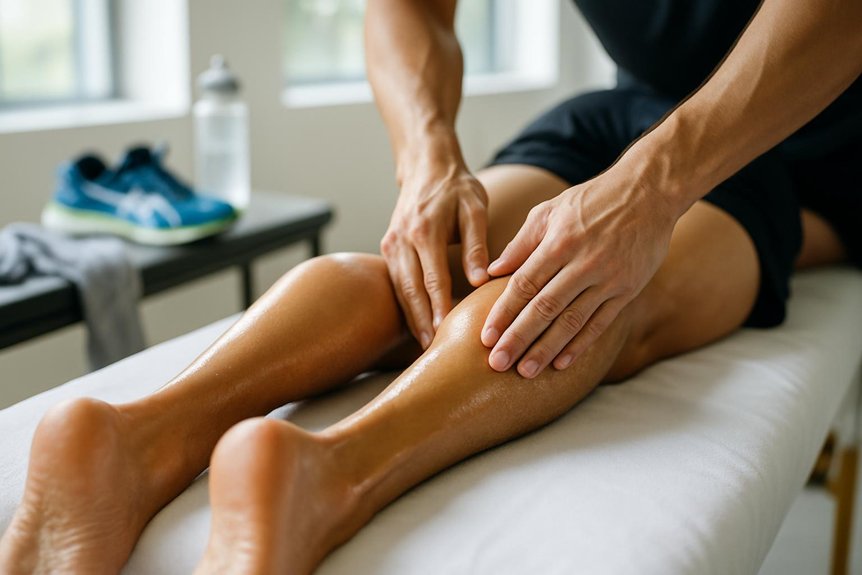
Within the first 24–72 hours post‑run, the ideal athletic massage window depends on training load and symptom profile: light-to-moderate soreness and stiffness often respond well to a same‑day or next‑day session, while heavy DOMS, sharp tenderness, or signs of acute strain are better managed with a 48–72‑hour delay and gentler techniques.
At Spa & Massage, timing is set around the runner’s next key workout: 24–36 hours after easy miles for loosening calves, quads, and hip flexors; 48–72 hours after races or long runs for deeper work.
Early sessions favour flushing strokes, myofascial release, and rhythmic compression to settle tone; later sessions can add targeted trigger-point and cross-fibre friction to restore glide.
Many clients book in advance across London clinics to lock recovery into the plan.
When Should You Avoid Athletic Massage?
How can a recovery tool become counterproductive? It should be avoided when symptoms suggest acute injury: sharp, localised pain, sudden swelling, bruising, loss of function, or suspected strain/tear; deep pressure can worsen bleeding and tissue disruption.
It should also be postponed with fever, flu, gastrointestinal illness, or active skin infections, where close contact and increased circulation are unsafe.
Athletes with deep vein thrombosis risk, uncontrolled hypertension, recent surgery, or anticoagulant use need medical clearance before any vigorous work.
After a hard run, massage is best delayed if DOMS is extreme to the touch—lighter techniques or rest may protect sensitivity.
At Spa & Massage, therapists screen, adjust pressure, and refer out when red flags appear.
What Happens in a Post-Run Athletic Massage Session?
Once red flags such as acute injury, illness, or unusual swelling have been ruled out, a post-run athletic massage session is structured to downshift muscle tone and restore efficient movement without overloading sensitised tissue.
At Spa & Massage, the therapist begins with brief goal-setting, then observes posture, breathing, and gait cues to decide pressure and pace.
Work typically starts with light, warming effleurage to encourage circulation, followed by measured deep-tissue strokes and myofascial techniques along tissue lines, staying below sharp pain.
Trigger point compression may be used briefly, then released to reduce guarding.
Passive joint movements and gentle stretching integrate the change, supporting smoother stride mechanics.
Many clients prefer a neutral oil; in-clinic, it is applied sparingly for traction.
Aftercare includes hydration, easy walking, and avoiding hard sessions for 24 hours.
Which Muscles Need Athletic Massage After Running?
Post-run muscle hotspots tend to cluster in the posterior chain and lower-leg complex, where repetitive loading concentrates strain and alters tone. Most runners benefit from focused work on calves (gastrocnemius/soleus) and the peroneals, then the Achilles-adjacent tissues and plantar fascia, using slow stripping and cross-fibre friction to restore glide.
Upstream, hamstrings and gluteus maximus/medius often hold protective tension; targeted compression, pin-and-stretch, and hip-rotator release can reduce perceived heaviness and improve stride mechanics. Quadriceps, especially rectus femoris and vastus lateralis, commonly require broad flushing followed by deeper work around the ITB interface (tensor fasciae latae), avoiding aggressive pressure directly on the band. In Spa & Massage clinics, therapists reassess tenderness and tone continuously, keeping pressure intimate, precise, and athlete-led.
Athletic Massage or Stretching/Foam Rolling: What Helps Most?
After the key post-run hotspots (calves, hamstrings, glutes, quads, and the hip rotators) have been identified, the next decision is which tool best changes the underlying tissue behaviour: hands-on athletic massage, stretching, or foam rolling. Evidence suggests all three can reduce perceived soreness, but they work differently and suit different bodies.
It offers the clearest dose control: at Spa & Massage, therapists use slow, compressive strokes and targeted friction to desensitise tight bands, improve glide between layers, and downshift protective tone—useful when a runner wants precise pressure and calm, close attention. Stretching is best kept gentle and short (20–30 seconds), aimed at restoring range without provoking tender fibres. Foam rolling can mimic compression, but pressure is harder to regulate; it suits maintenance between sessions, not acute sensitivity.
Conclusion
It can modestly reduce post-run soreness and perceived fatigue, particularly when soreness reflects DOMS rather than injury. Used alongside sleep, nutrition, and progressive loading, targeted work on calves, hamstrings, glutes, hip flexors, and lumbar fascia may improve comfort and maintain range of motion, though performance gains are inconsistent. Timing and pressure should match symptoms and training demands. Like a telegraph in a GPS age, it is simple, but often effective.