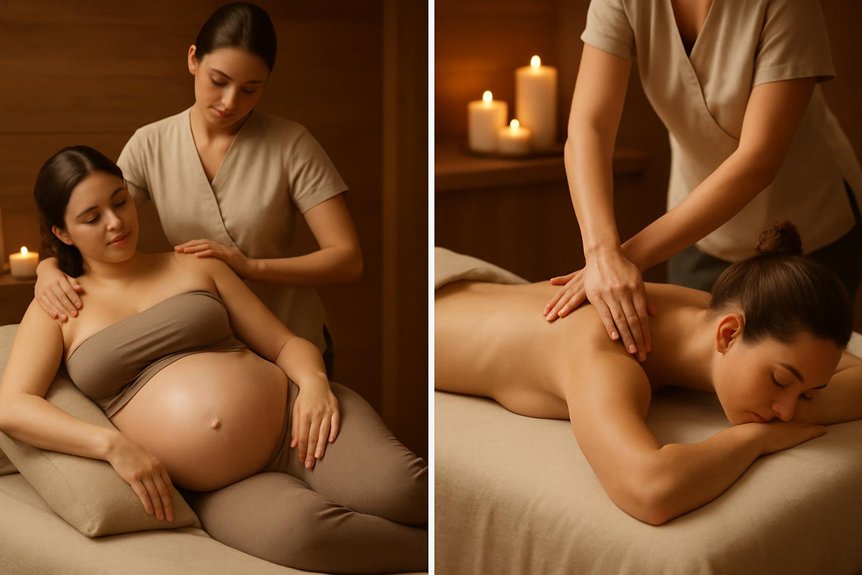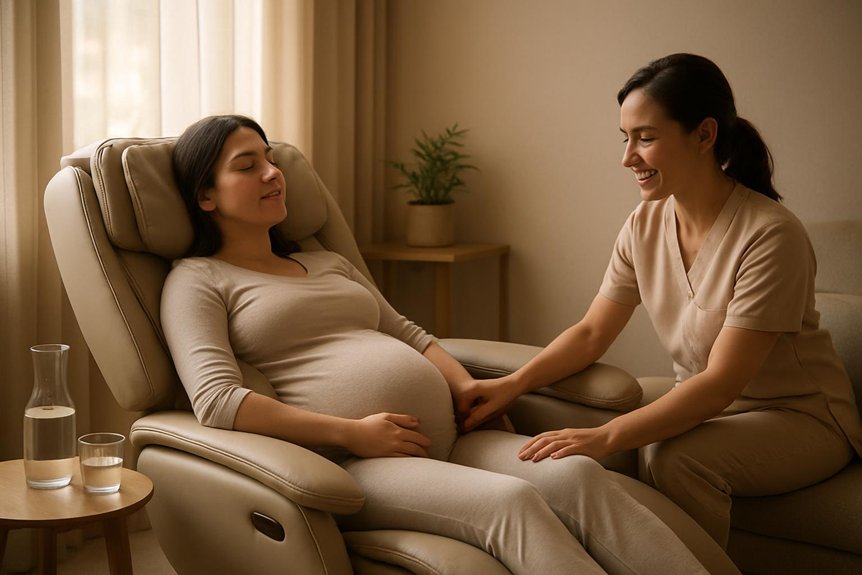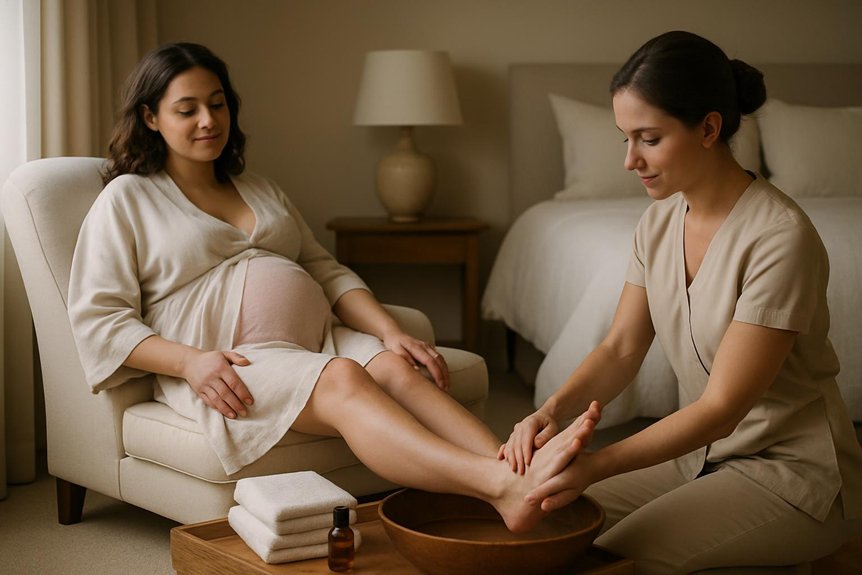
Prenatal massage can help rib flare pain for many pregnant people by easing overworked intercostals and upper-back muscles, supporting calmer diaphragm-led breathing, and reducing protective tension around sensitive rib joints. Safe positioning, usually side-lying with bolsters, avoids belly pressure and keeps breathing comfortable. Pressure should stay light to moderate and never provoke sharp pain. Sudden severe pain, breathlessness, fever, or upper-right abdominal pain needs urgent medical review. Further guidance can clarify relief options and warning signs.
What Is Rib Flare Pain in Pregnancy?
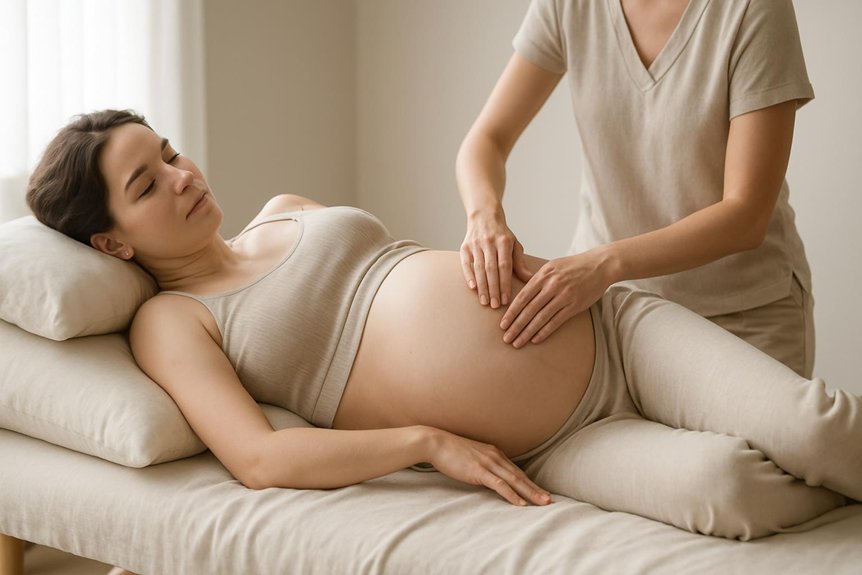
Rib-flare discomfort in pregnancy refers to pain, tenderness, or a “splaying” sensation around the lower ribs—most often along the ribcage edges beneath the breasts—caused by the combined effects of a growing uterus, postural change, and increased ribcage expansion for breathing.
It may feel like a sharp catch with rolling in bed, a bruised ache after sitting, or pressure that eases with gentle movement. Symptoms can be one-sided or bilateral, sometimes wrapping toward the back.
Although common, it should be distinguished from urgent concerns such as shortness of breath, chest pain, fever, trauma, or severe upper abdominal pain.
At Spa & Massage clinics in London, therapists treat it as a comfort issue first: positioning is supported, pressure is conservative, and care is adapted to each stage. Pregnancy massage is also valued for its benefits for expecting mothers when tailored to pregnancy-specific comfort and safety needs.
Why Does Rib Flare Pain Happen During Pregnancy?
Rib flare pain in pregnancy commonly arises as the growing uterus increases upward pressure on the ribcage, particularly as pregnancy progresses.
At the same time, posture and core mechanics often shift to accommodate the changing centre of gravity, which can strain the intercostal muscles and the tissues around the ribs.
Hormonal changes that increase ligament laxity can further reduce joint stability, so symptoms should be assessed conservatively and supported with pregnancy-safe care, as prioritised by Spa & Massage therapists.
Growing Uterus Pressure
As pregnancy progresses, the growing uterus shifts upward and forward, increasing pressure through the abdomen and diaphragm and changing the way the chest wall moves with breathing. This can gently splay the lower ribs, strain the intercostal muscles, and irritate the costal cartilage, creating a tender, catching ache beneath the bra line or along the rib margins. Symptoms often rise after meals, when lying back, or during deep breaths as the diaphragm has less room to descend.
At Spa & Massage, therapists note many clients feel safest with side‑lying prenatal massage that reduces abdominal compression and encourages calm, fuller breaths. Any sharp, sudden, or one‑sided pain, breathlessness, fever, or upper‑right abdominal pain warrants prompt medical assessment.
Posture And Core Changes
Although the baby bump is the most visible change, pregnancy also alters posture and core mechanics in ways that can drive rib flare pain. As the centre of gravity shifts forward, many people adopt increased lumbar sway and a lifted ribcage to keep balance. This “rib thrust” can overwork the intercostals, diaphragm, and upper abdominals, while the deep core and pelvic floor may struggle to coordinate under load.
Breathing can become more chest-dominant, further widening the ribs and sensitising the costal joints. At Spa & Massage clinics, therapists often notice tension patterns through the mid-back and serratus that mirror these changes. Gentle, side-lying prenatal massage and breath-led positioning can soothe tissues without forcing ribs or posture. Always seek medical advice for sharp, persistent pain.
Hormonal Ligament Laxity
Postural and breathing changes often coincide with another key driver of discomfort: pregnancy hormones that soften connective tissue. Rising relaxin, progesterone, and oestrogen increase ligament laxity to support pelvic expansion, but the effect can be body‑wide. Around the ribs and thoracic spine, looser ligaments may reduce joint stability, so everyday movements, lifting, or prolonged sitting can feel sharper or more “pulling,” especially as the uterus grows and the diaphragm’s mechanics change. Some people notice tenderness along the costal margin or intercostal spaces.
At Spa & Massage, therapists treat this with gentler, supportive prenatal massage—avoiding end‑range stretching and deep pressure over rib cartilage. Slow myofascial work, side‑lying positioning, and calming breath cues aim to ease guarding while respecting sensitive tissues. Always seek midwife or GP advice for sudden, severe pain.
How Can You Relieve Rib Flare Pain at Home?
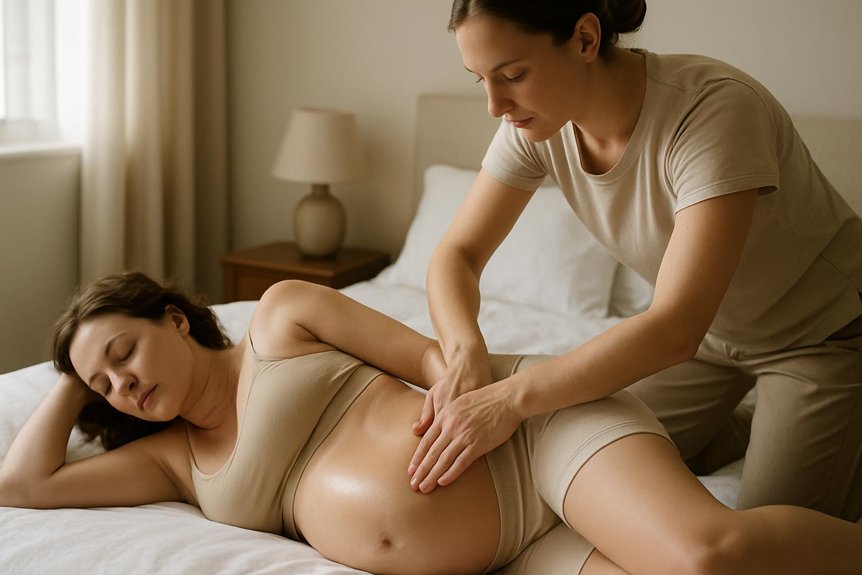
For many pregnant people, rib flare pain can often be eased at home with a combination of gentle positioning, breathing work, and light movement that reduces strain on the ribcage and supporting muscles.
Side-lying with a pillow under the bump and between the knees can decrease pressure and support comfortable rest; some find a small cushion behind the upper back soothing.
Slow diaphragmatic breathing—hands on lower ribs, inhaling to expand softly sideways, then long exhales—may calm guarding and improve rib mobility.
Short, frequent posture breaks help: seated lifts through the crown, shoulders relaxed, and gentle thoracic side-bends within comfort.
Warm showers or a heat pack (not too hot, 10–15 minutes) can ease tightness.
Persistent or sharp pain warrants midwife or GP review.
Can It Ease Rib Flare Pain Safely?
With the right modifications, prenatal massage can ease rib flare pain safely by reducing overactivity in the intercostals, upper back, and diaphragm-adjacent tissues while supporting more comfortable breathing and posture. Evidence suggests gentle, targeted soft-tissue work can downshift protective muscle guarding and improve thoracic mobility, which may lessen sharp rib-edge discomfort as the bump grows.
At Spa & Massage clinics across London, therapists adapt positioning with side-lying bolsters, avoid prolonged supine work, and keep pressure comfortable and responsive to pregnancy changes. Safety is strengthened by screening for red flags (sudden severe pain, breathlessness, fever, trauma) and liaising with midwives or GPs when needed.
Many clients find the calm, nurturing touch also eases stress, helping the body soften around the ribs and breathe more freely.
Which Prenatal Massage Techniques Help Rib Flare Pain?
At Spa & Massage, therapists typically prioritise gentle, evidence-informed techniques that reduce rib-cage strain while keeping the client comfortably supported in side-lying.
Approaches often include a side-lying rib release, diaphragm-focused breathwork to ease breathing mechanics, and upper-back mobilisation to reduce compensatory tension around the thoracic spine.
Each technique is adapted to gestational stage, symptoms, and medical guidance, with pressure kept light-to-moderate and stopped promptly if pain or breathlessness increases.
Side-Lying Rib Release
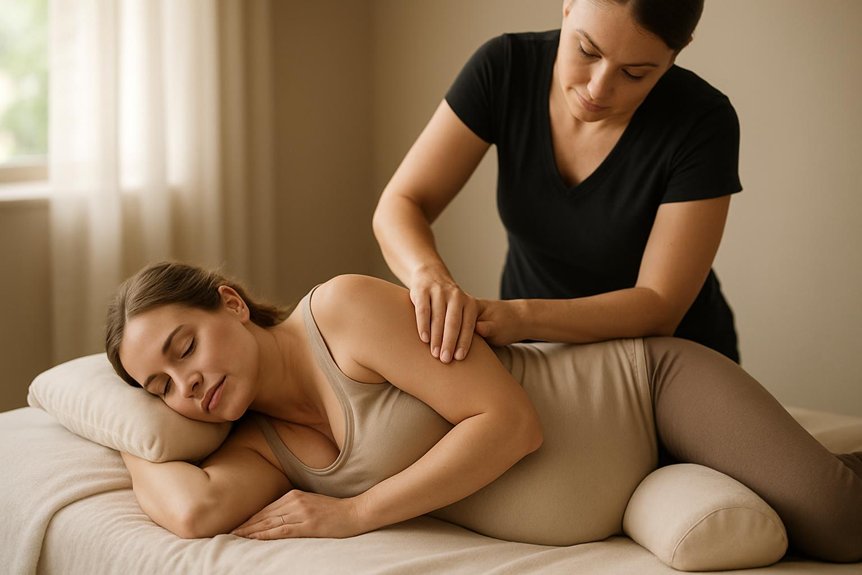
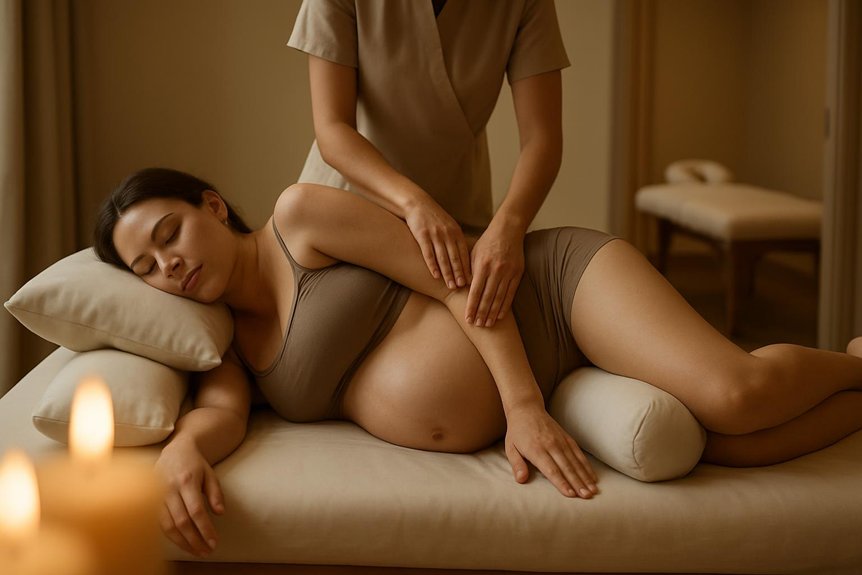
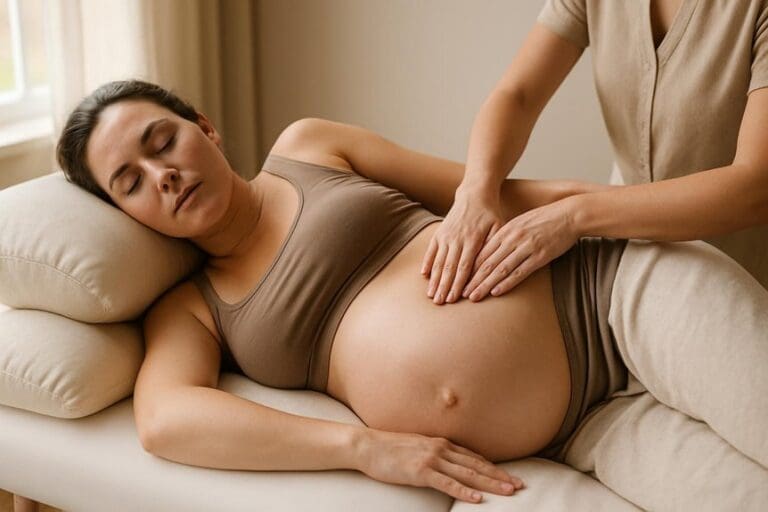
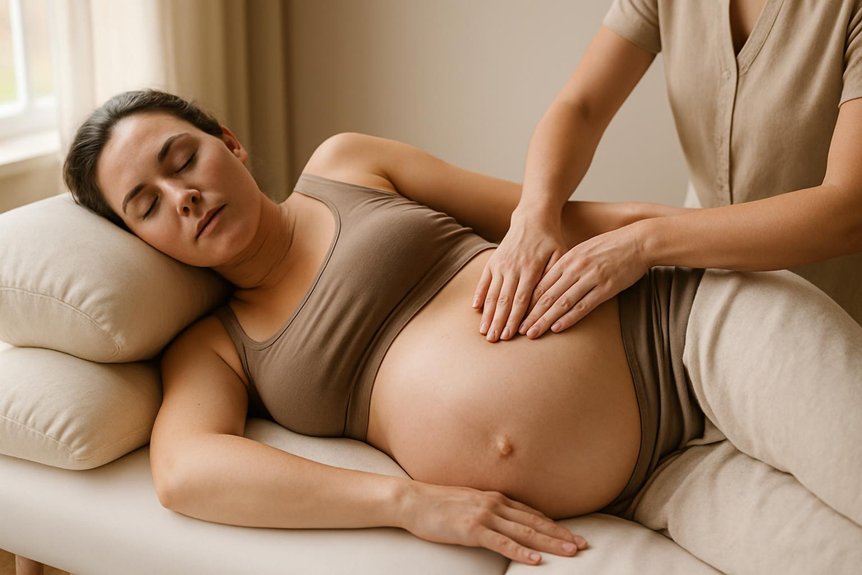
During pregnancy, side-lying rib release is often used to ease rib flare discomfort by gently reducing tension through the intercostal muscles and the attachments of the diaphragm, without placing pressure on the abdomen.
In Spa & Massage clinics, the therapist supports the client with pillows, then uses slow, warm hand contact along the side ribs, following comfort and breath rhythm.
Light sustained pressure and soft fascial glide may be applied between rib spaces, avoiding deep work over sensitive tissue.
This approach can calm protective guarding, improve ease of movement, and reduce sharp “catching” sensations reported with reaching or rolling.
Safety is prioritised: positioning is adjusted for circulation, pressure remains gentle, and treatment stops with dizziness, pain, contractions, or any medical concerns.
Diaphragm And Breathwork
Alongside hands-on soft tissue work, diaphragm-focused breathing strategies can be an effective, low-risk way to reduce rib flare pain in pregnancy by decreasing overactivity in the accessory breathing muscles (neck, upper chest, and intercostals) and improving ribcage mobility without compressing the abdomen.
At Spa & Massage, therapists often cue gentle “360° breathing”: inhaling softly through the nose so the breath expands into the sides and back ribs, then exhaling slowly through pursed lips to let the ribs soften down.
Light, stationary contact may be placed on the side ribs to guide awareness, never pressing into the belly.
Sessions emphasise comfort, side-lying support, and pausing if dizziness, breathlessness, or pain increases.
Practised daily, this can help calm the nervous system and ease tenderness during close, nurturing touch.
Upper Back Mobilisation
In many cases, gentle upper-back mobilisation can reduce pregnancy-related rib flare pain by improving thoracic spine extension and ribcage mechanics, which often become restricted as posture adapts to a growing bump.
At Spa & Massage, therapists use slow, supported movements—side-lying scapular glides, soft thoracic oscillations, and light rib “bucket-handle” cues—chosen to feel close and reassuring without forcing range.
Evidence-informed manual therapy aims to reduce protective muscle tone in the paraspinals and intercostals, easing strain at the front ribs and sternum.
Pressure stays moderate; any sharp pain, dizziness, or breathlessness is a stop signal.
Mobilisation is paired with calming exhalation and pillow positioning to keep the chest open and the client feeling safely held throughout.
Rib Flare Pain: When to Call Your Midwife or GP?
When does rib flare pain in pregnancy stop being “normal” discomfort and become a reason to seek medical advice? It should be discussed with a midwife or GP if pain is sudden, severe, one-sided, worsening, or unrelieved by rest, posture changes, or gentle support.
Urgent review is advised if it comes with breathlessness, chest tightness, fever, persistent cough, dizziness, swelling, headache, visual changes, upper-right abdominal pain, nausea/vomiting, or reduced baby movements, as these can signal conditions needing prompt care.
Spa & Massage therapists in London remind clients that prenatal massage is supportive, not diagnostic. If symptoms feel frightening, intimate, or “not quite right,” medical reassurance comes first; hands-on treatment can follow once it is safe.
Conclusion
Prenatal massage may help ease rib flare pain by reducing upper-back and intercostal muscle tension and supporting more comfortable breathing and posture. It is not a cure for the mechanical changes of pregnancy, and some may worry it is unsafe; however, when delivered by a therapist trained in prenatal care, with appropriate positioning and pressure, it is generally considered low risk. Combined with gentle movement and self-care, it can be a useful, supportive option—while persistent or severe pain warrants medical review.