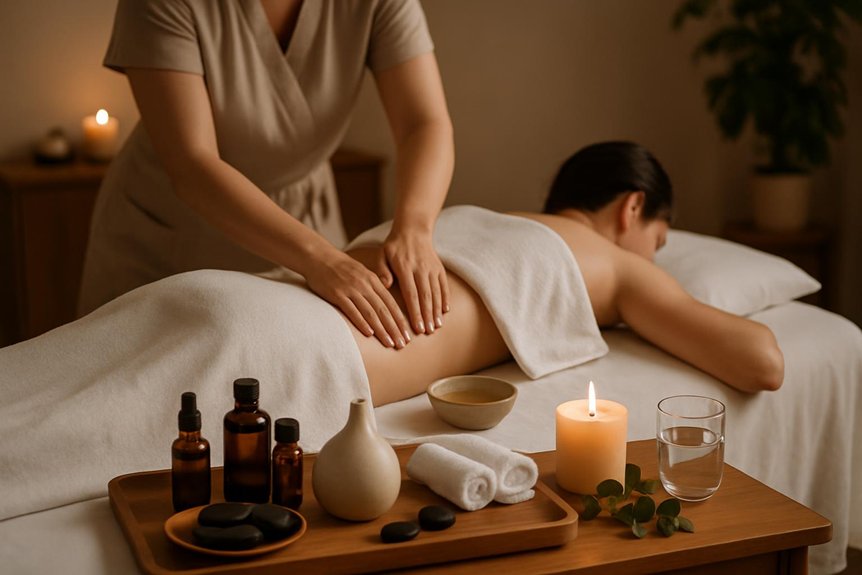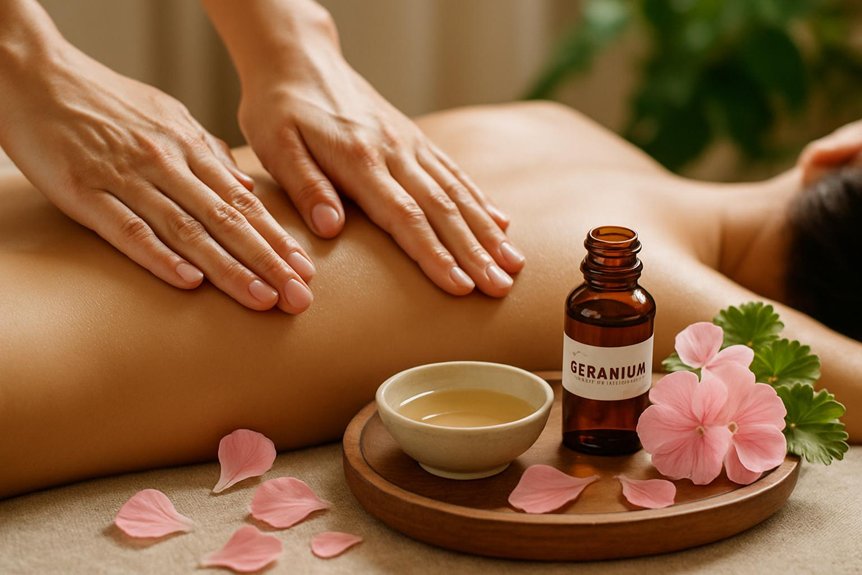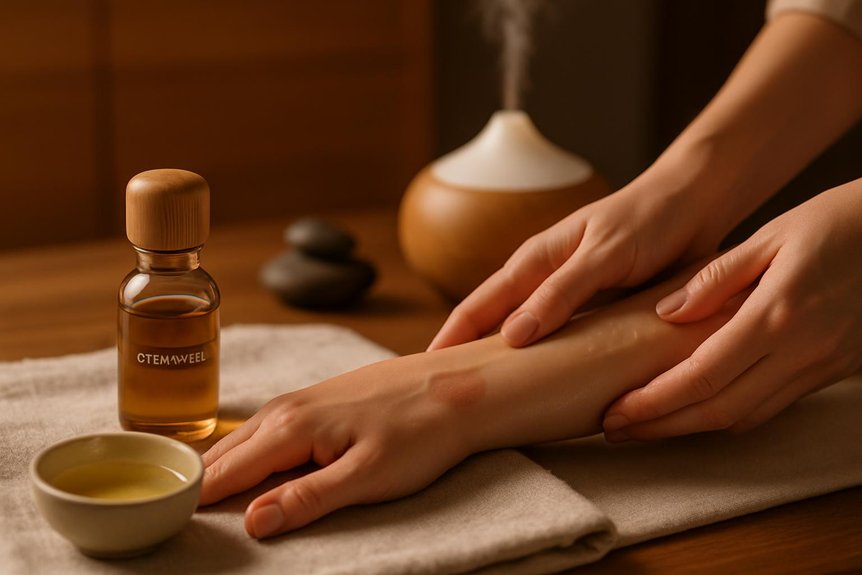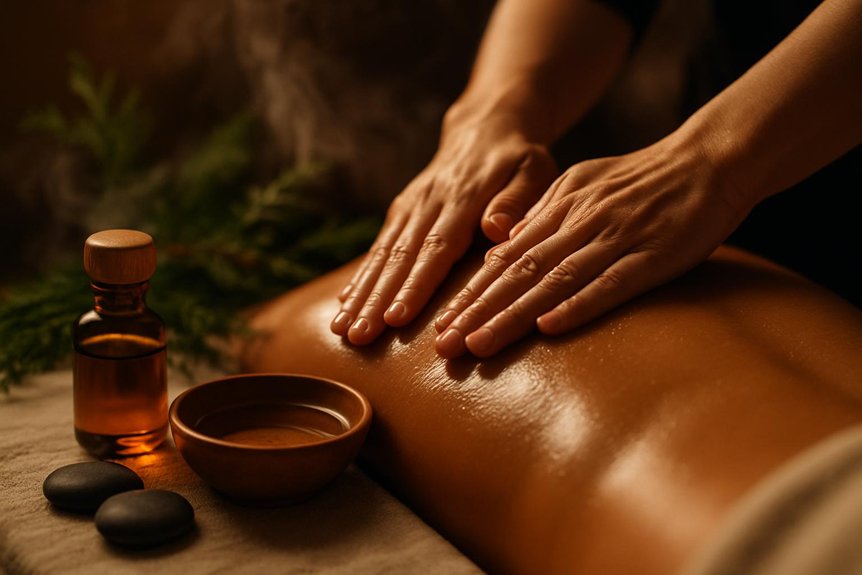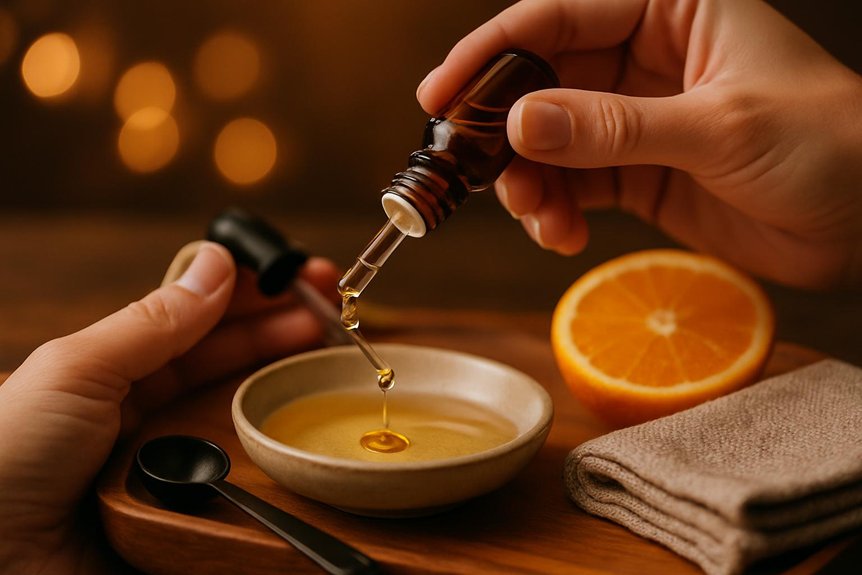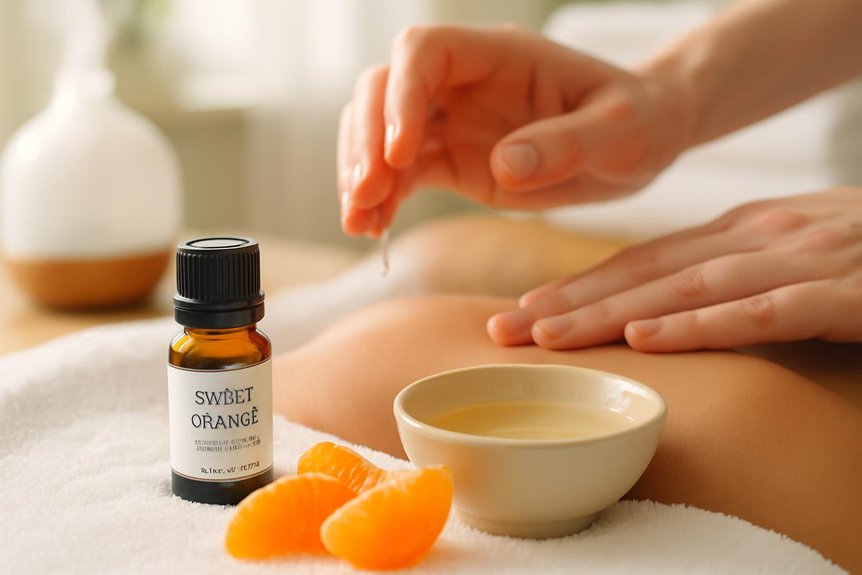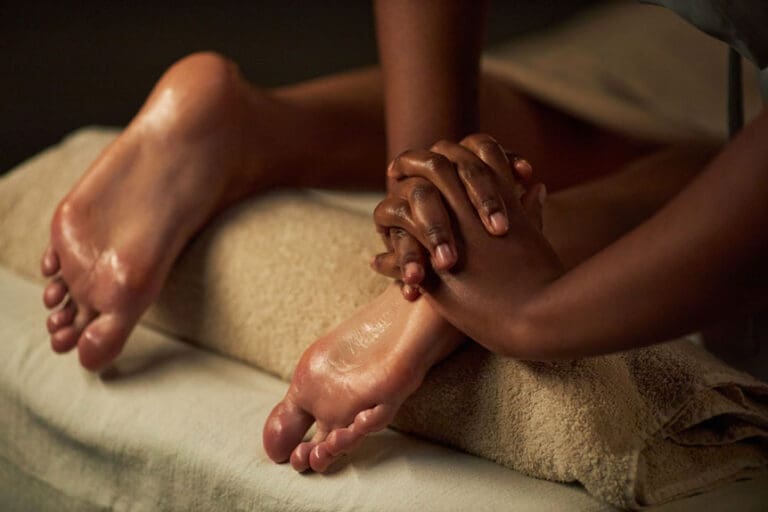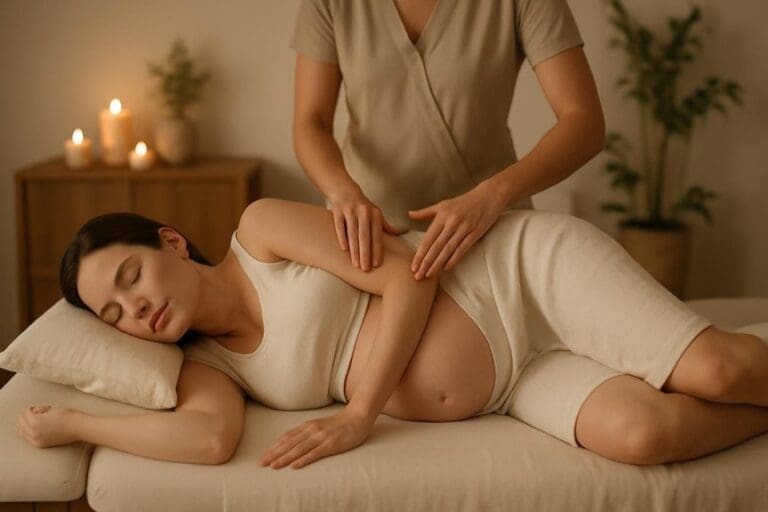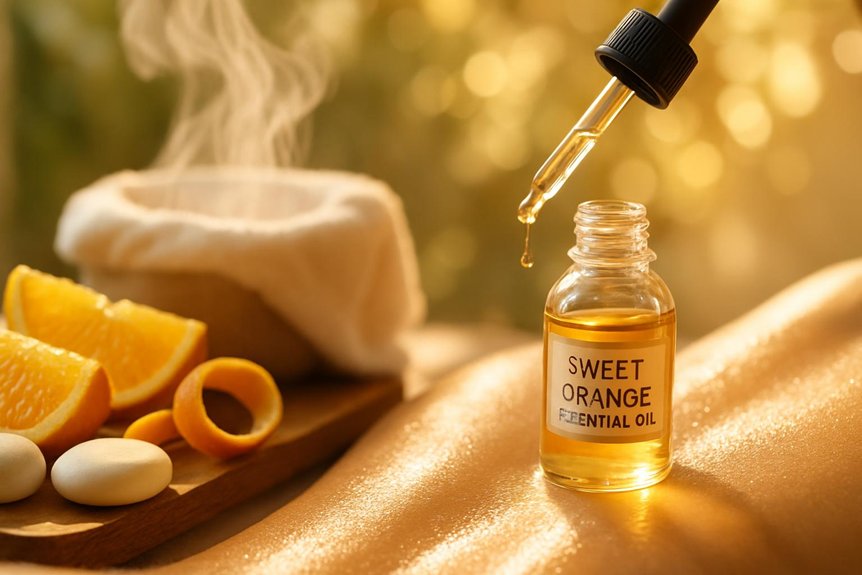
Sweet orange in aromatic massage is typically described as a bright, clean citrus that feels comforting and gently uplifting. It opens with fresh, airy top notes, moves into a sweet, juicy, softly floral middle, then settles into a light zesty peel finish. The aroma often starts medium-strength and softens as body heat, diluted oil, and slower breathing help it “bloom” on the skin. Further details can clarify suitability, safety, and aftercare.
What Does Sweet Orange Smell Like in Aromatic Massage?
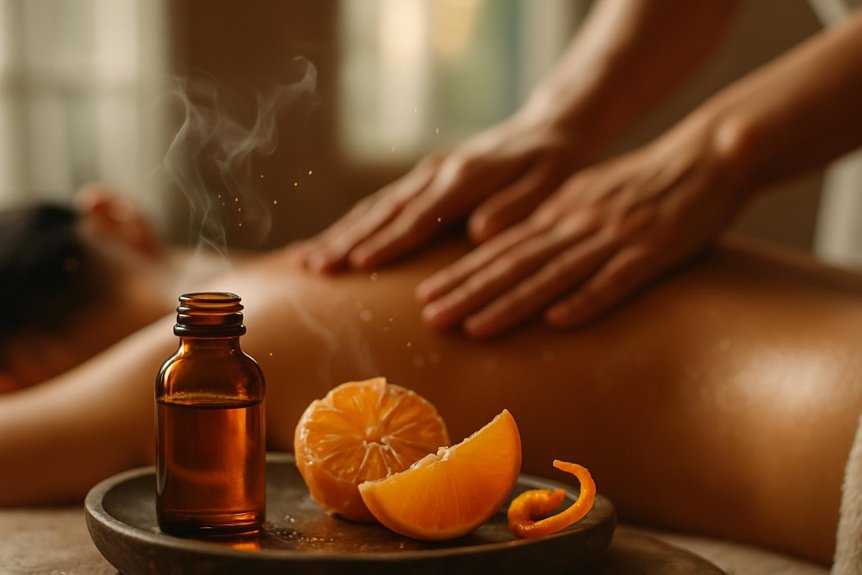
What does sweet orange smell like during an aromatic massage? It presents as a bright, clean citrus aroma that many clients experience as comforting and emotionally uplifting, without feeling heavy or perfumed.
In Spa & Massage clinics, therapists typically diffuse the scent gently from the skin as warmed oil is applied, allowing the fragrance to bloom with each slow breath and soften as the massage deepens.
Evidence suggests citrus aromas can support positive mood and reduce perceived stress, which can help clients settle into parasympathetic relaxation.
For deeper comfort, many therapists also use aromatherapy massage tips to keep the scent balanced and soothing throughout the session.
For clients seeking intimacy, the aroma often feels like an inviting closeness—fresh on the inhale, then quieter and more tender as touch becomes steady. Therapists adjust dilution and pacing to preference.
What Are the Main Scent Notes (Fresh, Sweet, Zesty)?
In aromatic massage, sweet orange typically opens with fresh citrus top notes that can feel bright and clarifying for many clients.
It then settles into sweet, juicy mid notes that are often perceived as comforting and mood-lifting, supporting a calmer treatment experience.
A zesty peel finish may remain on the skin and in the room, which Spa & Massage therapists consider when selecting dilution and blending to match a client’s sensitivity and therapeutic goals.
Fresh Citrus Top Notes
Often described as a “brightener” in aromatherapy, sweet orange essential oil presents a clear fresh citrus top note, supported by a gentle sweetness and a lightly zesty, peel-like edge.
In practice, this opening aroma is the first impression: clean, airy, and immediately noticeable, then quickly softening. Aromatherapy literature links citrus top notes with perceived uplift and reduced tension, which can support a client’s intention to feel lighter without becoming overstimulated.
At Spa & Massage clinics across London, therapists often introduce sweet orange early in the session, allowing the client to breathe in slowly before hands-on work begins. This top note can help anchor attention to the present moment, encouraging steadier breath and a sense of safe closeness during touch and conversation.
Sweet, Juicy Mid Notes
After the initial citrus lift fades, sweet orange typically settles into sweet, juicy mid notes that feel rounder and more comforting on the breath. The aroma reads as pulp-like, honeyed, and softly floral, with a gentle warmth that many clients experience as soothing rather than stimulating.
In Spa & Massage aromatherapy sessions, therapists often notice these mid notes encourage slower breathing and a sense of ease, supporting the calming rhythm of a therapeutic massage. Evidence from aromatherapy research suggests citrus oils can influence mood and perceived stress, and this sweeter phase is where clients commonly report feeling more held and emotionally settled.
Applied in a carefully diluted carrier oil, sweet orange can feel like a quiet invitation to soften the jaw, unclench the hands, and stay present with safe touch.
Zesty Peel Finish
As the sweeter mid notes subside, sweet orange frequently leaves a clean, zesty peel finish that reads as fresh and lightly bitter, like expressed rind rather than juice.
The main scent notes become crisp brightness, gentle sweetness, and a dry, green-citrus edge, often perceived as “just-zested” rather than sugary.
In aromatic massage, this finish can feel clarifying and subtly uplifting, supporting a sense of clean breathing space without overwhelming the senses.
At Spa & Massage clinics, therapists often blend sweet orange with balancing oils and adjust dilution to the client’s sensitivity, so the zesty top note stays soft and skin-comfortable.
Many clients describe it as close, warm, and reassuring: a fresh citrus halo that lingers lightly on the body while the nervous system settles.
Why Does Sweet Orange Feel So Uplifting?
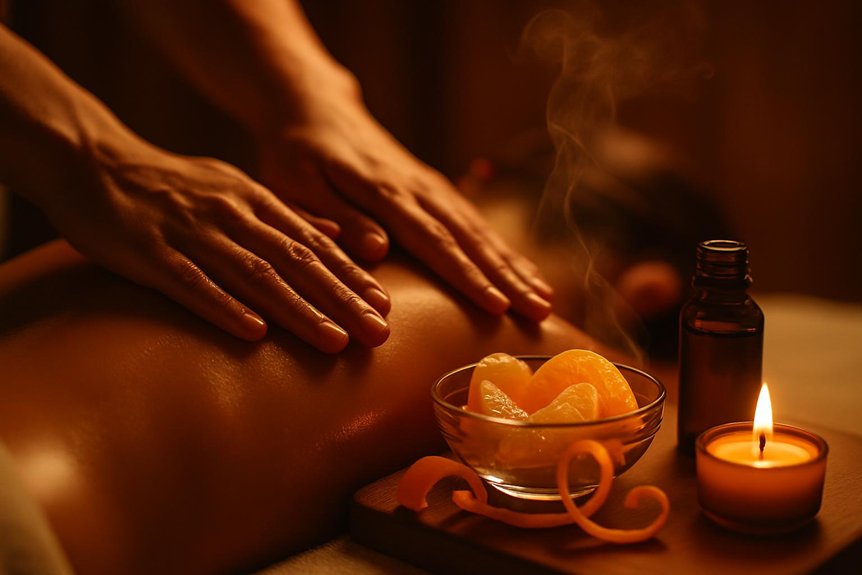
Why does sweet orange essential oil feel so uplifting in aromatic massage? Its bright citrus aroma is rich in limonene, a compound studied for supporting calm mood and easing perceived stress when inhaled.
In a massage room, this scent can gently shift attention away from rumination and toward the present moment, helping the nervous system settle without dulling alertness.
Many clients describe a “soft reset”: lighter chest, easier breathing, and a warmer emotional tone.
At Spa & Massage clinics across London, therapists often select sweet orange when a client wants comfort alongside motivation, especially during low-energy or high-pressure weeks.
Blended thoughtfully and paired with slow, grounding strokes, it supports relaxation while preserving a sense of closeness, safety, and hopeful ease.
How Does Sweet Orange Smell on Warm Skin in Massage?
Sweet orange’s uplifting character becomes even more tangible once the oil meets warmed skin during massage. Heat and gentle friction help its volatile citrus molecules release gradually, so the aroma often shifts from a bright, zesty opening to a softer, sweeter “orange peel” warmth that feels close and personal.
Many clients describe it as clean, comforting, and lightly sensual—present without crowding the breath.
At Spa & Massage clinics across London, therapists typically notice the scent “bloom” as circulation increases and the nervous system settles, aligning with evidence that pleasant olfactory cues can support relaxation and mood.
On skin, sweet orange can mingle with a client’s natural scent, creating a bespoke fragrance that invites deeper exhalations and calm connection during touch.
How Strong Is Sweet Orange During a Massage?
How intense does sweet orange feel during a massage?
In most sessions it presents as a medium-strength, bright top note that is clearly noticeable on the first inhale, then softens as the body warms and breathing settles.
Diffusion in the room, dilution in carrier oil, and heat from the therapist’s hands all influence perceived strength.
At Spa & Massage clinics, therapists typically blend within professional aromatherapy guidelines and invite clients to rate intensity before contact begins, adjusting drops or switching to a lighter application on the décolletage and neck.
Clients who prefer closeness often find sweet orange present but not overwhelming; those sensitive to scent may experience it as strong, especially during face-up work or slower strokes.
Patch testing can be offered.
What Benefits Can Sweet Orange Aromatic Massage Support?
Often chosen for its uplifting, citrus top note, orange essential oil in an aromatic massage may support stress relief, mood balance, and a general sense of relaxation by pairing gentle olfactory stimulation with calming, rhythmical touch.
In Spa & Massage clinics, therapists blend sweet orange into a suitable carrier and use slow, enveloping strokes to help soften muscular guarding and encourage steadier breathing.
The scent is commonly associated with reduced perceived tension and improved emotional comfort, which can be valuable during periods of overwhelm.
Many clients also report easier mental “switching off,” supporting better restfulness after treatment.
When combined with attentive pressure and grounded pacing, sweet orange may enhance body awareness and invite a warmer sense of connection to the present moment, while keeping the experience gentle and nurturing throughout.
Who Is Sweet Orange Aromatic Massage Best For?
Sweet orange aromatic massage is often best suited to clients seeking stress and mood support, as citrus aromas are commonly associated with perceived relaxation and positive affect.
At Spa & Massage clinics across London, therapists may recommend it for those who prefer gentle, uplifting bodywork that prioritises comfort while still addressing tension.
Suitability is guided by an individual consultation, including scent preference, skin sensitivity, and overall wellbeing goals.
Stress And Mood Support
Many clients seeking mood support and stress relief find that an aromatic massage with sweet orange oil is particularly well-suited to periods of mental fatigue, low motivation, or mild, persistent tension. At Spa & Massage clinics across London, therapists often suggest sweet orange when a client wants to feel calmer yet emotionally lighter, without feeling sedated.
Evidence from aromatherapy research associates citrus aromas with reduced subjective stress and improved positive affect, likely via olfactory pathways linked to the limbic system. In practice, the oil’s bright, clean scent can help anchor attention in the body, supporting slower breathing and a softer internal pace. It may suit clients experiencing work overload, low-grade anxiety, or sleep disruption driven by rumination, especially when paired with clear consent and comforting pressure.
Gentle Uplifting Bodywork
For a large proportion of clients, a sweet orange aromatic massage is best suited to those who want gentle, uplifting bodywork—light to moderate pressure paired with a bright citrus profile—rather than heavy, sedating relaxation. It tends to suit clients feeling “flat,” tense, or mentally busy who still want to remain present and connected to their bodies.
In Spa & Massage clinics, therapists often blend sweet orange in a carrier oil and use flowing, rhythmic strokes to support circulation, soften superficial muscle tension, and encourage calm breathing. This option can be helpful for those new to massage, sensitive to strong scents, or preferring an intimate, nurturing pace without intense discomfort.
As with all aromatherapy, skin sensitivity and medical history are screened, and pressure is adjusted throughout.
When Should You Avoid Sweet Orange Essential Oil?
Although sweet orange essential oil is generally well tolerated in aromatic massage, it should be avoided when there is a known citrus allergy, a history of skin sensitivity or dermatitis, or any current irritation such as eczema flare-ups, broken skin, or recent shaving/waxing.
It should also be avoided before sunbeds or direct sun exposure, as expressed citrus oils can increase photosensitivity; in Spa & Massage clinics, therapists screen for this during consultation and may choose a non-phototoxic alternative.
Caution is advised in pregnancy, asthma, or migraine if strong scents are triggering, and with children or older adults due to lower scent tolerance.
It should not be used undiluted; patch testing is appropriate after prior reactions.
If itching, warmth, or tightness appears, it should be removed and the session adjusted promptly.
How to Help the Sweet Orange Scent Linger After Massage
A few simple aftercare steps can help the sweet orange aroma remain noticeable for longer once an aromatic massage is finished.
At Spa & Massage, therapists suggest leaving the oil on the skin for two to four hours when practical, then showering gently without strong, fragranced body wash that can overpower citrus notes. Hydrated skin holds scent longer, so applying an unscented moisturiser can “seal” the aroma.
Clothing and bedding matter: choose clean, natural fibres and avoid heavily scented laundry products for the rest of the day.
A warm, unhurried evening, light movement, and slow breathing can deepen the association between scent and calm.
For a subtle top-up, a tissue with one diluted drop near the collarbone keeps the experience close and personal.
Conclusion
Like a small lamp carried through a dim corridor, sweet orange in aromatic massage tends to brighten the senses first, then soften into a steady warmth as skin heats the blend. Its fresh, sweet, zesty profile is often experienced as emotionally “lighter,” supporting relaxation through pleasant scent association and calm, slower breathing. For many clients, it suits treatments aimed at easing tension and low mood. Sensible dilution, patch testing, and sun-exposure caution help keep benefits safe.