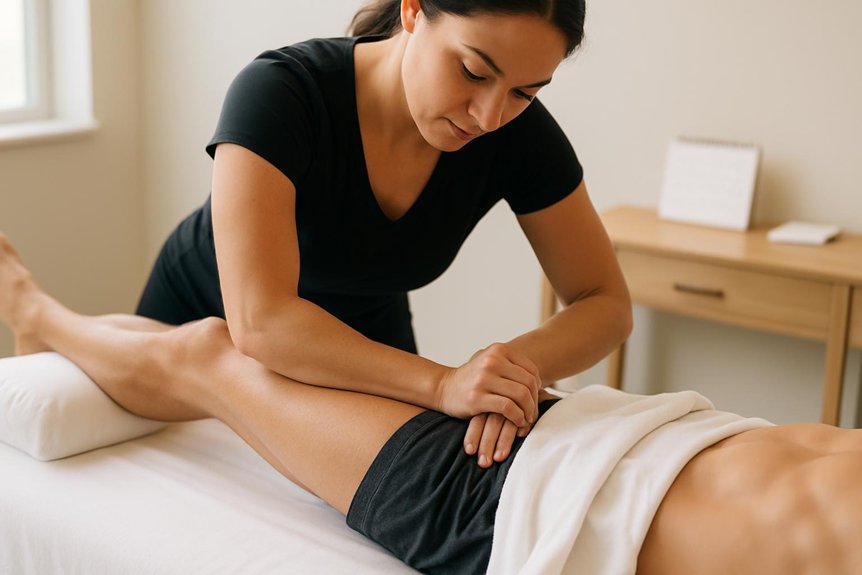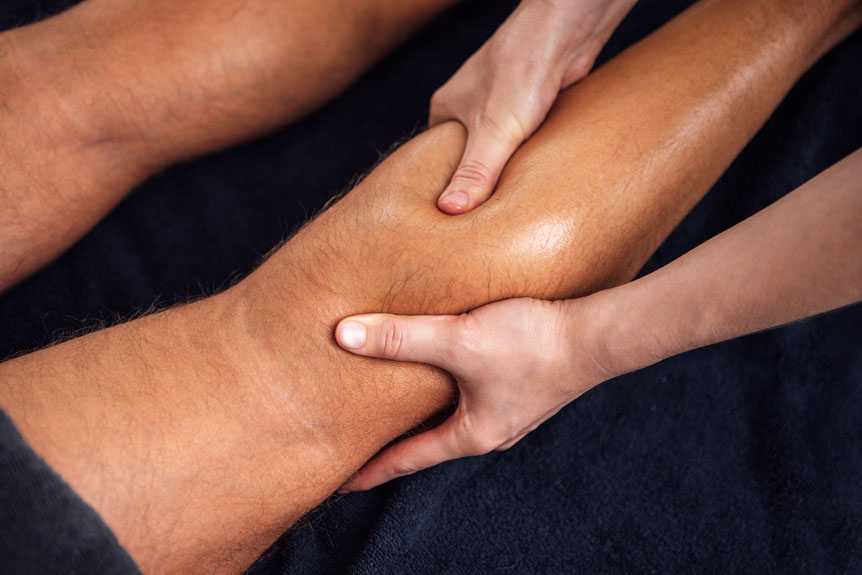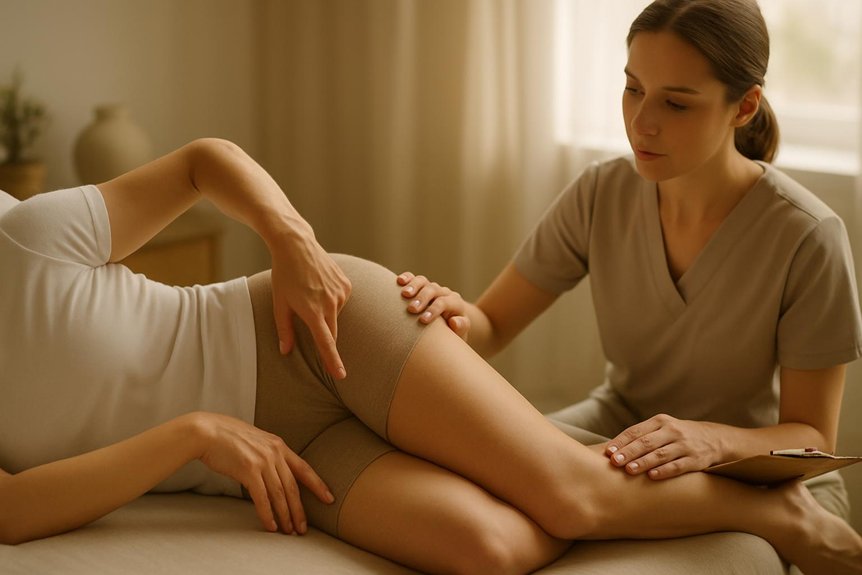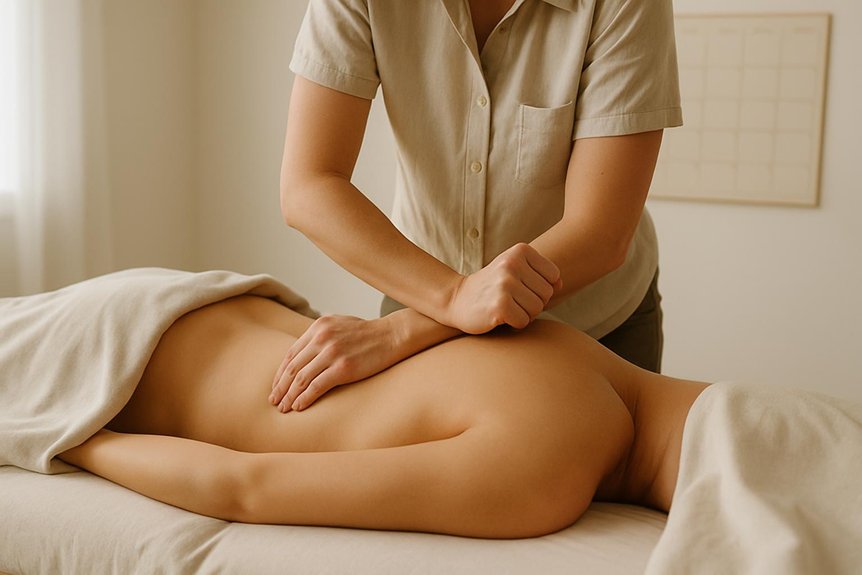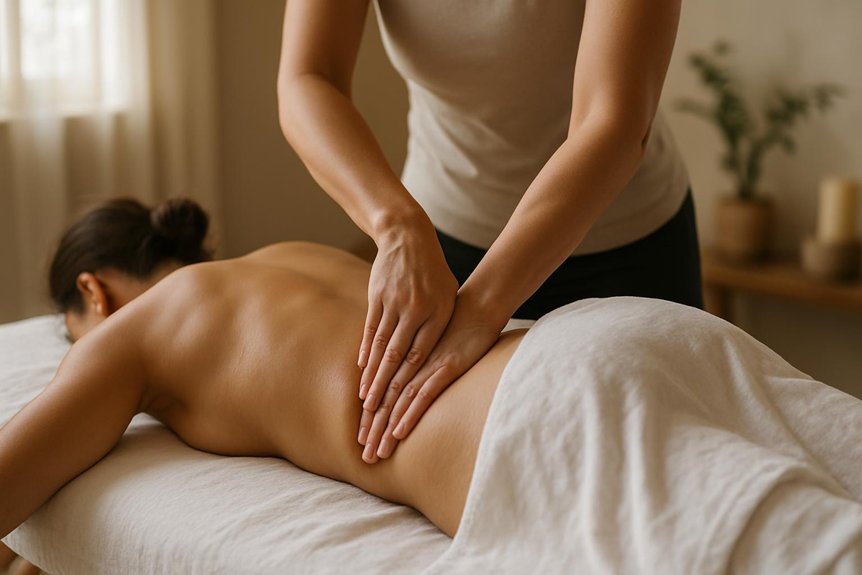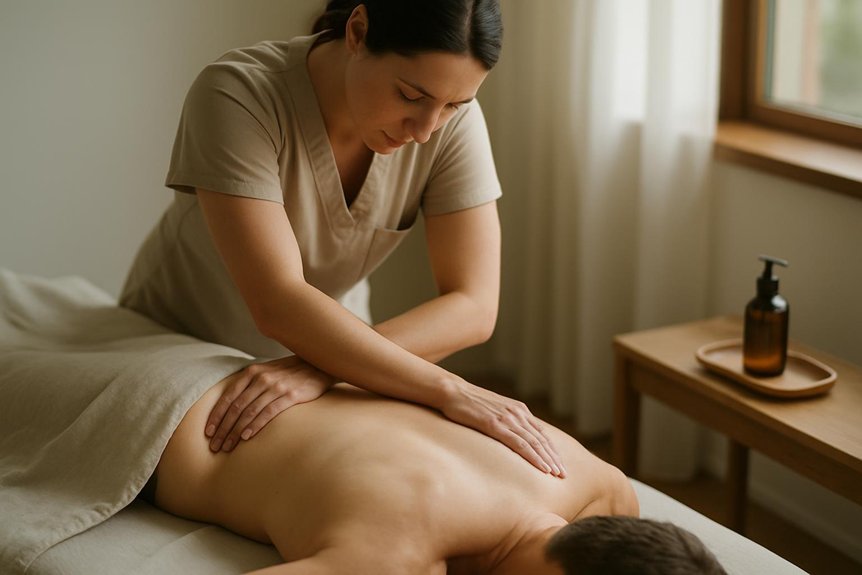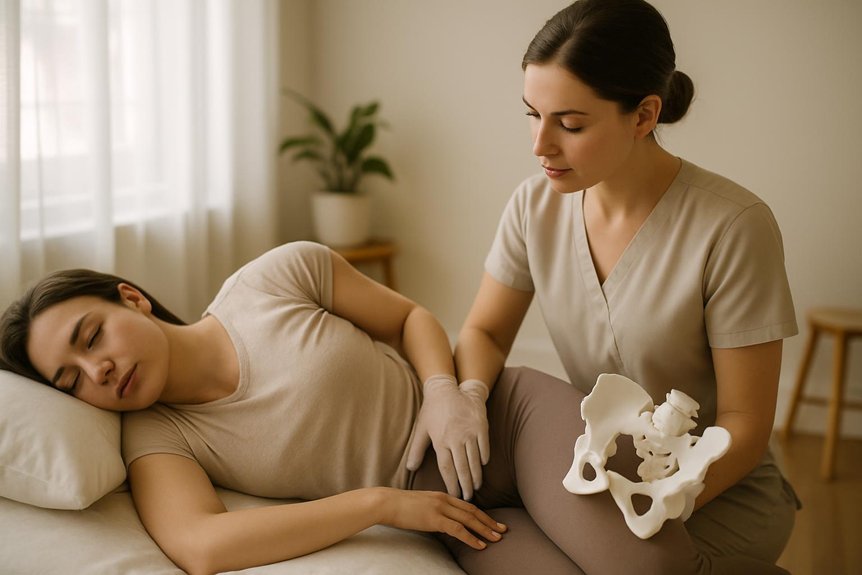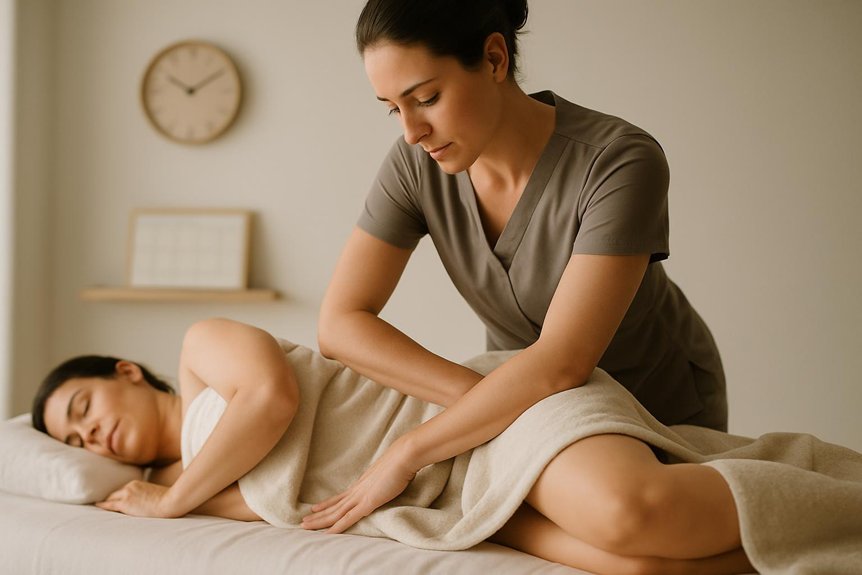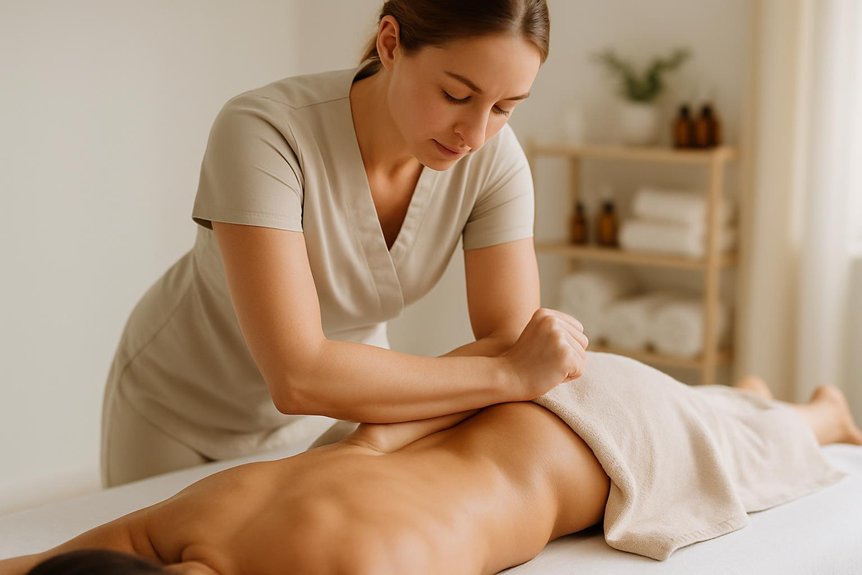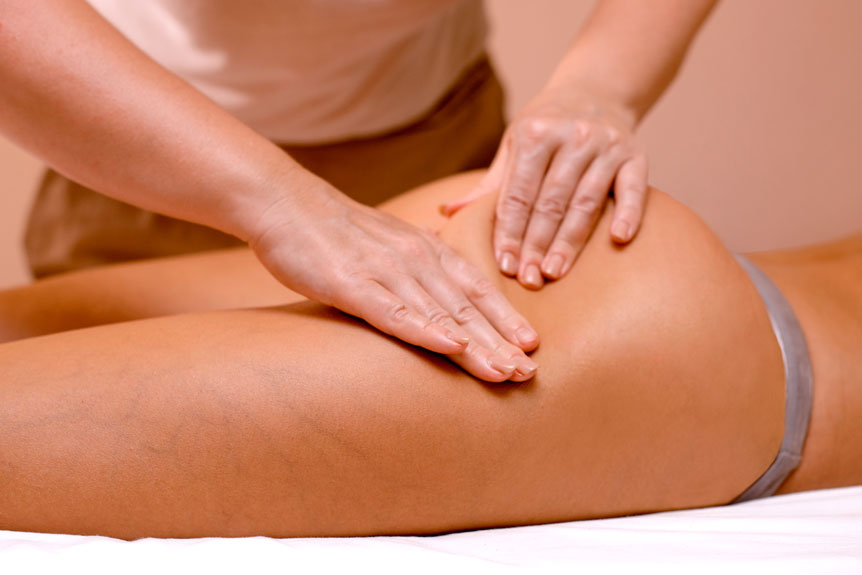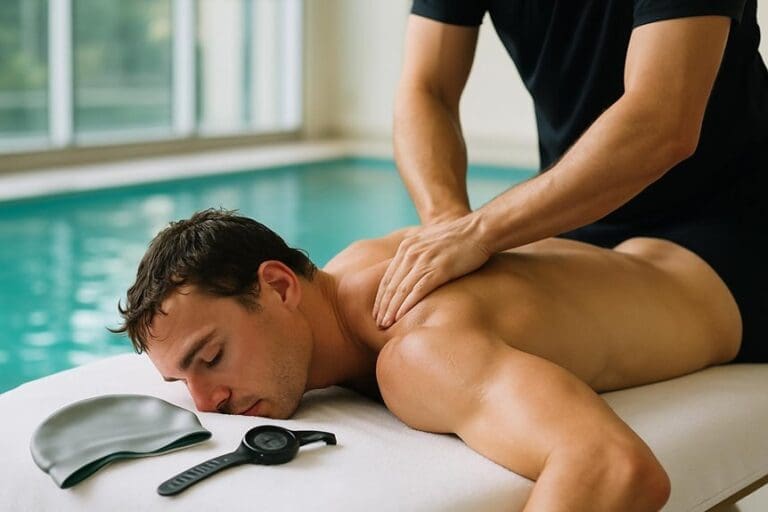

Before deep tissue work for suspected IT band pain, a client should report the exact location (outer knee near the lateral epicondyle, higher thigh, or hip) and the sensation (sharp, burning, band-like, radiating, tender to touch). They should describe timing and triggers such as downhill running, stairs, cycling fit, squats, or prolonged sitting and leg crossing. Recent training, shoes, and surface changes matter. Any swelling, locking, numbness, weakness, fever, injuries, or blood thinners should be disclosed. Further guidance covers pressure limits and aftercare.
Understand What IT Band Pain Usually Is
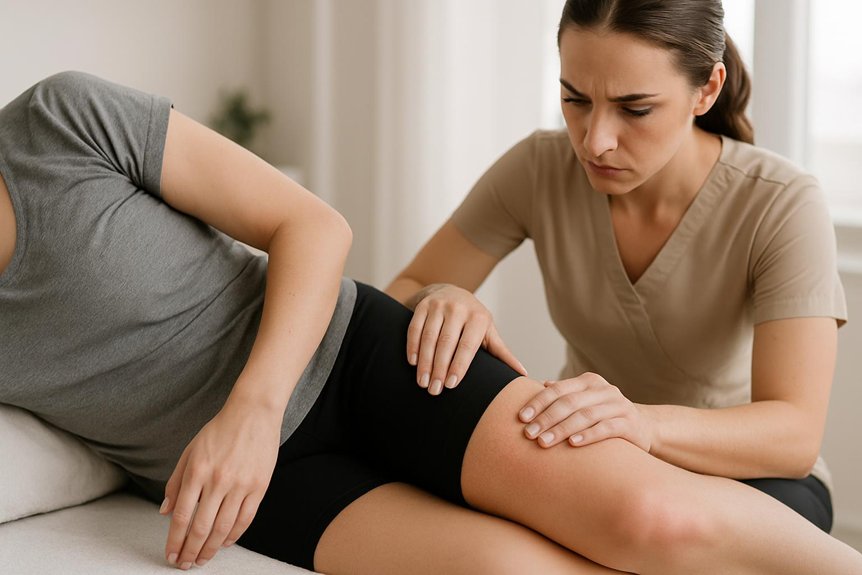
In clinical terms, “IT band pain” most often refers to iliotibial band–related lateral knee pain caused by friction or compression where the iliotibial band passes over the outside of the knee (near the lateral femoral epicondyle), typically aggravated by repetitive flexion and extension such as running, cycling, or frequent stair use.
It commonly feels like a sharp or burning ache on the outer knee, sometimes radiating up the outer thigh. Evidence suggests the problem is rarely the band “being tight” alone; contributing factors often include training load, hip abductor weakness, altered biomechanics, and local tissue sensitivity. Because deep work can be intense, the therapist may use deep tissue massage techniques more deliberately around irritated areas to support comfort and recovery.
People may notice symptoms worsen downhill, after longer distances, or when cadence drops. A patient-centered approach focuses on precise symptom location, triggers, and recent activity changes so Spa & Massage therapists can plan calm, respectful care around comfort.
Check If Massage Is Right for IT Band Pain
With IT band–related lateral knee pain often driven by load, biomechanics, and local tissue sensitivity rather than “tightness” alone, the next step is to check whether massage is an appropriate part of care.
Massage can be reasonable when symptoms are activity-related, the area is tender but not acutely inflamed, and the client can tolerate touch without sharp, escalating pain. It may also help if there is accompanying hip or thigh muscle guarding, sleep-disrupting ache, or stress-related tension.
It is less suitable when there is sudden swelling, locking, night pain unrelated to movement, fever, numbness, or suspected fracture—these warrant medical assessment first.
At Spa & Massage, therapists screen these factors and choose deep tissue or sports techniques with paced pressure, respectful draping, and calming oils.
Tell Your Therapist Exactly Where IT Band Pain Is
To guide assessment and treatment, the therapist should be told precisely where the pain is felt—most commonly at the outside of the knee near the lateral femoral epicondyle, but sometimes higher along the outer thigh or around the hip.
The client can describe whether it is pinpoint, band-like, or radiating, and indicate the exact spot with a fingertip while the therapist observes alignment and palpates gently.
Noting tenderness to touch versus pain only with pressure helps calibrate depth for deep tissue work.
At Spa & Massage clinics, therapists map the discomfort along the lateral thigh, gluteal region, and hip rotators, because nearby tissues can contribute.
Clear location details support safer pressure, better draping choices, and a more reassuring, connected treatment experience.
Explain When Your IT Band Pain Shows Up
They should describe precisely when the IT band pain appears—such as at the start of a run, after a certain distance, when climbing stairs, or later the same day—and any clear triggers like increased training load, downhill running, or prolonged sitting.
They should also note which activities reliably worsen symptoms (e.g., cycling, squats, walking, or side-lying), including intensity, duration, and whether pain eases with rest or persists.
At Spa & Massage, this timing-and-trigger information helps the therapist tailor assessment and treatment—such as targeted sports massage and aftercare guidance—to the individual’s presentation.
Timing And Triggers
Often, the most clinically useful detail to share about IT band pain is exactly when it appears and what reliably provokes it—such as pain that starts after a predictable running distance, worsens on downhill routes or stairs, flares during cycling at certain saddle heights, or emerges after long periods of sitting followed by standing.
They can note whether discomfort begins during activity, immediately after, or the next morning, and whether it settles with rest, gentle walking, or heat.
It also helps to describe the first moment it appeared: after a new training block, a change in footwear, a long journey, or increased desk time.
At Spa & Massage clinics across London, therapists use this timing pattern to guide pressure, positioning, and pacing during deep tissue work, while keeping sessions comfortable and informed.
Activities That Worsen Pain
In daily life and training, the most actionable information to share is which specific activities reliably aggravate IT band pain and at what point during the movement it appears. Common culprits include downhill running, long runs, speed work, cycling with a low saddle, climbing stairs, squats, lunges, and prolonged sitting with knees bent.
It also helps to note whether symptoms start immediately, build after a set distance or time, or flare during the deceleration phase (for example, when the knee moves from flexion to extension).
Clients can describe the exact location (outside knee vs lateral thigh), intensity, and whether a “sharp” catch differs from a diffuse ache. At Spa & Massage, therapists use this detail to tailor deep tissue or sports massage and aftercare.
Share Training Load, Shoes, and Desk-Time Habits
To guide an effective plan for IT band pain, the therapist should be told about any recent changes in training load (mileage, pace, hills, or frequency), as sudden increases are commonly linked with symptom flares.
Footwear age and type, plus typical running surface (camber, track, trail, or treadmill), should also be shared because they can alter lower-limb mechanics and tissue stress.
Sitting time, desk posture, and breaks from prolonged hip flexion are equally relevant, and at Spa & Massage our therapists use this context to tailor hands-on treatment and practical self-care.
Recent Training Load Changes
Track any recent changes in training load and daily habits, as these are common drivers of IT band pain. They should tell the therapist whether weekly mileage, pace, hills, or speed work increased, or if rest days decreased, and when symptoms began relative to that shift.
It helps to note recent gym changes such as heavier squats, lunges, or lateral-band work, plus any new cycling volume or longer commutes.
Desk-time matters too: prolonged sitting, legs crossed, or reduced walking breaks can heighten lateral hip tension and sensitivity.
At Spa & Massage, therapists use this timeline to choose pressure, pacing, and targeted work around the hip, thigh, and gluteal region, then suggest gentle mobility and graded return plans after deep tissue sessions.
Footwear And Running Surface
Even small changes in footwear or running surface can shift lower-limb mechanics enough to aggravate IT band pain. Before intensive tissue massage, the client should tell the therapist whether shoes are new, worn down, or different in heel drop or support, and whether orthotics are used. They should also note recent switches between road, treadmill, trail, track, or cambered pavements, plus more hills or speedwork, as these can increase lateral knee stress.
At Spa & Massage, therapists use this information to guide pressure, target the TFL, glutes, and lateral thigh appropriately, and avoid sensitising irritable tissue. The client should share where discomfort peaks during a run and how it settles afterward, so treatment and home advice can feel safely tailored.
Sitting Time And Posture
In addition to training load and footwear, daily sitting time and desk posture can meaningfully influence iliotibial band symptoms by increasing sustained hip flexion and lateral thigh tension.
Clients should tell the therapist how many hours they sit, whether one leg is crossed, and if they perch on a chair edge, as these patterns may reduce gluteal activation and increase hip adduction stress.
They should also note commute time, recent remote-work changes, and any numbness, low-back tightness, or outer-knee ache after long meetings.
At Spa & Massage clinics, therapists use this information to guide deep tissue and sports massage choices, then recommend brief standing breaks, hip-extension resets, and gentle lateral-hip strengthening between sessions for comfort and resilience.
Mention Injuries, Diagnoses, and Nerve Symptoms
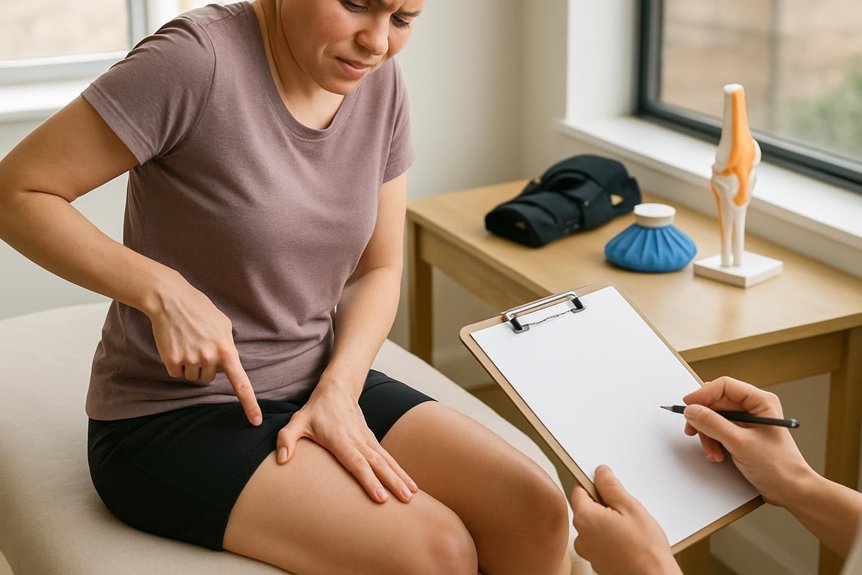
Alongside describing where the pain sits and when it flares, clients should tell their therapist about any recent injuries, previous diagnoses, or nerve-type symptoms that could change the clinical picture of IT band pain.
A recent ankle sprain, knee twist, fall, or hip impact can alter gait and load the outer thigh, making deep tissue work feel sharper than expected.
Prior diagnoses—meniscal injury, hip bursitis, lumbar disc irritation, scoliosis, or arthritis—help refine assessment and set safe pressure limits.
Nerve signs matter: burning, tingling, numbness, shooting pain past the knee, foot weakness, or pain that worsens with coughing may suggest referral patterns beyond local tissue.
At Spa & Massage, therapists use this detail to choose gentler techniques, positioning, and pacing while maintaining close consent.
Flag Medications, Blood Thinners, and Skin Sensitivity
Many commonly used medications can affect how safely and comfortably IT band pain can be treated, so clients should tell their therapist exactly what they take and why.
Anticoagulants and antiplatelets (such as warfarin, DOACs, or aspirin) increase bruising risk, and recent NSAID use may mask pain signals.
Oral or injected corticosteroids can thin skin and reduce tissue resilience.
Some antidepressants and antibiotics can heighten tenderness or photosensitivity, making touch feel sharper than expected.
Topical gels, patches, and heat rubs should also be disclosed to prevent irritation when combined with massage oils used in Spa & Massage clinics.
Clients should mention easy bruising, fragile skin, eczema, allergies, or reduced sensation, so the therapist can choose safer contact areas and lubrication while preserving comfort and trust.
Set Pressure Limits and an IT Band Aftercare Plan
Before hands-on work begins, clear pressure boundaries and a simple aftercare plan should be agreed so IT band–related pain is treated effectively without provoking flare-ups.
The client can describe a “good pain” range and name a stop signal; at Spa & Massage, therapists adjust depth continuously and avoid forcing pressure directly on the band when it heightens lateral knee pain. A 0–10 scale helps keep sensation therapeutic rather than sharp, hot, or nervy.
Aftercare should be specific: gentle walking, hydration, and light hip and glute mobility for 24–48 hours, with heat or ice based on symptom response.
If tenderness rises later, reduced training load and short self-massage around, not on, the band may help. A follow-up plan should be set.
Conclusion
Like a careful detective tracing clues beyond the obvious, an effective therapist looks past the sore outer thigh to the surrounding hip, glute, and movement patterns that often drive IT band symptoms. Clear, specific reporting—location, timing, triggers, training load, footwear, sedentary habits, prior injuries, nerve signs, and medications—supports safer clinical decisions about depth and technique. Agreed pressure limits and realistic aftercare help reduce post-treatment flare-ups and improve functional outcomes over time.